Tag: media

  • Imran tells spokespersons to stop sharing details of party meetings with media

    Imran tells spokespersons to stop sharing details of party meetings with media

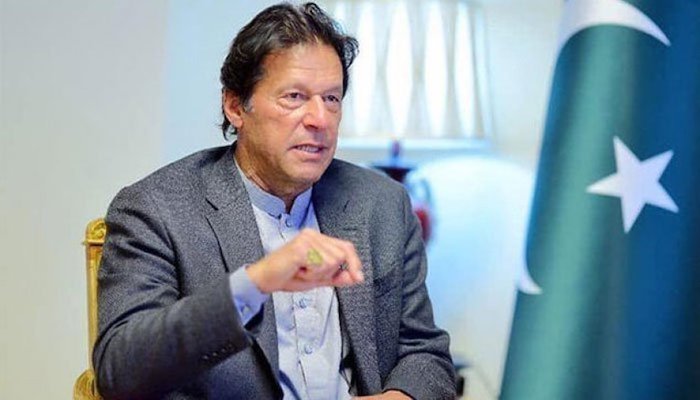
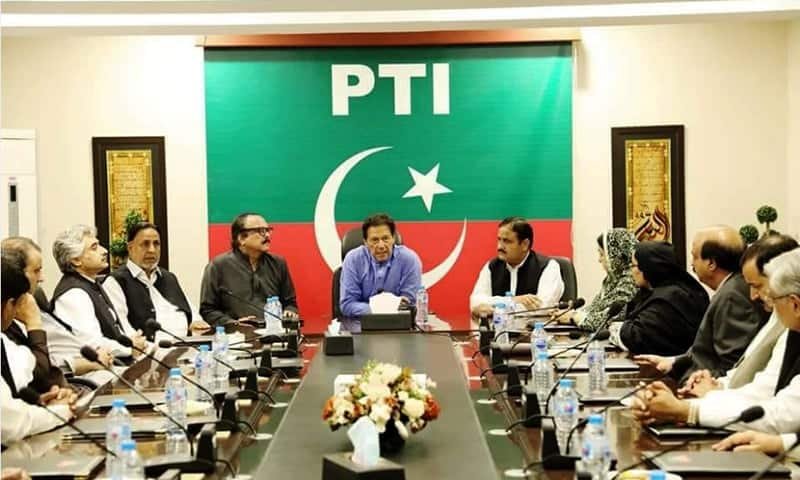
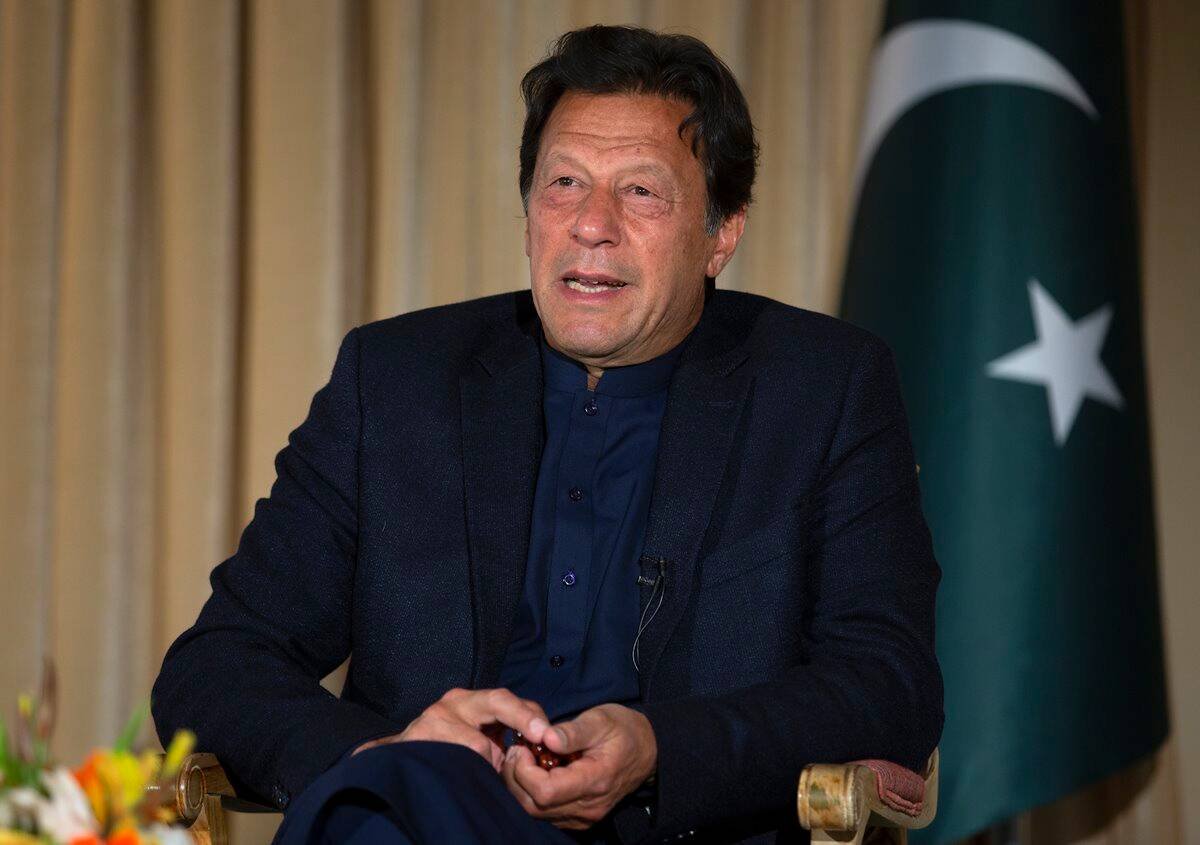
    Prime Minister Imran Khan has stopped the Pakistan Tehreek-e-Insaf (PTI) spokespersons from sharing the details of the party meetings with after details of a spokesperson meeting were released to the media.

    According to reports, the PM is not happy with the fact that the details of the party spokespersons meetings, organised on a regular basis to discuss the internal affairs and future strategy, make it to the newspapers even though there pertain to the internal affairs of the party.

    According to the PM, the meetings of the party spokespersons are held to strengthen the party narrative and these decisions should not be made public. He said the details of the meeting have been “misreported” on multiple occasions while directing the party spokesperson to keep these details under wraps.

    Recently, a news about PM aide Nadeem Afzal Chan’s resignation was being reported in the media before the resignation reached the PM, prompting a stern response from Imran. Recently, PM Imran Khan had also expressed annoyance with his ministers, saying if someone had a problem with the government narrative, they should step down from the cabinet.

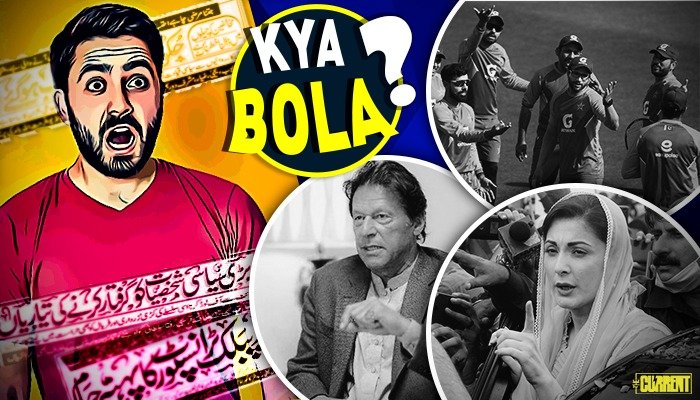
  • KYA BOLA? (Dec 7): ‘Five Star Mahool Ko Taras Gye’, ‘Hukoomat Media Ky Nishany Py’, ‘Media Azad Nahi’

    KYA BOLA? (Dec 7): ‘Five Star Mahool Ko Taras Gye’, ‘Hukoomat Media Ky Nishany Py’, ‘Media Azad Nahi’

    Following are some snippets that stood out from Urdu newspapers on Dec 7, 2020, which The Current takes no responsibility for.

    ‘Five Star Mahool Ko Taras Gye’

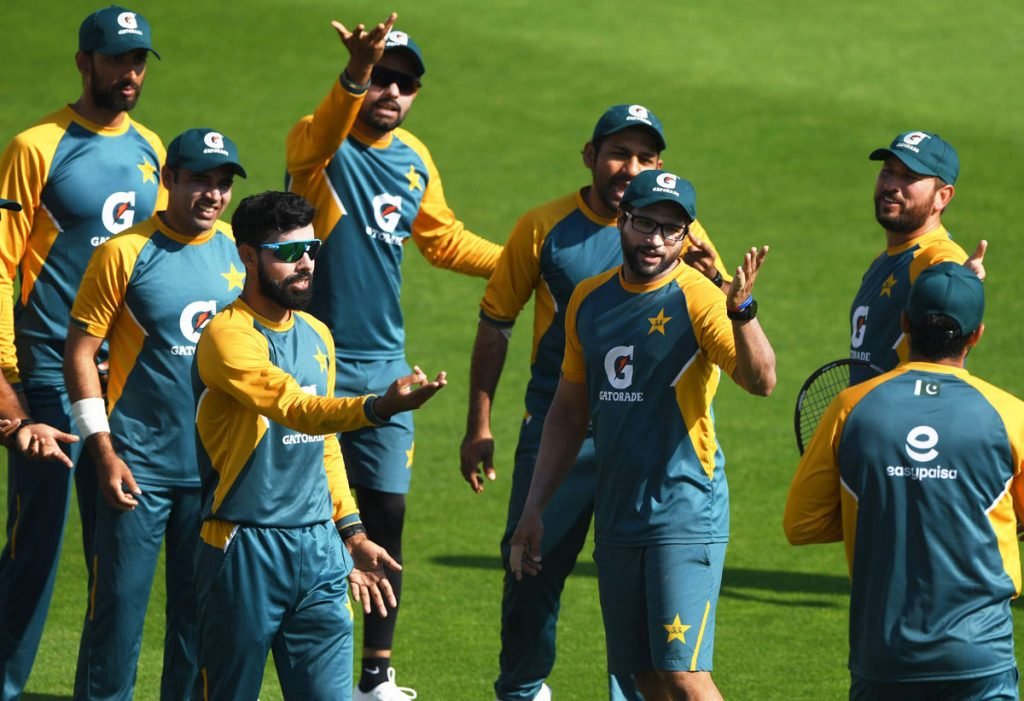
    According to Express News, Pakistani cricket players in New Zealand are irked by the quarantine routine. “Mulk mai badshaon wali zindagi guzarny waly stars ky kamron ki 11 din sy safai nahi hui. Bedsheets tak nahi change huay, aur khana dabon mai deny ka silsala jari.”

    ‘Hukoomat Media Ky Nishany Py’

    PM Imran Khan has been quoted by Daily Jang saying that the media is targetting his government. According to the PM: “Hukoomati karkardgi sahi nahi batai jati. Media corrupt opposition ki himayat kar raha ha.”

    ‘Media Azad Nahi’

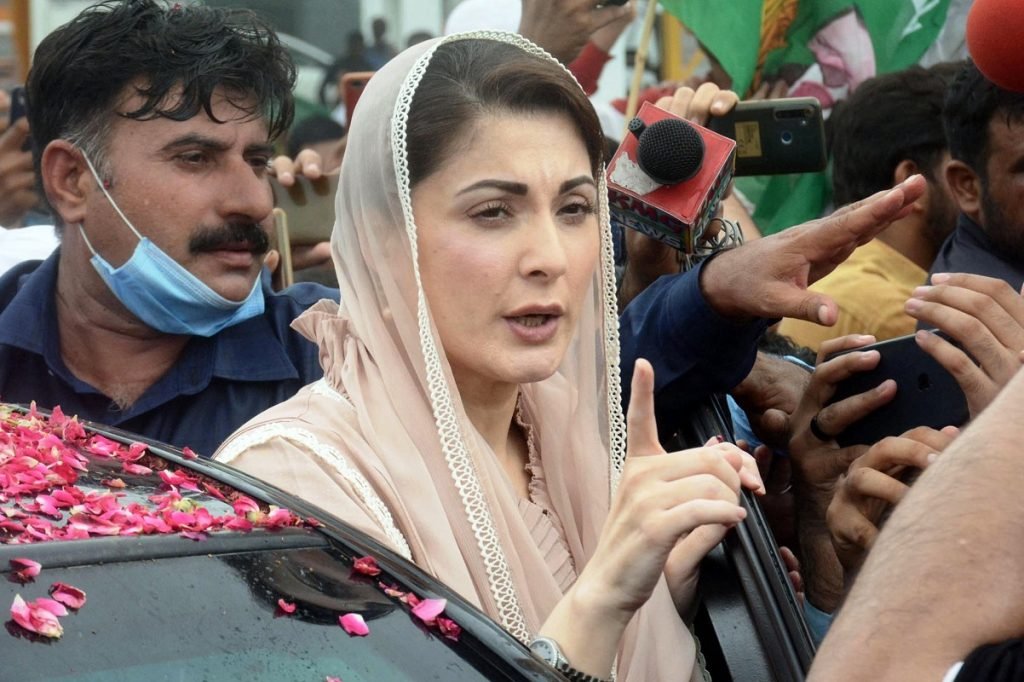
    Maryam Nawaz was quoted by Daily Jang as saying that Pakistani media was being controlled by the government. “Media kab tak mar khata rahy ga, wo hukomat ka aalakar banany sy inkar kary. Kya sada isi trah majboori mai bethy rahin gy? Sab channels ko sabaq parhaya jata ha ya likha hua aata ha.”

  • Dividing the divided

    “The ruling party’s most recent act of issuing a list of news media talk-show anchors, dubbing them pro-corruption, drives a deeper wedge into a polarised nation.”

    It is no secret that the truth of national integration of the Islamic Republic of Pakistan is not just bitter but severely inconvenient. The fine line that separates diversity and differences among this nation has blurred so many times that it has almost permanently been reduced to a smudge. From the barracks to the parliament, sermons and edicts from atop the mosque minarets, political jargons from atop the containers and trucks, to the unending layers of multiple identities — divisions are the Achilles’ heel of this society.

    Issuing a list of journalists, dubbing them against the interests of the state, vilifying them publicly was like shooting a nuke at this Achilles heel. Driving a wedge at the very source of information of the nation, the media, is creating the deepest division imaginable so far. In the history of deleted tweets in this country, these two might have very long lasting effects.

    A ruling political party being unaware of this landmine or apathetic to the consequences of triggering it can potentially prove to be catastrophic.

    73 years of age, sick, weak and drained it stood on shaky feet, running out of natural body resources, vitals dimming, surviving on one shot of steroids after another, scars of surgical interventions spread across the map of its skin and a plethora of side-effects from past treatments racking its existence. It had almost forgotten the number of doctors that had taken a shot at it, sometimes even without its total consent. Almost every one of those taxing prognosis left it more vulnerable and feeble. All of them focused on treating the symptoms and not the disease, worsening the illness.

    It was almost as if they knew, but never disclosed that it was plagued by the uncanny Autoimmune Disease – an ailment in which the organs of its own body were at constant war with each other. It was almost as if they were intentionally not treating the disease because ending its ailment would end years of profiteering from its misery, and yet they all claimed they did everything to serve its interest. Or maybe decades of varying drugs had blurred its ability to separate those who sought to save it from those who added to its agony.

    The story of Pakistan is difficult to pen down because it is hard to indisputably identify the heroes and the villains. Pakistanis to this day are even conflicted over autocratic dictatorships being good or bad. This is a country where coups were celebrated, even if by a significant minority. Its very inception on the basis of a presumed uniformity of a religion so deeply divided across sectarian lines was unsteady. The ethnic, cultural, political and ideological differences at its core, though dormant at the time, were highly flammable. While these divisions stayed buried under the unanimous rejected of Hindu subjugation, the fault lines under the surface started growing into visible cracks once liberated from the common enemy. This is why, ever since, the integration and unity of this nation has always been a function of hatred, fear and anger against a common enemy, rather than collective growth, pride and prosperity.

    However, in times when an aggravated threat of a common enemy does not exist, Pakistan’s autoimmune disease starts tearing her apart and eating the core of the country hollow. For all these reasons, and more, the worst thing that can happen to this already fragmented and disunited country is fuelling more divisions.

    From its campaign leading to the 2018 elections, PTI and its patron in chief Imran Khan has been extremely careless, if not intentionally exploitative, of this ability of the Pakistani polity. He went further than the usual practice of demonising and defiling his political rivals and berated their voters and supporters as dumb donkeys following their leaders mindlessly like zombies. At his massive public meetings he openly vilified news organisations that disagreed with him. The rants inadvertently led to mob attacks on news media offices and at times on journalists.

    The ruling party’s most recent act of issuing a list of news media talk-show anchors, dubbing them pro-corruption, incites targeted and aggravated hatred against these journalists. But more importantly still, it drives a deeper wedge into a polarised nation. It impacts not just PTI supporters but the supporters of its political rivals as well. With the history of Pakistan and its behavior in view, this action will have consequences far more long-lasting than being perceived.

    This list discourages openness to differing views and perspectives. It freezes the ability to question and challenge one’s hardened positions and clan-vote mentality. It encourages the dangerous practice of sticking to narratives that only feed people’s confirmation biases. It magnifies and glorifies selective perception. But more than anything else, it breeds generations of an ill-informed polity, with an ‘us-versus-them’ mindset for its own countrymen, incapacitated to vote a credible person into power, adding to the long list of bad doctors that would worsen this ailing country’s autoimmune disease and feed off its ailing semi-conscious body.

  • Targeting women

    Targeting women

    A large group of Pakistani women in media have released a joint statement about organised trolling, abuse and harassment they face online. The statement says, “Vicious attacks through social media are being directed at women journalists and commentators in Pakistan, making it incredibly difficult for them to carry out their professional duties.”

    The statement further says that online attacks are instigated by government officials and then amplified by a large number of Twitter accounts, which declare their affiliation to the ruling party.

    They asked the government to restrain its members from repeatedly targeting women in the media, send out a clear message to all party members, supporters and followers, to desist from launching these attacks, whether directly or indirectly and, hold all such individuals within the government accountable and take action against them. #AttacksWontSilenceUs, the hashtag used by the women who released the statement, trended at No 1 on Twitter.

    Targeting women in media is easy as there are only about five percent of women who are journalists in Pakistan. They not only face vile abuse related to their gender, but they also face a barrage of allegations that they take ‘lifafa’ or are paid by Opposition parties. These bullying tactics are used to either silence them and/or discredit them. Last year, a report titled ‘Hostile Bytes – a study of online violence against women journalists’ by Media Matters for Democracy (MMfD) said that 95 percent of women journalists feel online violence has an impact on their professional choices, while 77 percent self-censor as a way to counter online violence. In the recent statement by women media practitioners, self-censorship was identified as a problem as well as hacking attempts of their social media accounts. The mental toll it must take on those who are at the receiving end of this constant abuse is another factor that leads to self-censorship.

    Targeting women is a worldwide phenomenon. In neighbouring India, the trend is quite similar. Amnesty International published a report earlier this year, which said that women politicians in India face a shocking scale of abuse on Twitter. “Women are targeted with abuse online not just for their opinions – but also for various identities, such as gender, religion, caste, and marital status.” It has also been seen how women journalists who do not toe the official government line in India are viciously trolled by the ‘Modi Bhakts’ on social media platforms, especially Twitter.

    The National Assembly’s Human Rights Committee has invited women media practitioners who released the statement to come and highlight their issues in a meeting on Tuesday. Federal Minister for Human Rights Shireen Mazari also lent her support to the women media practitioners in her tweets. It is important that these issues are raised at the right platforms so that Pakistani online spaces can be safe for women from all spheres of life. A civil discourse is the need of the hour instead of online abuse. We hope that those who are behind such campaigns can actually get past their political differences and ensure that online spaces are used for meaningful discourse instead of bullying.

  • ‘#AttacksWontSilenceUs’ trends at No 1 after women journalists release statement on online harassment

    ‘#AttacksWontSilenceUs’ trends at No 1 after women journalists release statement on online harassment

    Pakistani women journalists released a joint statement on attacks on women in media in Pakistan, which says that vicious attacks through social media are being directed at women journalists and commentators in Pakistan, making it incredibly difficult for them to carry out their professional duties.

    The statement was signed by journalists including Asma Shirazi, Nasim Zehra, Gharidah Farooqi, Amber Shamsi, Benazir Shah, Mehmal Sarfraz, Zebunnisa Burki, Alia Chughtai, Ayesha Bakhsh, Munizae Jahangir, Ramsha Jahangir, Alina Farooqi, Reem Khurshid, Najia Ashar and many more.

    “The target of these attacks are women with differing viewpoints and those whose reports have been critical of the Pakistan Tehreek-e-Insaf’s government, and more specifically its handling of the coronavirus pandemic. The online attacks are instigated by government officials and then amplified by a large number of Twitter accounts, which declare their affiliation to the ruling party. In what is certainly a well-defined and coordinated campaign, personal details of women journalists and analysts have been made public. To further discredit, frighten and intimidate us, we are referred to as peddlers of ‘fake news’, ‘enemy of the people’ and accused of taking bribes (often termed as ‘paid’ journalists or lifafas). In some instances, our pictures and videos have also been morphed.”

    The statement further says that women in the media are not only targeted for their work, but also their gender. “Our social media timelines are then barraged with gender-based slurs, threats of sexual and physical violence. These have the potential to incite violence and lead to hate crimes, putting our physical safety at risk. Lately, there have also been attempts to hack into the social media accounts of reporters and analysts, as well as limit our access to information. In some cases, journalists have been locked out of their social media accounts as a result of hacking attempts.”

    The statement said that women in the media, especially those on social media platforms, are finding it increasingly difficult to remain on these platforms and engage freely. Many now self-censor, refrain from sharing information, giving their opinion or actively engaging online. These sustained attacks undermine public trust in journalism and go against the basic tenets of democracy. It is a public right to access accurate and reliable information, especially during a public health emergency.

    “We are being prevented from exercising our right to free speech and participate in public discourse. When we self-censor, others are prevented from receiving information to form their views, which is a violation of their rights under Article 19-A. When attacks and threats are made against us, we do not enjoy the protection of the law as guaranteed under Article 4, and this is the direct result of the actions of those who hold positions in government and are affiliated with the PTI.”

    Women journalists have asked Human Rights Minister Shireen Mazari to fulfil her promise to take notice of threats against journalists and to address the climate of abuse, bullying, fear and censorship.

    Their demands from the government include:

    1) Immediately restrain its members from repeatedly targeting women in the media

    2) Send out a clear message to all party members, supporters and followers, to desist from launching these attacks, whether directly or indirectly

    3) Hold all such individuals within the government accountable and take action against them

    They also called upon the Standing Committees on Human Rights of the upper and lower house of parliament to take notice and hold the government accountable by ensuring they acknowledge, apologise and list the actions they will now take to put an end to such a threatening environment.

    It wasn’t later that the demands became the number one trend on Twitter in Pakistan, and PPP chief Bilawal Bhutto-Zardari tweeted that he has taken notice of threats to women journalists as chair of the NA Human Rights Committee and would like to invite all the signatories to brief the committee.

    As per the latest updates, the human rights minister has reacted to the trend, saying attacking women journalists for doing their job is disgusting.

    In a subsequent tweet, Mazari said she had once again spoken to the information minister and stressed the need for Journalist Protection Bill.
  • Rana Sanaullah stopped by police, refuses to let them check his vehicle in absence of media

    Senior Pakistan Muslim League-Nawaz (PML-N) leader and lawmaker Rana Sanaullah was on Wednesday morning intercepted by police off Lahore’s The Mall. He, however, refused to step out of the vehicle and let the officials check it in the absence of media, The Current has learnt.

    According to sources, the PML-N stalwart was stopped by the police in the Regal Chowk area of the provincial capital in connection with the arrest of party president and Leader of Opposition in the National Assembly (NA) Shehbaz Sharif.

    The National Accountability Bureau (NAB) since Tuesday had been attempting to arrest Shehbaz in the assets beyond means case against him. The bureau had, however, failed to trace the PML-N chief despite raiding his Model Town and Jati Umra residences among other locations.

    READ: NAB arrest: Cat and mouse as Shehbaz not found

    Wednesday’s incident took place before a Lahore High Court (LHC) division bench granted pre-arrest bail to Shehbaz till June 17.

    “I will not let you check my vehicle in the absence of media because I fear being framed for carrying drugs once again,” Sanaullah, who had earlier been arrested by the Anti-Narcotics Force (ANF), told the cops who stopped him to check if Shehbaz was also present in the vehicle.

    The ANF had last year detained the lawmaker after accusing him of carrying a cache of drugs in his vehicle and for “supplying it to drug dealers”.

    After months-long incarceration, Sanaullah had been granted bail amid lack of evidence. He had then accused the ANF of planting the drugs in his vehicle for the registration of a “bogus” case against him.

  • We’re on your side, dear minister

    We are all familiar with the adage that journalism is not a crime. Unfortunately, it seems that the ruling Pakistan Tehreek-e-Insaf (PTI) for some reason thinks it is.

    When The Current, with pictorial evidence, reported how unhygienic the conditions at a quarantine facility in Peshawar were, and when a few journalists shared the story on social media, the government did not take it very well. Khyber Pakhtunkhwa (KP) Health Minister Taimur Khan Jhagra took to Twitter and quote-tweeted journalist Benazir Shah.

    Other than questioning the report, he said:

    Targeting a well-respected journalist for tweeting a story about bad conditions at a quarantine facility in KP came as a surprise to many who had been commending both the KP government and Jhagra for their hard work in the fight against coronavirus. Jhagra could have ignored the story and not responded at all or just acknowledged the unhygienic conditions. If neither, he certainly could have responded without targeting Shah. 

    Jhagra is known to be decent and hardworking unlike many of his colleagues. Thus it came as a surprise when he targetted an accredited journalist, despite being fully aware of how the trolling brigade works. By targeting Shah specifically, he unleashed a troll army that is always ready to attack the media, especially women journalists.

    The notoriety of the ruling party’s troll army is an open secret despite official denial. Twitter trends against the media and renowned journalists have become a norm. Sharing private pictures of journalists taken from their social media accounts is another feather in the cap of these trolls. Any journalist who has attended Prime Minister (PM) Imran Khan’s media briefings in recent days and dared to ask him a tough question, has faced online trolling and vile attacks.

    Jhagra also implied in his Twitter thread regarding The Current’s story that the “privileged” cannot bear 48 hours of discomfort as the quarantine facilities may not be ideal. Well, this wasn’t about privilege. It was about highlighting the unhygienic conditions at a quarantine facility and nothing to do with privilege. Both the privileged and the under-privileged deserve clean quarantine facilities. This problem isn’t limited to Pakistan. In neighbouring India, many such cases of poor and unclean quarantine facilities have been highlighted on social as well as mainstream media.

    We understand that the government has limited resources and it will be difficult to deal with such pressures. We also acknowledge how hard the federal, as well as provincial governments, are working to fight the coronavirus and that mistakes are unavoidable as this is something the world hasn’t seen in recent times.

    We commend the hard work of our public officials, healthcare workers, doctors, policemen, security officials and everyone out there who is working day in and day out to ensure that the people of Pakistan stay safe and healthy during the pandemic. But we will also mention and highlight facts and news so that our readers stay informed. It is not our job to only highlight the positives; we have to report the truth even if the state does not like it. Journalists cannot be bullied by online trolls or campaigns against them. The media is not your enemy; coronavirus is our common enemy. Fight the virus, don’t fight the media without any reason.

    We don’t have rose-tinted glasses on, and red flags are not just flags to us…

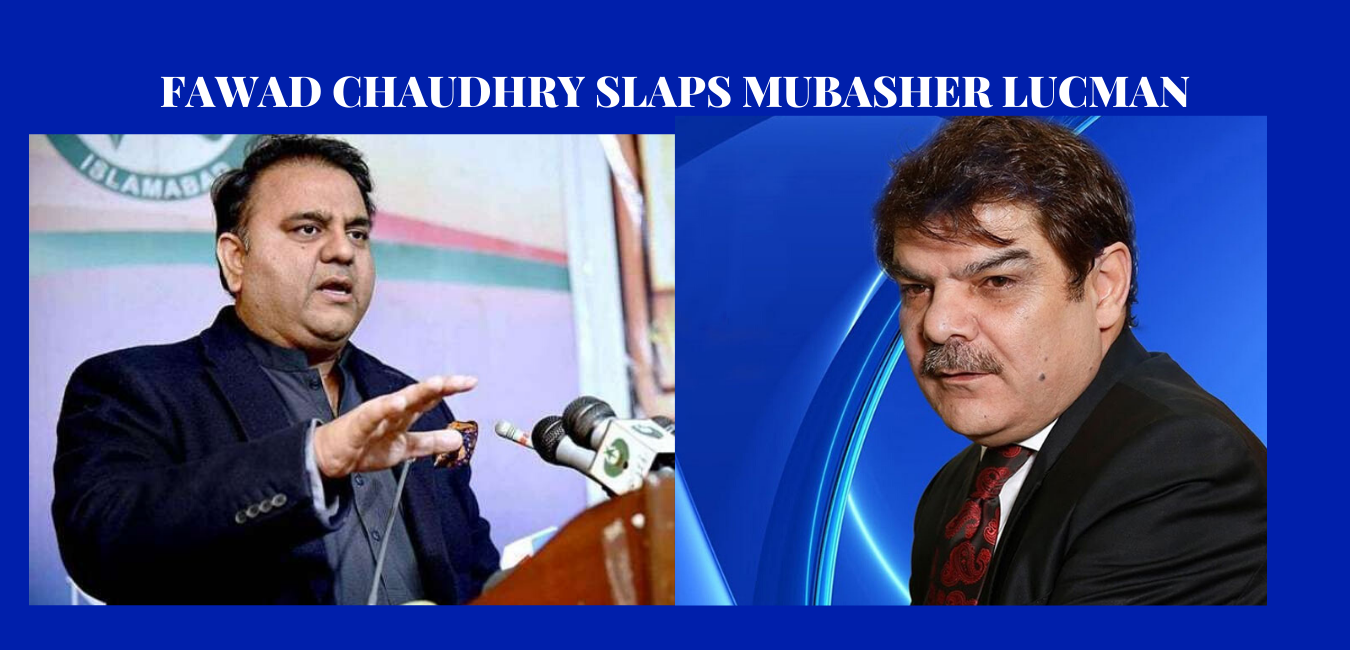
  • PTI’s Fawad Chaudhry slaps Anchor Mubasher Lucman at a wedding

    PTI’s Fawad Chaudhry slaps Anchor Mubasher Lucman at a wedding

    Federal Minister for Science and Technology Fawad Chaudhry slapped anchorperson Mubasher Lucman at Punjab’s irrigation minister, Mohsin Legharis, son’s valima.

    Other PTI representatives were present at the Valima when the incident occurred, including Jehangir Tareen.

    After the incident, Fawad Chaudhry criticised Lucman, saying that Lucman cannot be considered as a journalist.

    Fawad tweeting citing the story of him slapping Mubasher

    Fawad had earlier tweeted that ‘so called journalists’ malign ministers and respectable people for viewership.

    “There was a scuffle that broke out. A small fight broke out. In a fight, as usually is the case, he may have got one (slap) in, I may have hit one,” said the minister during Geo News talk show “Naya Pakistan” on Sunday evening.

    “I have been a minister earlier as well. I will not tolerate personal attacks against myself. We are all human beings and will react when someone makes such false allegations.”

  • ‘Pemra should not suppress individual’s rights,’ PTI leaders slam new order

    ‘Pemra should not suppress individual’s rights,’ PTI leaders slam new order

    Senior leaders of the ruling Pakistan Tehreek-e-Insaf (PTI) have slammed Pakistan Electronic Media Regulatory Authority (Pemra) on a new order that had banned TV anchors from appearing on talk shows hosted by other anchors.

    Former finance minister Asad Umer, Minister for Human Rights Shireen Mazari and Federal Minister for Science & Technology Fawad Chauhdry have expressed their dismay over Pemra’s decision and urged the media watchdog to do a better job.

    Asad Umar took to Twitter and wrote that “Pemra should be doing a better job and asked it to take action against fake news rather than suppress individual’s rights to express their opinion”.

    Human rights minister Shireen Mazari also weighed in on the order and tweeted that, “Do I need a degree in politics to be an expert on politics? I have no degree in “human rights” so should I go on TV to discuss “human rights” issues?”

    Agreeing with the Shireen Mazari, Fawad Ch termed the Pemra order illogical, unnecessary and uncalled for.

    Moreover, several journalists including Shahzeb Khanzada, Mansoor Ali Khan, Fereeha and Shahzad Iqbal have criticised the move and urged Prime Minister Imran Khan to take notice.

    The regulatory authority on Sunday, through a notification, banned regular TV talk show anchors from appearing in other talk shows and warned those indulging in “inappropriate and biased analyses and negative propaganda” of action.

    According to a Pemra’s notification, under its regulations, anchors are liable to host the show impartially and objectively without giving verdict on any issue.

  • VIDEO: ‘PTI govt paying media houses to like them?’, Hamid Mir trolls Faisal Vawda

    VIDEO: ‘PTI govt paying media houses to like them?’, Hamid Mir trolls Faisal Vawda

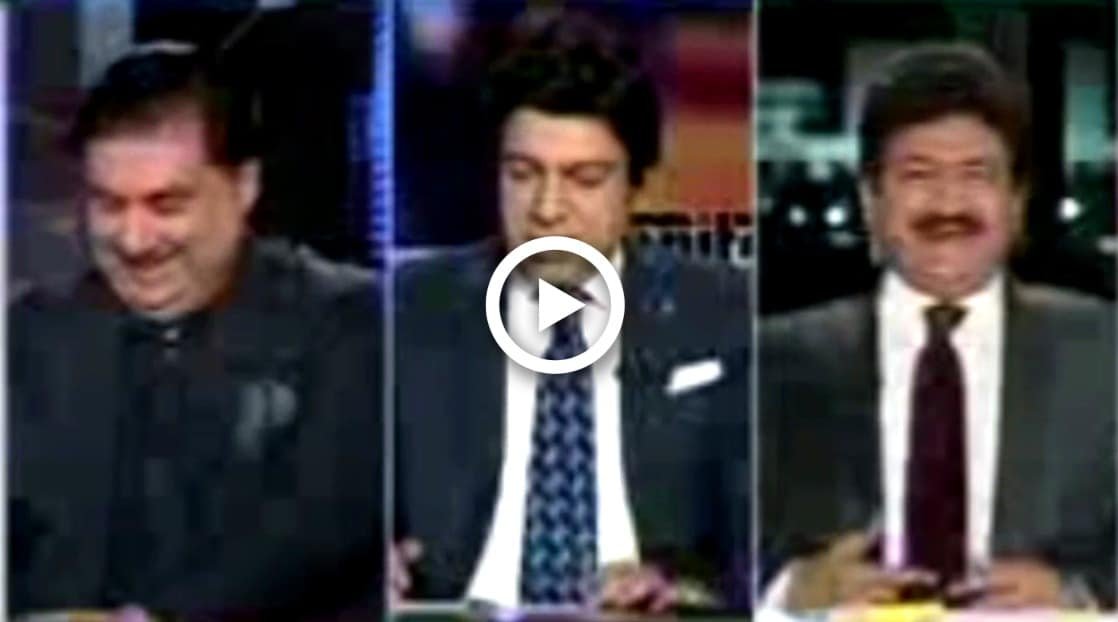
    Senior journalist Hamid Mir has trolled Federal Minister for Water Resources Faisal Vawda for claiming that “anti-Pakistan Tehreek-e-Insaf (PTI)” media houses had started liking the government after financial benefits.

    Speaking on Mir’s show, Vawda on Tuesday said that media outlets, known for their alleged affiliation with opposition parties, were now highlighting achievements of the PTI government as they had been “provided with ease of doing business”.

    “It wasn’t our job, but we fought against lay-offs in the media industry. We made doing businesses easy by giving them [media houses] budgets,” he said.

    When Mir asked if he meant the government had paid media houses any money, Vawda agreed, saying the PTI had “paid them against government advertisements”.

    It wasn’t later that both Mir and Pakistan Muslim League-Nawaz (PML-N) leader Khurram Dastgir Khan broke into laughter.

    WATCH VIDEO:

    Senior journalists have time and again expressed concerns over the state of Pakistani media ever since the PTI government took reins of the country.

    With cuts in government advertisements, a shakeout has been triggered and hundreds of thousands of media workers have gone jobless. Some journalists have also accused the PTI of using “stoppage of government ads to media as a weapon”.