New reports reveal that 15 medical and dental colleges across Pakistan have illegally admitted students.
According to officials from the federal health ministry, last year, the Pakistan Medical and Dental Council (PMDC) had barred admissions to 15 medical and dental colleges, where over 1200 students are currently enrolled.
Officials reported that despite warnings from the PMDC, these colleges granted illegal admissions to students. Previously, 15 medical colleges had received partial approval from the former Pakistan Medical Commission, while charging students fees and other expenses totaling over one billion.
The colleges in question are located in Karachi, Sanghar, Lahore, Islamabad, Rawalpindi, and Peshawar. The FIA (Federal Investigation Agency) is currently investigating 18 medical and dental colleges implicated in the admissions scandal.
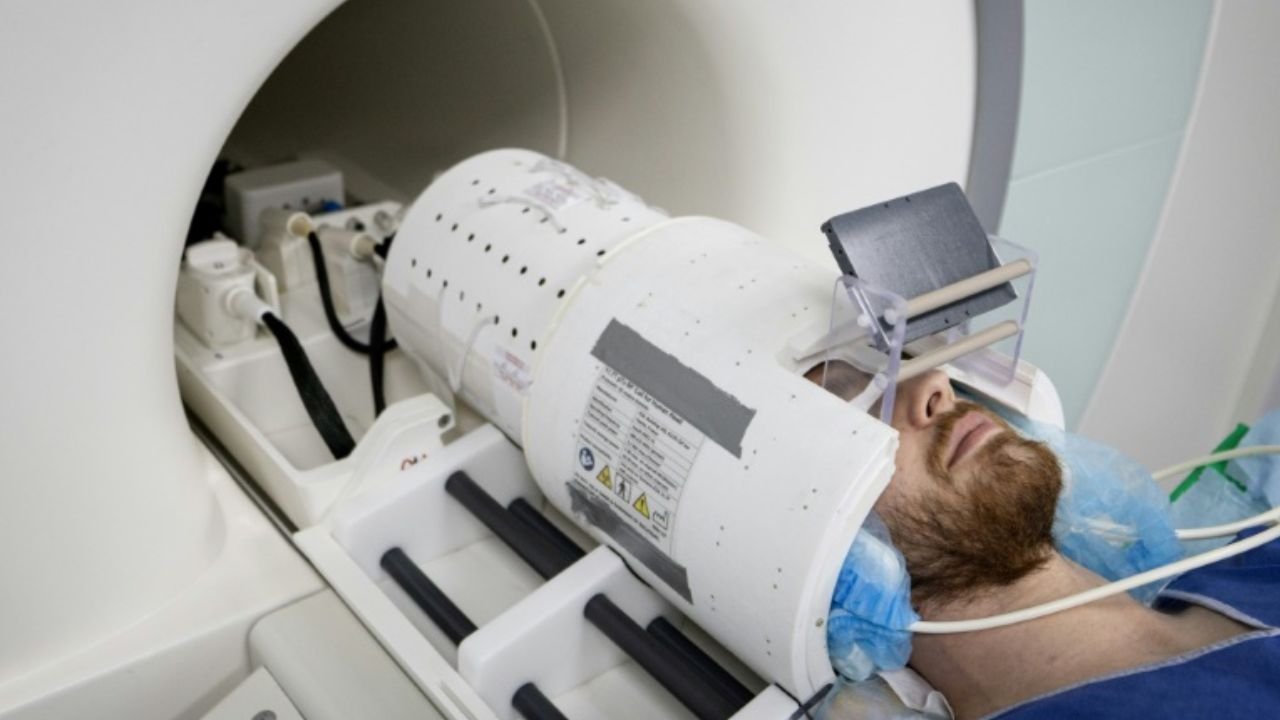
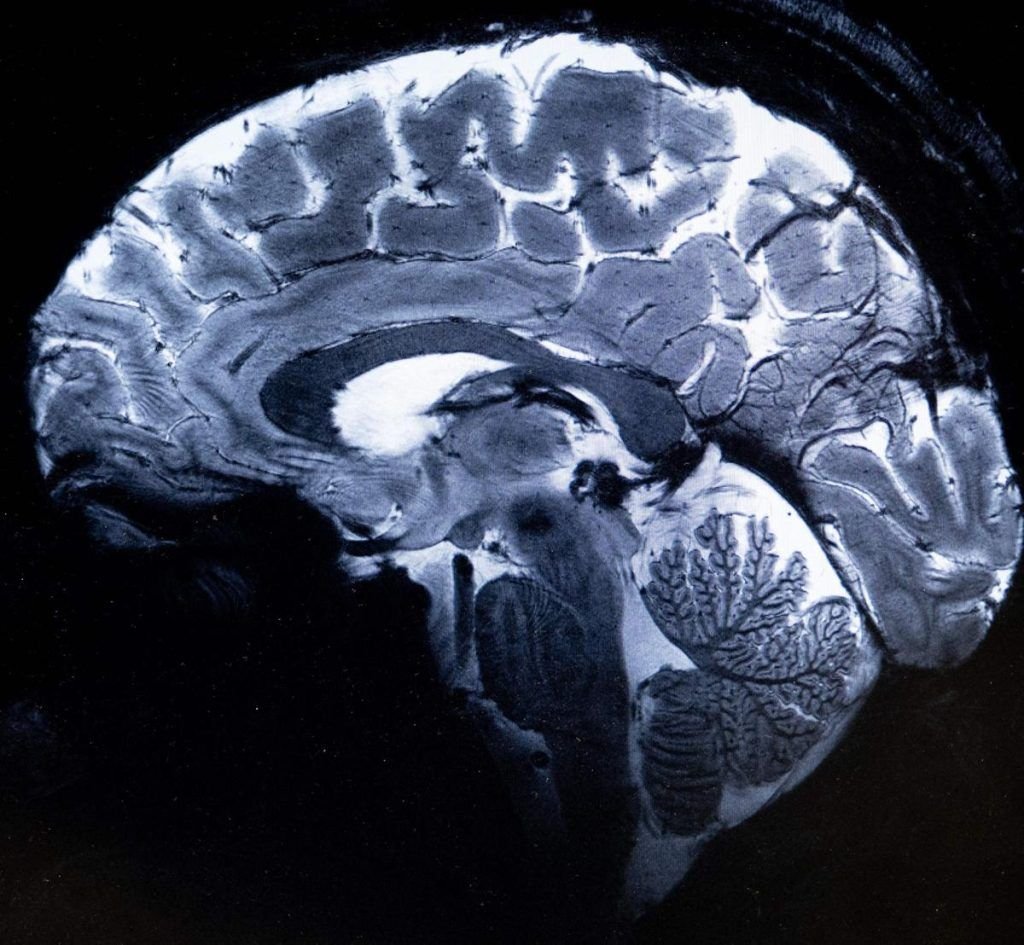
The world’s most powerful MRI scanner has delivered its first images of human brains, reaching a new level of precision that is hoped will shed more light on our mysterious minds — and the illnesses that haunt them.
Researchers at France’s Atomic Energy Commission (CEA) first used the machine to scan a pumpkin back in 2021. But health authorities recently gave them the green light to scan humans.
Over the past few months, around 20 healthy volunteers have become the first to enter the maw of the magnetic resonance imaging (MRI) machine, which is located in the Plateau de Saclay area south of Paris, home to many technology companies and universities.
“We have seen a level of precision never reached before at CEA,” said Alexandre Vignaud, a physicist working on the project.
The magnetic field created by the scanner is a whopping 11.7 teslas, a unit of measurement named after inventor Nikola Tesla.
This power allows the machine to scan images with 10 times more precision than the MRIs commonly used in hospitals, whose power does not normally exceed three teslas.
On a computer screen, Vignaud compared images taken by this mighty scanner, dubbed Iseult, with those from a normal MRI.
“With this machine, we can see the tiny vessels which feed the cerebral cortex, or details of the cerebellum which were almost invisible until now,” he said.
France’s research minister Sylvie Retailleau, herself a physicist, said “the precision is hardly believable!”
“This world-first will allow better detection and treatment for pathologies of the brain,” she said in a statement to AFP.
Lighting up the brain’s regions
Inside a cylinder that is fives metres (16 feet) long and tall, the machine houses a 132-tonne magnet powered by a coil carrying a current of 1,500 amps.
There is a 90-centimetre (three-foot) opening for humans to slide into.
The design is the result of two decades of research by a partnership between French and German engineers.
The United States and South Korea are working on similarly powerful MRI machines, but have not yet started scanning images of humans.
One of the main goals of such a powerful scanner is to refine our understanding of the anatomy of the brain and which areas are activated when it carries out particular tasks.
Scientists have already used MRIs to show that when the brain recognises particular things — such as faces, places or words — distinct regions of the cerebral cortex kick into gear.
Harnessing the power of 11.7 teslas will help Iseult to “better understand the relationship between the brain’s structure and cognitive functions, for example when we read a book or carry out a mental calculation,” said Nicolas Boulant, the project’s scientific director.
On the trail of Alzheimer’s
The researchers hope that the scanner’s power could also shed light on the elusive mechanisms behind neurodegenerative diseases such as Parkinson’s or Alzheimer’s — or psychological conditions like depression or schizophrenia.
“For example, we know that a particular area of the brain — the hippocampus — is implicated in Alzheimer’s disease, so we hope to be able to find out how the cells work in this part of the cerebral cortex,” said CEA researcher Anne-Isabelle Etienvre.
The scientists also hope to map out how certain drugs used to treat bipolar disorder, such as lithium, distribute through the brain.
The strong magnetic field created by the MRI will give a clearer image of which parts of the brain are targeted by lithium. This could help identify which patients will respond better or worse to the drug.
“If we can better understand these very harmful diseases, we should be able to diagnose them earlier — and therefore treat them better,” Etienvre said.
For the foreseeable future, regular patients will not be able to use Iseult’s mighty power to see inside their own brains.
Boulant said the machine “is not intended to become a clinical diagnostic tool, but we hope the knowledge learned can then be used in hospitals”.
In the coming months, a new crop of healthy patients will be recruited to get their brains scanned.
The machine will not be used on patients with conditions for several years.
The latest data regarding Sehat Sahulat Programme facility reveals that nearly 80 per cent of Caesarean section (C-section) procedures covered by the Programme in private hospitals across Punjab were conducted by obstetricians, potentially resulting in significant financial gains at the expense of taxpayers.
Figures from 2016 to January 2024 reveal that private hospitals claimed approximately Rs16.36 billion for C-section and normal delivery procedures, with a substantial portion going to private healthcare facility owners.
State Life Insurance Corporation subsidies were offered for various medical procedures under the program. Punjab Health Initiative Management Company (PHIMC) oversaw healthcare coverage, with 668,238 C-sections performed, predominantly in private facilities.
This discrepancy between private and government hospital procedures has raised concerns among medical observers, prompting calls for an independent investigation.
Similarly, payments to private hospitals for C-sections and normal deliveries totaled Rs16.36 billion from 2016 to January 2024, with a significant portion claimed in 2022 and 2023, leading to a ban on C-sections at private hospitals by the caretaker Punjab government in mid-2023 due to excessive claims.
The major claim of Rs7.19 billion was recorded in 2023, Rs8.16 billion in 2022, Rs610 million in 2021, Rs168 million in 2020 while another amount was calculated for the rest of the years.
The huge gap between how women and men’s health are treated costs $1 trillion a year worldwide, the World Economic Forum said on Wednesday.
Women spend a quarter more of their lives suffering from poor health than men, a disparity that includes an unequal focus on men across medical research, diagnosis and treatment, the report said.
Closing this gap would boost the global economy by $1 trillion annually by 2040 — a 1.7 percent increase in per capita GDP driven by women, it added.
The report was released as the WEF hosts its 54th annual conference in Davos, Switzerland.
The Swiss firm Ferring Pharmaceuticals and McKinsey Health Institute also contributed to the 42-page report.
Every US dollar invested in women’s health would return three dollars in projected economic growth, the report said.
A large part of this growth would come from sick women getting back into the workforce.
The gender health gap causes around 75 million years of life lost due to poor health annually, equating to a week per woman every year, the report said.
For example, addressing the inequities related to endometriosis and menopause — which only affect women and have long been considered under-studied — could contribute $130 billion to global GDP by 2040, it estimated.
Research also suggests that fewer than half the women living with endometriosis have been properly diagnosed, the report added.
The study also looked at how treatment and diagnosis has benefitted men more than women.
Asthma inhalers, for example, have been found to be significantly less effective for women than men.
Women are diagnosed later than men for 700 different diseases, previous research has shown. It also takes women two and a half years longer to be diagnosed with cancer.
WEF healthcare head Shyam Bishen said the analysis demonstrates that “investing in women’s health must be a priority for every country”.
“Beyond improving women’s quality of life, ensuring women have access to innovations in healthcare is one of the best investments that countries can make for their societies and their economies,” he said in a statement.
The WEF announced it was launching the Global Alliance for Women’s Health, with $55 million pledged for women’s health.
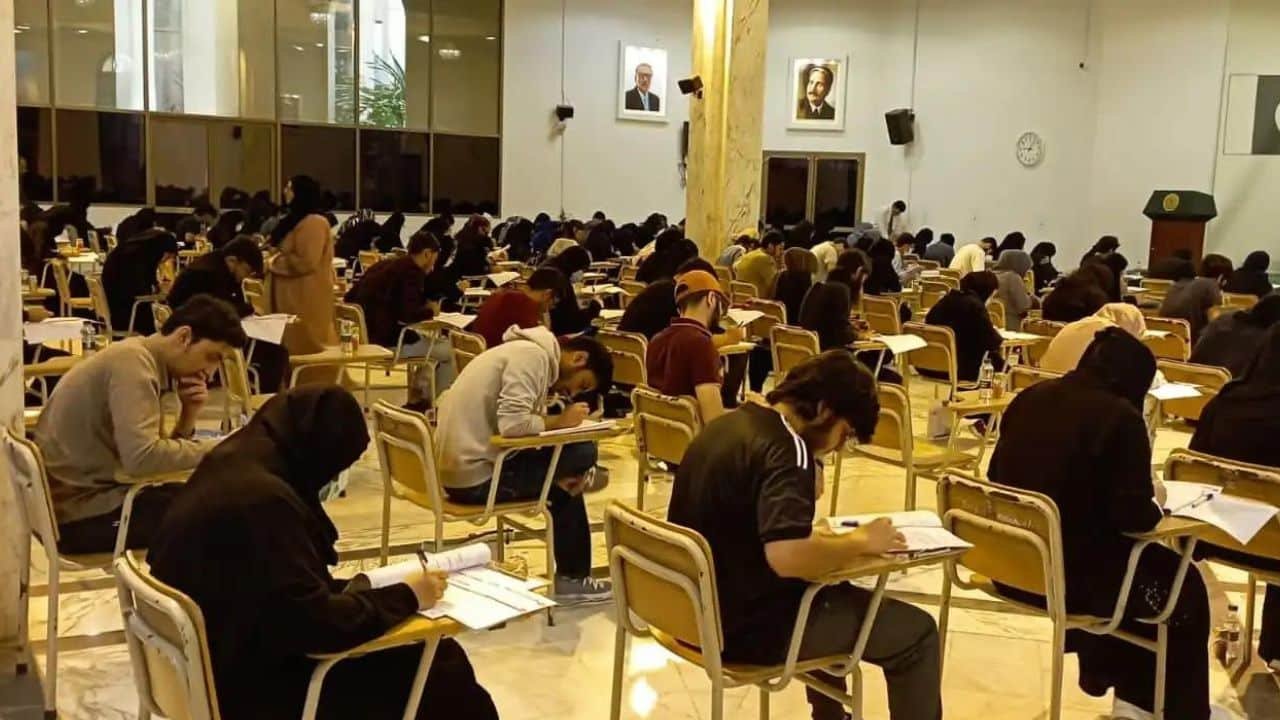
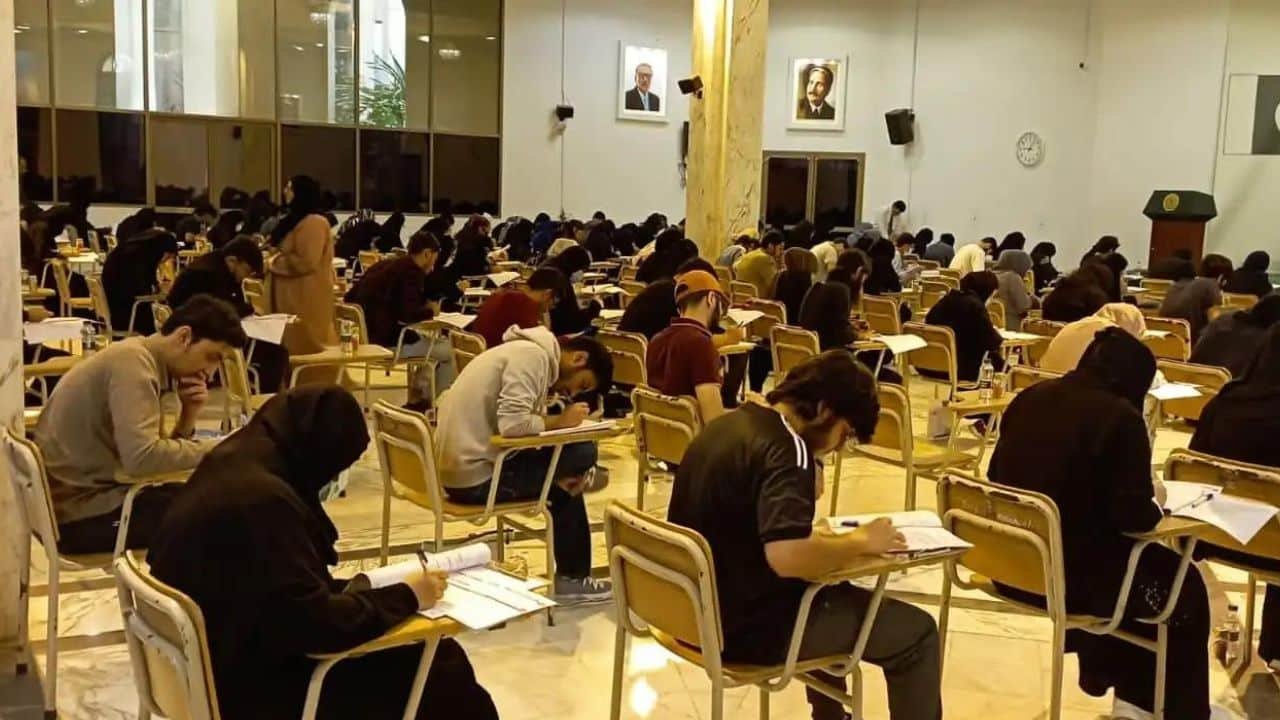
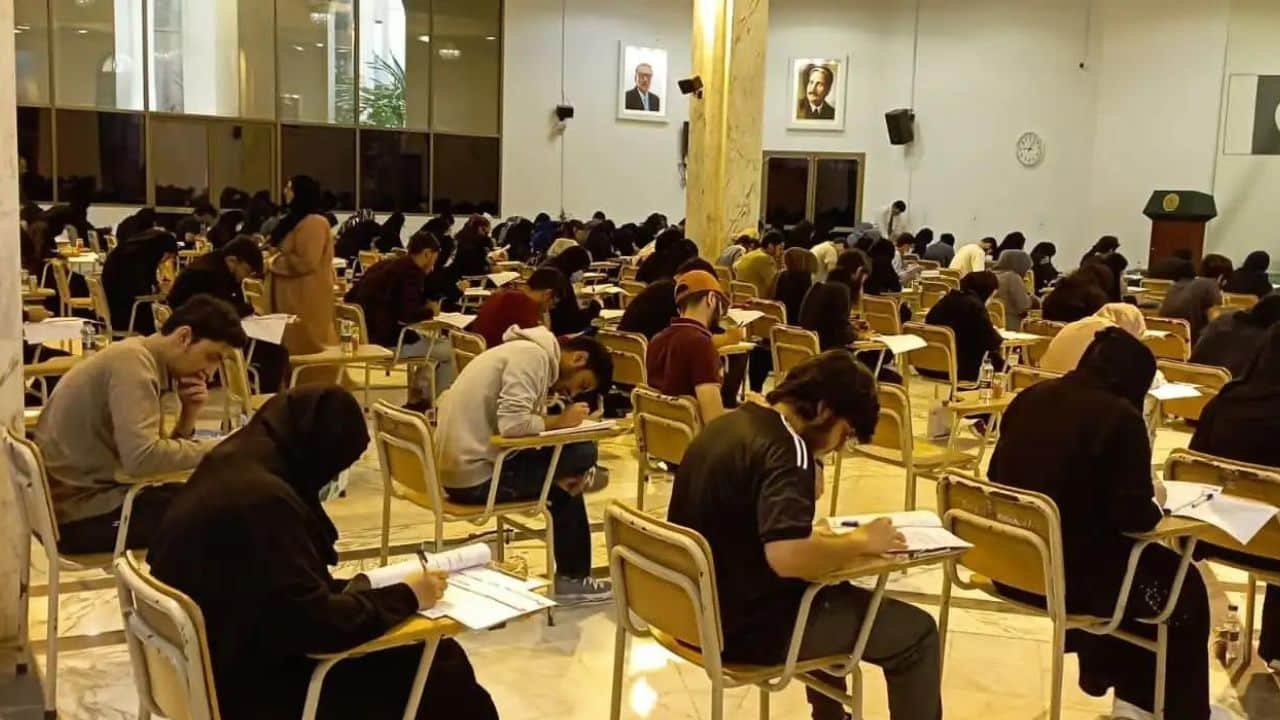
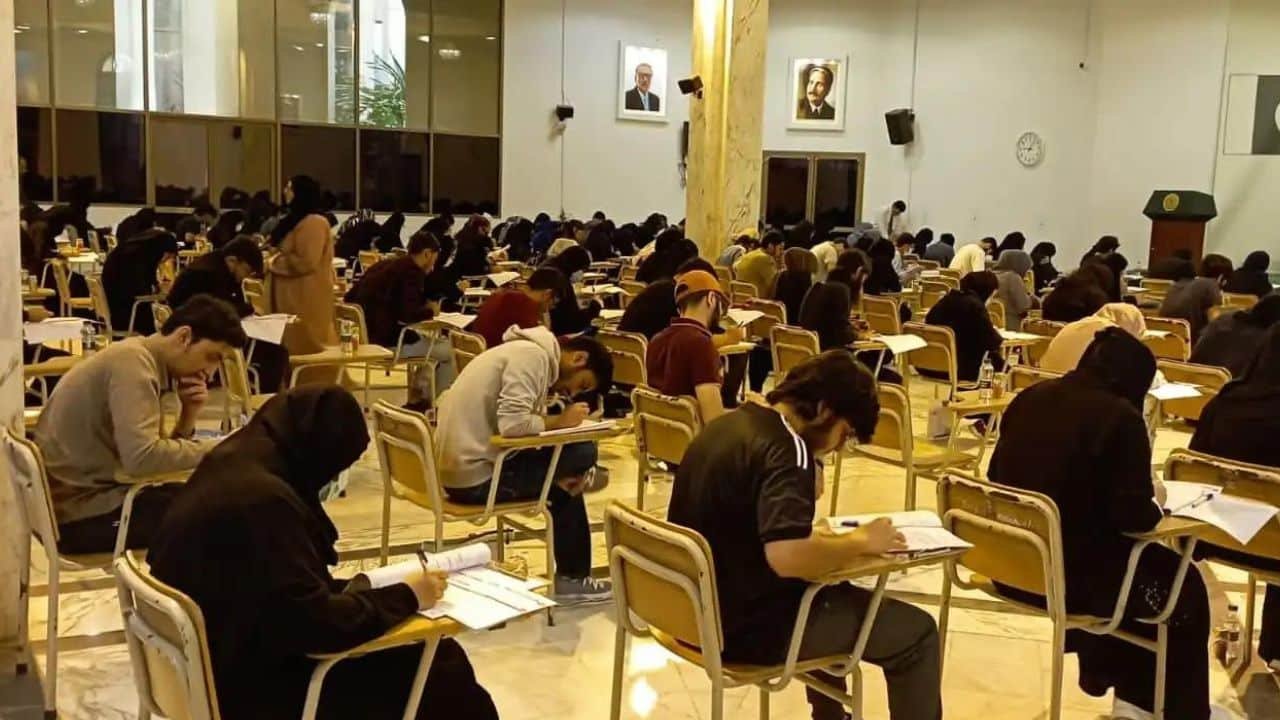
The second retake of the MDCAT exam in Khyber Pakhtunkhwa has gone viral despite secrecy measures, raising concerns among students. The test was conducted on Sunday across the province in 11 examination centres. More than 40,000 students appeared in the exam.
The test was conducted by Khyber Medical University (KMU) after the Bluetooth Scandal in the previous attempt conducted by the Educational Testing and Evaluation Agency (ETEA). Neither the students nor the security and administrative staff was allowed to take phones inside the examination centres. Section 144 was imposed with signal jammers installed around the examination centres along with the deployment of 2000 security personnel in the province. Despite all of this, the paper went viral.
However, Vice Chancellor KMU Doctor Zia ul Haq told Geo that the paper leaked post-exam, not during the exam. He stressed that the document is public property after the exam. A picture captured with the backdrop of a bedsheet also hints towards the conduction of the exam being transparent.
Fall out of the cheating scandal of the Medical Dental College Admission Test (MDCAT) continues, with the government of Khyber Pakhtunkhwa announcing that it will again conduct the test following the insistence of candidates.
Chief Education Secretary Arshad Khan presented a report regarding MDCAT in the supervisory cabinet meeting presided over by Chief Minister Khyber Pakhtunkhwa Muhammad Azam Khan.
After discussing the report in the meeting, it was decided to conduct the test again within six weeks under the supervision of Khyber Medical University.
On this occasion, caretaker information minister Barrister Feroze Jamal Kakakhel told the media in a briefing that the forensics of the gadgets seized from more than 200 students in MD CAT will be carried out.
The minister said that samples of all the gadgets have been sent to Islamabad, to clean the systems from duplication and prevent such incidents.
Previously, Peshawar police arrested seven suspects, including the mastermind “facilitating” cheating in MDCAT. City police also received several complaints of some students cheating via Bluetooth devices and more equipment.
Additionally, 74 candidates, including men and women have also been arrested and 19 cases have been registered at eight police stations in the provincial capital.
The case
Dozens of candidates had been caught cheating in the Pakistan Medical and Dental Council (PMDC) MDCAT exams conducted in a number of cities on September 10.
Over 40 candidates, including 20 female candidates, were arrested in Peshawar while 10 were taken into custody in DI Khan.
All of the detainees were said to be using Bluetooth to cheat in the test. And as reported by Geo, DI Khan police sources claimed that VIP passes were issued to the candidates for which a hefty amount was paid to take the exam through dishonest means.
Students and parents filed complaints to the Human Rights Cell in Peshawar regarding the results and integrity of the system which were then sent to the PHC chief justice.
The applicants asserted that approximately 200 students were caught using Bluetooth devices during the examination.
Peshawar police have arrested seven suspects on Friday, including the mastermind “facilitating” cheating in the recent Medical and Dental College Admission Test (MDCAT).
City police issued a statement saying that they had received several complaints of some students cheating via Bluetooth devices and more.
So far, 74 candidates, including men and women have been arrested and 19 cases have been registered at eight police stations in the provincial capital.
The police claim to have arrested Zafar Khattak, the alleged mastermind of the scandal following the initiation of a formal investigation — a joint operation by the Peshawar and Kohat police led to the arrest.
Khattak’s brother, along with Fahad, Fazal Subhan, Arshad, Fazl Wahab and Aminullah have also been arrested; all of whom are said to be highly-educated people.
Electronic devices have been recovered which are to be sent to the Federal Investigation Agency for forensic examination.
According to the police, other districts have also recovered 44 devices including microphones, mobile phones and a smart watch.
Results of the Medical and Dental College Admission Test (MDCAT) have been withheld on the orders of the Peshawar High Court (PHC) on Friday following petitions filed by students in the light of cases of cheating via Bluetooth devices in examination halls.
The court issued orders to the chief secretary, executive director of the Education Test and Evaluation Agency (ETEA), and the registrar of the Pakistan Medical and Dental Council (PMDC) to provide responses regarding these allegations.
The court has asked the Education Test and Evaluation Agency (ETEA) to not publish the official results on its website for now as the investigation is underway.
The hearing was chaired by Justice Syed Arshad Ali who passed orders that the online release of the results must be halted till September 21, the date of the next hearing.
The case
Dozens of candidates had been caught cheating in the Pakistan Medical and Dental Council (PMDC) MDCAT exams conducted in a number of cities on Sunday.
Over 40 candidates, including 20 female candidates, were arrested in Peshawar while 10 were taken into custody in DI Khan. All of the detainees were said to be using Bluetooth to cheat in the test. And as reported by Geo, DI Khan police sources claimed that VIP passes were issued to the candidates for which a hefty amount was paid to take the exam through dishonest means.
Students and parents filed complaints to the Human Rights Cell in Peshawar regarding the results and integrity of the system which were then sent to the PHC chief justice.
The applicants asserted that approximately 200 students were caught using Bluetooth devices during the examination.
Gallup Pakistan and PRIDE have conducted a combined research, revealing that up to 35 percent of female doctors in Pakistan are currently without a job.
The research is based on the Labour Force Survey of 2020-21 and has analysed Pakistan Bureau of Statistics’ data on the labour market, collected from 99,900 households.
According to the Pakistan Medical and Dental Council, Pakistan has produced about 200,000 doctors since 1947, half of them being women.
Currently, 104,974 women doctors live in Pakistan of whom 68,209 (65 per cent) are working at private and state-owned medical centres. 15,619 (14.9 per cent) are jobless, while 21,146 (20.1 per cent) are out of the labour force.
Meanwhile, more than 36,000 women doctors are either unemployed or have chosen not to work.
Additionally, as per Bureau of Emigration, since 1970, about 30,000 doctors have left Pakistan, and 1,000 on average will leave every year. Most of them obtained subsidised education from public universities.
The report further highlights that an average private medical university charges more than Rs5 million whereas the government provides the same education for less than Rs1 million. This indicates that taxpayers’ money goes in vain because one in three of the women doctors do not work.
To be precise, Rs200 billion is spent on around 50,000 women doctors that goes wasted.
The survey found that about 28 percent of medical graduates live in rural areas and 72 per cent in urban areas.
In rural regions, 52 percent Pakistan’s medical graduates are employed and 31 percent are not. Lesser people (i.e. 17 percent) in the rural areas opt to remain out of the labour force in comparison to the national average of 20 percent.
On the other hand, 70 per cent of the graduates are employed in the urban area, while less than 9 per cent are unemployed. Here, more than 21 per cent of the medical graduates choose to remain out of the labour force.
78 per cent women in the urban areas have employment opportunities while in rural areas it is as low as 22 per cent.
Nonetheless, joblessness in rural areas is higher in rural areas at 57 per cent and 43 per cent in the urban centres.
Out of the 21,146 women medical graduates who preferred to remain out of the labour force, “their share in cities stands much higher at 76.6 per cent compared to their 23.4 per cent share in rural areas”. And about 76 per cent were married.
54 per cent of the women medical graduates fall in the age bracket of 25-34 years.
Dozens of candidates have been caught cheating in the Pakistan Medical and Dental Council (PMDC) MDCAT exams conducted in a number of cities on Sunday.
Over 40 candidates, including 20 female candidates, were arrested in Peshawar while 10 were taken into custody in DI Khan.
All of the detainees were said to be using Bluetooth to cheat in the test. And as reported by Geo, DI Khan police sources claimed that VIP passes were issued to the candidates for which a hefty amount was paid to take the exam through dishonest means.
Moreover, police received reports of MDCAT paper getting leaked via Bluetooth devices.
Initially, FIRs were lodged at police stations Sharqi, Faqirabad and Pahari Pura. All the 43 candidates were later released on personal surety and will be produced before the court on September 11.
Khyber Pakhtunkhwa (KP) Chief Secretary has issued instructions on tracking down government officials involved in cheating and to bring the facilitators to justice. He also asked the IT Board and higher education department to ameliorate their test strategy.