Tag: medical breakthrough

  • ChatGPT solves medical mystery, diagnosing rare condition in 4-year-old after 17 doctors failed

    ChatGPT solves medical mystery, diagnosing rare condition in 4-year-old after 17 doctors failed

    A mother’s relentless pursuit of answers regarding her four-year-old son’s unexplained pain and growth delay has reached a triumphant conclusion, thanks to the remarkable capabilities of artificial intelligence (AI).

    After consulting with 17 medical professionals over a span of three years, none of whom could provide a definitive diagnosis, she turned to ChatGPT, an AI tool that ultimately unveiled the elusive condition responsible for her son’s suffering.

    ChatGPT has emerged as a transformative AI tool, simplifying intricate tasks and offering solutions to perplexing challenges for individuals and families worldwide. Its profound impact across various industries became evident in a recent case that showcased its extraordinary ability to aid in medical diagnostics.

    The journey began for Courtney, a mother who found herself entangled in a medical mystery concerning her four-year-old son, Alex. This young boy experienced persistent pain and a puzzling lack of growth, necessitating his reliance on Motrin for relief. Desperate to alleviate her son’s suffering, Courtney embarked on an exhaustive quest for answers, consulting numerous physicians and even making a harrowing emergency room visit.

    Courtney recounted the extensive efforts she undertook in her relentless pursuit of a diagnosis, emphasising numerous doctor consultations and a harrowing emergency room visit. She also described spending sleepless nights meticulously researching and exploring various possibilities on her computer.

    Amid the backdrop of the COVID-19 pandemic, Alex’s condition took a perplexing turn as he began chewing objects that caused him severe pain. This development prompted Courtney to intensify her efforts, eventually leading her to a doctor who suggested that Alex’s issues might be related to lingering COVID-19 effects. However, Alex’s growth stagnated, and the mystery endured.

    Having consulted 17 doctors with no conclusive results, Courtney ventured into unconventional territory and turned to ChatGPT for answers. By sharing Alex’s symptoms with the AI, she received a revelation that had eluded medical professionals for years. ChatGPT identified a rare neurological condition known as tethered cord syndrome as the root cause of Alex’s suffering.

    Courtney explained the pivotal role played by ChatGPT in unraveling the medical mystery. She meticulously analysed every detail in her son’s MRI notes, inputting them into the AI tool and even mentioning her son’s inability to sit crisscross applesauce. This meticulous approach led to a breakthrough in understanding the potential structural issue her son was facing.

    Armed with newfound hope and a potential diagnosis, Courtney promptly scheduled an appointment with a neurosurgeon, sharing her suspicion that Alex was afflicted by tethered cord syndrome. The neurosurgeon, after reviewing the MRI, confirmed this diagnosis, paving the way for Alex to undergo surgery to address the condition just a few weeks ago.

    The case of Alex and his mother’s unwavering quest for answers serves as yet another testament to the transformative potential of AI in the field of medicine. ChatGPT’s ability to navigate complex medical data and identify rare conditions has not only provided a lifeline for this family but has also expanded our understanding of AI’s profound impact on healthcare.

    This remarkable story joins a growing list of instances where ChatGPT has proven its mettle in diagnosing challenging medical conditions. In March, a Twitter user shared a similar experience, recounting how the AI tool accurately identified a diagnosis for a pet dog when traditional medical avenues fell short.

    Tethered cord syndrome, as described by the American Association of Neurological Surgeons, occurs when spinal cord tissue forms attachments that restrict its movement. This condition leads to abnormal stretching of the spinal cord, resulting in various neurological symptoms.

    The identification of tethered cord syndrome in Alex’s case underscores the significance of AI-powered solutions like ChatGPT in uncovering rare and complex medical conditions, ultimately enhancing patient outcomes.
  • Revolutionary brain implants enable paralysed man to walk again after 12 years

    Revolutionary brain implants enable paralysed man to walk again after 12 years

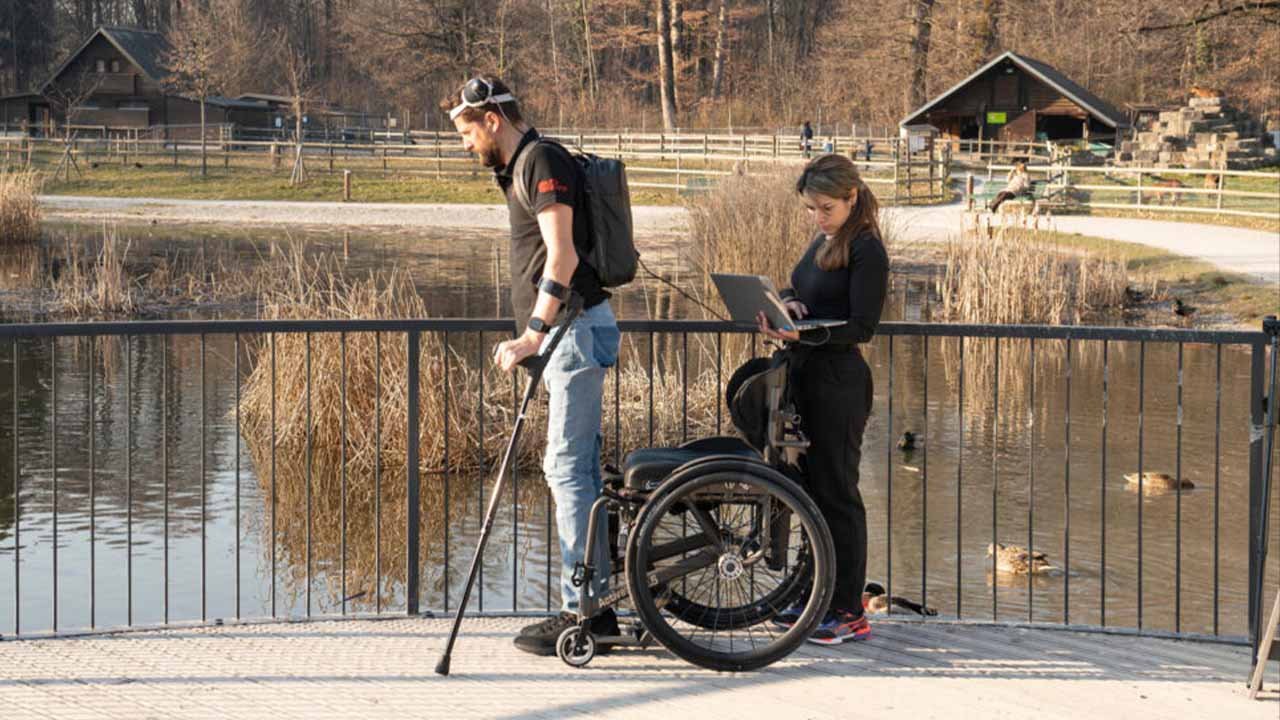
    In a groundbreaking medical achievement, a paralysed man has regained the ability to walk through the power of his thoughts, thanks to electronic brain implants. Gert-Jan Oskam, a 40-year-old Dutch man who had been paralysed for 12 years due to a cycling accident, can now walk, stand, and climb stairs, all by simply thinking about it.

    The experimental system involves electronic implants that wirelessly transmit Gert-Jan’s thoughts from his brain to his legs and feet through a second implant on his spine. Although the technology is still in the early stages of development, a leading UK spinal charity has hailed it as “very encouraging”.

    Describing his experience, Gert-Jan expressed his joy, saying, “I feel like a toddler, learning to walk again.” He emphasised the pleasure of being able to stand up and share a beer with his friend, a simple pleasure that many take for granted.

    The research, published in the journal Nature, was led by Swiss scientists. Professor Jocelyne Bloch, the neurosurgeon who performed the intricate surgery to insert the implants, explained that while the system is currently in the research phase, the ultimate goal is to make it available to paralysed patients.

    Harvey Sihota, the CEO of UK charity Spinal Research, praised the development as a significant step forward for neurotechnology and its potential to restore function and independence to individuals with spinal cord injuries. He acknowledged that there is still progress to be made before the technology becomes widely accessible.

    Gert-Jan underwent the operation in July 2021. During the procedure, Professor Bloch inserted two disc-shaped implants into Gert-Jan’s brain, above the regions responsible for movement. These implants wirelessly transmitted his brain signals to sensors attached to a helmet on his head. An algorithm developed by the Swiss team translated these signals into instructions to move his leg and foot muscles via a second implant on his spinal cord.

    After a few weeks of training, Gert-Jan was able to walk with the assistance of a walker. Although his movements are slow, they are smooth, marking a significant breakthrough in the field. Professor Grégoire Courtine, who led the project, described the sight of Gert-Jan walking naturally as “so moving” and a paradigm shift in available treatments.

    This technology builds upon previous work by Professor Courtine, where only a spinal implant was used to restore movement. Notably, other patients have also experienced successful treatment with spinal implants, allowing them to regain mobility. However, their movements were pre-programmed and somewhat robotic, requiring synchronisation with a computer.

    Gert-Jan, who previously only had a spinal implant, now enjoys greater control over his movements. Instead of feeling controlled by the system, he feels in control himself. Although the systems cannot be used continuously and are still bulky and experimental, patients like Gert-Jan use them for short periods a few times a week as part of their recovery. Interestingly, the act of walking during these sessions has helped train their muscles and restore some movement even when the system is turned off, suggesting nerve regeneration.

    The ultimate goal is to miniaturise the technology and make it suitable for everyday use. Professor Courtine’s company, Onward Medical, is actively working to improve and commercialise the technology. Looking to the future, Professor Courtine envisions applying the brain-spine interface shortly after an injury, highlighting the tremendous potential for recovery.

    This remarkable achievement provides hope for individuals with spinal cord injuries and paves the way for advancements in neurotechnology that can significantly improve their quality of life.

  • First baby born in UK with DNA from three parents to combat incurable mitochondrial diseases

    First baby born in UK with DNA from three parents to combat incurable mitochondrial diseases

    The fertility regulator in the United Kingdom (UK) has confirmed the birth of a baby using the DNA of three individuals for the first time. The majority of the baby’s genetic material comes from its two parents, with around 0.1 per cent coming from a donor woman.

    This innovative technique is designed to prevent the birth of babies with mitochondrial diseases, which can be fatal within days or hours of birth and are incurable. Less than five babies have been born using this method, and no further information about them has been released.

    Mitochondrial diseases are caused by defective mitochondria, which fail to generate energy and can lead to serious health problems, including brain damage, heart failure, and blindness. Mitochondria are inherited only from the mother, so this technique involves using healthy mitochondria from a donor egg to replace the affected mitochondria in the mother’s egg.

    Mitochondrial donation treatment is a modified form of IVF, and there are two techniques for performing it. This method was pioneered in Newcastle, and laws were introduced to allow the creation of such babies in the UK in 2015. However, the first baby born using this technique was in the US to a Jordanian family in 2016.

    The technique has been described as a permanent change that would be passed down through generations, but it only affects mitochondrial DNA and not other traits such as appearance, nor does it constitute a “third parent”. There is a risk of “reversion,” where any remaining defective mitochondria could still result in disease.

    The Human Fertilisation and Embryology Authority (HFEA) has confirmed the birth of fewer than five babies using mitochondrial donation treatment, but it has not provided any precise numbers to protect the families’ identities. This news is seen as a significant step in the cautious process of assessing and refining mitochondrial donation.

    More information is needed to determine the success of this technique, and whether the babies are free of mitochondrial disease and at risk of developing health issues later in life.