Tag: Men

  • Study reveals higher risk of depression in new fathers

    Study reveals higher risk of depression in new fathers

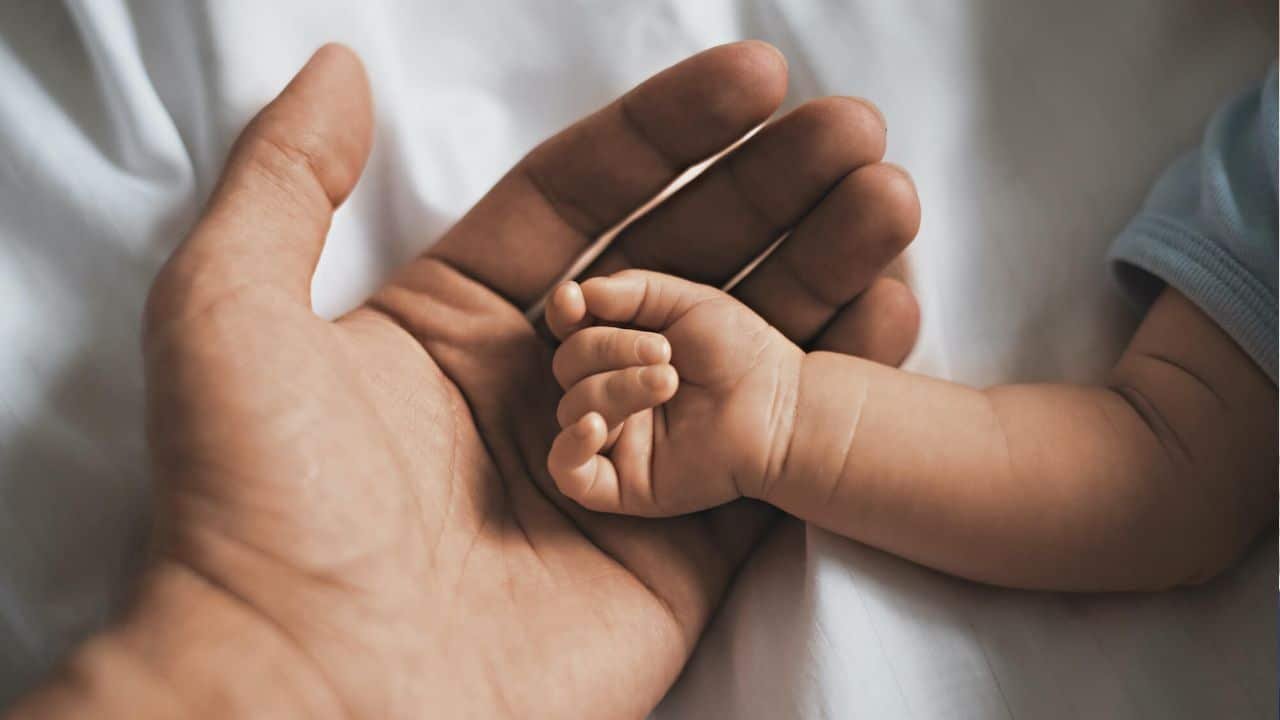
    A study conducted by the University College London (UCL) has highlighted that men also have a high risk of depression during the transformative period of parenthood. The research, which analyzed medical records of 90,000 men who became fathers within the previous year, focused on the mental health of new fathers and its relation to postnatal depression.

    Led by Professor Irene Petersen, the study found that men with a history of depression who had previously used antidepressants were 30 times more likely to be prescribed them again in the first year after their child’s birth. It was emphasized that postnatal depression in fathers was not a risk for all men but rather more likely to affect those already prone to depression.

    This study brings attention to the mental well-being of new fathers, an area often overshadowed by the focus on mental health during pregnancy and postpartum for women. It suggests that fathers should consider having a mental health check-up in the first year after becoming a parent.

    According to Professor Petersen, some of the men in the study continued their existing treatment for depression, while others experienced a relapse of depression without a recent prescription. It’s possible that these individuals were more aware of the symptoms and sought treatment voluntarily. The study focused on the use of antidepressant treatment rather than making a formal diagnosis. The research showed that paternal post-natal depression is not a risk for all men but primarily affects those who are already prone to depression.

    “However, having a child might act as a trigger for depression in some men,” he concluded.

    Another researcher and PhD candidate involved in the study emphasized the intricacy of the connection between depression and fatherhood. They noted that previous antidepressant treatment played a significant role in determining whether antidepressants were used in the year after becoming a parent. This could be attributed to some men continuing the treatment they were on before becoming fathers, while others might be more susceptible to experiencing depressive feelings again, which may be exacerbated by the challenges of parenthood.

    The study also revealed that fathers living in the most deprived areas had an 18 percent higher risk of being prescribed antidepressants compared to fathers in the least deprived areas.
  • Father kills daughter in the name of honour

    Father kills daughter in the name of honour

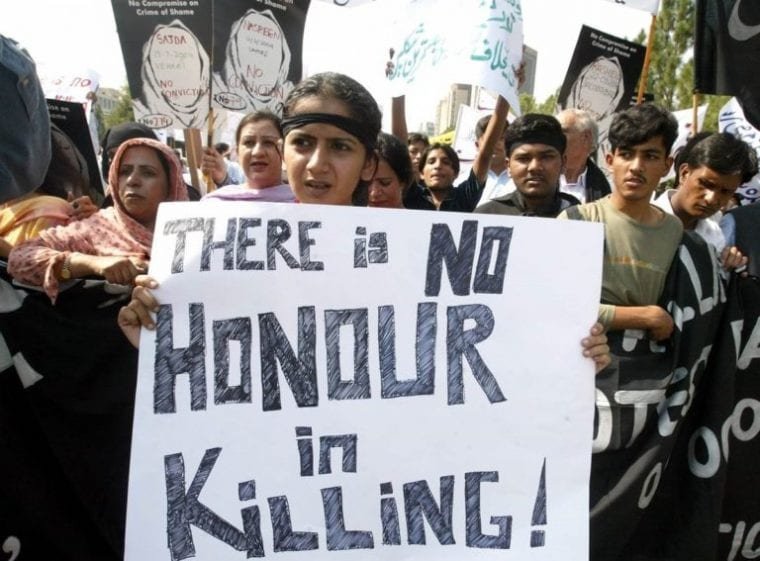
    A father has killed his own daughter and her alleged friend in Sindh in the name of honour.

    The police in Jamshoro has arrested two suspects in connection with the incident and a heavy contingent of forces have been deployed in the area to avoid any untoward incident.

    In 2022, a report stated that at least 217 people, including 152 women, have been killed in so-called honour-related crimes across Sindh.

    Hundreds of women are killed each year in Pakistan by family members over perceived loss of “honour”.

    Many human rights activists have raised alarms over the issue and while numerous laws have been passed to prevent honour killing, the numbers continue to get higher which each passing year.

  • Gomal University, are you listening? Women deserve the same education as men

    Gomal University, are you listening? Women deserve the same education as men

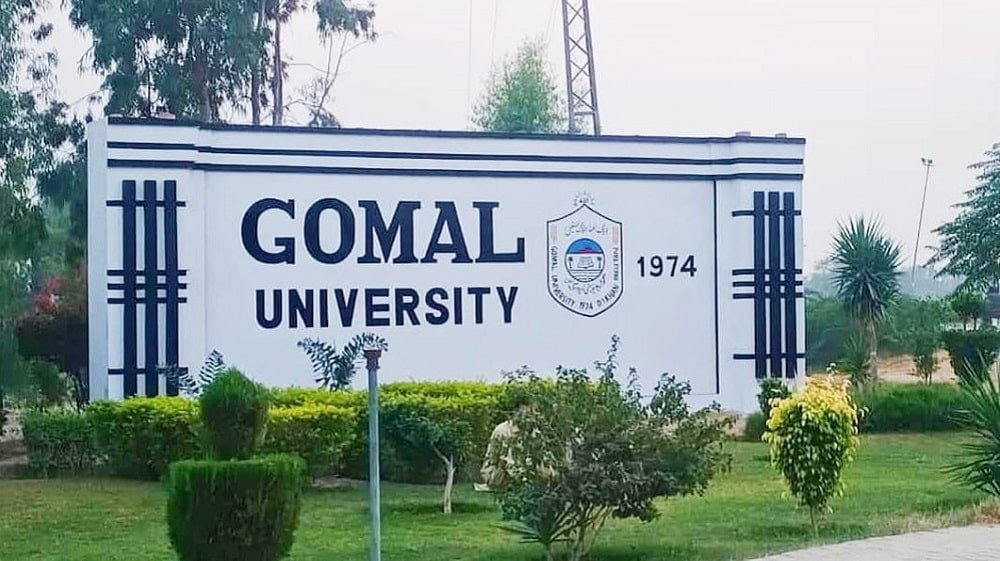
    Gomal University in Khyber Pakhtunkhwa’s (KP) Dera Ismail Khan implemented a total ban on joint gatherings of male and female students on campus. The university issued a notification in this regard on Wednesday, which stated: “Gathering/coupling (male and female) is totally banned in any ground, roads etc. beyond the premises of department. Female students are directed to be careful and limit themselves just in their class rooms and department common rooms.” Interestingly, the notification was issued a day after Valentine’s Day.

    The Human Rights Commission of Pakistan (HRCP) rightly demanded that the notification must be withdrawn immediately. HRCP said that it takes strong exception to the said notification and that “segregation will reinforce a culture of ignorance and inequality”. This notification reminds us of the Afghan Taliban and their regressive mindset. Universities are not supposed to ask women to restrict themselves or limit themselves. In fact, universities are the learning grounds for both men and women so that they are prepared to go out into the world once they finish their education. This is the year 2023, a world where that is progressing rapidly and then comes such actions and/or notifications that make us question our choices towards education and developing critical mindsets. Are we against women’s education or moves like these are done just for restricting and policing women? We must not forget that in a patriarchal society like ours, females are told how to sit how to speak, how to dress. Policing of women’s behaviour is quite common in our country. Every year at Aurat March, the women are told not to raise slogans that challenge patriarchy, that challenge their own lived experiences. They are told by men, who have no idea what it is to be a woman in Pakistan, on what to do, what to say, what words to use for their slogans, what tone to take when they chant those slogans, how to ask for their rights, etc.

    According to the university administration, the decision would help provide a better and safer environment for female students. If it is all about safety, then one thinks of how is it logical that restricting the movement of women would help in providing security. The regressive outlook makes us one wonder if the male-dominated university administration would enforce the same or stricter curbs on the movement of male students and will the same kinds of bans and limitation be put on male students?

    In 2018, the KP government called for banning the entry of male MPs and politicians in girls’ schools as guest speakers. In 2019, the provincial government decided to make the wearing of an abaya or burka mandatory. And now a ban on joint gatherings by a university. We can only hope that those who make such rules understand that universities are a place for education. They act as places where individuals are trained, developed and prepared to be change-makers, influencers and leaders. Imagine how such restrictions and bans will hamper students’ growth and evolution. We hope these regressive double standards end, and both our men and women are treated equally.

  • Only seven women out of 110 world leaders in climate change conference

    Only seven women out of 110 world leaders in climate change conference

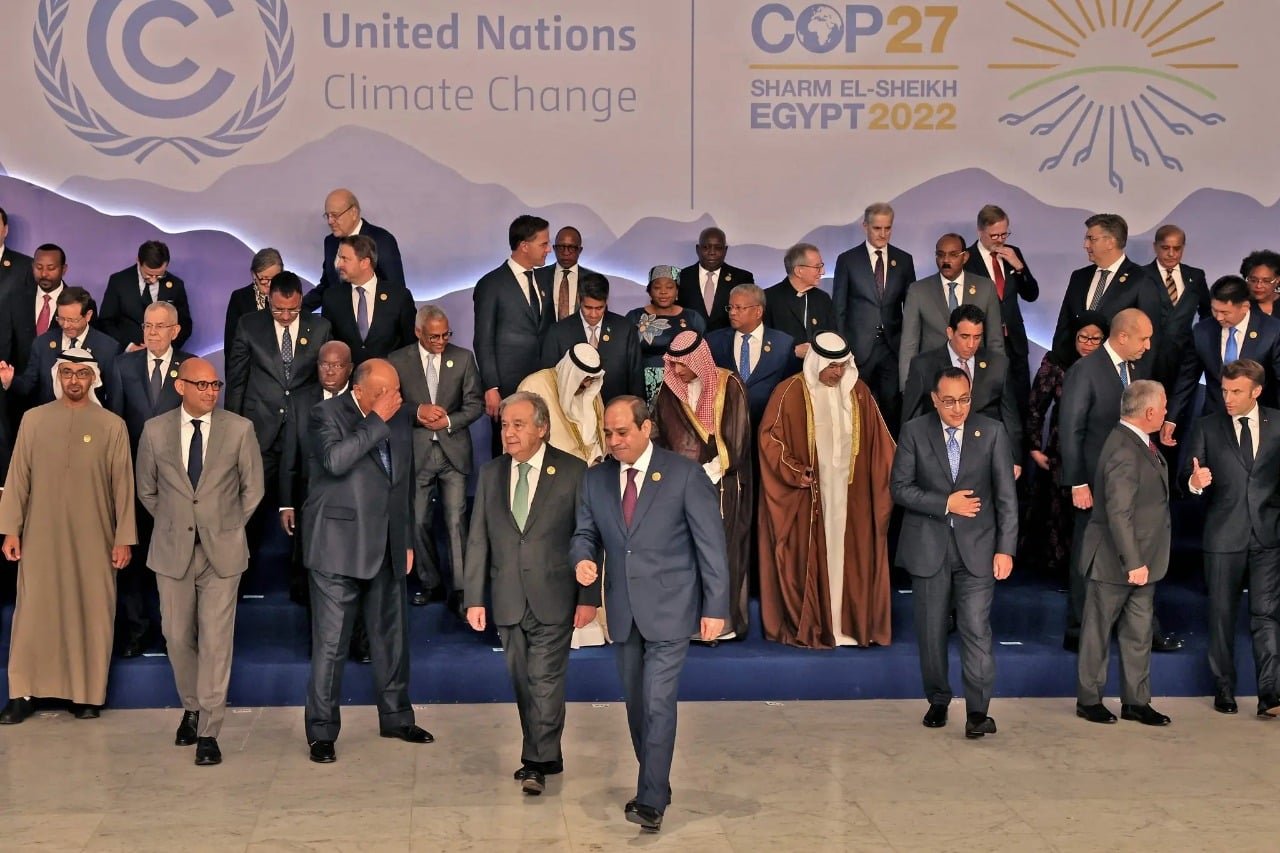
    Out of the 110 world leaders who showed up to discuss climate issues at the Climate change conference (COP27) in Sharm el-Sheikh, Egypt, only seven are women. This disproportionate representation was in stark contrast to the fact that women are most affected by the climate crisis.

    Former Minister of Environment and Climate Change of Canada, Catherine McKenna thinks male leaders at COP27 should allow women to take their podium time.

    In an op-ed for Scientific American, McKenna, along with climate researcher Amy Myers Jaffe, said, “This is especially critical as attendees discuss how the countries of the Global North, responsible for most of the world’s carbon output, should help the Global South deal with the effects of that pollution. The perspectives of women, whose voices are underrepresented in climate discussions, are instrumental to solving the climate crisis in a more just and equitable fashion and can contribute powerfully to our understanding of climate action across the globe.”

    According to United Nations (UN) report, women and girls experience the greatest impacts of climate change, which amplifies existing gender inequalities and poses unique threats to their livelihoods, health, and safety.

    Seventy per cent of the 1.3 billion people living in poverty are women. In urban areas, 40 per cent of the poorest households are headed by women. Women predominate in the world’s food production (50-80 per cent), but they own less than 10 per cent of the land.

  • Women outperform men but 13% less likely to be promoted: Study

    Women outperform men but 13% less likely to be promoted: Study

    A study from MIT Sloan Associate Professor Danielle Li finds that female employees are less likely to be promoted than their male counterparts, despite outperforming them and being less likely to quit.

    In the paper, ’Potential’ and the Gender Promotion Gap, Li found that even though female employees received higher performance ratings than male employees, they still received 8.3 per cent lower ratings for potential than men. Results showed that women were 14 per cent less likely to be promoted than their male counterparts. The annual promotion rate is 1.64 percentage points lower for women, corresponding to a 13 per cent lower likelihood.

    Management-track of 30,000 employees at a large North American retail chain between February 2009 and October 2015 was studied. Women made up about 56 per cent of entry-level workers. Rising through the ranks, women made up 48 per cent of department managers, 35 per cent of store managers, and 14 per cent of district managers.

    The research found out that relative to men with the same scores for potential, women outperformed their previous year’s score. Yet they were still given lower potential ratings heading into the next year.

    “The result I found most depressing in the paper is the result in which women outperform their stated potential,” said Professor Danielle Li in an interview. “Women have to hit a higher threshold of future performance in order to justify the same potential score.”

  • Women drivers less likely to be involved in accidents than men: Study

    Women drivers less likely to be involved in accidents than men: Study

    A new study conducted by scientists at the Newcastle University in England shows that women are less likely to be involved in road accidents. Moreover, they are better at taking control of cars due their faster reaction time.

    The study says that women tend to avoid driving recklessly and have more control over their vehicles. They are better at taking back control of the vehicles because of relatively faster reaction time than men.

    For this study, 43 men and 33 women were chosen wherein they had to use driving simulator. It revealed that women took back control of the car faster than men. Additionally, relatively smaller proportion of women were recorded in hasty takeovers proving them more patient while driving.

    The test was run at two different speeds, 30 mph and 60 mph, in clear, rainy, snowy and foggy conditions, with visibilities of 3,280 feet, 1,312 feet, 656 feet and 328 feet respectively.

    Women exhibited more control of the steering wheel and relatively quicker reaction time to different situations. On average, women took 2.45 to react and gained back control while men took 2.63 seconds.

    This reaction time shows that women are less likely to be involved in road accidents as compared to their male counterparts.

  • Babar declared captain of ICC Men’s T20I Team of the Year, Rizwan, Shaheen included

    Babar declared captain of ICC Men’s T20I Team of the Year, Rizwan, Shaheen included

    International Cricket Council (ICC) has recognised 11 cricketers from different teams for their exceptional performance in cricket. Pakistan all-format skipper Babar Azam has been declared the captain of the team after his prolific stint in the ICC T20 World Cup.

    Pakistan’s star players, wicket keeper-batter Mohammad Rizwan and bowling sensation Shaheen Shah Afridi, also made it to the team.

    In a statement issued for the announcement of Men’s T20I Team of the Year, the ICC said that it is to recognise 11 outstanding individuals who have impressed one and all, “be it with the bat, the ball or their all-round exploits in a calendar year.”

    Here is a look at the players who made it to the team from Pakistan.

    Babar Azam

    The Pakistan skipper was at his classy best in the shortest format in 2021, leaving his best at the T20 World Cup where he ended the tournament as the leading run-scorer.

    Overall, Babar played 29 matches and aggregated 939 runs at an average of 37.56 with one century and nine half-centuries. His captaincy was also praised as he led his team to the semi-finals of the T20 World Cup in UAE and Oman.

    Mohammad Rizwan

    The Pakistan wicketkeeper-batter ruled the roost in 2021 when it came to the shortest format of the game. Aggregating a staggering 1,326 runs in only 29 matches, Rizwan struck at an average of 73.66 and a strike-rate of 134.89.

    Apart from his exploits with the bat, he was as solid as ever behind the stumps, playing a key role in Pakistan’s run to the semis during the ICC Men’s T20 World Cup 2021, where he ended up as the third-highest run-scorer.

    Shaheen Afridi

    It was a year to remember for Shaheen Afridi, especially in the shortest form of the game. Extracting brilliant movement with the new ball and reversing it with the old, Afridi picked up 23 wickets in 21 matches at an average of 26.04 and an economy of 7.86.

    Still only 21, Shaheen will likely lead the Pakistan pace bowling unit for years to come and with already rapid improvements in his bowling, he will undoubtedly prove to be a fearsome prospect.

    The others include Jos Buttler of England, Aiden Markram of South Africa, Mitchell Marsh of Australia, David Miller of South Africa, Wanindu Hasaranga of Sri Lanka, Tabraiz Shamsi of South Africa, Josh Hazlewood of Australia, and Mustafizur Rahman of Bangladesh.

  • ‘No perfume, no attractive clothes, boots shouldn’t make sound’: Taliban sets conditions for Afghan women

    ‘No perfume, no attractive clothes, boots shouldn’t make sound’: Taliban sets conditions for Afghan women

    “[There are] some special conditions that exist only for women. One is that the colour of their dress should not be very attractive. So that it does not attract people’s attention,” said a member of the Taliban on Afghanistan’s TOLO News, as per the subtitles of a video being circulated on social media.

    The Taliban member further says, “The second condition for women is that she should not smell good and should not use perfume when she leaves her home.”

    “The third condition is she should not wear long boots and that the boots should not make a sound,” read the subtitles.

    “Wearing long boots that make sound seems like an announcement,” he said.

    “I have said this every time, everywhere, the sound that a boot makes, what does that mean?”

    “The sound is an announcement for young men by the women. Hey young men, wake up, we just left the house with make-up. You are sleeping and are not looking at us,” he added.

    “It is a kind of announcements and these sort of boots are made to incite young men towards bad actions by women.”

  • Ban sources responsible for spreading obscenity and nudity demand ulema

    Ban sources responsible for spreading obscenity and nudity demand ulema

    Religious scholars (ulema) have condemned the rape of a girl in a seminary in Rawalpindi and demanded that perpetrators of such detestable crimes should be given punishment in public through speedy trial, reported Dawn.

    In a joint declaration issued after attending a consultative meeting, ulemas expressed grief over the rising incidents of child abuse and women harassment in Pakistan and said that the prime minister and chief justice of Pakistan should take immediate action against the culprits and order their speedy trials.

    They urged the Pakistan Electronic Media Regulatory Authority (PEMRA), Pakistan Telecommunication Authority (PTA), and Ministry of Information to block porn websites and pornographic and nude content and advertisements on social media.

    The joint declaration said that the rules of Shariah are clear for both men and women. It is obligatory for both men and women to cover themselves properly and avoid obscenity and nudity. Shariah does not allow a man to touch or harass a woman, the declaration said.

    The joint declaration said that the rising incidents of abuse and harassment of boys and girls and the state of fear and intimidation prevailing among women demand from all sections of society, especially the government and judiciary, to ban and close all such sources responsible for spreading obscenity and nudity in society.

  • ‘Men and women are not equal, women can give birth to a human but  men can’t do that’: Zara Noor Abbas

    ‘Men and women are not equal, women can give birth to a human but men can’t do that’: Zara Noor Abbas

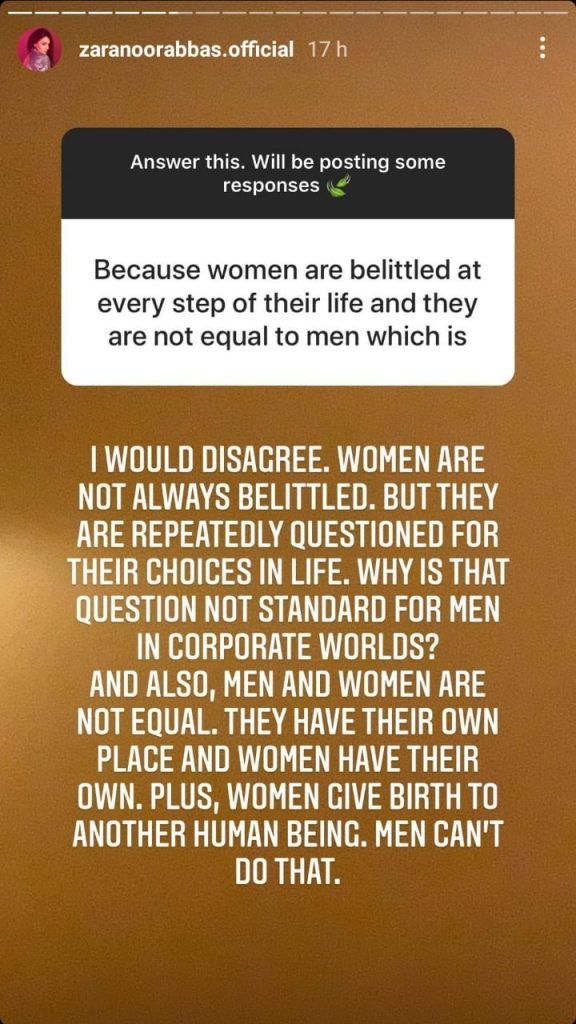
    Zara Noor Abbas took to her Instagram stories to engage in a Q&A session with her followers. Answering a question, she said that men and women are not equal as women can give birth to a human but men can’t do that.

    Read more – ‘Don’t let the abuser get by,’ Zara Noor slams Firdous Awan for misconduct

    The Ehd-e-Wafa actress said that replying to a follower who said that women are belittled. She said: “I would disagree, women are not always belittled but they are repeatedly questioned for their choices in life. Why is that question not standard for men in the corporate worlds?”

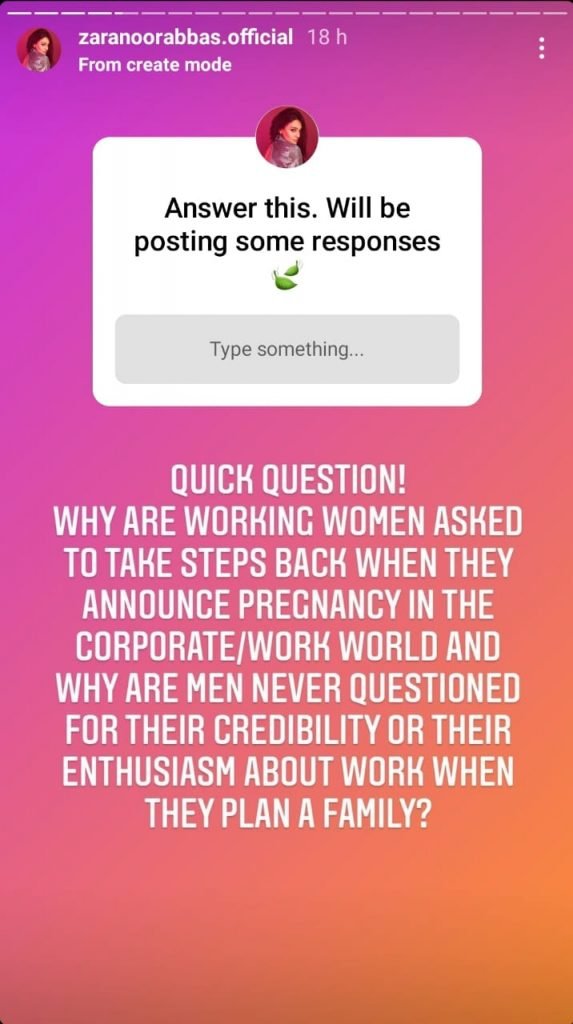
    Earlier, she questioned: “Why are working women asked to take steps back when they announce pregnancy in the corporate/work world and why are men never questioned for their credibility or the enthusiasm about work when they plan a family?”

    Zara is currently working in Hum TV’s Phaans opposite Sami Khan.