Tag: meta

  • Instagram’s repeated stories glitch in iPhones fixed in newer version

    Instagram’s repeated stories glitch in iPhones fixed in newer version

    On iPhones, Instagram stories have been acting up for certain users, forcing them to go through all of someone’s stories before being allowed to see new ones.

    Since Monday, numerous users have been afflicted by the problem, and other Reddit users have complained that the same thing is occurring to them’.

    The source of the problem appears to be that Instagram forgets where you left off when viewing someone’s story.

    For example, if a user uploads five stories and you look at four of them before swiping away, you should see their fifth story the next time you tap on their symbol. Instead, each time you want to view the story, Instagram forces you to go back through the four you have previously seen.

    When someone adds a new story to their feed, the problem occurs as well.

    According to The Verge, Instagram released an update for the app in the iOS App Store on Wednesday morning that appears to have fixed the problem.

    In case, you’re having problems, check for updates and make sure your app is up to date, to the latest version, which is v239.1.

    The update notes only state that “the current version provides bug fixes and performance enhancements,” yet netizens claim that it has solved the problem of repeating Stories.

    In an email to The Verge, Meta representative Christine Pai said the business is “aware that some customers are having problems accessing Instagram Stories”.

    Pai apologised for the disruption and stated that Instagram is “trying to bring everything back to normal as quickly as possible”.

    The exact number of users that have been affected is unknown. Many twitterati are saying that they have to replay stories on Instagram, still the platform is not that massively trending.

  • Sheryl Sandberg to step down from Facebook after 14 years

    Sheryl Sandberg to step down from Facebook after 14 years

    Facebook-parent Meta confirmed that Sheryl Sandberg is stepping down as its chief operating officer (COO) of the social media platform.

    However, Sandberg did not specify the reason for her departure from the company, which will happen in the fall, in a Facebook post. Sandberg revealed that she intends to concentrate on her charity efforts in the future.

    “The debate around social media has changed beyond recognition since those early days. To say it hasn’t always been easy is an understatement,” Sandberg wrote. “But it should be hard. The products we make have a huge impact, so we have the responsibility to build them in a way that protects privacy and keeps people safe”.

    Mark Zuckerberg clarified that Sandberg will remain on the board of directors of Meta, according to Meta CEO Mark Zuckerberg in a separate Facebook post. The company’s Chief Growth Officer, Javier Olivan, will take over as COO, although his work will be “distinct from what Sheryl has done” and “a more traditional COO function”.

    In a recent post, Zuckerberg said: “It’s unusual for a business partnership like ours to last so long. I think ours did because Sheryl is such an amazing person, leader, partner, and friend”.

    Sandberg established herself as a high-profile figure in the IT industry prior to joining Facebook, having previously served as Google’s vice president of global online sales and operations. Prior to joining Google, she worked for President Bill Clinton at the World Bank and the Treasury Department.

    She was often regarded as the adult supervisor for a firm led by a very young entrepreneur during her early years at Facebook.

    Sandberg closely worked with Zuckerberg to increase Facebook’s income from around $150 million in 2007 to over $3.7 billion in 2011, the year before the company went public.  She also rose to fame as one of the most powerful women in technology. Her notoriety was enhanced by her role in founding the Lean In movement, which outlined a strategy for women to succeed and achieve their objectives.

  • Most common women harassment platforms are WhatsApp, Facebook: Research

    Most common women harassment platforms are WhatsApp, Facebook: Research

    A Pakistani research-focused NGO, Digital Rights Foundation (DRF) revealed its annual report on the five-year cyber harassment helpline.

    According to the DRF, WhatsApp and Facebook were the most commonly utilised apps in Pakistan to harass women. Its helpline for combating online abuse and harassment will reach a five-year milestone this year.

    In the last five years, the online harassment helpline has received over 11,681 cases. In 2021, there were 4,441 cases received, with an average of 370 instances each month. The months of March and September saw a spike in reports, while the remainder of the year was quite constant.

    About 68 per cent of the calls were from women, 30 per cent were from males, and the remaining 2 per cent were from gender minorities. WhatsApp was the most widely mentioned platform for harassment, followed by Facebook.

    In 2021, 893 complaints were related to blackmail, and 727 incidents on the helpline involved the use of non-consensual photos, according to the research.

    Executive Director of DRF Nighat Dad stated that “the pace at which the cases of cyber harassment are increasing is alarming and must serve as a wake-up call for us to take appropriate action to make the internet a safe and equal space for everyone”.

    Pakistan’s first specialised helpline against cyber violence and harassment, the cyber-harassment helpline, was opened in December 2016. The toll-free number (0800-39393) is available Monday through Sunday, 9 AM to 5 PM, and includes email and social media help.

    Via: Geo

  • WhatsApp will soon let you exit groups secretly

    WhatsApp will soon let you exit groups secretly

    WABetainfo has unveiled a beta feature that allows participants to leave a group with only the admins being notified.

    ‘Only you and group admins will be notified that you left the group,’ says a beta popup when a group member opts out.

    Currently, when someone leaves a group chat, WhatsApp broadcasts their departure to the whole group, making their departure very public. Although leaving a group silently is not yet possible, WhatsApp appears to recognise that making one’s withdrawal less noticeable may be the safest default.

    Officially, WhatsApp allows up to 256 users to join a single group, however, this can lead to a lot of coming and departing notifications in a conversation, which can be distracting to other participants.

    WhatsApp is also testing rich link previews in Status updates in another beta development. Rich link previews would provide a preview of the website being linked to, giving users an indication of the content they may expect to see if they visit the webpage, whereas sharing a link in a Status update now only displays the URL.

    The meta-owned WhatsApp hasn’t said when these new features will be available for the normal users, as it usually does while testing them with its beta users.

    Greater file transfers, emoji reactions and larger groups were among the most recent major additions to the platform in the last month.

  • Instagram is testing ‘pin’ feature for posts

    Instagram is testing ‘pin’ feature for posts

    Instagram is currently testing a new feature that allows users to pin photos to the top of their photo grid. According to tipsters, developers and insiders with access to the feature can already pin posts from the side menu.

    Instagram appears to have been working on the pin option for at least a few months. The upcoming feature will be a welcome addition to the Meta-owned platform, especially for those who want to highlight a photo or video they fancy, which may be buried way down in the grid.

    Instagram users currently have the option to pin stories to their accounts, but the addition of a pin feature would further enhance the user experience.

    The pinned posts test comes around a week after Instagram said that, as part of a modest test, it would remove the ‘Recent’ button from hashtag pages for some users. When you click on a hashtag, you’ll be led to a page where you can sort through the content that’s been shared with that hashtag into three categories: top, recent, and reels.

    Read more: Twitter officially declares adding an edit button

    Some users will only see the ‘Top’ and ‘Reels’ tabs on hashtag pages as a result of this change. The adjustment might be viewed as a method for Instagram to promote Reels, its TikTok competitor, while simultaneously focusing on uncovering the most popular postings on the platform.

  • WhatsApp’s new update will support group voice call with up to 32 participants

    WhatsApp’s new update will support group voice call with up to 32 participants

    In the last few months, the popular Meta-owned messaging platform WhatsApp has made news by adding new and widely requested features in its Beta releases.

    Many other features, including enhanced file sharing size, emoji reactions, and the ability to hide last seen from select contacts, will be available in the live release of the app soon, according to the business.

    As per reports, WhatsApp has begun rolling out a new update for iOS that includes support for 32-person talks, a redesigned call user interface, waveforms, and other enhancements. On iOS, the update will be available in the live build of WhatsApp.

    Until now, WhatsApp users had been able to make group phone calls with numerous people at once. Previously, a group voice discussion could only hold up to eight people, but WhatsApp is now rolling out a new version that allows up to 32 individuals to join.

    In WhatsApp Groups, voice calls with up to 32 participants would be possible. To accommodate the new members, the platform has changed the way participants are displayed on the screen. Different WhatsApp users are labeled using waveform pictures.

    Read more: Google to ban call recording apps in the next update

    This new capability is included in the update version 22.8.80, which is 109.7MB in size for iOS devices. Android users will get a similar upgrade with these additional features in the near future, but it will not be available on the windows or desktop version.

  • Gen Z is more likely to buy products promoted by influencers, celebrities

    Gen Z is more likely to buy products promoted by influencers, celebrities

    People born between 1997 and 2012 are known as Generation Z. They are not just digitally aware, but real digital natives who have grown up immersed in digital networking.

    Gen Z has been identified as being nimble, active, and bold. Every generational shift leads to a transformation in demand and expectations.

    A research study conducted by Meta reveals how Gen Zers interact with marketers and invest their online time.

    Social media – more than a picture uploading platform

    Over two-thirds of Gen Zers are surveyed on Facebook and Instagram, according to Comscore research. By time spent on mobile and desktop, these two applications list third among the top ten digital sites.

    For many people, social media is more than a basic way to keep in touch with friends and loved ones. It’s where people can spend time discovering their passions and interacting with the brands they care about. Gen Zers are delighted to see advertisers on Meta platforms, according to a Meta-commissioned study. In fact, 60 per cent of those questioned claimed they follow a company on social media.

    Gen Zers crave engagement with favourite brand

    Gen Z craves a genuine engagement with the brands they adore. According to a Meta study, 41 per cent of Gen Zers surveyed stated they feel more personally connected when brands share content that makes them feel like they’re a member of the brand’s group.

    The yearning to be a part of something and to know what’s going on can go a long way: According to the survey, 29 per cent of respondents feel a stronger bond to businesses that provide an inside glimpse into their activities. Gen Zers also highly value real chats with brands, with more than a quarter of those polled expressing a desire to be able to ask product experts questions directly through social networks.

    Gen Zers fancy writing feedback

    Following a brand on social media is a method for 60 per cent of Gen Zers surveyed to engage more deeply with their interests. One of the most common methods for people to engage with their passions is through stories shared on social media by companies and influencers, according to 43 per cent of those polled.

    They do, however, want a more engaging experience: As a way to communicate with brands, 38 per cent of respondents love completing product feedback questionnaires. 

    Impact of involving celebrities, influencers

    The key to establishing a stronger bond between businesses and Gen Z is through influencers and artists. According to Meta data, 79 per cent of Gen Zers have made a purchase as a result of watching a creator’s content. Influencers let customer feels more attached to and satisfied with the businesses, products, and services they offer.

    Read more: Pakistanis will get slow Internet on Thursday

    Luckily for marketers, 35 per cent of those polled indicated that creator material caused them to promote a brand, product, or service.

    Role of social justice

    Advocating for social justice and ethnic diversity is critical for Gen Zers. According to a second Meta research of interactional analytics, Gen Zers used Instagram to express their views on social justice issues, with discussion volume increasing by 300 per cent year over year since May 2020. However, deeds speak louder than speech for this age.

    According to Meta study, Gen Z consumers expect brands to work with influencers from a variety of racial and cultural backgrounds. The study also found that more than half of Gen Zers polled learn about new businesses through content from influencers from multiple origins.


  • Instagram may introduce voice message replies for stories soon

    Instagram may introduce voice message replies for stories soon

    Instagram is reportedly working on a feature that would allow users to reply to stories with a picture or a voice message. This was signaled by the application developer, Alessandro Paluzzi, who further mentioned in his tweet that Instagram is also testing a feature that will allow users to share posts using a QR code.

    Paluzzi’s screenshots show the traditional message box where you may reply to users’ stories, with a twist, as one snapshot includes a GIF sign, while another has a mic icon in addition to the GIF button that was already available.

    Users will probably use these icons to respond to Instagram stories with an image or a voice message.

    The social media platform introduced a feature in February that allowed users to like other users’ stories without having to respond with a direct message.

    Until then, the only option to respond to a story was to send a direct message to the user through the text box at the bottom of the story (or using pre-set emojis, GIFS, or stickers, which were almost similar.

    Read more: Intel to launch world’s fastest 5.5 GHz CPU on April 5

    The rumored new picture reply function will complement existing capabilities and provide users with more options for creatively responding to stories. These features are also well-suited to Instagram’s long-term strategy.

    All of this may be included in the coming days as the head of Instagram, Adam Mosseri, had already stated that the Meta-owned platform will be focusing on the videos, messaging as well as creators.

  • Emoji reactions for Whatsapp messages coming soon

    Emoji reactions for Whatsapp messages coming soon

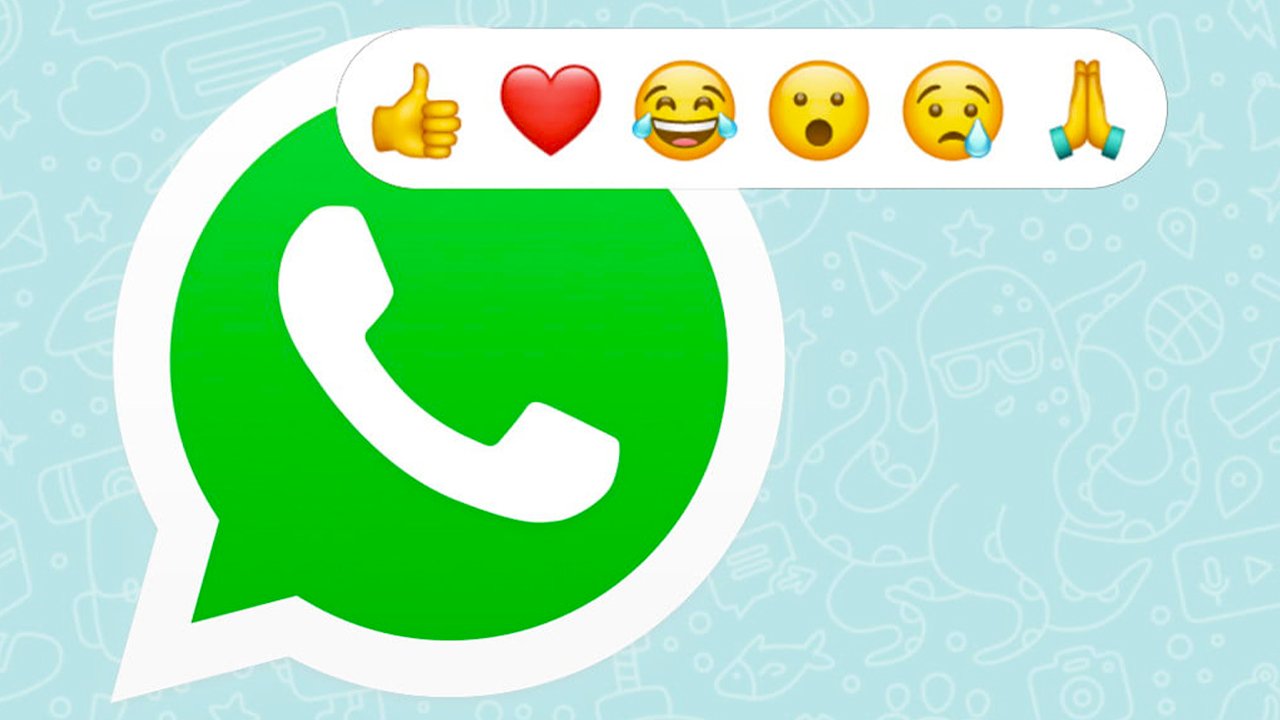
    The Meta-owned Whatsapp is currently testing an ‘emoji react’ feature, initially in the Beta version for android devices. As per a credible resource, reaction Emojis have already started to appear in the Beta application for developers or users to test it.

    In the Beta version, holding a received message allows users to react with one of six Emojis which comprises: thumbs up, crying, laughter, love, shocked face, and folded hands as an alternative of saying ‘thanks’.

    It seems like the most popular messenger with billions of users will be rolling out the feature on Android phones in the first phase. However, there is no official date announced by Meta regarding its introduction but the testing pace says it all.

    The new feature will significantly enhance its usability, letting users immediately respond to messages instead of accessing the keyboard every time.

    Besides the ongoing testing for Android devices, there are signs that the emoji reactions are also on the way for iOS devices. A few months ago, the iOS Beta version was upgraded with a feature that consisted of a toggle to enable or disable reaction notifications.

    Previously a number of messaging and social media platforms have introduced emoji reactions including Instagram, Facebook Messenger, Google Messages, iMessage, and most surprisingly the Twitter DMs.

  • Don’t want that friendship message? Meta introduces online women safety initiatives in Pakistan

    Don’t want that friendship message? Meta introduces online women safety initiatives in Pakistan

    Meta has launched an online safety initiative for women in Pakistan that includes Online Safety Guide and StopNCII (Non-consensual intimate images). These programs would provide protection to women users in cyberspace.

    Online Safety Guide, is available on “Safety@Facebook” to connect with established helplines in Pakistan. It is easily accessible in both languages English and Urdu to avoid restraints in providing assistance to victims. There are safety guide tools that will help women to protect themselves from online fraud.

    Stop NCII.org is a platform where women can register their case if someone is threatening to leak their intimate image online which is referred to as ‘Revenge Porn’.

    This platform was established with the help of Meta’s expert guidance. It was funded by the collaboration of a global NGO partner —the UK Revenge Porn Helpline.

    It was already providing global services and now it has joined collaboration with regional partners to advocate the rights of victims.

    The portal is also available in the Urdu language so that women will not hesitate in asking for assistance from experts.

    The partner of Meta in Pakistan, Digital Rights Foundation (DRF) has organised an online roundtable for launching the Urdu-based portal of Stop NCII in Pakistan.