Tag: Miftah Ismail

  • ‘Miftah is facing immense criticism from within PML-N’: Khawaja Asif

    ‘Miftah is facing immense criticism from within PML-N’: Khawaja Asif

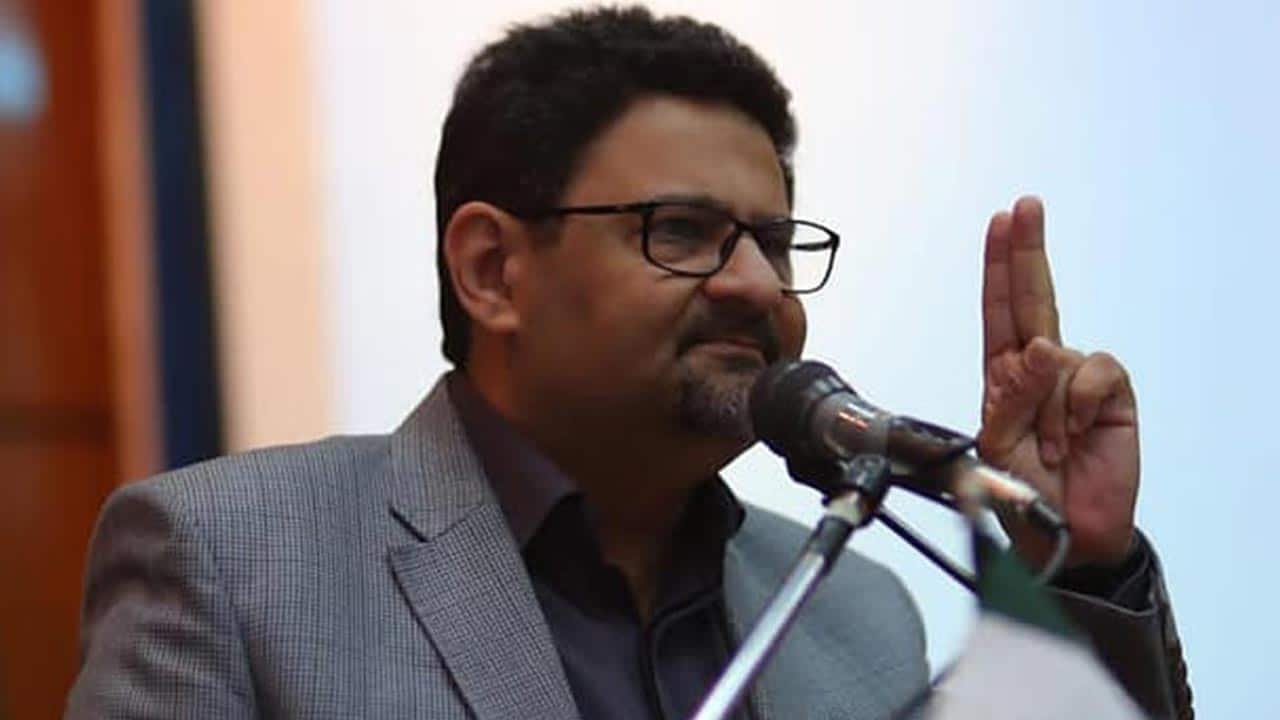
    Defence Minister Khawaja Asif on Saturday tweeted in support of Finance Minister (FM) Miftah Ismail. He further revealed that Ismail was facing immense criticism from within the Pakistan Muslim League-Nawaz (PML-N) because of the continuous increase in petrol prices.

    “FM Miftah is among the hardest working members of PM’s team, accessible to all stakeholders,” tweeted Khawaja Asif.

    “He is performing v. well under difficult circumstances, with immense criticism from vested interests – including, and unfortunately, from within PMLN. Time to show solidarity with Miftah.”

    Miftah Ismail had recently said that he was “not supposed” to appear on national television to announce an increase in the cost of petroleum products, but that he did so in response to a directive from Prime Minister (PM) Shehbaz Sharif.

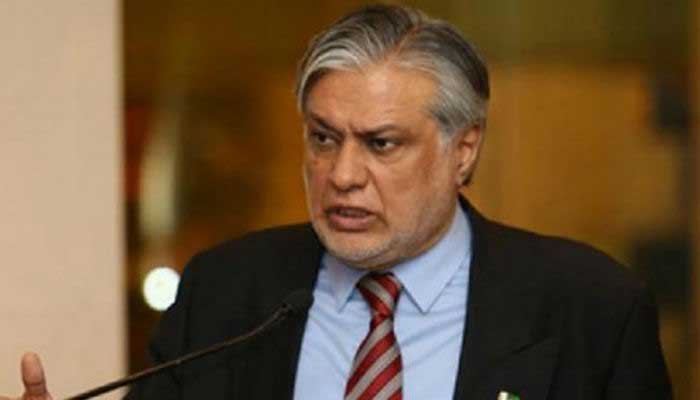
    It is pertinent to mention here that PML-N’s supremo Nawaz Sharif’s close aide and former Finance Minister Ishaq Dar confirmed his return to Pakistan in July. He said that he is coming back on the directions of Nawaz and the decision was taken after the consent of PM Shehbaz.

    There was news circulating of Dar taking the charge of the finance ministry, to which he said he cannot decide this matter. “My party will decide.”

    Ismail is under pressure since the government announced multiple hikes in petroleum products and the delay in the revival of the International Monetary Fund (IMF) bailout programme.

  • Oil sales fell by 11 per cent as prices rose to highest levels

    Oil sales fell by 11 per cent as prices rose to highest levels

    In June 2022, overall sales of petroleum and lubricants were 1.93 million tonnes, down 11 per cent from the previous month but unchanged from the previous year.

    Petrol and high-speed diesel (HSD) sales both experienced significant monthly declines, falling by 12 and 16 per cent, respectively.

    Sales of all oil products rose by 16 per cent YoY to 22.595 million tonnes during FY22 from 19.45 million tonnes during the same period in FY21.

    Analyzing the data demonstrates that expansion was seen in all categories, with offtake increasing to 8.95 million tonnes, 8.87 million tonnes, and 4.04 million tonnes, respectively, up by 9 per cent, 15 per cent, and 35 per cent on YoY compared to the same period last year.

    Ismail Iqbal Securities analyst Abdullah Umer stated, “We believe that significant rise in both diesel and petrol prices are the main reason behind the decline in retail sales.”

    According to the brokerage house, “Healthy economic activity, robust agricultural activity, upbeat automobile sales, and curb of HSD smuggling remained major drivers behind such stupendous growth.”

    Although the current government has chosen to manage petroleum product prices by levying a Petroleum Development Levy (PDL) and sales tax even if international oil prices decline, the brokerage house anticipated a further slowdown in diesel and gasoline sales going forward.

    In the coming months, retail fuel demand is likely to be further impacted by an increase in carpooling, increased use of public transportation, a change in consumer behaviour (moving from passenger cars to two-wheelers), high inflation, and a general slowdown in economic activity.

    “We expect RFO sales to remain intact due to a likely decline in RLNG & imported coal-based power generation.”

    The government announced a late-night price increase for petroleum products on Thursday, raising the ex-depot price of gasoline to Rs248.74 per liter (after an increase of Rs14.85) and diesel to Rs276.54 (after a hike of Rs13.23).

    Diesel was previously priced at Rs263.31 per litre and petrol at Rs233.89.

    The pricing structure included a Rs10 petroleum levy on gasoline. The cost of high-speed diesel, kerosene, and light diesel oil has also increased by Rs5 per litre.

    Finance Minister Miftah Ismail announced the government’s decision, stating that these prices would go into effect at midnight in order to make up for the Rs-230 billion loss experienced during the fiscal year that ended on June 30th, 2022.

    According to him, the country’s budget deficit, which reached a historic high of Rs5 trillion, made the increase in these prices inevitable.

  • ‘Don’t need permission of any League leader, Nawaz Sharif’s orders are enough’: Ishaq Dar

    ‘Don’t need permission of any League leader, Nawaz Sharif’s orders are enough’: Ishaq Dar

    Pakistan Muslim League-Nawaz (PML-N) supremo Nawaz Sharif’s close aide and former Finance Minister Ishaq Dar confirmed his return to Pakistan in July. He said that he is coming back on the directions of Nawaz and the decision was taken after the consent of Prime Minister (PM) Shehbaz Sharif, reports The News.

    “I don’t need the permission of any League leader to return to Pakistan, as Nawaz Sharif’s orders are enough,” he added.

    The former finance minister further revealed that he has received his new passport and his doctor has also given permission to travel. 

    While talking to BBC Urdu on Tuesday, he said that his medical treatment is expected to be completed in the next 10 to 12 days.

    When asked about taking the charge of the finance ministry, Dar said he cannot decide this matter. “My party will decide.”

    Dar confirmed that he will take oath as Senator once he is back in Pakistan.

    It is pertinent to mention that the incumbent finance minister Miftah Ismail is an unelected member and he cannot continue in the office for more than six months. He took charge of the ministry in April.

    When asked by BBC Urdu about the cases against him in Pakistan and his bail, Dar said that he is facing only one “fake case which was filed by [former prime minister] Imran Niazi”.

    The PML-N leader also said that the “baseless” case against him was based on his tax return and added that he always filed his income tax return on time.

    “That is why when Imran Khan’s government approached Interpol to bring me to Pakistan, the documents given to Interpol had no credence, so they gave me a clean chit,” he added.

    Earlier, Samaa News reported that Dar would be back to face his court cases and assume his responsibilities as Senator. After winning the cases, he will decide on joining the federal cabinet.

    In 2017, an accountability court declared Ishaq Dar a proclaimed offender in assets beyond means case.

    Dar has been living in London since 2017 on account of his medical treatment. He has served as a federal minister of finance four times between 1998 and 2017.

    Earlier this year, Dar was re-instated to the Senate by the Election Commission of Pakistan (ECP).

  • Petroleum levy of Rs50 per liter approved in Finance Bill 2022–23

    Petroleum levy of Rs50 per liter approved in Finance Bill 2022–23

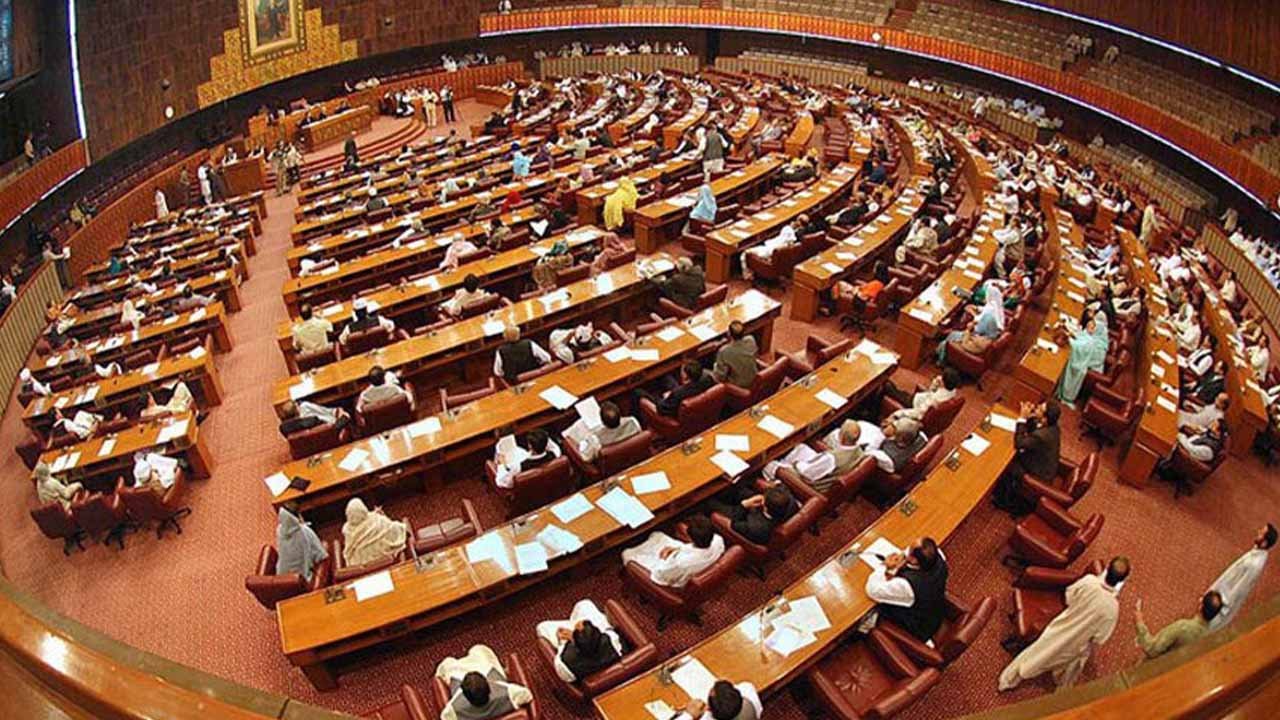
    On Wednesday, the National Assembly approved an amendment to the Finance Bill 2022 that will allow the government to increase the fuel levy to Rs50 per liter.

    During the National Assembly session held to discuss the amendments to Finance Bill 2022, Finance Minister Miftah Ismail made it clear that the amendment grants the government the authority to impose a tax of no more than Rs50 per liter. The levy will not be implemented instantly, he said.

    He went on to say that the levy had been temporarily kept at zero by the government. Throughout the upcoming fiscal year, the levy will be gradually implemented.

    According to The News, about 80 per cent of the amendments to the finance bill, according to State Minister for Finance and Revenue Ayesha Ghous Pasha, were tax-related.

    She emphasised that the government’s objective was to burden the wealthy while sparing the rest of us.

    The participants also agreed to impose a 5 per cent tax on the services of IT and software consultants in addition to the collection of sales tax through shopkeeper utility bills.

    Additionally, a change to revoke the salary class’s relief was approved. Individuals earning between zero and Rs600,000 annually would not be subject to income tax, per the initial budget proposals (where salary income exceeds 75 per cent of taxable income). The following slab would have had a nominal deduction of Rs100 per year (those earning between Rs600,000 and Rs1.2 million per year).

    With the new rates, those making between Rs0.6 and Rs1.2 million annually will now be required to pay 2.5 per cent in income tax.

    Furthermore, a 10 per cent super tax on 13 high-income sectors was approved by the National Assembly. The 10 per cent super tax on large industries was announced by Prime Minister Shehbaz Sharif on Friday in his “bid to relieve the general public of tax pressures.”

    “The revenue generated by this tax will be used to alleviate poverty in Pakistan, and it will be funded by high-income earners,” he said following a meeting with the government’s economic team.

    The tax will be levied on the cement, steel, sugar, oil and gas, fertiliser, LNG, textile, banking, automobile, beverages, chemicals, and tobacco industries. Later, Miftah Ismail, the finance minister, added airlines to the list, bringing the total to 13 sectors.

    Miftah went on to explain that the indirect tax (super tax) was intended to help the state accumulate funds under the heading of tax collection and reduce the budget deficit. He also stated that the fee was a one-time levy.

    The government’s proposed 1-4 per cent super tax on high-income individuals’ salaries was also approved by the National Assembly.

    The leadership levied a 1 per cent tax on those making up to Rs150 million annually, a 2 per cent tax on those making up to Rs200 million annually, a 3 per cent tax on those making up to Rs250 million annually, and a 4 per cent tax on those making up to Rs300 million annually.

    Additionally, a change was approved that imposes a tax on imported mobile phones that ranges from Rs100 to Rs16,000 depending on their value.

    Late Tuesday night, new amendments were added to the Finance Bill, 2022, including a potential reduction in the sales tax rate on the import of pharmaceutical raw materials from 17 per cent to 1 per cent, a tax exemption for theatres and production companies, and a change in the definition of “deemed rental income” by replacing the words “immovable properties” with “capital assets” and other changes.

    Under the revised Finance Bill 2022, the FBR also decreased the capital value tax (CVT) on vehicles from 2 per cent to 1 per cent.

  • Imposing super tax on the rich will reduce budget deficit: Miftah

    Imposing super tax on the rich will reduce budget deficit: Miftah

    The government’s recently announced indirect tax (super tax) is intended to assist the country in increasing tax revenue and lowering the budget deficit, according to Finance Minister Miftah Ismail.

    He was relating to the large industries’ 10 per cent super tax or poverty alleviation tax.

    13 industries, including LNG terminals, sugar, cement, steel, textile, tobacco, fertiliser, banks, oil and gas, beverages, automobiles, and steel, will be subject to this one-time levy, according to Miftah. The government labelled these 13 industries for a special tax as they made significant profits last year.

    Companies in these sectors earning more than Rs300 million will be subject to a 10 per cent super tax, he added.

    According to the finance minister, this tax is a one-time levy that will only be in effect for fiscal year 2022–2023.

    He clarified on Twitter that the 4 per cent super tax will be imposed on all industries.

    “For the specified 13 sectors, another 6 per cent will be added for a total of 10 per cent,” he said. “So their tax rates will go from 29 per cent to 39 per cent. This is a one-time tax needed to curtail the previous four record budget deficits.”

    The imposition of a super tax on the wealthy, according to Finance Minister, will lessen the country’s reliance on foreign aid, lower the budget deficit, and bring the country closer to financial stability.

    Other businesses that make over Rs150 million will be subject to a 1 per cent super tax, and those that make over Rs200 million will be subject to a 2 per cent tax. On top of the current rates, it is worth noting that these taxes are additional.

    Businesses that earn more than Rs250 million in revenue will pay a 3 per cent super tax, and those that earn more than Rs300 million will pay a 4 per cent super tax.

    He continued, citing statistics, that there were 9 million retail and wholesale establishments in Pakistan, and that the government wanted to bring an additional 2.5–3.5 million into the tax system.

    “We are linking the income tax and sales tax of these shops with the electricity bill,” Miftah said. “Now, small shops will pay a fixed tax of Rs3,000 and large shops will pay Rs10,000.”

    Only 22 of Pakistan’s more than 30,000 gold trading companies, he claimed, were registered, and their average annual sales came to Rs4,000.

    Sales tax and a fixed income of Rs40,000 will now be paid by gold shops of 300 square feet or less.

    He said that the government would lower the sales tax on large stores from 17 per cent to just 3 per cent.

    The withholding tax on jewellery sales to gold shops by the general public has been reduced from 4 per cent to 1 per cent.

    According to Miftah, fixed tax structures similar to these will be introduced for real estate agents, car dealers, and builders. Since this tax only applies to income and not to spending, inflation will not rise.

    Additionally, the withholding tax for the IT sector has been eliminated. Sales and income taxes would not apply to IT companies with annual revenue of less than Rs80 million.

    Miftah emphasised that Pakistan needs the IMF programme to resume as the country’s foreign exchange reserves are at a critical point.
  • Official PML-N Twitter account replaces Miftah with Ishaq Dar

    Official PML-N Twitter account replaces Miftah with Ishaq Dar

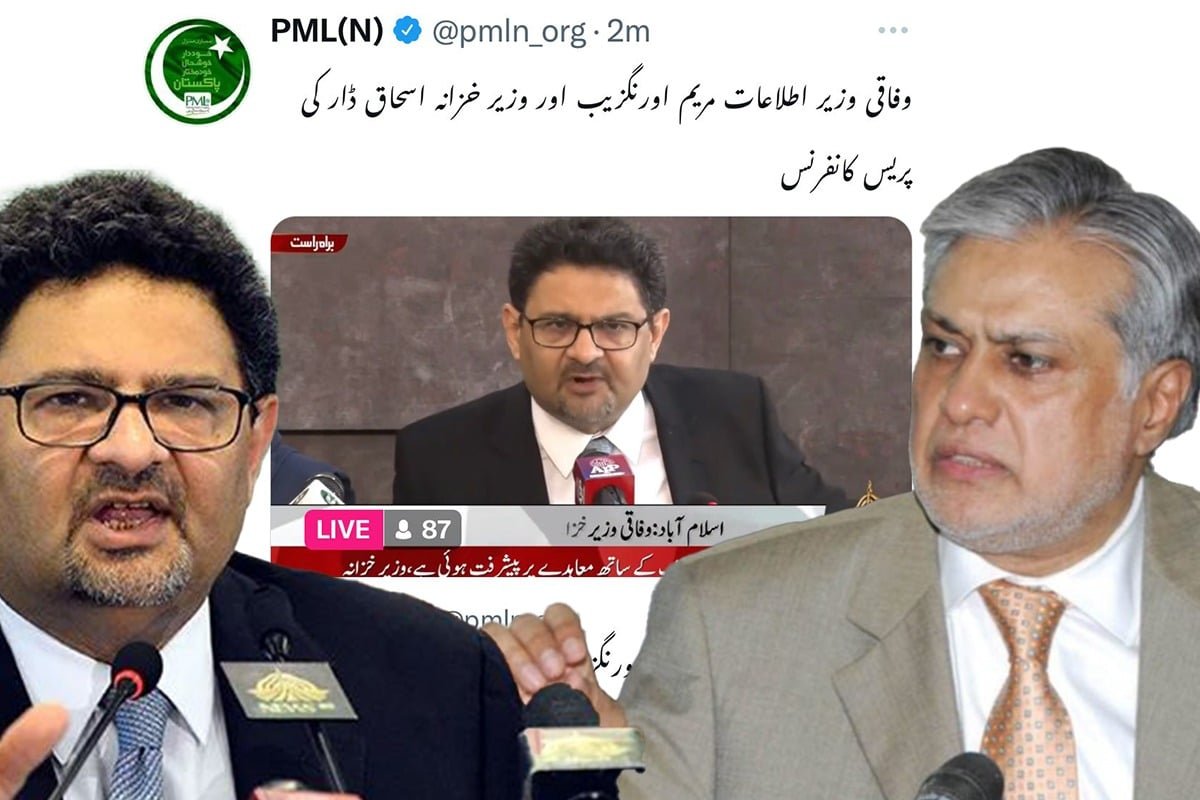
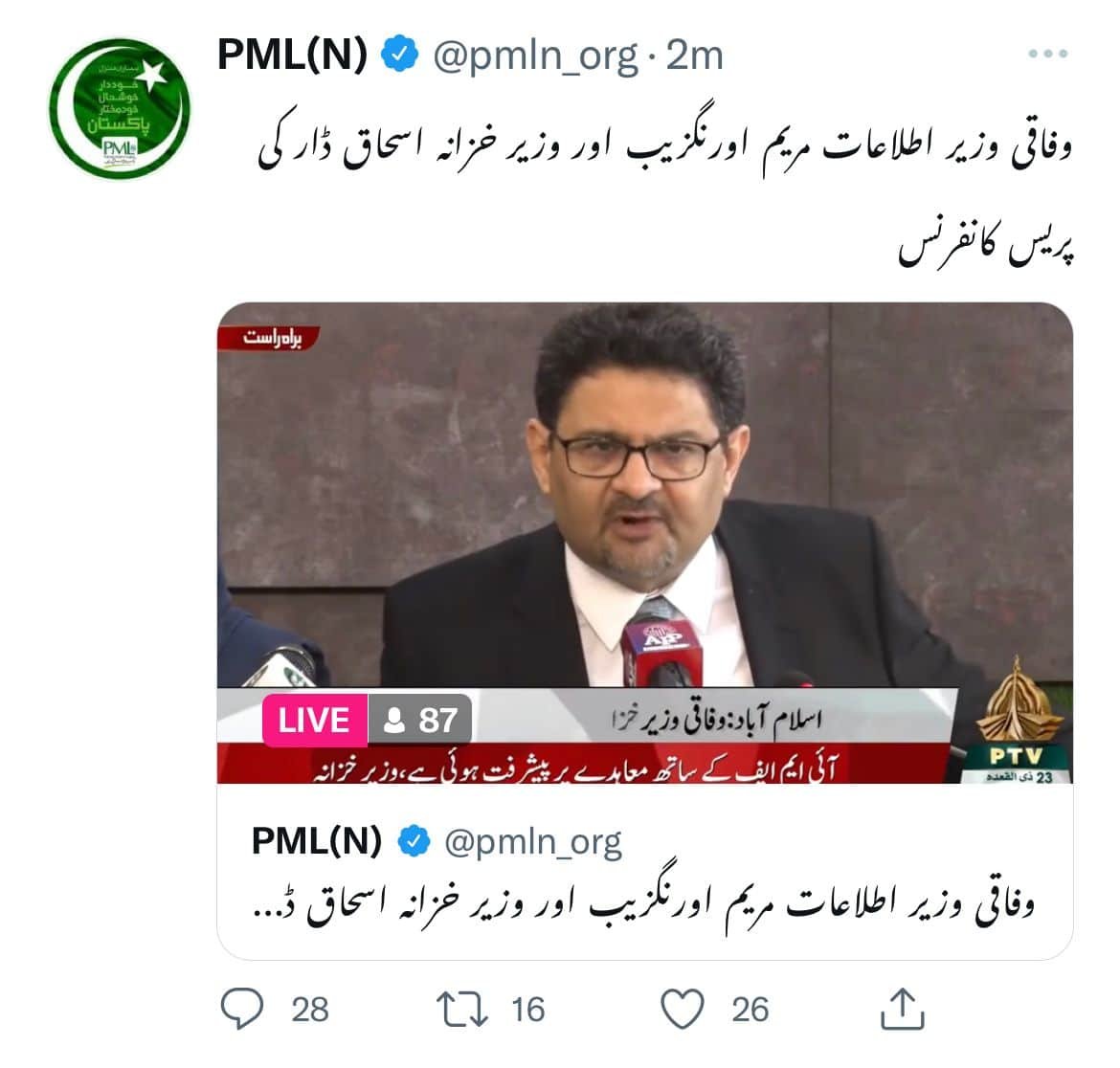
    Finance Minister Miftah Ismail and Information Minister Marriyum Aurangzeb addressed a press conference in Islamabad today (June 23) about the economy.

    When the press conference started, the official Twitter account of Pakistan Muslim League-Nawaz (PML-N) shared the live stream link but replaced the current finance minister’s name with PML-N’s former finance minister Ishaq Dar.

    “Federal minister Information Marriyum Aurangzeb and Finance Minister Ishaq Dar’s press conference,” tweeted PML-N.

    However, the tweet was deleted after users pointed out the faux pas. A new tweet with Miftah’s name was then shared.

    In a joint press conference, the finance minister expressed hopes of the economy getting better with the expected Chinese loan and the ongoing dialogue with the International Monetary Fund (IMF).

    Miftah Ismail revealed that they have reached an understanding with the IMF over the budget’s measures. The details of the discussion on the federal budget for the fiscal year 2023 would be revealed in the National Assembly and then they will close the budget, he added.

    “It is a historic budget as we have neither increased indirect taxes not imposed taxes on commodities or consumption,” said Miftah.

  • ‘IMF programme will be revived soon’: Miftah Ismail

    ‘IMF programme will be revived soon’: Miftah Ismail

    Pakistan and the International Monetary Fund (IMF) evolved a broader agreement on the budget 2022-23 to revise upward the Federal Board of Revenue (FBR) target and slash down the expenditures to achieve a revenue surplus in the next fiscal year.

    Federal Minister for Revenue and Finance Miftah Ismail had already indicated the revival of the agreement with IMF within a day or two.

    “I am very hopeful that the IMF programme will be revived soon,” said the finance minister. “Pakistan and the IMF locked the budget details and achieved substantial progress on finalising budgetary targets for 2022-23.”

    “Now the Memorandum of Economic and Financial Policies (MEFP) will be shared by the IMF soon,” the minister said.

    “Discussions between the IMF staff and the authorities on policies to strengthen macroeconomic stability in the coming year continue, and important progress has been made over the FY23 budget,” Esther Perez Ruiz, the IMF’s resident representative in Islamabad, told Reuters.

    Miftah said that the government would target raising 96 billion rupees from privatisation in 2022/23. In the current fiscal year, the government did not raise any funds from privatisation.

  • PM Shehbaz decides to continue targeted subsidy on five essentials items

    PM Shehbaz decides to continue targeted subsidy on five essentials items

    Prime Minister (PM) Shehbaz Sharif on Monday decided to continue a targeted subsidy on five essential items — wheat flour, sugar, ghee/edible oil, pulses, and rice — at Utility Stores for the next financial year.

    The prime minister also approved the expansion of a network of Utility Stores in Karachi.

    “The small number of Utility Stores in Karachi is not acceptable in any way and a comprehensive plan for raising the number of Utility Stores in the megacity should be presented within two weeks,” tweeted PM Shehbaz.

    The decision was taken at a high-level meeting regarding Utility Stores in the country, with the PM in the chair. Minister for Finance Miftah Ismail, Minister for Industries and Production Murtaza Mahmood, and other senior officials were also in attendance.

  • US agrees to help Pakistan negotiate a deal with IMF

    US agrees to help Pakistan negotiate a deal with IMF

    The United States (US) has agreed to help Pakistan negotiate a deal with the International Monetary Fund (IMF).

    According to media reports, Pakistan’s Ambassador to the United States Masood Khan met Assistant US Trade Representative (USTR) for South and Central Asia Christopher Wilson to discuss expanding trade relations between the two countries and encouraging US investments in Pakistan.

    Pakistan has not yet received the first draft of a memorandum of financial and economic policies (MEFP) from the IMF as targeted earlier because certain matters remained unsettled. “We are working very closely with the IMF and will soon reach some conclusion,” a top finance ministry official told Dawn.

    Pak govt asks US to help with IMF deal

    Last week, Pakistan asked for the support of the US for the revival of the IMF programme, reports Shahbaz Rana for The Express Tribune.

    The Shehbaz-led government’s economic team met with US Ambassador Donald Blome and sought Washington’s support and acknowledgement of the actions taken.

    According to the news outlet, Finance Minister Miftah Ismail and Minister of State for Finance Dr Aisha Pasha met with the US envoy. 

    The government is making all-out efforts to revive the programme and has taken many unpopular steps, but still remains short of the IMF’s expectations.

    The IMF not only wants a reversal of the cut in the income tax rates for the salaried class but is seeking to pass on an additional burden of Rs125 billion on the salaried people. The government has now worked out a new proposal that entails reversing Rs47 billion tax relief and then passing on an additional burden of Rs18 billion to the salaried class, reports Shahbaz Rana.

    The Tehreek-e-Insaf (PTI) led- government had committed to increasing the taxes on the salaried class with effect from July and also agreed to share the draft of the personal income tax reforms with the IMF by end of February 2022. However, PTI did not fulfil its commitments.

    Minister of State for Finance Dr Aisha Pasha said that there was now more clarity to the IMF on the new budget, hoping to sign a deal very soon.

    On Wednesday, the federal government increased the price of all petroleum products, including Rs24 per litre for petrol and Rs59.16 per litre for high-speed diesel (HSD). In less than a month, this is the third hike.

    Miftah Ismail criticised the previous PTI government for reaching an erroneous agreement with the IMF, which tied the incumbent’s hands and forced it to raise oil prices to get the economy back on track.

  • ‘Free and fair’ elections, demands Khan

    ‘Free and fair’ elections, demands Khan

    Chairman Pakistan Tehreek-e-Insaf (PTI) Imran Khan on Sunday demanded free and fair election and revealed that he expects match-fixing in Punjab by-elections.

    PTI took out countrywide protests against rising inflation at Khan’s call on Sunday. Khan addressed his supporters via video-link.

    On Monday, Khan thanked his supporters for coming out across Pakistan yesterday, especially those “who braved difficulties & in some cities rain, to join our protest against massive inflation & clearly reject Imported Govt of crooks imposed by US regime change conspiracy”.

    No free lunch, warns Khan

    Imran Khan warned that Pakistan can become the next Sri Lanka. He said that Finance Minister Miftah Ismail has asked for the support of the United States (US) for the revival of the International Monetary Fund (IMF) programme. “I want to tell Miftah Ismail and Shehbaz Sharif that the Americans have a philosophy, which is that there is no free lunch. Everything has a price. The US will extract our sovereignty as a price.” Khan said that the new government seems ready to pay this price.

    Recognising Israel part of foreign conspiracy agenda: Khan

    Khan also mentioned Pakistan People’s Party (PPP) Senator Saleem Mandviwalla’s statement on the potential of Pakistan having diplomatic ties with Israel. “This is part of the same agenda due to which there was a regime change. The agenda is to follow what Israel, India and the US want,” said Khan.

    However, Mandviwalla clarified on Sunday that his words were being taken out of context. “I never wanted Pakistan to further ties with Israel or indulge in trade with it,” said Mandviwalla, adding that recognising Israel was not in Pakistan’s interests.

    Match-fixing in Punjab by-polls on the cards

    “We have to struggle together. Get ready. I will soon give another call for protest, which will continue until we are given a date for free and fair elections. Not just elections but free and fair elections,” said Khan.

    He reiterated that there is a plan of rigging by-elections in Punjab through ‘match-fixing’. By-polls in Punjab are set to take place next month in July.

    Imran Khan’s full address can be seen here: