Tag: Miftah Ismail

  • ‘No MoU on wheat and oil with Khan’s govt’: Russian ambassador to Pak

    ‘No MoU on wheat and oil with Khan’s govt’: Russian ambassador to Pak

    Danila Ganich, Russia’s ambassador to Pakistan, has said that in his opinion the Russian visit could have been “one of the factors” for the removal of former Prime Minister (PM) Imran Khan from power but added that it was a sheer coincidence that Khan happened to be in Russia the day the Ukraine war broke out.

    “I think that was one of the factors but I also know that it was a sheer coincidence that he happened to be in Moscow on that very day,” said Ganich when asked if Khan’s government was removed from power because of his visit to Russia in an interview with Aaj News‘ senior anchorperson Shaukat Piracha.

    “The proof of that is just the fact that he was in Moscow on that very day, had he known that the operation would start on that very day, definitely he would have tried to refrain from being there on that very day. So that was a coincidence.”

    “As an ambassador of a foreign country I prefer not to interfere in your internal affairs.”

    “I do know that Pakistani [authorities] concluded that there was no conspiracy. So here I would like to say period. I cannot take sides here, especially when your judge concluded that there was no conspiracy,” said Ganich.

    Ganich said that Russia and Pakistan did not conclude any memorandum of understanding (MoU) on Khan’s claims that Russia had agreed to sell both wheat and oil at a 20 per cent and 30 per cent discount to Pakistan due to the efforts of his government.

    “I can confirm that we did not conclude any MoU,” the ambassador revealed. “As for what kind of discounts could have been offered [on oil and wheat], I cannot comment on this, as these are confidential negotiations.”

    Earlier, Russian Counsel General in Karachi, Andrey Fedorov said that a proposal was discussed between the two parties, while categorically denying that any letter was written by the Pakistan Tehreek-e-Insaf (PTI) government to Russia, reported Samaa News.

    Finance Minister Miftah Ismail in an interview with CNN’s Becky Anderson refuted Khan’s claims that Russia has not offered a 30 per cent discount on oil or wheat.

    Miftah further said that even though a letter was written by former minister Hammad Azhar, Russia did not respond to the letter.

    Former premier Khan recently said that during his time in power, the PTI government had signed an agreement with Russia to buy cheap oil and wheat. Adding that his government remained in power Pakistan would not have to face the petrol bomb.

  • Getting a new car? Check out the new advance tax imposed on your favourite vehicle

    Getting a new car? Check out the new advance tax imposed on your favourite vehicle

    The government has released the fiscal budget for 2022-23, which includes several changes, including a 200 per cent advance tax on the purchase of cars with engine displacements greater than 1600cc for non-filers.

    This decision is likely to possess a considerable effect on the sales of several cars in Pakistan, which have already witnessed multiple price hikes in previous months. The tax amount for non-filers has now been doubled, which will have an influence on new car sales, particularly those with larger engines.

    The advance tax will now be applicable to several famous vehicles that have dominated the auto industry for years now from well-known manufacturers, including old players like Honda and Toyota, as well as new players like Hyundai, Kia, DFSK and BAIC.

    Taxes for filer and non-filer

    Toyota Corolla Altis Grande, 1800cc, ranges from Rs4,499,000-4,859,000, Tax for filer: Rs150,000, Tax for non-filer: Rs300,000

    Hyundai Elantra GLS, 2000cc, priced at Rs4,949,000, Tax for filer: Rs200,000, Tax for non-filer: Rs400,000

    Hyundai Tucson, 2000cc, ranges from Rs5,799,000-6,299,000, Tax for filer: Rs200,000, Tax for non-filer: Rs400,000

    Hyundai Sonata 2.0, 2000cc, priced at Rs6,999,000, Tax for filer: Rs200,000, Tax for non-filer: Rs400,000

    DFSK Glory 1.8 CVT, 1800cc, priced at Rs5,159,000, Tax for filer: Rs150,000, Tax for non-filer: Rs300,000

    Kia Sportage, 2000cc, priced at Rs5,300,000-6,300,000, Tax for filer: Rs200,000, Tax for non-filer: Rs400,000

    BAIC BJ40, 2000cc, priced at Rs8,199,000, Tax for filer: Rs200,000, Tax for non-filer: Rs400,000

    Hyundai Sonata 2.5, 2500cc, priced at Rs7,849,000, Tax for filer: Rs300,000, Tax for non-filer: Rs600,000

    Kia Sorento, 2400cc, ranges from Rs6,836,000-7,499,000, Tax for filer: Rs300,000, Tax for non-filer: Rs600,000

    Toyota Fortuner, 2700-2800cc, ranges from Rs9,959,000-12,679,000, Tax for filer: Rs400,000, Tax for non-filer: Rs800,000

    Toyota Hilux, 2800cc, ranges from Rs7,359,000-9,729,000, Tax for filer: Rs400,000, Tax for non-filer: Rs800,000

    Isuzu D-Max V-Cross, 3000cc, ranges from Rs6,600,000-6,960,000, Tax for filer: Rs400,000, Tax for non-filer: Rs800,000

    Kia Sorento V6, 3500cc, ranges from Rs7,499,000, Tax for filer: Rs450,000, Tax for non-filer: Rs900,000

    Local vehicle assemblers are dissatisfied with the new budget, claiming that the government unilaterally raised advance tax on motor vehicles larger than 1,600cc because the industry did not propose it. They claim that the decision is also discriminatory and will reduce auto sales.

    Read more: Energy sector to get a massive portion of the Rs699 billion subsidy

    Advance tax on motor vehicles larger than 1600cc has been doubled, while electric vehicles costing Rs5 million or more will be subject to a 3 per cent tax.

  • Govt unveils Rs9.5 trillion budget 2022-23, focused on sustainable growth

    Govt unveils Rs9.5 trillion budget 2022-23, focused on sustainable growth

    The federal budget for 2022-23 has been revealed with a total outlay of Rs9,502 billion. It includes measures for sustainable economic growth, industrial and agricultural development, and aid for the poor ones.

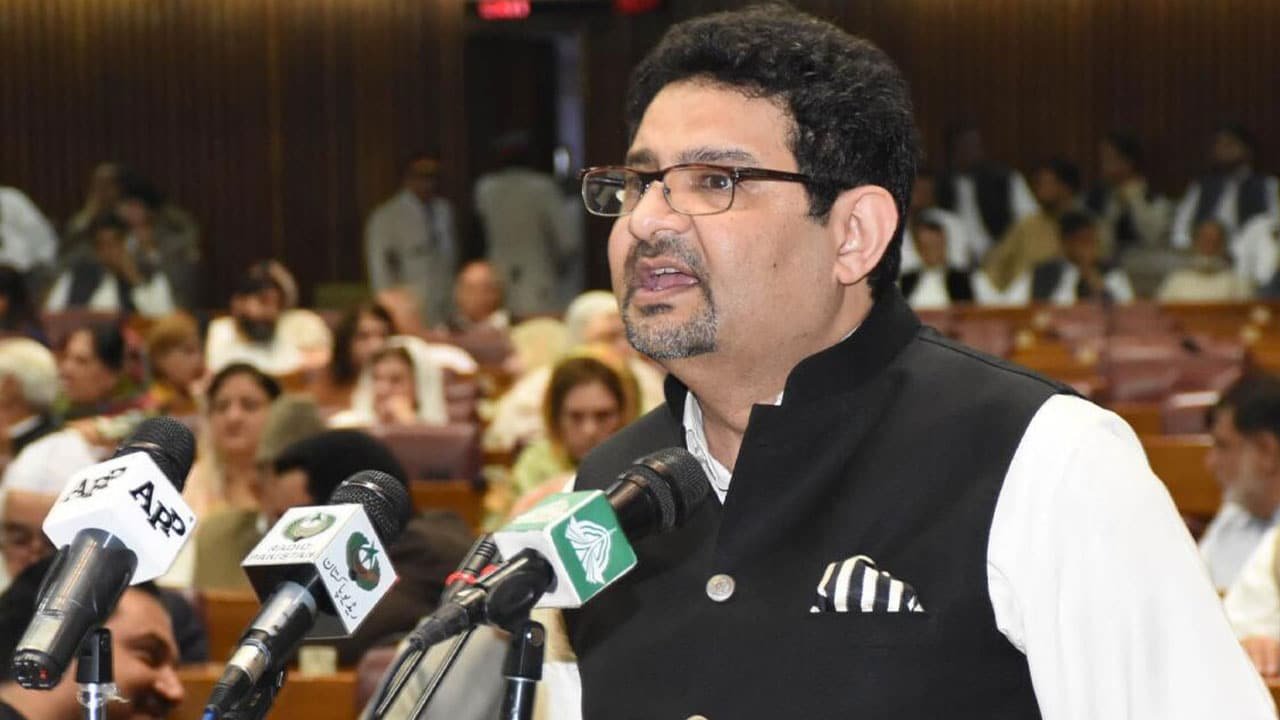
    Finance Minister, Miftah Ismail began his address by claiming that the PTI administration had left Pakistan’s economy in shambles and harmed investor confidence by often switching finance ministers and monetary policies.

    He slammed former Prime Minister Imran Khan, claiming that he never cared about the poor, claiming that “keeping an eye on potato and tomato prices is not a PM’s duty”.

    He claims that the governing party took control of the country despite the fact that it will have to make difficult decisions to save the economy, which will affect their individual parties’ appeal, but they chose to put the country’s interests ahead of their own.

    Relief for working class and the poor

    He claimed that the budget is geared at providing greater relief to the working class and the poor, as opposed to the wealthy, because the working class prefers to buy local products over foreign ones, boosting the economy.

    Budget 2022-23, according to Miftah Ismail, will concentrate on offering facilities to farmers planting crops that supply cooking oil, such as corn and sunflower, so that the country does not need to import palm oil, which is at an all-time high in the worldwide market.

    Slashing furniture, stationary expenses in govt offices

    Considering the current economic downturn, the administration has decided to restrict operational expenditures to the absolute minimum, and that new furniture and stationary for government offices will be completely prohibited. Other than obligatory diplomatic visits, all government-sponsored foreign trips will be prohibited.

    Education

    The government has set aside Rs65 billion for the Higher Education Commission (HEC) in the current budget. In addition, the HEC has been granted Rs44 billion for development programmes, which is 67 per cent more than the previous year.

    Miftah Ismail said that this is a demonstration of our commitment to the youth. We are encouraging provinces to completely fulfill their obligations in terms of higher education promotion in the coming years, he said. The HEC budget includes 5,000 scholarships for Balochistan and tribal district students. He added that a unique scholarship programme has been introduced for Balochistan’s coastal communities.

    The Finance Minister said that 100,000 laptops would be provided to students around the country on affordable instalments. Funds have also been set aside for the purchase of cutting-edge equipment to improve engineering and technology education.

    15 per cent Increase in govt employees’ salaries

    In Budget 2022-23, Miftah Ismail announced a 15 per cent increase in government employee salaries, as well as the merger of adhoc allowances.

    He said that the tax on savings certificates, pensioners’ benefit accounts, and martyrs’ family assistance accounts had been reduced from 10 per cent to 5 per cent.

    Small merchants will be subject to a new fixed income and sales tax regime, according to the Minister. Electricity bills would be used to collect taxes ranging from Rs3,000 to Rs10,000 under this method. This will be a final agreement, and FBR will have no right to inquire about the tax.

    According to Miftah Ismail, a proposal has been made to increase initial depreciation rates for industries and other businesses from 50 per cent to 100 per cent in the first year.

    Furthermore, he stated that any tariffs imposed on industrial units during the import of raw materials will be considered adjustable in order to protect the business community’s working capital.

    New industrial policy

    He stated that an industrial policy is being implemented in partnership with the Asian Development Bank in order to boost the country’s industrial base. He stated that the Prime Minister has directed that all exporter claims be resolved as soon as possible.

    A sum of Rs40.5 billion is due to them right now, and we will pay it as soon as possible. Regardless of financial challenges, sales tax refunds are issued swiftly. Industrial feeders have been spared from load-shedding, according to him, in order to ensure that the industrial sector has uninterrupted power supply.

    A new strategy for promoting investment in the country is being developed which aims to provide an enabling atmosphere for investors by eliminating the lengthy procedure. The government will overhaul the dispute settlement structure to make it easier for domestic and foreign investors.

    Boosting agriculture sector

    Talking about the agriculture sector, Finance Minister stated that Rs21 billion had been set aside to boost agriculture and livestock productivity. He stated that the Ministry of Food Security, in consultation with the Planning Commission and the provinces, has developed a three-year growth strategy. This plan aims to increase agri-production, increase farmer prosperity, and promote smart agriculture and self-sufficiency.

    National Youth Commission

    The Finance Minister also announced the development of a National Youth Commission to help youth realise their full potential. Various plans for the youth, he noted, have been offered. He stated that a coordinated strategy is being implemented to strengthen the role of educated youth in the growth of the country. According to him, the youth employment initiative will create over two million job chances.

    He added that a scheme to foster youth entrepreneurship will be launched, under which interest-free loans of up to Rs500,000 and loans of up to Rs25 million will be made available on easy payments. He stated that in this lending arrangement, a 25 per cent quota has been been aside for women. He stated that women will be given precedence in hi-tech training in order to achieve economic empowerment. Youth development centres would be set up over the country, he said.

    A green youth movement would be launched to involve young people in environmental initiatives. Funds will be set aside to distribute laptops on a merit-based and instalment basis, as well as the construction of 250 mini-sports stadiums across the country. Miftah Ismail stated that an innovation league would be established in order to improve the youth’s potential. He said that a talent quest and sports drive programme will be developed for youngsters between the ages of eleven and twenty-five.

    Reduction in govt spending

    According to the Finance Minister, the current government’s top focus is austerity. This budget includes a reduction in government spending, and we are taking meaningful moves in that direction. He stated that automobile purchases will be completely prohibited. Apart from development initiatives, procurement of furniture and other products would be prohibited. Cabinet members and government officials will have their gasoline quotas lowered by 40 per cent. There will also be a ban on international tours paid for by the government, with the exception of the most important ones.

    A medium-term macroeconomic framework has been established to put the economy on a road of development, according to the Finance Minister. He emphasised his belief that by implementing this framework, we will be able to steer the economy in the right way. Our biggest problem, he remarked, is to expand without a current account deficit. As a result, a minimum of 5 per cent will be obtained without disrupting the balance.

    Improved fiscal and monetary policy

    He said that the GDP will increase from Rs67 trillion to Rs78.3 trillion in the coming fiscal year and the government is attempting to lower inflation through improved fiscal and monetary policy. During the next fiscal year, inflation will be decreased by 11.5 per cent.

    He predicted that the tax-to-GDP ratio will rise to 9.2 per cent in the coming fiscal year, up from 8.6 per cent now. He noted that in 2017-18, we had kept this ratio at 11.1 per cent. He stated that the overall deficit, which is currently at 8.6 per cent, will be steadily reduced. In the coming fiscal year, this will be reduced to 4.9 per cent. Similarly, the overall primary balance, which presently stands at -2.4 per cent of GDP, will be reduced to 0.19 per cent.

    Import and export

    Imports, which are estimated to be $76 billion this fiscal year, would be lowered to $70 billion the following fiscal year, according to the Finance Minister. Exports are currently $31.3 billion, but will increase to $35 billion in the coming fiscal year. The current account deficit will be decreased from -4.1 per cent of GDP to -2.2 per cent of GDP.

    Remittances, which are predicted to continue at $31.1 billion this fiscal year, are expected to grow to $33.2 billion next fiscal year.

    Key allocations in Budget 2022-23

    Rs1,523 billion allocated for defence

    Rs800 billion allocated for Public Sector Development Program (PSDP)

    Rs699 billion allocated for targeted subsidy

    Rs364 billion allocated for Benazir Income Support Program (BISP)

    Rs64 billion allocated for Higher Education Program

    Rs25.99 billion allocated for Atomic Energy Commission

    Rs24 billion allocated for Health

    Rs21 billion allocated for Benazir Nashunuma Program

    Rs11 billion allocated for Agriculture

    Rs10.12 allocated billion for food security 

    Rs9.60 billion allocated for Climate Change

    Rs530 billion allocated for pension funds

    Rs3.46 billion allocated for Maritime Affairs

    Key announcements

    The GDP growth target has been set at 5 per cent.

    Remittances are expected to total $33.2 billion.

    Inflation will be held at 11.5 per cent.

    FBR has set a revenue target of Rs7,004 billion.

    Non-tax revenue objective is set at $2 billion.

    The goal set for imports is $70 billion.

    The target for exports is $35 billion.

    Government employees will have a 15 per cent raise in pay.

    Under a new employment scheme, youngsters will be eligible for interest-free loans up to Rs500,000.

    Distributors and manufacturers will no longer be subject to an 8 per cent withholding tax.

    On national saving systems, the profit rate dropped from 10 per cent to 5 per cent.

    Cinema owners and film makers are exempt from income tax.

    On cars with engines larger than 1600cc, the advance tax will be raised.

    Pharmaceutical materials are exempted from any customs duties.

    This is a developing story..

  • Pakistan’s textile sector witnesses a significant downturn in growth

    Pakistan’s textile sector witnesses a significant downturn in growth

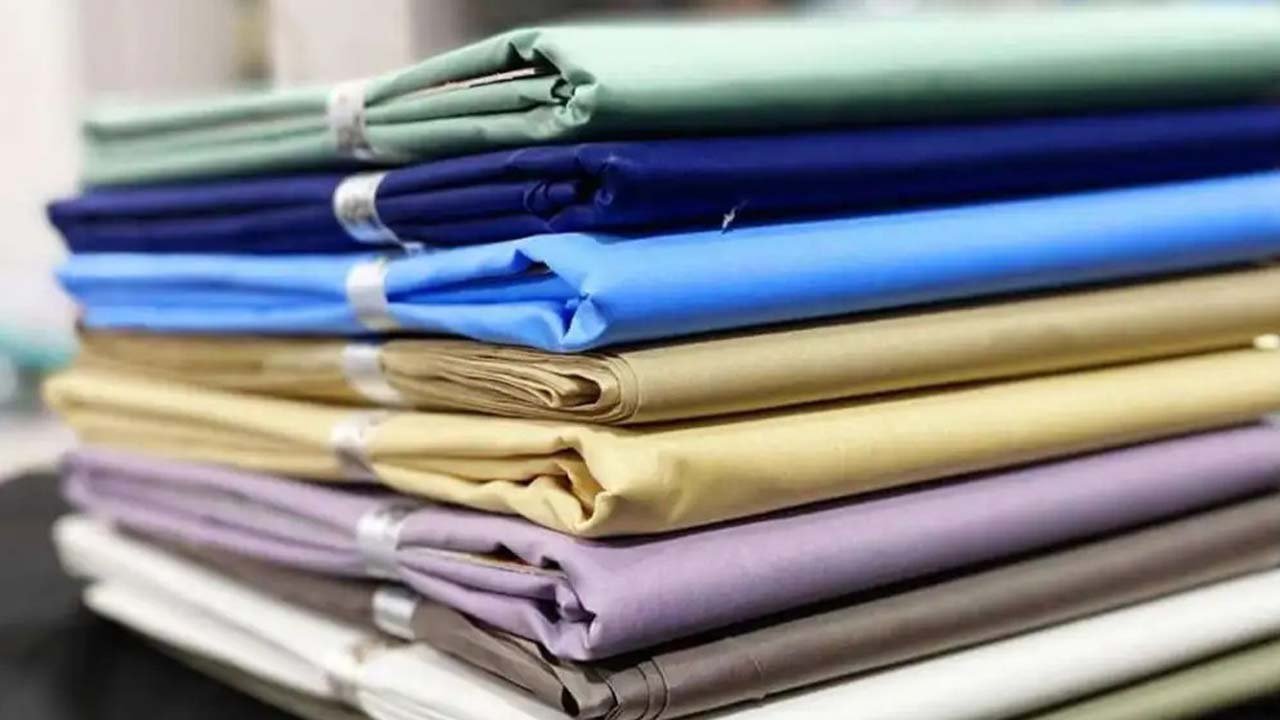
    Pakistan’s Economic Survey 2021-22 reveals that the textile industry expanded by 3.2 per cent during July-March in fiscal year 2021-22, compared to 8 per cent in the same period last year, demonstrating a considerable setback in progress.

    The poundage of the textile sector has declined from 20.9 to 18.16 per cent in QIM 2015-16, but it remains the highest among all LSM sectors, according to Brecorder.

    Woolen segment production grew the most, with a 38.9 per cent increase in blankets, a 27.9 per cent increase in woollen and carpet yarn, and a 19.1 per cent increase in woollen worsted cloth. Yarn and cloth production increased by 0.7 per cent and 0.3 per cent, respectively.

    Congruent production units, invariant capacity and elevated cotton prices owing to demand and supply gap disruptions have moderated the growth momentum of the cotton sector, stated the Economic Survey 2021-22 document, unveiled by Finance Minister Miftah Ismail.

    “Depreciation of PKR restrained the production of jute, as most of the raw material is imported from Bangladesh. However, surge in imports of textile machinery, rising demand for concessionary financing from textile firms and high exports of this sector showing a sizable improvement in the textile sector,” it added.

    With a weight of 6.08 in the LSM, wearing garments has been detached from the textile sector. It grew by 34 per cent compared to 35.6 per cent compression.

    The sector has been growing traction both locally and internationally, with garment production increasing by 34 per cent during the time frame. Garment exports have also increased by 33.9 per cent in aspects of volume.

    Textile is Pakistan’s most valuable manufacturing sector, with the widest production chain and intrinsic value addition ability at each point of the process, from cotton to ginning, spinning, fabric, dyeing and printing, made-ups and garments.

    This sector accounts for well almost one-fourth of industrial value addition and employs approximately 40 per cent of the industrial workforce. Textile products have maintained an average share of about 61.24 per cent in national exports, excluding seasonal volatility.

    In the meantime, knitwear exports decreased by 4.8 per cent in quantity while increasing by 34.1 per cent in value during the period under review. Towel exports totaled $819.6 million, up from $692.1 million, representing an increase of 18.4 per cent in value and 5.1 per cent in quantity.

    The ready-made garment industry has surfaced as a crucial small-scale industry in Pakistan, and it is a good source of providing employment opportunities to many people with a very low capital investment. Exports increased by 33.9 per cent in quantity and 26.2 per cent in value from 27.8 million dozen to 37.3 million dozen worth $2.8 billion, up from $2.27 billion in the same period last year.

    Meanwhile, Pakistan exported synthetic textile fabrics worth $343.59 million in comparison to $269.20 million in the same period last year, representing a 27.6 per cent increase. In terms of volume, synthetic textile exports fell by 33.6 per cent.

    The ceremony was also attended by Ahsan Iqbal, Minister of Planning, Development, and Special Initiatives, Khurram Dastgir, Federal Minister of Power, and Aisha Ghaus Pasha, Minister of State for Finance and Revenue.

    Furthermore, the survey underscored the key features of the government’s policies aimed at restoring macroeconomic stability and putting the economy on a growth path. Addressing the launch event, Miftah Ismail stated that the government has avoided a default due to the difficult decisions made by the current administration. He said that the country is now on the path of stability.

  • ‘Car servicing needed, please look into this’ Twitter asks Miftah to get things done after Maryam’s tweets

    ‘Car servicing needed, please look into this’ Twitter asks Miftah to get things done after Maryam’s tweets

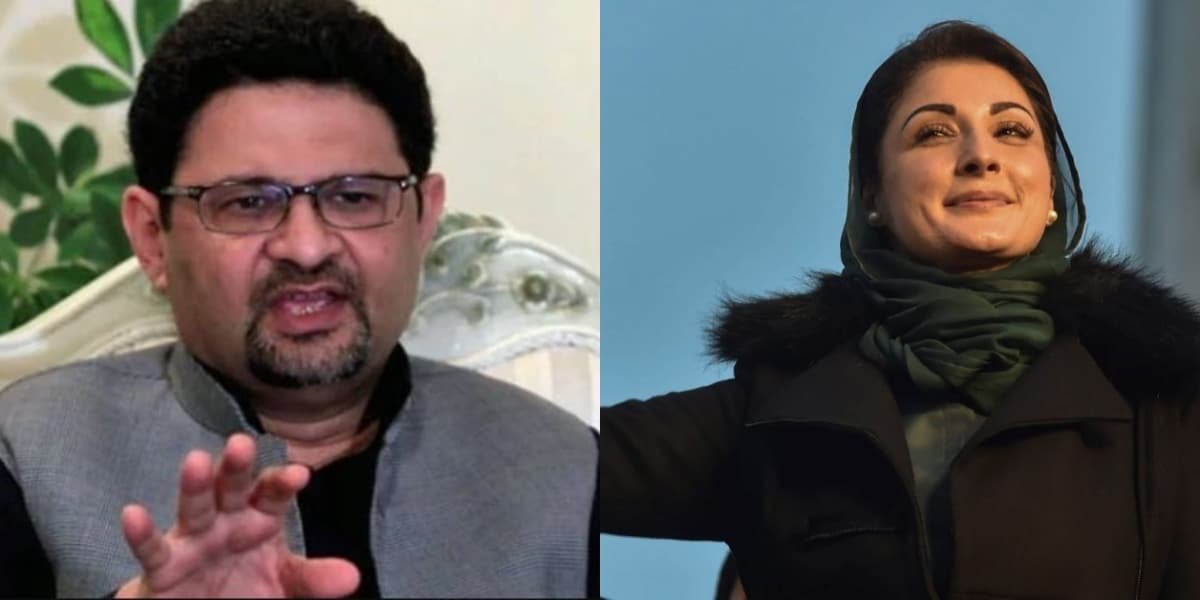
    Pakistan Muslim League-Nawaz (PML-N) Vice President Maryam Nawaz has asked Finance Minister Miftah Ismail to look into the matter of pet food import ban, tagging him in a tweet by journalist Gharidah Farooqi.

    Gharidah tweeted: “It’s been more than two weeks that Pet Food import remains banned in Pakistan. Request to PM Shehbaz Sharif. Kindly lift this ban. Pl listen to the please of voiceless creatures waiting for you to show mercy. Almost NIL impact on import bill. Why not then?”

    Maryam Nawaz tagged Miftah Ismail and wrote, “Please look into this.”

    Last month, when the import ban was imposed and some customs officials confiscated people’s private shopping at airports, Maryam Nawaz had asked Miftah Ismail to look into it. He had responded: “Ji I will.”

    Maryam Nawaz’s tweets for Miftah Ismail has sparked a meme fest on Twitter.

  • Govt considers imposing special levy in the upcoming budget

    Govt considers imposing special levy in the upcoming budget

    The government is considering imposing a specific levy or increasing the tax burden on paid and non-salaried classes earning more than Rs20 million per year in the upcoming budget 2022–23.

    Prime Minister Shehbaz Sharif presided over a high-level meeting to discuss the next budget’s essential components. The premier will have to decide whether to increase tax revenue and thus increase subsidies or cut the tax revenue objective.

    The administration is considering increasing the tax burden on the rich and affluent instead of increasing the percentage of indirect taxes. Top government officials admitted, “Yes, we are considering hiking taxes on the rich.” One of the proposals is to impose a tax modelled after the super tax, which was originally imposed at a rate of 5% on income earners earning Rs50 million per year but was gradually reduced and then repealed.

    For the approaching budget 2022-23, PM Shehbaz will have to choose either increasing subsidies and increasing the FBR’s tax collection target or reducing subsidies and lowering the FBR’s tax collection target.

    The government will have to choose between these two options in order to comply with the IMF’s proposed fiscal framework.

    After talks with the international lender ended inconclusively the day before, Pakistan’s government increased local fuel prices on Friday to meet a major condition imposed by the International Monetary Fund for resuming its bailout programme.

    Miftah Ismail, Pakistan’s finance minister, said on Tuesday that if offered, Pakistan would buy oil and food at reduced costs from Russia, if Moscow did not impose sanctions on Islamabad. He added, though, that Russia had not made such an offer so far.

    Mr Ismail told CNN’s Becky Anderson that Moscow had not responded to the previous government’s letter requesting cheaper oil from Russia.

    The finance minister also stated that if the economy had let it, the current government would have called early elections, but that in the current situation, the government’s first priority is to stabilise the country’s finances.

  • Miftah Ismail says no response by Russia for buying oil at discounted rates

    Miftah Ismail says no response by Russia for buying oil at discounted rates

    Finance Minister Miftah Ismail on Tuesday in an interview with CNN’s Becky Anderson said that he does not know where former premier Imran Khan gets his numbers from, refuting Khan’s claims that Russia has not offered a 30 per cent discount on oil or wheat.

    “Let’s be clear. I don’t know where Khan gets these numbers from,” said Miftah.

    “Khan just makes it up as he goes along. He is the guy who was saying we (PDM) were brought in through an American conspiracy. And now he has come up with this new thing. If Russia was selling him cheap wheat and oil, then why didn’t he buy it? He did not,” said Miftah.

    Difficult for me to imagine buying Russian oil

    Miftah said that Western sanctions have made importing oil from Moscow impossible despite the Pakistani government’s request to buy wheat from Russia and Ukraine.

    “Russia has not offered us any oil either. It is difficult for me to imagine buying Russian oil,” said the finance minister.

     Raising oil prices was ‘a trap for us

    Talking about talks with the International Monetary Fund (IMF), Miftah said, “We have had talks with the IMF in Doha recently. We are talking to the IMF and particularly the IMF is looking at the budget that I am going to present in early June and after that, I am hoping that we will reach an agreement with the Fund.”

    He said the IMF was looking for Pakistan to reverse the subsidies on oil, petrol and diesel in particular “that the previous government had given”.

    Miftah added that the IMF also wanted Islamabad to reverse electric tariff subsidies that the previous government had done.

    “Then it is looking at the budget that I will present. So, I am pretty confident that we should be able to get an agreement with the Fund but there would be some austerity in the budget, some measures to increase taxation in the next budget.”

    The minister said that raising oil prices by the previous government was “a trap for us”.

    “Imran Khan in the last days of his government did a few things to violate all these agreements with the IMF, including giving these unsustainably high subsidies. And he knew we could not sustain this.”

    “And when we came to power, he is now going city to city, trying to rally the people with his theories about conspiracies and all that for putting a lot of political pressure on us.”

    The new government, he said, was finding it difficult to raise the prices right away, but it took a very important step last week.

    Moscow had not even responded to the previous government’s letter

    Ismail said that Moscow had not even responded to the previous government’s letter seeking to buy oil at a discounted price from Russia.

    “The two sides had talked about it, but since Russia is under sanctions, and they have not yet responded to the request sent by the Pakistan Tehreek-e-Insaf (PTI) government, there was no movement on this front.”

    However, he said Islamabad had approached both Ukraine and Russia, “whichever country is willing to sell us wheat we would be happy to buy it”.

    Hammad’s claims

    Former Energy Minister Hammad Azhar said, “Miftah sahib is claiming on national tv that no letter or proof exists of Russian oil talks. And who he should speak to. Russia was enthusiastic on selling discounted oil to us and he should have spoken to Energy Minister of Russia.”

    Miftah’s response:

    Miftah responded to Hammad Azhar’s tweet: “Bhai please listen to my interview again. I did say your govt wrote a letter. But I said no response ever came.”

    He added, “I didn’t say that you waited more than a month after IK’s visit to write the letter & then too when you knew you’d lose the VNC & that it was only done for politics.”

  • Coalition partners finally decide to complete govt term

    Coalition partners finally decide to complete govt term

    The coalition partners have decided that the present government will go ahead with the completion of its term instead of early elections in the country, reports Geo News.

    The decision comes after a meeting of the heads of the ruling alliance today (Monday). The allied parties’ heads met to discuss the political situation in the country after the announcement of a long march towards Islamabad by Pakistan Tehreek-e-Insaf (PTI) Chairman Imran Khan on May 25.

    As per the news outlet, the government has also decided to take tough decisions in a bid to steer the country out of an economic crisis. As Finance Minister Miftah Ismail has left for Doha, Qatar, for talks with the International Monetary Fund (IMF), the tough measures will reportedly be taken in a couple of days.

    The Shehbaz Sharif government has stated that it needs support from “all sides” to take tough decisions in order to revive the economy.

  • PM rules out the removal of fuel, energy subsidies ahead of talks with IMF: Miftah Ismail

    PM rules out the removal of fuel, energy subsidies ahead of talks with IMF: Miftah Ismail

    Finance Minister Miftah Ismail has once again said the government doesn’t plan to increase the prices of petroleum products. Talking to the media at the Karachi airport, he said that Prime Minister (PM) Shehbaz Sharif and Pakistan Muslim League-Nawaz (PML-N) supremo Nawaz Sharif had ruled out the possibility of ending the subsidies.

    “It will not happen. I have refused. Shehbaz Sharif sahib has refused. Nawaz Sharif sahib has refused,” said Ismail. “I am assuring you that I will not agree to [the terms] that Shaukat Tarin agreed to.”

    He said that according to the deal finalised by former finance minister Shaukat Tarin, Pakistan would have to raise the price of diesel by over Rs150 and petrol by Rs100.

    Miftah said that Imran Khan took a loan of Rs20,000 billion, which is 80% of the entire amount of loans taken in 71 years of Pakistan’s history.

    He further stated that former planning and development minister Asad Umar caused Pakistan a loss of 9.1%, which was a record loss in 52 years.

    “Pakistan exported wheat when we [PML-N] left the government but today the country is importing wheat,” Miftah said.

    A team comprising State Bank of Pakistan and Federal Board of Revenue officials, as well as Minister of State for Finance and Revenue Dr Aisha Ghous Pasha and the finance secretary, are already in Doha to negotiate with the IMF.

    The talks began on May 18. At the time, Ismail had told the IMF that the government understood the current economic crisis and agreed that it would have to take “tough decisions” while mitigating the effects of inflation on middle to low-income groups.

  • Economic crisis: Finance minister in Doha to hold talks with IMF

    Economic crisis: Finance minister in Doha to hold talks with IMF

    Finance Minister Miftah Ismail along with his team left for Doha on Tuesday to hold talks with the International Monetary Fund (IMF).

    The ministry said that talks with the IMF mission started today (May 18).

    The review talks are expected to continue for a week and will focus on striking a staff-level agreement for the release of a $1 billion tranche under the Extended Fund Facility (EFF).

    It has been reported that Pakistan will have to convince the IMF to revive the stalled $6 billion programme at a time when the government had not started eliminating the unfunded fuel subsidy after making a commitment with the forum.

    The dollar rate is at its peak in the country. Currently, the rupee touched 200 against the US dollar in the open market. This spell of the dollar’s persistent rise against the rupee began last week.