The Khorasan Diary (TKD) is a joint collaboration of journalists, researchers, and academics from across the world providing consultancy-based services for risk mitigation, security analysis, research papers, and access to original sources of information in the region of Khorasan.
It also has a digital media platform covering areas inaccessible for mainstream media and highlighting grass root developments, particularly in conflict zones.
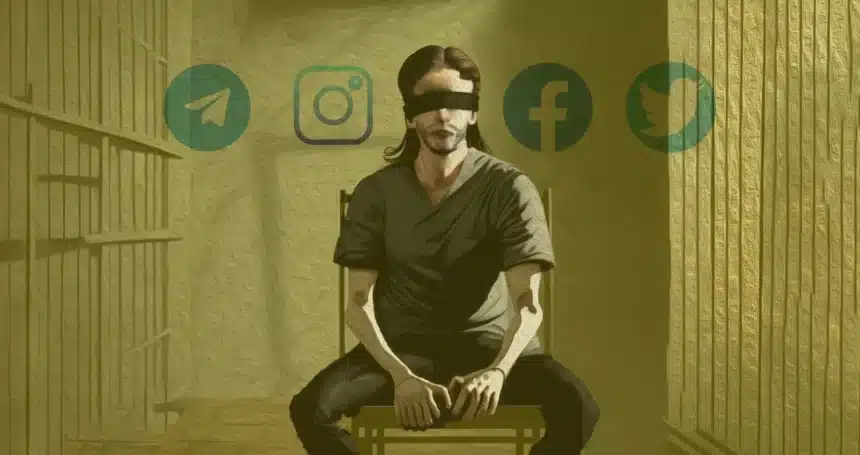
In their latest investigative story, TKD has uncovered the case of a young Pakistani boy who gets entangled in militant circles through social media.
In April 2023, the Islamic State of Khorasan (ISIS-K), a militant group active in South Asia and Central Asia, released a video featuring Serena Hotel and Police Facilitation Centre in Islamabad. The video had a threatening message — “We are coming,”. This alerted the security agencies.
The Khorasan Diary (TKD) was given access to information in regards to the case. The pieces of information led to the discovery of a unit of ‘freelancers’ from Islamabad’s most reputable educational institutions. Apart from providing information to ISKP, the students operated on behalf of the group.
Among these freelancers was 19-year-old Hamza*. His story began with a meme. During the COVID-19 pandemic his classes shifted online and he resorted to the internet to kill time.
“I was always fascinated with digital media and played around with editing tools,” he told The Khorasan Diary.
It was during this time that Hamza came across an Instagram account named ‘Jihadiaspect’* with more than 30,000 followers, sharing memes and videos related to the Islamic State Central. The content had high-definition footage, cinematic style editing, and Western music in the background appealing to the youth.
He watched several of their videos till he discovered that the account had been using the same editing tool as he did: Capcut.
After conversing with the user(s) through comments under their posts, Hamza made his way into the direct messages and inquired further about the editing software.
Hamza was then added to a private Instagram group consisting of numerous teenagers and from there, he was connected with several other pages and individuals across the globe, affiliated with different sects and jihadist groups.
Eventually, Hamza’s religious beliefs transformed as well.
By June 2022, Hamza was introduced to a new group on Telegram named “Formula 1” managed by Islamic State of Khorasan (ISK).
According to Hamza, his recruiter persuaded him on the basis of his Pashtun heritage, emphasising the internal conflicts within the community and advocating for the establishment of a caliphate as the ultimate solution to their issues. During this period, Hamza received several videos on Taliban’s killings of innocent Salafis.
For his first assignment, Hamza made a video showcasing an attack involving a suicide bomber at a loya jirga in Afghanistan in June 2022, where a motorcyclist strategically drove his explosive-laden vehicle into a Taliban checkpoint.
Hamza was praised for his work and he felt a sense of pride when it was posted.
“It was finally happening. I had achieved something. My entire life I was scrutinized for things I never did. My father used to beat me and keep me in isolation. My mother was beaten before me multiple times and we suffered at the hands of our relatives who jostled during yearlong court briefings on how I was involved in my own father’s death. Close relatives, for months, dragged us through police stations and courts following my father’s mysterious killing to force us to surrender our family property to them as I was the only male left in my family. It was finally my time to prove to the world that I was right,” said Hamza.
Hamza was also encouraged to write for their publication.
He wrote for “Voice of Khorasan” but made a critical error by sourcing all the content from Wikipedia. His work was deemed plagiarized because the organization exclusively expected original content. Consequently, his article remained unpublished.
This left Hamza disappointed and in despair.
In February 2023, Hamza received a task to create an impactful video concerning Pakistan and to reestablish their influence in Afghanistan and Pakistan.
Failing to meet the deadline, he received a message stating he will never be contacted again
It was then that Hamza shot a video at Police Facilitation Center and Serena Hotel and recorded a 14-minute clip.
It was released on various ISKP channels, jolting Islamabad’s law enforcement community and resulting in Hamza’s eventual arrest.
Militancy, Technology, and Gen-Z
Khorasan Diary deduced a new trend through multiple interviews with detained militants from various militant outfits in the region. The younger generation of Jihadis is apparently less influenced by ideology and more persuaded by aspects of identity crisis, broken families, and lack of opportunities.
Emerging organizations like ISKP no longer recruit through religious seminaries. There was a time when several students from Pakistan’s private school networks joined religious or nationalist militant outfits due to a lack of proper checks from teachers and parents.
“There was literally no one to stop me from what I was up to. For me, it was some kind of an adolescent adventure initially. My father was stuck in his own court cases and family issues. Mother was a traditional housewife who for years was facing my father’s abuses, both physical and verbal. My teachers and friends at school were aware but instead of stopping me, they were getting fascinated with what I was producing,” Hamza tells Khorasan Diary.
Khorasan Diary also notes that online workers are difficult to track as users are cautious and usually private, and communicate on private encrypted platforms. Generally, the typical online recruiting process culminates in assigning new ISKP recruits to manage online propaganda before entrusting them with training, migration, and attack planning.