Tag: Military courts

  • Civilians to be tried in military court; Supreme Court decides

    Civilians to be tried in military court; Supreme Court decides

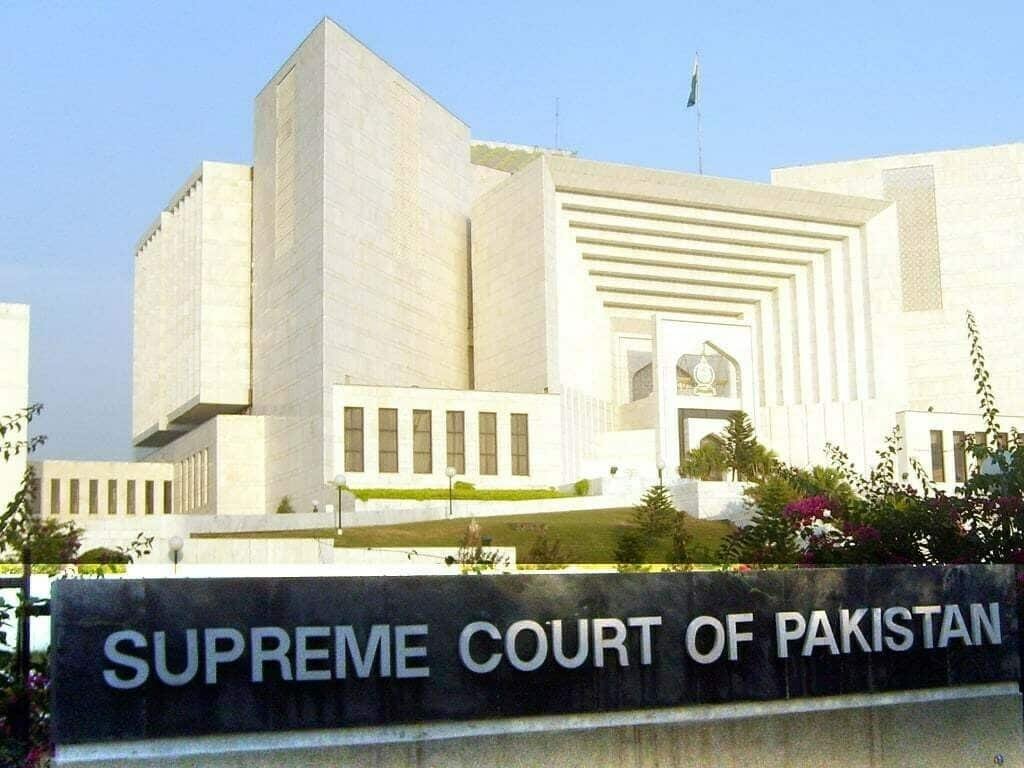
    The Supreme Court has, by a majority of 5-1, suspended its October 23 order that declared the trials of civilians in military courts null and void regarding the May 9 riots.

    The decision came in response to intra-court appeals (ICAs) filed by the federal and provincial governments, as well as the defense ministry, challenging the earlier verdict.

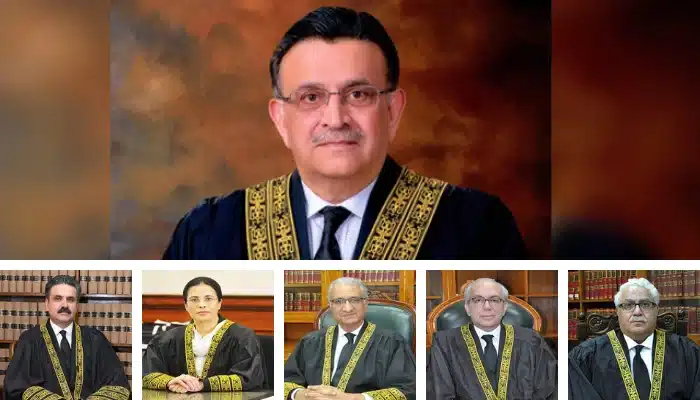
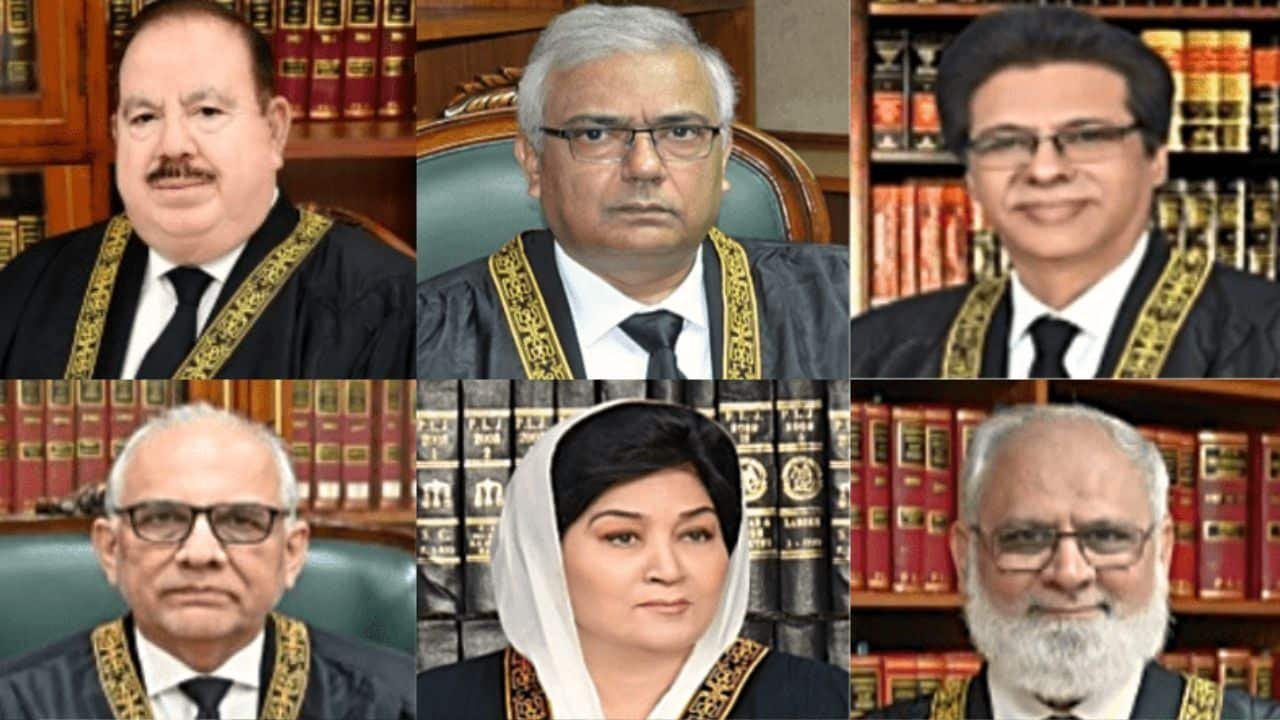
    A six-member bench of the Supreme Court, headed by Justice Sardar Tariq Masood and comprising Justice Aminuddin Khan, Justice Muhammad Ali Mazhar, Justice Syed Hasan Azhar Rizvi, Justice Musarrat Hilali, and Justice Irfan Saadat Khan heard the set of intra-court appeals.

    Justice Hilali differed with the majority decision.

    On October 23, a five-member apex court bench headed by Justice Ahsan unanimously admitted the pleas and nullified the government’s decision to try civilians in military courts in connection with the May 9 riots which erupted after the arrest of Pakistan Tehreek-e-Insaf (PTI)-then chairman Imran Khan.

    Four judges out of the five declared that Section 2(1)(d) of the Army Act and 59(4) (civil offences) are “ultra vires the Constitution and of no legal effect”.

    “Without prejudice to the generality of the foregoing the trials of civilians and accused persons, being around 103 persons […] shall be tried by criminal courts of competent jurisdiction established under the ordinary and/or special law of the land in relation to such offences of which they may stand accused,” the short order read.

    Following its verdict, the federal and the provincial governments along with the defence ministry filed intra-court appeals (ICAs). However, the caretaker government of Sindh refused to file any plea against the SC order.

    Justice Masood, who faced objections regarding his inclusion in the bench, refused to recuse himself.

    Former Chief Justice Jawwad S Khawaja and others had raised concerns about Justice Masood’s previous expressions on the matter, but the judge maintained his position.

    The Supreme Court’s recent decision to suspend the October 23 verdict means that the trials of 103 civilians will continue, with the final ruling conditional upon the Supreme Court’s subsequent orders.
  • Senate passed resolution against Supreme Court decision on civilian trials in military courts

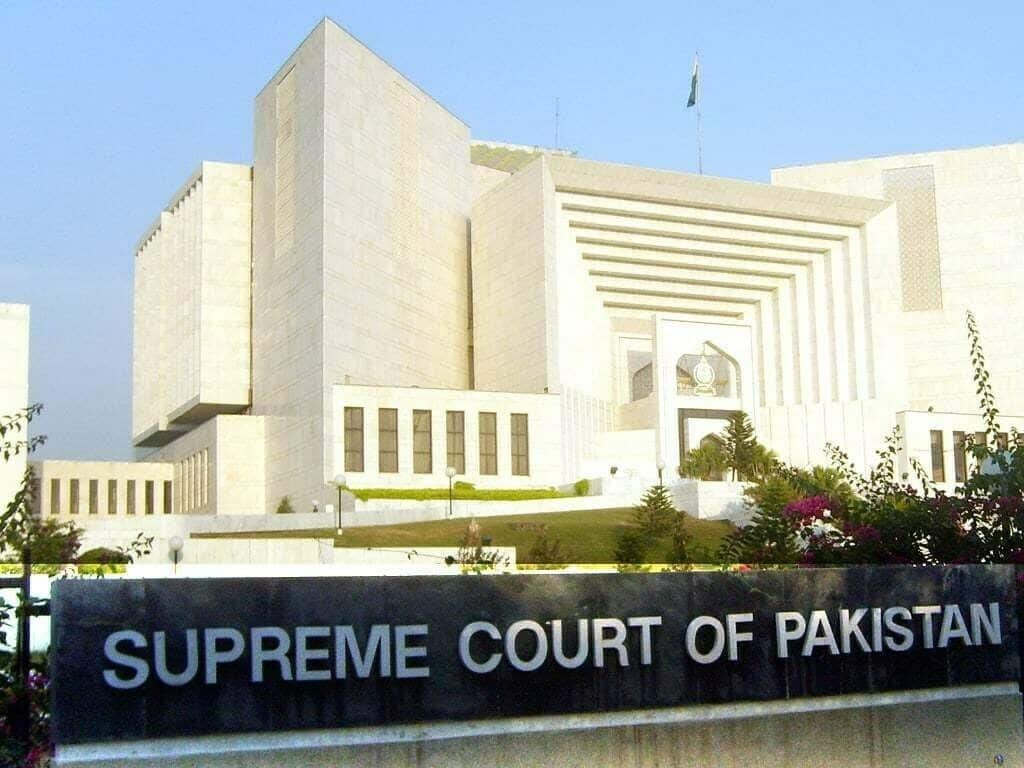
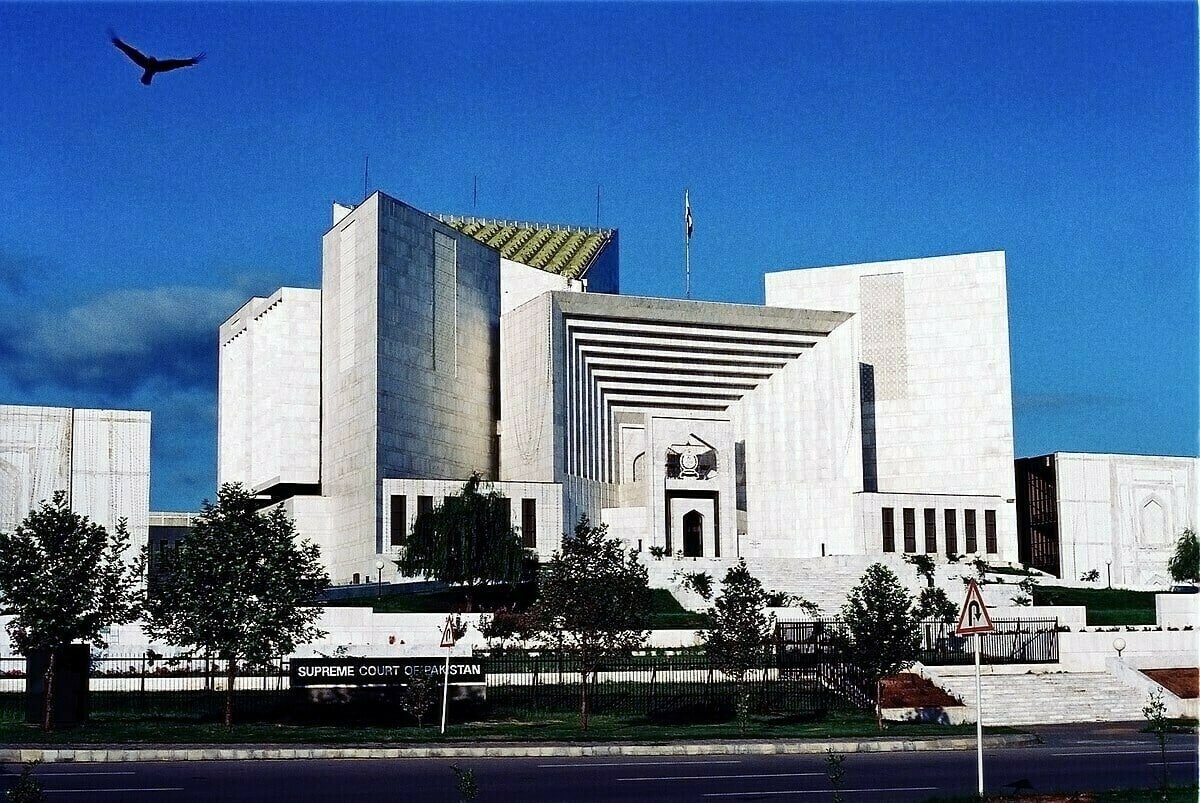
    The Senate of Pakistan passed a resolution on Monday against the Supreme Court’s decision on civilians’ trial in the military courts, urging that the implementation of the judgment be stopped “unless it is considered by a larger bench.”

    A five member bench of Supreme Court (SC) last month unanimously declared civilians’ trial in military courts null and void.

    “Without prejudice to the generality of the foregoing the trials of civilians and accused persons, being around 103 persons […] shall be tried by criminal courts of competent jurisdiction established under the ordinary and/or special law of the land in relation to such offences of which they may stand accused,” the short order read.

    Independent Senator Dilawar Khan from Khyber Pakhtunkhwa (KP) moved the resolution on Monday, stating that the decision is legally flawed as the larger bench did not announce the verdict and should not be implemented.
    The resolution observed with “apprehension that the invalidation of the jurisdiction of army courts is likely to facilitate vandals and abettors of terrorism and anti-state activities”.

    “The Senate of Pakistan calls upon the apex court to reconsider its decision, urging alignment with the national security paradigm and sacrifices of the martyrs in order to address the concerns raised regarding the ramifications of the judgment on the security and stability of the nation.”

  • Supreme Court will intervene if martial law-like situation happens

    Supreme Court will intervene if martial law-like situation happens

    If a martial law-like situation arises, then the Supreme Court will intervene, the apex court has said during a hearing on petitions against the trials of civilians in military courts.

    Chief Justice Umar Atta Bandial said that the present case is not related to the death penalty.

    Attorney General for Pakistan (AGP) Mansoor Usman Awan describes the procedure of military trials in court.

    A six-member larger bench headed by the Chief Justice of Pakistan, Umar Atta Bandial, is hearing the case. Justice Ijazul Ahsan, Justice Munib Akhtar, Justice Yahya Afridi, Justice Sayyed Mazahar Ali Akbar Naqvi, and Justice Ayesha Malik are part of the larger bench.

    The AGP said in his arguments that incidents like May 9 have never happened in the history. He also mentioned that the faces of the people involved in May 9 riots are very clear.

    The Attorney General said that the court should adjourn further hearing for a month. In response, the chief justice said that the court will consult with each other and inform him about the next hearing date.

    Journalist Hasnaat Malik tweeted after the hearing, “So final fate of civilian’s trial in military courts will be decided during next CJP era. CJP Bandial wants stay in commencement of civilians trials till his retirement. He also made it clear that there is no martial law in the country”.

  • Practise and Procedure, civilian trials in military courts cases fixed for hearing

    Practise and Procedure, civilian trials in military courts cases fixed for hearing

    The Supreme Court has fixed hearings for the Practise and Procedure bill case as well as the civilian trial cases in military courts.

    The Supreme Court will hear the Practise and Procedure bill case on July 21. There is an injunction on the implementation of the law by the court until an announcement is made.

    An eight-member bench headed by Chief Justice of Pakistan (CJP) Umar Ata Bandial will hear the case.

    Moreover, a petition against the trials of civilians in military courts has also been fixed for hearing on July 18.

    During the last hearing of the case pertaining to military courts, the CJP stressed the importance of maintaining high morale in the Army. He also said that any decline in morale could only benefit the enemy.

  • Will Imran Khan be tried in military court? No decision yet, says Geo

    Will Imran Khan be tried in military court? No decision yet, says Geo

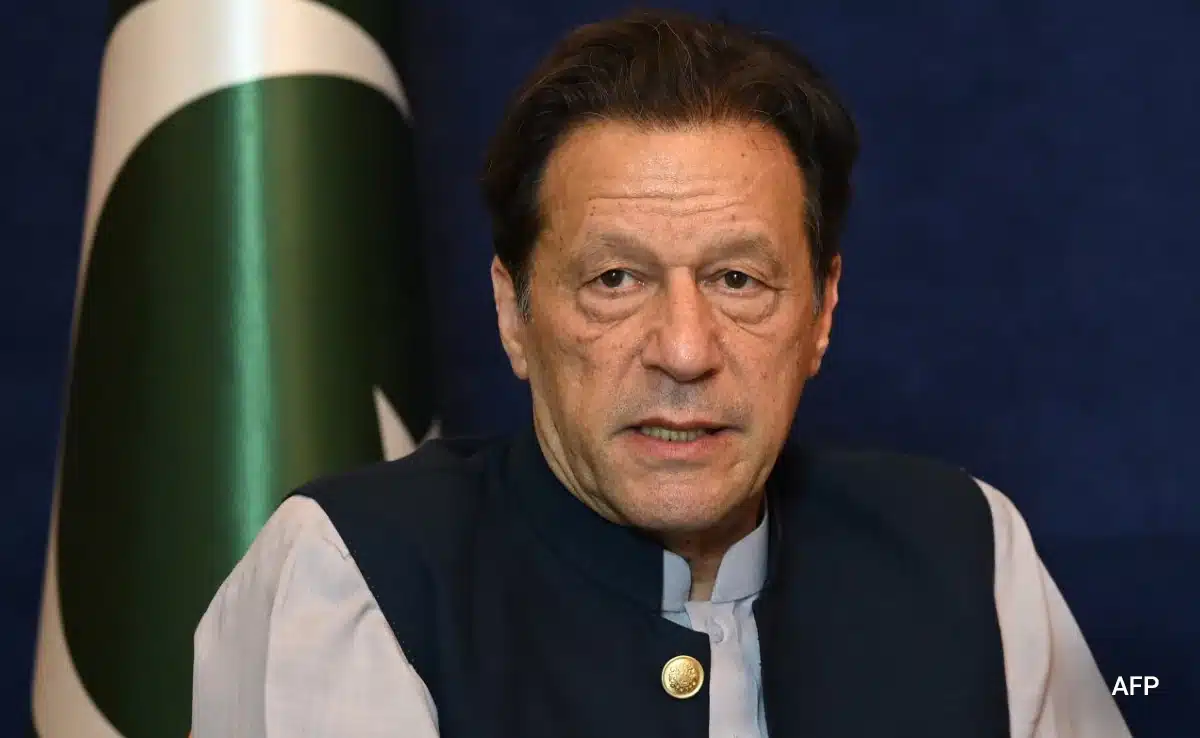
    No final decision has been taken yet on whether Imran Khan, Chairman of Pakistan Tehreek-e-Insaf (PTI), will be tried under Army Act in military courts for the May 9 riots, geo.tv has reported.

    A report by Ansar Abbassi of The News says that while a well-connected source says that some federal ministers are convinced of Imran Khan being the mastermind of the May 9 attack on military and civilian installations, a final decision on taking him to military court is yet to be taken.

    The report states that there is a general consensus among civil and military authorities that Imran Khan plotted the May 9 mayhem, however, establishment has yet to directly name him.

    The former Prime Minister is nominated in at least six FIRs in police stations in Mianwali, Rawalpindi and Gujranwala related to May 9 attacks. He is expected to be named in more as rioters record statements with law-enforcing agencies and police gather more evidence.

    According to the numbers presented by the federal government in the Supreme Court of Pakistan, 102 civilians are awaiting trials in military courts. This number does not include any woman or minors.

  • Trials of civilians have not started yet in military courts, Supreme Court told

    Trials of civilians have not started yet in military courts, Supreme Court told

    Attorney General of Pakistan (AGP) Mansoor Usman Awan confirmed on Tuesday that military trials of civilians had not started yet.
    The AGP gave the statement during the fourth hearing of the petitions filed against the cases of civilians in military trials.

    During Monday’s hearing, Chief Justice of Pakistan (CJP) Umar Ata Bandial asked for reassurance from the AGP that no such trial will be tried until the case is heard in the court.

    The AGP confirmed that trials of civilians have not started yet.
    Earlier, Petitions against military trials were filed by former Chief Justice of Pakistan (CJP) Jawwad S. Khawaja, Aitzaz Ahsan, Karamat Ali, and former Prime Minister Imran Khan.

  • SC bench hearing petitions against military courts dissolved again

    SC bench hearing petitions against military courts dissolved again

    A seven-member bench of the Supreme Court, hearing a set of pleas against military trials for perpetrators of the May 9 riots, has dissolved once again on Monday. Justice Mansoor Ali Shah, one of the judges on the bench, refused to be part of the bench after the government raised objections.
    The Attorney General of Pakistan (AGP), Mansoor Usman Awan, came to the rostrum at today’s hearing and imparted the government’s objections on including Justice Mansoor in the bench as one of the petitioners is related to him.
    “One of the petitioners is Justice Shah’s relative. Therefore, it may affect his conduct,” AGP Awan said.
    However, Chief Justice of Pakistan CJP Umar Atta Bandial said, “The bench will not be made according to your whims.” The CJP expressed anger by saying that the “government should not mock the judiciary.”

    Nonetheless, Justice Shah recused himself from the bench.

    Petitions against military trials have been filed by former Chief Justice of Pakistan (CJP) Jawwad S. Khawaja, Aitzaz Ahsan, Karamat Ali, and former Prime Minister Imran Khan.

    At the first hearing of the case, Justice Qazi Faez Isa and Justice Sardar Tariq Masood left the bench after Justice Isa said he did not consider the SC bench “a proper court.”

  • ‘Those who are creating issues over military courts have political motives’: Khawaja Asif

    ‘Those who are creating issues over military courts have political motives’: Khawaja Asif

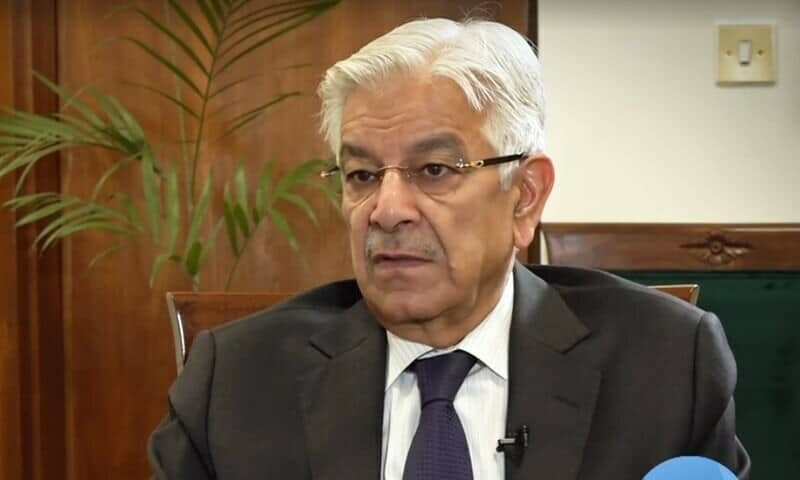
    Defence Minister Khawaja Asif said on the floor of the National Assembly on Thursday that the people who have issues with military courts are politically motivated.

    He further said that to avoid conflicts, institutions should not trespass on each other’s boundaries.

    The defence minister remarked that it is very obvious that the people who have issues with military courts have political motives, adding that these types of crimes have not happened before in the country’s history. He has also said that the attackers involved in the May 9 riots are political activists.

    Mentioning that the attackers were brainwashed by their leaders to attack military installations, he further said that I would tell the judiciary to leave a legacy if they wanted to be remembered.