Tag: military operations

  • Timeline of military operations in Pakistan

    Timeline of military operations in Pakistan

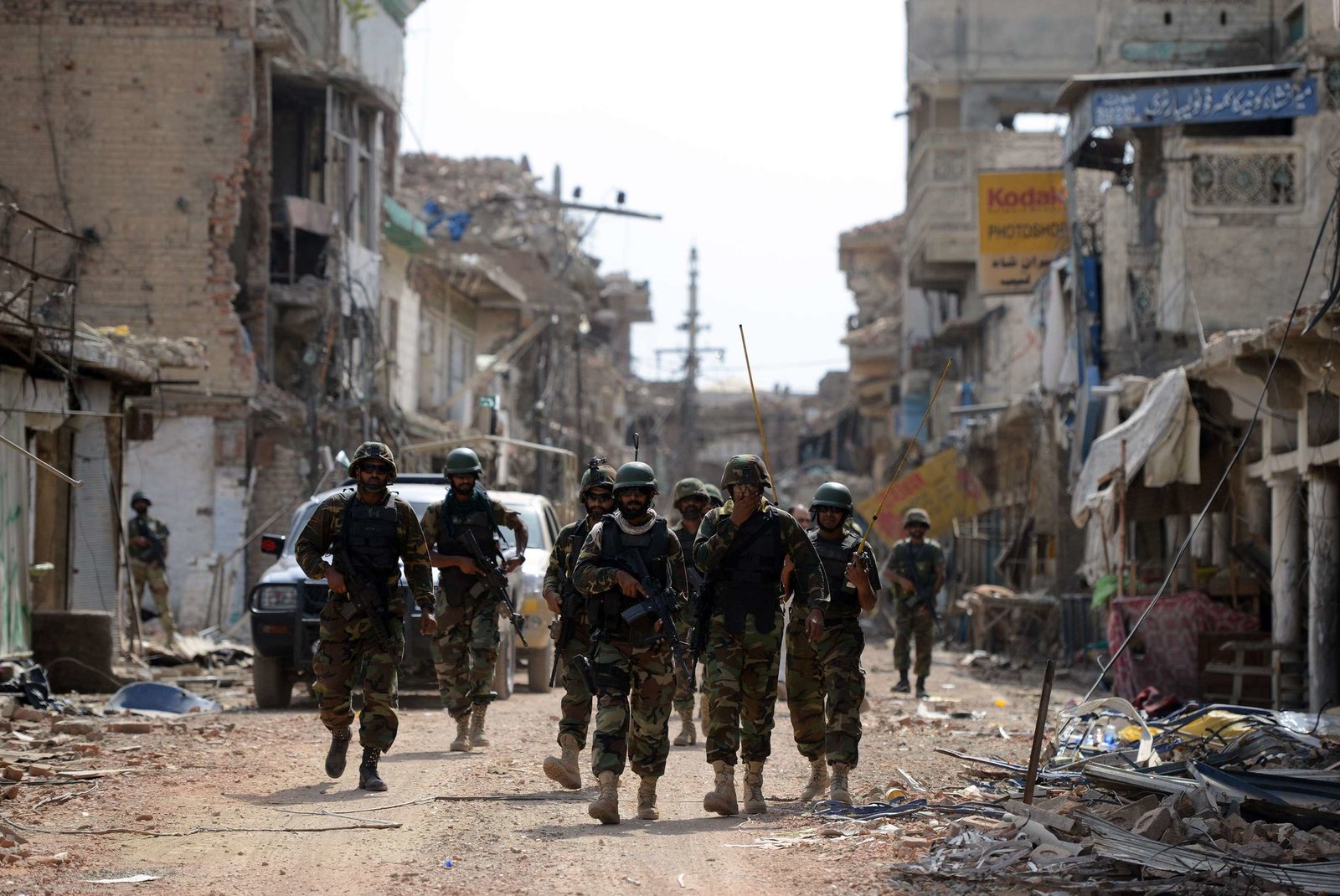
    Ever since the War on Terror began, Pakistan has had to conduct multiple military operations to battle with militancy.

    In 2007, the first battle was fought in Khyber Pakhtunkhwa (KP) Swat district between Pakistani security forces and Tehreek-e-Taliban Pakistan (TTP).

    Parvez Musharraf was the army chief at that time. Following the failure of talks between army and TTP, Musharraf gave the go-ahead to start a military operation named Rah-e-Haq in KP’s Swat district.

    By mid-2007, an organization founded by Sunni Islamist cleric and militant Sufi Mohammad Khan, Tehrik-e-Nifaz-e-Shariah-Mohammadi, had taken over the majority of the district. 

    In November 2007, military forces started an operation to eradicate terrorist elements from Sawat Valley.

    In 2009, the security situation in Swat again became worse when Mullah Fazlullah appeared on the scene. The army started an operation called Rah-e-Rast, which lasted for three months.  

    According to the details of Inter-Services Public Relations (ISPR), during Operation Rah-e-Rast, the army killed 2635 militants, detained 254, and wounded 454 others.

    The tenure of former army chief Gen (r) Ashfaq Parvez Kayani was full of military operations in tribal areas of the country as the armed forces conducted a military operation named Rah-e-Nijat in 2009 in South Waziristan.

      
    The aim of the operation was to wipe out TTP, including eliminating TTP chief Baitullah Mehsud from the area.

    Operation Zarb-e-Azb was launched on June 15, 2014, under the leadership of former army chief Gen Raheel Sharif against multiple militant organization including TTP, the Islamic Movement of Uzbekistan, the East Turkestan Islamic Movement, Lashkar-e-Jhangvi, al-Qaeda, Jundallah and Lashkar-e-Islam in North Waziristan.

    Operation Radd-ul-Fasaad started in 2017. At that time, Nawaz Sharif was the Prime Minister and General Qamar Javed Bajwa was the army chief. The operation’s purpose was to root out terrorism from the entire country.

    Now, the Apex Committee on National Action Plan on June 22, 2024, approved a new operation with the name of ‘Azm-e-Istehkam’.

    Pakistan Muslim League-Nawaz (PML-N) leader and Defence Minister Khawaja Asif said today that operation Azm-e-Istehkam will be implemented in different areas of Balochistan and KP.

    The purpose of ‘Azm-e-Istehkam’ operation is to strengthen the government’s writ in certain areas.
  • Israeli military strikes Rafah while continuing talks with mediators

    Israeli military strikes Rafah while continuing talks with mediators

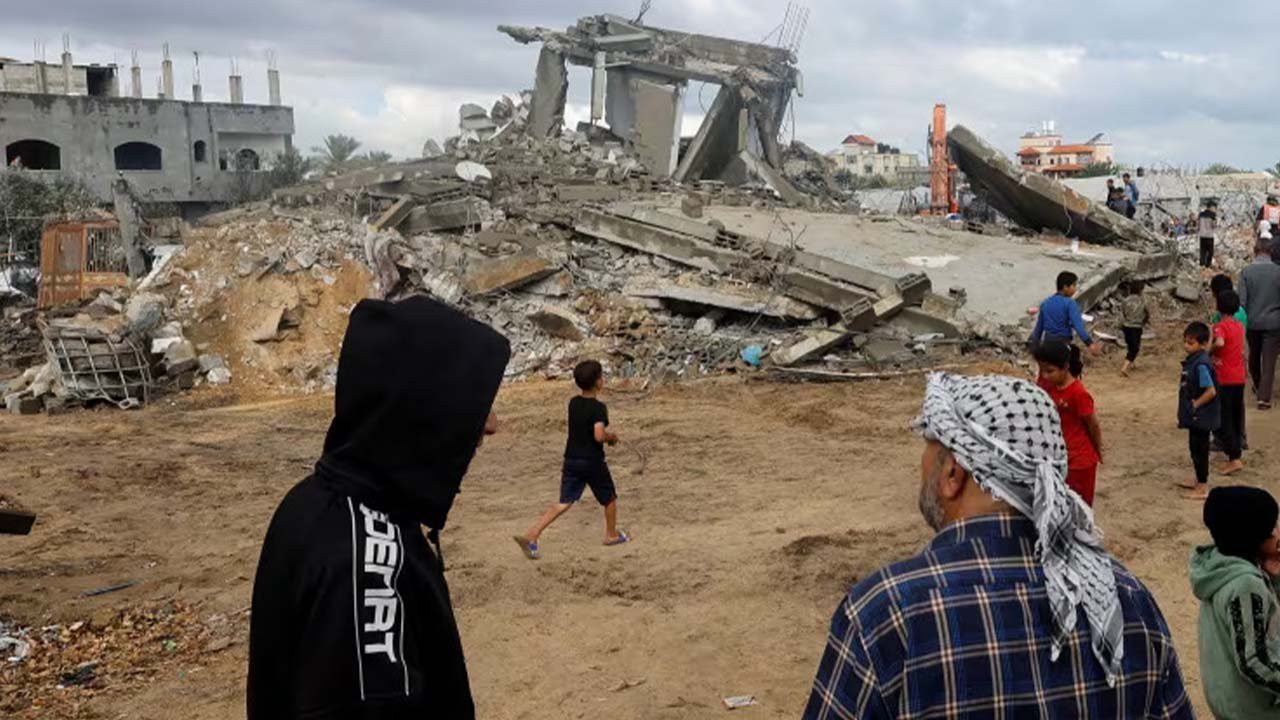
    The Israeli military said that it is conducting targeted strikes against positions held by the Islamist group Hamas in the eastern part of Rafah, a southern city in Gaza.

    The operation is part of ongoing efforts to pressure Hamas into releasing Israeli hostages and achieving other strategic goals, reports Ari Rabinovitch.

    Israeli Prime Minister Benjamin Netanyahu stated that his war cabinet has approved the continuation of the operation in Rafah. The aim is to increase pressure on Hamas to ensure the release of Israeli hostages while pursuing other military objectives.

    “The war cabinet unanimously decided that Israel continue the operation in Rafah to exert military pressure on Hamas in order to advance the release of our hostages and the other goals of the war,” Netanyahu’s office said in a statement.

    The statement also indicated that despite the ongoing strikes, Israel would engage with mediators in an attempt to reach an agreement with Hamas, noting that the current Hamas proposal does not meet Israel’s necessary demands.

    “In parallel, even though the Hamas proposal is far from Israel’s necessary demands, Israel will send a working delegation to the mediators in order to exhaust the possibility of reaching an agreement under conditions acceptable to Israel,” the statement read.

    Meanwhile, the White House announced that it is reviewing Hamas’s response to a ceasefire and hostage release deal and is urging Israel to avoid launching a large-scale offensive in Rafah.

    White House spokesperson John Kirby noted that U.S. President Joe Biden spoke with Netanyahu for about 30 minutes regarding the ongoing operation in Rafah and the hostage situation before Hamas’s response was received.

    Kirby described the discussion as constructive, stating, “It wasn’t a pressure call; it wasn’t about twisting his arm towards a certain set of parameters.”

    However, he also said that the United States does “not support ground operations in Rafah” unless Israel can demonstrate a clear plan to protect hundreds of thousands of Palestinian civilians living in the area.

    CIA Director William Burns is also in the region, discussing the Hamas response with Israeli officials.

    Kirby highlighted the urgency of the situation, stating, “We are at a critical stage right now,” and reiterated that the U.S. is urging restraint to avoid further civilian casualties.