
Tag: Ministry of Information Technology

  • Pakistan suspends cryptocurrency services to combat illegal transactions

    Pakistan suspends cryptocurrency services to combat illegal transactions

    The Pakistani government announced on Wednesday that it will suspend cryptocurrency services provided over the internet in the country in order to prevent illicit digital currency transactions.

    According to Geo, the State Bank of Pakistan (SBP) and the Ministry of Information Technology have already begun the process of prohibiting cryptocurrencies, complying with the directives.

    During a briefing to the Senate Standing Committee on Finance, Dr Aisha Ghaus Pasha, the Minister of State for Finance and Revenue, emphasised that cryptocurrency will never be legalised in Pakistan.

    She revealed that the Financial Action Task Force (FATF) has imposed restrictions on the matter, stating that the condition set by FATF is that cryptocurrency will not be legalised.

    Supporting Pasha’s stance, Sohail Jawad, the Director of SBP, stated that crypto transactions carry high risks and will therefore never be granted permission in Pakistan. He explained that cryptocurrency is a virtual currency with over 16,000 types currently in existence. Additionally, he mentioned that the market, which was valued at $2.8 trillion, has now shrunk to $1.2 trillion.

    Senator Saleem Mandviwalla from the Pakistan Peoples’ Party (PPP) expressed concerns over the billions of dollars invested in the market. In response, the SBP official reassured him by mentioning that the Federal Investigation Agency (FIA) and the Financial Monitoring Unit (FMU), a financial intelligence unit aiding Pakistan in combating terrorism financing and money laundering, are actively addressing these concerns.

    Pakistan has witnessed a surge in cryptocurrency trading and mining, as evidenced by the growing interest in related social media videos and online exchange transactions.

    Although the government had previously banned trading and mining of virtual currencies in April 2018, cryptocurrency mining continues to thrive in the country, despite the closure of several mining farms.

    Most exchanges operate discreetly through undisclosed partners, evading regulatory oversight. Nevertheless, the government persists in its efforts to curtail crypto trading activities.
  • Smuggled phones flood AJK and GB as device identification system remains unimplemented

    Smuggled phones flood AJK and GB as device identification system remains unimplemented

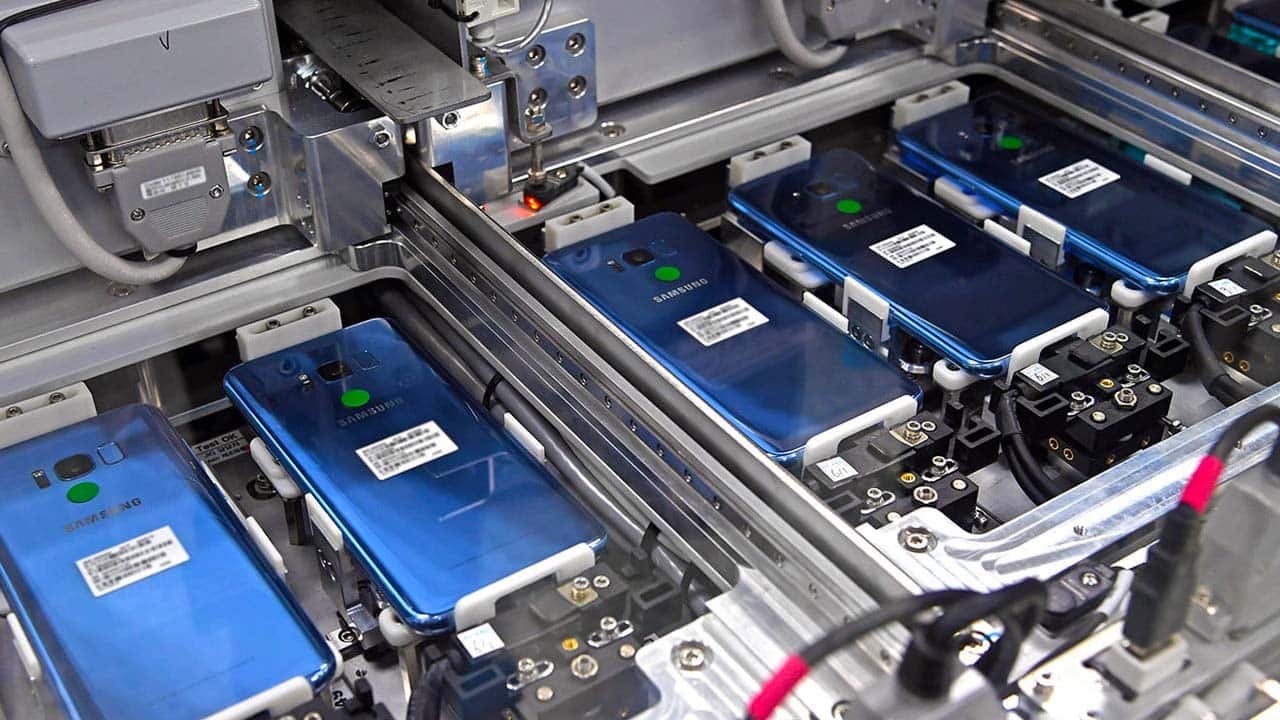
    According to a source in the Federal Board of Revenue (FBR), the non-implementation of the Device Identification, Registration and Blocking System (DIRBS) has led to an increase in the use of smuggled mobile phones in the Azad Jammu & Kashmir and Gilgit-Baltistan region. Unlike the rest of the country, the Special Communications Organisation (SCOM) is the main mobile phone operator in this region, and the DIRBS does not apply to its connections.

    The purpose of the DIRBS is to identify non-compliant devices operating on local mobile networks and eventually block them while registering compliant ones. Despite a halt in local manufacturing and import of mobile phones, around 100,000 mobile phones are being smuggled into the region every month.

    Industry experts have confirmed that non-duty paid mobile phones smuggled from Dubai have made their way to the region. Zeeshan Mianoor, Deputy Vice Chairman of Pakistan Mobile Phone Manufacturers Association, stated that the monthly sales of local mobile sets were around 2 million devices, with around 8-10% of them sold in the AJK and GB region.

    According to Dawn, Muhammad Ishaq Jalal, a Skardu-based journalist, explained that unregistered phones do not work in mainland Pakistan, but they operate on SCOM, and the same connection works in mainland Pakistan on the Ufone network due to the agreement between SCOM and Ufone. Jalal also noted that expensive, used smartphones are available at reasonable prices in the GB region because many of them are blocked in mainland Pakistan either because they were not registered with PTA or stolen, and their IMEI has been blocked.

    The spokesperson of the Pakistan Telecommunication Authority (PTA) stated that both the PTA and the Ministry of IT and Telecom have requested the Cabinet Division to ensure the implementation of DIRBS on SCOM. The spokesperson added that the system would be extended to the SCOM connections once the Cabinet Division approves the request. The DIRBS was introduced to protect local mobile device manufacturing by imposing duties on imports of mobile phones, as well as those brought by travellers coming from abroad. However, this system also helped to reduce mobile phone smuggling.