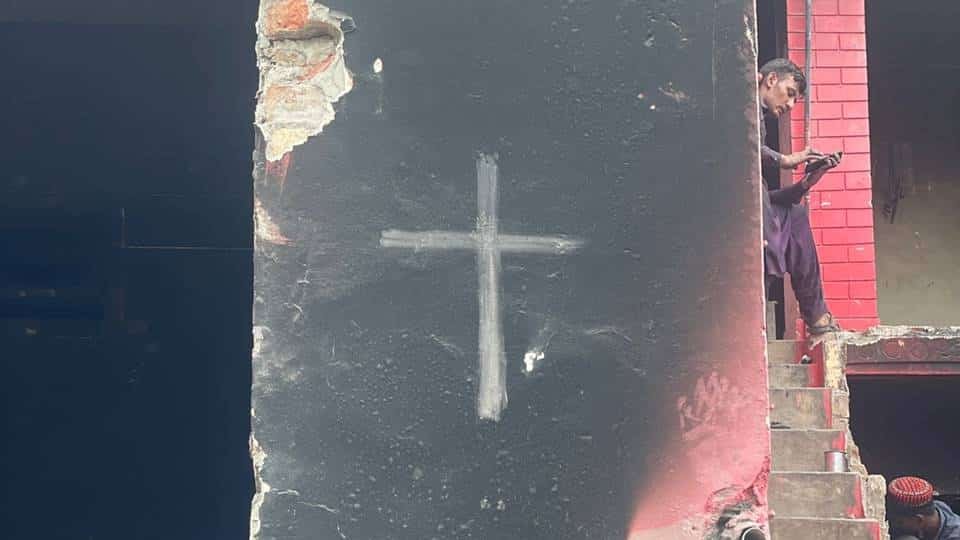
Tag: minorities

  • Online hate sows Muslim fears as India votes

    Online hate sows Muslim fears as India votes

    Haldwani (India) (AFP) – After his brother was murdered in anti-Muslim riots, Pervez Qureshi watched the videos he believes incited the killers, part of a wave of hatred being fomented on social media ahead of India’s elections.

    India has a long and grim history of sectarian clashes between the Hindu majority and its biggest minority faith, but analysts warn increasingly available modern technology is being used to deliberately exploit divisions.

    “Videos and messages were shared on Facebook and WhatsApp which contained inflammatory language and incitement to violence,” Qureshi told AFP, recalling the attack on his brother Faheem in February in the northern city of Haldwani in Uttarakhand state.

    “It poisoned the atmosphere.”

    Nearly 550 million more Indians have access to the internet than when Prime Minister Narendra Modi came to power a decade ago, according to figures from the Internet and Mobile Association of India.

    Modi’s Hindu-nationalist Bharatiya Janata Party (BJP) is widely expected to win a third term in elections that begin on April 19.

    Part of his popularity can be attributed to his party’s masterful online campaign team, staffed by thousands of volunteers who champion his good deeds and achievements.

    Modi’s use of social media “awakens nationalism and patriotism among the youth in every corner of the country”, said Manish Saini, a youth leader of a BJP “IT Cell” in Uttarakhand state, who works online to reach voters.

    ‘Atmosphere of hatred’

    Critics however accuse the BJP’s sophisticated social media apparatus of also fanning the flames of division.

    Haldwani community leader Islam Hussain said tensions were already high before February’s violence, after months of incendiary social media posts calling Muslims “outsiders”.

    “It was said that due to the increasing population of Muslims, the social demography of Uttarakhand is changing”, Hussein said.

    “Right-wing social media cells have a big role in creating an atmosphere of hatred against Muslims.”

    Clashes erupted after the authorities said a mosque had been built illegally, and a Muslim group gathered to prevent its demolition.

    Some hurled stones at police officers, who beat them back with batons and tear gas.

    Hindu residents gathered to cheer on the police clampdown, chanting religious slogans and throwing rocks at the crowd.

    Footage of the riots spread swiftly on social media.

    Egged on by online calls to mobilise, Hindu mobs rampaged through the streets.

    “It’s time to teach them a lesson,” read the caption to one of dozens of inflammatory posts, many of which remain online.

    “The time has come to beat Muslims.”

    Qureshi said his brother Faheem, 32, was killed by Hindu neighbours after they first torched his car.

    ‘Triggers an incident’

    But Saini, coordinator for the BJP’s youth wing, said the online team he leads does not encourage violence — and is under strict instruction not to “write anything against anyone’s religion”.

    He said his colleagues had mobilised quickly on the day riots broke out to provide information, not to stir up trouble.

    “When we got the news, we immediately started preparing graphics, videos and text messages to reach people with the correct and accurate information related to the incident,” he said.

    He said the initial violence was clashes between police and a Muslim group — and blamed Modi’s opponents for instigating riots to tarnish the government’s image.

    Critics disagree.

    Raqib Hameed Naik, from research group Hindutva Watch, said that the BJP’s IT Cell had generated anger towards minorities, by promoting the government’s Hindu-nationalist agenda.

    Naik, who documents hate speech against religious minorities, said the social media messages spreading during the Haldwani violence followed a pattern seen in previous riots.

    “First, hate speech against Muslims by a Hindu activist or politician creates an atmosphere… then the hate speech triggers an incident,” Naik said.

    Afterwards, online Hindu-nationalist campaigners “hold Muslims responsible” for the violence, he added.

  • Christians in India fearful as election looms

    Christians in India fearful as election looms

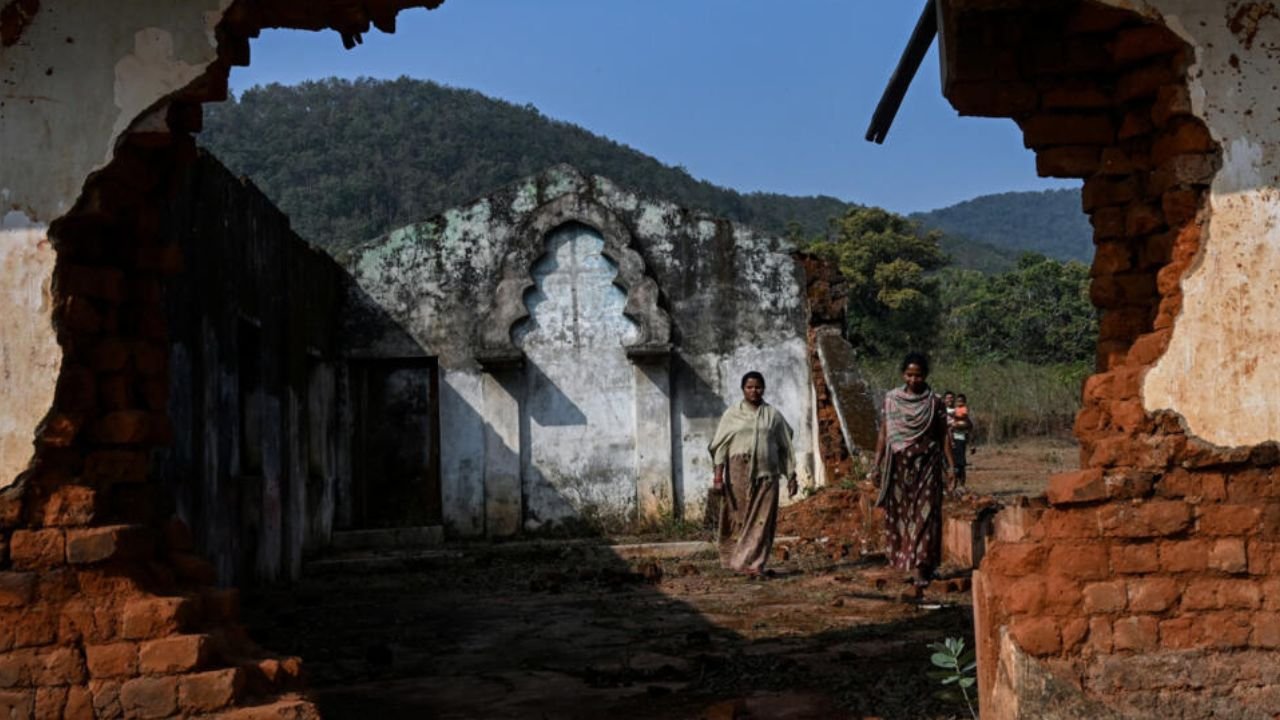
    Irpiguda (India) (AFP) – Church walls crumble in India’s Kandhamal district, where brutal attacks on Christians 16 years ago means many survivors still worry about their minority’s place in a Hindu-majority nation.

    With India’s election on the horizon and Hindu nationalist Prime Minister Narendra Modi widely expected to win, many Christians fear they may once again become targets.

    Deepti was among those attacked in 2008 when mobs rampaged through parts of India’s eastern state of Odisha after the murder of a Hindu priest and his four followers.

    The murder was widely blamed on Christians, and the ensuing revenge rampage left at least 101 people dead.

    Aged 19 at the time, she was gang raped by a mob enraged that her uncle had refused to recant his Catholicism.

    “I remember it every minute,” the 35-year-old domestic worker said in tears, using a pseudonym because she feared being identified.

    “I had been living there since childhood, I recognised them from their voice,” said Deepti, who moved to the state capital Bhubaneswar after the attack.

    “I can still remember each one of them.”

    She was one of scores of women who, according to community leaders, were sexually assaulted across the district.

    Mobs targeted dozens of churches, prayer halls and Christian homes, forcing tens of thousands to flee.

    Last year, the Vatican greenlighted the start of the beatification process towards potential sainthood for 35 of those killed in the violence, a group the church calls the “Kandhamal martyrs”.

    Local Odisha Archbishop John Barwa calls the move a “source of renewed faith and hope”.

    A simple memorial for those who were killed has been erected in the village of Tiangia.

    “Where there is hatred, let me sow love”, the memorial reads, quoting Saint Francis of Assisi.

    ‘Still scared to talk’

    Prasanna Bishnoi, head of Kandhamal’s survivors’ association, said church recognition that people had “died because of their faith” was welcomed — but that honouring the dead did nothing to address the worries of the living.

    “Otherwise, I don’t think it is going to benefit our people,” Bishnoi said.

    Six weeks of voting in marathon general elections begin on April 19, but few doubt the June 4 result — with the ruling Hindu-nationalist Bharatiya Janata Party (BJP), in power for a decade, widely tipped to win again.

    Critics accuse Modi’s BJP of wanting to turn officially secular India into a Hindu nation, something he denies.

    But many Christians worry.

    Right-wing Hindu groups have long accused Christians of forcibly converting Hindus and these allegations, which the community has vehemently denied, have resulted in attacks.

    India has 1.4 billion people and according to the last census, more than two percent are Christians.

    Believers say the religion has been present in the country for nearly two millennia, since the apostle Thomas arrived in the year AD 52.

    The New Delhi-based United Christian Forum (UCF) rights watchdog recorded 731 attacks against Christians in India last year, warning of “vigilante mobs comprising religious extremists”.

    In Kandhamal, the trauma of the 2008 attack haunts survivors, fearful they could be targeted again.

    “Even now the danger persists,” said Raheli Digal, 40, showing AFP the charred walls of what was once her house in Irpiguda village, where the church also lies in ruins.

    “When we remember those old scenes, and watch the news (about ongoing incidents of violence against Christians), we feel scared,” she added.

    “They have been saying for a long time that they won’t let Christians live here.”

    The housewife said she has lived since the 2008 violence in a resettlement camp nearby, and rarely returns to her village.

    “We do not come here… we are still scared to talk to them (Hindus),” she said.

    She sobbed as she described how she hid in the surrounding forested hills, watching as a mob chanting anti-Christian slogans came with blazing torches.

    “They destroyed our home, set it on fire,” she said.

    “We had nothing, not even a piece of cloth, not even water or food,” she added. “We had small children with us — we grabbed them, and ran into the forest.”

    ‘This country is for everyone’

    When Modi in January inaugurated a grand temple to the deity Ram in the northern city of Ayodhya, sparking Hindu celebrations nationwide, Digal and her neighbours stayed home.

    The temple was built on the site of a centuries-old mosque whose destruction by Hindu zealots in 1992 sparked sectarian riots that killed 2,000 people nationwide, most of them Muslims.

    The BJP admits there is a “level of threat perception”, but says it is trying to change that.

    “It is important that we dispel that,” said BJP national spokesman Mmhonlumo Kikon.

    Modi has been “engaging with the Christian community and the leaders to reassure them this country is for everyone — it is not just for the majority community”, Kikon said.

    Bishnoi, from the survivors’ association, said seeing Modi meeting Christians helped him feel “safe”.

    But he also said that reports of violence worried him and cast doubt in his mind.

    “If this government comes to power, then I think minorities will be under pressure,” he said.

  • Mark your calendars: Aurat March is around the corner!

    Mark your calendars: Aurat March is around the corner!

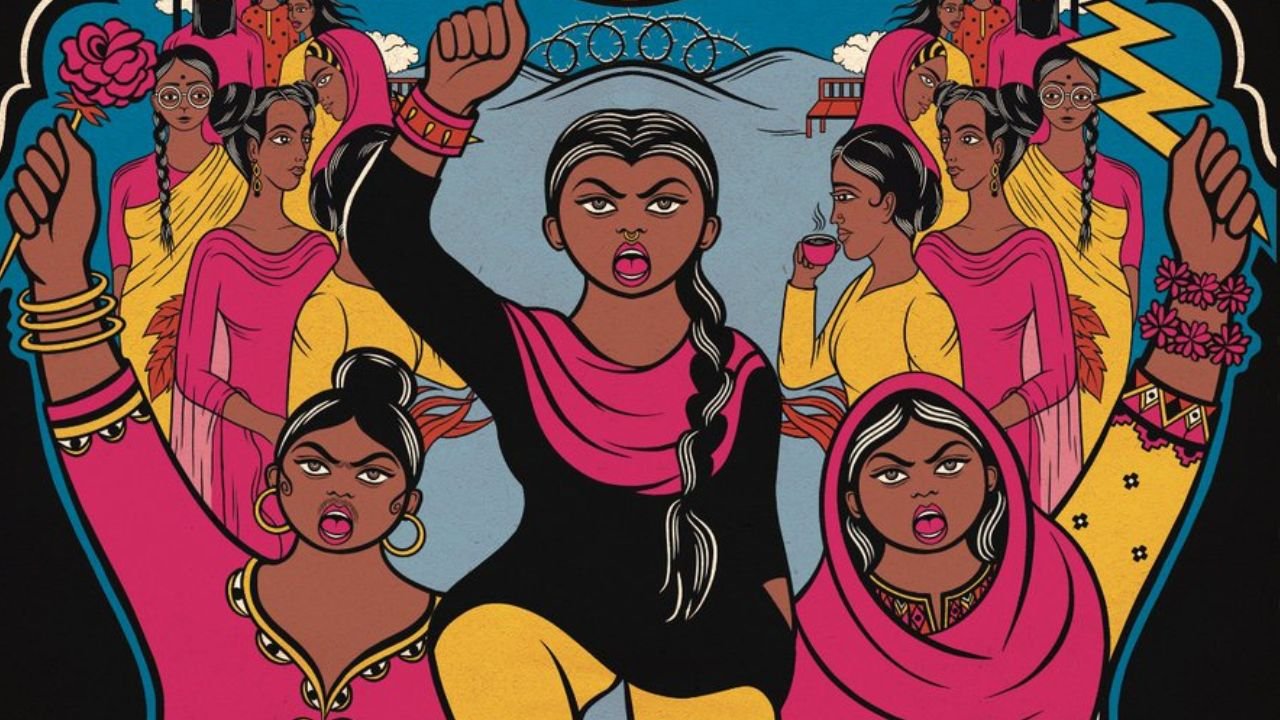
    March is finally here which means that 8th of the month is Women’s Day around the world and in Pakistan, Aurat March in major cities will walk through the streets to remind the state and the society of the due rights of women and minorities of the country.

    Where and when to join Aurat March?

    Lahore
    Time: 8th March, 2 pm
    Place: Lahore Press Club

    Karachi
    Time: 2:30 pm
    Place: Frere Hall

    Islamabad
    Time: 2 pm
    Place: Islamabad Press Club

    Multan
    Time: 3 pm
    Place: Nawan Shehar Chowk

    What are the demands this year?

    Lahore

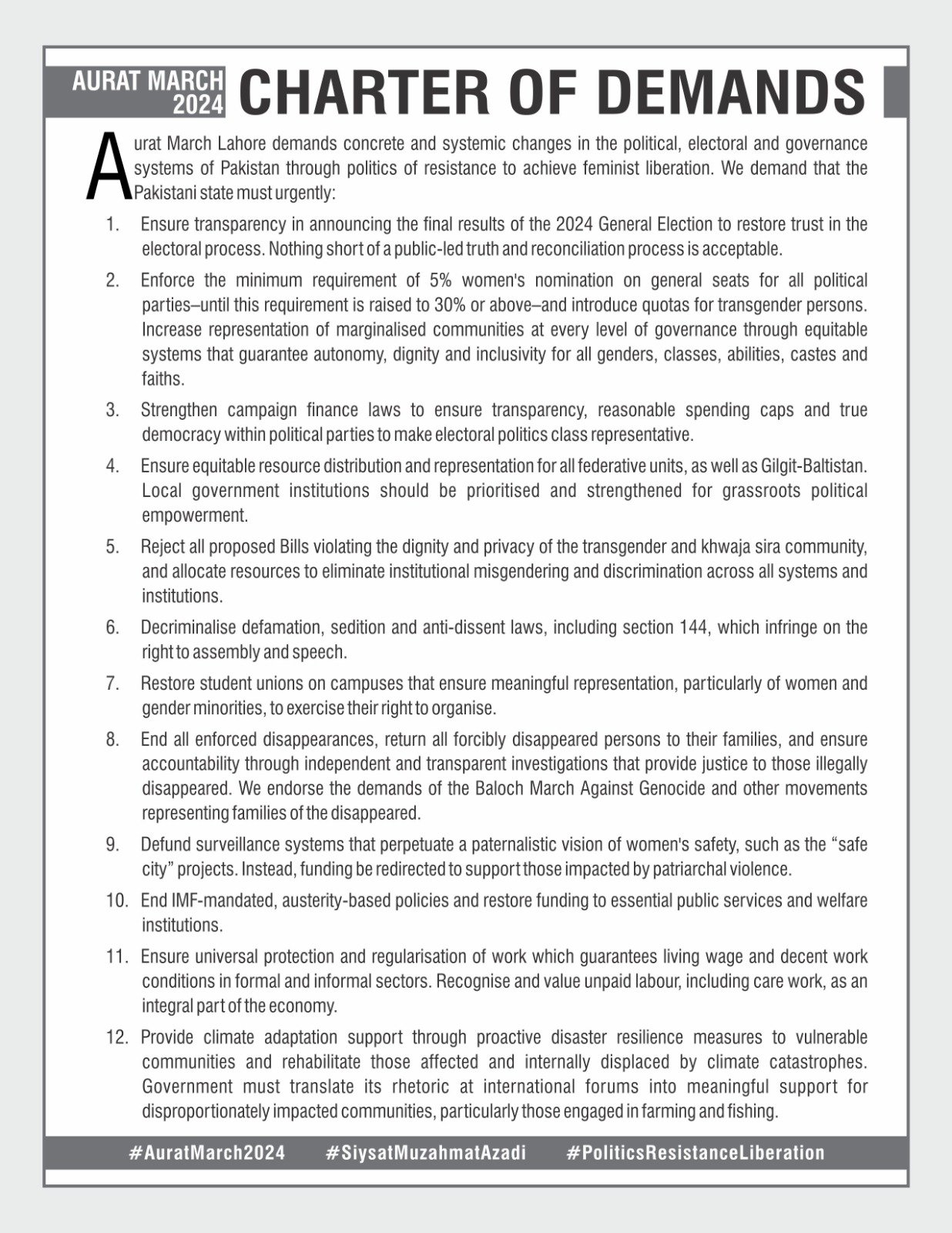
    This year, Lahore based its theme on “Siyasat, Muzahamat aur Azadi” which means that the manifesto addresses the electoral politics (in the light of the recent General Elections of Pakistan back in February 8), as well as asserts on the re-envisioning political participation where “oppressed groups and communities on the margin take center stage.”

    Here are the demands by Aurat March Lahore:

    Karachi

    In Karachi, Aurat March will focus on domestic violence, sexual violence, enforced disappearances, extrajudicial killings, land grabbing, state-sponsored poverty, religious extremism, repression of gender and body politics, fascistic capture of politics and everything “the patriarchy subjects us to under its militaristic control of our bodies.”

    Islamabad

    The capital’s theme this year is Resistance and Hope:

    Calling on to end enforced disappearances; promoting “hope and world peace” in light of Israeli genocide in Gaza; end to gender-based violence; to take action against cyber harassment targeting women, minorities, and children with effective legislation; end to period poverty by making period products accessible for all and provind period education in school; economic justice i.e. integrating women’s reproductive labour into country’s Gross Domestic Product (GDP), formalisation of informal sector to ensure work standards and safe working environment, action against child labour, wage regularisation, right to unionisation, and allocation of funds to rehabilitate women farmers, shopkeepers, small landlords; improved access to universal education and healthcare; political rights of women; as well as rights of religious minorities.

    Read the details on the demands by Islamabad here:

    Multan

    With the main focus on climate justice right and economic liberation, here are the demands by the city of Multan this year:

    1. Education for All: Guarantee education for girls up to the age of 16, ensuring equal access to knowledge and opportunities.
    2. Right to Identity: Ensure that all men, women, and transgender people in Siraiki Wasaib have their identity cards without any hindrance from the state.
    3. Combat Harassment: Form active committees against sexual harassment in educational institutions and workplaces, enforcing strict adherence to anti-harassment laws.
    4. Student Empowerment: Lift the ban on student unions in universities across Pakistan, allowing students to exercise their rights and have a say in their education. Also, Establish new colleges and universities with equitable access for all, fostering an environment of learning and growth.
    5. Inclusive Infrastructure: Implement accessible architecture in schools, government offices, and public spaces, catering to the needs of people with disabilities.
    6. Fair Wages: Enforce inflation-adjusted and gender-conscious minimum wage policies, promoting economic justice for all.
    7. Protect Domestic and Small Industry Workers: Safeguard the rights of domestic workers, particularly young girls, from exploitation and abuse.
    8. End Early Marriage: Enact laws against early marriage and forced religious conversion, setting the legal marriage age to 18.
    9. Transgender Rights: Implement the Transgender Rights Act 2018, ensuring equality and protection for transgender individuals.
    10. Political Victimisation: Stop the unjust targeting and unlawful detention, especially of women, for political reasons.
    11. Women’s Protection: Fully implement the Women Protection Bill and expedite the completion of Women Crisis Centers in Multan.
    12. Holistic Education: Incorporate human rights, climate change, and gender education into the high school curriculum, fostering awareness and understanding.
    13. Healthcare Access: Ensure accessible healthcare and employment opportunities, along with childcare facilities for women in both government and non-government sectors.
    14. Remove Taxes: Eliminate taxes on women’s hygiene products and essential items, relieving financial burdens on women.
    15. Worker Rights: Abolish the exploitation of various marginalized groups, including brick kiln workers, farmers, journalists, and factory workers.
    16. Combat Terrorism: Take legal action against activities that terrorize women, ensuring the rule of law prevails.
    17. Judicial Representation: Increase the number of women judges, particularly in the Lahore High Court, Multan, and Bahawalpur Benches, promoting gender parity in the judiciary.
    18. End Corruption: Eradicate corruption and mistreatment of women in social support programs.
    19. Report Mechanisms: Establish effective portals to report incidents of harassment and violence against women, ensuring swift action and justice.
    20. Religious Freedom: Protect religious places and minorities from desecration and criminal acts, upholding fundamental freedoms for all.
    21. Child Protection: Implement stringent measures to prevent the sexual abuse of children, safeguarding the innocence and well-being of our youth.
    22. Safe Spaces: Ensure the fundamental freedoms and protection of women in Dar ul Aman and working women hostels, providing safe havens for those in need.
    23. Digital Access: Declare internet access as a fundamental right and bridge the digital divide, ensuring equitable access to technology for all.
    24. Combat Stereotypes: Eliminate gender stereotypes in educational materials, electronic media, and social platforms, promoting equality and diversity.
    25. Justice for All: Pay homage to human rights leaders like Rashid Rehman and demand justice for those who have sacrificed for the cause of equality and justice.
  • Karachi: Homeless siblings run over by car

    Karachi: Homeless siblings run over by car

    An unfortunate incident took place in Karachi when a fast-moving car ran over a sleeping family killing three siblings and injuring two other family members.

    The family was sleeping on a footpath near Nagan Chowrangi in the small hours of Wednesday morning when the car ran over them. However, the car driver managed to escape in injured condition, leaving behind his vehicle which was impounded by the police.

    The police said that two brothers and their sister were killed in the accident, reports Dawn. Bali Gopi Chand, 22, and Ashok Gopi Chand, 9, died on the spot. Later, Shri Ram Gopi, 15, died during treatment at the Jinnah Postgraduate Medical Centre. Sita Gopi, 14, and Lalay Gopi, 6 were injured and admitted for treatment.

    “An FIR has been registered and police are working on the case,” said SSP Zeeshan Shafiq Siddiqi, adding that police will arrest the driver and whoever else was in the car. A case of manslaughter has been registered.

    Area SHO Qamar Kiani said that the police had conducted raids at three places to nab the suspect but to no avail.

    He also said that the case was registered on the complaint of a relative of the victims, who informed the police that he lived in the slum area of Sohrab Goth and sold vegetables on a pushcart. He was asleep in his home when at around 3 am someone informed him about the death of his relatives in a car accident.

  • List of all public holidays in 2024

    List of all public holidays in 2024

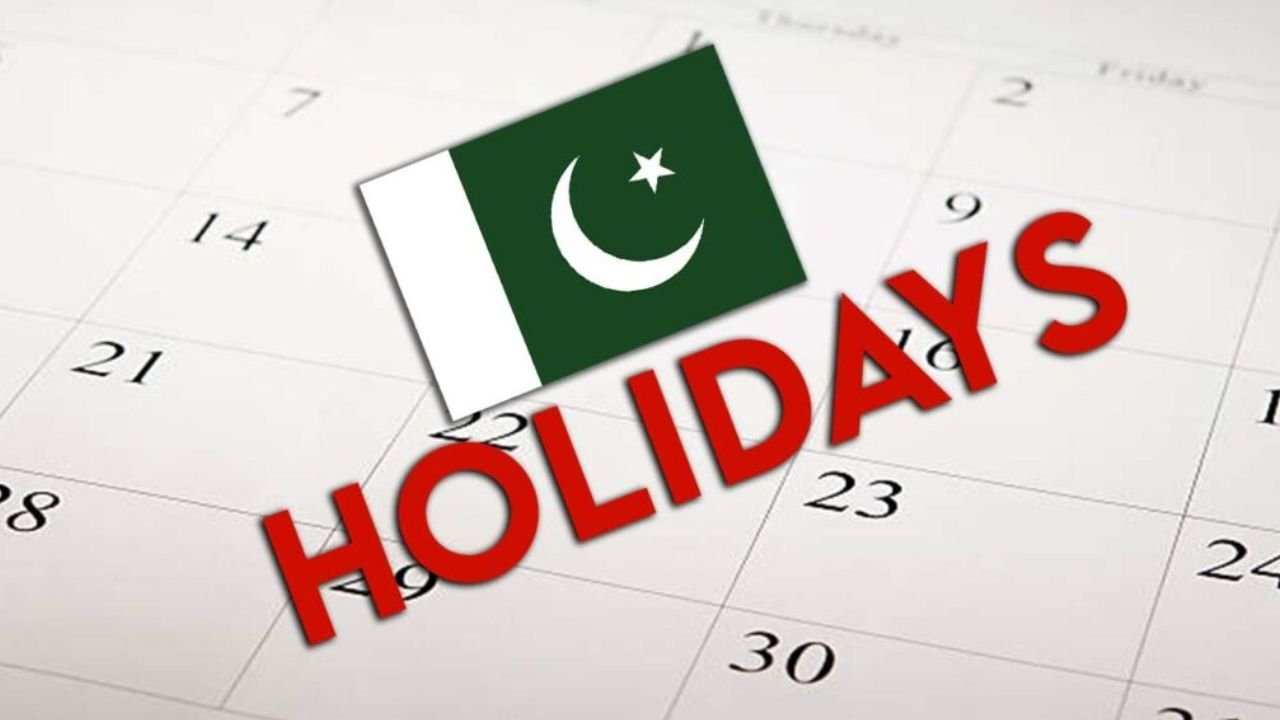
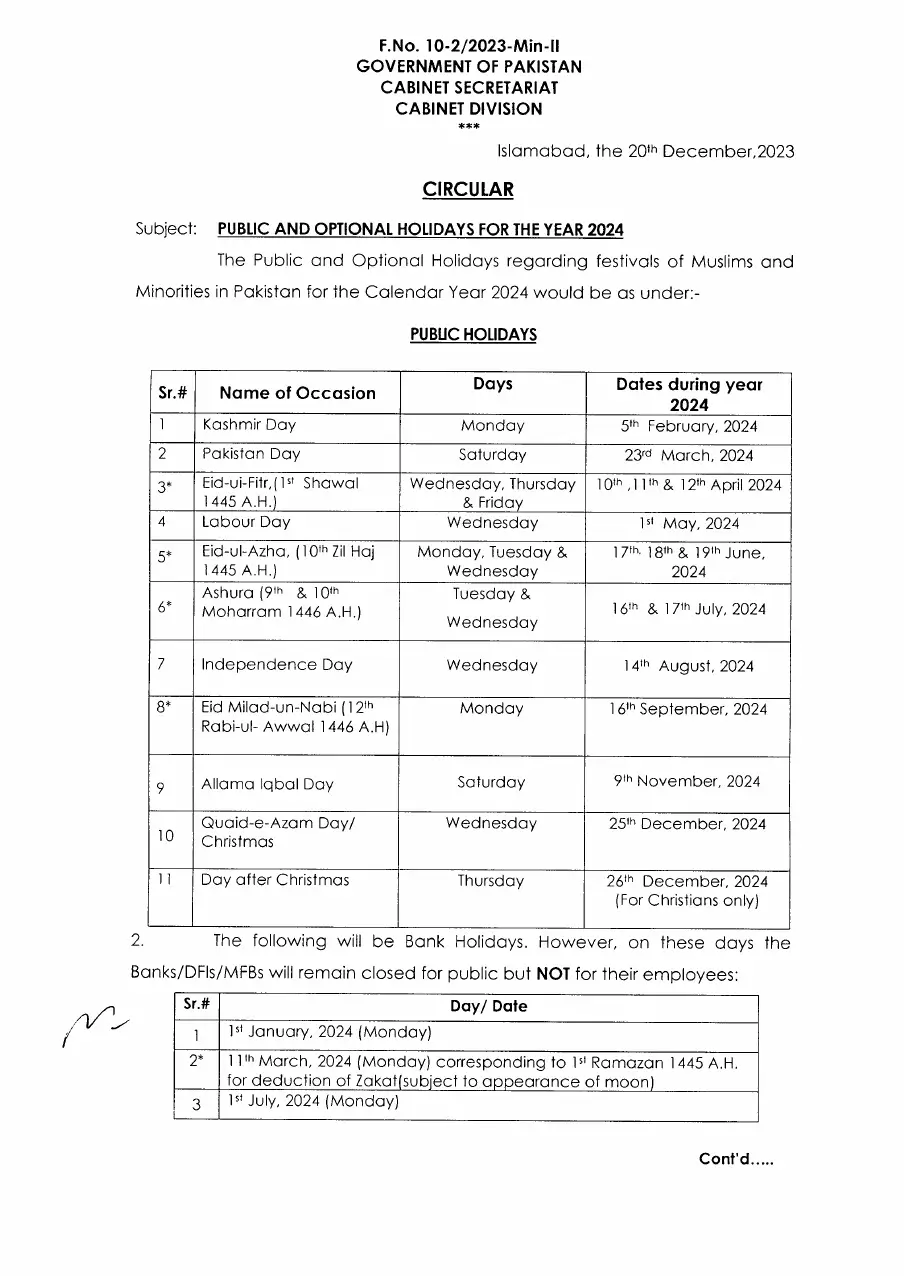
    In a notification issued by the Cabinet Division on Wednesday, the Government of Pakistan has officially declared the public holidays for the upcoming year 2024.

    The list encompasses a range of festivals and events significant to both Muslims and minorities across the nation.

    The 2024 public holiday calendar features a total of 11 days, each representing a momentous occasion celebrated widely in Pakistan.
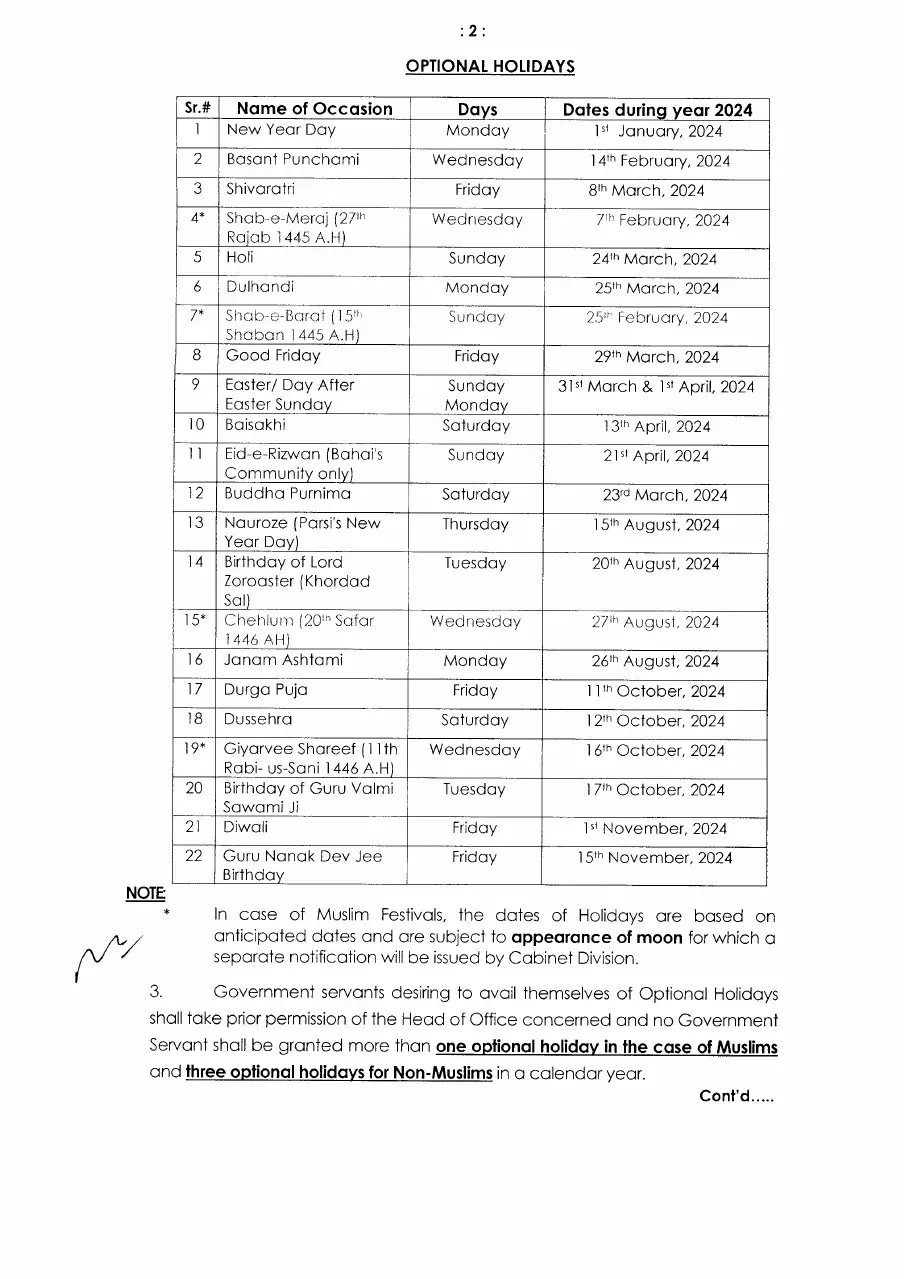
    The notification also includes optional holidays for minorities.

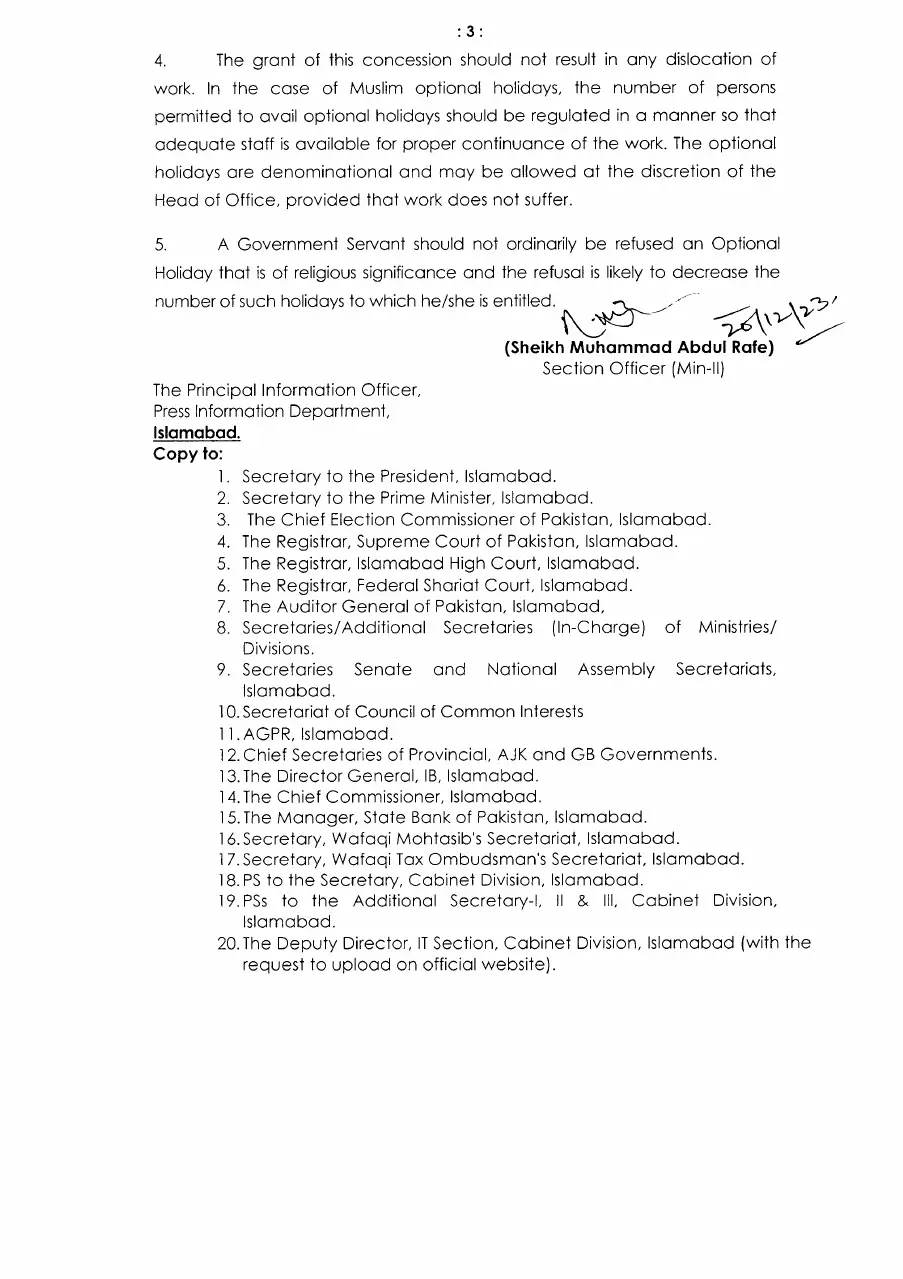
    To avail those they will have to take prior permission from the head of their department.

  • Supreme Court seeks reports on Sikh target killings, Jaranwala riots

    Supreme Court seeks reports on Sikh target killings, Jaranwala riots

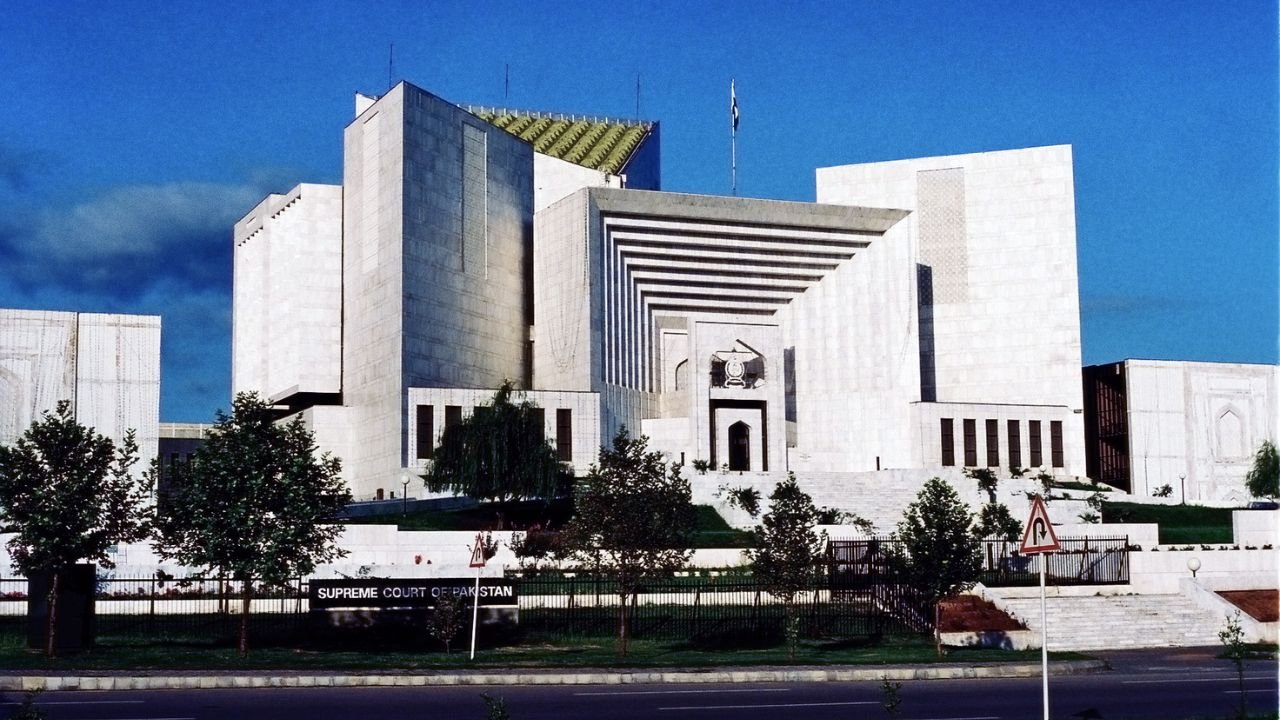
    As reported by Geo News, the Supreme Court of Pakistan has, on Friday, asked the Inspectors General (IG) of Police to provide reports on cases pertaining to minority rights, asking what steps have been taken by the government on the Jaranwala tragedy and target killing of minority citizens.

    Sardar Bishna Singh, chairman of Baba Gurunanak Welfare Society, appeared in the Supreme Court, where he pointed out that while some of the people from Sikh community went to India in 1947, “We stayed in Pakistan, our religion also started from here. We are not claiming that we are being wronged because we are Sikhs but the Qabza group (land grabbers) does not take anything into consideration — temple, mosque, gurdwara.”

    He also highlighted the destruction of gurdwaras across the country, including Lahore.

    The Supreme Court described the target killing of the Sikh community as deplorable with Justice Ijazul Hassan stressing that the murders have forced Sikh community to move to different places or leave Pakistan, emphasizing that practical steps need to be taken to ensure their safety.

    The Supreme Court asked all the IGs for a detailed report on the recent target killings and also issued notices to the Attorney General and all Advocate Generals.

    The Apex Court also called for a report from a JIT on the Jaranwala tragedy, asking that the initial report be given to the petitioner.

    The petitioner said that after the Jaranwala tragedy, hateful speeches continue unabated.

    The court sought the report on Jaranwala tragedy from the Advocate General Punjab and the IG Punjab and also sought a report from the Punjab Interior Department on the steps taken after the incident, adjourning the hearing of the case for two weeks.

  • Blasphemy: what happened to the man who falsely accused 14-year-old Rimsha?

    In August 2012, Rimsha Masih was arrested on blasphemy charges. At the time, Masih was only 14 years old. She had allegedly desecrated the pages of Holy Quran by burning them.

    But what really went down?

    A local Muslim boy, Hammad, had asked Rimsha Masih to hand over the trash bag she was carrying. He inspected it and took the bag to the cleric of the local mosque named Hafiz Mohammed Khalid Chishti. As evidence against the girl, Chishti showed a few burned pages of the Holy Scripture to the police. As this incident came to light, there was a collective outrage from the local Muslims. And as narrated by Mohammad Hanif in an article for The Guardian, 300 local Christian families were forced to escape their residence and seek refuge in a forest in Islamabad.

    Chishti told AFP News that he thought Rimsha had ‘“deliberately” burnt the pages as part of a Christian “conspiracy” to insult Muslims and that action against such activities should have been taken “sooner”.

    Resultantly, minor Rimshah Masih was arrested. She spent more than three weeks on remand in an adult jail. During her trial, her age was evaluated through medical reports that concluded it to be 14 but with a “mental age younger than that”. This supported the claims of Masih being a child with Down’s Syndrome that the accuser’s lawyer rejected stating that the doctors are “favouring the victim and the state is also supporting her”.

    Rimsha was released on bail the following month of September after the police clarified in court that she was not guilty of the accusations made against her and that it was, in fact, the cleric himself who allegedly conspired against the young girl.

    But did Rimsha Masih get justice in the face of a false blasphemy case?

    Following Rimsha Masih’s acquittal, Hafiz Mohammed Khalid Chishti was arrested. Several witnesses against him were taken into record. It was claimed that Chishti had included the Holy Scriptures in the trash bag himself in order to portray Rimsha as the desecrator. The witnesses also claimed that Chishti believed that this was the only way to drive out Christians from their community.

    This meant that Chishti himself was now guilty of desecrating the Holy Scripture. The-then Investigation Officer (IO) Munir Jafferi, while talking to The Express Tribune, said that Chishti could be sentenced to life imprisonment if convicted of desecrating the Holy Book.

    He was sent on 14-day judicial remand under Section 295-B of the Pakistan Penal Code.

    By 2013, Rimsha Masih and her family escaped to Canada because even in her innocence, she was not safe in Pakistan. They were given permanent Canadian residency on “humanitarian and compassionate grounds”.

    All the while, that same year, all witnesses against Chishti withdrew their claims, and thus, the court dismissed all charges against him.

    History of Blasphemy Laws in Pakistan

    In 1860, the British colonisers introduced the Indian Penal Code. It consisted of a chapter that criminalised offences relating to religion in order to counter Muslim-Hindu-Sikh conflict in the Indian Subcontinent:
    Section 295, Injuring or defiling place of worship, with intent to insult the religion of any class
    Section 296, Disturbing religious assembly
    Section 297, Trespassing on burial places, etc.–Whoever, with the intention of wounding the feelings of any person (Section 297)
    Section 298, Uttering words, etc., with deliberate intent to wound religious feelings

    But in 1927, the laws buoyed out as vague clauses were added in the Penal Code, further deregulating the conflicts. As per 295 A, “Deliberate and malicious acts intended to outrage religious feelings of any class by insulting its religion or religious beliefs” was also a punishable offence.

    It is to note that the maximum punishment under these laws was from one year to a maximum of 10 years in jail, with or without a fine.

    In some instances, people took the law into their own hands. A case often recounted from the pre-partitioned India is of an objectionable book on Islam. It was written by a man named Pandat Chamupatt but anonymously published. The publisher was a journalist, Mahashe Rajpal, who owned a publishing house called ‘Rajpal & Sons’.

    The book was deemed as blasphemous by Muslims. Lawsuit against the publisher was filed under section 153 A: “Promoting enmity between different groups on ground of religion, race, place of birth, residence, language, etc.” Punjab High Court in Lahore, however, acquitted the publisher of the charges on “technical grounds” since the law did not highlight ‘adverse discussions of the life and character of a deceased religious leader’.

    The British Raj then made amendments to the law and included section 295-A to punish “deliberate acts intended to outrage religious feelings of any community… by words, either spoken or written”.

    The acquittal, nonetheless, led to protests, criticism, and threats; and after several failed attempts, the editor of the publishing house was assassinated in 1929.

    The next reported case was in Karachi in 1934. Nathu Ram, an active member of Arya Samaj, too, had allegedly written an objectionable book on the history of Islam.

    This, once again, prompted an angry reaction by the Muslims. After a trial, he was imprisoned for a year and fined for his offence. Ram had filed an appeal in the court but during one of his hearings in March 1936, he was attacked and killed.

    His killer was a man named Abdul Qayum from Hazara from the North West Frontier Province (now Khyber Pakhtunkhwa). Muslims back then gave him the status of Ghazi and a shrine was built after his death.

    Even then, however, killings over blasphemy were comparatively a rarity.

    Post-1947, with Muslims and Hindus officially divided, the anti-blasphemy laws remained intact in Pakistan.

    These laws were cemented under the dictatorship of General Zia-ul-Haq.

    General Zia made changes to the Penal Code and added five new clauses between 1980 to 1986, including:
    295 B, which criminalises the desecration of the Quran.
    295 C, which criminalises with life imprisonment or the death penalty any direct or indirect desecration of Prophet Muhammad (PBUH).
    298 A, which criminalises direct or indirect desecration of wives and relatives of Prophet Muhammad (PBUH).

    At first, section 295-C only contained life imprisonment as the punishment for blasphemy but it was replaced with death penalty as the parliamentarians pushed it on the basis of ijma (consensus of Islamic scholars). The Federal Shariat Court (FSC), too, defended the death penalty for blasphemy even though four out of seven ulemas that were consulted by the FSC opposed the ruling. The opponents of the death penalty included Jamaat-e-Islami’s founder, Maulana Maududi; head of the Barelvi sect, Ahmad Raza Khan; and the head of the Deobandi sect, Mahmood Deobandi.

    They all agreed that blasphemy was a pardonable offence and that “death penalty cannot be given for single offences”.

    In 2010, Dawn published an article tracing the qualitative results of the anti-blasphemy laws. While less than 10 cases of blasphemy were reported between 1927 and 1986; post-1986, as many as 4,000 cases were recorded. Then, between 1988 and 2005, 647 people were charged out of which 50 percent were non-Muslim. More than 20 people have been murdered for alleged blasphemy.

    49 per cent of 361 cases of blasphemy offences registered between 1986 and 2007 were against non-Muslims even though non-Muslims make less than four per cent of the total population.

    The situation began to worsen in 2011 with the murder of former governor of Punjab, Salmaan Taseer, who was vocal against the anti-blasphemy laws and supported Asia Bibi who was then given death penalty for committing blasphemy (but acquitted in 2019). Taseer’s killer, Mumtaz Qadri, was arrested and was later hanged but he became a hero to many who hailed him for his deed. More than 100,000 people attended his funeral and his shrine is still visited by hundreds.

    Lawyer Asad Jamal recalls the day after Salmaan Taseer’s death. He was on Mall Road, Lahore, where he spoke with sepoys regarding Taseer’s murder. “No one wanted to condemn the act”, he still remembers. “It was very telling of the direction the country was heading towards.”

    Since 2011, the number in cases, accusations, and killings have increased. In a report by Centre for Research and Security Studies (CRSS), as of 2021, 43 people have been extrajudicially killed since 2011 and 1,185 accused.

    When it comes to the role of lawyers and judges in blasphemy cases, Jamal believes that it is simply reflective of the socio-political situation of Pakistan. The state of affairs have worsened over the past 20 years. Apart from frail economy and political rifts, there is a major element of fundamentalism that comes in the shape of parties like TLP and their massive support.

    “Such an environment doesn’t encourage a lot of lawyers to take up blasphemy cases.”

    He also adds that very few lawyers have “worthwhile legal skills” to take up blasphemy cases. Many simply do not want to deal with these issues. People like Asma Jahangir and Abid Hasan Minto were not mainstream but exceptions. Apart from being courageous, they were competent. “But now, the times have changed,” he adds.

    Peter Jacob, a human rights activist and the director of Centre for Social Justice (CSJ), says that while some politicians condemn violence against the minorities like the recent Jaranwala case, it, nonetheless, always has a cost one has to bear due to the sensitivity of the matter.

    While talking about the youth belonging to religious minorities, Jacob has noticed a segment within Christians and Hindus who are actively participating in political discussions on- and offline. The examples are the recent protests held in various cities across Pakistan, including Karachi, Lahore, Swat, Kurram district, and Rawalpindi against the Jaranwala incident.

    “I am quite impressed by their sense of belonging and their affiliation with the case of a better Pakistan, their respect for human rights and democracy. Civil liberty will play a role of a natural healer — healing of the society and articulation of the way forward out of these troubled times,” he added.

    Jacob, however, believes that there has to be resolve at the national level by powerful quarters to understand the height of radicalisation that has taken place in order to control the lethality of the problem. “While there is political fragmentation, a free and fair atmosphere must be created where political forces can play their role and come up with people-centric solutions that will entail the process of self-healing and accountability.”
  • What’s the point of helping them now?

    What’s the point of helping them now?

    This week started off with the commemoration of Pakistan’s 76th year of Independence. Despite the current political uncertainty and economic instability, the flag was hoisted high by the president; the national anthem was recited; and as per tradition, the lit roads were taken over by youth dressed in green and white.

    And while passionate speeches were made praising the sacrifices of those who fought for the freedom of Pakistan, somewhere in the district of Faisalabad, an inaudible alarm of impending destruction rang through.

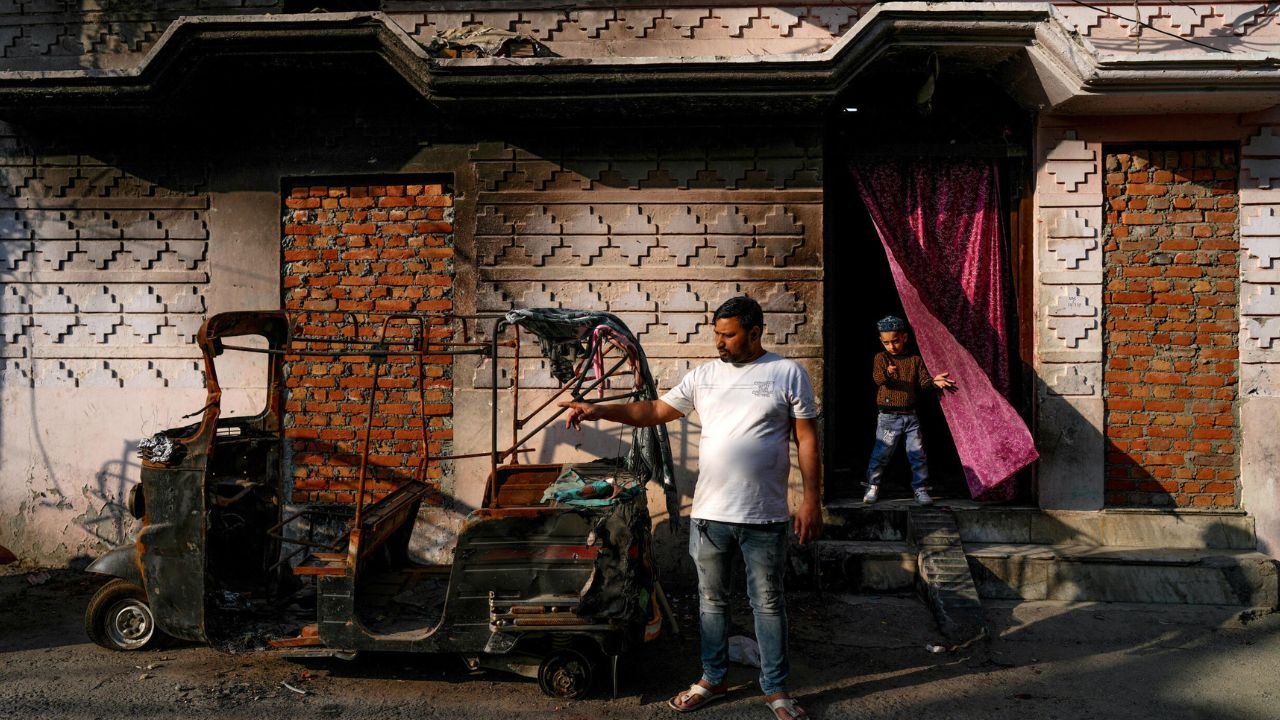
    On August 16, a mob of hundreds of people attacked the Christian community in Jaranwala over alleged blasphemy allegations against two Christian residents. By night, the Christians in Jaranwala were homeless in their own hometown. Even the churches, burnt and destroyed, could not accommodate its people in need.

    Members of our team visited Jaranwala yesterday and came back emotionally dazed after witnessing the helplessness and hopelessness of the Christian community. “What is the point of helping us now? Everything has been ruined,” one woman cried to us. And we could do nothing, say nothing to make her feel better.

    The people in that mob who wrecked an entire community are inheritors of the same freedom that is signalled to us on national television with pride. It is the freedom that was equally granted to Christians, Hindus, Ahmadis, and Sikhs along with Muslims. But somewhere along the way, it became the right of only one. Somewhere along the way, freedom became sectarian violence. Somewhere along the way, freedom became intolerance. And somewhere along the way, our freedom divided us.

    And so, today we mourn and deplore the horrors of mob violence for the umpteenth time.

    We continue to steer forward through blood and debris without minding the rotting smell of state’s conscience.

    Perhaps it is time to redefine ‘freedom’ in Pakistan. Like privilege, it only serves a few and obliterates the rest. Like hope, it is a yearning; but elusive as a mirage. Like tragedy, it has become our nightmare amidst all that could have been.

  • Govt commits to reconstructing 150-year-old Marie Mata Temple in Karachi

    Govt commits to reconstructing 150-year-old Marie Mata Temple in Karachi

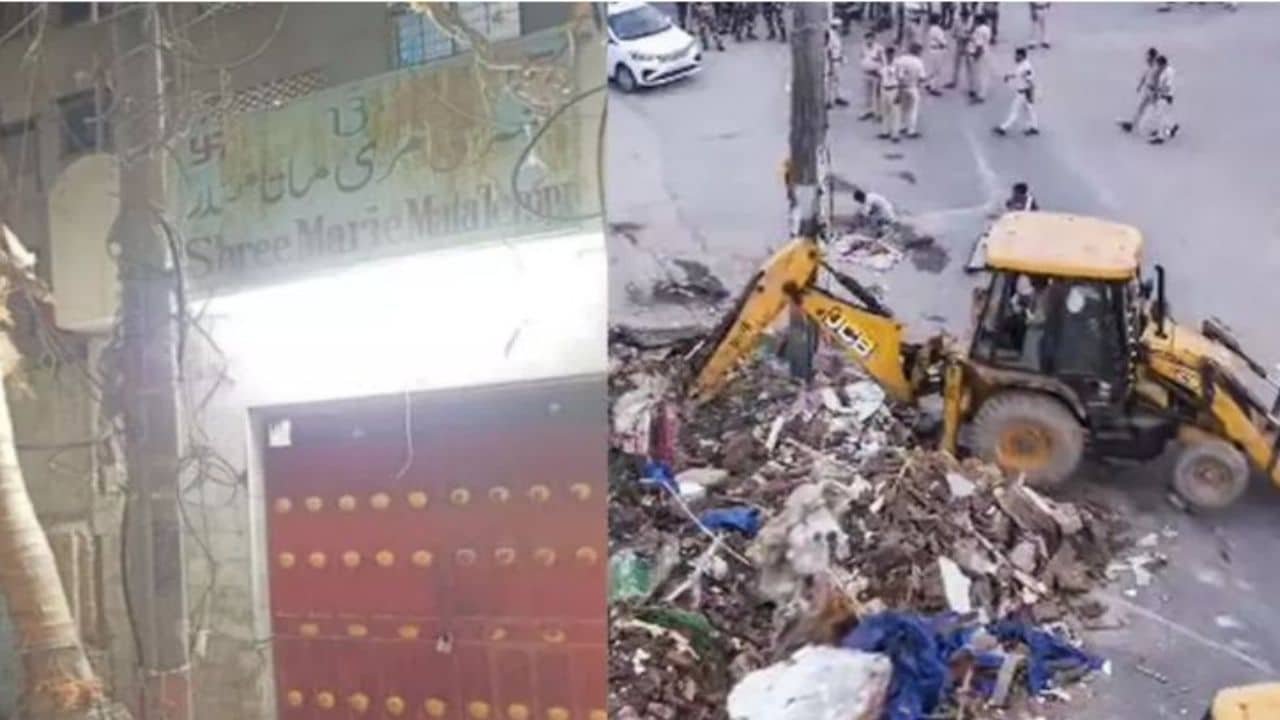
    The Sindh government has committed to undertake the rehabilitation and reconstruction of the historic Marie Mata Temple in Soldier Bazaar of Karachi, Dawn has reported.

    During Question Hour in a session of the Sindh Assembly, the Minority Affairs Minister raised his concern, emphasizing that the demolition of any place of worship is strictly prohibited. Consequently, all construction activities on the temple site have been halted.

    The temple, which has a rich history of over 150 years, had undergone partial renovation around eight years ago, during which the temple deities were temporarily relocated to a nearby room located above a storm water drain. Unfortunately, last week, the structure on the temple’s premises was demolished by a builder who intended to construct a plaza in its place.

    A woman living on the property said that her ancestors gave the land for the temple, but now she’s building her house there.

    According to the minister, the minority affairs department will conduct a comprehensive survey to prepare a detailed report, and subsequently oversee the reconstruction of the temple on its original site.

  • Missing Afghan boy found murdered after being raped

    Missing Afghan boy found murdered after being raped

    A missing five-year-old Afghan boy was found murdered on Monday in Karachi. The boy was also raped before being murdered, police have confirmed.

    The minor went missing on Sunday, however, at the time the deceased’s father didn’t register any report. The father has told the police that he had no enmity with anyone.

    Later, the area Station House Officer (SHO) said that an First Information Report (FIR) was lodged on the complaint of the child’s father, who is an Afghan.

    Police Surgeon Summaiya Syed said that after the autopsy it was found that the boy was sexually assaulted, reports Dawn.

    “The face was covered with a plastic bag. His hands were tied behind his back with nylon wire and he was strangled to death,” she said.

    Taking notice of the incident, Karachi police chief formed an investigation team and directed it to submit a progress report within three days.