Tag: minority

  • India’s Congress party promises minority protection and jobs

    India’s Congress party promises minority protection and jobs

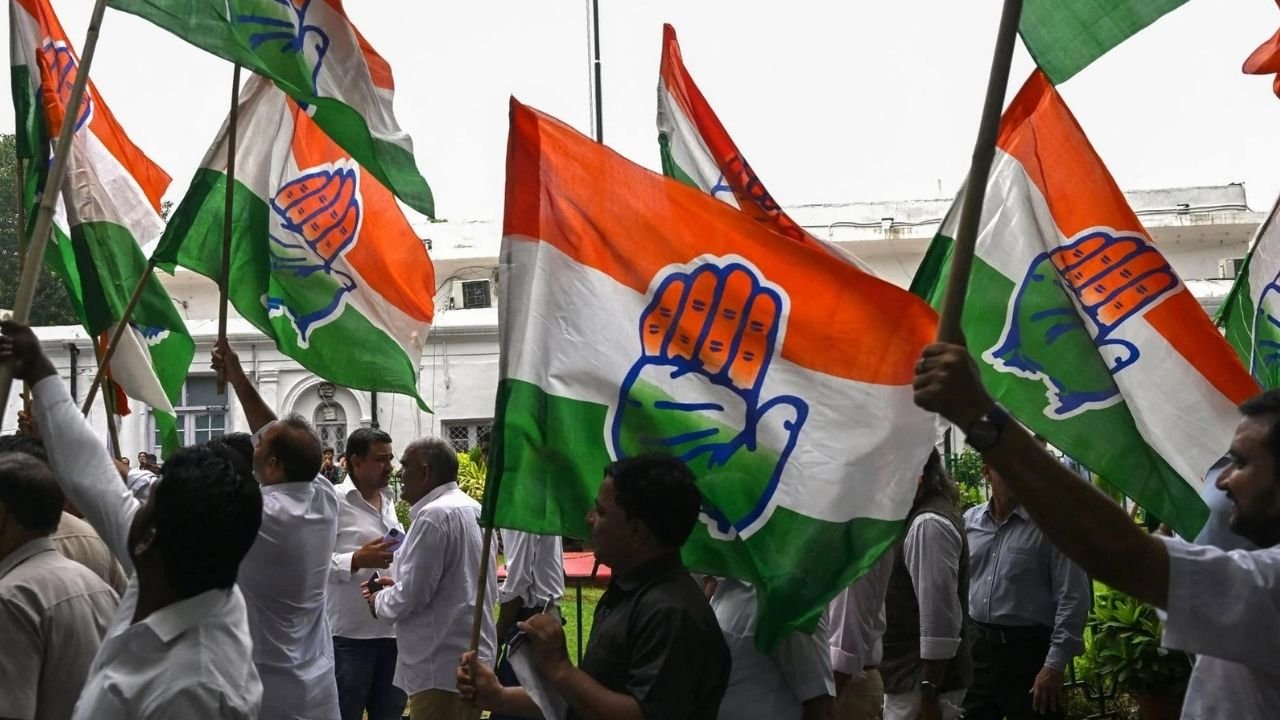
    India’s main opposition party Congress vowed Friday to protect minorities – generally seen as a reference to the country’s Muslims – while accelerating growth and jobs in a manifesto for an election it is widely expected to lose.

    Nearly a billion Indians will vote to elect a new government in six-week-long parliamentary elections starting on April 19, the largest democratic exercise in the world.

    Many analysts see Prime Minister Narendra Modi’s re-election under his Hindu nationalist Bharatiya Janata Party (BJP) banner as a foregone conclusion.

    Congress led India’s independence struggle and dominated politics for most of the next seven decades but its secularist vision has since struggled against the BJP’s appeal to members of India’s majority faith.

    In its manifesto, Congress promised to protect “linguistic and religious minorities”.

    “The plurality of religions represents the history of India,” it said. “History cannot be altered.”

    India has a long and grim history of sectarian clashes between the country’s Hindu majority and Muslims, its biggest minority faith with 200 million members.

    Party leader Rahul Gandhi — the son, grandson and great-grandson of prime ministers — said the upcoming election was “fundamentally different” from any other in India’s history.

    “It is between those who want to end India’s constitution and democracy and those who want to save it,” he said.

    The Congress manifesto, titled a “justice document”, offered “concrete guarantees unlike Modi’s empty promises”, said lawmaker and lead author P Chidambaram.

    The party has promised to address India’s “massive unemployment” on a “war footing”, adding that it would earmark half of all government jobs for women.

    Young people voted for Modi in droves when he was first elected a decade ago after he said he would create 10 million jobs a year.

    But a recent International Labour Organization (ILO) report warned that India was hamstrung by a “grim” crisis, with unemployment on the rise.

    Congress proposed an unconditional annual cash transfer of Rs 100,000 ($1,200) “to every poor Indian family”, without precisely defining who would qualify.

    The BJP is yet to publish its own manifesto.
  • Online hate sows Muslim fears as India votes

    Online hate sows Muslim fears as India votes

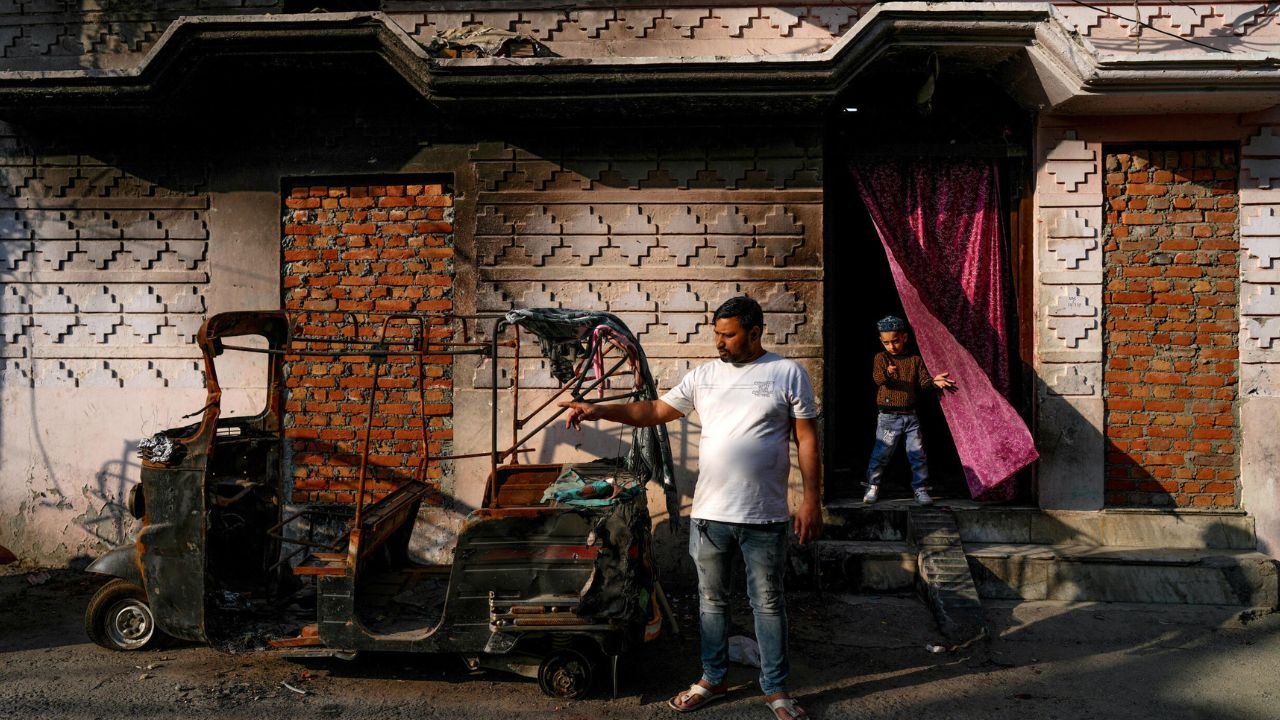
    Haldwani (India) (AFP) – After his brother was murdered in anti-Muslim riots, Pervez Qureshi watched the videos he believes incited the killers, part of a wave of hatred being fomented on social media ahead of India’s elections.

    India has a long and grim history of sectarian clashes between the Hindu majority and its biggest minority faith, but analysts warn increasingly available modern technology is being used to deliberately exploit divisions.

    “Videos and messages were shared on Facebook and WhatsApp which contained inflammatory language and incitement to violence,” Qureshi told AFP, recalling the attack on his brother Faheem in February in the northern city of Haldwani in Uttarakhand state.

    “It poisoned the atmosphere.”

    Nearly 550 million more Indians have access to the internet than when Prime Minister Narendra Modi came to power a decade ago, according to figures from the Internet and Mobile Association of India.

    Modi’s Hindu-nationalist Bharatiya Janata Party (BJP) is widely expected to win a third term in elections that begin on April 19.

    Part of his popularity can be attributed to his party’s masterful online campaign team, staffed by thousands of volunteers who champion his good deeds and achievements.

    Modi’s use of social media “awakens nationalism and patriotism among the youth in every corner of the country”, said Manish Saini, a youth leader of a BJP “IT Cell” in Uttarakhand state, who works online to reach voters.

    ‘Atmosphere of hatred’

    Critics however accuse the BJP’s sophisticated social media apparatus of also fanning the flames of division.

    Haldwani community leader Islam Hussain said tensions were already high before February’s violence, after months of incendiary social media posts calling Muslims “outsiders”.

    “It was said that due to the increasing population of Muslims, the social demography of Uttarakhand is changing”, Hussein said.

    “Right-wing social media cells have a big role in creating an atmosphere of hatred against Muslims.”

    Clashes erupted after the authorities said a mosque had been built illegally, and a Muslim group gathered to prevent its demolition.

    Some hurled stones at police officers, who beat them back with batons and tear gas.

    Hindu residents gathered to cheer on the police clampdown, chanting religious slogans and throwing rocks at the crowd.

    Footage of the riots spread swiftly on social media.

    Egged on by online calls to mobilise, Hindu mobs rampaged through the streets.

    “It’s time to teach them a lesson,” read the caption to one of dozens of inflammatory posts, many of which remain online.

    “The time has come to beat Muslims.”

    Qureshi said his brother Faheem, 32, was killed by Hindu neighbours after they first torched his car.

    ‘Triggers an incident’

    But Saini, coordinator for the BJP’s youth wing, said the online team he leads does not encourage violence — and is under strict instruction not to “write anything against anyone’s religion”.

    He said his colleagues had mobilised quickly on the day riots broke out to provide information, not to stir up trouble.

    “When we got the news, we immediately started preparing graphics, videos and text messages to reach people with the correct and accurate information related to the incident,” he said.

    He said the initial violence was clashes between police and a Muslim group — and blamed Modi’s opponents for instigating riots to tarnish the government’s image.

    Critics disagree.

    Raqib Hameed Naik, from research group Hindutva Watch, said that the BJP’s IT Cell had generated anger towards minorities, by promoting the government’s Hindu-nationalist agenda.

    Naik, who documents hate speech against religious minorities, said the social media messages spreading during the Haldwani violence followed a pattern seen in previous riots.

    “First, hate speech against Muslims by a Hindu activist or politician creates an atmosphere… then the hate speech triggers an incident,” Naik said.

    Afterwards, online Hindu-nationalist campaigners “hold Muslims responsible” for the violence, he added.

  • How many registered religious minority voters are in Pakistan?

    How many registered religious minority voters are in Pakistan?

    As per the recent province-wise religion report of the Election Commission of Pakistan (ECP), there are 30 lac, 78 thousand, 3 hundred and 6 voters from religious minorities in Pakistan.

    Out of 40 thousand 781 minority voters in Khyber Pakhtunkhwa 3516 are Bahai, 220 Buddist, 28080 Christian, 4209 Hindu, 723 Parsi, 1149 Ahmadi, and 2884 Sikh.

    In former Federally Administered Tribal Areas (FATA) there are 3539 religious minority voters out of which 400 are Bahai, 41 Buddist, 1446 Christian, 669 Hindu, 16 Parsi, 23 Ahmadi, and 944 Sikh.

    For 12 lac 59 thousand 303 minority voters in Punjab, 18102 are Bahai, 786 Buddist, 1057071 Christian, 73456 Hindu, 262 Parsi, 108538 Ahmadi, and 1088 Sikh.

    In Sindh, there are 16 lac 80 thousand 582 minority voters, out of which 7269 are Bahai, 495 Buddist, 228552 Christian, 1423276 Hindu, 2787 Parsi, 16668 Ahmadi, and 1535 Sikh.

    Balochistan has 44 thousand 930 minority voters, out of which 1387 are Bahai, 1387 Buddist, 18702 Christian, 18702 Hindu, 265 Parsi, 549 Ahmadi, and 272 Sikh.

    In the Federal Capital, there are 44 thousand 783 minority voters, out of which 242 are Bahai, 41 Buddist, 40518 Christian, 276 Hindu, 16 Parsi, 3677 Ahmadi, and 13 Sikh.

    Although elections are not happening in Gilgit Baltistan and Azad Jammu and Kashmir in February 2024, ECP did share detailed data of these areas too.

    Out of 653 minority voters in Gilgit Baltistan, 472 are Bahai, 5 Buddist, 147 Christian, 8 Hindu, 16 Ahmadi, 5 Sikh, and none from the Parsi community.

    Azad Jammu and Kashmir has 3735 minority voters out of which 1083 are Bahai, 23 Buddist, 987 Christian, 45 Hindu, 13 Parsi, 1580 Ahmadi, and 4 Sikh.

    As Pakistan gears up for nationwide parliamentary elections in February 2024, a significant portion of the population, the Ahmadiyya community, faces disenfranchisement due to discriminatory provisions in the electoral law.

    Current electoral regulations in Pakistan effectively exclude Ahmadis from the voting process based on their religious beliefs.

    To register as voters, members of the Ahmadiyya community are compelled to either renounce their faith or accept placement in a distinct electoral list categorizing them as “non-Muslim.”

    However, self-identification as Muslim is a fundamental tenet of Ahmadiyya religious belief.

    This exclusionary practice has resulted in the denial of voting rights for Ahmadis, who comprise over 500,000 individuals in Pakistan.

    Despite their significant numbers, Ahmadis find themselves unable to participate in local, provincial, and national elections.

    It is noteworthy that in 2002, Pakistan discontinued an electoral system that segregated Muslims and non-Muslims into separate categories for registration and voting.

    However, discriminatory measures persist, particularly affecting the Ahmadiyya community’s ability to exercise their

    The government also created a separate category for Ahmadis. Since then, all Pakistani citizens have voted according to a single electoral list except the Ahmadis, who vote on a separate list.

  • PM Shehbaz condemns the killing of Sikh citizens in Peshawar

    PM Shehbaz condemns the killing of Sikh citizens in Peshawar

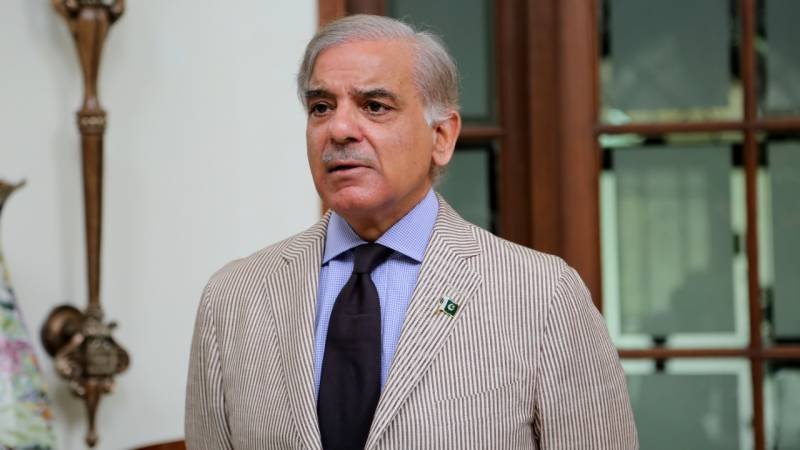
    Prime Minister Shehbaz Sharif condemned the killing of two Sikh citizens in Peshawar.

    “Strongly condemn the killing of our Sikh citizens in Peshawar, KP. Pakistan belongs to all its people. Have ordered a high level inquiry to ascertain facts. The killers will be arrested & meted out exemplary punishment. My most sincere sympathies to the bereaved families,” PM said in a tweet.

    Unknown assailants killed two persons of the Sikh community at Sarband area in Peshawar. According to the police, two persons riding on motorbike opened fire on two shopkeepers of the Sikh community selling spices at Bata Tal Bazaar. They succumbed to their injuries on the spot.

    The deceased were identified as Kanwaljeet Sigh and Ranjeet Singh. According to journalist Iftikhar Firdous, the Islamic States Khurasan (ISKP) chapter says it carried out the attack targeting two Sikhs. In October 2021, ISKP also claimed another such attack in Peshawar.

    The Human Rights Commission of Pakistan also condemned the killing of Sikh citizens.

  • Equal citizens

    Recently, we heard about two bakeries in Karachi that refused to write ‘Merry Christmas’ on cakes. Both Delizia and Aunty Munaver turned away customers who wanted cakes with Christmas greetings. It is deeply disturbing to see such acts of bigotry in a country whose founder and others who fought for its freedom believed in rights for all and equality regardless of caste, creed, and faith. Yet we see how non-Muslims in Pakistan continue to face discrimination on a regular basis.

    Today, when we celebrate Christmas with our Christian brethren and wish them a day full of joy, we hope that our society will change for the better. Today is also the birth anniversary of Quaid-e-Azam Muhammad Ali Jinnah, who taught us the meaning of tolerance and who believed in pluralism and inclusiveness.

    We often repeat and quote Jinnah’s August 11 speech but it is important to reiterate what he said again and again: “We are starting in the days where there is no discrimination, no distinction between one community and another, no discrimination between one caste or creed and another. We are starting with this fundamental principle that we are all citizens and equal citizens of one state.”

    This is what Pakistan stands for as this is what our founder taught us. It was good to see many people raising their voices against those bakeries that refused to write Merry Christmas on their cakes. It was social media outcry that led to Delizia bakery management on the backfoot and saying that it was an individual act. Whether it was an individual act or not can be ascertained as this isn’t the first time that such an incident took place. This year, we saw the horrible lynching of a Sri Lankan national. The government took strong exception to the incident and promised to take action against all those responsible. But the incident also showed how intolerance has seeped into our society. It is this bigotry and intolerance that has to end. On the birth anniversary of Jinnah, we should pledge to make this Jinnah’s Pakistan and not a Pakistan where extremism prospers. Once again, Merry Christmas to all those celebrating. 

  • Ahmadi graveyard attacked during a woman’s burial

    Ahmadi graveyard attacked during a woman’s burial

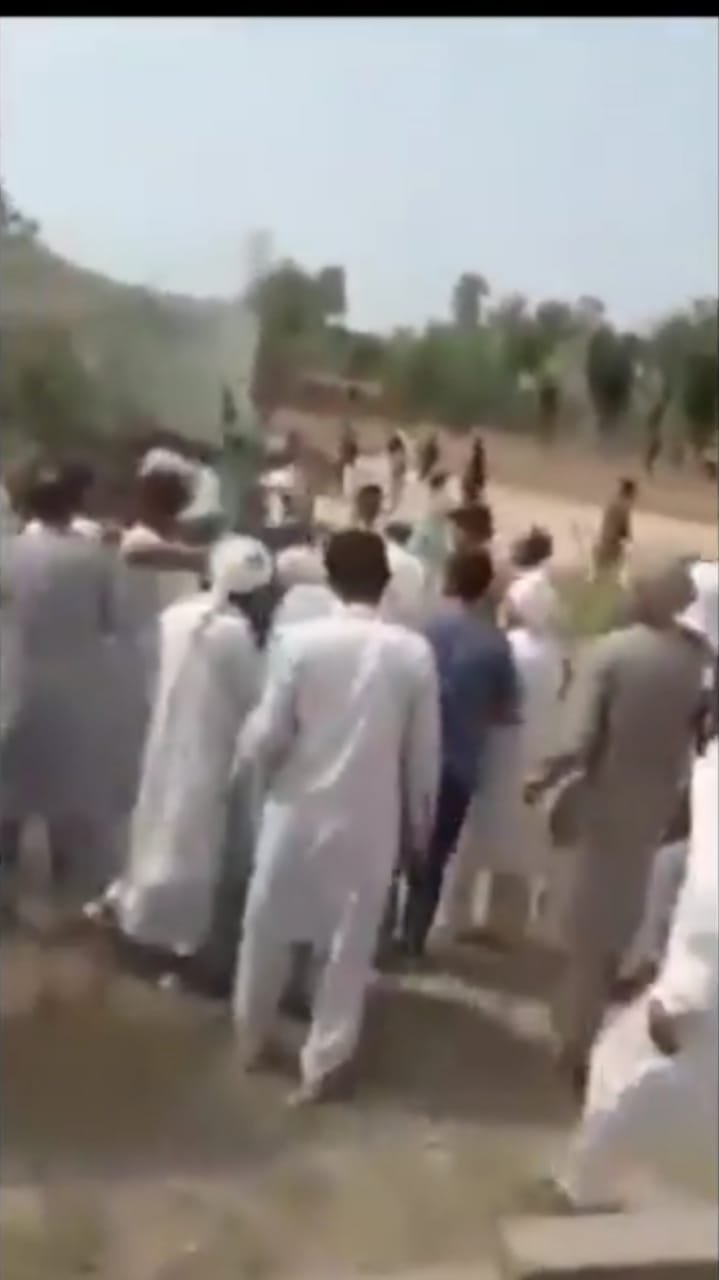
    An Ahmadi graveyard in Sheikhupura was attacked by extremists who attempted to stop the burial of an Ahmadi woman.

    When the woman’s dead body was brought to the graveyard for burial, a mob attacked the graveyard and tried to stop the family from burying the woman there as the deceased was an Ahmadi. Despite this, the minority community’s members managed to finish the burial process.

    Punjab Chief Minister Usman Buzdar’s Focal Person Azhar Mashwani wrote in a tweet that police and members of the administration reached the site as soon as the incident was reported.

    Mashwani also quoted the district administration as saying that two different areas have been demarcated for both communities’ graveyard as per an agreement between elders of both communities. He said that this “longstanding issue of graveyard is resolved”.