Tag: misogyny

  • Survey resurfaces: 40 per cent Pakistani men believe beating wife justified five years ago

    Survey resurfaces: 40 per cent Pakistani men believe beating wife justified five years ago

    According to a resurfaced Demographic and Health survey taken in 2018 by the National Institute of Population Studies (NIPS), around 40 per cent men agreed that a husband is justified in beating his wife.

    However, the reasons for beating were as follows: If she burns his food, goes out without his permission, neglects his children or refuses to have sex with him. Surprisingly, 42 per cent women had also agreed with the statement. Around 34 per cent women, the report reveals, had experienced spousal violence, whether it was physical, sexual or emotional.

    The report states that 28 per cent married women had experienced physical violence since the age of 15, and 15 per cent women had experienced violence in the past year.

    Up to seven per cent married women admitted that they experienced violence during their pregnancy.

    On experiencing sexual violence, six per cent married women had experienced sexual violence and the most common perpetuator was revealed to be the husband, while 14 per cent women who were divorced, seperated or widowed had experienced sexual violence.

    Moving on to financial stability and empowerment, the survey reported that only 19 per cent married women had been working in the past 12 months, compared to 98 per cent married men.

    Half of the married women who are employed and earned an income, made independent decisions on how to spend their earnings, while 41 per cent made joint decisions with their husband. 76 per cent of working women reported making less money than their husband.

    The survey also found that only three per cent of ever-married women owned a house, alone or jointly, compared to 72 per cent ever-married men.

    The survey sampled from all four provinces including Punjab, Sindh, Khyber Pakhtunkhwa, Balochistan, including Azad Jammu Kashmir and FATA. A total of 12,364 women between the ages of 15-49 and 3,145 men had participated in the survey.

  • Sharmila Tagore thinks today’s television content is regressive: ‘Women are portrayed as each other’s worst enemies’

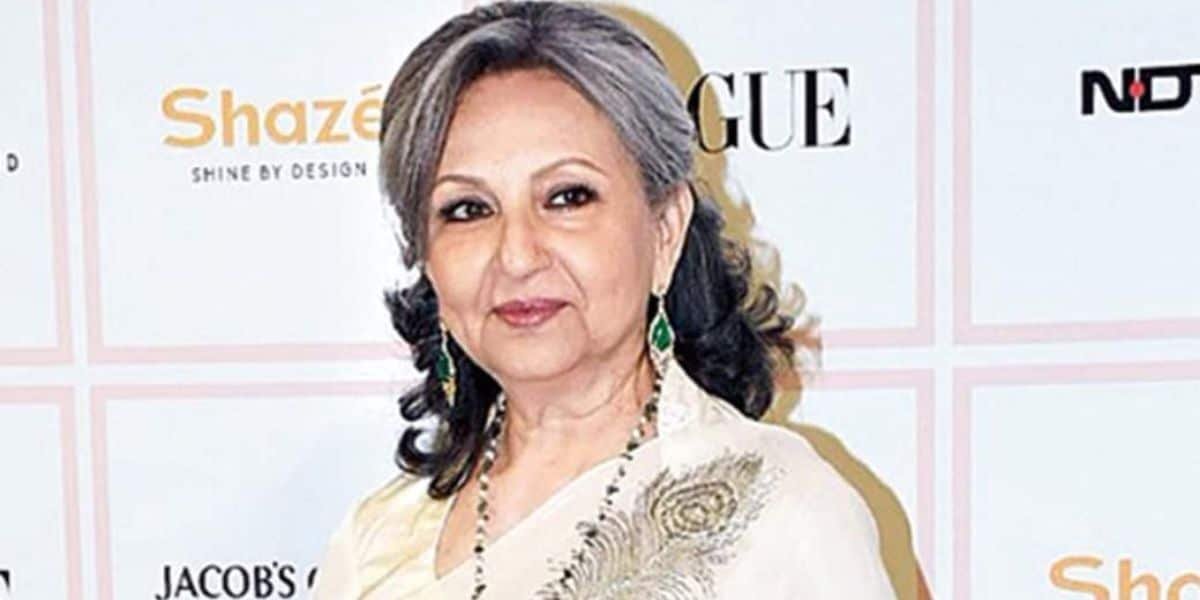
    Sharmila Tagore thinks today’s television content is regressive: ‘Women are portrayed as each other’s worst enemies’

    Bollywood veteran actress Sharmila Tagore made her comeback to the big screen recently with the film ‘Gulmohar’, and in an interview with Times of India, she believed that television today has gotten more regressive in how women are portrayed:

    “The content TV is offering today is quite regressive. Most TV serials portray women as women’s worst enemies, and that is so unfortunate. The government does keep a tab on this, and then it finally comes to us.”

    The actress, who is also a member of the Broadcasting Content Complaints Council (BCCI) had revealed she had often called producers to request them to remove objectionable material, but they refuse to, citing commericial reasons:

    “Sometimes, we call the show makers, asking them to tweak or remove certain objectionable portions. But, producers mostly refuse to budge as commerce often overrides logic.”

  • ‘Your wife is not your cleaner’: Washing powder brand’s new commercial has enraged Twitter users

    Ever thought that Pakistani commercials couldn’t go lower than they already are? Welp, Brite decided to hit rock bottom with an advertisement that has enraged social media on its blatant display of misogyny.

    The commercial shows a woman opening her husband’s suitcase and finding his clothes covered with food stains. But below the clothes is a package and a card which tells the mother to not worry, because Brite can wipe away all kinds of food stains.

    First of all, how is it possible that a grown working man dribbles this much food down his clothes? And is this woman his wife, or a walking talking robot who is now responsible for all of his chores? Twitter had the same questions when they caught hold of the ad.

    A user slammed it as a failed marketing strategy, which is once more highlighting the fact that women weren’t equal members of the households, but they were subservient to the men around them.

    Others began joining in, sharing other sexist advertisements that they have disagreed with.

    Women are not your domestic helpers. They don’t exist to clean and cook around you. Especially if you’re a grown man who is capable of travelling but can’t seem to clean himself.

  • Trouble, Trouble, Trouble: Taylor Swift’s boyfriend Matty Healy faces backlash from fans for problematic history of islamophobia, racism, sexist jokes

    Trouble, Trouble, Trouble: Taylor Swift’s boyfriend Matty Healy faces backlash from fans for problematic history of islamophobia, racism, sexist jokes

    We knew you were trouble when you walked in like quite literally the receipts are right here.

    Taylor Swift made headlines when the ‘Anti Hero’ singer started dating the frontman of The 1975 band, Matty Healy, after splitting up from her longtime boyfriend, Joe Alwyn.

    However, the news was not received well by fans, who criticised Healy’s problematic history of making racist, sexist and Islamophobic jokes.
    Swift has been extremely vocal about her activism for gay rights and feminism, with songs like ‘Mad Woman’ discussing female rage and sexism, and ‘You Need To Calm Down’ from her Lover album empowering the transgender community.

    It must be exhausting always rooting for the anti-hero? Not for Tay-Tay it seems.

    Fans began sharing clips and problematic posts Healy had posted in the past where he appeared to be mocking Islam. For instance, a fan shared a screenshot of his Instagram stories with a tweet:

    “You start dating a Muslim girl then BOOM”

    Another user shared a clip of ‘The City’ singer’s interview with Brut Mexico where he slammed religious people by saying they should be ashamed of themselves, addin that he had no rights as an athiest.

    “Religious people are always allowed to be offended: ‘Oh, we’re offended by this, I’m offended by that,’ I have to get up every day and read something abhorrent that’s happened in the name of religion.”

    https://twitter.com/msatermnid/status/1657258113324441601?s=20

    The ‘Medicine’ singer has been slammed for his controversial racist and sexist comments about rapper Ice Spice. During his appearance at The Adam Freidland Show, the episode was immediately pulled from Spotify and Apple after backlash, but is still available on Youtube.

    Healy had also courted controversy in January when videos emerged of him doing the Nazi salute on stage, a move that has enraged many Swifties

    These recent controversies have led to many Swifties starting to retract their support for Swift, and even criticising her for working with problematic men but yet being quite vocal about social issues.

    Fans even began using the hashtag #speakupnow to demand Swift addressed the problematic history of her boyfriend, and stand up for the rights she claims to be advocating.

    https://twitter.com/laurenelectro/status/1658968672428343297?s=20

  • Jameela Jamil slams celebrities for attending Met Gala that honoured controversial designer Karl Lagerfeld

    Activist and actress Jameela Jamil took to Instagram to publicly slam the celebrities who attended this year’s Met Gala, where late German fashion designer Karl Lagerfeld- who was a controversial figure for his many sexist and racist comments- was honoured.

    Lagerfeld had been outspoken against allowing curvy women to pose for magazines or model, in response to women’s magazine ‘Bridgette’ when the publication announced that they would only publish pictures of real women instead of models:

    “You’ve got fat mothers with their bags of chips sitting in front of the television and saying that thin models are ugly. The world of beautiful clothing is about ‘dreams and illusions’.”

    Lagerfeld had also been a vocal opponent of the #MeToo movement, speaking to Numero in 2018 after three models accused the creative director of Chanel of sexual harassment:

    “If you don’t want your pants pulled about, don’t become a model! Join a nunnery, there’ll always be a place for you in the convent.”

    Jamil criticised the celebrities who had been vocal about social issues like #MeToo movement and body positivity for refusing to call out the controversial legacy of the late ‘Chanel’ fashion designer:

    “Last night Hollywood and fashion said the quiet part out loud when a lot of famous feminists chose to celebrate at the highest level, a man who was so publicly cruel to women, to fat people, to immigrants and to sexual assault survivors. And all the women’s publications, and spectators online, chose to gleefully ignore it. Suddenly your appetite to find someone’s tweets from when they were 12, has gone.”

    The ‘Good Place’ actor went on to share that the selective cancel culture within liberal politics needs to stop, because it further erodes the trust people have in progressive politics that it will actually make a difference in the world:

    “This isn’t about cancel culture. Its not even about Karl. It’s about showing how selective cancel culture is within liberal politics, in the most blatant way so far. It’s about showing why people don’t trust liberals. Because of slippery tactics and double standards like this.”

  • ‘Look who’s talking’: Twitter has no patience for Salman Khan’s hypocrisy on women’s clothes

    Bollywood star Salman Khan is no stranger to controversy and scandals, but it now seems like the aging lothario has forgotten his past.

    The ‘Kisi Ka Bhai, Kisi Ki Jaan’ actor was speaking at Rajat Sharma’s show ‘Aap Ki Adalat’ where he defended his rule that women on the sets of his films couldn’t wearing plunging necklines. The superstar said that women’s bodies are precious and it was boys who have bad intentions:

    “It’s not a matter of girls, it’s about the boys. The way they look at girls, at your sister, wife or mother, I do not like it. So, I do not want them to go through this.”

    When asked about whether this statement imposes double standards by blaming women for their harassment, the actor responded:

    “There is no double standard in it. I feel that a woman’s body is a lot more precious, the more that is covered, the better, I feel.”

    Twitter users have slammed Khan’s comments as degrading and sexist for blaming women once more for the actions of men.

    Many had to point out that Khan had a lot of skeletons in his closet to go and preach modesty to women, by printing out receipts of the actor’s history of abusing ex-girlfriends.

  • Hurried ‘Fairy Tale’ finale misses opportunity for feminist ending

    HUM’s drama ‘Fairy Tale’ cemented itself as a household name with a hilarious storyline, stellar performances by actors and a compelling love story. The series had audiences, especially young women, applauding the growing change in how drama’s are abandoning sexist tropes to make empowering stories where for once, the women are smart and men aren’t chauvinists.

    For a lot of women, ‘Fairy Tale’ provided relief that somewhere, some one was listening to them about what they wanted: a feminist rom-com where the male lead respected, cherished and catered to the woman he loves. Farjaad (played by the talented Hamza Sohail) was described by many as a benchmark in how women wanted men in dramas to be: supportive, caring and completely the anti-thesis of what typical male leads in Pakistani dramas are like. In some of the viral clips from the drama that were garnering applaud on social media, Farjaad was considerate of Umeed’s independence, empowering her and stepping up to help her rather than shoving her inside the four walls.

    Which is why discussing the finale is important because rather than following through with the expectations and ending with a bang, with Umeed finally accomplishing her dream by opening a chai cafe and being married to Farjaad, it took a U-turn.

    The drama followed Umeed’s desire to break her father’s restrictions, a feat she manages to accomplish by participating in a game show through which she wins Rs2 crore and becomes the breadwinner of the family. Through Umeed, a lot of Pakistani women found catharsis because finally, a female lead who is financially independent? One, who empowers the women in her life, and doesn’t think twice before schooling a man who tries to lecture her? Is passionate about making her own path and establishing her own business, when currently one of the leading dramas in Pakistan involves slaps and suicide attempts *cough cough Tere Bin*? Umeed was an anomaly, reminiscent of the kind of characters who led the dramas of the 90’s when Haseena Moin was alive, and she was quick to win the audiences over.

    However, these accomplishments were for naught when by the finale, Umeed decides immediately that she isn’t interested in making more money, and gives a speech about how she would rather become an obedient daughter and get married to Farjaad. Like, why bother taking us all for a ride? Why would you explore 30 episodes about a young woman discussing business initiatives, ending with her choosing to give up all of it, and settle to marry?

    Through Farjaad especially, it was rare to see a man in a Pakistani drama own up to his actions, and empower the women in his life (READ: extremely rare), but that finale was a double-take for many audience members because in the first part he threatens to break up with Umeed if she chooses to go on and participate in the game show, something that was unexpected from a guy who told his love interest that he would keep supporting her. Then, when Umeed arrives at his office to apologise to him (why?) he taunts her for being in love with AK (played by Ali Safina). Even though he does apologise for this as well and admits that he isn’t perfect, shouldn’t the finale have ended with Farjaad owning up to his promises by helping Umeed setting up her business?

    These lose threads dangling from the plot will keep fans of the drama anxious about whether asking for a feminist rom-com was too good to be true, or maybe since Season 2 has been announced, some hope is left.

    But had the show kept true to its promise and given women what they wanted, a drama about a woman rejecting patriarchal norms and her father’s strictness to make her own dreams come true, it would have been much nicer.

  • Yashma Gill debunks the ‘gold digger stereotype’, encourages women to be financially independent

    Yashma Gill debunks the ‘gold digger stereotype’, encourages women to be financially independent

    Yashma Gill was a guest on the Nadir Ali podcast, a clip of which has gone viral, where she passionately spoke out against the misogynist stereotype that women are gold-diggers.

    Ali said that in our society today, a man’s ugliness is considered his empty pocket:

    “Regardless of whether he is good-looking or not, he looks awful without having money. He is told to go and earn money.”

    Gill corrected this statement by pointing out that that many women in successful, happy marriages are earning more than their husbands so this stereotype that women are only in love with money isn’t true:

    “I will not give any names, but around us there are a lot of examples where a woman is more successful than her husband, and they had love marriages…Regardless of these people belonging to my field or not..I don’t like the stigma attached to women that we are gold diggers.”

    Ali brought up a sexist stereotype about women gaining financial independence and abandoning men:

    “When a man earns, he hands over everything he has to the woman. Whereas when a woman begins earning she decides to abandon her man.”

    Gill counteracted this statement by pointing out that financial independence only helps women become more confident within themselves, and doesn’t translate into not wanting a companion anymore.

    “People are confusing this with when a woman becomes financially independent, she is no longer helpless,” stressed the ‘Pyaar Kay Sadqay’ actor. “She can stand up for herself. She can remind her parents that she is no longer a burden on them so doesn’t need to be married off. She can even provide for her children…So I think that independence for women and girls can give them strength and power, not the fact that they don’t need a man. Everyone needs companionship.”

    Gill then gave the example of Hazrat Adam (S.A.W) and Hazrat Havva (S.A.W), to prove that every human being was meant to have a companion:

    “Take the example of Hazrat Adam (S.A.W) and Hazrat Havva (S.A.W), this is a natural thing that evcryone needs companionship. But there must be compatibility, respect and a lot of other things.”

    Listen to her complete interview here:

    Gill shared the viral clip on her Instagram stories to address the misunderstanding that might rise in case audience is assuming that Ali was being sexist, to which the actor had written that the host was respectful and well mannered:

    “So just to clear the air, the respectable host only meant to ask my opinion on what is a common misconception in society. Nowhere did he agree with it himself or said that it is something that he believes in. It was just one of the many things that he discussed with me – “discussed” not imposed, argued or debated. Therefore let’s not get him wrong and frame him in ways he doesn’t deserve because he was nothing but extremely kind and respectful towards me that I was honestly in awe of his nature. A true gentleman.”

  • ‘We need more men like him’: Writer behind ‘Mujhe Pyar Hua Tha’ revealed why she wrote Saad as a non-toxic character

    Saad from the drama ‘Mujhe Pyar Hua Tha’ has won the nation’s heart for breaking stereotypes that are associated with the toxic male lead in Pakistani dramas, and being an attentive husband and care giver to the female lead, Maheer (played by Hania Amir).
    Twitter users have praised Wahaj Ali for brilliantly portraying the sensitive and caring Saad, and how at every step he has remained a character who was fearlessly devoted to his wife, and was a dedicated son to his parents.

    The writer behind the iconic drama, Sidra Sahar Imran, gave an interview to Fuchsia magazine where she opened up about the character of Saad, and why she felt that it was important to address the toxic double standards in our society that shame men for showing emotions or for being ‘kind-hearted’:

    “I had observed that often romance novels will depict the girl as the sati savitri who will sacrifice all that she has, but I used to think that men also exist in our society why can’t we depict them the same way?”

    Looking at the feedback Saad’s character was receiving, Imran said that most people were shocked.

    “I can see that mostly people are shocked that a man like Saad is acting this way. Because we are so used to men not being able to tolerate a lot of abuse. Our society cannot understand the fact that men should be sensitive and soft-spoken, since we are used to the standards telling them to be tough and loud. In our male-dominant society, we encourage men that to be a real man, they need to be aggressive and out-spoken to prove their worth. But there are a lot of men like Saad out there and I wanted to write a character like him.”

    Imran also revealed that there was a way she could have catered to these expectations after Maheer and Saad’s marriage, and demonstrate his anger and possessiveness but she refused:

    “I didn’t want my character to act in this manner, after coming a long way. He will not cater to such toxic standards about what a real man is.”

  • ‘Jahil’: Celebrities, activists slam Senator Afnan Ullah Khan for horrifying remarks about Mahira Khan, Anwar Maqsood

    Yesterday, a clip from a session named An Evening With Mahira Khan went viral on social media, featuring Anwar Maqsood. The renowned writer made a disparaging comment about two female Pakistan Muslim League -Nawaz (PML-N) leaders, Maryam Aurangzeb and Maryam Nawaz.

    In the clip, Khan was seen asking about two women who are fighting and shouting with each other, to which Maqsood responded that these women are Maryam Nawaz and Maryam Aurangzeb,

    “I am restricted from talking about politics, I can’t say anything about anyone. Hopefully the situation will get better soon. What you said about poisoning, abusing each other so I gave an example, it is also happening in real life. Also both are actors, not character actors.”

    This comment was rightfully criticized because of how it chose to directly target the female politicians through the same misogynist stereotypes Khan was condemning in her session. Twitter users also slammed Khan for her selective morality, urging the actor to reflect on the feminist morals she is presenting because repeatedly calling out misogynist slurs used to put down women, but in the same breath applauding this way of publicly targeting female politicians and humiliating them? Baffling.

    https://twitter.com/Bubbleskhanum/status/1637942268773519367?s=20

    “I don’t expect anything good from him, because he is a man, but it’s so baffling to see Mahira Khan applauding over this incitement of misogyny and sexism, she literally made a brand by capitalizing over feminism, but is not consious about how harmful this is for Pakistani women,” one user wrote.

    This is the proper manner of responding to an opinion you disagree with, by pointing out mistakes and urging the other person to reflect and correct themselves. Because after all, celebrities have a public platform through which they can influence other people to follow their actions.

    What is the most vile, awful way to counteract? By using abelist, abusive language and making personal remarks like the way Senator Afnan Ullah Khan did on Twitter

    “Mahira Khan has mental health problems and Anwar Maqsood has become a drunkard at this stage of life. Both of them are shameless characters and the public should condemn them for it. There are books written about Mahira Khan’s character, and she is known for even flattering Indian actors for the sake of money and Anwar Maqsood is filled with hatred at this point of his life,” wrote the PML-N senator on Twitter.

    To condemn a misogynist remark is the right of any politician, but to go even lower and make personal, completely distorted and abusive comments about someone is completely not acceptable.

    Targetting Khan and Maqsood with such awful comments from the politician whose party is currently ruling the country proves how deep misogyny runs in this country. Celebrities like Atiqa Odho and Farhan Saeed openly condemned these comments for showcasing Dr Ullah Khan’s misogynist state of mind.

    Farhan Saeed retweeted this comment and condemned the way free speech in Pakistan has been suppressed

    “This is the mentality that doesn’t let #Pakistan grow , this is what they do when someone just gives an opinion or has a political preference . They get personal so people stop giving their opinion . Senator ? Zuban jahilon wali,” he wrote.

    Odho shared a picture of both Khan and Maqsood on her Instagram account and in the caption she condemned the PML-N politician for using such foul language against two “hard working and committed people.”

    She wrote: “#AnwerMaqsood a living legend and mentor and #MahiraKhan our beloved star. Both shine where ever they go and leave others way behind. Shameful when anyone dares to say anything against such hard working and committed people as these are national treasurers. PMLN should expel the senator who behaved so poorly from their party at once to teach him a lesson and show their sincerity towards our iconic soft image ambassadors. Such acts must not go unnoticed as these are not political people and as citizens have a right to an opinion within a true democracy. Hope action is taken and a public apology is given by #PMLN !”

    Actor and writer Mira Sethi tweeted that these remarks are ‘utterly shameful’.

    https://twitter.com/sethimirajee/status/1638106602828865539?s=20

    Actor Iffat Omar, who is critical of Imran Khan, also condemned the tweet and tagged Maryam Nawaz, urging her to take action against the senator.

    The twitter account of Aurat March called out the Senate of Pakistan to teach their politicians to refrain from using such abusive, sexist language against their critics, especially when it is a woman involved.