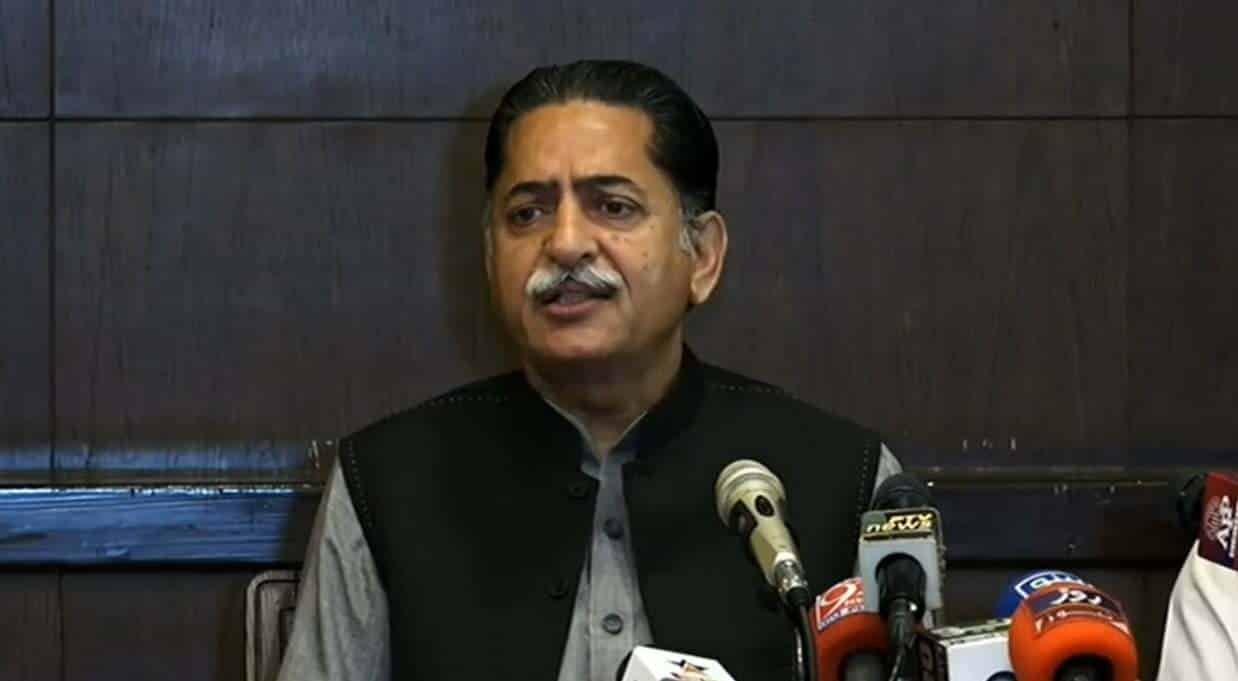
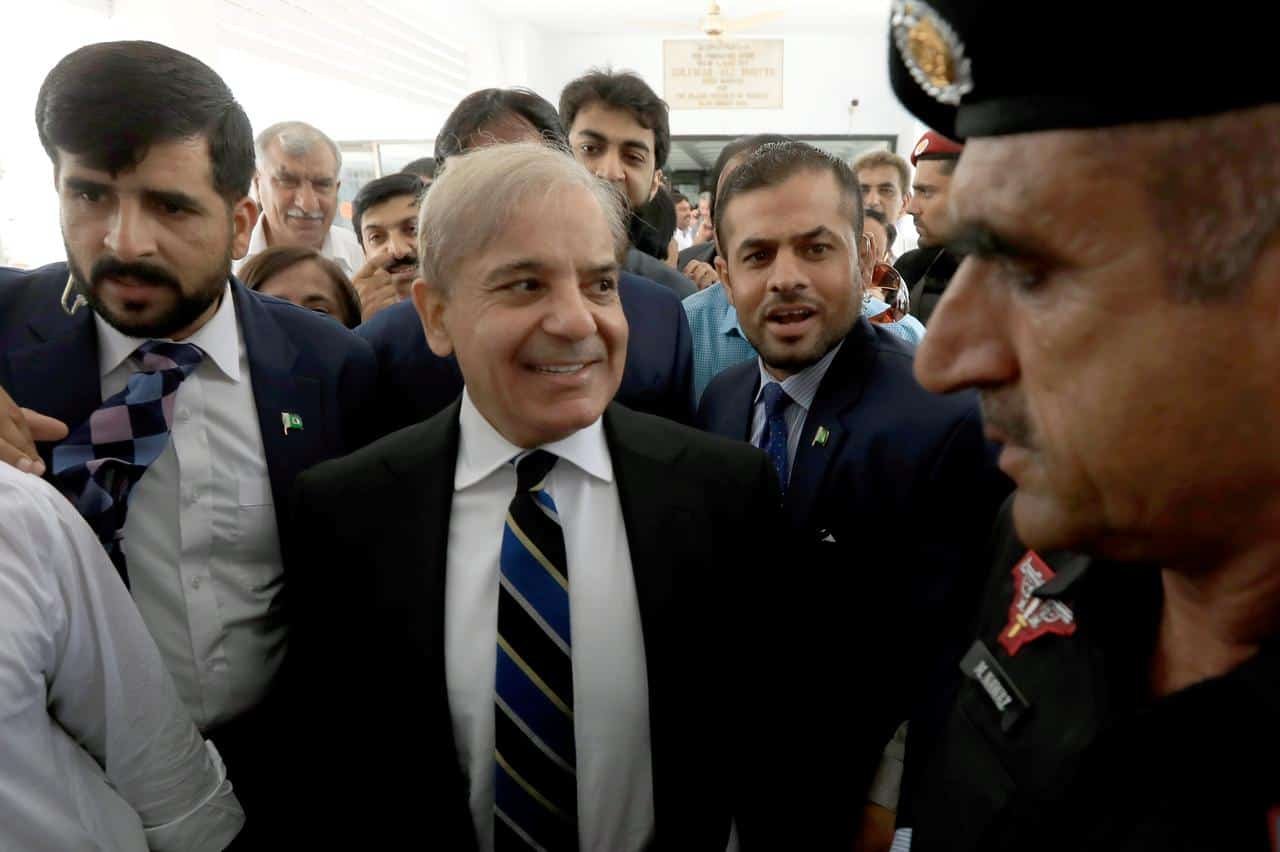
Considered a “senior leader” of Pakistan Muslim League-Nawaz (PML-N), Javed Latif has passed sexist comments against former First Lady and Pakistan Tehreek-e-Insaf (PTI) Chairman Imran Khan’s wife Bushra Bibi.
In an apparent reference to Khan and his wife, he said, “The 72-year-old boy is saying that my 75-year-old wife was alone in the house in Zaman Park. The chaadar and the sanctity of the four walls have been violated.” He continued, “If she was alone in the presence of 200 terrorists, Should she be surrounded by 4000 or 5000 armed people for him to her consider safe?”
His comments came under fire on Twitter where a lot of social media users not only condemned the politician’s statement but also called him out in harsh words.
72 سالہ لڑکا کہہ رہا ہے کہ میری 75 سالہ بیوی زمان پارک گھر میں اکیلی تھیں چادر اور چار دیواری کا تقدس پامال کیا گیا ہے.اگر 200 تربیت یافتہ دہشتگردوں کے حصار میں بھی اس کی بیوی اکیلی تھی تو کیا اس کے ارد گرد 4,5 ہزار مسلح لوگ ہوں تو یہ اسے محفوظ سمجھے گا؟ وفاقی وزیر میاں جاویدلطیف pic.twitter.com/o3MfUfSUVa
Aurat March Karachi issued a statement, quote tweeting the clip. “We strongly condemn such sexist remarks against Bushra Bibi by a government representative,” stated the feminist group. “It is disgusting that political parties have normalised sexist attacks on women from opponent groups.”
“That this statement is coming from the party of Maryam Nawaz, who herself remains a victim of sexist slurs is all the more concerning,” continued the official statement.
“We demand the government and all political parties stop this misogynist tradition which targets women due to their gender. Such practice should lead to strict punitive action by [the] government as well as Election Commission.”
We strongly condemn such sexist remarks against Bushra Bibi by a government representative. It is disgusting that political parties have normalised sexist attacks on women from opponent groups. That this statement is coming from the party of Maryam Nawaz, who herself remains a.. https://t.co/nAdByipieg
— Aurat March – عورت مارچ (@AuratMarchKHI) March 20, 2023
This is not the first time that a politician sitting in a media gathering has used this kind of language for a woman.
The Current strongly condemns the PML-N leader’s remarks. This should stop NOW!
Actor Amna Ilyas was a guest on “The Talk Talk Show’ where she opened up about being a feminist, and clarified the misinformation around the Aurat March slogan ‘Mera Jism Meri Marzi’.
When the placcard was raised at the 2018 Aurat March, it caused outrage after many right-wing critics said that the chant supports promiscuity and challenges family values in Pakistan. Many religious clerics had used the placard as justification to call ‘Aurat March’ un-Islamic and accused it of promoting a Western agenda in Pakistan.
Many feminist activists have defended the slogan for protecting women’s bodily autonomy, and now Ilyas has also done the same, as she explained that the slogan ‘Mera Jism Meri Marzi’ was more than about clothes, it’s about protecting the rights of women:
“It’s about having body autonomy rights and consent. It’s about harassment, domestic violence, and concepts like, ‘No one has the right to touch me without my consent, even if I’m married to you’.”
Ilyas went on to debunk the stereotype associated with feminism that women who support this ideology are promoting vulgarity, when in reality the ideology supports the rights of women to have the same opportunities as men:
“Whenever I talk about feminism, people always object by saying ‘Oh, Amna is bold, of course, she will spread vulgarity as she’s from the industry, she wants all our daughters to be like her’. No, I don’t want that, I only do what I want to for myself.”
“When we speak of equal rights, it’s about having the same opportunities to thrive in my career as the man beside me. If you’re a father of four children who excel in your profession, why can’t I do the same? Honestly, it’s not about whether you’re getting permission to wear jeans or not. What we truly need, is the space to work in a cerebral capacity,” she explained.
A 26 year old woman named Kajol from Delhi was seen being attacked by her father-in-law on Tuesday morning while she was heading for a job interview. The culprit was against her decision to get a job.
According to police officials, Kajol wanted to work in order to help her husband Praveen Kumar support their family but the father-in-law was against her decision and wanted her to stay at home.
According to the released footage which is now going viral on the internet, Kajol can be seen being approached by her father-in-law, who is holding a brick in his hand. When she tried to escape the attack, the father-in-law repeatedly hit her on the head with a brick.
Kajol was taken by her husband to Sanjay Gandhi Hospital where she received 17 stitches on her head.
Meanwhile, a case has been filed against the father-in-law by Kajol’s parents who live in Faridabad, according to the officials.
At this year’s Aurat March, a boy went viral on Twitter when he was seen schooling a reporter by explaining to him why marching for women’s rights is incredibly important.
Listen to this 2 min audio, it’s amazing how this young boy stands up for women and counters this bully YouTuber
Actress and writer Mira Sethi revealed yesterday that she had met the boy by tracing him down on Twitter, and described him as her ‘hero’.
“Remember the kid who stood up to that vile reporter at Aurat March Lahore?” she wrote, “I found him on Twitter, asked if I could come over to express my gratitude and met his whole family. Muhammad Ali is only 20, but he radiates clarity and courage. I’m going to do whatever it takes to make sure his light is never dimmed. So full of gratitude today.”
Syed Aly Jaffery also shared the interaction on his Twitter page and called her a ‘nice and amazing person’
Today @sethimirajee has visited my home. She is such a nice and amazing person. Also she gifted me a cute bucky. Love you mam. ❣️ pic.twitter.com/yvsW5fTzWX
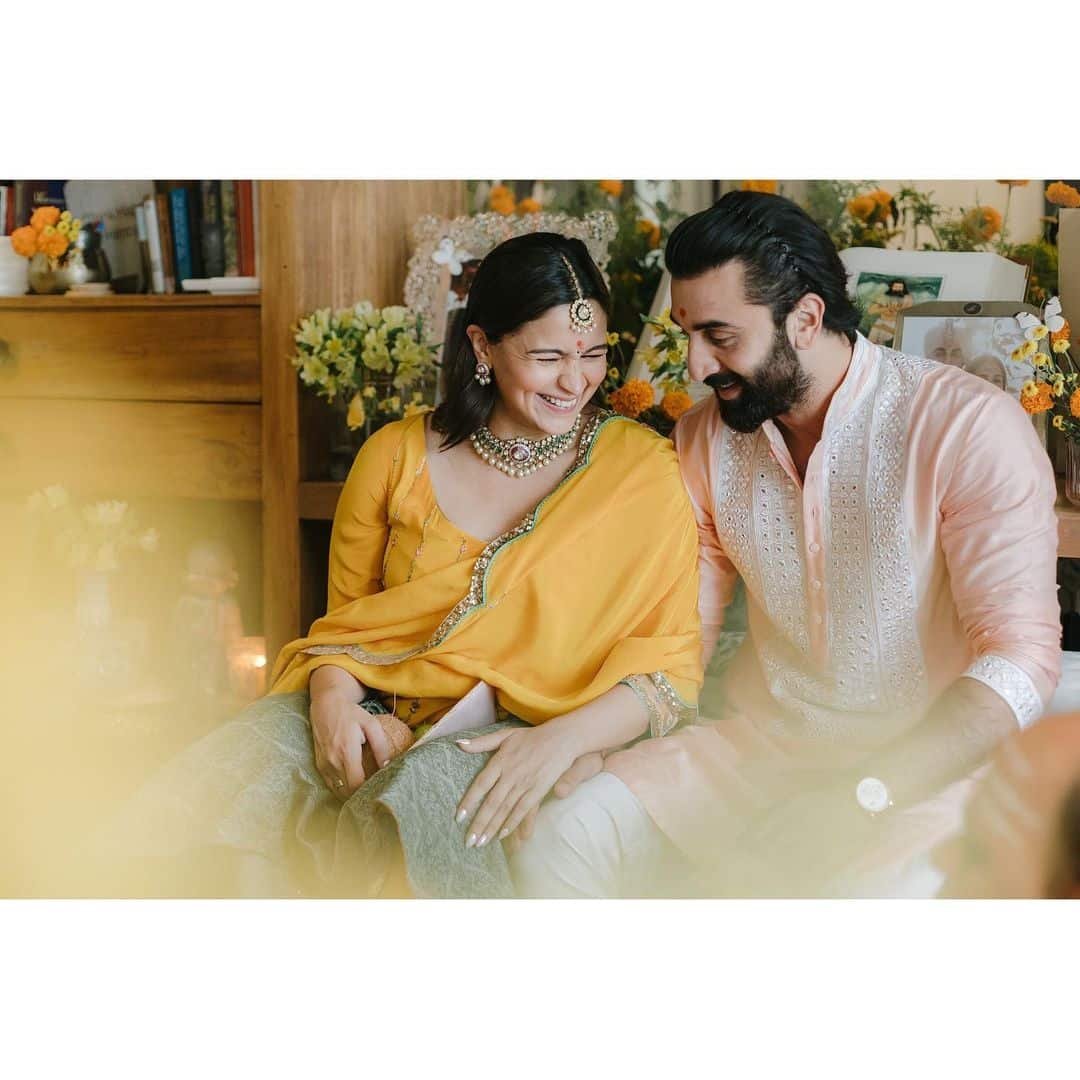
Ranbir Kapoor is once more being criticized by fans for his insensitive comments about his wife, Alia Bhatt.
The ‘Tu Jhooti Mein Makkar’ actor was previously called a misogynist by the internet when he was seen body shaming Bhatt during a livestream, while Bhatt had been pregnant with their baby, Raha.
Kapoor is being criticized this time for a remark he made during an interview with ‘GOODTiMES. The ‘Brahmastra’ actor said he doesn’t want their baby Raha to have Alia’s personality, since the ‘Gangubai’ actor is very loud and ‘talks a lot’:
“I just hope she has my personality rather than hers because I can’t have two women like Alia in the house,” he said. “Alia has a very boisterous personality; she talks quite loud and is vivacious. Two girls at home like that would be quite a daunting task for me. I hope Raha is a bit more quiet and demure like me so then we both can handle Alia.”
Since this interview went online, Twitter users have slammed Kapoor as insensitive and misogynist for refusing to recognize how such comments about Bhatt are extremely hurtful.
One user wrote: “I hate guys who do this to their wives. This low key mocking of their demeanor which they then pass on to the kids. Very common in Indian families.”
I hate guys who do this to their wives. This low key mocking of their demeanour which they then pass on to the kids.
Another user wrote “oh god oh god oh god if you don’t like your wives just say that stop making jokes at the expense of their literal personality and get a life”
oh god oh god oh god if you don’t like your wives just say that stop making jokes at the expense of their literal personality and get a life https://t.co/ZNT3vndWWI
Many users were pointing out that Kapoor’s action was one of most common traits through which men put down confident and loud women by mocking and publicly humiliating them.
If you don’t like interacting with loud women ppl then don’t marry one!!! Bohat simple baat hai baad mein interviews mein subtle digs marne se to behtar hai pehle sochlo. For u it’s a joke for us it isn’t u’re literally making hs insecure of our personality https://t.co/KeQkKboqli
Aurat March has set up a performance art piece at their protests each year which highlights their central demand which is to create an equal space for both men and women in Pakistan.
This year, the feminist movement revealed that a gaze tunnel titled “Chalien Auraton Ki Chaal” was installed at the march for men to pass through, in order to make them experience the kind of fear and claustrophobia women undergo when they are harassed on the streets.
The March elaborated on the significance behind this art installation in a post:
“The tunnel piece is an exercise in empathy, in conveying our gendered experiences of walking down the streets, in market places, through office doors. Ask any gender minority what they feel when they are in public spaces: each one of us will have many stories of harassment, of discomfort, of instances where the streets didn’t feel like ours. The art piece plays soundbites of our day-to-day public interactions. Aurat March is ultimately about reclaiming public spaces, of never settling for chaar-dewaris, but rather stretching ourselves more fully within and outside our homes. That demands introspection from men of them way they occupy public spaces. We hope this piece helps in that.”
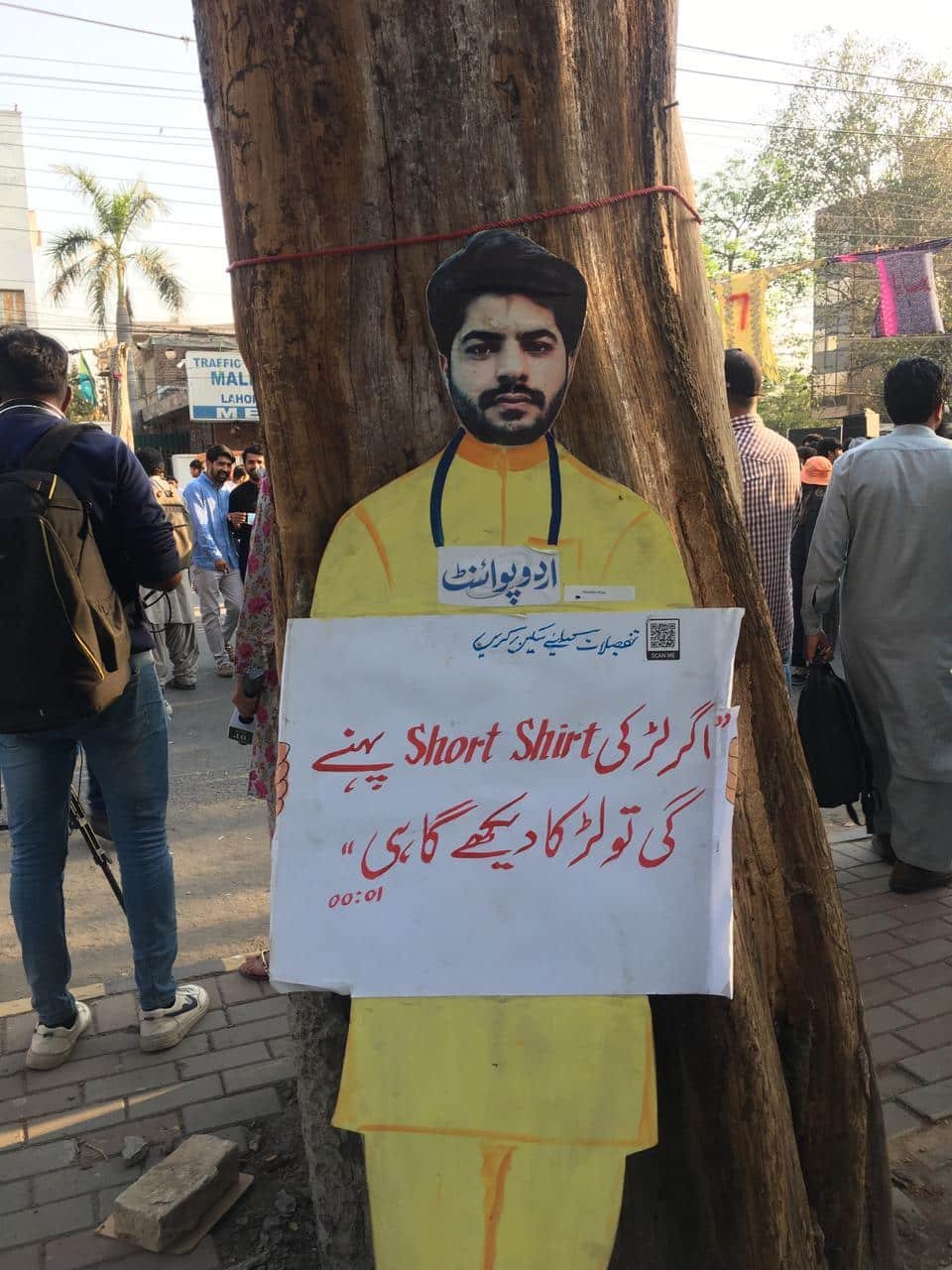
Another art installation ‘In Ko Viral Karo’ was also at display on the protest which featured pictures of Youtube bloggers along with the misogynist comments they made about participants.
The movement addressed the significance behind this installation in the post: “The coverage of Aurat March we see on Youtube is far from reality. These Youtube ‘journalists’ sensationalized, misrepresented and harassed participants from Aurat March last year. We present direct quotes from their ‘coverage’”.
There is a poignant moment in the documentary ‘The Romantics’ where filmmaker Aditya Chopra reflects back on the 26/11 Mumbai attacks that shook the entire country. At the time, his production company had been gearing up for the release of his upcoming romantic comedy film ‘Rab Ne Banadi Jodi’. Many of his colleagues had urged him to push forward the dates to prevent an uproar. Chopra said in the documentary that he knew that more than ever, that was the time people needed a reminder of joy and happiness in their lives, so he decided to stick with the original date. When the film released in cinemas across India, it became a hit.
Currently in the state ‘Bannistan’ is in, with our economy struggling, inflation rising and more women finding it difficult to access public spaces without the fear of sexual assault or harassment, we have now developed an allergy to joy. Anything that prompts laughter or makes people happy. Solution: ban it. We ban our films, we call for festivals to be stopped because of fears like “western sazish” or “anti-Islamic” and then we wonder why our upcoming generation has no creative skills or any motivation to find work.
Art is not just a prop to promote state policies, but a way to encourage members of society to find joy and reflect on the way they are living their life. We need art because it encourages us to express our inner selves and also because it is a powerful way to spread messages on social issues to the masses. Perhaps this is why art terrifies our public officials so much, and why it is censored more than any other industry in this country. We label the art we don’t like as ‘immoral’ because it is the only medium that can reflect the tabooed topics we are so afraid to speak about. Consider dramas in the past like “Dil Na Umeed to Nahi” which got several notices from PEMRA because it discussed the issue of child sex trafficking, and the difficulties survivors face in rehabilitating themselves. Another notice was sent to ban hugs or caressing, because God forbid any marriage is seen as being happy or affectionate. But we refuse to think about the numerous domestic violence and abuse scenes we watch on our screens every day.
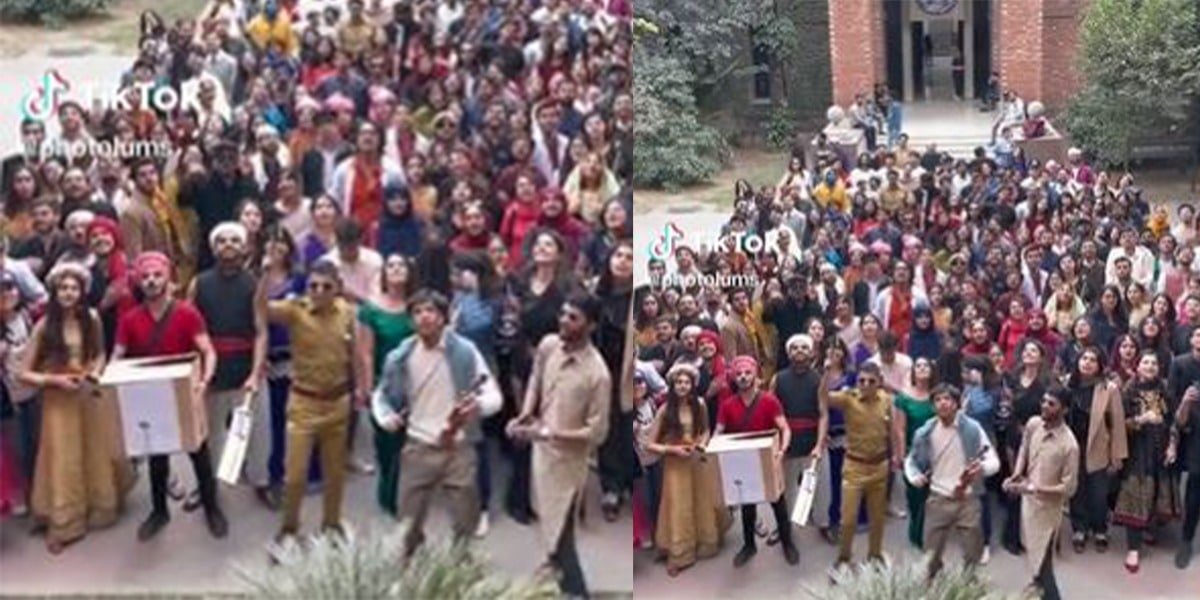
A few days ago, a video began trending online featuring Bollywood day at LUMS, where students showed up dressed as their favorite characters from movies and dramas. But in response, social media users began criticizing the university for promoting vulgarity, and called the participants “kanjarkhana”
Slur words are labels that we put on people who do not conform to the idea that it is shameful to seek celebration and joy in our lives, and words like these can be traced to our colonial roots. The British had demoralized the kunjar community in the sub-continent, a nomadic community of folk entertainers. As Jasir Shahbaz writes for Samaa, under the British rule, the kanjar community had been socially outcasted and under the Criminal Tribes Act, 1871, they were listed as “addicted to the systematic commission of non-bailable offences.”
These terms are thriving under the ongoing reign of Bannistan: shame anyone who works in entertainment as a ‘kanjari’. We criticize female actors for performing on screens, deem women who seek their independence or protest for equal rights as loose and immoral, when in reality anything that challenges our misogynist and regressive mindset is improving our lives.
In defense of the students who celebrated the end of their University days and any other woman out there trying to live her life, kanjari is an empowering term because it means we’re celebrating life. In times of repression and censorship, celebrating art can be the greatest form of living because it allows us to represent ourselves on screen. And gives space to every individual in society, regardless of caste or background. So instead of shaming these children for celebrating Bollywood day or just protesting in the streets, hold back your thoughts and just go about your own day if you’re not interested in what they have to say. Because now more than ever, we need joy in our lives. We need a reason to keep moving and find solace in the countless stories we see in films or read.
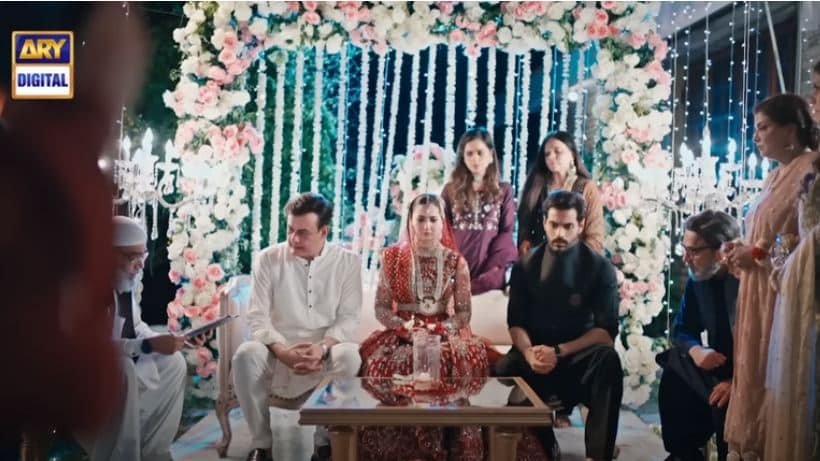
The year is 2023. The Pakistani entertainment industry is as terrified of a woman who exercises her own free will and independence, as it was in 1973. After encouraging the bitch and bechari trope, the gold digger, the women fighting over a man trope, here comes another interesting plot device to keep viewers entertained: humiliation nikkahs.
What is this term and why do we bring this up? Humiliation nikkahs is a trope that are apparently suppose to make the enmity to lovers story even more spicier, simply by pressurizing the girl to marry the man for the sake of keeping her izzat intact. Bring up an excuse like the man the woman was suppose to marry bailed, and what could be more precious for a woman than diamonds, jewelry or a worthwhile lifestyle? Her honor! Because dear children, if a woman has no honor, punish her by marrying her off instantly to a stranger, popping out a ready made husband good to go!
Recently, the drama Mujhe Pyar Hua Tha has been gaining a lot of attention on social media because of Wahaj Ali’s brilliant performance, but his smolder and Nice Boy™️ vibes isn’t enough to divert us from the regressive story line. A love affair is stopped because women do not appreciate caring and nice boys apparently. From the start, the drama keeps us invested in the love story between two cousins (not enough coffee on this planet to get in to how messed up this is). The male lead, Saad (excellent name choice, five points for the writer) is the good boy next door. He’s the one who has always listened to your problems, is only a call away when you need to go out, but not the one you want to fall in love with. . He’s Devdas without the dimples or the long hair strand in front of the face, but the slouch who moans about no one liking him.
Then there’s the girl, Meerab, who is vain, self-centered, and consistently ignoring Nice Boy’s™️ kindness. She also taunts him for not doing enough when in the first episode, she chastises Saad for not owning a nice enough car and making her late to her cousin’s wedding. Meerab falls in love with a rich man Areeb, for which she is repeatedly condemned by her family, because she begs them not to force her to marry Saad, the man she had literally grown up next to. She and her mother are painted as villains in the drama because of their aspirations to marry above their station.
But what possible flaw could Saad have, aside from the fact that he is literally her blood relative? He’s the Nice Boy™️! Could it be perhaps that she doesn’t owe to him that she gives up her independence simply because he loves her? Or perhaps she has different desires than what Saad is offering her, and would like to have a wealthy and luxurious lifestyle? But by the end of the day, Meerub is a selfish, manipulating bitch for wanting more than just a mere home, and Saad is the Sad Boy who got played with because for once, a woman reminded him that she doesn’t owe him anything.
And then we come to the part that has inspired this rant: the shotgun wedding that is apparently the genius twist used to put two enemies together. Apparently the writer thought they were one-upping the great minds of writers like Agatha Christie or Emily Henry, who couldn’t write a better love triangle than forcing a woman to quickly marry her cousin because log baatien kar rahay hain? One would have to question why do television shows still presume that a woman’s honor and respect is completely destroyed when they are raped or assualted, but there is never a question about the man’s sense of respect. Especially in a country where more women are beaten or murdered by family relatives because they made videos on Tik Tok or even rejected a man’s proposal, this kind of message actively perpetuates the ever present misogyny women in Pakistan still deal with.
‘Log Kya Kahengee’ is a mantra women have been sacrificing their dreams and existence to, and it’s shameful that to this day, drama creators cannot recognize how damaging their depictions can be for women trying to survive in Pakistan.
The humiliation nikkah isn’t brand new, but a beloved trope. Popular dramas like Chupke Chupke abruptly put the opposing lovers together without any proper chemistry because it was another great idea hatched by respectable elders. Dear children, marriage is the magic wand that magically evaporates any anonymity or prejudice two people who never have interacted before in their lives might have, and then suddenly they’re the new Majnu Laila in town. Chupke Chupke executed this trope in a brilliant manner. Faaz and Meenu, the opposites in the Hum Tv Ramzan drama, had never interacted before, and were also STUDENT and TEACHER before this happened. Meenu tragically happened to have been engaged to a con-man, who was quickly caught by the brilliance of family members who were pushing her to get married in the first place. In a stroke of brilliance, they quickly decide that Meenu must marry her cousin, and teacher, Faaz Ibrahim, to save her respect. Before Faaz can even interject with some logic, Meenu’s brother quickly shushes him by reminding him ‘Meenu ki izzat ka sawal hai.’
Because worse than marrying the wrong man or even being abused and humiliated in a toxic relationship, is getting bailed on your wedding day.
What’s more worrying to witness is how the humiliation nikkah trope is supposed to be a way writers are trying to convince the audience that a toxic male lead, who repeatedly stalks, harasses and crosses boundaries with a woman, is actually truly in love with her. Taking an example of the ever green Ishq Hai where Danish Taimoor”s character is driven to madness when he realizes that the woman he loves (played by Minal Khan) is getting married to someone else. So he kidnaps her, drives her to an isolated home, where he holds a gun to his head and threatens this woman that she must marry him, or he will kill himself.
Swoon, right? Shah Rukh Khan should take notes. He only gently reminded his female lead that he wouldn’t force her to run away with him, because he loved her too much, and would never want her to live a life of shame and cut off from her loved ones.
But what’s going to change by shouting our frustrations in the air this way because by the end of the day, this is the same entertainment industry willing to demonize Aurat March as a Western agenda movement, designed to break apart the family system.
The family system, that is maintained because women have kept quiet for centuries about being abused, mistreated, cut off from their family members, forced to clean and cook for the entire household, will suddenly collapse overnight because one girl made the choice to marry according to her own free will.
We sincerely hope that Pakistani drama creators would maybe stop chasing their own tales and spinning out the same regressive storylines, and maybe for once, listen to the women living in Pakistan, who deserve much better than consistently being denied their humanity and self worth.
Pakistani artist Shazia Sikandar made international headlines a few weeks ago when her statue ‘Havah…, to breathe, air, life’ was installed on the rooftop of the New York appellate courthouse .
Conservative US news channel Fox News covered the installation of the statue in Tucker Carlson’s show where he criticized Sikander’s artwork and called it ‘satanic’. He also said that New York officials made a terrible decision to replace former President Thedore Roosevelt’s statue with Havah. On her Instagram page, Sikander posted a screenshot of the racist coverage, along with some of the hateful comments she had received over her artwork, calling out their misogyny. She clarified that ‘Havah’ was not a statue of late Supreme Court judge Ruth Badger Ginsberg, however, she did take inspiration from her.
“Hot Under The Collar . @foxnews twisting it for their agenda. . NOW is women carrying their roots and histories wherever they may be, with a nod to RBG. It is not a statue of her.”
It seems like hell hath no fury like an incel scorned. What scares an alpha male is not soaring prices or climate change or even dictatorships, but a woman asserting her independence and saying she’s a feminist. This was demonstrated today when a man on Twitter openly claimed that men should not marry women who are feminists. Because obviously, a woman who refuses to recognize her humanity and independence is what a man-child like Abu Hafsa needs to clean up after him.
May Allah protect our sons from marrying feminist bints. Especially the undercover ones.
But Muslim women were quick to roast the man in the comments, and remind him that no woman needs to give up herself to cater to the men around her. And definitely women can survive perfectly well without man childs like him.
May Allah protect our daughters from marrying male chauvinists. Especially the “I’m a good guy” types ameen https://t.co/CzI0bZrNKh
Any man threatened by your ambition or independence is not worth thinking twice about. Never worry about catering to a man’s needs when it involves dimming your own light or self worth.