Tag: missing persons

  • Balochistan Home Minister heads commission for recovering missing persons

    Balochistan Home Minister heads commission for recovering missing persons

    Balochistan Home Minister Mir Zia Ullah Langau has been appointed as the chairman of a commission that will look into the cases of missing persons.

    The commission will recover and investigate the cases of missing persons, provide legal assistance to the families of missing persons while also looking into the activities of these missing persons against the state.

    Earlier, the Balochistan home ministry formed a parliamentary commission on missing persons on the orders of the Balochistan High Court (BHC).

    It is pertinent to mention that the missing person commission received a total number of 9,133 complaints from the residents of Balochistan alone.

    Apart from this, Supreme Court (SC) was informed that overall 2,207 cases of missing persons are pending as of November 30, 2022.

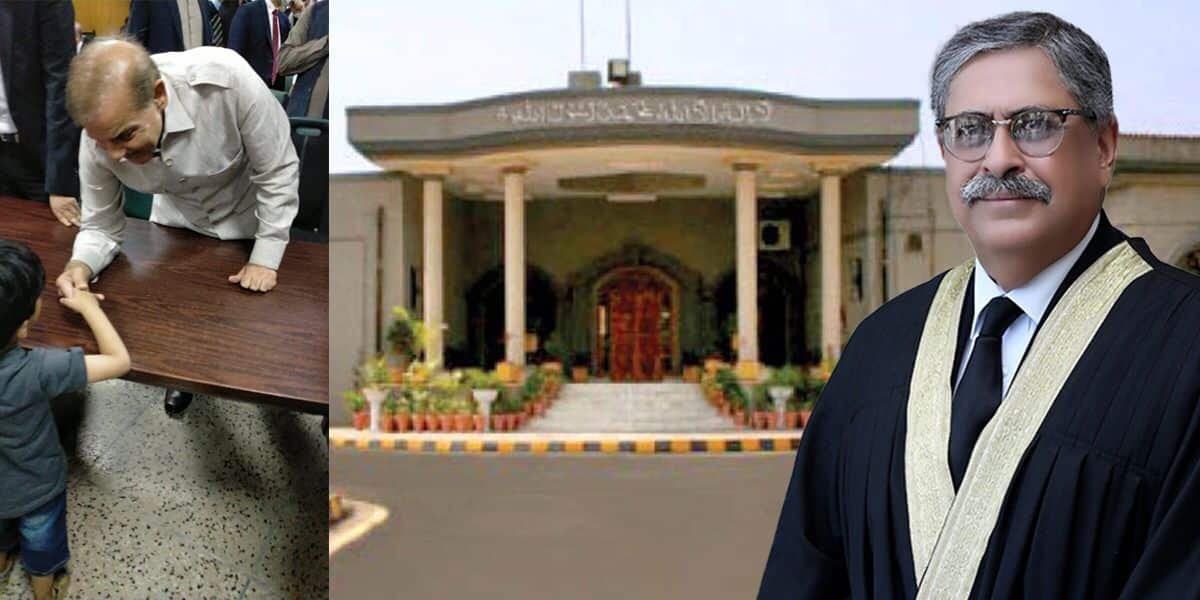
    Prior to this, former Islamabad High Court (IHC) Chief Justice Athar Minallah instructed Prime Minister (PM) Shehbaz Sharif to ensure a resolution to the missing persons’ cases.

    The Premier assured the court that all-out efforts would be made to recover missing persons.

  • ‘Balochistan’s issues must be resolved’: NA addresses fake encounters

    Balochistan National Party-Mengal (BNP-M) Chief Sardar Akhtar Mengal raised the matter of fake encounters in the National Assembly (NA) in which, he alleged, innocent people were killed and presented as terrorists.

    Three missing persons were found dead in Kharan on Monday. They were allegedly killed in fake encounters by the Balochistan Counter Terrorism Department.

    Mengal told the lower house that the people killed by the department have been identified and all of those people were “picked up”.

    “Wasim Tabish was a student who wrote a poem for missing persons. Those who speak and write are picked up,” said the BNP-M chief.

    “Do not push us to a point of no return”, warned Mengal, as he urged the end of fake encounters in Balochistan.

    Later, Defence Minister Khawaja Asif described the issue as “Wounds of the state that have been bleeding for years”. He called for measures to address and resolve the issues and acknowledged that the problem had existed for a long time.

    “Balochistan’s issues must be resolved”, stressed the federal minister.

    Not only Khwaja Asif, but Minister for Climate Change, Sherry Rehman, also called for constituting a “truth and reconciliation commission” to address the unrest in Balochistan.

    The federal ministers also highlighted growing concerns over the situation in Swat.

    “A terrorist is a terrorist and he remains one because he took up weapons. And when he agrees to talk to you, he has pre-conditions,” said Rehman.

    The PPP senator recalled multiple incidents of terrorism and said it was beyond her understanding how a compromise could be reached with terrorists. Moreover, she urged the house to call a joint session again.

    Khawaja Asif called for the members to sit together on the situation in Swat, among other issues of grave importance.

    He recalled that a similar situation in Swat was seen 11 to 12 years ago when concerns were raised that “those in Swat may not be too far away from Islamabad”. He warned that “Whatever is happening in Swat and elsewhere, those flames can reach us as well”.

  • PM Shehbaz to leave ‘no stone unturned’ in missing persons case

    PM Shehbaz to leave ‘no stone unturned’ in missing persons case

    Prime Minister (PM) Shehbaz Sharif assured the Islamabad High Court (IHC) on Friday, September 9, that all-out efforts will be made to recover missing persons.

    “I cannot say that all of the missing persons will be recovered, but we will leave no stone unturned,” he assured the court “I will not give any lame excuse,” said the premier to the IHC Chief Justice Athar Minallah.

    Justice Minallah during the last hearing had instructing PM Shehbaz to ensure that missing persons — whose cases were being heard in the court, had to be produced before IHC on September 9 (today) and warned that the failure to do so would require the premier to appear in person on the said date and give an explanation.

    Justice Minallah stressed that the state’s responsibility should be fulfilled, regretting that in cases where missing persons were recovered, no further action was taken.

    Political leadership has to solve this issue

    “The political leadership has to solve this issue,” he said. “The court has no other way but to only ask the executive [about the issue].”

    Justice Minallah also stressed on the fact that no impression must be created that implies that law enforcement agencies were picking up citizens. The CJ reminded Sharif that national security was his responsibility.

    “This impression affects our national security,” he added. Addressing PM Shehbaz, he continued, “This court trusts you. Give [us] a solution for this [issue].”

    He asked who the court should hold responsible for enforced disappearances.

    PM Shehbaz replied that solving the issue was his duty.

    “Court will hold the chief executive responsible,” Athar Minallah warned, stressing that “people going missing is intolerable.”

    He said no entity was above the Constitution in the country, adding that this court would ensure civil supremacy, as well as the supremacy of the Constitution.

    Making people go missing biggest form of torture

    Justice Minallah then termed the practice of “making people go missing the biggest form of torture” and a “deviation from the Constitution”.

    “This court is a constitutional court … This court will look at the Constitution. There is no bigger issue than this,” he further remarked.

    He asked PM Shehbaz what the court should tell a small child approaching it for justice. “He also met the erstwhile prime minister,” Justice Minallah said, apparently making a reference to missing journalist Mudassar Naru’s son meeting former prime minister Imran Khan in December last year.

    PM Shehbaz told the court that a child of a missing person asked him to reunite him with his father. “His sentence is very disturbing for me,” he said.

    Saying that he was answerable to the courts and the people of the country, he added, “I am not here to play blame games.”

    Require two months to resolve the issue

    Law Minister Azam Nazeer Tarar then asked the court if he could speak about a few matters.

    In response, the IHC CJ said that he does not want to hear that the government has formed a committee and is probing the case. “I am telling you, no missing persons case should be filed again in this court,” he told the government in no uncertain terms.

    The law minister said that the government was holding meetings in this regard every week and that it required two months to resolve this issue and not a week.

    The court accepted the law minister’s plea to resolve the case within two months, adjourning the case till November 14.

  • ‘No one can dare undermine me,’ Fawad Chaudhry burns BBC HARDTalk

    ‘No one can dare undermine me,’ Fawad Chaudhry burns BBC HARDTalk

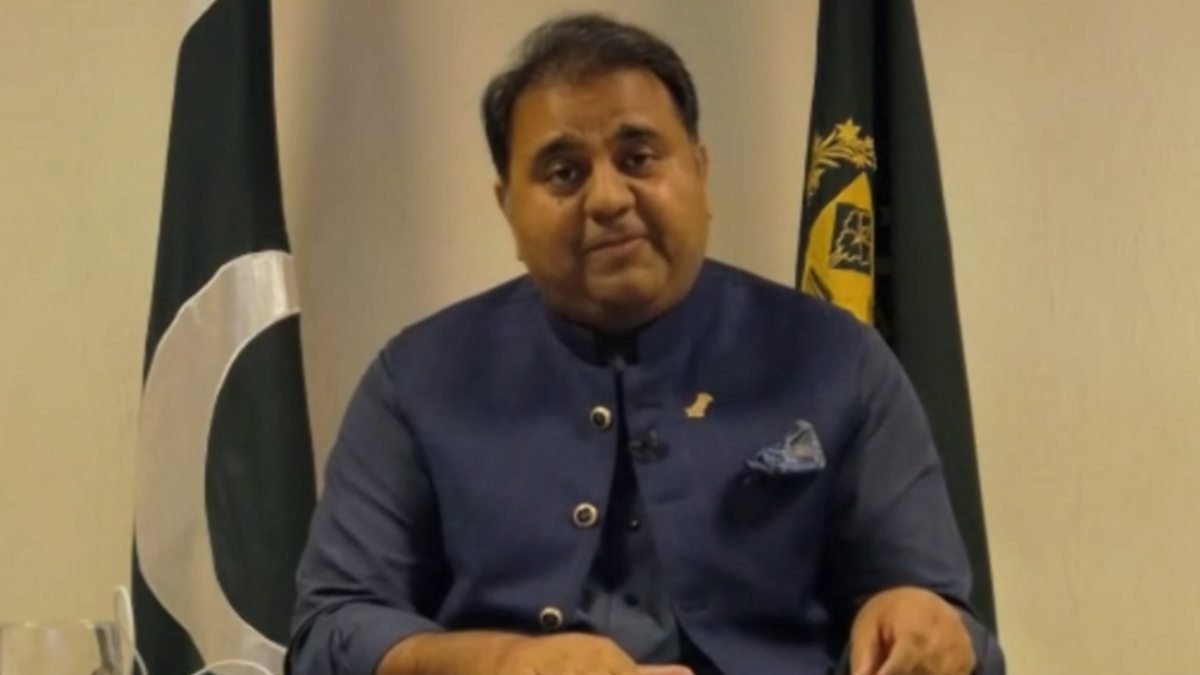
    Federal Minister for Information and Broadcasting Fawad Chaudhry talked on the protection of journalists, the involvement of the establishment within the state, the economy of Pakistan, missing persons, popularity of Prime Minister Imran Khan, Covid stituation and many other issues in an interview given to BBC host Stephen John Sackur on BBC HARDtalk.

    Journalists Protection

    The host opened the interview by asking what is the government and Fawad Chaudhry being the Information Minister doing to protect the journalists of the country. Sackur mentioned the recent attack on journalist Asad Ali Toor, who was severely beaten up by unidentified assailants in his apartment. Sackur further mentioned how a senior journalist and former Chairman of Pakistan Electronic Media Authority (Pemra), Absar Alam, was shot in Islamabad. To which Fawad Chaudhry replied, “Individual incidents do happen. The situation is not only dangerous for journalists but it has been for all the citizens of Pakistan. We have faced the worst terrorism. When we were fighting our war against terrorism, we lost a lot of field journalists and many civilians.”

    “Benazir Bhutto too got killed due to terrorism. We have been dealing with tough times,” replied Fawad.

    Stephen Sackur asked what the state was doing about the involvement of state agencies in such incidents.

    “It’s a bit fashionable for the western media to accuse ISI (Inter-Services Intelligence)
    when such incidents happen. When you name any organisation or Pakistani intelligence agency, you are bound to produce evidence of their involvement as well,” replied the minister. “The two specific incidents which you have mentioned, the investigation is still under process, I still don’t know under what pretext have you concluded that the state must be involved in any of this.”

    Direct State Interference

    BBC host asked Chaudhry about freedom of speech in Pakistan. He said that media censorship has increased during Imran Khan’s tenure. Chaudhry replied, “We have about 112 private channels, 43 international channels, with this kind of mass media we have, how do you expect the state to intimidate the media? How can the state be accused of intimidating the media?”

    Censorship

    “I am the Information Minister of the world’s fifth-largest state. I am the Information Minister of one of the world’s seven nuclear states of the world. No one can dare to undermine me. I am here with full authority and I decide in Pakistan what will and what is happening,” answered Fawad when told by Sackur that Chaudhry has no real power or control.

    PTI government’s comparison with previous government’s

    The host compared the working of the Pakistan Tehreek-e-Insaf (PTI) with previous governments.

    “This may be a perception of some Indian-influenced think tanks, not ours. This is not the perception of the people in general. Imran Khan is the most popular prime minister,” said Fawad.

    “As said, don’t undermine the elected government of Pakistan. Imran Khan has received nearly 200 million votes. This is not a joke. He is the prime minister of a nuclear state. He takes the decisions, the cabinet takes the decisions,” added Fawad.

    Relation with establishment

    Fawad Chaudhry said that we have a very good relationship with the ‘so-called establishment’ “as you term it so often. They are part and parcel of our system. We have huge respect for them, but the decision-making rests with the prime minister and the cabinet.”

    Missing Persons

    The BBC host asked about missing persons the security establishments, and the deep state?

    “ISI and army respect human rights just as any other civilian government will do. They are the most civilised army of the world, they are the most responsible army of the world. People in Pakistan respect them for their role,” said Fawad.

    “Least number of missing persons were reported in Imran Khan’s government. We are the only government that has just passed a law against disappearance. We are the only ones who have made illegal confinement a criminal offense. And now the bill has been passed and will go to the parliament,” added Fawad

    Imran Khan’s pledge to deliver

    The show host said that PM Khan’s promises have not been delivered to the people of Pakistan.

    “Unfortunately, I do not agree with your conclusion. Right now Pakistan’s growth rate is 3.94 per cent, which is one of the highest in the whole world despite all the Covid crises,” said Fawad.

    Fawad added, “People who have voted for Prime Minister Imran Khan and PTI are still ardent fans. In the next elections, PM Imran Khan will be elected again.”

    Covid situation

    Sackur asked why only one per cent of Pakistan’s population has been vaccinated.

    “As far as Covid is concerned Pakistan is a great success story. The partial lockdown story that Prime Minister Imran Khan implemented in Pakistan was a great success story,” replied Chaudhry.
  • Baloch families end Islamabad sit-in after PM Imran’s pledge to meet them

    Baloch families end Islamabad sit-in after PM Imran’s pledge to meet them

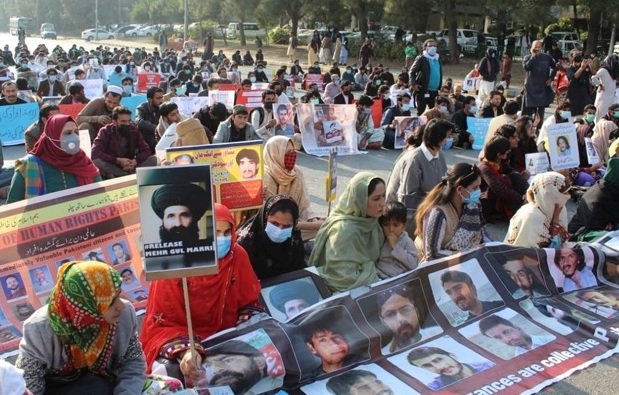
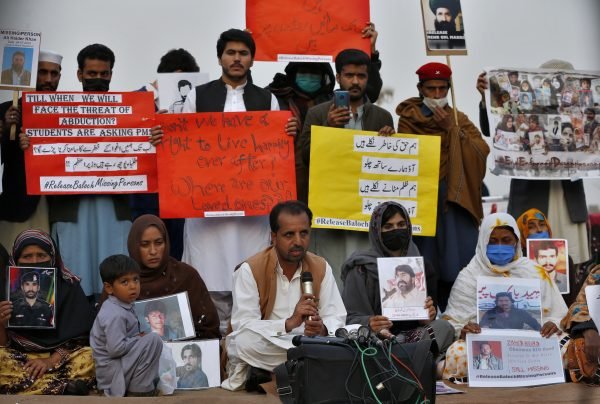
    Protesters calling for an end to enforced disappearances in Balochistan ended a week-long sit-in in the capital on Monday, after an assurance that Prime Minister Imran Khan will meet them next month.

    “We don’t have any big hopes from this government, but the way they have reassured us, we also have decided to give them a chance,” Sammi Baloch, who has been searching for her father Deen Muhammad since 2009, told Reuters.

    She and other families have protested across the country for years to little avail.

    The Islamabad protesters — 10 families of missing men and around a hundred supporters — said they will return if assurances are not met.

    Security officials say many of Balochistan’s so-called disappeared have links to separatists. But actual court punishments have been rare.

    The Pakistan Army and human rights ministry did not respond to Reuters’ requests for comment for this story, including questions about specific family members sought by the protesters.

    For one week, protesters held up photos of missing relatives under the watchful eyes of police surrounding them.

    Among them was 60-year-old Baz Khatoon, who clutched a stack of news reports and court filings about her son, Rashid Hussain Brohi. She believes he was detained in Dubai in December 2018, was flown to Pakistan six months later, and then vanished without a trace.

    Khatoon said her son moved to Dubai to be safe in 2017 after three male relatives, including his father, had turned up dead after being taken away by security forces over the years.

    After Brohi was detained, Amnesty International and UN bodies looking into disappearances called on the Emirati authorities not to deport him to Pakistan for fear he would be killed.

    Brohi’s mother has obtained a copy of an Emirati travel document showing Brohi’s Emirati visa was cancelled in June 2019, and that he left two days later on a flight to a small airport in Balochistan. The UAE government media office did not immediately respond to a Reuters request for comment.

    Local news channels reported that he was brought back to Pakistan and charged with sending funds to gunmen responsible for a 2018 attack on the Chinese consulate in Karachi. But Khatoon said she has been given no official explanation of his whereabouts.

    “Just tell us our kids are safe, put them in jail, we don’t have any problem with that,” Khatoon said.

    “If they were in jail at least we would know they are safe, at least I could take some food there for my son, or a blanket to keep him warm, or a change of clothes.”

  • Journalist, who released footage of Capt (r) Safdar’s arrest, goes missing

    A reporter who released the footage of Pakistan Muslim League-Nawaz (PML-N) leader Capt (r) Safdar’s arrest from his hotel room has been missing since last night.

    Ali Imran Syed, a journalist based in Karachi, left his home between 7pm and 8pm after telling his family he would be back home in half an hour. He has not returned home since, said Geo News.

    According to the wife of the reporter, his car was parked outside the house and he had left his mobile phone at home.

    According to the report, the Geo News administration has approached the Karachi police over the disappearance of the journalist. The family had also submitted a report to Sachal police station, it added. However, Dawn quoted a police official saying that a case has yet to be registered.

    Meanwhile, Sindh government spokesperson Murtaza Wahab said Chief Minister Murad Ali Shah has taken notice of the incident.

    Reacting to the disappearance of the reporter, the human rights organisations have called upon the government to ensure the release of the journalist.

    Amnesty International stated that Imran was “feared to have been subjected to an enforced disappearance for his reporting”. “The authorities must establish his whereabouts immediately,” the human rights group said.

    The Human Rights Commission Pakistan also demanded “immediate release” the Geo News reporter.

    PML-N Vice President Maryam Nawaz also condemned the reporter’s disappearance. “I have heard that he has been picked up for allegedly sharing CCTV footage of [retired Captain Safdar’s arrest]. This is unfortunate,” she said while speaking to reporters in Lahore.

    Safdar was arrested from his hotel room in the early hours of Monday from his hotel room for raising slogans at the mausoleum of Muhammad Ali Jinnah, the founder of Pakistan, and jumping over the grill surrounding the grave.

    The Sindh government led by the Pakistan People’s Party (PPP) had distanced itself from the matter soon after the arrest.

  • Court tells Defence Ministry to release missing persons’ lawyer

    Court tells Defence Ministry to release missing persons’ lawyer

    Rawalpindi bench of the Lahore High Court (LHC) on Thursday ordered the Defence Ministry to immediately release lawyer Col (r) Inamur Rahim, reportedly terming his arrest “illegal” and “unconstitutional”.

    A representative of the Ministry of Defence had last week informed the LHC that Rahim was in the custody of law enforcement agencies and was currently being interrogated. The revelation had come during the hearing of a case related to Rahim’s abduction from his home in Rawalpindi on the night of December 16.

    Rahim, who has fought court cases on behalf of the families of several missing persons, had been picked up by unidentified men from his home in Rawalpindi’s Askari 14. According to his son Husnain Inam, around eight to 10 persons had “picked up” his father.

    The case was heard by Mirza Waqas of the LHC’s Rawalpindi bench.

    According to The News, in a monthly progress report last year, the Commission of Inquiry on Enforced Disappearances (CIED) had reported that 6,051 cases had been registered before the CIED since March 2011.

    Out of these, 3,793 cases had been “disposed”, while 2,258 cases were still pending. Significantly, out of the 3,793 cases “disposed” by the CIED, 743 “missing people” were traced to different internment centers.

    Some 468 people were located in prisons; and 189 people were found to have passed away. The commission provided no information on steps taken to establish the circumstances behind these detentions or deaths.