Tag: Modi

  • ‘Will make Pakistan wear bangles’ says Modi

    ‘Will make Pakistan wear bangles’ says Modi

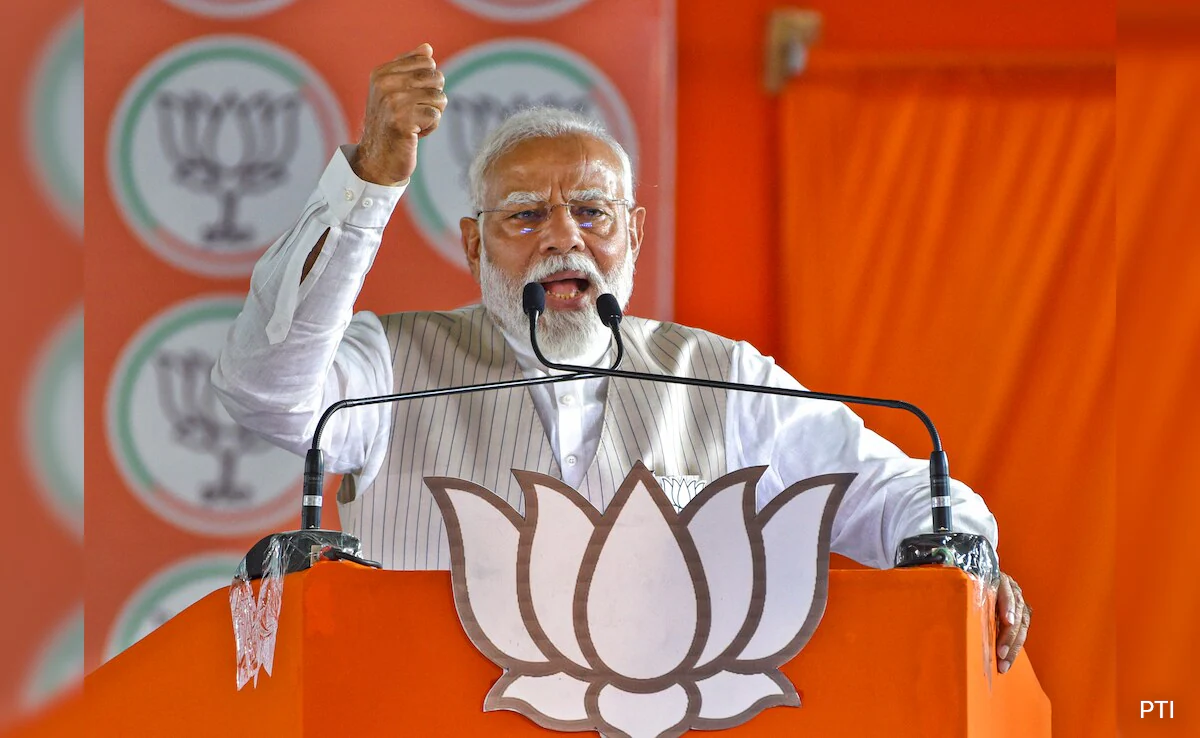
    Prime Minister of India Narendra Modi on Monday attacked opposition leaders for being scared of Pakistan and said, “If Pakistan does not wear bangles, we’ll make the country wear them.”

    During an election rally in Bihar’s Muzaffarpur, Modi said the inflammatory rhetoric was a reply to National Conference leader Farooq Abdullah’s statement that Pakistan has an “atomic bomb”, and not bangles.

    Modi stated, “The INDIA bloc seems to have leaders who are scared of Pakistan and have nightmares of its nuclear power.”

    Modi called the opposition leaders cowards and said they, “Give a clean chit to Pakistan on terrorism, raise doubts on surgical strikes.”

  • Modi files candidacy for India election in Hindu holy city

    Modi files candidacy for India election in Hindu holy city

    India Prime Minister Narendra Modi on Tuesday formally submitted his candidacy to recontest the parliamentary seat for the Hindu holy city of Varanasi in a general election he is widely expected to win.

    The marathon six-week poll concludes next month, and the 73-year-old premier used the election formality as a campaign event that paid deference to the country’s majority faith.

    Varanasi is the spiritual capital of Hinduism, where devotees from around India come to cremate deceased loved ones by the Ganges river, and the premier has represented the city since sweeping to power a decade ago.

    Hundreds of supporters had gathered outside a local government office to greet Modi when he arrived to lodge his nomination.

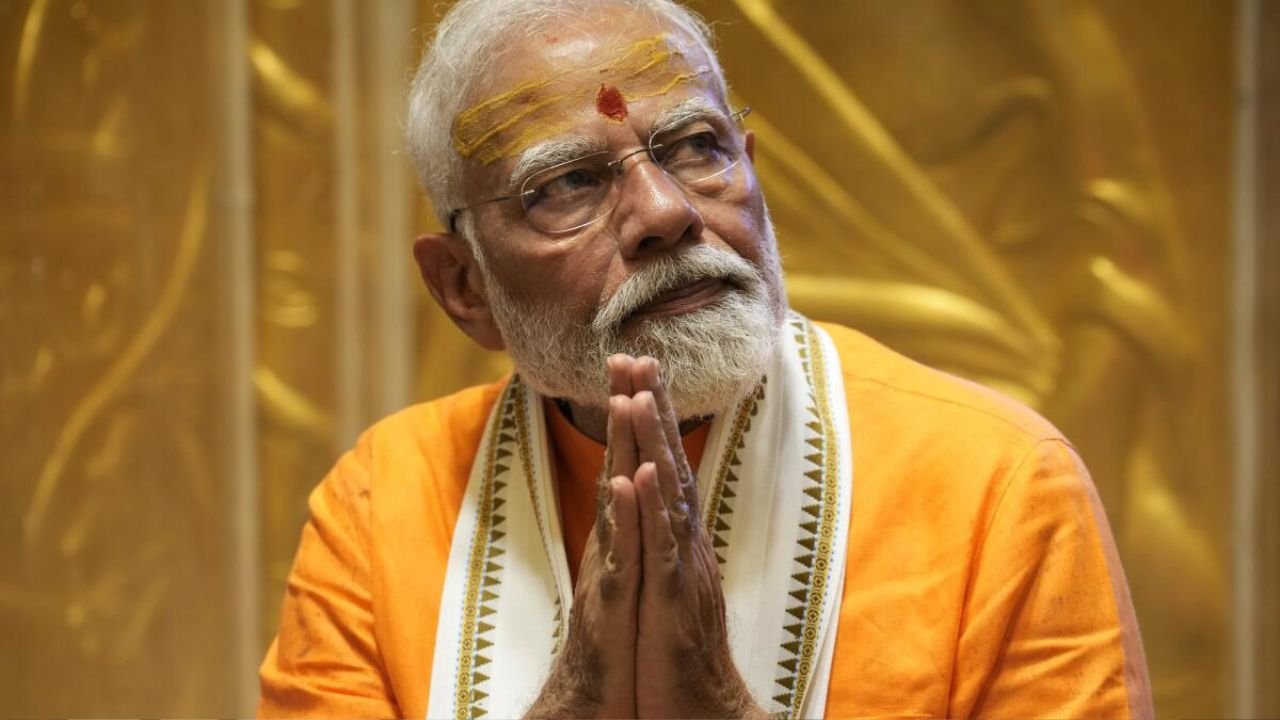
    Footage showed the premier handing over his candidacy paperwork, flanked by a Hindu mystic.

    “It’s our good fortune that Modi represents our constituency of Varanasi,” devout Hindu and farmer Jitendra Singh Kumar, 52, told AFP while waiting for the leader to emerge.

    “He is like a God to people of Varanasi. He thinks about the country first, unlike other politicians.”

    Modi, who has made acts of religious worship a central fixture of his premiership, had spent the morning visiting temples and offering prayers at the banks of the Ganges.

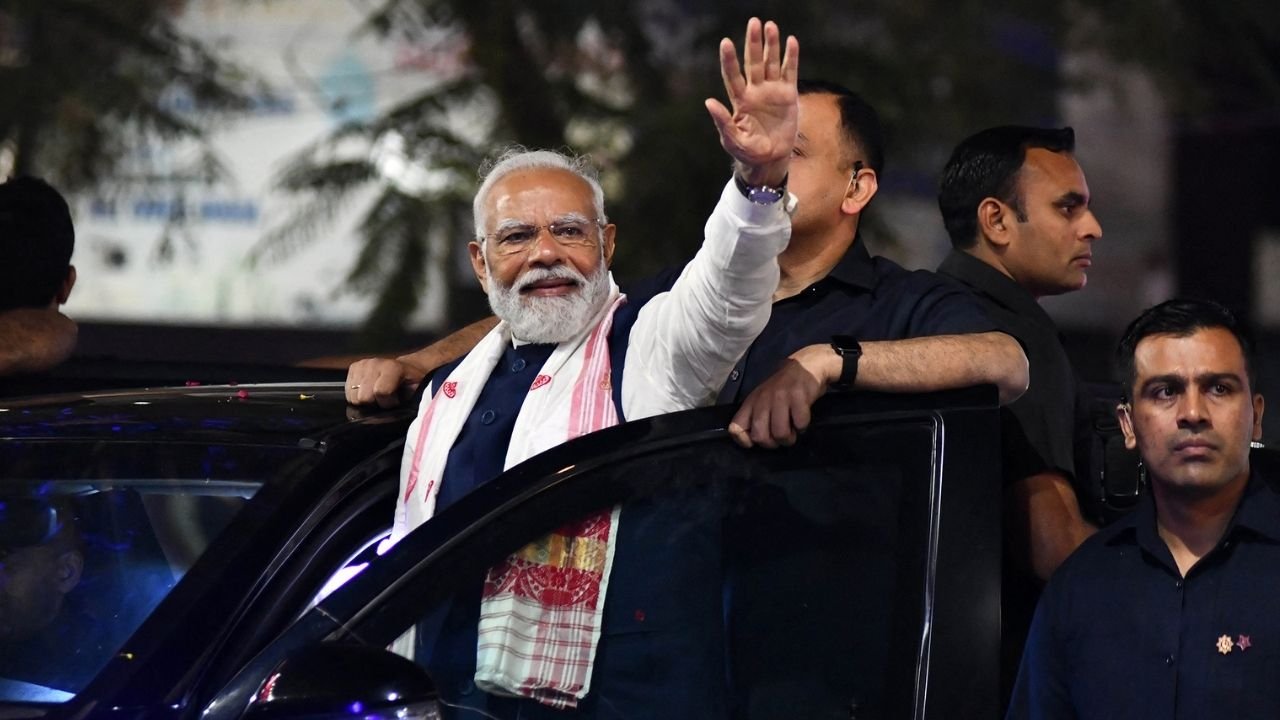
    Tens of thousands of supporters had lined the streets of Varanasi to greet Modi as he arrived in the city on Monday atop a flatbed truck, waving to the crowd from atop a flatbed truck as loudspeakers blared devotional songs.

    Many along the roadside waved saffron-coloured flags bearing the emblem of his ruling Bharatiya Janata Party (BJP), throwing marigold flowers at the procession as it passed by.

    ‘Not wanted’

    Modi and the BJP are widely expected to win this year’s election, which is conducted over six weeks to ease the immense logistical burden of staging the democratic exercise in the world’s most populous country.

    Varanasi is one of the last constituencies to vote on June 1, with counting and results expected three days later.

    Since the vote began last month, Modi has made a number of strident comments against India’s 200-million-plus Muslim minority in an apparent effort to galvanise support.

    He has used public speeches to refer to Muslims as “infiltrators” and “those who have more children”, prompting condemnation from opposition politicians and complaints to India’s election commission.

    The ascent of Modi’s Hindu-nationalist politics despite India’s officially secular constitution has made the Muslims in the country increasingly anxious.

    “We are made to feel as if we are not wanted in this country,” Shauqat Mohamed, who runs a tea shop in the city, told aFP.

    “If the country’s premier speaks of us in disparaging terms, what else can we expect?” the 41-year-old added.

    “We have to accept our fate and move on.”

    abh/gle/mca

    © Agence France-Presse

  • Muslims not allowed to vote in some areas: Indian election passed third stage of voting

    Muslims not allowed to vote in some areas: Indian election passed third stage of voting

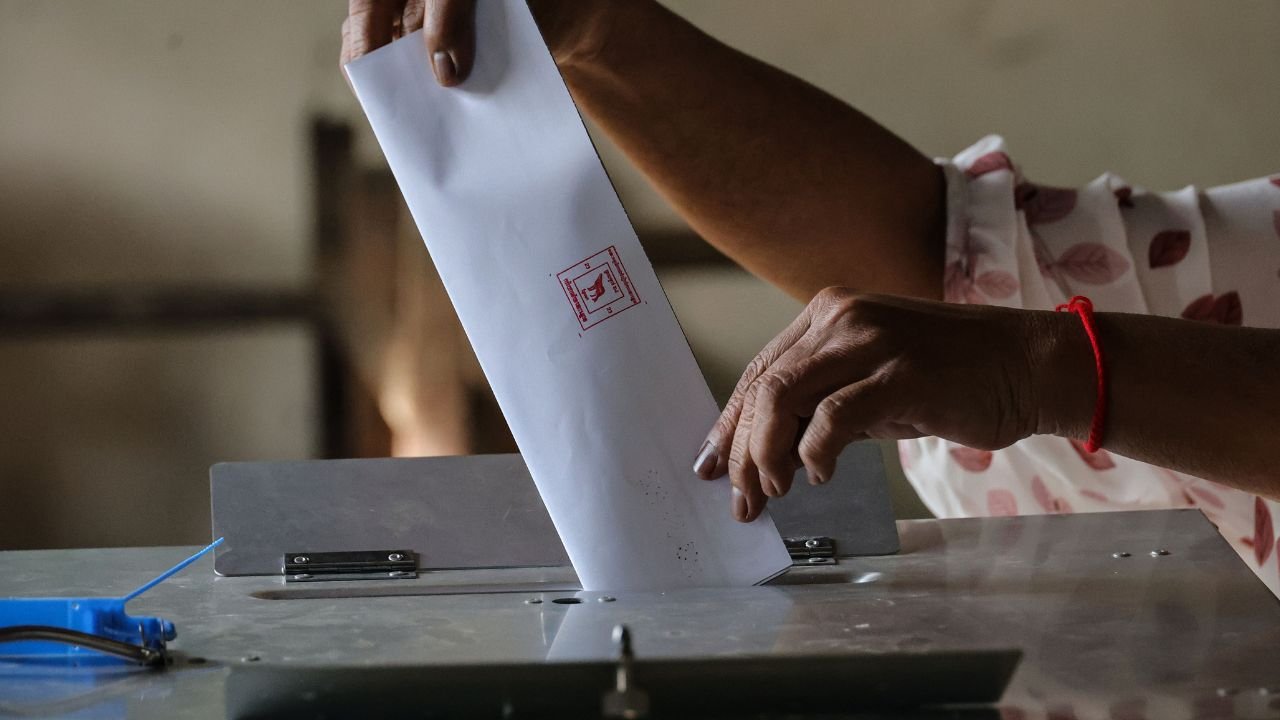
    The third and most important phase of the Indian elections is over where citizens of 11 states and union territories participated, locking the fate of 52 per cent of the 543 parliament seats in the parliament.

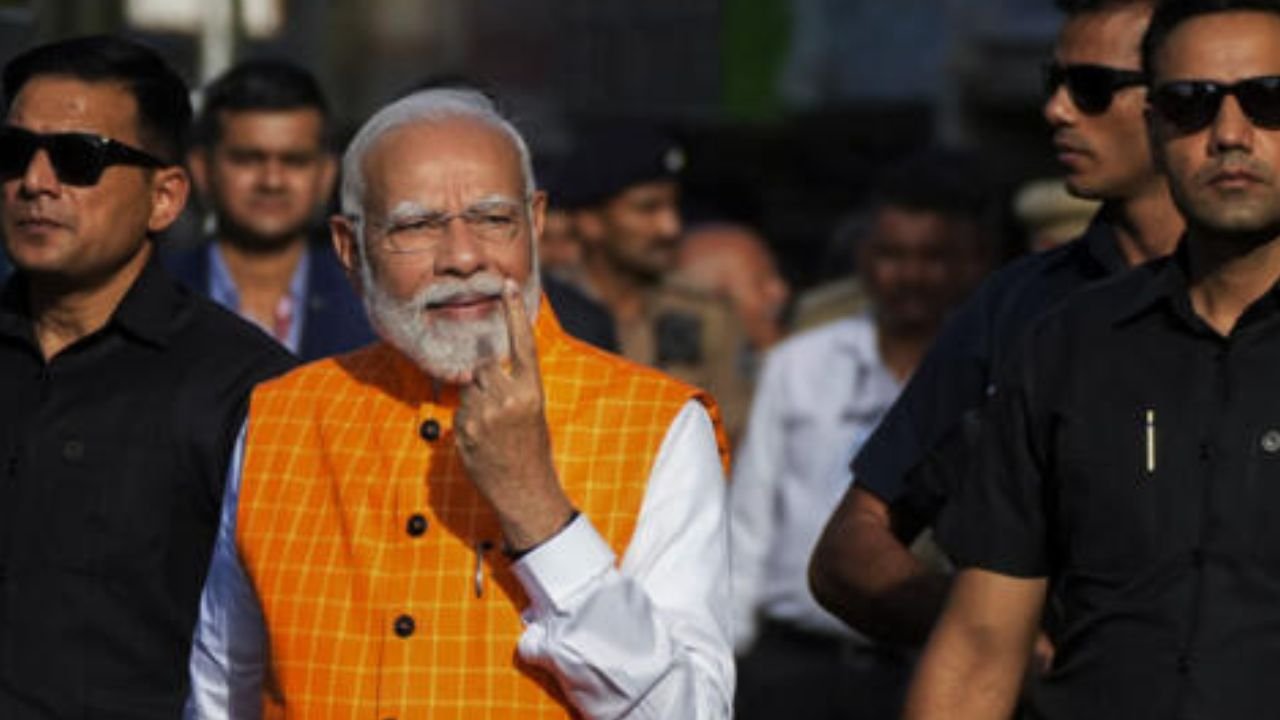
    Elections were held in 94 seats spread over 12 states on Tuesday, including all 26 seats in Gujarat where Modi and his home minister cast their votes.
    The day’s contests included five seats in Bihar, four in West Bengal, 11 in Maharashtra, seven in Chhatt­isgarh, 10 in Uttar Pradesh, 14 in Karnataka, and nine in Madhya Pradesh, where Congress defector and BJP candidate Jyotiraditya Scindia was in the race. Of these states, Karnataka and West Bengal are ruled by the opposition.

    The fate of 285 seats is now sealed.

    The Election Commission of India (ECI) ordered X, formerly Twitter, to take down an anti-muslim animated video posted by BJP Karnataka but avoided directly sending a notice to the BJP.

    The video features caricatures of Congress leaders Rahul Gandhi and Mallikarjun Kharge, advancing the party’s recent messaging that Congress is diverting funds and resources away from lower caste Hindus towards Muslims.

    Set back in Haryana

    In a setback to the ruling BJP in Haryana amid the Lok Sabha election, three independent MLAs have withdrawn their support to the Nayab Singh Saini-led government in the state, quotes Dawn in a report.

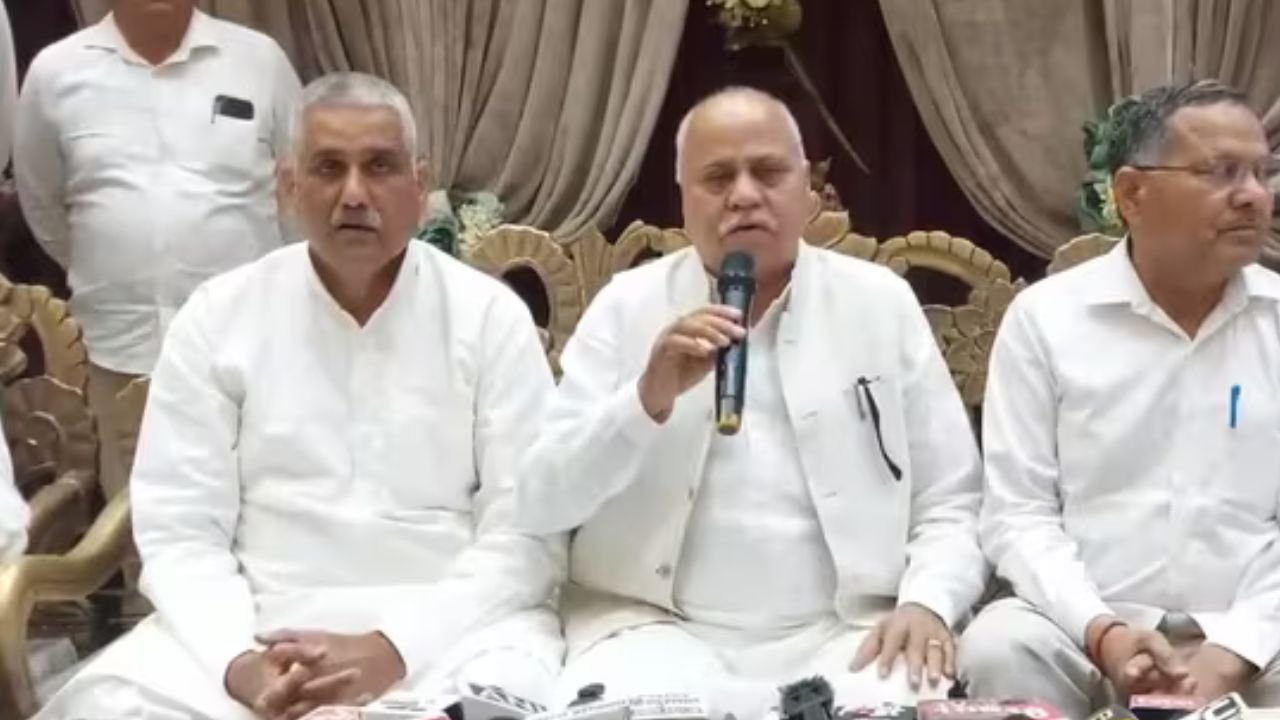
    The three MLAs — Sombir Sangwan, Randhir Gollen and Dharampal Gonder — made the announcement at a press conference in the presence of senior Congress leader and former Haryana chief minister Bhupinder Singh Hooda and Haryana Congress chief Udai Bhan.

    Anti-muslim campaign

    There were reports of police chasing away Muslim voters from polling booths in a constituency in BJP-ruled Uttar Pradesh. Elsewhere, names of some voters had allegedly disappeared from the voters’ list.


    Dip in the stock market

    Indian stock market has been experiencing strong episodes of uncertainty in recent sessions, leaving investors confided, reports claimed. Analysts were reading the turbulence at the stock exchanges as a sign of difficulties for Prime Minister Narendra Modi.

  • Hindu nationalist Modi the favourite as India votes

    Hindu nationalist Modi the favourite as India votes

    India began voting Friday in a six-week election with an all but assured victory for Hindu nationalist Prime Minister Narendra Modi, as a weakened opposition is pushed to the sidelines.

    A total of 968 million people are eligible to take part in the world’s biggest vote — a staggering logistical exercise that critics say follows a concerted effort to delegitimise rivals.

    A long and winding queue was patiently assembled outside a polling station in the Hindu holy city of Haridwar, on the banks of the Ganges river, even before the booths opened.

    “I am here because I am happy about the direction the country is headed,” said autorickshaw driver Ganga Singh, 27. 

    “I will vote keeping in mind not personal welfare but the country’s prosperity.”

    Modi, 73, remains resoundingly popular after a decade in office that has seen India rise in diplomatic clout and economic power, as well as efforts by his government to bring the country’s majority faith in ever closer alignment with its politics.

    “I urge all those voting… to exercise their franchise in record numbers,” he wrote in a social media post on X as the election began. 

    “Every vote counts and every voice matters!”

    Modi has already led the ruling Bharatiya Janata Party (BJP) through two landslide victories in 2014 and 2019, forged in large part by his appeals to the Hindu faithful.

    This year, he presided over the inauguration of a grand temple to the deity Ram, built on the grounds of a centuries-old mosque razed by Hindu zealots.

    “The nation is creating the genesis of a new history,” Modi told the thousands gathered for the ceremony, among them Bollywood celebrities and cricket stars.

    Construction of the temple fulfilled a long-standing demand of Hindu activists and was widely celebrated across India with back-to-back television coverage and street parties.

    ‘Pattern of repression’ 

    Analysts have long expected Modi to triumph against a fractious alliance of more than two dozen parties that have yet to name a candidate for prime minister.

    His prospects have been further bolstered by several criminal probes into his opponents and a tax investigation this year that froze the bank accounts of Congress, India’s largest opposition party.

    Opposition figures and human rights organisations have accused Modi’s government of orchestrating the probes to weaken rivals. 

    “We have no money to campaign, we cannot support our candidates,” Rahul Gandhi, the most prominent Congress leader, told reporters in March.

    “Our ability to fight elections has been damaged.”

    Congress dominated Indian politics for nearly seven decades following independence and remains the only opposition party with a nationwide presence.

    In Haridwar, Gabbar Thakur, who photographs tourists by the Ganges for a living, turned out early to vote. 

    “I am here because I am upset with the government,” he said. “The so-called development hasn’t reached where I live.”

    Modi’s tenure has seen India overtake former colonial ruler Britain as the world’s fifth-biggest economy, and Western nations lining up to court a prospective ally against regional rival China’s growing assertiveness.

    In doing so, they have sidestepped concerns over the taming of India’s once-vibrant press and restrictions on civil society that have seen rights groups like Amnesty severely curtail their local operations.

    Last year, the tax office raided the BBC’s local offices weeks after the British broadcaster aired a documentary questioning Modi’s role in 2002 religious riots that killed around 1,000 people, most of them Muslims.

    While India is constitutionally secular, the country’s 220 million-strong Muslim community and other minorities have felt threatened by the rise of Hindu nationalist fervour.

    Modi’s time in office had seen “a pattern of repression to undermine democracy and civic space”, rights group CIVICUS said in a Wednesday report.

    Opposition alliance 

    Modi’s BJP is challenged by an alliance of more than two dozen parties that have come together in an electoral bloc.

    It has accused Modi’s government of using law enforcement agencies to selectively target its leaders and undermine its campaign.

    Among them is Delhi chief minister Arvind Kejriwal, arrested last month and still in custody on allegations his party received kickbacks in return for liquor licences.

    Gandhi — the scion of India’s most famous political dynasty, whose father, grandmother and great-grandfather all served as prime minister — was briefly disqualified from parliament last year after being convicted of criminal libel.

    The 53-year-old has criticised the government for democratic backsliding and its chest-thumping Hindu nationalism.

    On Friday, his Congress party urged voters to end “hatred and injustice” as polls opened.

    “Your one vote can put an end to inflation, unemployment, hatred and injustice,” it said on social media platform X.

    But Gandhi has already led Congress to two defeats against Modi and his efforts to dent the premier’s popularity have failed to register with voters.

    Published opinion polls are rare in India, but a Pew survey last year found Modi was viewed favourably by nearly 80 percent of the public.

    Voting will be staggered over seven stages between April 19 and June 1, with more than a million polling stations across India.

    Ballots will be counted all at once on June 4 and are usually announced on the same day.
  • Jobs and rights on young voters’ minds for India polls

    Jobs and rights on young voters’ minds for India polls

    New Delhi, India – Around 130 million young adults aged 18 to 22 will be newly eligible to vote in India’s national elections when polls open Friday — more people than the entire population of Mexico.

    AFP asked four first-time voters who were too young to vote in the 2019 elections about who they would support and the issues that mattered to them:

    The student

    Mumbai university student Abhishek Dhotre, 22, said he was unhappy with “the communal discord that is seen all throughout India” as a result of the government’s muscular Hindu nationalism.

    Prime Minister Narendra Modi’s government has brought India’s majority Hindu faith to the forefront of political life.

    That has left Muslims and other minorities anxious about their futures in the nominally secular country.

    Still, with India’s economy growing at a breakneck pace, overtaking former colonial ruler Britain as the world’s fifth-largest in 2022, Dhotre wants Modi and his Bharatiya Janata Party (BJP) to win again.

    “With the flow of development, infrastructure and everything that’s going on, I would prefer the current government to stay,” he told AFP.

    The software developer

    Thrishalini Dwaraknath, 20, epitomises India’s economic changes — she is about to move from Tamil Nadu to the tech hub of Bengaluru, both of them in the south, to work as a software developer.

    “I’m excited to be part of the Indian democracy and voicing my opinion for the first time,” she told AFP. “And I’m glad that my voice matters.”

    She praised Modi’s government for its achievements in office but said it needed to do more to help millions of unemployed young Indians find work.

    India’s annual GDP growth hit 8.4 percent in the December quarter, but the International Labour Organization estimated that 29 percent of the country’s young university graduates were unemployed in 2022.

    “Addressing the skill gap between students and the job market is key,” Dwaraknath said.

    The farmer

    One first-time voter who will definitely not be backing the BJP is Gurpartap Singh, 22, a wheat farmer from the northern state of Punjab.

    Farmers in Punjab were the backbone of a yearlong protest in 2021 against the Modi government’s efforts to bring market reforms into India’s agricultural sector.

    The reforms were later shelved, marking a rare political defeat for the prime minister, but farmers say their demands have still not been met.

    “So many farmers died in the protest,” Singh said. “They have not got justice.”

    Farmers are a significant voting bloc in India — hundreds of millions of people make their living from the land.

    “The government that thinks about the farmers, youth — that is the government that should come to power,” Singh said, adding that the BJP had failed that test.

    The transgender woman

    India’s 1.4 billion people encompass a vast range of backgrounds including a transgender community estimated to be several million people strong.

    The Hindu faith has many references to a “third gender”, and a 2014 Supreme Court ruling said people could be legally recognised as such.

    They nonetheless face entrenched stigma and discrimination, and Salma, a transgender Muslim woman from the Hindu holy city of Varanasi, said she did not expect that to change under another BJP government.

    “All the time this government has stayed in power, they have done nothing good for us,” said Salma, who declined to say who she would vote for.

    “We should get equal rights.”

    burs-ash/slb-gle/lb

    © Agence France-Presse

  • Modi opponent challenges arrest ahead of India election

    Modi opponent challenges arrest ahead of India election

    New Delhi, India – A top Indian opposition politician appeared in court Friday to fight his arrest in a case supporters say is aimed at sidelining challengers to Prime Minister Narendra Modi before next month’s election.

    Arvind Kejriwal, chief minister of the capital Delhi and a key leader in an opposition alliance formed to compete against Modi in the polls, was detained on Thursday in connection with a long-running corruption probe.

    He is among several leaders of the bloc under criminal investigation and one of his colleagues described his arrest as a “political conspiracy” orchestrated by the ruling Bharatiya Janata Party (BJP).

    Kejriwal was escorted into a courtroom in the capital by officers from the Enforcement Directorate, India’s main financial crimes agency, to petition for bail while the case proceeds.

    His legal team had originally sought to challenge the legality of his detention in the Supreme Court but Shadan Farasat, a lawyer for Kejriwal, told AFP they would instead contest his remand in a lower court.

    Hundreds of supporters from Kejriwal’s Aam Aadmi Party (AAP) took to the streets on Friday to condemn the leader’s arrest, with police breaking up one crowd of protesters who attempted to block a busy traffic intersection.

    Several demonstrators were detained including Delhi education minister Atishi Marlena Singh and health minister Saurabh Bhardwaj, according to an AFP journalist at the scene.

    Small rallies in support of Kejriwal were held in several other cities around India.

    Kejriwal’s government was accused of corruption when it implemented a policy to liberalise the sale of liquor in 2021 and give up a lucrative government stake in the sector.

    The policy was withdrawn the following year, but the resulting probe into the alleged corrupt allocation of licences has since seen the jailing of two top Kejriwal allies.

    Kejriwal, 55, has been chief minister for nearly a decade and first came to office as a staunch anti-corruption crusader. He had resisted multiple summons from the Enforcement Directorate to be interrogated as part of the probe.

    Singh, the education minister, said Thursday that Kejriwal had not resigned from his office.

    “We made it clear from the beginning that if needed, Arvind Kejriwal will run the government from jail,” she told reporters.

    ‘Decay of democracy’

    Tamil Nadu chief minister M.K. Stalin, a fellow member of the opposition bloc, said Kejriwal’s arrest “smacks of a desperate witch-hunt”.

    “Not a single BJP leader faces scrutiny or arrest, laying bare their abuse of power and the decay of democracy,” he said.

    Modi’s political opponents and international rights groups have long sounded the alarm on India’s shrinking democratic space.

    US democracy think-tank Freedom House said this year that the BJP had “increasingly used government institutions to target political opponents”.

    Rahul Gandhi, the most prominent member of the opposition Congress party and scion of a dynasty that dominated Indian politics for decades, was convicted of criminal libel last year after a complaint by a member of Modi’s party.

    His two-year prison sentence saw him disqualified from parliament for a time until the verdict was suspended by a higher court, but raised further concerns over democratic norms in the world’s most populous country.

    Kejriwal and Gandhi are both members of an opposition alliance composed of more than two dozen parties that is jointly contesting India’s national election running from April to June.

    But even without the criminal investigations targeting its most prominent leaders, few expect the bloc to make inroads against Modi, who remains popular a decade after first taking office.

    Many analysts see Modi’s reelection as a foregone conclusion, partly due to the resonance of his assertive Hindu-nationalist politics with the members of the country’s majority faith.

    abh-sai/gle/mca

    © Agence France-Presse

  • Why is Maldives trending on Twitter?

    Why is Maldives trending on Twitter?

    Social media is a big source of arguments, being the quickest source to share information worldwide. A single picture, especially if posted by someone important, can cause chaos between countries.

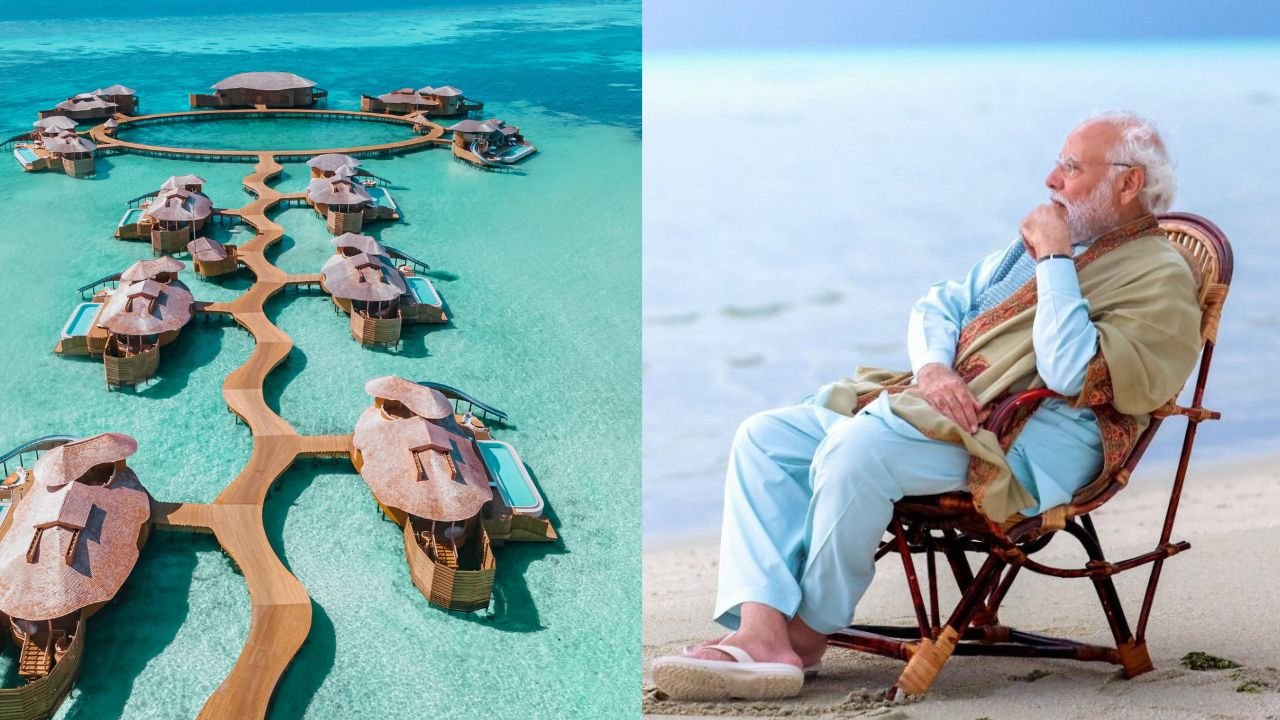
    Prime Minister of India, Narendra Modi, posted about his recent trip to Lakshadweep on X (former Twitter).

    “In addition to the scenic beauty, Lakshadweep’s tranquility is also mesmerising. It gave me an opportunity to reflect on how to work even harder for the welfare of 140 crore Indians,” the caption read.

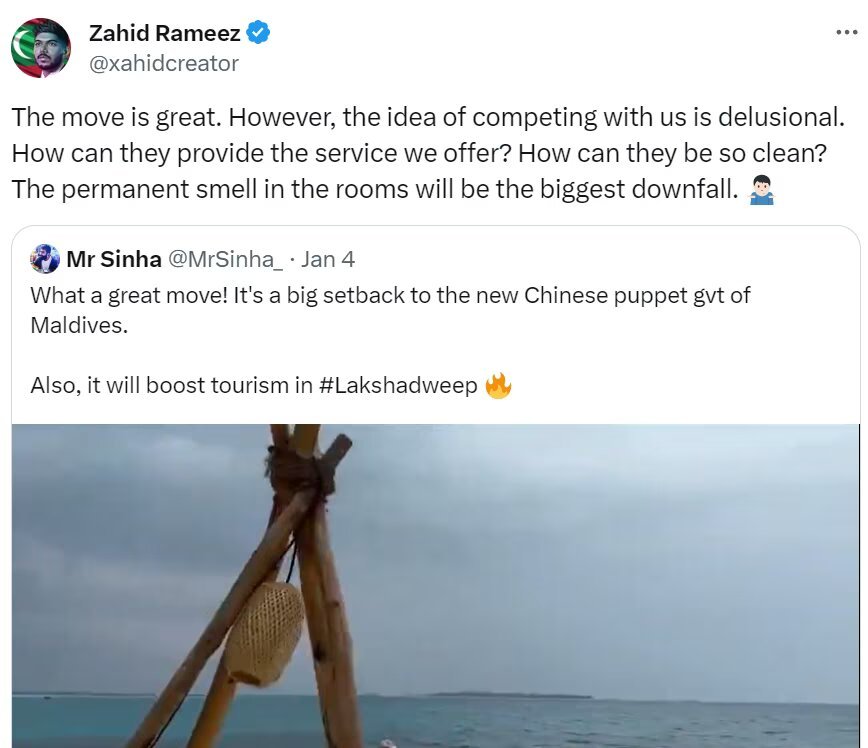
    Social media erupted with calls for boycott of Maldives tours after Maldivian politician Zahid Rameez made objectionable remarks regarding Modi’s visit to Lakshadweep.

    The incident led to the trending of the hashtag #BoycottMaldives on X in India.

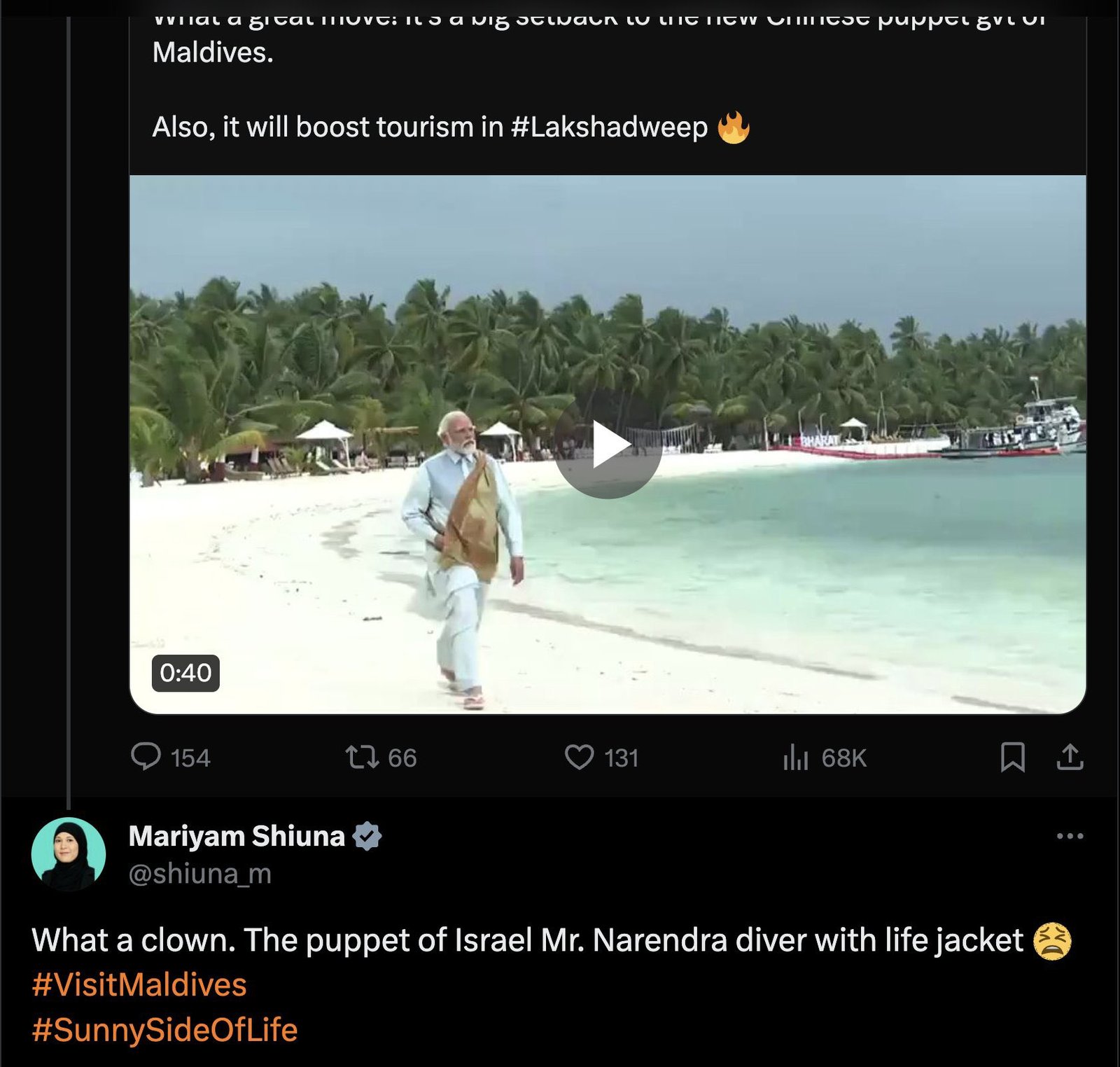
    The controversy unfolded when Rameez, a member of the Progressive Party, responded to a claim suggesting that PM Modi’s visit was a setback for the Maldives and would boost tourism in Lakshadweep.

    Rameez mocked Indians, stating that competing with the Maldives for tourism was “delusional.” He questioned how India could match the level of service and cleanliness offered by the island nation, adding that the permanent smell in Indian rooms would be a significant drawback.

    Rameez’s remarks ignited a heated exchange on the microblogging site, with many users sharply criticizing him.

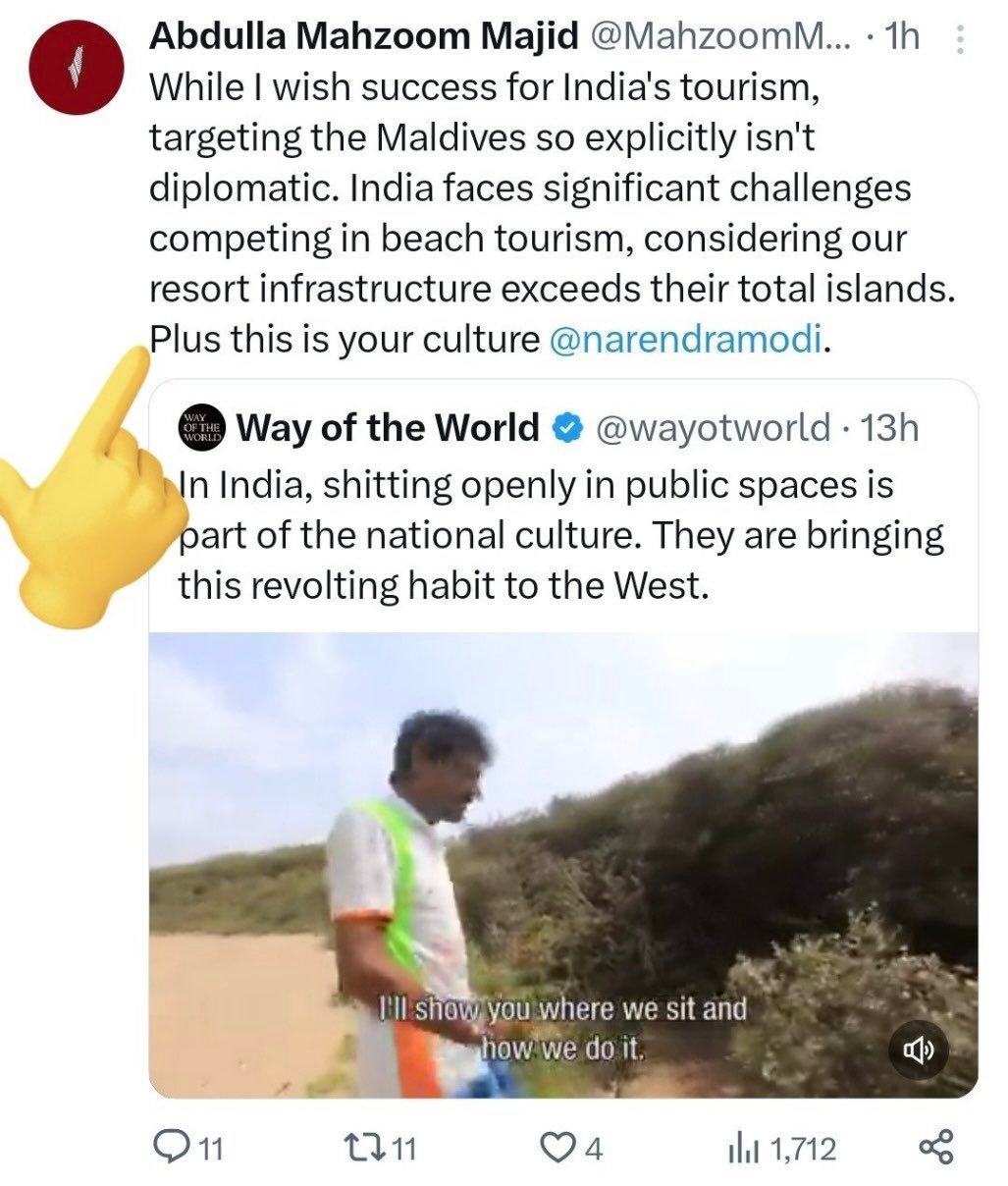
    Deputy Minister of the Ministry of Youth Empowerment Maldives, Abdulla Mahzoom Majid, also criticised Modi and said, “While I wish success for India’s tourism, targeting the Maldives so explicitly isn’t diplomatic. India faces significant challenges competing in beach tourism, considering our resort infrastructure exceeds their total islands. Plus this is your culture @narendramodi.”

    Subsequently, the hashtag #BoycottMaldives gained traction on social media, with influencers joining the call for a boycott.

    Adding fuel to the fire, Maldivian minister Mariyam Shiuna also made derogatory comments against Prime Minister Narendra Modi in a now-deleted post, further fueling the outrage.

    Former President Nasheed urged the Maldivian government to distance itself from the offensive comments made by Shiuna and provide clear assurance to India that they do not reflect official government policy.

    “What appalling language by Maldives Government official @shiuna_m towards the leader of a key ally, that is instrumental for Maldives’ security and prosperity. @MMuizzu gov must distance itself from these comments and give clear assurance to India they do not reflect gov policy.”

    In response to the growing calls for a boycott, several Indian celebrities, including Akshay Kumar and Sachin Tendulkar, took to social media.

    They promoted the hashtag ‘#ExploreIndianIslands,’ encouraging fellow citizens to support domestic tourism.

    Former Indian cricketer Akash Chopra urged Indians to choose wisely in light of the political tensions, emphasizing the importance of national dignity.

    Minister of Foreign Affairs of Maldives, Moosa Zameer, said, “The recent remarks against foreign leaders and our close neighbours are unacceptable and do not reflect the official position of the Government of #Maldives. We remain committed to fostering a positive and constructive dialogue with all our partners, especially our neighbours, based on mutual respect and understanding.”

    As the controversy continues to unfold, diplomatic relations between India and the Maldives face a test, with the tourism industry caught in the crossfire of political tensions.

  • Indian journalists, opposition leaders ‘targeted by state-sponsored attackers’

    Indian journalists, opposition leaders ‘targeted by state-sponsored attackers’

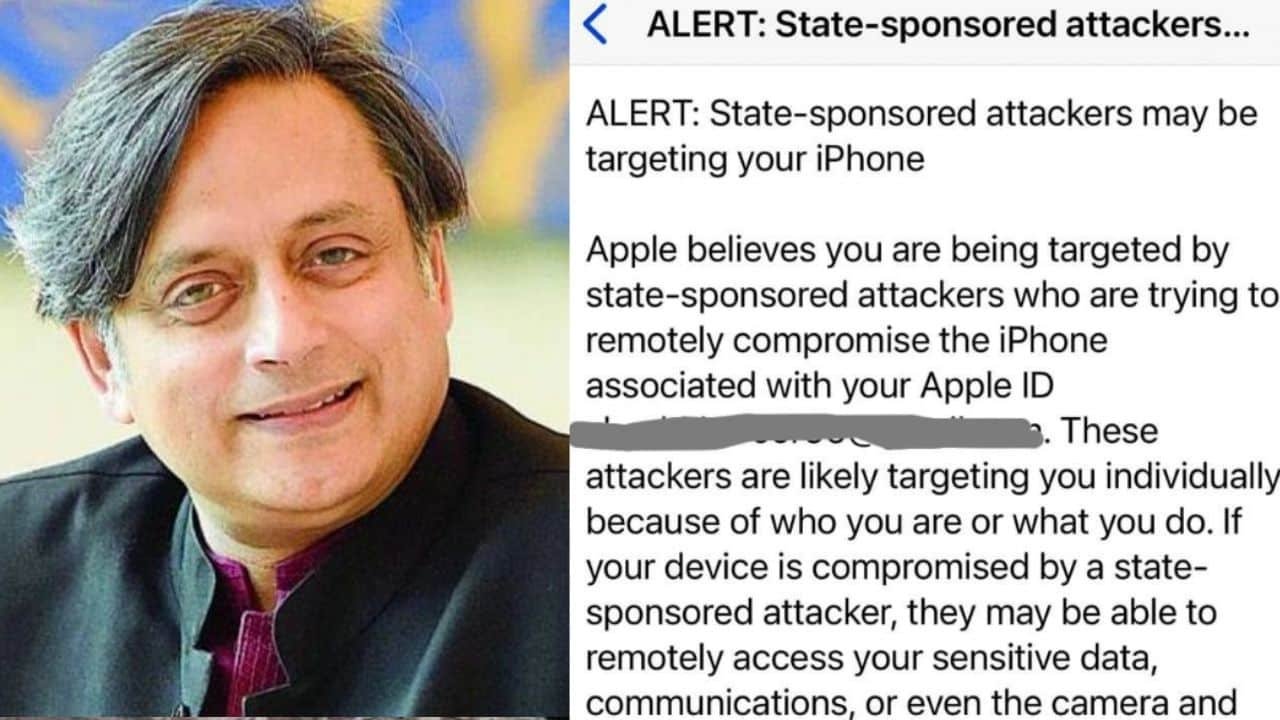
    Several prominent leaders from India’s opposition parties, including members of the Indian National Developmental Inclusive Alliance (INDIA), have recently been alerted about potential security breaches concerning their Apple devices.

    Indian National Congress’s Shashi Tharoor and Pawan Khera, Shiv Sena’s Priyanka Chaturvedi, Trinamool Congress’s Mahua Moitra, and Aam Aadmi Party’s Raghav Chadha are among those who received warning emails from Apple, highlighting the threat of state-sponsored attacks targeting their iPhones.

    The news broke when The Wire, an online publication, revealed that even Siddharth Varadarajan, the founding editor of The Wire, and Samir Saran from the Observer Research Foundation, were also on the list of individuals who received the warning emails.

    The situation prompted immediate action from various quarters, including the media, with several journalists and opposition leaders reportedly receiving similar notifications from Apple about potential state-sponsored attacks.

    Shashi Tharoor, Pawan Khera, Priyanka Chaturvedi, and Siddharth Varadarajan confirmed the receipt of the warning emails during the late hours of Monday night and early Tuesday morning.

    Tharoor, who noticed the email on Tuesday morning, emphasized the importance of making these threats public, citing the necessity of transparency in safeguarding security. Expressing his concern, Tharoor highlighted the misuse of public funds and the urgent need to address more significant national security threats.

    The situation escalated further when The Wire alleged that the language used in the warning emails was similar to previous alerts from Apple, although this claim could not be independently verified by Newslaundry.

    Tharoor took to Twitter, sharing that the emails were sent from “threat-notifications@apple.com”.

    Mahua Moitra, a member of the Trinamool Congress, later added that individuals within Rahul Gandhi’s office had also been targeted.

    In response to the unfolding events, Apar Gupta, the founder of the Internet Freedom Foundation, provided a detailed analysis emphasizing the importance of not dismissing these alerts as false alarms.

    Seeking clarification from Apple, Newslaundry contacted the company’s official spokesperson, seeking information about the origin of the alleged attacks and the number of affected users. Apple responded, stating that while they do not specifically attribute the notifications to any state-sponsored attackers, the detection process is complex and evolving.

    Notably, the alerts were not limited to India alone, as it was discovered that individuals from nearly 150 countries had also received similar threat notifications from Apple.

    These developments have emerged approximately two years after reports of India’s alleged use of Israeli spyware for targeted surveillance, indicating a continued focus on digital security concerns within the country.

  • Friday prayers banned for second week in a row in occupied Kashmir

    Friday prayers banned for second week in a row in occupied Kashmir

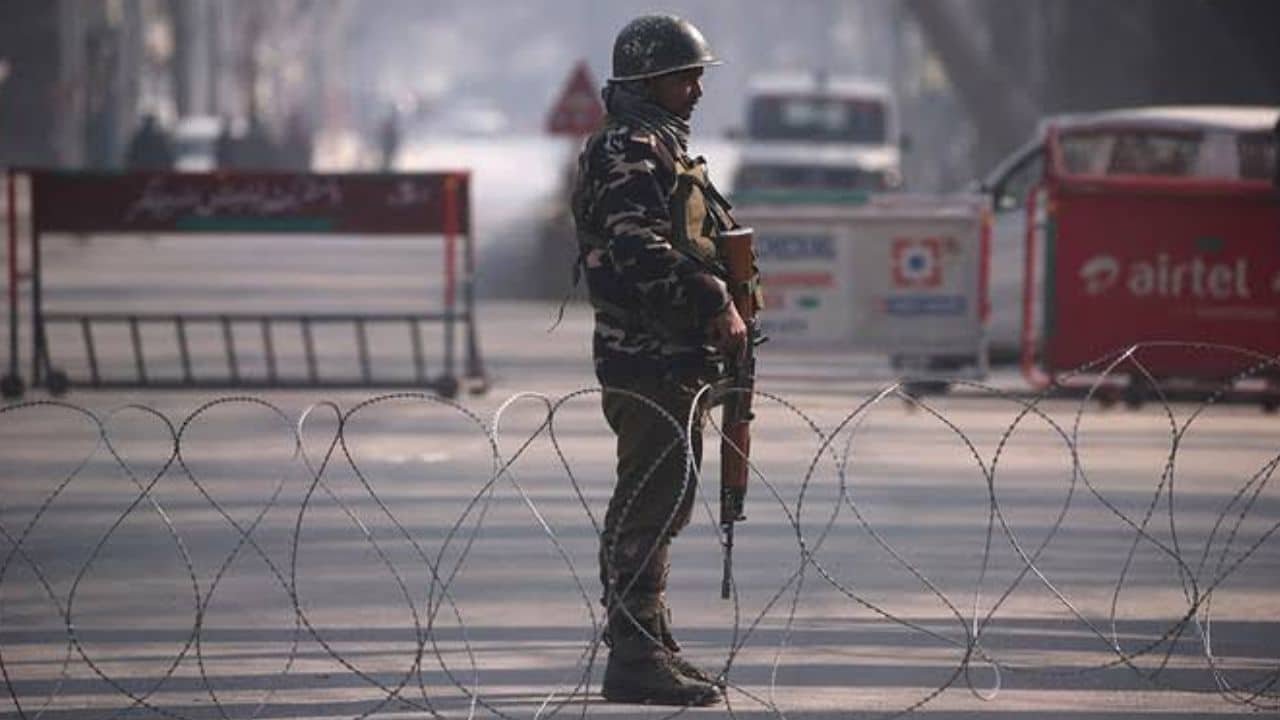
    Jamia Masjid in Srinagar was closed down last Friday, October 20, during Friday prayers to bar prayers for Palestine.

    Kashmir Life reported that a press release from masjid authorities stated that for the second consecutive Friday, “police officials once again closed the gates of Jama Masjid Srinagar and informed the Auqaf not to open the gates for Friday prayers”.

    Jammu Kashmir People’s Freedom League Chairman Muhammad Farooq Rehmani condemned authorities for barring Muslims from praying and banning them to pray for Palestine.

    He highlighted the restraining of Mirwaiz Umar Farooq and others throughout Indian Illegally Occupied Jammu Kashmir (IIOJK) who had been praying for peace and safety in Gaza.

    He further called out on Modi and his approach towards Palestine as it contradicts the central stance of India’s first Prime Minister Jawahar Lal Nehru and other advocates of the freedom movement.

    India had taken a pro-Palestine stance in 1948 in the UNSC and voted against the Palestinian segregation to provide a separate state for the Jews in Palestine.

    He also reflected on undermining peace and freedom in Kashmir and Palestine, both, under India and Israel through forces.

  • Israeli propaganda getting help from Indians

    Israeli propaganda getting help from Indians

    Ahead of the statement given by Israeli Ambassador to India, Naor Gilon, about being “overwhelmed” by the unprecedented response he has received from the country, Indians have become an active part of the Israeli propaganda team all across social media.

    In his interview to The Economic Times, Gilon stated that with this kind of support from Indians, he believes “he could have another IDF with the (Indian) volunteers” because everyone is calling him to offer help. He goes on to elaborate that “the closeness India and Israel has is understandable but cannot be explained, It’s something very unique.”

    The Ambassador also posted messages of solidarity by spectators in the Pak vs India match and as recently as some hours ago posted about Hamas being the culprit behind the bombing of Al-Ahli Baptist Hospital. Indian media quotes him as their official resource as Gilon retweets journalists and media houses propagating the false narrative.

    There are a number of accounts on social media titled Indians for Israel or India stands with Israel. Added to that are fake accounts posing as Palestinians, even Al Jazeera reporters (Farida Khan) spreading Anti-Hamas and Pro-Israeli narrative. A number of tweets were found and reported to have similar content.

    Al-Jazeera has reported about the virality of disinformation caused by the blue-ticked accounts terming them “disinfluencers” with budding Islamophobic conspiracy theories. The article takes a closer look at the “BJP IT Cell” to which most Islamopobic content and trolling is likely to be attributed to.
    Author and Journalist Marc Owen Jonas has revealed many instances of fake-news including a video circulating on social media, mostly shared by Indians, gaining millions of impressions and retweets about girls becoming sex-slaves for Hamas. A closer look shows them to be happily chatting and using phones.

    However, there are some voices of dissent too, which get rebuked but stand tall in their stance. Ravi Nair, an esteemed journalist, not just voiced his opinion on India’s growing inclination towards right-wing but also exposed the original supporters of Zionism.
    In one of his tweets he said, “Hello, Israel, we Indians don’t support right-wing criminals whether Zionists or Hindutavaadis.”

    To which he got hate from American Hindu Republican Renee Lynn in these words, “If you want to support Terrorists because you are brainwashed and want to shout Allahu Akbar then go away. You are not the majority in India”.

    Pratik Sinha associated with ALT News, a credible fact checker resource has said, “With India now exporting its disinformation actors in the Indian mainstream media and on social media in support of Israel, hopefully the world will now realise how the Indian right-wing has made India the disinformation capital of the world”.