Tag: Moeed Yusuf

  • ‘Was missile handled by Indian army or rogue elements?’ Pakistan demands ‘joint probe’ into missile incident

    ‘Was missile handled by Indian army or rogue elements?’ Pakistan demands ‘joint probe’ into missile incident

    Pakistan took notice of the clarification by the Indian Defence Ministry regretting the “accidental firing” of the Indian-origin missile into Pakistani territory and demanded a “joint probe to accurately establish the facts surrounding the incident”.

    In a statement issued today (March 12), the Ministry of Foreign Affairs said that the grave nature of the incident raised several fundamental questions regarding security protocols and technical safeguards against the “accidental or unauthorised launch of missiles in a nuclearised environment”.

    “Such a serious matter cannot be addressed with the simplistic explanation proffered by the Indian authorities,” said the Foreign Office (FO) statement.

    Pakistan said some of the questions that need to be answered include:

    • India must explain the measures and procedures in place to prevent accidental missile launches and the particular circumstances of this incident.
    • India needs to clearly explain the type and specifications of the missile that fell in Pakistani territory.
    • India also needs to explain the flight path/ trajectory of the accidentally launched missile and how it ultimately turned and entered Pakistan?
    • Was the missile equipped with self-destruct mechanism? Why did it fail to actualise?
    • Are Indian missiles kept primed for launch even under routine maintenance?
    • Why did India fail to immediately inform Pakistan about the accidental launch of the missile and waited to acknowledge it till after Pakistan announced the incident and sought clarification?
    • Given the profound level of incompetence, India needs to explain if the missile was indeed handled by its armed forces or some rogue elements?

    “The whole incident indicates many loopholes and technical lapses of serious nature in Indian handling of strategic weapons,” said the statement, adding that the Indian decision to hold an internal court of inquiry is “not sufficient since the missile ended up in Pakistani territory”.

    “Pakistan, therefore, calls upon the international community to take serious notice of this incident of [a] grave nature in a nuclearised environment and play its due role in promoting strategic stability in the region,” the FO said.

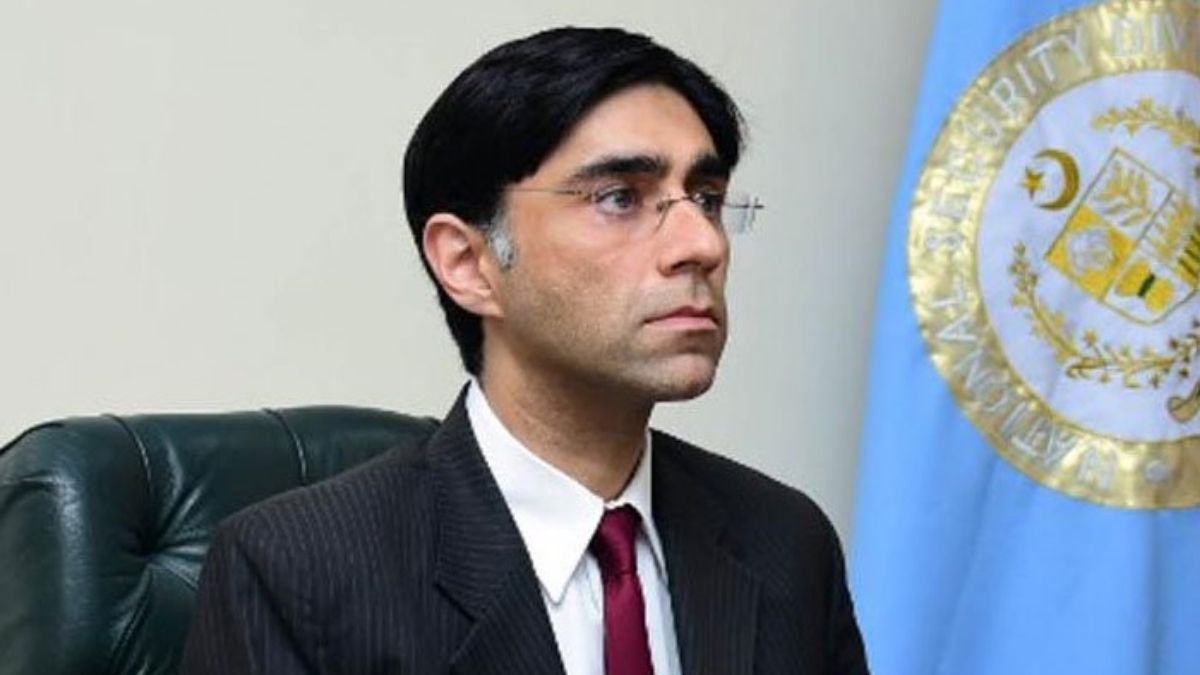
    Pakistan’s National Security Adviser (NSA) Dr Moeed Yusuf tweeted yesterday that it has taken more than two days for India to accept that this was their missile launched ostensibly due to a technical malfunction during maintenance.

    “This raises serious questions about India’s ability to handle such sensitive technology. This missile traveled close to the path of international and domestic commercial airlines and threatened the safety of civilians,” said Yusuf.
  • Indians call Pakistani response “very, very mature” on accidental Indian missile in Pakistani territory

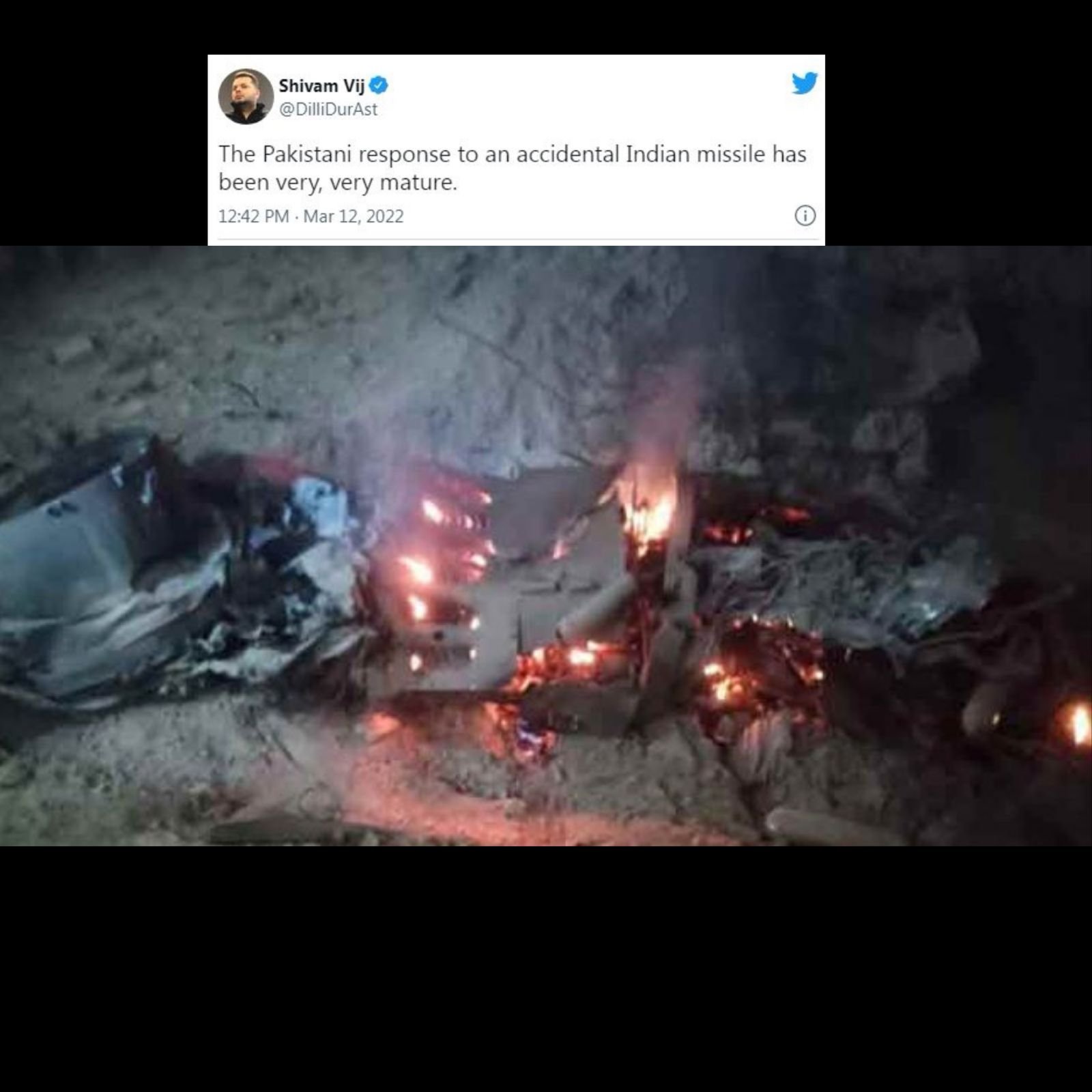
    Indians call Pakistani response “very, very mature” on accidental Indian missile in Pakistani territory

    Indian journalists, former Indian diplomats, and others have said that the Pakistani response to an accidental Indian missile misfiring into Pakistani territory has been “very, very mature”.

    https://twitter.com/DilliDurAst/status/1502550520070045700

    Many also said that this accident is extremely dangerous and “shocking”.

    Former Indian diplomat K. C. Singh tweeted, “Such gross failure of command & control in a nation with nuclear weapons reflects very poorly on India. Imagine if it had been fired towards China. Retaliation may’ve been in kind or worse.”

    Journalist Sushant Singh wrote, “Nuclear weapon states don’t fire a missile into an adversary’s territory, accidentally or otherwise. Period.”

    Journalist Shekhar Gupta tweeted, “This is so worrying and, frankly embarrassing. A supersonic cruise missile strays from one nuclear weapon power into another. Stuff Cold War nightmares were made of. This could’ve led to unintended disaster. Good the Pakistanis kept their counsel.” He also wrote that Indian “warrior TV channels would’ve gone ballistic—with warheads, of course”.

    Author Jyotsna Mohan tweeted, “If Pakistan had ‘accidentally’ fired a missile 100kms into India, imagine how many would have gone to fight at the border from their couches and twitter.”

    Indian national security analyst Nitin A. Gokhale said the accident “should worry the brass”.

    Journalist Nirupama Subramanian said that Indian should have acknowledged missile fiasco “immediately after it happened instead of keeping quiet for 48 hours after the incident, and making a statement only after Pakistan announced it”. She added, “It’s a zero error job. no room for #galtisemistake.”

    Pakistan’s response to the Indian statement

    Pakistan’s National Security Adviser (NSA) Dr Moeed Yusuf tweeted that it has taken more than two days for India to accept that this was their missile launched ostensibly due to a technical malfunction during maintenance.

    “This raises serious questions about India’s ability to handle such sensitive technology. This missile traveled close to the path of international and domestic commercial airlines and threatened the safety of civilians,” said Yusuf.
    Indian Ministry of Defence statement

    The Indian government on Friday (March 11) admitted that “a technical malfunction led to the accidental firing of a missile“, which in Mian Channu in Pakistan. The Indian statement came a day after Director General (DG) Inter-Services Public Relations (ISPR) Major-General Babar Iftikhar held a press conference about the supersonic missile from India. “Whatever caused this incident to happen, it is for the Indians to explain”, said DG ISPR, adding that the incident could have resulted in a major aviation disaster.

  • British government calls off Pakistan’s visit to the UK over stance on Russia

    British government calls off Pakistan’s visit to the UK over stance on Russia

    The British government called off National Security Adviser (NSA) Moeed Yusuf’s United Kingdom (UK) visit on Friday without giving a reason, reports The News.

    According to a report, the visit was called off because of Pakistan’s policy towards the Russia and Ukraine war.

    Previously, the European Union (EU) ambassadors in Islamabad issued their reply to Pakistan’s neutral response after United Nations General Assembly (UNGA) session, saying that Pakistan should condemn Russia. In response, the spokesman for the Foreign Office (FO) Asim Iftikhar said, “We expressed concern over the statement because as I said that is not the way diplomacy should be practised, and I think they have realised.”

    While replying to a query that the NSA visit cancellation was linked to the expression of its reservations about the rejoinder to the EU envoys, Iftikhar termed it “baseless”.

    In the UNGA emergency session on Wednesday, Pakistan abstained from voting to censure Russia over its invasion of Ukraine.

  • PM Khan visits China, ‘pitch book’ prepared to convince China to invest in Pak

    PM Khan visits China, ‘pitch book’ prepared to convince China to invest in Pak

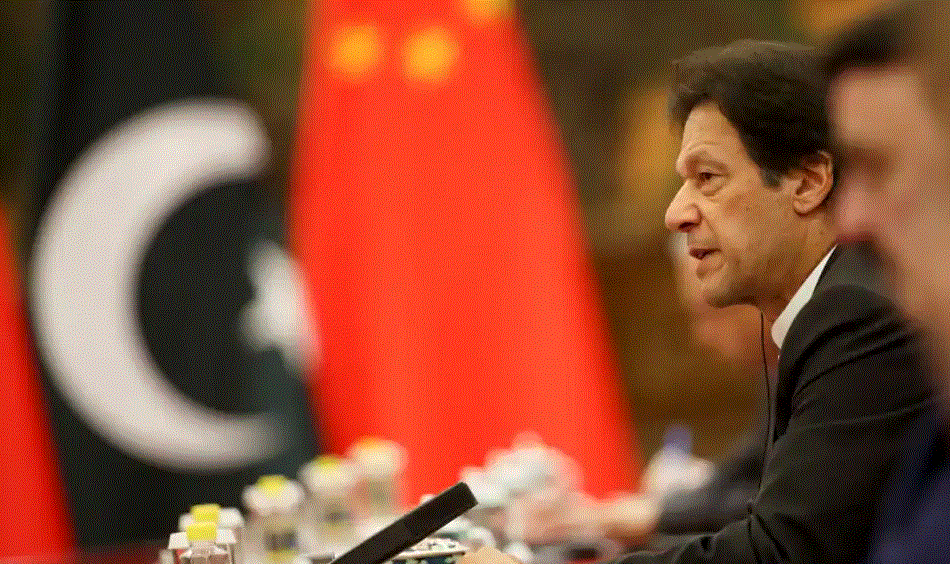
    Prime Minister (PM) Imran Khan has left for China on a four-day official on Thursday to attend the ceremony of the Olympic Games Beijing 2022 where he will meet Chinese President Xi Jinping and Premier Li Keqiang. PM Khan is accompanied by a high delegation including China Pakistan Economic Corridor (CPEC) Special Assistant Khalid Mansoor.

    Prime Minister Office (PMO), in a tweet, said, “The visit would mark the culmination of celebrations commemorating the 70th anniversary of the establishment of diplomatic relations between and with more than 140 events organized to showcase the resilience of the All-Weather Strategic Cooperative Partnership.”

    This visit would be PM Khan’s fourth visit to China. Previously, he went on a two day (October 8-9) visit to China in 2019, before the Covid pandemic.

    Prior to the premier’s departure, cabinet members who are accompanying him termed this visit to China of great significance.

    Foreign Minister (FM) Shah Mahmood Qureshi revealed that many Chinese companies are “desirous” of investing in Pakistan. According to him, the visit will further expand bilateral relations and promote high-level exchanges.

    Finance Minister Shaukat Tarin stated that it is a “very important” trip politically and economically. He added that China would be asked to relocate some of its required industry needs to Pakistan.

    Meanwhile, National Security Adviser (NSA) Moeed Yusuf stressed that the trip is important in regards to solving the Afghan crisis. He said that the issue will be discussed during the visit as well.

    Federal Minister for Information and Broadcasting Chaudhry Fawad Hussain, while highlighting the years of friendship between both countries, said “Pak-China relations are deeper than the oceans and higher than the Himalayas.”

    Planning Minister Asad Umar said the trip has come at a “very important time”. A special book has been prepared which will explain why Pakistan is a prime destination for investment and will be presented to the Chinese leadership, Umar shared via Twitter.

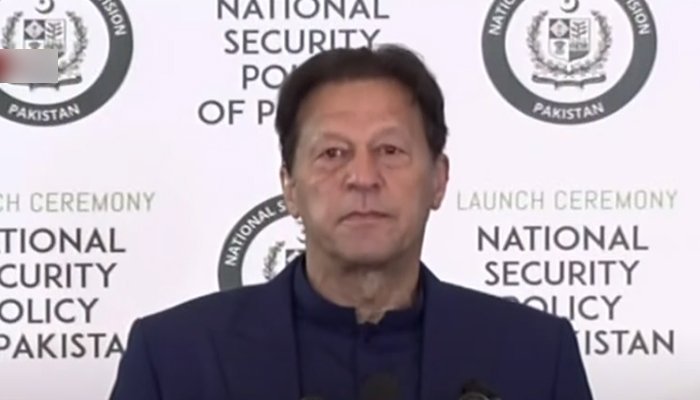
  • PM Khan launches first-ever National Security Policy, original document remains classified

    PM Khan launches first-ever National Security Policy, original document remains classified

    Prime Minister (PM) Imran Khan launched the public version of the country’s first-ever National Security Policy (NSP) which aimed at addressing the external imbalance, socio-economic inequalities, and geographic disparities, reports Radio Pakistan.

    It is reported that the original version of the policy will remain classified.

    According to PM Khan, the nation is now headed in the right direction and added that national security was defined “in the right manner” in the new policy.

    Speaking about the International Monetary Fund (IMF), PM said, “We approach IMF under duress as in the end, only IMF is ready to help us and provide the cheapest loans. We have to abide by their conditions, and as a result, impose a burden on the people.”

    National Security Adviser (NSA) Dr Moeed Yusuf also addressed the launching ceremony.

    He said, “We are not seeking hostility with India for the next 100 years. The new policy seeks peace with immediate neighbours.”

    The NSP will mainly secure Pakistan’s interest and position globally. Moreover, the document would provide for pursuing youth-focused policies, guaranteeing food security, improving preventive healthcare, and mainstreaming climate adaptation.

  • ‘Pakistan is still under influence of the US’: Moeed Yusuf

    ‘Pakistan is still under influence of the US’: Moeed Yusuf

    National Security Adviser (NSA) Dr Moeed Yusuf has made a statement that Pakistan’s foreign policy is still not free from the influence of the United States (US).

    In Geo News programme “Jirga”, the advisor said, “It [Pakistan] is still not [free from US influence] and I doubt that there is any country which is free from it.” He added that Pakistan does not have financial and economic independence as it does not have enough assets to meet the requirements of the increase in population.

    “When we cannot fulfill the demands, we seek foreign loans. When you procure loans, your economic sovereignty is compromised,” the national security adviser said.

    Moreover, he said that this affects a country’s foreign policy and when foreign policy is affected, you cannot run the affairs of the country properly.

    Responding to a query about Pakistan-India relations, he said that Islamabad wants to improve ties with New Delhi, but had to halt diplomatic contacts due to India’s on-seriousness and extremist attitude.

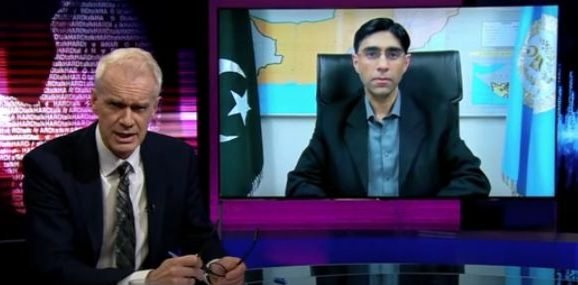
  • ‘Govt is going to ensure Pakistani citizens are safe without blood being spilt on either side’: Moeed Yusuf on BBC HARDtalk

    ‘Govt is going to ensure Pakistani citizens are safe without blood being spilt on either side’: Moeed Yusuf on BBC HARDtalk

    National Security Adviser (NSA) to the Prime Minister, Dr Moeed Yusuf, while giving an interview to BBC host Stephen John Sackur on BBC HARDtalk said that the state’s job is not to kill another Pakistani.

    “We are going to try our level best to ensure that Pakistani citizens are safe without any more blood being spilt on either side.” The NSA’s comments come in reference to the Pakistan government’s talks with the Tehreek-i-Taliban Pakistan (TTP).

    “How secure is Pakistan after the Taliban are back in power in Afghanistan?”: Sackur

    Sackur questioned Yusuf on how secure Pakistan is after the Taliban are back in power in Afghanistan.

    “Frankly it depends on how responsibly the international community plays the future. Pakistan was not behind anything. There was a policy employed by the United States (US) and others who are in Afghanistan. That was always a failing policy. The only country that kept saying that you will not find a military solution to this problem was Pakistan and our advice was not heeded.”

    “We kept saying negotiate from a position of strength, we weren’t listened to, we were blamed and scape-goated and the result is in front of you,” added Yusuf.

    “We heard the worried voices of the Supreme Court when they were grilling PM Khan,” Sackur

    “Pakistanis are very worried. We heard the worried voices of the Supreme Court when they were grilling PM Khan on what was going on under these negotiations with the Taliban,” responded Sackur and further added that during the grilling of the premier, one of the judges alluded to the 2014 terrible atrocity where the TTP attacked the Army Public School (APS) in Peshawar and killed more than 130 children and questioned PM Khan whether the government was about to sign a documented defeat with those who killed these children, and are we going to surrender once again.

    “You should recognise the state of democracy in this country that the judge calls in the prime minister who goes gets grilled and now Stephen Sackur has the opportunity to ask me. That’s the state of democracy and I am proud of that,” responded Yusuf.

    “We have a consistent policy as a state to say that negotiation must happen from a position of strength and this is what we told the Americans and United Kingdom (UK).”

    “No military bases of China in Balochistan”: Yusuf

    Yusuf said there were no military bases of China in Balochistan, rather there were economic bases there where any country could invest.

    “Let me clarify that there are no military bases offered to China in Balochistan, including Gwadar. Yes, there are economic bases and the same was also offered to the United States, Russia, and the Middle East and we are open to all the countries,” the NSA said, adding, “CPEC is what, it is road infrastructure and energy infrastructure and anybody can come and invest there, we are not closed to anybody.”

    “Is Pakistan developing relations with China at the cost of its principles of supporting the rights of Muslims in the world?” Sackur

    Sackur asked whether Pakistan was developing relations with China at the cost of its principles of supporting the rights of Muslims in the world. “You raise your voice for Kashmiri Muslims but refuse to condemn the violation of human rights in a Chinese province,” the interviewer asked.

    Moeed said that Pakistan did not accept the Western version of human rights violations in Xinjiang province and if they have any concerns, they should talk to China. “We have relations of trust with China and our ambassador and other delegations from here also visited the Xinjiang province,” he said.

  • ‘I do not agree state does not have capability to deal [with TLP]’: Moeed Yusuf disagrees with Fawad’s statement

    ‘I do not agree state does not have capability to deal [with TLP]’: Moeed Yusuf disagrees with Fawad’s statement

    National Security Advisor (NSA) Moeed Yusuf, while speaking to anchorperson Saleem Safi during Geo News programme ‘Jirga’, was asked to comment on Information Minister Fawad Chaudhry’s statement on the government’s talks with the Tehreek-I-Labbaik Pakistan (TLP). Chaudhry had said that neither the state nor the government is ready to fight extremism.

    “I do not agree at all that the state does not have the capability to deal [with TLP],” stated Yusuf.

    “I had also said this publicly that a red line has to be drawn because the policemen martyred [during clashes with TLP] were also the state’s responsibility.”

    He cited the example of the infamous Lal Masjid episode, saying that the media at the time had called upon the state to use force as its writ was being challenged right in the heart of the capital.

    “And when the state used force, all of you [the media] stood against the government,” he added.

    Fawad Chaudhry had said the state and government are “not fully prepared” to deal with extremism, adding that they had to “take a step back” while dealing with the TLP.

    “Religious extremism was seen more in regions that are in India now. Areas over here (Pakistan) never had religious extremism to the extent [seen today],” he said, regretting that “Pakistan faces a grave danger today.”

    “We don’t have any potential threat from India. We have the sixth largest army in the world, we are an atomic power, and India cannot compete with us,” he continued. “We face no danger from America. We face no danger from Europe. The biggest danger we face [today] is from within [Pakistan].”

  • Pakistan denies reports of ‘agreement’ with US to use airspace for military operations in Afghanistan

    Pakistan denies reports of ‘agreement’ with US to use airspace for military operations in Afghanistan

    In a statement by Pakistan’s Ministry of Foreign Affairs, the spokesperson stated that “no such understanding was in place”. The statement said that Pakistan and the United States (US) have longstanding cooperation on regional security and counter-terrorism and the two sides remain engaged in regular consultations.

    However, a report published in CNN suggested that the US administration has informed that the country is nearing an agreement with Pakistan to use its airspace to conduct military and intelligence operations in Afghanistan.

    The report cites three sources familiar with the details of a classified briefing with members of the American Congress, held on Friday. It states that Pakistan had expressed the desire to sign a Memorandum of Understanding (MoU) with the US government in exchange for assistance with its own counter-terrorism efforts and help in managing the relationship with its neighbour India.

    However, negotiations between both countries are ongoing and nothing has yet been finalised.

    The US military currently uses Pakistan’s airspace as part of ongoing intelligence-gathering efforts, but there is no formal agreement and without it, the US has the risk of Pakistan refusing entry to US military aircraft and drones to Afghanistan.

    One source said that an agreement was discussed when US officials visited Pakistan, but it’s not yet clear what Pakistan wants or how much the US would be willing to give in return.

    Prior to this revelation, in an interview, Prime Minister (PM) of Pakistan Imran Khan said that Pakistan would absolutely not allow the Central Intelligence Agency (CIA) to use bases on its soil for cross-border counter-terrorism missions after American forces withdraw from Afghanistan.

    Moreover, National Security Adviser (NSA) Moeed Yusuf said that Pakistan has not given a chance to the US to demand airbases after withdrawal from Afghanistan, and categorically said, “Pakistan’s position is that it cannot provide airbases to the US.”

    The US withdrew its troops from Afghanistan on August 31.

  • US Deputy Secretary of State receives cold reception upon her arrival in Pakistan

    US Deputy Secretary of State receives cold reception upon her arrival in Pakistan

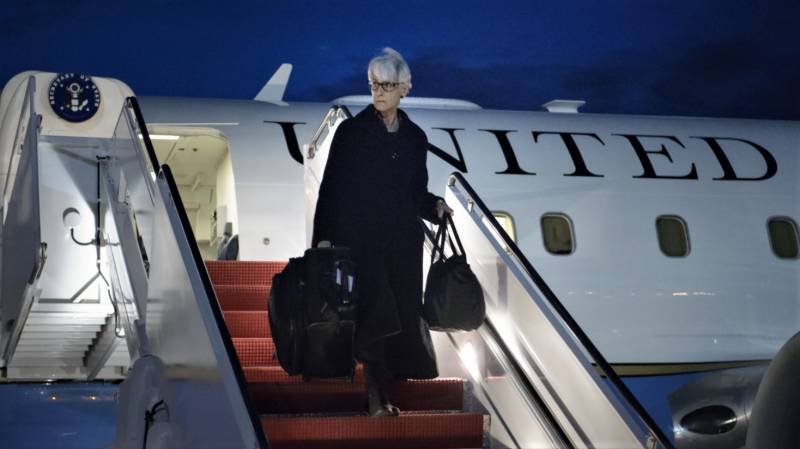
    United States (US) Deputy Secretary of State Wendy R Sherman, following her visit to India, received a cold reception upon her arrival in Islamabad as per The News.

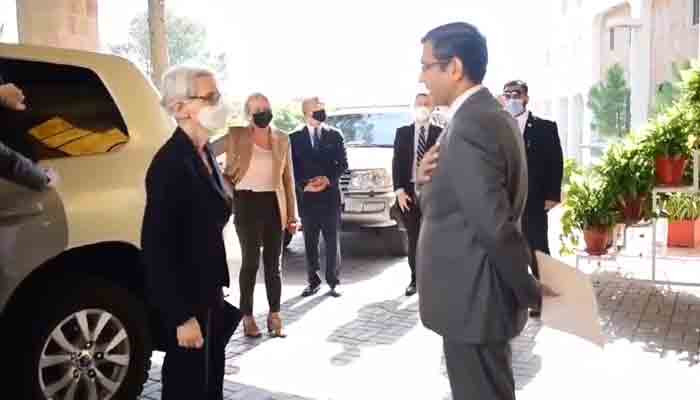
    She was welcomed by a mid-level diplomat, instead of her counterpart, Foreign Secretary Sohail Mehmood.

    Well aware of Pakistan concerns: Wendy R Sherman

    Before coming to Pakistan, Sherman in Mumbai had made it very clear that the US was not interested in a broad relationship with Pakistan, beyond Afghanistan.

    She stated, “My visit to Pakistan is for a very specific narrow purpose and the United States does not see itself building a broad relationship with Pakistan and we have no interest in returning to days of hyphenated [India and Pakistan]. That is not where we are. That is not where we’re going to be.”

    “My visit to Pakistan in the context of Afghanistan is in a bid to make sure that Pakistan has the capabilities to ensure everybody’s security, including India’s and the US”, she said as she left India.

    According to The News, the government was shocked at Sherman’s undiplomatic statements that she had made in India.

    Sherman met with the National Security Adviser (NSA) Moeed Yusuf where he stressed that the world “must maintain contact” with the interim Taliban government in Afghanistan.

    Furthermore, Yusuf blatantly said that Indian human rights violations in Indian Illegally Occupied Jammu and Kashmir (IIOJK) also pose a threat to regional peace.

    Foreign Minister (FM) Shah Mahmood Qureshi met the Deputy Secretary on Thursday but he didn’t tweet about the meeting. However, Sherman tweeted, “I met today with Pakistan FM to discuss Afghanistan’s future and the important and long-standing US-Pakistan relationship. We look forward to continuing to address pressing regional and global challenges.”

    Sherman also met Chief of the Army Staff (COAS) General Qamar Javed Bajwa where matters of mutual interest, regional security situation, and collaboration in humanitarian measures in Afghanistan were discussed.

    Apart from the meetings, while talking to The News’ editors, Sherman said she believed US President Joe Biden will soon talk to Prime Minister (PM) Imran Khan. She said, “We have an idea that every country wants to have a telephone conversation with US President. I am sure that this conversation will be held with PM Khan soon.” 

    “I am sure that this contact will take place soon, so I don’t think it should mean anything else,” she added.

    Moreover, while replying to a question about a bill presented in September by 22 Republican senators targeting Pakistan, Sherman assured, “We get hundreds of bills; thousands of people are behind them but we are well aware of Pakistan’s concerns and are closely looking at the situation.”