Tag: Mohammad Hanif

  • Writer Mohammed Hanif returns Sitara-e-Imtiaz to protest against Baloch persecution

    Writer Mohammed Hanif returns Sitara-e-Imtiaz to protest against Baloch persecution

    A Case of Exploding Mangoes and Red Birds famed writer and journalist Mohammed Hanif has returned the prestigious civilian award, Sitara-e-Imtiaz, in protest against this week’s crackdown on Baloch protestors by Islamabad police.

    In a post on X, Hanif shared the video of a Baloch girl stating her demands and wrote, “In protest, returning my Sitara e Imtiaz, given to me by a state that continues to abduct and torture Baloch citizens.”

    He went on to mention two female Baloch activists Sammi Baloch and Mehrang Baloch, writing that journalists of his generation have seen these young women grow up in protest camps. “Ashamed to witness a new generation being denied basic dignity,” Mohammed Hanif lamented.

    Hanif’s literary genius was recognized by the government of Pakistan back in 2018 when one of the highest national laurels, Sitara-e-Imtiaz, was conferred upon him.

    Along with being a journalist and novelist, Hanif is also a playwright and writes for the BBC.

    His novel A Case of Exploding Mangoes was long-listed for the Booker Prize, shortlisted for the Guardian First Book Award, and won the Commonwealth Prize for Best Book. His second book, Our Lady of Alice Bhatti, won the Wellcome Book Prize.

    Baloch protesters are on roads demanding the release of all “missing persons” and an end to “extrajudicial killings” in Balochistan under the leadership of activist Dr Mahrang Baloch and Baloch Yakjehti Committee (BYC).
  • Damning bans

    Damning bans

    “Creativity takes courage” – Henri Matisse

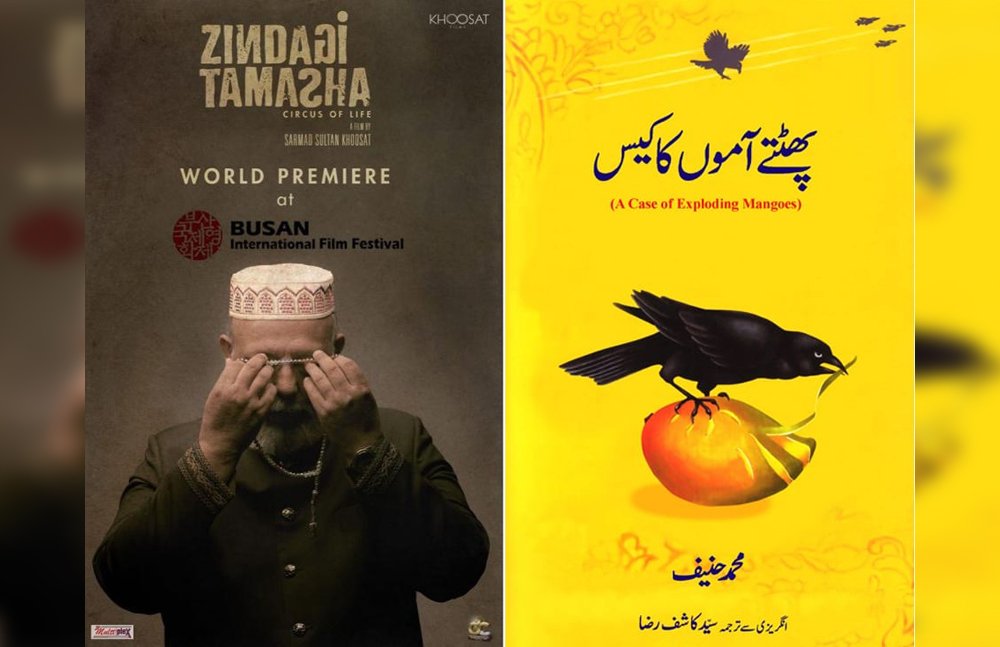
    Matisse wasn’t wrong. When filmmaker Sarmad Khoosat released the first trailer of his upcoming movie, ‘Zindagi Tamasha’, it created quite a buzz. The movie was supposed to release today (January 24) across Pakistan. It has already won the Kim Ji Seok Award at Busan International Film Festival. Film critics and the public at large were waiting for its release as Sarmad is known to be quite creative and the movie looked promising enough. Just like other governments, this government too promised the revival of Pakistani cinema. Sarmad Khoosat’s ‘Zindagi Tamasha’ seemed like a step in the right direction.

    But what happened when religious hardliner Tehreeke Labbaik Pakistan (TLP) threatened to hold protests against the movie just because the protagonist was a bearded man who is shunned by society after a video of him dancing at a wedding goes viral? The Pakistani state caved in to pressure, again.

    A film that was passed by three censor boards cannot be released now because the state fears the religious pressure group. The federal government has decided to block its release and has asked the Council of Islamic Ideology (CII) to critically review it. The Punjab government will review it on February 3 and a TLP representative will be in the review committee. The Sindh Censor Board halted its release citing the reason that it “may create unrest within religious quarters and may deteriorate and be detrimental to the peaceful circumstances in the country”.

    There is nothing outrageous or anti-Islam in the movie. Busting the myths about the movie, Mohammed Hanif writes for Samaa, “The only taboo the film breaks is showing a man with a beard doing house chores. It humanises a religious man.”

    Sarmad wrote two beautiful and heartfelt open letters – one was addressed to the president, prime minister, chief justice, army chief and information minister, while the other was for Pakistan and Pakistanis. He ended his first letter with these poignant words, “The space for rational and artistic thinking and expression must not be annexed by a few troublemakers for their political ends, but I fear this is what will happen if we buckle under this time.”

    We are barring the release of a movie that promises to be creative and critical while being sensitive and responsible at the same time. Why do we then complain about misogyny on our television screens if we will not allow films like ‘Zindagi Tamasha’ to be screened in our cinemas? Films that make us think, films that break stereotypes, films that make us question the dark side of our society; films that celebrate the beauty of our nation.

    There already are curbs on freedom of expression in Pakistan these days. Copies of the Urdu translation of Hanif’s ‘A Case of Exploding Mangoes’ were confiscated after threats to the publisher. The Punjab Assembly has recommended banning three books on Islam as they critically evaluate historical events. When a country starts banning books and movies, it means its descent into the dark ages is almost complete. Once we complete this downward journey, there’s no coming back.

    It’s better to stop right now and celebrate critical thinking instead of banning art and creativity.