Tag: Monetary Policy

  • SBP seeks design ideas from students, designers for new banknotes

    SBP seeks design ideas from students, designers for new banknotes

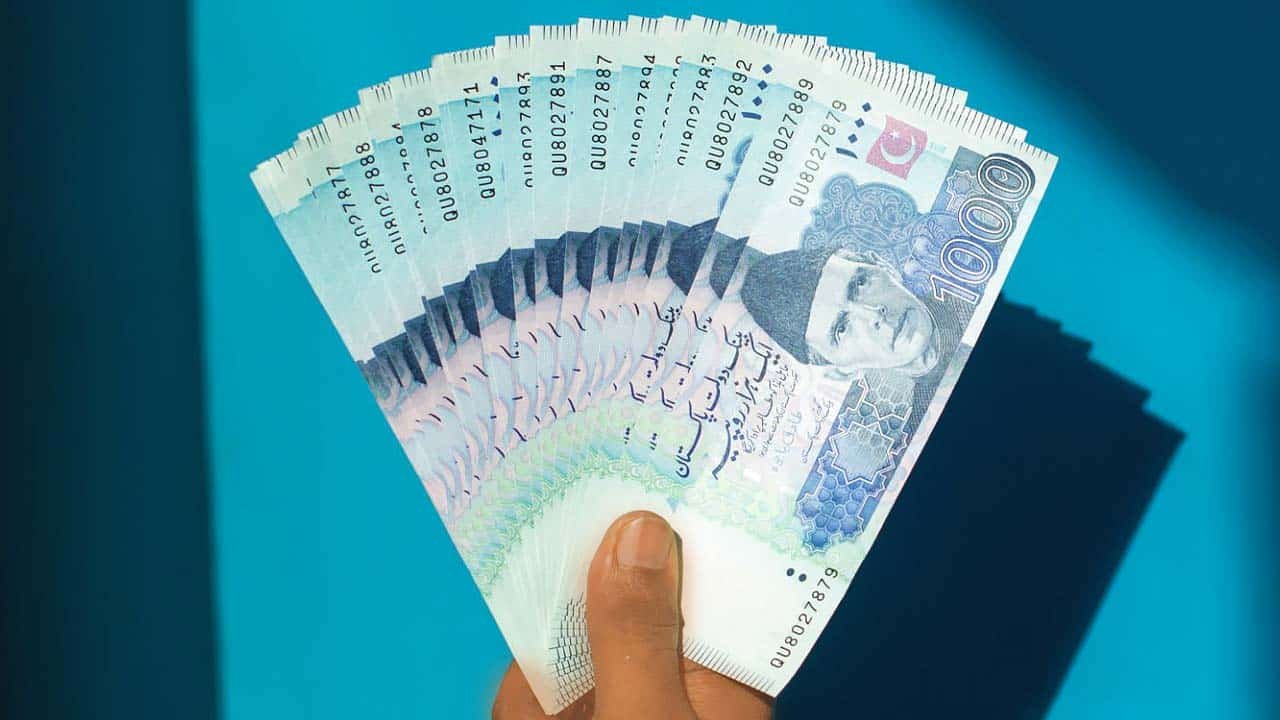
    In a significant move to enhance security features and align with technological advancements, the State Bank of Pakistan (SBP) has kicked off the process of designing and issuing a new series of banknotes covering all existing denominations.

    The SBP, in an official statement released on Tuesday, emphasised the complexity of the issuance process, which involves multiple meticulous steps and stages that demand careful planning and coordination among various stakeholders. Despite the general timeline of 2-3 years for launching a new banknote series, the SBP aims to expedite the process and complete it within the next two years.

    As an initial step towards the design process, the SBP has organised an art competition for the new banknote series. This competition is expected to yield diverse and creative ideas and themes that will form the basis for the subsequent phases of development.

    The finalised concepts will be shared with renowned professional banknote designers, who will be selected through a competitive process to transform these ideas into the final printable designs for each denomination.

    The final designs will then undergo scrutiny by the federal government for approval, ensuring that they meet the necessary standards and security features. The SBP assured the public that the existing banknote series would continue to remain in circulation even after the introduction of the new series.

    Any decision regarding the withdrawal of the existing banknotes will be executed gradually and in a phased manner, contingent upon the successful issuance and sufficient circulation of the new banknotes.

    The central bank highlighted that the periodic introduction of new banknote series, occurring approximately every 15–20 years, is a common practice among central banks. This practice aims to bolster the integrity of banknotes and integrate the latest technological developments in design and security features, ensuring a secure and reliable currency system for the nation.
  • State Bank of Pakistan’s reserves soar to $8.27 billion, highest level since July 2023

    State Bank of Pakistan’s reserves soar to $8.27 billion, highest level since July 2023

    In the latest report, the State Bank of Pakistan (SBP) announced a significant rise of $243.1 million, or 3.03 per cent week-on-week, in foreign exchange reserves, reaching $8.27 billion as of January 19, 2024. 

    This boost is credited to the reception of the second installment of SDR 528 million, equivalent to $705.6 million, from the International Monetary Fund (IMF). 

    After settling government external debt repayments, the net increase for the week stands at $243.1 million, marking the highest level for SBP’s reserves since July 14, 2023.

    Furthermore, the total reserves of the country witnessed an increase of $196.3 million, or 1.49 per cent, totaling $13.34 billion during the same week. 

    In contrast, commercial banks experienced a decline in reserves, dropping by $46.8 million, or 0.91 per cent, to $5.07 billion week-on-week.

    It is noteworthy that in the current fiscal year, total liquid foreign reserves have shown a substantial growth of $4.18 billion, reflecting a 45.65 per cent increase. 

    Similarly, the ongoing calendar year has seen a rise of $0.12 billion, marking a 0.91 per cent increase in the nation’s reserves.

  • Pakistan informs IMF of preparedness to address near-term challenges

    Pakistan informs IMF of preparedness to address near-term challenges

    In a recent communication to the International Monetary Fund (IMF), the government has underscored its preparedness to address potential near-term challenges, signalling a commitment to maintaining economic stability.

    The disclosure comes as part of the IMF’s first review under the stand-by arrangement.

    The government, as revealed in the report, stands ready to respond decisively should near-term price pressures reemerge. This includes addressing stronger-than-expected second-round effects on core inflation and potential pressures on the exchange rate amid the normalisation of the current account.

    Amid signs of weaker demand, positive supply developments, and decreasing pressures on the exchange rate, the government anticipates a notable decline in inflation in the coming months.

    As a result, the policy rate was maintained at 22 per cent during the latest Monetary Policy Committee (MPC) meeting held on October 30. However, the government reiterated its readiness to respond promptly if there is a resurgence of near-term price pressures.

    The primary objective is to ensure a clear downward trajectory for inflation and inflation expectations. The pace of future adjustments will be contingent on various factors, including inflation data, exchange rate developments, external position strength, and the fiscal-monetary policy mix.

    The government aims to keep the real policy rate in positive territory on a forward-looking basis, signalling a commitment to bringing inflation within the target band by fiscal year 2026.

    To enhance monetary policy transmission, the interest rate on major refinancing schemes, specifically the EFS and LTFF, will continue to be linked to the policy rate, with a spread of no more than 3 per centage points, as per the announcement by Pakistani authorities.

    The report emphasised the importance of vigilance, highlighting that despite the return of the forward-looking real policy rate to positive territory, caution is necessary due to near-term risks.

    With inflation expectations not yet firmly anchored, the Monetary Policy Committee is urged to respond robustly and promptly should inflationary pressures resurface.

    Maintaining a positive real policy rate during a period of easing inflation and promptly addressing signs of new demand pressures or rising inflation expectations is seen as crucial.

    This strategy aims to re-anchor inflation expectations and guide down core inflation from the second half of fiscal year 2024 onwards, contingent on the absence of a resumption in administrative import compression.

    The report projects a significant decline in headline inflation through fiscal years 2025–26, aligning within the targeted 5–7 per cent range by fiscal year 2026. This outlook is supported by fiscal consolidation efforts and the normalization of global commodity prices.

    While the IMF staff views the current stance as broadly appropriate given weak domestic demand, the report suggests that the MPC should remain prepared to respond resolutely if near-term price pressures reemerge, including second-round effects.

  • Interbank closing: PKR continues winning streak, settles at Rs281.22

    Interbank closing: PKR continues winning streak, settles at Rs281.22

    The Pakistani rupee (PKR) extended its upward trend against the US dollar for the fifth consecutive session, gaining 0.02 per cent in the inter-bank market on Tuesday.

    The State Bank of Pakistan (SBP) reported that the rupee concluded at Rs281.22 after a rise of Re0.06. In the preceding session on Monday, the rupee had experienced a slight increase, settling at Rs281.28 against the US dollar.

    On a global scale, the US dollar took a pause in its rally on Tuesday, with traders expressing confidence in multiple Federal Reserve rate cuts this year.

    This optimism is based on the belief that the slowdown in US inflation is significant.

    Meanwhile, in the cryptocurrency realm, bitcoin maintained its position near the highest level since April 2022, driven by growing expectations of the imminent approval of spot bitcoin exchange-traded funds (ETF).

    These market movements were influenced, in part, by the New York Fed’s recent Survey of Consumer Expectations, revealing that US consumers’ short-term inflation expectations in December reached the lowest level in almost three years.

    A key reading on US inflation is scheduled later in the week, offering additional insights into the Federal Reserve’s potential room for interest rate adjustments this year.

    Futures currently indicate the pricing in of nearly 140 basis points worth of easing by the Fed in the coming year.

    Against a basket of currencies, the US dollar experienced a slight decline of 0.08 per cent, settling at 102.22, following a 1 per cent increase in the previous week.

  • Winning streak: Pakistani rupee appreciates 0.04% in fourth consecutive session

    Winning streak: Pakistani rupee appreciates 0.04% in fourth consecutive session

    In a resilient display, the Pakistani rupee continued its upward trajectory against the US dollar, marking gains for the fourth consecutive session in the interbank market on Monday. 

    The State Bank of Pakistan (SBP) reported a noteworthy appreciation of 0.04 per cent, with the rupee settling at Rs281.28 after a rise of Re0.12.

    This positive trend extends the rupee’s recent performance, as it achieved a 0.16 per cent appreciation during the preceding week, settling at Rs281.40 against the US dollar in the inter-bank market. 

    Impressively, this marks the eighth consecutive week of the local currency advancing against the greenback.

    The momentum driving the rupee’s strength can be attributed to the recent announcement of a staff-level agreement (SLA) between Pakistan and the International Monetary Fund (IMF). 

    This agreement pertains to the first review of the $3 billion standby arrangement (SBA), reinforcing investor confidence in Pakistan’s economic stability.

    A significant development contributing to this positive outlook is the notable increase in foreign exchange reserves held by the State Bank of Pakistan. 

    According to SBP data from the previous week, the central bank’s reserves surged by $464 million on a weekly basis, reaching $8.2 billion as of December 29.

    Internationally, the US dollar maintained stability on Monday, with investors eagerly awaiting a crucial US inflation report later in the week. This report is expected to provide clarity on the Federal Reserve’s monetary policy outlook. 

    The greenback’s recent rally was supported by a rebound in US Treasury yields as traders adjusted their expectations regarding the pace and scale of potential Fed cuts this year. 

    This cautious optimism globally has complemented Pakistan’s positive economic indicators, contributing to the sustained strength of the Pakistani rupee against the US dollar.

  • PKR gains ground against US dollar, closes at Rs283.26

    PKR gains ground against US dollar, closes at Rs283.26

    The Pakistani rupee (PKR) continued its positive trajectory against the US dollar (USD) for the fourth consecutive session, appreciating by 0.09 per cent in the inter-bank market on Friday.

    According to the State Bank of Pakistan (SBP), the rupee concluded at Rs283.26, reflecting an increase of Re0.25.

    Thursday witnessed a marginal gain in the rupee, settling at Rs283.51 against the US dollar.

    The ongoing optimism is buoyed by the recently released trade figures for November, revealing a noteworthy 13.16 per cent month-over-month (MoM) and a substantial 31.72 per cent year-over-year (YoY) reduction in the trade deficit, amounting to $1.89 billion.

    Export figures exhibited a robust 7.66 per cent YoY surge, reaching $2.57 billion, while imports saw a YoY decline of 14.47 per cent, totaling $4.46 billion.

    On the global front, the US dollar remained near four-month lows on Friday, influenced by the increasing likelihood of US interest rate cuts in the coming year.

    Conversely, the euro and pound found support as their respective central banks reiterated the necessity for sustained higher interest rates.

    Amid an eventful week for central banks, clarity emerged regarding the potential timing of interest rate cuts following Federal Reserve Chair Jerome Powell’s statement during Wednesday’s meeting.

    Powell suggested that the tightening of monetary policy is likely concluding, with discussions about cuts coming “into view.”

    The Fed’s projections imply a 75-basis-point cut next year from the current level, leading to a broad decline of the greenback against its counterparts.

    The dollar index stands at 102.05, not far from the four-month low of 101.76 observed on Thursday, marking a 1.9 per cent decrease and its most significant weekly decline since July.

    Oil prices, a pivotal indicator of currency dynamics, saw an increase on Friday, set to achieve their first weekly rise in two months.

    This positive shift is attributed to a bullish forecast from the International Energy Agency (IEA) regarding oil demand for the upcoming year, coupled with a weaker dollar.

    Brent futures rose by 21 cents to $76.82 a barrel at 0918 GMT, while US West Texas Intermediate (WTI) crude also experienced a 21-cent climb, reaching $71.79.

  • Interbank closing: Pakistani rupee gains 10 paisa against US dollar

    Interbank closing: Pakistani rupee gains 10 paisa against US dollar

    The Pakistani rupee (PKR) demonstrated resilience for the third consecutive session against the US dollar (USD), marking a 0.04 per cent appreciation in the interbank market on Thursday, according to the State Bank of Pakistan (SBP).

    The PKR settled at Rs283.51 after an increase of Rs0.10. This positive trend follows Wednesday’s marginal gain, where the rupee settled at Rs283.61 against the USD.

    In contrast to major currencies, the local currency experienced a loss of Rs2.64 against the Euro, closing at Rs308.49 compared to the previous value of Rs305.85.

    The British Pound strengthened by Rs2.91, concluding at Rs357.96 in comparison to Rs355.05 from the preceding day.

    The Swiss franc also witnessed gain of Rs1.46, closing at 325.35 compared to Rs323.89 in the previous session.

    Against the Japanese yen, PKR lost 5.23 paisa, settling at Rs1.9972 versus Rs1.9449 a day ago.

    In the ongoing financial year, the PKR has appreciated against the dollar by Rs2.48, or 0.87 per cent.

    However, in the current calendar year, it has depreciated by Rs57.08, or 20.13 per cent.

    In a related development, the Asian Development Bank (ADB), in its latest report, Asian Development Outlook (ADO), highlighted that Pakistan’s overall recovery is still constrained by moderate confidence and high inflation eroding purchasing power.

    The ADB noted that Pakistan’s inflation rate averaged 28.5 per cent over July–October but is expected to ease amid fiscal consolidation, monetary tightening, and improved availability of food and key imported inputs.