Tag: Monthly data

  • Honda Pakistan records 40 per cent increase in earnings

    Honda Pakistan records 40 per cent increase in earnings

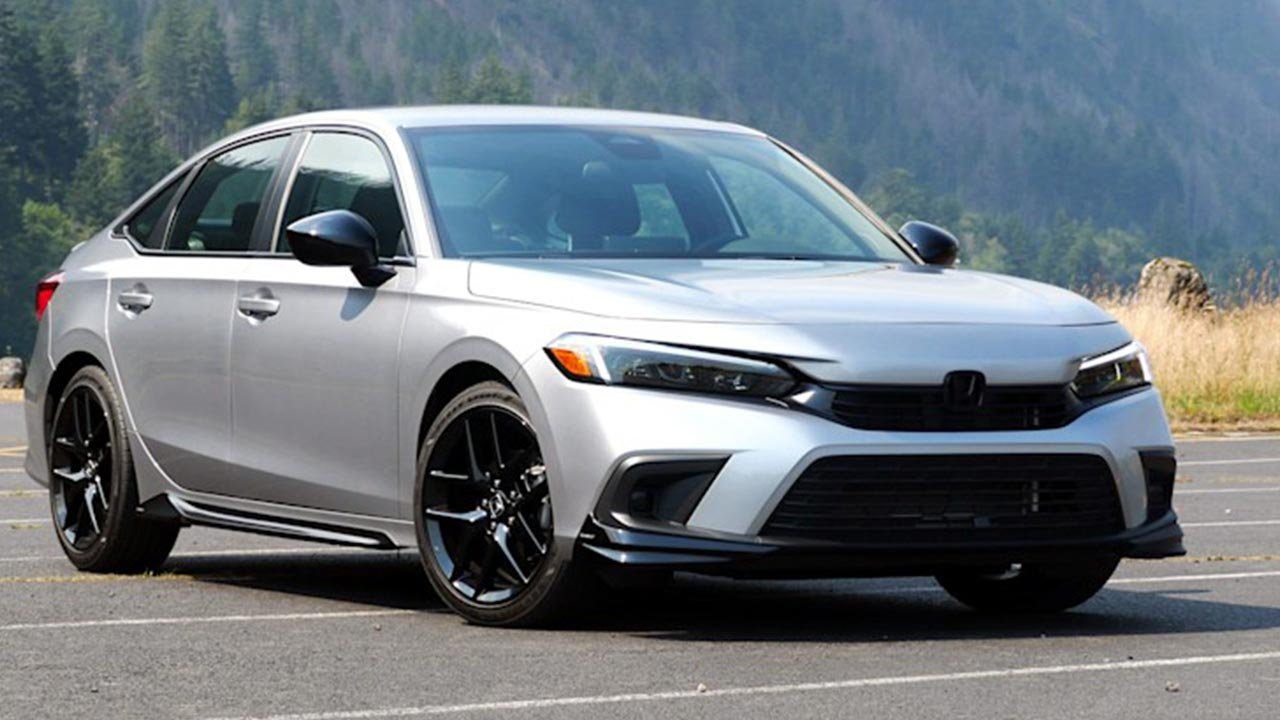
    Honda Atlas Cars Limited (HACL) concluded the financial year with a 40 per cent increase in earnings, giving investors reason to be optimistic. This is despite several challenges including an ongoing chip shortage, rising commodity prices on overseas markets, hefty freight rates, and the rupee’s depreciation.

    “The result is below our expectations, which is mainly due to higher-than-expected distribution costs and effective tax rate,” Ismail Iqbal Securities auto sector analyst Muqeet Naeem stated.

    The automaker benefited from the fact that demand for four-wheelers remained high despite the problems.

    Honda purchasers appear to be unconcerned with price changes, preferring to purchase their preferred vehicles whenever they want, regardless of how much more expensive they are now than they were only two years ago.

    Prices have continued to rise at a rapid pace. There may also be a sense that prices will continue to rise. However, in a market known for “own money” or high premiums, continued demand despite price increases should not be surprising.

    The earnings per unit sold is a great marker of how quickly prices have risen. Honda sold 57 per cent more automobiles in MY22 than the previous year, which ended in March 21.

    The introduction of a new Civic generation considerably attributed to Honda’s sales growth.

    Not only have imports become more expensive as the PKR has depreciated against the greenback, but inflationary pressures on inputs and rising fuel prices have also contributed to cost increases. Revenue and cost per unit sold have generally increased in lockstep.

    As a result, despite strong demand growth, margins have fallen to 5 per cent.

    Other income, which consists of customer advances, has significantly bolstered the company’s profitability. Other income boosted the bottom line by 47 per cent in MY22, compared to 33 per cent the previous year. This also suggests that demand will continue to rise in the coming months.

    However, as lending rates continue to skyrocket, the company may lose demand from purchasers who plan to finance their vehicles through a bank.

  • Pakistan is finalising policy guidelines to launch 5G

    Pakistan is finalising policy guidelines to launch 5G

    The government intends to introduce 5G across the country, despite the fact that widespread 4G coverage is viewed as a major requirement before its launch. Also, 5G services can be offered in locations where 4G services are already available.

    Although all telcos in Pakistan have switched to 4G or LTE networks, a few companies are still unable to provide stable connectivity in a number of locations. Also, network providers frequently fail to deliver an acceptable, 4G standard connection speed despite hefty mobile data charges.

    To meet license requirements for the 5G network, cellular operators are forced to extend 4G coverage.

    According to Brecorder, the government of Pakistan is intending to introduce 5G in the country, according to official documents, and the Ministry of Information Technology and Telecommunication (MOIT&T) is in the phase of finalising policies for 5G in consultation with the Pakistan Telecommunication Authority (PTA) and relevant authorities.

    The former administration intended to offer 5G services in the country in the first quarter of 2023. Unfortunately, no consulting assistance has been utilised for this purpose thus far. The reports also revealed that the PTA spent no expenses as no consultancy services had been obtained for its deployment.

    The MOIT&T has analysed seven bands for the implementation of 5G services. As per official documents, the government is currently reviewing the possibilities available for the prompt deployment of 5G services in the ccountry.

    The following bands are being considered for 5G service adoption as low, mid and high bands:

    700 MHz; 2.3 GHz; 2.6 GHz; 3.5 GHz; MiIIimeter wavebands; C-Band (3.6-4.2) GHz; and Unlicensed Backhaul Frequency bands (P2P & P2MP).

    In light of these bands, the ministry has requested that the Frequency Allocation Board (FAB) share the present status and availability of all 5G spectrum in the above-mentioned frequency bands.

    Network providers are actively extending their infrastructures. Pakistan presently has 90 per cent teledensity and 89 per cent mobile penetration. The total number of cellphone consumers is 193.4 million. These figures are steadily rising. According to license terms, all CMOs are working to expand 4G coverage nationally.

    Approximately 60 per cent of the populace has access to 4G coverage. New rollout criteria have been imposed on operator licenses in order to accelerate 4G implementation in Pakistan.

    Furthermore, population-based rollout obligations are being implemented in order to give 4G coverage to the greatest number of Pakistanis.

  • Another hike of Rs4.9 per unit approved in power tariff

    Another hike of Rs4.9 per unit approved in power tariff

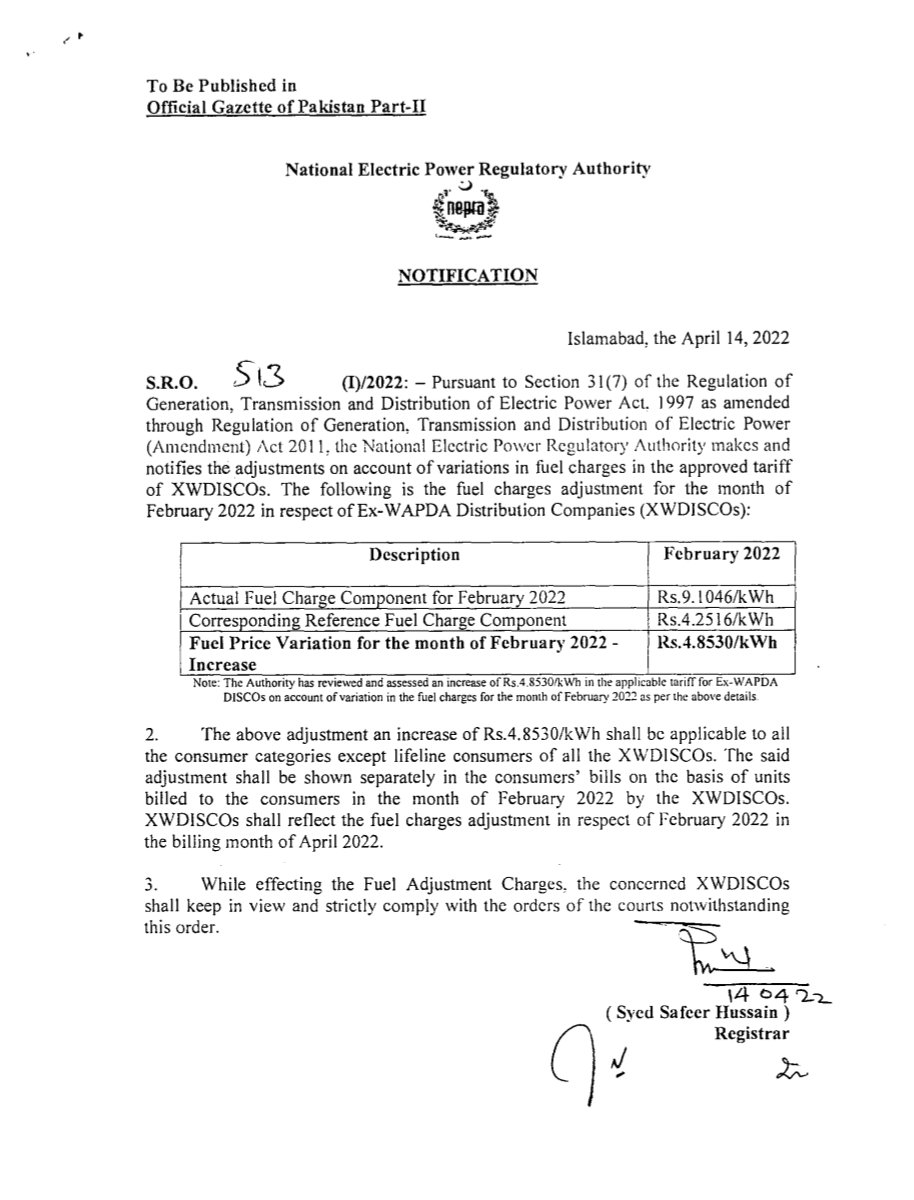
    Owing to the monthly Fuel Cost Adjustment (FCA) for February, the National Electric Power Regulatory Authority (NEPRA) on April 15 increased the price of electricity by Rs4.85 per unit.

    It has also announced an increase in the price of power, stating that the power output in February was more expensive than the previously set fuel price.

    According to the notice, the power distribution companies (DISCOs) will collect the amount from electricity consumers in the April bill. In addition, consumers will be hit with a charge of Rs37.7 billion, excluding general sales tax (GST). However, K-Electric and lifeline customers will be exempt from the hike.

    On March 31, the NEPRA held a hearing to determine the FCA but did not make a decision. The Central Power Purchasing Agency (CPPA) requested that the cost per unit be increased to Rs4.94 by the NEPRA.

    Following the monthly FCA, which only operates for one month, the administration had already hiked the power price to Rs5.95 per unit for the month of January.

    As per NEPRA’s data, the most expensive energy production sources, including High-Speed Diesel (HSD) and Residual Fuel Oil (RFO), were used more than average in the prior months, raising the overall cost of production.