Tag: moon

  • iCube Qamar’s moon images are out

    iCube Qamar’s moon images are out

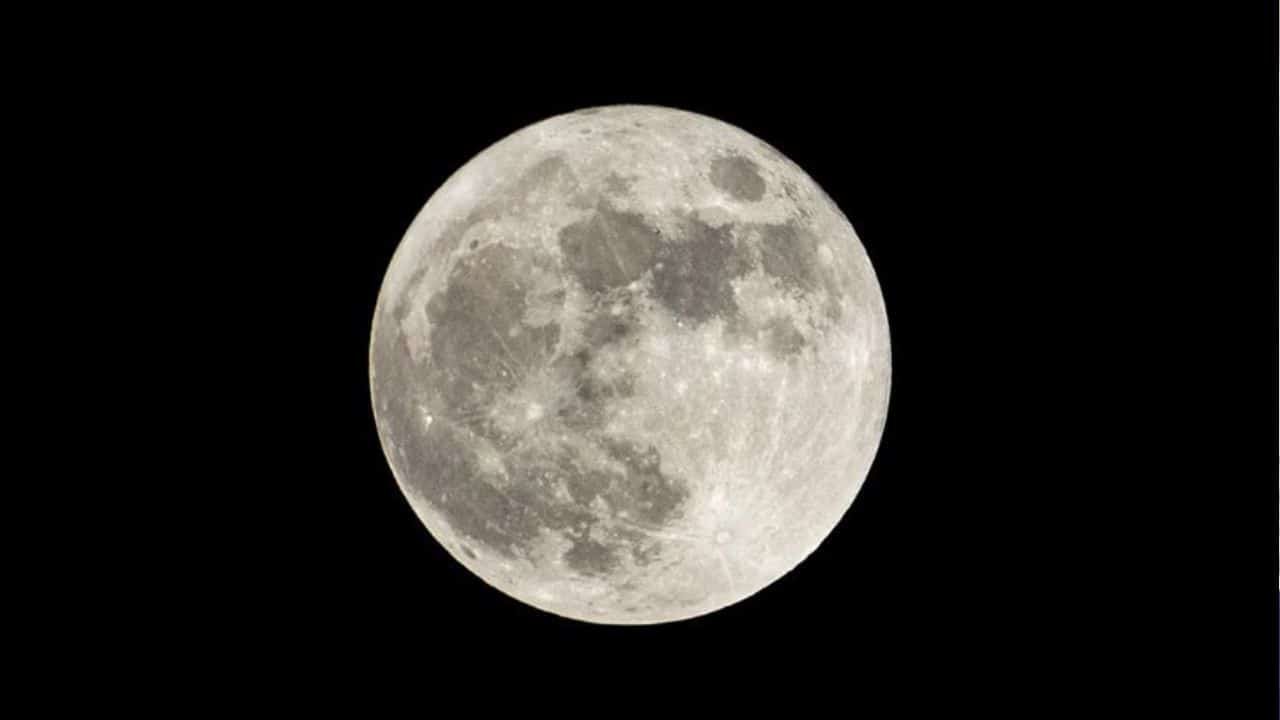
    Pakistan’s first satellite mission ‘iCube Qamar’ has successfully entered the moon’s orbit and its first image has been released.

    Institute of Space Technology informed Geo News that iCube Qamar successfully entered lunar orbit on May 8 and has completed three orbits around the moon.

    The mission will orbit the Moon for about three to six months.

    According to the Institute of Space Technology, the first Pakistani satellite completes its orbit in 12 hours. Qamar’s signals will be received on Earth after traveling a distance of 360,000 to 400,000 km.

    The spokesman said that in-orbit testing of iCube Qamar’s controllers, subsystems, and protocols is ongoing. The mission will remain in experimental stages for five to six days after reaching the lunar orbit.

    iCube Qamar was sent into space with the Chinese mission Cheng 6 on May 3 from the Hainan Space Launch Site.

  • Pakistan mein ‘Super Blue Moon’ kis waqt daikhein?

    Pakistan mein ‘Super Blue Moon’ kis waqt daikhein?

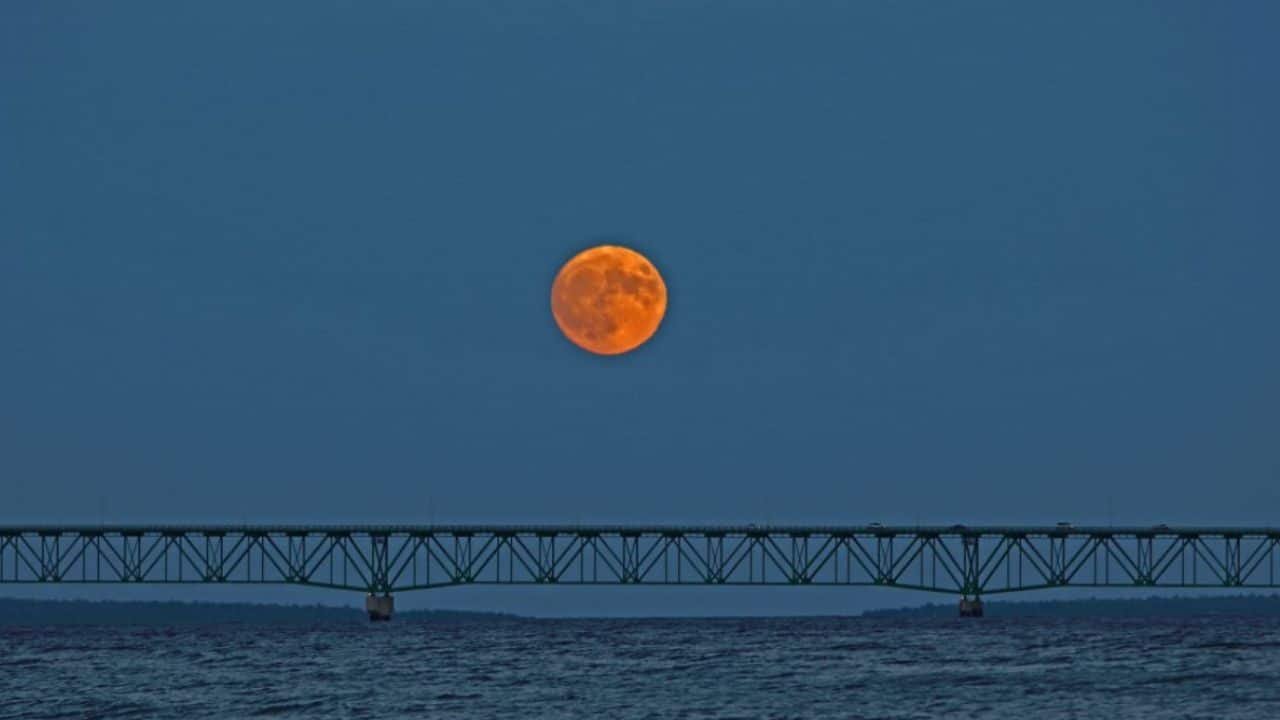
    Once in a blue moon is going to be a reality tonight. On the night of August 31, a celestial spectacle known as the ‘Blue Moon’ will captivate astro enthusiasts around the world. Despite its name, this unique event won’t unveil a blue-hued moon; instead, it will radiate a captivating shade of orange.

    The Super Blue Moon Experience

    During this event, the Super Blue Moon will be slightly larger and brighter than a typical full moon. Supermoons shine about 40 percent larger and 30 percent brighter than regular full moons. While the size difference may not be discernible to the naked eye, binoculars can enhance the view of this captivating phenomenon.

    When and How to Observe the Super Blue Moon

    In Pakistan, the spectacular view of the Super Blue Moon can be seen from 6:25 AM PKT till 6:40 AM. The moon will be full at 6:35 AM PKT.

    European viewers will have an extended opportunity to witness the moonrise, providing an additional chance to catch a glimpse of this celestial event. In London, the moon will rise at 8:08 PM BST. For those in New York, moonrise is set for 7:45 PM EDT, followed by moonset at 7:33 PM EDT, with the full moon radiating its brilliance at 8:37 PM EDT.

    In Los Angeles, both moonrise and sunset are scheduled for 7:36 PM PDT, and the full moon will grace the sky at 5:37 PM PDT. London residents can experience the Blue Moon at 7:52 PM BST during sunset and 8:24 PM BST, with the full moon’s appearance at 1:37 AM BST.

    Understanding the Blue Moon Phenomenon

    A Blue Moon is an extraordinary astronomical event that occurs when a supermoon or full Moon coincides with a perigee—when the Moon is closest to Earth in its orbit.

    While Blue Moons aren’t exceedingly rare occurrences, they remain intriguing phenomena in the world of astronomy. The most recent Blue Moon graced the skies in August 2021, as reported by Space.com. With the average lunar cycle spanning approximately 29.5 days, a year typically accommodates 12 lunar cycles, totaling 354 days. As a result, roughly every 2.5 years, a thirteenth full moon emerges within a given year.

    This upcoming event, the super blue moon, marks the final chapter of a four-part lunar sequence and is anticipated to be the third-largest moon visible throughout this year. It’s important to note that the term “blue moon” has no connection to the moon’s color; it merely signifies the occurrence of two full moons within a single calendar month.

    How rare is a blue supermoon?

    According to NASA, the blue supermoons are a very rare phenomenon. It mentions that these moons often only appear once every ten years due to astronomical conditions. But occasionally, the interval between blue supermoons can be as long as twenty years. While blue moons only account for 3% of full moons, supermoons account for around 25% of all full moons. Although the interval between super blue moons is highly erratic—it can be as long as 20 years—the average is often 10 years. The following super blue moons will take place in pairs in 2037, in January and March.
  • Kalpana K — the woman behind Chandrayaan-3

    Kalpana K — the woman behind Chandrayaan-3

    On Wednesday, August 23, India’s third lunar mission Chandrayaan-3, successfully landed on the south pole of the moon, the first landing of its kind.

    Behind this feat is a team of five individuals who steered the mission towards success, among whom is Kalpana Kalahasti, the deputy project director, whose contribution is noteworthy.

    According to Gulte, Kalpana’s roots trace back to Thaduku in Puttur Mandal of Chittoor district. Her father, Muniratnam, worked as an officer in the High Court, and her mother, Indira, was also educated. Kalpana pursued her education in Chennai, studying B.Tech in Electronics and Communication at Madras University.

    She aspired to work at the Indian Space Research Organization (ISRO) since she was a child. After she completed her B.Tech in ECE, she was able to pursue her dream. She passed the intricate selection process and joined ISRO in 2000. She began her career as a radar engineer at the Space Center (SHAR).

    Five years later, she got transferred to the U R Rao Satellite Centre in Bangalore in 2005. The focus of her work then shifted towards satellite systems, and worked as an engineer in satellite building.

    She took up a major role as the deputy project director for the Chandrayaan 3 mission and she supervised the project through its minute details. She remained dedicated and ensured that the mission was not hindered despite the COVID-19 pandemic.

    After the successful landing Chandrayaan-3, Kalpana K addressed the Indian nation at the ISRO Telemetry Tracking and Command Network, expressing, “…this will remain the most memorable moment for all of us…from the day we started rebuilding our spacecraft after the Chandrayaan 2 experience, it has been breathe in-breathe out Chandrayaan 3 for the team.”

    She was also previously involved in the second lunar mission and the Mangalyaan mission.

    Other member of the team were ISRO chairman S Somanath, project director Veeramuthuvel, M Sankaran, director of U R Rao Satellite Centre where the satellite was constructed, and M Srikanth, the mission director.

  • Lunar spectacle double supermoons coming our way in August

    Lunar spectacle double supermoons coming our way in August

    A celestial extravaganza is set to bedazzle sky watchers this month with not one, but two spectacular supermoons, beginning with the Sturgeon Moon tonight, August 1st, and culminating in a rare super Blue Moon at the month’s end.

    Visible in various parts of the world, including the United States and Saudi Arabia, tonight’s supermoon, coined the Sturgeon Moon, will rise less than 226,000 miles away from Earth, as per USAToday.

    This supermoon will make the lunar orb appear 14% larger and 30% brighter than an ordinary full moon, according to Pakistani space scientist Dr. Jawed Iqbal. The Sturgeon Moon, named after the large fish found in the Great Lakes, will reach its zenith at 2:32pm ETD Tuesday, as reported by the Old Farmer’s Almanac.

    In Makkah, Majed Abu Zahra, the president of the Astronomical Society in Jeddah, forecasts the supermoon to peak at 9:30pm local time. Sky gazers can look towards the southeast after sunset to capture this magnificent sight.

    Supermoons, scientifically known as perigean full moons, occur when a full moon coincides with its perigee, the closest point to Earth in its elliptical orbit. This makes the moon appear larger and brighter than a typical full moon. While supermoons typically occur three to four times annually, this month’s double spectacle is indeed a rare treat.

    The second supermoon, a super Blue Moon, will illuminate the skies on August 30, promising to be the largest and brightest of 2023 due to its exceptionally close distance of 222,043 miles to Earth, nearly 17,000 miles closer than average. This super Blue Moon will peak close to sundown in the U.S., offering another chance for enthusiasts to marvel at the moon’s magnified radiance.

    However, if missed, the next opportunity to witness a super Blue Moon will not arrive until August 2032, almost nine years from now. While Blue Moons – the second full moon in a calendar month – recur approximately every two and a half years, Blue Supermoons, like the one expected this month, occur far less frequently, the last one having occurred back in December 2009.

    This extraordinary series of lunar events offers a golden opportunity for all sky-watchers to enjoy the night sky’s grandeur, serving as a vivid reminder of the fascinating phenomena that our celestial neighborhood continually offers.

  • First solar eclipse of 2021 to occur on June 10

    First solar eclipse of 2021 to occur on June 10

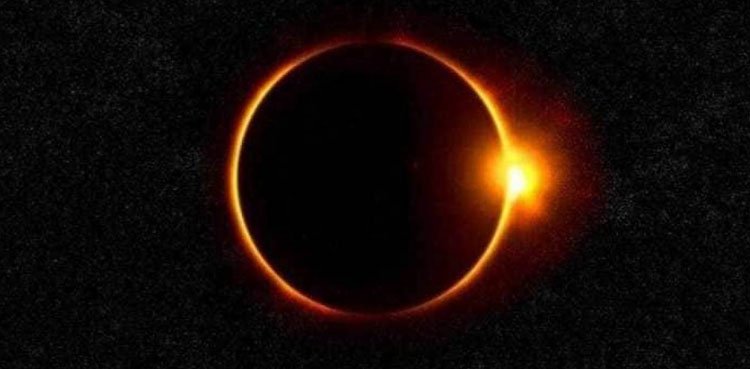
    The first solar eclipse of the year will occur on June 10. This eclipse is going to appear as a ‘ring of fire’.

    As per details, the eclipse will be seen in Russia, Greenland, Northern Canada, North Asia, Europe, and the United States.

    Astronomer and Director Institute of Space Science and Technology Karachi University Professor Dr Javed Iqbal said that the first solar eclipse of 2021 could not be witnessed in Pakistan.

    The eclipse can take place at 1:12pm Pakistani time while it would be at its peak at 3:42pm and expectedly end at 4:34pm, the professor said.

    Also Read:13 mesmerising photos of the Super Flower Blood Moon

    The annular solar eclipse occurs when the sun, moon and the earth come in a straight line and almost on the same plane. It is a partial eclipse when a ring of fire appears in the sky.

    They occur every year or two and can only be seen from a thin pathway across the planet.

    A solar eclipse always occurs about two weeks before or after a lunar eclipse, when the Moon moves into Earth’s shadow. Lunar eclipses are evident from about half of the Earth’s surface.

    The last lunar eclipse which was also notseen  in Pakistan was witnessed on May 26.

  • Man gifts land on Moon to wife on wedding anniversary

    According to media reports, Dharmendra Anija a resident of India’s Ajmer city gifted his wife three acres of land on the Moon on their wedding anniversary.

    Talking to an International media news outlet he said, “It was our wedding anniversary on December 24. I wanted to do something special for her. Everyone gifts earthly possessions like cars and jewellery, but I wanted to do something different. Therefore, I purchased land on the Moon for her.”

    Dharmendra further added that he is happy over the fact that he is the first man in Rajasthan to buy a land on the moon.

    The land was bought from the Luna Society International and the whole process took about a year to complete.

    Dharmendra’s wife Sapna expressed her happiness over receiving an “out of the world” gift from her husband. “I’m extremely happy. I never expected he would gift me something so special. The party was organised by professional event organisers, and the setting was surreal. It felt like we are literally on the moon, said Sapna. The husband gifted a framed certificate of the property document to his wife.

    Earlier this year, a man from Rawalpindi bought a one-acre plot of land on the moon as a wedding gift for his wife. The land was bought for $45 from the International Lunar Lands Registry.

  • Space museum to be set up in Islamabad

    The Scientific Committee of the National Astronomical Observation Commission has decided to set up Pakistan’s first-ever space museum in Islamabad. Earlier, there was PIA Planetarium at Expo Centre in Karachi which used to give a virtual tour of the outer space.

    According to APP, Federal Minister for Science and Technology Fawad Chaudhry chaired the meeting in which the decision was taken to set up Pakistan’s first space museum in Islamabad. The federal minister announced that the first-ever space museum will be established within eight months.

    The meeting also decided to set up five astronomical observatories in Pakistan. It was unanimously decided that astronomical observatories would be set up in Islamabad and Gwadar at the initial phase.

    In a tweet, Fawad said that provincial governments have also been asked to established space museums in provincial capitals.

    “From looking at the moon to beyond the stars, you will be able to explore the universe in future”, he said.

    The Ministry of Science and Technology has been making great strides in development. Earlier, this week they also delivered a batch of locally-manufactured ventilators to the National Disaster Management Authority to fight COVID-19.