Tag: Morocco

  • EU accused of funding migrant dumping in Sahara

    EU accused of funding migrant dumping in Sahara

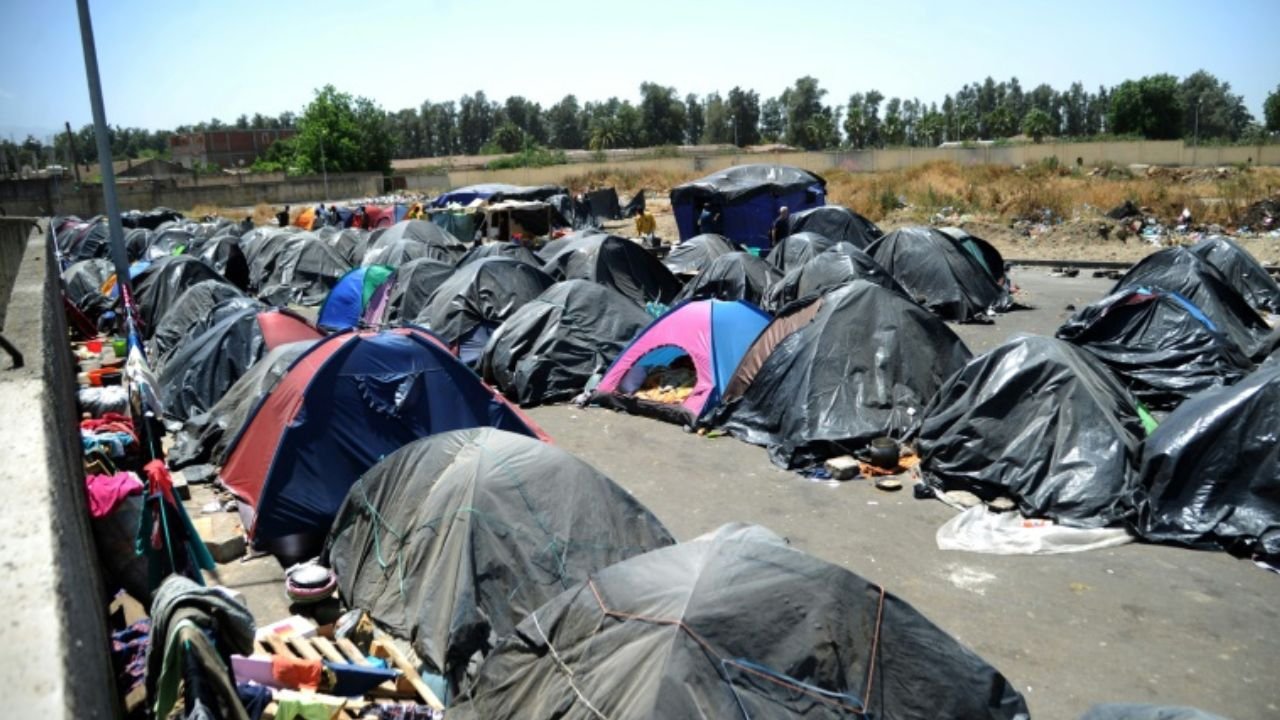
    The European Union admitted on Tuesday to a “difficult situation” after a journalism consortium said Tunisia, Morocco, and Mauritania were dumping migrants in the desert, using the bloc’s funds.

    The wide-ranging investigation by Lighthouse Reports with outlets including Le Monde and The Washin­gton Post paints the EU as complicit in a “system of mass displacement” and serious rights abuses.

    “Europe supports, finances and is directly involved in clandestine operations in North African countries to dump tens of thousands of black people in the desert or remote areas each year to prevent them from coming to the EU,” a report said.

    Such operations, it said, were “run thanks to money, vehicles, equipment, intelligence and security forces provided by the EU and European countries”.

    “This is a difficult situation. It’s a fast-moving situation, and we will continue to work on it,” European Commission spokesman Eric Mamer told reporters when questioned about the investigation.

    The report said refugees and migrants in Morocco, Mauritania and Tunisia were being “apprehended based on the colour of their skin, loaded onto buses and driven to the middle of nowhere, often arid desert areas”, without water or food.

    Others reportedly were taken to border areas where they were allegedly “sold by the authorities to human traffickers and gangs who torture them for ransom”. The 27-nation EU has struck deals with the three named countries with explicit financing to boost stopping irregular migration to Europe.

    Brussels has given 150 million euros ($160 million) to Tunisia under a recent accord, with more promised. It has also allocated 210 million euros to Mauritania and 624 million euros to Morocco under the cooperation agreements.

    Racially motivated practices

    The EU’s efforts to have African countries stem migration flows across the Mediterranean Sea go hand in hand with a newly agreed overhaul of the bloc’s asylum rules. These will make EU borders tighter and speed up the deportation of unsuccessful asylum seekers.

    The Lighthouse Reports said it interviewed more than 50 black migrants — all of them from sub-Saharan Africa and West Africa — who had been expelled from the three North African countries.

    Their testimony, including videos and photos, “helped us to recognise the systematic and racially motivated nature of the practices,” along with the consortium’s own evidence gathering, it said.

    It cited unnamed European officials as denying that EU funds were being used to violate migrants’ rights. But it said two EU sources acknowledged it was “impossible” to fully account for how the funding from Brussels was being used.

    The European Commission — the EU’s executive arm — did not respond explicitly to the report’s allegations. Commission spokeswoman, Ana Pisonero, said: “Sometimes the situation is challenging in our partner countries… (but they) remain sovereign states and they continue to be in control of their national forces.” She said the EU monitored programmes it provided funding for, and noted pledges from partner countries to uphold international law and human rights.

  • Morocco’s earthquake death toll rises above 2,100

    The total number of people who died in Friday’s deadly earthquake in Morocco has risen to 2,122 with the number set to rise further as recovery operations proceed.

    On Friday night, around 11:11 pm local time, a magnitude 6.8 earthquake struck the area around the ancient city of Marrakech, with tremors spreading deep into rural communities on Atlas Mountains.

    The country has announced a three-day mourning period as local and foreign rescuers mount frantic searches for survivors buried beneath rubble.

    The earthquake, originating from the High Atlas Mountains located southwest of Marrakesh, was felt across the country, including in the provinces of Ouarzazate, Marrakesh, Azilal, Chichaoua and Taroudant; travelling all the way to southern Spain.

    As of now, 2,421 people have been injured while the United Nations has estimated that about 300,000 people have been affected.

    Since the catastrophe, locals have been sleeping on the streets in towns and cities. Rural areas have taken a huge blow, while a historically significant 12th century mosque has also collapsed along with parts of Marrakech old city, a UNESCO World Heritage site.

    Al-Jazeera spoke with Lanchen Haddad, a Moroccan senator and former minister, who said that the area was “not known for being active in terms of earthquakes”.

    “There’s not been very many earthquakes in that part of Morocco, most occur in the area much farther north on the Mediterranean coast near the tectonic plate,”

    World offers aid

    The rescue operation in remote mountain areas was mainly undertaken by local teams and no broad demand for international aid had been issued by the capital, Rabat, up till Sunday.

    Many countries have offered aid to Morocco including Spain, Tunisia, Qatar, Italy, Israel.
    Turkey, US and Taiwan have rescue teams and specialist search ready and are ready to dispatch their aid as soon as Morocco send a green signal.

    Its neighbour, Algeria, has a frictional relationship with Morocco, but after the tragedy, it opened its airspace that was closed for two years, to ease the flights carrying humanitarian aid and the injured.

    At the G20 Summit in New Delhi, President Emmanuel Macron said, “France is ready to offer aid to Morocco if Morocco decides it is useful,”

    “The second they request this aid, it will be deployed,” he added.

  • Biryani wins hearts at Morocco

    Biryani is by far the most favorite dish of Pakistanis and now it has made its way to Morocco and they are also in love with this exotic spicy dish and we are not surprised.

    The embassy, in collaboration with Pakistan Morocco Joint Business Council (PMJBC), organized a biryani festival in the capital of Morocco Rabat. The event was aimed at introducing the people of Morocco to Pakistani rice and spices, and also creating a soft image of the country as a tourism destination.

    Hosted by Pakistan’s Ambassador to Morocco, Hamid Asghar Khan, the festival was attended by the business personalities from both countries. Chairman PMJBC and the Honorary Consul General of Morocco, Ishtiaq Baig, led a delegation of 25 top businessmen from Karachi. Among the other guests were the vice-chairman of the Moroccan Parliament, members of the National Assembly, rice buyers, and restaurant/hotel operators.

    Pakistani chef Gulzar Hussain along with his team went to attend the event. He served four different types of Biryanis – prawn biryani, mutton biryani, vegetable biryani, and chicken biryani. The festival was the first event held under the plan of Engage Africa Policy. Prime Minister Imran Khan had announced the policy last week.

    Speaking on the occasion, Ambassador Khan highlighted that the event was organized to facilitate the private sector and drive active engagement for the trade policy.