Tag: Mosquito

  • Novel bacteria strain holds potential to curtail malaria transmission

    Novel bacteria strain holds potential to curtail malaria transmission

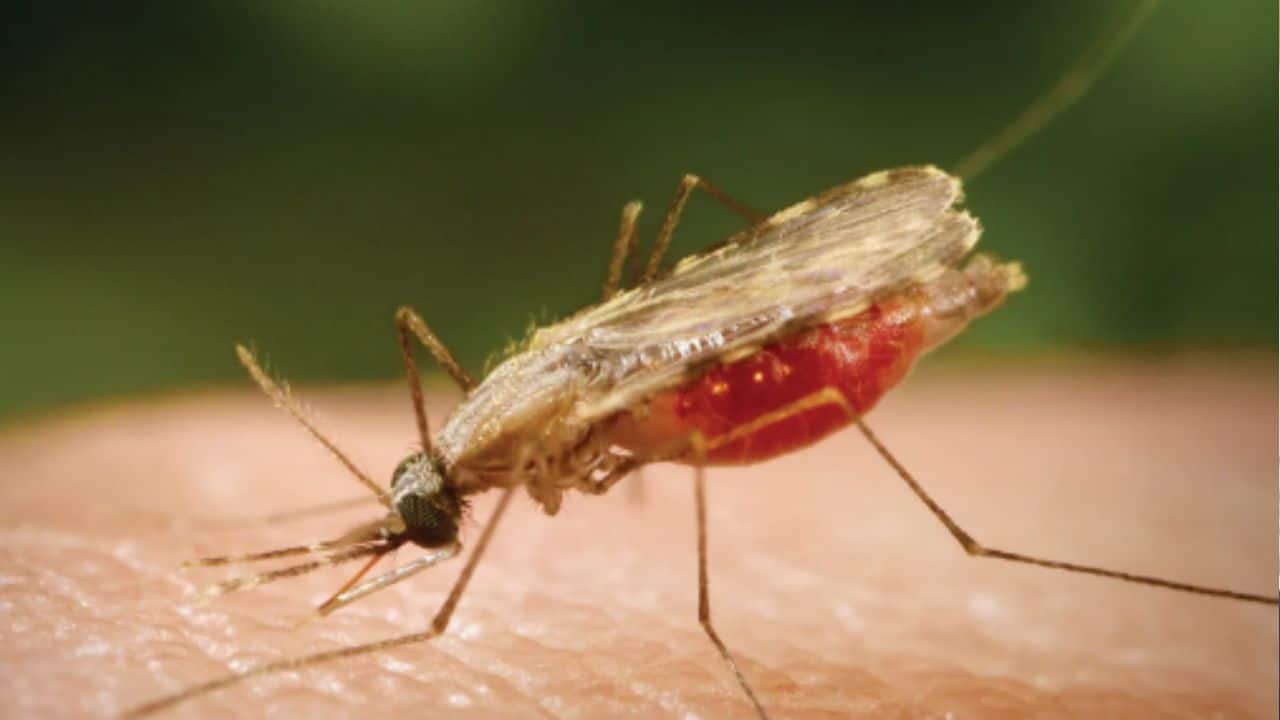
    In a promising stride against one of the world’s most deadly diseases, scientists have accidentally discovered a naturally occurring bacterium, TC1, that could impede the transmission of malaria from mosquitoes to humans, according to BBC.

    The groundbreaking finding came to light at a research facility in Spain, supervised by pharmaceutical giant GlaxoSmithKline (GSK). The researchers stumbled upon the phenomenon while conducting experiments on mosquitoes related to drug development.

    The team noticed an unexpected result: a group of mosquitoes remained free from malaria parasites. Further analysis led to the identification of a bacteria strain, TC1, existing in the natural environment, which seemed to halt the growth of malaria parasites inside the mosquito’s gut.

    The bacterium proved to be resilient, persisting throughout the mosquito’s lifespan and notably reducing its parasite load by up to 73%.
    This unexpected helper produces a molecule known as Harmane, which hinders the early development stages of the malaria parasite within the mosquito.

    Malaria continues to devastate populations globally, claiming around 620,000 lives each year, primarily among children under the age of five. While vaccines are in progress, their implementation in Africa remains in the nascent stages.
  • WHO approves world’s first Malaria vaccine

    The World Health Organization (WHO) has endorsed the widespread rollout of the first malaria vaccine with the experts hoping that it could save tens of thousands of children’s lives each year across Africa.

    Hailing it as “an historic day”, WHO Director-General Dr Tedros Adhanom Ghebreyesus said that after a successful pilot programme in three African countries, the RTS,S vaccine should be made available more widely.

    The WHO recommendation is for RTS,S – or Mosquirix – a vaccine developed by British drugmaker GlaxoSmithKline.

    “This is a vaccine developed in Africa by African scientists and we’re very proud,” said Ghebreyesus.

    According to European Medicines Agency, Mosquirix is a vaccine that can be administered to children aged 6 weeks to 17 months to help protect against malaria.

     It also helps protect against infection of the liver with the hepatitis B virus, but European Medicines Agency warns that the vaccine should not be used only for this purpose.

    The vaccine was developed by GlaxoSmithKline in 1987. However, it does face challenges: Mosquirix requires up to four doses, and its protection fades after several months.

    Still, scientists hope that the vaccine could have a major impact against malaria in Africa.

    Since 2019, 2.3 million doses of Mosquirix have been administered to infants in Ghana, Kenya and Malawi in a large-scale pilot programme coordinated by WHO.

  • Singapore sets a mosquito factory to curb dengue cases

    Singapore sets a mosquito factory to curb dengue cases

    Every year dengue fever comes and makes us all worried even though the government is trying to control the deadly virus with initiative like fumigation, surveys to check larvae, public awareness campaigns on television and radio etc. However, the mosquito-borne disease is far from being under control.

    But what Singapore has done to fight against dengue is surprising as well as interesting.

    Instead of killing mosquitoes, Singapore has set up mosquito factories which produces a new type of mosquito. What happens is when this ‘new kind’ of mosquito goes out and ‘falls in love’ with other mosquitoes, the outside world mosquito will no longer be able to reproduce which means that the mosquito population decreases.

    And what’s even more interesting is that this new mosquito does not bite.

    https://www.youtube.com/watch?v=PJfBmHgSxBA