Tag: motorway

  • Baku’s sweet deal might drive Pakistan’s sugar industry to new heights

    Baku’s sweet deal might drive Pakistan’s sugar industry to new heights

    Businesses look towards Baku, as Azerbaijan remains poised to invest in Pakistani motorways, despite the Eurasian country’s economy being 130 per cent smaller than Pakistan’s economy in terms of GDP in a move to strengthen bilateral relations via investments.


    As it stands, Baku is planning to invest in motorways M6 (Sukkur-Hyderabad) and M9 (Hyderabad-Karachi). It is interesting to note, though, that two years ago, Deputy Commissioner Tashfeen Alam of Naushahro Froze fled Pakistan to Azerbaijan after potentially embezzling two billion rupees from the budget that was allocated to the Sukkur-Hyderabad motorway: The same one Baku wants to invest in.


    Regardless of the embezzlement scandal and the officer’s subsequent escape to Azerbaijan, Baku’s plan to invest in Pakistan’s motorway construction will spell great news for businesses. This is due to the fact that the construction of motorways will significantly improve connectivity, helping obscure markets emerge and get connected to the wider Pakistani market.


    The beneficiaries will be those enterprising locals who will start up businesses once they obtain road access. This is possible as obtaining road access will enable them to capture the increase in traffic that will start to flow through their area. Rest stops and fuel stations are expected to be set up along the length of the motorway.


    The construction of the motorway will also cut travel times down and allow for a greater volume of goods to pass from Sukkur to Karachi. This is expected to facilitate the growth of sugar production and exports greatly.


    As per the Sugarcane Policy Analysis for 2023-24 by the Agricultural Policy Institute, Sukkur produces 406.11 thousand tons of Sugar annually, while Hyderabad has an abundance of sugar mills. Connecting these two cities via M6 will allow for a greater volume of sugar to be processed.


    It is possible that sugarcane farmers in Sukkur decide to make an attempt to improve their yields as they know they can access Hyderabad’s mills with ease. As for millers in Hyderabad, they will secure a fresh supply of unprocessed sugar to work on.


    The second leg of the journey will be the transport of processed sugar, via M9, to the port city of Karachi, where this sugar could get packaged and exported. If exports are boosted, Pakistan could see the export figure for sugar value to sit around half a billion dollars.


    Aside from the sugar industry, Baku’s willingness to invest in the motorways is a win for Islamabad. This is because the increase in Foreign Direct Investment (FDI) levels will positively signal to other countries that Pakistan is an optimal destination for foreign investments.


    If the meeting between the Pakistani delegation and Azerbaijan goes through, those involved in the sugar industry will respond positively to this sweet deal.

  • National Highway Authority increases toll tax

    The National Highway Authority (NHA) has issued a notification on increase in toll tax.

    According to the notification, toll tax for cars has been increased from Rs 30 to Rs 40, for wagons from Rs 50 to Rs 70, and for buses from Rs 100 to Rs 130.

    The toll tax for articulated trucks has been increased from Rs 250 to Rs 350, an increase of Rs 100.

    The toll tax on the Lahore to Abdul Hakeem Motorway (M3) has been increased to Rs 500 for cars, Rs 750 for wagons, and Rs 2,500 for trucks.

    On the Faisalabad to Multan Motorway (M4), the toll tax for cars has been increased to Rs 650, for wagons to Rs 1,000, and for trucks to Rs 3,200.

    The toll tax on the M5 motorway has been fixed at Rs 900 for cars, Rs 1,300 for wagons, and Rs 4,500 for trucks.

  • ‘Zia-ul-Haq ko Sadar Nahi Maanta’: Chief Justice of Pakistan

    ‘Zia-ul-Haq ko Sadar Nahi Maanta’: Chief Justice of Pakistan

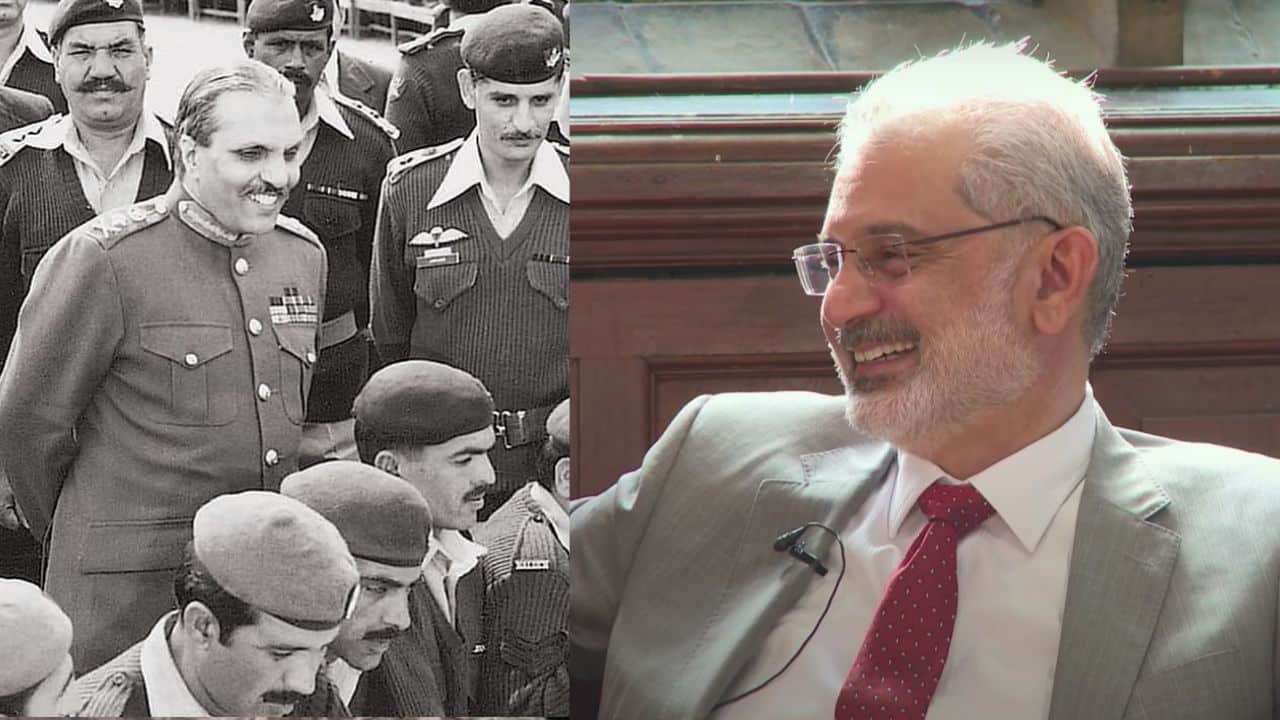
    Chief Justice of Pakistan, Justice Qazi Faez Isa gave an unexpected but strongly worded statement during the hearing of the Faizabad sit-in case, stating that he doesn’t recognize the late military dictator General Zia-ul-Haq as president, as per Neo News.

    During the hearing of the Faizabad sit-in case, Justice Faiz Isa, addressing Ijaz-ul-Haq’s lawyer, said that he does not consider Zia-ul-Haq the President of Pakistan.

    When the Attorney General revealed that Ijaz-ul-Haq’s lawyer had been asked to provide a written reply with an affidavit to withdraw the statement, the lawyer of countered the Attorney General’s statement, denying that he had been asked to retract the statement.

    Ijaz-ul-Haq’s lawyer informed the court that his client had merely stated that his name should be removed from the verdict, to which Chief Justice Justice Faiz Isa remarked that Ijaz-ul-Haq’s name was only mentioned in the report by intelligence agencies, and it was not included in the verdict.

    During the same conversation, when Chief Justice Justice Faiz Isa mentioned that Ijaz-ul-Haq is the son of former army chief Zia-ul-Haq, his lawyer replied that his father was also the President of Pakistan. In response, the Chief Justice stated, “I do not consider Zia-ul-Haq the President of Pakistan. No one can become the President by the force of arms. Do not call Zia the President again in this court.”

    The lawyer of Ijaz-ul-Haq, the son of former military ruler Zia-ul-Haq, asserted that it is documented in the constitution that Zia-ul-Haq was the president. Chief Justice Justice Faiz Isa responded by remarking that Zia-ul-Haq had written in the constitution that he was the president for five years.

    Earlier today, the Supreme Court of Pakistan issued summons for the chairman of the Pakistan Electronic Media Regulatory Authority (PEMRA) following allegations of “media coercion” during the 2017 Faizabad sit-in.

    The summon was initiated by a three-member bench of the apex court, led by Chief Justice of Pakistan (CJP) Qazi Faez Isa, and including Justice Aminuddin Khan, and Justice Athar Minallah.

    The hearing, part of a series of nine review petitions against the Supreme Court’s February 6, 2019 verdict on the Faizabad sit-in case, was marked by significant developments.

    Authored by Justice Isa years before he took oath as the chief justice of Pakistan (CJP), the searing judgement had instructed the defence ministry and the tri-services chiefs to penalise personnel under their command who were found to have violated their oath.

  • Faizabad sit-in: What is happening in court?

    The Supreme Court of Pakistan has issued summons for the chairman of the Pakistan Electronic Media Regulatory Authority (PEMRA) following allegations of “media coercion” during the 2017 Faizabad sit-in.

    The summon was initiated by a three-member bench of the apex court, led by Chief Justice of Pakistan (CJP) Qazi Faez Isa, and including Justice Aminuddin Khan, and Justice Athar Minallah.

    The hearing, part of a series of nine review petitions against the Supreme Court’s February 6, 2019 verdict on the Faizabad sit-in case, was marked by significant developments.

    Authored by Justice Isa years before he took oath as the chief justice of Pakistan (CJP), the searing judgement had instructed the defence ministry and the tri-services chiefs to penalise personnel under their command who were found to have violated their oath.

    Notably, the court addressed the allegations made by Justice Isa in a prior judgment, emphasizing the importance of upholding the Constitution and the rule of law.

    Former PEMRA chairman, Absar Alam, alleged that the then-Director General of Inter-Services Intelligence (ISI), General Faiz Hamid, and his subordinates exerted undue influence on media policies.

    In his written reply, Alam said, PEMRA officials were under pressure from “serving officers”, adding that he himself “received calls” from the then DG(C) Major General (retd) Hamid and or his subordinates complaining that their requests were not acceded to by him.

    “The Applicant-in-Person had been asked to: i) to take action against Najam Sethi a prominent senior journalist; and ii) to completely blackout Hussain Haqqani from TV Channels, however, both illegal/unlawful demands remained unmet,” read the affidavit, seen by Geo News.

    According to the ex-Pemra chairman, Gen (retd) Hamid and or his subordinates “controlled TV Channel policy through illegal/unlawful means by changing their numbers and moving them at the tail end, when they refused to follow instructions”.

    He further said that the situation became “untenable” in April 2017, adding that he addressed the matter in writing to then-prime minister Nawaz Sharif, then-chief justice Mian Saqib Nisar and then-Chief of Army Staff General (retd) Qamar Bajwa, to inform that due to grave threats by unknown persons to Pemra officials for not following instructions fear had paralysed the latter.

    Chief Justice Isa, expressing concern over the government’s handling of the matter, noted that the investigation committee formed by the government was inadequate.

    The fact-finding committee was constituted by the government, on Friday, to investigate the “role and directions” of all “concerned” officials in the management and handling of the sit-in in 2017.

    During the hearing today, Chief Justice Qazi Faez Isa said the apex court wanted to know who was behind the Faizabad sit-in.

    “We want to know who was the mastermind of the Faizabad sit-in,” he remarked, expressing annoyance over the decision not being implemented since its issuance on February 6, 2019.

    “Our job is to order, and your job is to implement,” he stressed, underlining the need for a comprehensive and transparent inquiry.

    In response to these developments, the Supreme Court rejected the government’s fact-finding committee, urging the Attorney-General for Pakistan, Mansoor Usman Awan, to swiftly form a new inquiry commission to ensure the implementation of the court’s verdict on the Faizabad sit-in case.

    The Faizabad sit-in, which occurred in 2017, disrupted daily life in Islamabad for 20 days, resulting in six casualties and numerous injuries.

    The sit-in was organized by the Tehreek-e-Labbaik Pakistan (TLP) to protest alleged modifications to the Khatm-i-Nabuwwat oath during the passage of the Elections Act 2017, later rectified by an act of Parliament.

  • 1124: The helpline you should know about for assistance during emergencies, accidents

    1124: The helpline you should know about for assistance during emergencies, accidents

    Bringing attention to a little-known emergency lifeline, popular TikToker Jannat Mirza and her father, a police officer, have teamed up to spread awareness about the significance of dialling 1124 during accidents—an alternative to the widely recognised 1122 emergency number.

    Jannat Mirza, celebrated for her engaging content and impactful messages on social media, is stepping up her influence to highlight the importance of the 1124 emergency helpline. In a recent video, she shared her personal experiment evaluating the responsiveness of the 1124 service.

    “I put the 1124 helpline to the test,” Jannat Mirza revealed to her followers. “I was genuinely surprised by the quick response I received.” She recounted a simulation where she mimicked an accident scenario and dialled 1124. Almost instantly, a responsive team was dispatched and promptly arrived at the specified location.

    Emphasising the critical role of the 1124 helpline, Jannat Mirza’s father, an experienced police officer, stated, “While many are familiar with 1122, being aware of 1124 is equally crucial. The goal is to offer timely assistance, and this helpline allows us to do precisely that.”

    The collaborative video by Jannat Mirza and her father aims to bridge the information gap surrounding emergency services.

    Given that accidents can occur unexpectedly, knowing the appropriate channels to seek help is imperative. Jannat Mirza’s firsthand encounter and her father’s professional insights collectively underscore the efficiency of the 1124 emergency helpline. By sharing their experience, they aspire to motivate individuals across Pakistan to familiarise themselves with this vital service, potentially safeguarding lives.

    About 1124 service

    In 2007, a centralised 24/7 call centre helpline, 1124, was established to receive calls from citizens all across Punjab. These incoming calls trigger a rapid response mechanism from Punjab Highway Patrol (PHP) posts, and, in areas without PHP presence, Punjab Police is dispatched to assist the individual in need. This comprehensive service encompasses immediate assistance in cases of vehicle breakdowns, other emergencies, crimes against oneself or reported by a third party, traffic regulation and management concerns, accident response, and facilitating rescue and evacuation to nearby medical facilities.

    Moreover, this helpline serves as a vital platform for registering inputs in various domains and subsequently relaying the data to relevant authorities. One notable application is reporting fire hazards within residential areas. The call centre incorporates advanced features, including call recording, routing, interactive voice response (IVR), and other cutting-edge functionalities, to efficiently manage calls from citizens throughout Punjab. Importantly, this helpline can be dialled without the need for an area code, streamlining access to timely assistance.

  • Export-quality rice production at risk: Rising theft incidents targeting water pumps, transformers

    Export-quality rice production at risk: Rising theft incidents targeting water pumps, transformers

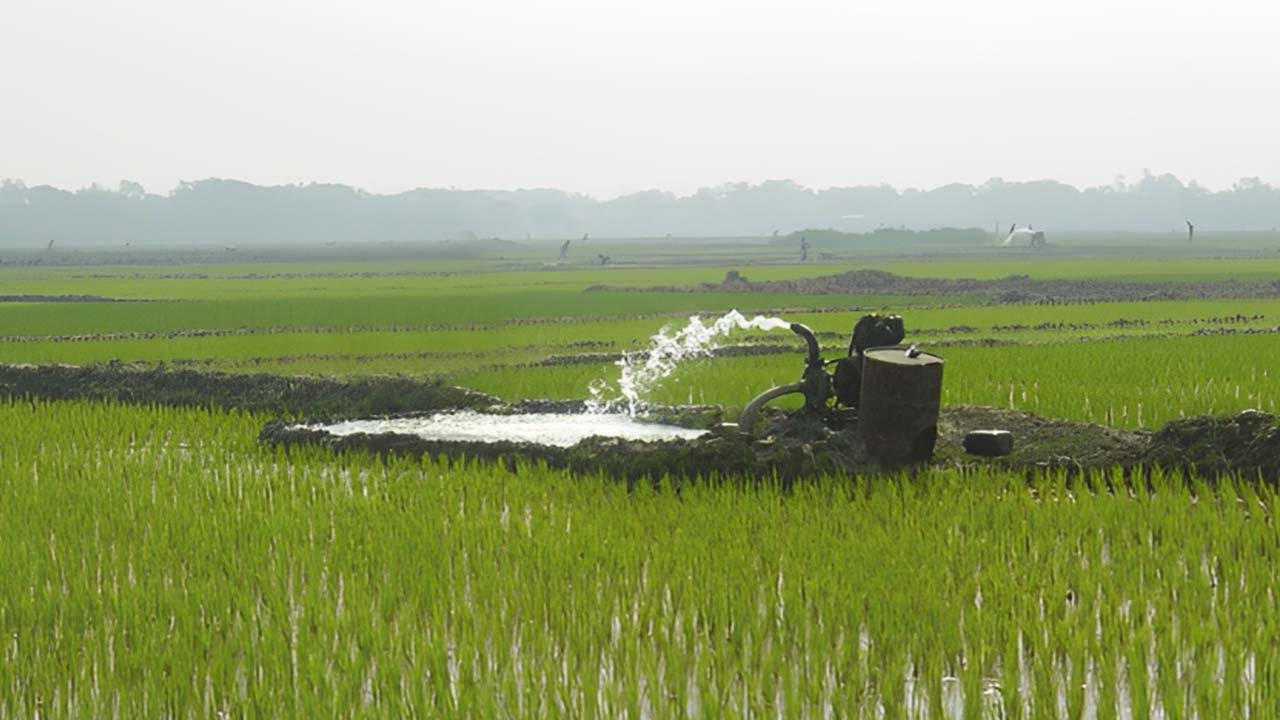
    Pakistan is currently facing a major threat to its export-quality rice production as a result of extensive theft of high-voltage electric wires, transformers, and water pumps. This theft has left vast stretches of rice-producing land along the Lahore to Sheikhupura Motorway without access to tube-well water, precisely during the critical rice sowing season.

    This alarming situation, which has been verified by both farmers and officials from the Water and Power Development Authority (Wapda), demands immediate attention.

    According to The News, the area most severely affected is near village Warran on the Motorway, where farmers are grappling with the challenges of rewiring their tube-wells and procuring replacements for the stolen equipment required for rice cultivation. The thefts of agricultural-related electrical hardware have been escalating precisely when water is in desperate demand for the rice crops.

    Although the rice-growing season began two weeks ago, many farmers are unable to sow their crops due to the thefts, which have deprived them of crucial equipment necessary for water extraction. Agricultural experts caution that any further delays in rewiring tube-wells and replacing stolen equipment could have severe repercussions for this year’s rice production.

    Regrettably, the motorway police’s lack of cooperation, attributed to resource constraints, has further complicated matters. Despite filing First Information Reports (FIRs) for each incident, no thieves have been apprehended thus far. Some Wapda officials suspect that the stolen wires and accessories are being sold at discounted prices to factories for various manufacturing purposes. Additionally, there are allegations that local politicians may be protecting the thieves, impeding the police’s efforts to apprehend them. These circumstances intensify the urgency surrounding this issue.

    Pakistan’s export-quality rice production is currently under a significant threat due to widespread theft of essential electrical equipment. The unavailability of water for irrigation poses a grave challenge to the entire rice crop, placing immense pressure on farmers. Swift action is imperative to address this issue and prevent further harm to the agricultural sector.

  • Daska motorway rape case: Woman takes back statement, says she was not raped

    A case was registered against a National Highways and Motorway Police (NH&MP) police inspector at the Daska Saddar police station for allegedly raping a woman. However, the woman has now taken back her complaint saying that she was not raped.

    The First Information rape (FIR) stated that the woman who belonged to Lahore, went to Daska for personal work.

    The woman had earlier said in the FIR that she was waiting for a rickshaw when a motorway vehicle came to her and offered to drop her to her destination.

    The woman claimed that the inspector, who is named in the FIR, sent other police officers away and then raped her.
    The woman in a statement before the magistrate has now withdrawn her accusation of rape.

  • Islamabad police announces traffic diversion plan ahead of PTI long march

    Islamabad police announces traffic diversion plan ahead of PTI long march

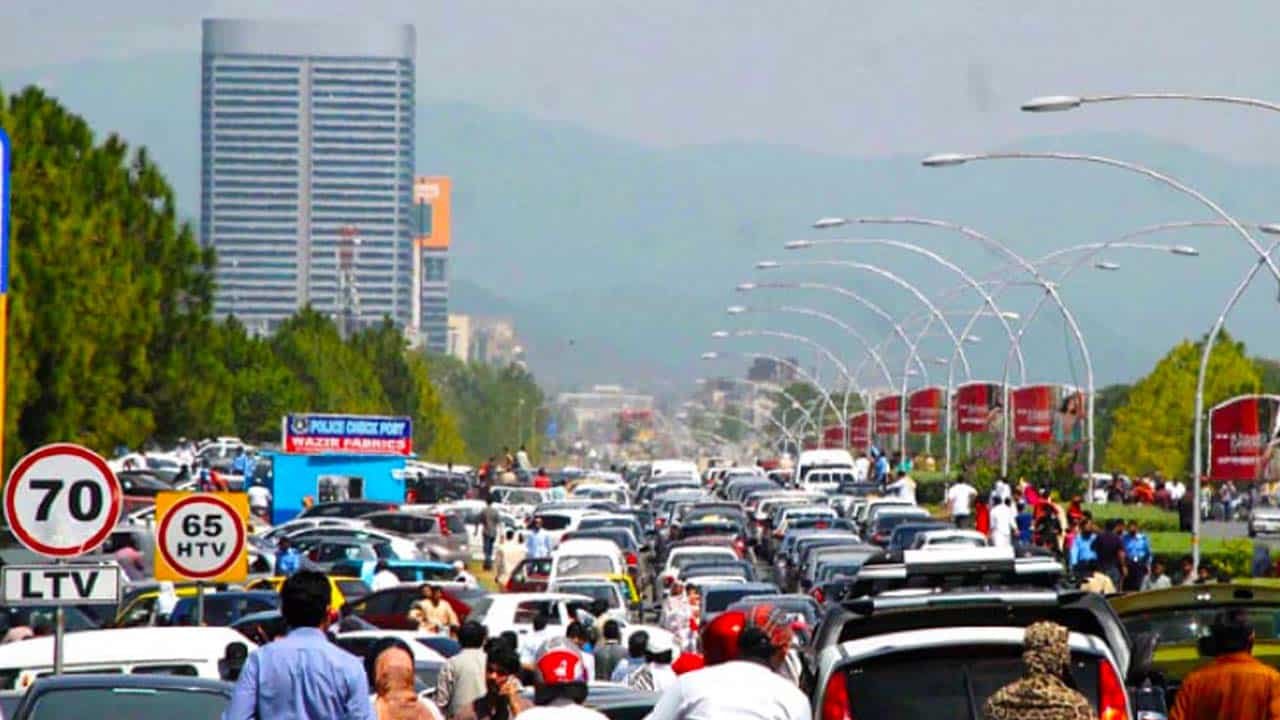
    The Islamabad Capital Territory (ICT) Police released an alternative traffic plan on Friday ahead of the Pakistan Tehreek-e-Insaf (PTI) long march in Rawalpindi on Saturday.

    The traffic on both sides of Murree Road has been diverted at Faizabad, according to ICT police.

    Therefore, it is possible to access Rawalpindi from Islamabad through the old airport road and stadium road.

    In addition, both Express Chowk and NADRA Chowk are entirely blocked off from accessing the Red Zone. As an alternative route, Margalla Road, Ayub Chowk, and Serena Chowk can be used.

    Islamabad’s other routes are all accessible to traffic.

    Residents are urged to dial the helpline number 15 in case of any emergency.

    Every kind of public gathering in the federal capital, including those in and near the Red Zone, is now subject to Section 144. However, the permit to hold the rally is only given if the proposed routes are followed.

  • Pakistani speed cameras: How do they work?

    Pakistani speed cameras: How do they work?

    Rough driving and overspeeding are major causes of fatalities and serious accidents on the road. According to the Pakistan Bureau of Statistics (PBS), 12,894 vehicles were involved in roughly 9,701 traffic incidents between 2019 and 2020.

    About 12,317 individuals were injured in these accidents, while 5,436 people lost their lives.

    Speed cameras are frequently installed in locations known for having frequent accidents as a means of minimising speed-related injuries and fatalities.

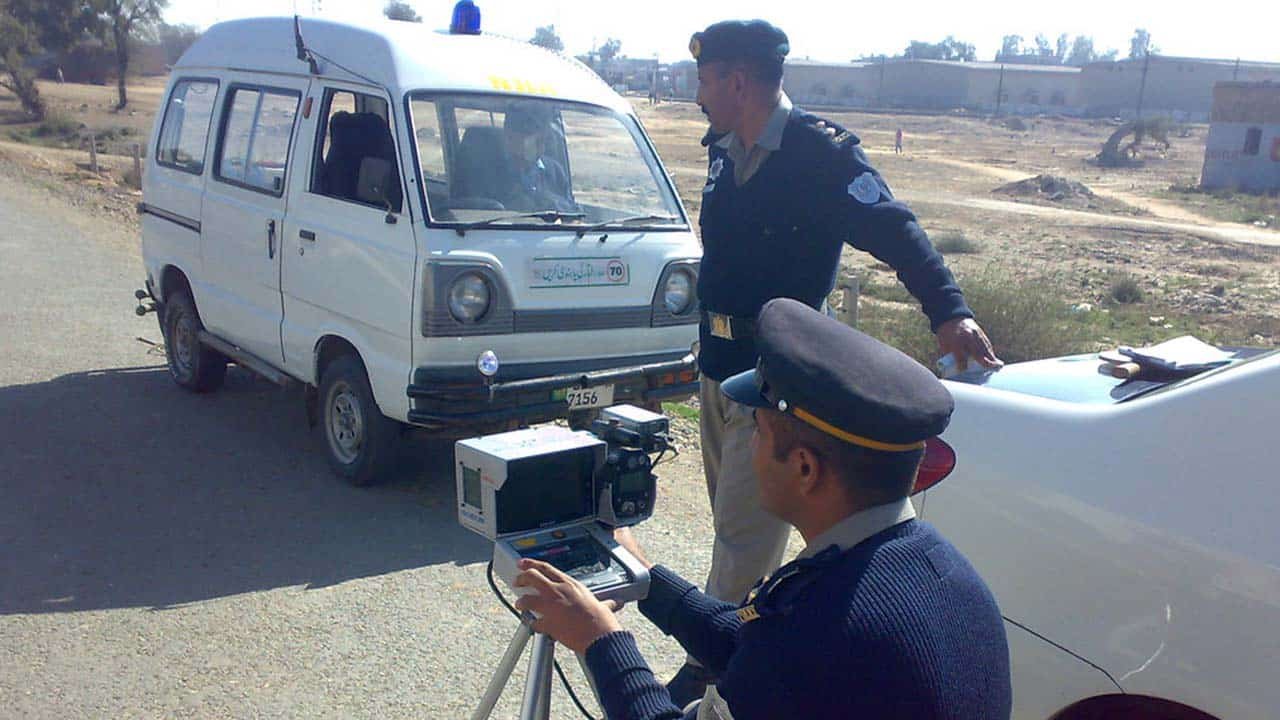
    Drivers can be caught in perfect detail up to one kilometre away using the speed camera technology of today.

    However, most of cameras employ road markings to calculate your speed and track the distance travelled over time. The average speed over a range of 75 metres to 20 kilometres can be determined by SPECS average speed cameras. They appear one after the other on highways spaced at least 200 metres apart.

    Long Rangers are high-tech cameras that can record images and videos of vehicles up to one kilometre distant.

    We all think that anyone exceeding the 120 km/h set speed limit for cars or light transport vehicles (LTV) on the highway will be issued an overspeeding challan. Motorway police won’t stop you if you are travelling at speeds of 120 to 130 km/h, or sometimes 131 km/h. However, if you are inside the range of a speed camera, you will be pulled over for overspeeding as soon as you reach 132 km/h.

    Motorway speed guns can measure speed from a distance of 95 to 100 feet. But don’t assume you can dodge them just because you caught a distant view of the speed gun. Your speed is already on record. This reality is mostly due to the fact that speed traps are frequently placed on highways near sharp curves, leaving you with little time to take evasive action.

    Near Teriyaki, Chakkri, and Salt Range are the three locations with the most speed cameras. The bulk of citations are given in the salt range for exceeding the 50 km/h speed limit.

  • ANF seizes 52.6 kg drugs near Islamabad motorway toll plaza

    ANF seizes 52.6 kg drugs near Islamabad motorway toll plaza

    During an operation on Wednesday, the Anti-Narcotics Force (ANF) was able to seize over 52.66 kg of drugs and detain three suspects.

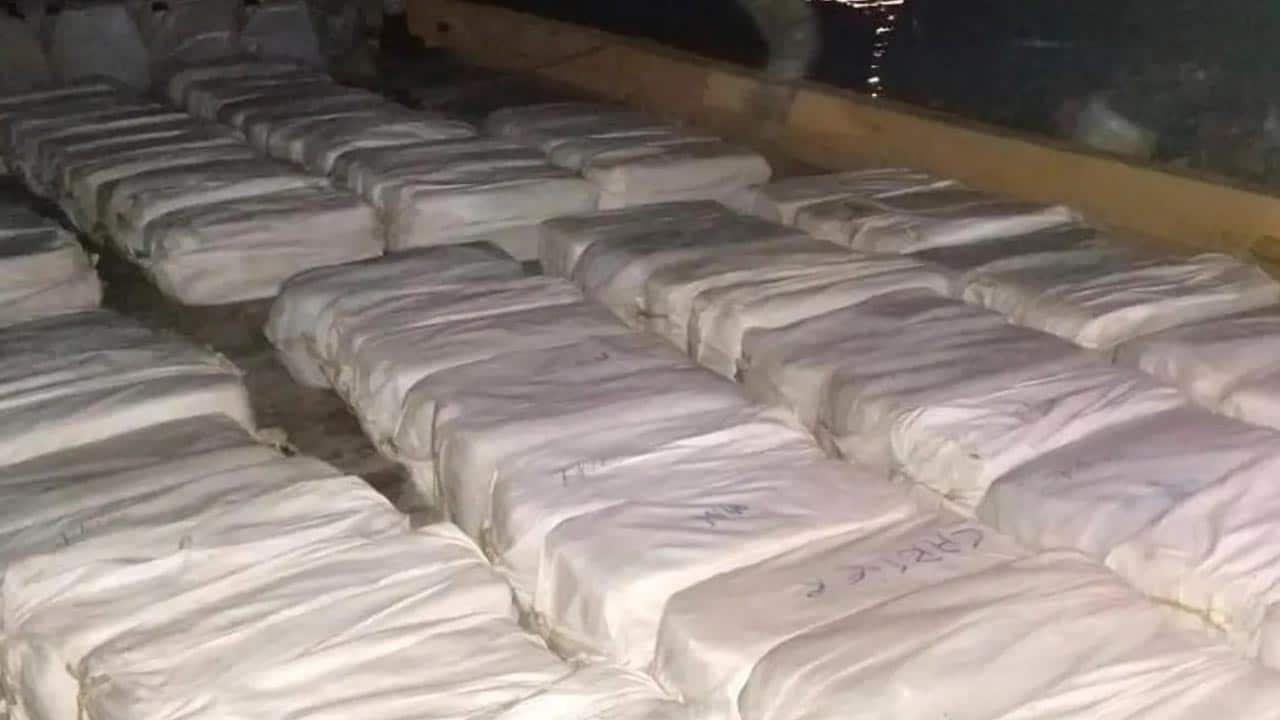
    An ANF headquarters spokesman said that during an operation near the Islamabad Motorway toll plaza, ANF recovered more than 52.60 kg of drugs, including 45.60 kg of charas, 4.10 kg of heroin, and 3.60 kg of opium that were hidden in two cars’ hidden compartments. The operation saw the arrest of three further suspects by ANF.

    According to details, a case has been filed against the drug traffickers and the accused’s accomplices would also face prison time.

    In a similar raid, ANF detained two individuals and seized more than a tonne of drugs at the start of this month.

    After receiving a tip, the ANF conducted a raid in the Islamabad area, capturing nearly one tonne of drugs, including 28.8 kg of heroin, along with two members of an inter-provincial drug smuggling ring, according to a spokesman for the ANF headquarters.

    The ANF has been active in carrying out raids in various cities, making it practically hard for traffickers and smugglers to move drugs within the country or across the border.