Tag: Muslim

  • Provinces intensify security protocols ahead of Muharram

    With Muharram approaching, security concerns loom large, exacerbated by recent terrorist activities across the country. Provincial governments have formulated plans to ensure peace.

    Punjab

    The Punjab Home Department has issued security guidelines that enforce Section 144 throughout the province. 502 locations have been identified as sensitive, with deployment of army and Rangers personnel at these sites.

    10,426 Muharram processions are scheduled across the province.

    The Punjab Interior Department has stipulated that processions and gatherings are permitted only along designated routes and locations.

    According to Punjab’s Interior Secretary, Noorul Amin Mengal, peace committees in each district are tasked with implementing all SOPs and monitoring assemblies and processions.

    Hate speech on social media is also strictly prohibited, and serious actions will be taken against violators; whereas unauthorized use of loudspeakers is also prohibited by law.

    Sindh

    The Sindh Home Department has also announced a province-wide curfew for the duration of Muharram.

    Starting from the first to the tenth of Muharram, a ban on motorcycle double riding has been imposed.

    Additionally, the display of weapons and the operation of drones are strictly prohibited.

  • ‘People were standing outside just to welcome me’; Aamir Khan on Punjab’s hospitality during Dangal shoot

    ‘People were standing outside just to welcome me’; Aamir Khan on Punjab’s hospitality during Dangal shoot

    Bollywood’s perfectionist Aamir Khan is grateful for the hospitality of the people of Indian Punjab while he was shooting ‘Dangal’ in 2016. Aamir Khan attended the Great Indian Couple Show where he said that during his stay in a Punjab village, he was touched by the locals’ simple yet profound gestures of respect.

    Aamir Khan said, “When I went to Punjab for the shooting of ‘Rang De Basanti,’ I was overwhelmed by the immense love and warmth received from the locals.”

    The Bollywood actor said that during the shooting of ‘Dangal,’ they were in a small village in Punjab. “I observed that in the mornings, people would stand outside their homes and greet the team with folded hands, while in the evenings, they would bid farewell with kind words.”

    He said, “The people there never bothered me nor did they stand in front of my car, they just greeted from a distance, and this had a great impact on me.”

    Aamir khan said, “I belong to a Muslim family, so I was not folding hands and saying Namaste. I am used to raising my hand and bowing my head, the way Muslims greet each other.”

  • Calls for mosque demolition weigh on India’s Muslim voters

    Calls for mosque demolition weigh on India’s Muslim voters

    Muslim teacher Tasleem Qureshi’s walk to the polls on Friday took her past the yellow barricades and police cordon guarding her local mosque — a looming flashpoint in India’s religious divide.

    Her hometown Mathura is the site of the Shahi Idgah, an Islamic house of worship that the Hindu faithful believe was built over the birthplace of the deity Krishna.

    Hindu activists want to “reclaim” the site in a campaign endorsed by members of Prime Minister Narendra Modi’s ruling Bharatiya Janata Party (BJP).

    “The BJP keeps saying that the Shahi Idgah will cease to exist after the elections,” Qureshi, 48, told AFP.

    “We will not let that happen and we will protect it with our lives,” she said.

    Modi is widely expected to win a third term in office once India’s six-week-long election concludes in June, in large part thanks to his championing of the country’s majority faith.

    Mathura is one of several locations across India’s northern heartlands where activists have sought to replace centuries-old Islamic monuments with Hindu temples.

    In January, Modi presided over the inauguration of a grand temple to Ram, one of the most important deities in the Hindu pantheon.

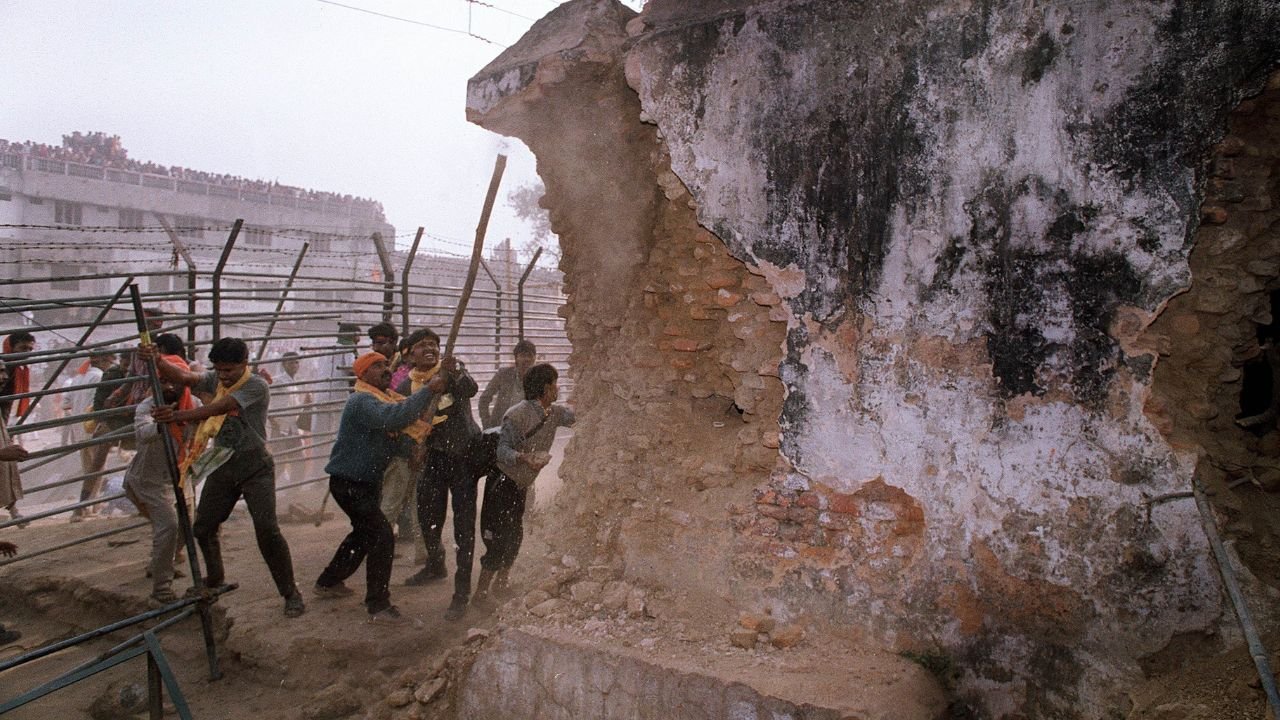
    It was built in the northern city of Ayodhya on the grounds of a centuries-old mosque razed by Hindu zealots decades earlier.

    Modi told an audience of thousands at a glitzy ceremony attended by Bollywood celebrities and cricket stars that India was “creating the genesis of a new history”.

    Construction of the temple fulfilled a long-standing demand of Hindu activists and was widely celebrated across India, with extensive television coverage and street parties.

    Jubilant Hindu activists had proclaimed when the mosque was destroyed that more would follow, identifying the Shahi Idgah in Mathura as one of their future targets.

    Modi’s opponents accuse his Hindu-nationalist government of marginalising India’s 220-million-plus Muslim population.

    He was accused last weekend of “blatantly targeting” the faith in a campaign speech in which he claimed his opponents had once pledged that Muslims had “first right over the nation’s wealth”.

    Temples small and large line Mathura’s narrow, pot-holed streets, teeming with young men offering guided tours for pilgrims.

    The street leading to the mosque has for decades been guarded by a stern, round-the-clock police detachment to prevent vandalism.

    A polling station nearby is testament to the close quarters in which the city’s two main faiths live, with women in Muslim dress voting alongside saffron-clad Hindu priests.

    But with Hindus accounting for more than 80 percent of Mathura’s population, its religious divide is a microcosm of the one across India at large.

    Its parliamentary seat has been held by the BJP since Modi was first elected in 2014, represented by movie star Hema Malini, and the Ayodhya temple’s inauguration has galvanised Hindu voters in the city who support the mosque’s removal.

    Gokul Prasad, an electrician, told AFP that Modi’s inauguration of the Ayodhya temple was the “single most important issue” of the election campaign.

    “Since we live in Mathura so close to the Shahi Idgah, we will obviously vote for Modi,” the 50-year-old said.

    The fate of the Shahi Idgah has also mobilised the city’s Muslim minority.

    But several told AFP that they had lined up to vote on Friday only to find their names were missing on the electoral rolls.

    “They told me neither I nor my husband can vote as our names are not there,” said 55-year-old Rehana Qureshi — no relation to Tasleem — outside a polling booth.

    “We have lived and voted here for generations,” she added. “It seems that the only right we Muslims still have is also being taken away.”

  • Canadian sentenced to life in prison for ‘terrorist’ murders of Muslim family

    Canadian sentenced to life in prison for ‘terrorist’ murders of Muslim family

    A white supremacist committed terrorism when he ran down a Muslim family out for an evening stroll, a Canadian judge said Thursday as she sentenced him to life in prison for the murders.

    The ruling is the first in Canada to make a link between white supremacy and terrorism in a murder case.

    Nathaniel Veltman, 23, was convicted in November of four counts of first degree or premeditated murder, and one count of attempted murder in the killing of three generations of the Afzaal family that also left a young boy orphaned.

    He acknowledged striking the family with his pickup truck in June 2021 in London, Ontario.

    The prosecution argued at trial that he sought to intimidate and terrorize Muslims, while the defense said he’d suffered a mental decline — which did not, however, meet the requirements for an insanity plea.

    His lawyers also said he was in “a state of extreme confusion” after consuming hallucinogenic psilocybin mushrooms that weekend.

    Judge Renee Pomerance of the Ontario Superior Court of Justice at his sentencing said Veltman “had planned a murderous rampage for months and took steps to ensure that he would kill as many Muslims in this brutal manner as he could.”

    Recalling Veltman’s statements to police, she said: “He wanted to intimidate the Muslim community. He wanted to follow in the footsteps of other mass killers, and he wanted to inspire others to commit murderous acts.”

    “I find that the offender’s actions constitute terrorist activity,” she concluded.

    The jury in the almost 10-week trial heard Veltman had penned a “terrorist manifesto,” found on his computer, in which he espoused white nationalism and described his hate for Muslims.

    The judge noted that he wore “combat gear” including a helmet and bulletproof vest during the attack.

    Veltman passed the Afzaal family on a London street on that warm Sunday evening, turned his newly purchased truck with a heavy grill guard around, jumped the curb and slammed into them.

    Salman Afzaal, 46, his wife Madiha Salman, 44, their 15-year-old daughter Yumnah and her grandmother Talat Afzaal, 74, were killed. A nine-year-old boy orphaned in the ramming suffered serious but non-life-threatening injuries.

    The slaying was the deadliest anti-Muslim attack in Canada since a shooting at a mosque in Quebec City in 2017 that left six dead. The perpetrator of that shooting was not accused of terrorism.

  • Indian court allows Hindus to pray inside disputed mosque

    Indian court allows Hindus to pray inside disputed mosque

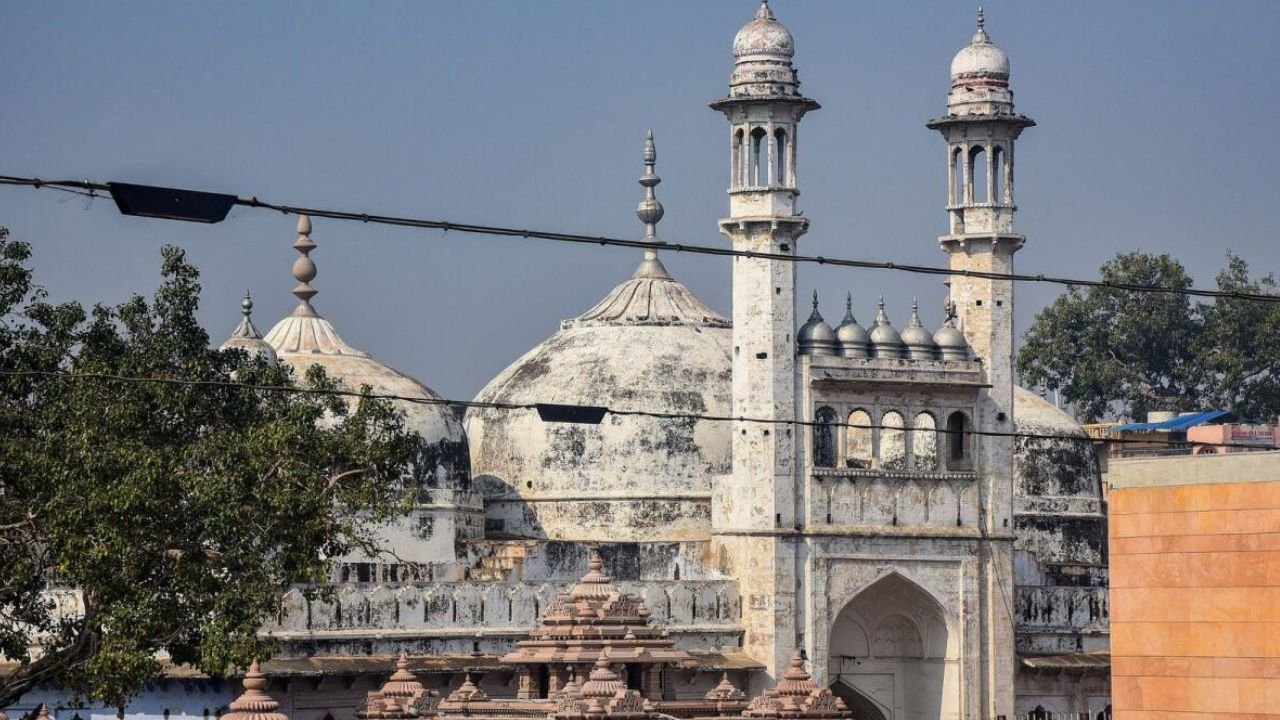
    An Indian court weighed in on one of the country’s most sensitive religious disputes Wednesday by permitting Hindu worshippers to pray inside a mosque in the city of Varanasi.

    The Gyanvapi mosque is one of several Islamic houses of worship that Hindu activists, backed by Prime Minister Narendra Modi’s party, have sought for decades to reclaim for their religion.

    It was built in the 17th century by the Mughal empire in a city where Hindu faithful from across the country cremate their loved ones by the Ganges river.

    The court in Varanasi ruled that Hindu worshippers — who believe the mosque replaced a destroyed temple to the deity Shiva — could pray in the building’s basement.

    Its verdict ordered district authorities to “make proper arrangements within the next seven days” to facilitate worshippers.

    The decision is the latest in a long-running legal saga over Gyanvapi’s future.

    This month, India’s official archaeological agency said a survey of the site appeared to corroborate the belief that it was originally home to a temple, according to local news reports.

    Emboldened right-wing Hindu groups have laid claim to several Muslim sites of worship they say were built atop ancient temples during Mughal rule.

    Last week, Modi presided over a grand inauguration ceremony in the nearby city of Ayodhya for a Hindu temple built on grounds once home to the centuries-old Babri mosque.

    Hindu zealots had torn down that mosque in 1992 in a campaign spearheaded by members of Modi’s party, sparking sectarian riots that killed 2,000 people nationwide, most of them Muslims.

    The decades-long court battle that ensued over the future of the Babri site ended in 2019 when India’s top court permitted the construction of a temple to the deity Ram, who according to Hindu scripture was born in the city.

    Members of Modi’s party routinely refer to India’s history of Muslim rule under the Mughal emperors as a time of “slavery”.

    The prime minister described last week’s opening of the temple as “the advent of a new era”.

    Calls for India to enshrine Hindu supremacy have rapidly grown louder since Modi took office in 2014, making its roughly 210-million-strong Muslim minority increasingly anxious about their future.

  • Petition against Imran, Bushra nikah dismissed

    Petition against Imran, Bushra nikah dismissed

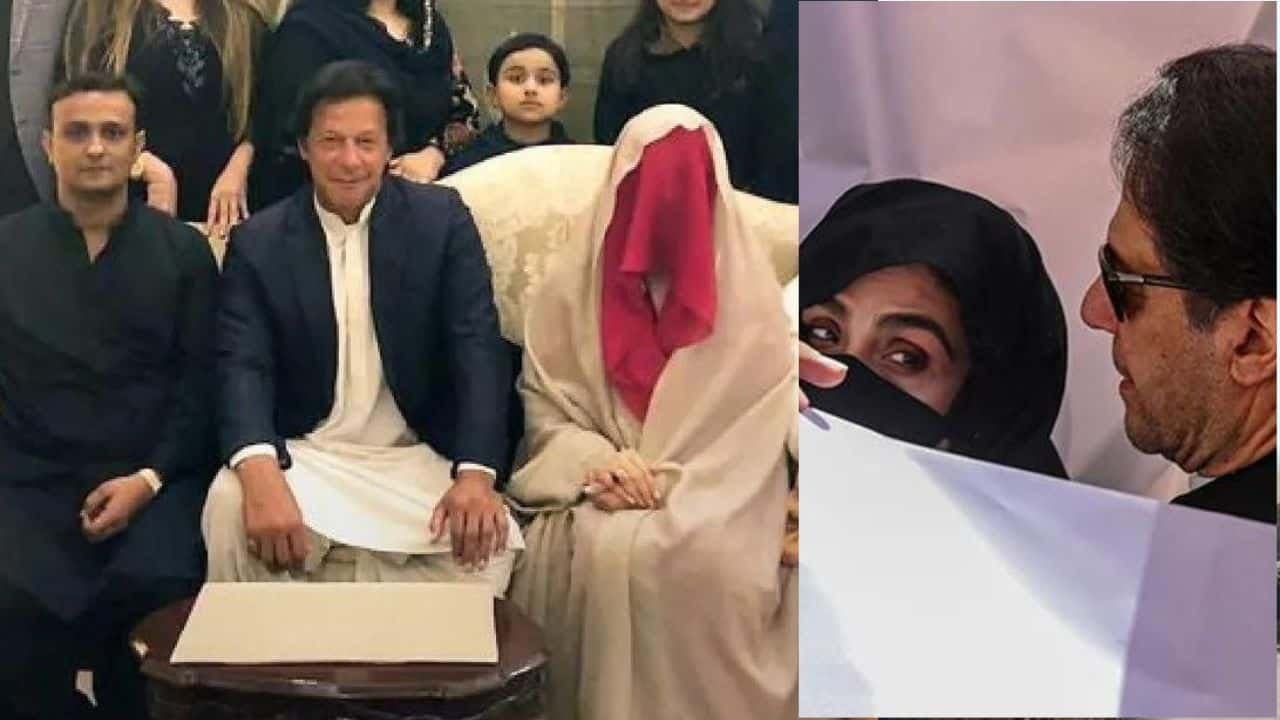
    Civil Judge, Islamabad, Qudrat Ullah has dismissed a petition challenging the nikah between Pakistan Tehreek-e-Insaf (PTI) Chairman Imran Khan and his wife Bushra Bibi on Friday after it was withdrawn by the petitioner.

    Muhammad Hanif, the petitioner, had moved the court seeking legal action against the former prime minister for marrying his present wife while she was reportedly on iddat, but he withdrew his case, leading to its dismissal.

    In an application submitted in the court, the petitioner said: “For the time being, the applicant wants to withdraw the above said complaint due to technical reasons.”

    “If permission to withdraw the complaint is not accorded, applicant shall suffer irreparable loss,” he stated.

    Keeping in view the statement of the complainant, Judicial Magistrate (East) Qudrat Ullah granted permission for the withdrawal of the complaint under Section 248 Code of Criminal Procedure (CrPC) and wrapped up the case.

    Imran-Bushra marriage case

    The petitioner, Muhammad Hanif, had claimed that Bushra Bibi was divorced by her former husband in November 2017 and married Khan on January 1, 2018, despite the fact that the iddat period had not ended, “which is against the Sharia and Muslim norms.”

    The complainant submitted in the court the statement of Mufti Muhammad Saeed, who solemnised the marriage between Imran and Bushra, where he had said that the PTI chief married Bushra Bibi during the latter’s iddat (the time a woman goes into isolation after her husband dies or divorces her), despite knowing everything.

    In his statement to a lower court, Saeed said he had solemnised Khan’s nikah with Bushra Bibi on January 1, 2018, over the assurance of a woman claiming to be the former first lady’s sister.

    “Then the former premier contacted me again in February 2018 and requested me to solemnise his nikah with Bushra Bibi again as the first time it was against the Shariah,” Saeed stated before the court.

    He said that the first time when the nikah was solemnised, Bushra Bibi’s Iddat hadn’t ended.

    He quoted Khan as saying that Bushra Bibi had been divorced in November 2017 and that there was a “prediction” that the PTI chairman would become the prime minister of Pakistan if he married Bushra Bibi.

    Mufti Saeed added that the first nikah was illegal, which had been solemnised based on the “prediction”.

    The complainant also submitted the statement of Aun Chaudhry, a witness to the marriage and former political secretary to former prime minister Imran Khan, who claimed in court that their marriage ceremony and Nikkah were based on “fraud”.

    According to his statement, Imran’s divorce from his previous wife, Reham Khan, took place in 2015, after Bushra Bibi told the former premier to give her divorce immediately.

    “At the time, Reham Khan was not present in the country, but Imran Khan divorced her through email on the advice of Bushra Bibi,” he said.

    “On December 31, 2017, Imran said to me that he was going to marry Bushra Bibi the next day. I was surprised and told him that Bushra Bibi was already married. Imran Khan said that Bushra Bibi had been divorced,” he added.

    Aun Chaudhry claimed Imran Khan instructed them for the preparations for the marriage on January 1, 2018, adding that he accompanied Mufti Saeed, the cleric who solemnised the couple’s Nikkah, and PTI leader Zulfi Bukhari to Lahore where Imran Khan’s marriage was solemnised.

    Later, when they realized that the iddat period had not been completed yet, Aun stated “Imran Khan said that the waiting period (Iddat) would be completed on February 18, 2018, and asked me to make arrangements for the marriage on the same date. The waiting period had to be completed between February 14 or 18, 2018. Imran Khan’s second Nikkah took place in Bani Gala whereas the first one had taken place in Lahore.”

    He revealed that Bushra Bibi had been given an “order” that if the Nikkah took place on the first day of 2018, Imran Khan would become the prime minister, adding that the date was chosen keeping in mind the “prediction”.

    Marriage

    In February 2018, the PTI announced that Khan married Bushra Riaz Watoo, better known now as Bushra Bibi, who is a respected faith healer. The ceremony was held in Lahore.

    Although Khan’s sisters were not in attendance, the bride’s mother and friends attended the intimate ceremony.

    Before marrying the spiritual guide, Khan was married twice.

    He first married Jemima Goldsmith, daughter of a British billionaire, in 1995, but it ended in 2004. He has two kids, Suleman and Qasim, from his first wife. Both of them live with their mother.

    His second marriage was to Reham Khan in January 2015, which dissolved in a short span of 10 months.

  • Zoya Akhtar responds to backlash over Muslim representation in her films

    Zoya Akhtar responds to backlash over Muslim representation in her films

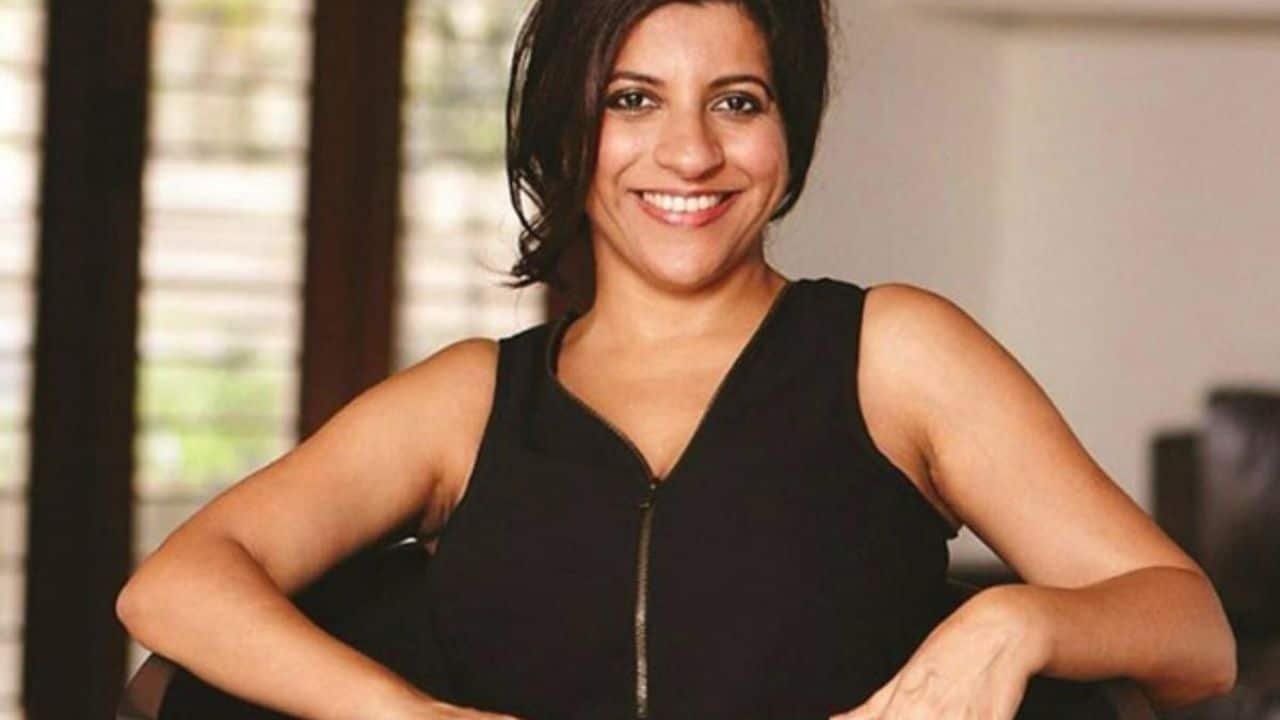
    Zoya Akhtar has been long criticised by social media users for the manner in which Muslims are represented in her films and dramas. The critically acclaimed series ‘Made In Heaven’, airing on Amazon Prime, prompted several users to criticise the director, who is the sister of actor Farhan Akhtar and daughter of Javed Akhtar, for episode 6. The criticism focused on the aspect that only polygamy marriages among Muslims are depicted rather the oppression or violence the community suffers from in India. The episode focuses on a woman Shehnaz, who attempts to kill herself after her husband gets married for the second time.

    On Instagram, Zoya finally responded by responding to a commentator who asked her to show positive Muslim characters, and stop relying on regressive stereotypes.

    The ‘Dil Dhadhakne Do’ director answered by listing several films where she had Muslim characters like Gully Boy, ‘Zindagi Milegi Na Dobara’, ‘Luck By Chance’:

    “Zaffar Khan and Tanveer in Luck By Chance. Imran and Laila in ZNMD. Farah Ali in Dil Dhadakne Do. Practically everyone in Gully Boy. Sarfaraz Khan and Leila Shirazi, Kabir, Faiza and Nawab have in Made In Heaven.”

  • Muslim man shoots Hindu girl before killing himself after families don’t give marriage permission

    Muslim man shoots Hindu girl before killing himself after families don’t give marriage permission

    Trigger warning: murder, death

    Muhammad Asif Brohi, a Muslim resident of Hyderabad, has reportedly killed himself after firing at Gauri Kohli, a Hindu girl he wanted to marry.

    The attempted murder- suicide took place after the families of both the boy and the girl objected to their desire to marry.

    According to Tribune, the woman is currently in critical condition in the hospital after surviving a bullet injury. Brohi killed himself by firing a bullet through his head, police have confirmed.

    Officials stated that Brohi’s body had been handed to his family after post-mortem, while Kohli has been shifted to Liaqat University Hospital.

  • Imran ne kaha ke Bushra Bibi se shaadi karne par woh PM ban jaye gaye, claims Mufti

    Mufti Saeed, who solemnised the nikkah of former Prime Minister (PM) Imran Khan and his third wife Bushra Bibi, has told a court in Islamabad that Khan told him that there was a prediction that if he married Bushra Bibi, he would become the prime minister.

    Stating that he solemnised their nikkah on January 1, 2018, Muft Saeed said that later Khan himself told him the first nikkah was illegal as per Islamic law, and asked him to perform the ceremony again.

    When the first nikkah took place, Khan took Mufti Saeed, a former close associate, to a house in Lahore where he met a woman who identified herself as Bushra Bibi’s sister. Saeed claimed that he asked the woman if Bushra bibi’s nikkah could be solemnised as per Shariah, to which she said yes.

    On the woman’s assurance, Mufti Saeed carried on with the formalities. But later in February of the same year, Khan requested him to conduct another nikkah with Bushra on the pretext that the first time her iddat had not been completed.

    Iddat is a period in Islamic law where either after being widowed or getting divorced, a Muslim woman may not marry another man. Once the stipulated period is over, she can marry whoever she wants to.

    Mufti Saeed said Khan claimed that Bushra Bibi got divorced in November 2017, hence, according to Mufti, they both got married knowing all the facts, yet went ahead with the nikkah. He also stated that their marriage is “illegal”.

  • City in Sindh goes viral for being ‘super-clean’, where Muslim, Hindu residents clean up together

    A few days ago, Mithi, a city in Sindh, went viral on Twitter for its clean roads and responsible citizens who have kept their surroundings neat.

    “Zero litter or garbage This is one of the streets within Mithi City. The picture is captured at 4:00 PM, after the rush hours. The usual cleaning happens once a day, early in the morning. Now compare it to urban cities Diff in civic sense between Jahil log & parhe likhe log”

    Soon, other residents of the city spoke up and confirmed that the people of this area ensure that Mithi remains clean.

    https://twitter.com/Smahaseghani/status/1631571150458216449?s=20

    Activist and painter Zulkfiqar Bhutto commented that he had also visited Mithi and regarded it as ‘the cleanest city I’ve ever seen in Pakistan’.

    Mithi is a small town located near Tharparker, Sindh, and is also known as the only place where 80% of the population comprises of Hindus.

    The area is known for the strong interfaith harmony between Muslims and Hindus, as Dawn writer Hassan Raza noted that in this town, Muslims will not slaughter cows out of respect for Hindus, and Hindus will not hold any marriage ceremonies or celebrations during the month of Muharram.

    “In our village, Hindus and Muslims have been living together for decades and there has not been a single day, when I have seen a religious conflict. No loud speaker is used for Azaan at the time when Hindus are worshiping in their temple, and no bells are rung when it is time for namaz. Nobody eats in public when it is Ramazan and Holi is played by every member of the village.”

    BBC Urdu also ran a story in 2021 about how in Mithi, both Hindus and Muslims come together to celebrate the Holi festival.