Tag: Muttahida Qaumi Movement

  • Sindh Tribe elects its first-ever female chief

    Sindh Tribe elects its first-ever female chief

    In a first, a Sindh Tribe — Soho — has elected its first-ever female chief, Heer Soho. She will be appointed officially in a ceremony after the month of Ramzan.

    The decision was made unanimously following the death of her father, Sardar Ismail Soho, by the tribe’s older members.

    Heer hails from Mirpur Bathoro, Thatta. She holds a Master’s Degree in Agriculture and in Economics. Currently, she is a member of the Sindh provincial member from the Pakistan People’s Party (PPP). Her father was also an active member of PPP who had played a prominent role in the movement for restoration of democracy (MRD).

    In 2002, she was elected as a member of the Provincial Assembly as a representative of the Muttahida Qaumi Movement (MQM) on a reserved seat.

    After she left the MQM, she was again elected in the 2018 general elections on a reserved seat representing PPP.

  • ‘Didn’t want to sell Pakistan out’: Karachi street criminal who turned FBI spy

    ‘Didn’t want to sell Pakistan out’: Karachi street criminal who turned FBI spy

    Kamran Faridi, United States (UN) Federal Bureau of Investigation’s (FBI) valued secret agent, has been sentenced to seven years in jail, reports Murtaza Ali Shah for The News.

    Judge Cathy Seibel of New York’s Southern District Court condemning Faridi said, “perhaps the most difficult sentencing I have ever done.”

    Faridi eventually grew close to PSF’s Najeeb Ahmed, then a well-known student leader

    “Faridi, who is currently serving time in a New York jail, was born and grew up in Block 3 of Karachi’s Gulshan-e-Iqbal area. He joined the Peoples Students Federation (PSF) — the student wing of the Pakistan Peoples Party (PPP)— when he was a Grade-9 student at the Ali Ali School and started hanging out at the National College, Karachi University, and NED University. Faridi eventually grew close to PSF’s Najeeb Ahmed, then a well-known student leader.”

    “As he lived in an area dominated by the rival Muttahida Qaumi Movement (MQM), it soon became difficult for him to operate from home ground. Najeeb helped Faridi shift where he joined other PSF activists living in the apartment complex.”

    “Local police and the Crime Investigation Department (CID, now known as the CTD) soon had arrest warrants out against Faridi. At the same time, MQM activists were hunting him down. Aware of the danger, Faridi’s family paid off a human smuggler and arranged for him to travel to Sweden. In Sweden, however, Faridi was unable to keep a low profile and soon got into fights with the local Albanian and Bangladeshi gangs. He was arrested a few times by local police, and in 1992, Swedish authorities blacklisted him and refused to give him a visa due to his bad conduct,” says the reporter who met with Faridi.

    “Now an illegal immigrant, Faridi went into hiding at an island, where he was allegedly helped by Greenpeace activists. A local human rights activist, according to Faridi, arranged a fake passport for him to travel to Iceland, from where he went to America and started a life in New York City. He later moved to Atlanta, Georgia, in 1994 and bought a gas station in a violent neighbourhood called Bankhead Highway.”

    “According to Faridi, Atlanta police used to hustle him regularly for bribes. Fed up of their harassment, he reported them to the FBI. This is how Faridi first came into contact with the federal agency.”

    FBI saw value in Faridi’s fluent command of Urdu, Punjabi, and Hindi, and in 1996 he became a full-time informant and agent

    “The FBI agents he was in contact with, Faridi claimed, told him that they would help him, but only if he would help them first. They wanted him to infiltrate a local Urdu-speaking Pakistani gang that had been causing difficulties for local law enforcement. The FBI saw value in Faridi’s fluent command of Urdu, Punjabi, and Hindi, and in 1996 he became a full-time informant and agent.”

    “Faridi did so well in helping the FBI’s investigations that he was offered assignments with the Central Intelligence Agency (CIA), the Drugs Enforcement Agency (DEA), UK’s MI6, French intelligence, Austrian federal police, Thailand’s Federal Police, and the Malaysian National Police. Faridi’s feats included several high-profile terrorism-related operations. He also reportedly played a key role in obtaining information from some of the world’s deadliest groups and persons.”

    It was through Faridi’s efforts that the US learned about Abu Jafar and other al-Qaida members planning to attack the US and foreign maritime vessels with explosives

    “In May 2011, Faridi began supporting an FBI investigation into the notorious South Asian criminal network, D-Company. In 2015, Faridi maintained a joint safe house with Walid Al-Agha, a Daesh supporter, and leader based in Turkey, and facilitated the travel of other ISIS supporters between Syria and Turkey. In November 2015, Al-Agha was ultimately convicted in Turkey and the US government credited Kamran Faridi for playing a lead role in the conviction. “

    “In March 2018, he travelled to South America, where he identified a support network that was facilitating the travel of terrorist operatives. It was through Faridi’s efforts that the US learned about Abu Jafar and other al-Qaida members planning to attack the US and foreign maritime vessels with explosives off the coasts of Djibouti and Europe. When Abu Jafar received scuba-diving training in Malaysia and Thailand, Faridi accompanied him, and based on Faridi’s reporting and assistance, the FBI placed Abu Jafar on its Most-Wanted list.”

    “The FBI also deployed Faridi to Southeast Asia several times in 2016, and again in 2019, to interact with senior terrorist figures. In February 2019, Faridi’s assistance led to the arrest of two al-Qaida operatives in Malaysia, according to the US government.”

    “It was due to Faridi that Karachi businessman Jabir Motiwala was arrested in London in August 2018 on suspicion that he was a top lieutenant of underworld kingpin Dawood Ibrahim and was involved in running drugs, extortion, and money laundering on behalf of D-Company, the criminal network run by Ibrahim. While Motiwala was in Wandsworth prison in London — contesting but waiting for his almost certain extradition to the US — the FBI revoked Faridi’s contract in February 2020.”

    “I did not want to sell Pakistan out on a false basis. I say it on oath that I was asked to lie in my statements by my bosses and I refused to lie,” Faridi

    “Faridi said he was asked by the FBI to falsely testify against D-Company, Dawood Ibrahim, Chhota Shakeel, Anees Bhai, and Anees Tingu in Jabir Motiwala’s case to link them to the charges against Jabir Motiwala. He was also allegedly told to sign false testimony linking these individuals to the procurement of nuclear technology on behalf of a leading Pakistani spy agency.”

    Faridi claimed he, “did not want to lie” because he “had no evidence” and he “did not want to submit a false testimony for money”.

    “I did not want to sell Pakistan out on a false basis. I say it on oath that I was asked to lie in my statements by my bosses and I refused to lie. They said if I lie the evidence will become stronger, but I refused,” he said.

    Faridi “felt betrayed” by the FBI because his wife, Kelly

    After his contract was suddenly revoked, Faridi emailed and texted multiple death threats on February 17 and 18, 2020, to his former FBI handlers.

    “Faridi had felt betrayed by the FBI because his wife, Kelly, had just been diagnosed with cancer, and news of his termination worsened the blow. The US government also informed the court that Faridi had helped “enemies of the US” when he asked his wife to alert at least four or five suspects that they were under surveillance.”

    The judge said that while she did agree that Faridi had obstructed the work of law enforcement, but “the value of this defendant’s incredible work for the United States is immense” and that “the work that Mr Faridi did for the United States is at the very top to me of valuable source work”.

    The judge added: “[…] even if the [US] government gave it the back of the hand, I don’t give it the back of the hand. Incredible work of immense value over many years, in the riskiest of circumstances, and, you know, I think it would be hard to understate (sic) the value of it.”

    “The benefit that the defendant gave this country is tremendous and the damage he did […] didn’t wipe it out completely, but it did a tremendous amount of harm.” She sent him to jail for a seven-year term.

    “I served the US wholeheartedly, but I have been rewarded a jail sentence and removed from long service because I refused to lie about Pakistan”- Faridi

    “Faridi now hopes that the judge will take a considerate look at his case and contributions and reduce the sentence. That is the only hope he has right now. He told this reporter that he will leave for Pakistan as soon as his sentence is over. “

    “I served the US wholeheartedly, but I have been rewarded a jail sentence and removed from long service because I refused to lie about Pakistan.”
  • ‘If govt does not take their allies on board, we have no option but to make a decision’: Khalid Maqbool Siddiqui

    ‘If govt does not take their allies on board, we have no option but to make a decision’: Khalid Maqbool Siddiqui

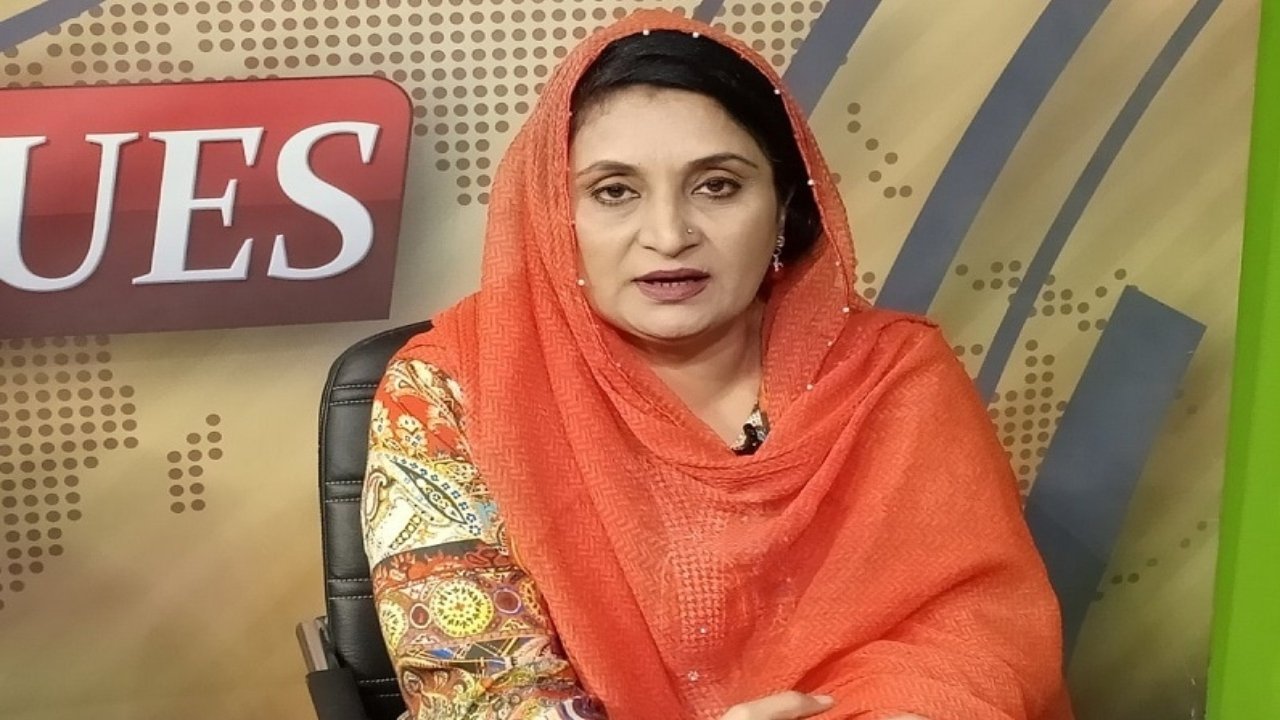
    Muttahida Qaumi Movement (MQM) leader Khalid Maqbool Siddiqui, while speaking on Geo News programme, ‘Aaj Shahzeb Khanzada Kay Sath’, said that his party’s confidence in the government had worn out because the MQM was not seeing the government heading in the right direction.

    Siddiqui said that the MQM could not share the responsibility of bad governance by the ruling party as the former had never been taken into confidence on important national issues.

    “We are not taken into confidence on important legislation and the documents are given to us at the eleventh hour. How can we support such legislation,” said Siddiqui.

    “If the government does not take their allies on board, we have no option but to make a decision,” he said.

    Hinting that the MQM could part ways with the government if it did not mend its ways, Siddiqui said, “We are now nervous about the situation. The government must acknowledge its incompetence. We may have to make a big decision.”

  • PTI leads in Cantonment Board polls, PML-N in second place

    PTI leads in Cantonment Board polls, PML-N in second place

    Pakistan Tehreek-e-Insaf (PTI) emerged as the biggest winner in the Cantonment Board elections held across Pakistan on Sunday, reports Radio Pakistan.

    According to the unofficial results, PTI got 58 seats, while the Pakistan Muslim League-Nawaz (PML-N) scored 51. Independent candidates claimed 49 seats.

    Pakistan People’s Party (PPP) has managed to win 14 seats and Muttahida Qaumi Movement (MQM) got 10 seats. Jamaat-e-Islami (JI) won five seats while Balochistan Awami Party (BNP) got two seats.

    Minister for Information and Broadcasting Fawad Chaudhry in a tweet said the Cantonment Board election results show that the Opposition has left with no standing following a crushing defeat.

    Reacting to the ruling party’s victory, federal Minister for Planning, Development and Special Initiatives Asad Umar said: “Cantonment elections once again show the PTI not only as the largest party but also the only national party.”

    PML-N President Shehbaz Sharif called party leaders and congratulated them on their success in the cantonment polls.

    Province wise results:

    PTI won the most number of seats in Khyber Pakhtunkhwa (KP) — 18 — followed by 28 in Punjab, 14 in Sindh, and three in Balochistan.

    PML-N won big in Punjab, bagging 51 seats, managing only five in KP, three in Sindh, and none in Balochistan. In Lahore, the PML-N bagged 15 of 19 wards.

    PPP was surprisingly unable to defeat PTI in Sindh, instead of tying with them for 14 seats. The remaining three seats were won in KP, meaning none were won in either Punjab or Balochistan.

    Independent candidates scored big in Punjab, bagging 32 seats. They secured nine in KP, seven in Sindh, and four in Balochistan.

    MQM won all of its 10 seats in Sindh, whereas JI won five in Sindh and two in Punjab.

    ANP won two seats in KP, whereas BAP won two in Balochistan.

  • ‘MQM London faction planning killings to trigger sectarian violence,’ police say

    A US-based female member of the London faction of Muttahida Qaumi Movement (MQM) is planning assassinations on religious leaders to trigger sectarian violence in Pakistan, authorities said on Thursday.

    In a press conference in Karachi, Counter-Terrorism Department (CTD) Deputy Inspector General (DIG) Omar Shahid Hamid and a Rangers official played a video showing a woman giving instructions to an unidentified hitman and promising payment on successful completion of the killing.

    Read more – Fawad sees ‘woman version of Altaf Hussain’ in Maryam Nawaz

    The woman, identified as one Kehkashan Haider, has been residing in Texas since the 1990s and is a close aide of London-based MQM founder Altaf Hussain, the officials said.

    An audio recording of a telephonic conversation between Haider and a hitman was also played during the press conference wherein she tells the individual to “send his love” to the target and demanded confirmation of the attempt, adding “our life depends on it.”

    In a separate video, she further provided details of the payments to be made to the killer and arrangements for his security and transport while adding that he would be flown abroad after the successful assassination.

    Revealing Haider’s background, DIG Hamid said that she is a member of the party’s London faction (which is still loyal to Hussain) and has established target killer groups in collaboration with India’s Research and Analysis Wing (RAW) and domestic ethnic-turned-terrorist groups, including Baloch separatist groups, to target law enforcement agencies, police and political and religious leaders in Pakistan, particularly in Karachi.

    VIDEO: Altaf sings ‘Sare Jahan Se Acha’ on Indian channel

    He revealed that an intelligence-based operation (IBO) began in 2017 when the Sindh Rangers arrested a team of target killers with links to MQM-L. The details of the plot were uncovered jointly by the CTD and the Pakistan Rangers during the interrogation of recently arrested alleged hitmen from Karachi and other parts of Sindh.

    The information collected during the course of interrogations revealed that assassination teams had been re-established under the directions of the MQM-L chief Hussain, DIG Hamid said.

    “These new targeted killing teams were being patronised by Kehkashan Haider,” he added.

    On the occasion, the Rangers official, Col Shabbir, said that the murder of the target identified by Haider possessed the potential to cause sectarian rifts.

    “We wanted to bring it to your [media’s] notice how these people are attempting to spread chaos in the country from abroad,” he said.

    The CTD has registered a case against Haider under Sections 11-H and 11-N of the Anti-Terrorism Act, 1997 pertaining to terror financing, DIG Hamid said.

    He observed it was “alarming” that a woman based in the United States was coordinating such illicit activities in Karachi “like a mafia don”.

    He announced the Foreign Ministry will “take up this matter with the law enforcement institutions of the US government”.

    “A clear line of financial transactions is appearing when we traced bank accounts and transactions,” he said, adding that the evidence of financial transactions for terror financing made Islamabad’s case stronger.

    “If there is any aspect of money laundering in this, [then] it will be investigated according to the Anti-Money Laundering Act and looked at by the FIA [Federal Investigation Agency].”