Tag: NADRA

  • 12,000 fake passports recovered from Afghans in Saudi Arabia

    12,000 fake passports recovered from Afghans in Saudi Arabia

    The staggering number of 12,000 Pakistani passports have been found in the possession of Afghan nationals in Saudi Arabia, media reports have confirmed.

    The discovery comes as law enforcement agencies initiate a crackdown against people and groups involved in the issuance of fake citizen documents to illegal immigrants.

    According to reports by Geo News, the Pakistani embassy in Riyadh was informed of the passports by Saudi authorities.

    An investigation into the matter has been initiated by Director General Immigration and Passports Directorate Mustafa Kazi and the Federal Investigation Agency.

    The prime suspect, Umar Javed, has been arrested in Lahore for making fake passports.

    Earlier, a former officer and a serving grade-15 officer of the Passport Directorate were arrested and probed in regards to the issuance of fake documents.

    As reported by Azaz Syed on Geo news, an interior ministry official has asserted that a detailed investigation is underway and NADRA data is also being counterchecked.

  • NADRA resumes registration of transgenders

    NADRA resumes registration of transgenders

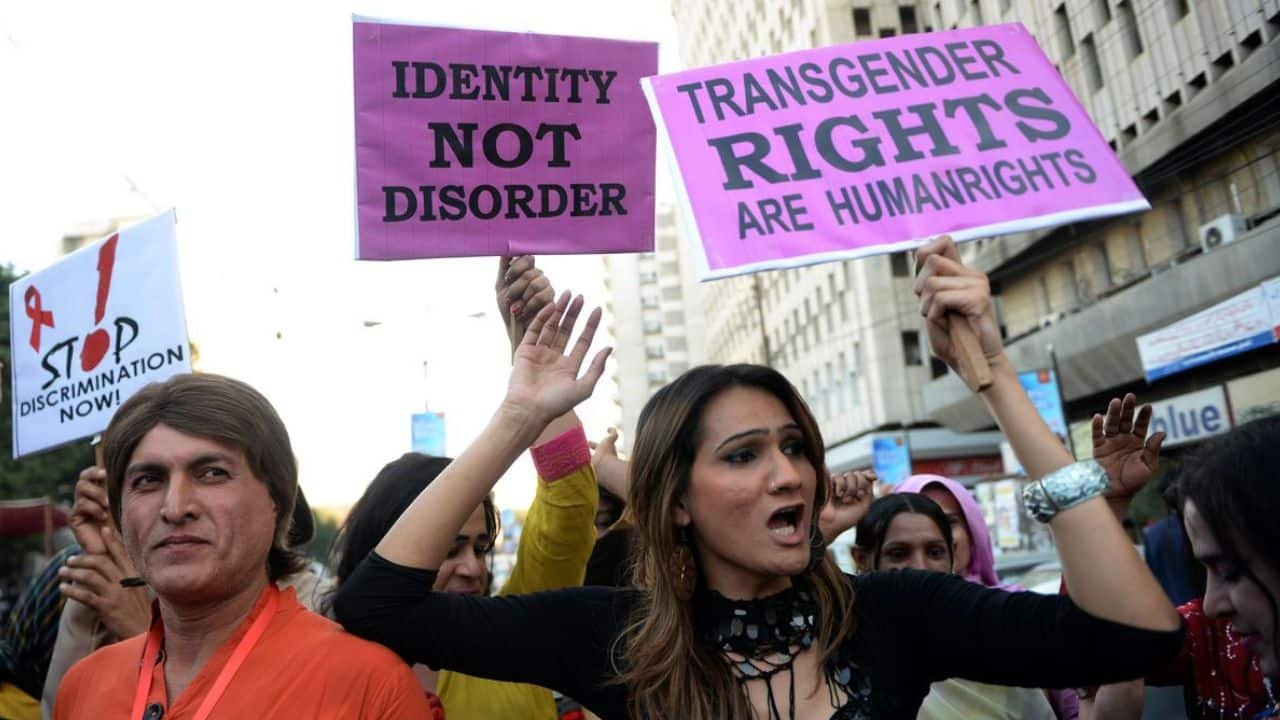
    The National Database and Registration Authority (NADRA) has resumed the process of registration of transgenders after almost three months.

    NADRA stopped the issuance of X ID cards after the decision of the Federal Sharia Court against various provisions of the Transgender Persons (Protection of Rights) Act, 2018 in May this year.

    History
    The National Assembly passed the Transgender Persons (Protection of Right) Act in 2018, giving all legal rights and recognition to transgender persons, penalising any form of discrimination against them.

    However, in September 2022, the Federal Sharia Court took up petitions challenging the law which had Jamaat-i-Islami’s Senator Mushtaq Ahmed, TV anchor Orya Maqbool Jan, and transgender persons Almaas Boby and Bubbly Malik as party to the petition.

    In May this year, the Federal Sharia Court struck down all provisions in the Amendment Bill 2022 that they said conflicted with Islam and the Constitution in May, declaring Section 2N(3), Section 2F, Sections 3 (recognition of identity of transgender person) and 7 (right to inherit) of the Transgender Act to be unconstitutional.

    But lawyers, civil society and human rights activists insisted on its restoration.

    In July this year, Farhatullah Babar challenged the decision of the Sharia Court in the Sharia Appellate Bench of the Supreme Court.

  • Tired of long queues at NADRA centres? Good news for you, then

    Tired of long queues at NADRA centres? Good news for you, then

    NADRA centres are to introduce various new facilities including renewal of national identity cards at post offices without waiting in queues.

    Counters have been set up in 10 General Post Offices (GPOs) in Karachi to provide facilities for national identity cards where devices are connected to the NADRA system.

    Post office counters have facilities for renewal of identity cards, change of marital status, while the facility of issuing replacements for lost identity cards will also be available at the counters.

    This means that ID cards can be renewed from the post office up to one year after expiry, while home address, signature and photograph can also be changed.

    However, biometric facility of blood relation is not available at post offices. Renewal of form is mandatory from a 16th grade officer while FRC and (b) form issuance facilities are not available.

    NADRA has agreed to set up counters at the Pakistan Post Office for 10 years.

  • Elections in Jan ‘24: How you can register to vote in Pakistan

    Elections in Jan ‘24: How you can register to vote in Pakistan

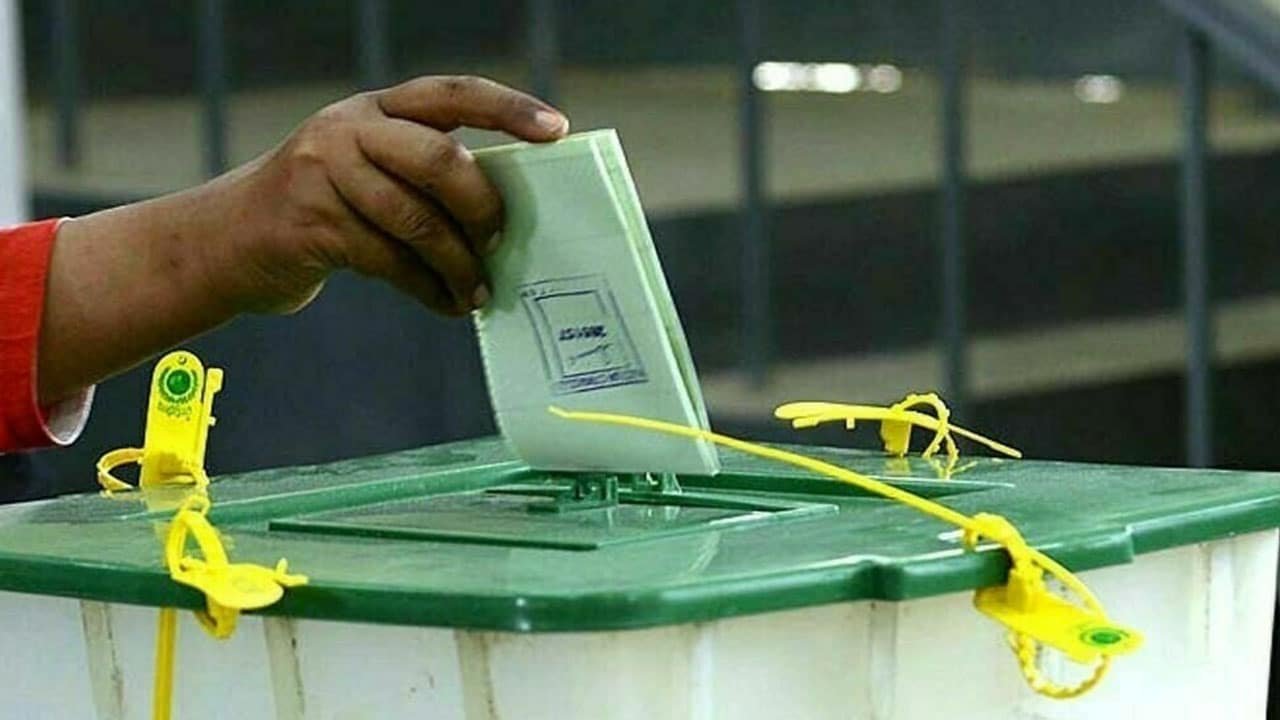
    The Election Commission of Pakistan (ECP) has set a new date for the general election in January, which is about three months later than originally planned. This decision was made to clear up confusion about when the election would happen and to help the struggling economy. 

    In this article, we will explain how you can sign up to vote in the upcoming election. 

    To register to vote, you need to send in an application along with a copy of your Computerised National Identity Card (CNIC) to the District Election Commissioner (DEC), Registration Officer, or Assistant Registration Officer in the district where you want to vote.

    You can find the necessary forms online on the ECP website or get them for free at the offices of the District Election Commissioner, Registration Officer, Assistant Registration Officer, or Display Centre Incharge. 

    To be eligible to vote, you must meet these criteria: 

    (a) You must be a citizen of Pakistan.  

    (b) You must be at least eighteen years old.  

    (c) You need to have a CNIC issued by the National Database and Registration Authority (NADRA) up until the last day for submitting claims, objections, and applications for updating the voter list.  

    (d) You must not have been declared legally unfit (unsound mind) by a court.  

    (e) You must either live in the area where you want to vote or be considered a resident under section 27. 

    Even if your NADRA ID has expired, it’s still valid for registering to vote or casting your vote in an election. 

  • Nadra launches eye recognition biometric identification system

    Nadra launches eye recognition biometric identification system

    The National Database and Registration Authority (NADRA) has recently implemented a state-of-the-art iris recognition or eye recognition biometric identification system.

    According to a NADRA spokesperson, this innovative system will work in conjunction with existing fingerprint and facial identification methods. The spokesperson emphasized that the iris identification method has proven to be highly reliable, with an error margin that is practically non-existent.

    Furthermore, the spokesperson highlighted that the eye scanning of an individual at a young age can serve as a permanent means of identification. This advancement showcases the long-term effectiveness of the iris recognition technology, offering enhanced security and accuracy.

    Iris recognition, also known as eye recognition, is an automated biometric identification technique that employs advanced mathematical pattern-recognition algorithms on video images of an individual’s irises. These irises possess intricate and unique random patterns, discernible even from a considerable distance.

    Prior to this development, NADRA had already introduced its cutting-edge Automated Finger Identification System (AFIS) for various civil purposes.

  • Nadra confirms data theft of Army Chief’s family

    Nadra confirms data theft of Army Chief’s family

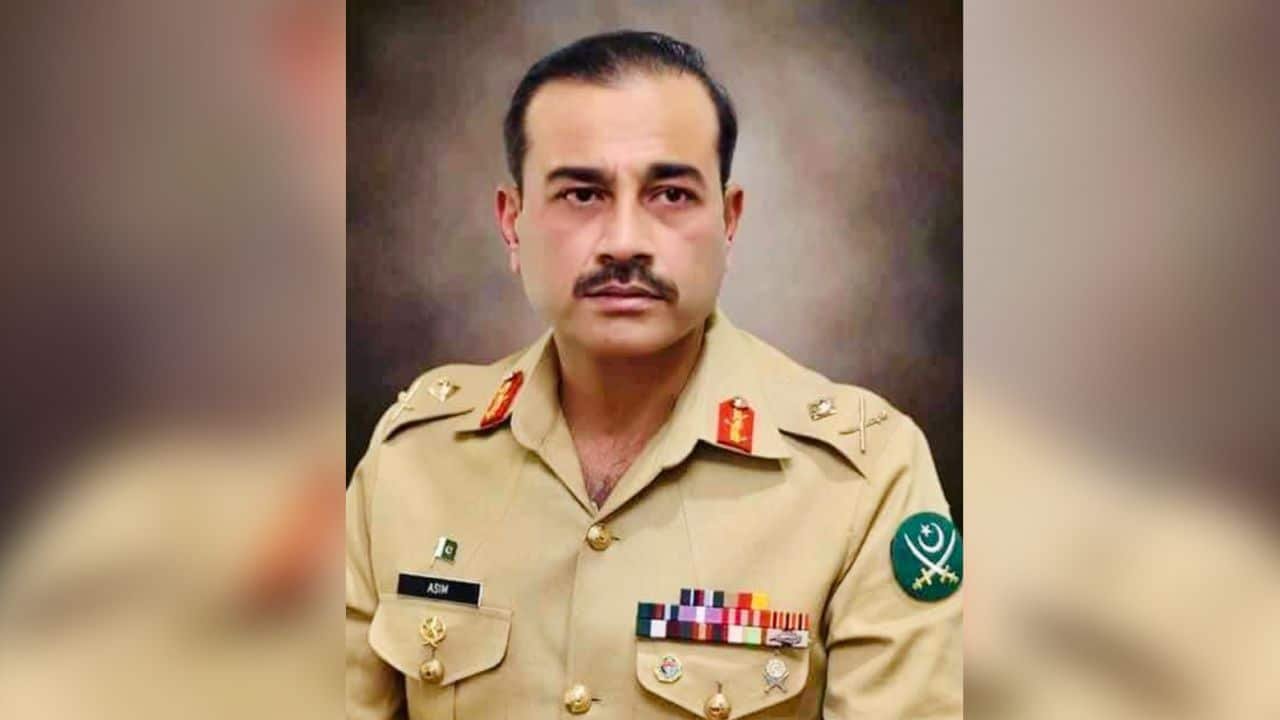
    In a news report published on Sunday in The News, it was stated that the National Database Registration Authority (NADRA) is set to finalise an inquiry identifying those behind a data leak involving the incumbent Chief of Army Staff (COAS) General Asim Munir’s family.

    Journalist Azaz Syed wrote that NADRA has issued a detailed statement confirming the data theft of Army Chief’s family, according to the same news outlet.

    According to the report, “Nadra finalises probe into illegal access to COAS family’s data, dated April 02, 2023, it is to clarify that the subject probe into illegal access to COAS family’s data is a continuation of Nadra’s stringent measures to protect the citizens’ data from unauthorised access, when he sought help from premier security agency upon assumption of charge as chairman Nadra in June 2021.”

    Multiple users of different organisations had accessed General Asim Munir’s data before he was appointed COAS. Other than Nadra, nine institutions, including law enforcement agencies, banks and housing authorities, accessed the COAS’s family data.

    About the ongoing inquiry, COAS’s family data was accessed in absence of Nadra Chairman Tariq Malik, who was on ex-Pakistan leave (on official assignment) in November 2022.

    Last November, illegally-accessed information was reportedly used in an attempt to block the appointment of the current army chief.

    In October 2022, five senior Lieutenant-Generals were contending for the position of Pakistan’s new army chief. During this time, a junior data entry operator at NADRA, Farooq Ahmed, allegedly accessed the data of a female family member of Gen Munir and collected the family’s details and identity card numbers.

    This data was later used in the Federal Investigation Agency’s (FIA) Integrated Border Management System (IBMS) to track international travel destinations the family had travelled to.

    The prime minister had an investigation launched into the data leak.

    As regards to the ongoing probe into the COAS family’s data, the NADRA chairman ordered the inquiry which is in the closing phase. Culprits, from DGs to the data entry operators, have been identified.

  • ‘Sexist’: NADRA slammed for declaring men head of family

    ‘Sexist’: NADRA slammed for declaring men head of family

    Twitter users have slammed a sexist policy authorized by The National Database and Registration Authority (NADRA) after a user shared a screenshot of the message she received from the government organization that informed her that the husband was designated as the head of the household.

    The user went on to criticize NADRA as she had not nominated her husband as the head of the household, per the message stated.

    https://twitter.com/yougoglencocco/status/1640997625821380608?s=20

    The user further went on to question how this policy would become a threat for women trying to escape abusive marriages, because their private information is being sent to their spouses without their consent.

    Other women also slammed NADRA for refusing to recognize female agency, and pointed out how this policy alienates single parent households, especially with women who had escaped abusive relationships.

    Sharing their experiences of being turned away from offices while applying for their CNIC card, female tweeps blamed the policy that demands that a male guardian verify themselves as the head of their household.

    NADRA responded to the tweet by sharing that this policy was designed to guard family data from unauthorized access, because of which they had decided to inform the family head about procedures related to family data.

    “It is one of the security features to guard family data from unauthorised access. In order to maintain the integrity of family data, @NadraPak informs every family head about any processing through which someone becomes part of his family.”

    This tweet was bashed by Twitter users are regressive for refusing to recognize women as the head of their households, as activist and researcher Ammar Rashid tweeted that the government body should not have violated the privacy of women by leaking their data this way.

    “Maybe @NadraPak should try to institute measures to confirm identities that don’t openly violate the constitutional right to privacy of adult female citizens? Other countries seem to be managing data security just fine without such archaic rules.”

    Another user said: “A married woman is usually above the age of 18 and that makes her legally a citizen. She must have access to her OWN security features without having man govern her changes to the card.”

    https://twitter.com/dcfaiqalethal/status/1641077646548148227?s=20

    The Chairman of NADRA, Tariq Malik addressed the controversy in a tweet on Thursday, sharing that the policy did not discriminate against women from becoming the head of the household, and shared statistics that showed more women were nominated for this position than men.

    @NadraPak policy of declaring head of family is not gender specific. See thru lens of #realdata 28 million citizens declared their mother, 291,039 declared their sisters, 116,800 men declared their wife as head of family. And, 3.69 million females who are self head of family.”

    Malik further went on to reveal that the backlash to this policy has encouraged the department to reform it in order to prevent discrimination of any kind:

    “Declaring head of family is self reported event. I have directed our Public Engagement Department to sit down with social scientists and subject matter experts to bring reform in policies and SoPs. Suggestions welcomed. We have revamped quite a few since a year.”
  • Nazim Jokhio’s family reaches peace agreement with accused

    Nazim Jokhio’s family reaches peace agreement with accused

    Nazim Jokhio’s family has submitted an affidavit in court, stating that they have reached a peace agreement with the murder accused.

    The affidavit has stated that both parties have reached an agreement. It has also been stated in the affidavit that the slain man’s family has no objection to ending the case.

    The affidavit has been submitted by Jokhio’s mother, widow, and children. After the affidavit, the court directed authorities to publish an advertisement in the newspaper regarding the legal heirs of Nazim Jokhio.

    The court has also asked National Database and Registration Authority (NADRA) to submit a report on the matter at the next hearing. The hearing was adjourned till October 15th.

    On November 3 last year, Nazim’s tortured body was found in Pakistan People’s Party (PPP) Member of Provincial Assembly (MPA) Jam Awais’ farmhouse in Karachi’s Malir area, a day after he filmed a group of foreigners hunting the endangered houbara bustard in his Achar Salaar village in Thatta.

    According to Jokhio’s brother, Nazim had broadcast a live stream on social media of a hunting expedition involving foreign guests of PPP MPA Jam Awais, after which Jam Awais called Nazim to the house where he was allegedly murdered.

    Jam Karim is the elder brother of Jam Awais. In November, he was nominated as a suspect with ten others in the murder case.

    Community Verified icon
  • NADRA introduces a new digital payment system to replace ATMs

    NADRA introduces a new digital payment system to replace ATMs

    The National Database and Registration Authority (NADRA) has introduced an innovative system that will serve as an alternative to automated teller machines (ATMs) and let citizens pay utility bills and identity documents.

    This development comes as a result of NADRA’s partnership with 1Link, Pakistan’s largest and fully licensed payment gateway system. The two authorities have formed a strategic alliance to evolve and administer an e-payment system that will build on NADRA’s already existing e-Sahulat franchise.

    According to DAWN, the collaboration will make it possible for the more than 17,000 e-Sahulat centers to conduct financial transfers, cash-in and cash-out transactions, as well as P2G, G2P, and P2P payments.

    NADRA Chairman Tariq Malik and 1Link CEO Najeeb Agrawal inked the agreement on Monday at the organization’s headquarters. In response to this development, Malik stated that NADRA has been trying to enhance e-governance by empowering organisations from the public and commercial sectors through its digital services.

    He asserted that one of Pakistan’s most cutting-edge digital services for financial payments is NADRA’s e-Sahulat facility.

    Through this cooperation, the more than 17,000 e-Sahulat locations operated by NADRA will be able to quadruple the capacity of more than 16,500 1Link ATMs nationwide. As was already mentioned, this will make it simple for consumers to deposit and withdraw money.

    In the future, the digital platform will also be accessible in rural Pakistan, enabling students there to continue their studies while earning money to cover their tuition.

  • Are we obsessed with the The Minor case?

    Are we obsessed with the The Minor case?

    The Minor is a household name these days. A young girl, came into the limelight when a case of a missing minor girl was reported in Karachi. The missing or allegedly abducted girl was later found in Punjab where she had gotten married and was apparently living a happy life with her husband. This is where the case unravelled.

    The Minor happens to be underage and her marriage to her husband is not considered a legal one per law. A girl/boy getting married under the age of 18 years is considered to be illegal. Earlier this year, Justice Babar Sattar of the Islamabad High Court (IHC) declared any marriages under the age of 18 years unlawful even though each province has different legal age for marriage.

    The problem, in this case, is that no one is talking about the law here. The Minor is being dragged to the hospital every now and then to check her age through medical tests. Her parents come on television, record videos, and say how their daughter has been trapped. The Minor, on the other hand, keeps saying that she is happy and is not under any pressure. The court allowed her to decide who to stay with instead of keeping her in a government shelter until everything had been settled, under the law. Legal observers have raised another question including why a medical test, which is not accurate, is allowed when NADRA documents prove that she is a minor. Did the court not trust NADRA records and if not, why? These questions have so far not been answered.

    In this case, we have left the main issue, i.e. underage marriage behind and are only catering to the drama that is unfolding: the fact that she sat on a cushion during an interview or that she wore make-up. Why is no one talking about how important it is for parents to talk with their children? Why is no one talking about how this case will impact the minds of children whose television screens keep flashing The Minor and her husband, the crying mother, and sister of The Minor ? Why is no one talking about how traumatic all this is for girls and boys of this age? Why is no one talking about how two children — who are apparently underage — got married after meeting online? Why did the boy’s family agree when the girl was quite obviously a minor? Why is there silence around these issues?

    We hope that parents start to have open conversations with their children and create an environment where children can speak openly and a relationship of trust is built between them.