Jamaat-i-Islami (JI) presented a bill in the upper house of Parliament Senate seeking an amendment in the Transgender Persons (Protection of Rights) Act, 2018, for the creation of a medical board that would recommend “whether a person’s gender should change, instead of them seeking a reassignment on the basis of their personal identity”, reports Dawn.
The bill was presented by JI’s Senator Mushtaq Ahmad who recommended the formation of such boards at the district level comprising of a professor doctor, a psychologist, a male general surgeon, a female general surgeon, and a chief medical officer after the approval by the Prime Minister (PM) and provincial Chief Ministers (CM).
The proposed law also seeks a ban of gender reassignment surgeries or any other treatment to change genital features on the basis of “any psychological disorder or gender dysphoria”. It also states that the law in its present form could lead to the “legalisation of homosexual marriages”.
However, the present law states: “A person recognised as transgender shall have the right to get himself or herself registered as per self-perceived gender identity with all government departments including, but not limited to NADRA (National Database and Registration Authority).”
According to the JI, under the current law, a person could get themselves registered as a man or a woman not on the basis of their biology but their “personal thoughts”.
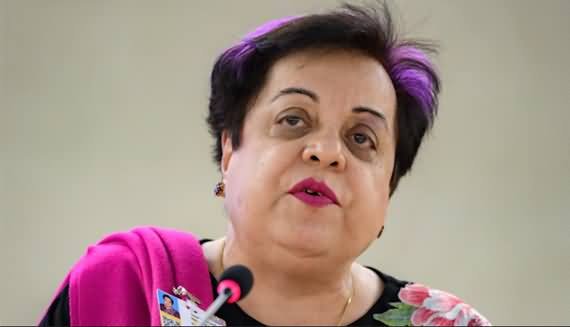
Human Rights Minister Shireen Mazari strongly opposed the proposed bill which was presented by JI and said the proposed amendment was aimed at “victimising” transgenders. She defended the current law and argued that it gave Transgenders Persons the right to identity.
“Till date, not a single complaint has been received regarding the misuse of this existing law,” she said.
JI and Jamiat Ulema-i-Islam-Fazl (JUI-F) senators protested Mazari’s remarks, following which Senate Chairman Sadiq Sanjrani, sent the bill to the relevant standing committee for discussion.
According to data shared with the house, 16,530 cases of gender change from male to female were processed, 12,154 cases of female to male, 21 cases of transgender to male, nine cases of male to transgender and as many cases of transgender to female.
Members of Al-Qaeda, Tehreek-e-Taliban Pakistan (TTP), Indian and Afghan nationals have been found to be in possession of Pakistani Identity Cards (ID), according to a government report.
The report was presented by Senator Faisal Sabzwari of the Muttahida Qaumi Moment Pakistan (MQM) in the Senate Standing Committee on Interior.
It states that some arrested Afghan citizens had ID cards issued by the National Database and Registration Authority (NADRA) Karachi where allegedly 50% to 60% of employees are involved in corruption.
According to the report, Abdullah Baloch of Al-Qaeda and an Indian citizen who was involved in the Safoora Goth also had an identity card.
NADRA chairman Muhammad Tariq Malik said that the matter is under investigation, 12 officers have been arrested and 29 have been suspended.
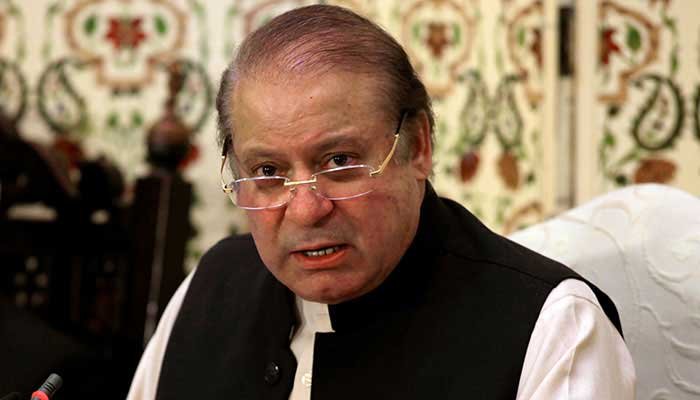
The Punjab government suspended the Medical Superintendent (MS) and a senior doctor of Lahore’s Kot Khawaja Saeed Hospital over Nawaz Sharif’s fake vaccination entry case.
According to the Federal Investigation Agency (FIA) watchman, Abul Hassan and ward boy Adil used the ID of a third employee, Naveed, to enter Sharif’s fake data into the system. Police registered cases against the three of them and arrested Abul Hassan and Adil.
Moreover, the investigative team comprising officials from FIA and the provincial health department have seized important records from the hospital.
A four-member team presented a report before Punjab Chief Minister (CM) Usman Buzdar. The National Command and Operations Centre (NCOC) summoned the Punjab health secretary to Islamabad.
A fake entry was made on the National Database and Registration Authority (NADRA) portal, which said that Nawaz, who is currently in London, was administered the first dose of Sinovac on September 22 and he is due to receive the second dose next month. The entry was later deleted from NADRA portal.
Pakistan Muslim League-Nawaz (PML-N) Vice President Maryam Nawaz said, “Just like this fake government, its vaccination record and entry data for vaccines is also fake.”
National Database and Registration Authority (NADRA) has launched ‘Qaumi Tasdeeq-o-Tajdeed Campaign’, which is a new system for the verification of family members.
آپ کے خاندان میں کوئی غیر متعلقہ فرد تو رجسٹرڈ نہیں؟
ایک SMS سے تصدیق کریں، گھر بیٹھے با آسانی۔
نادرا میں اپنےرجسٹرڈ موبائل نمبر سے 8009 پر اپنا قومی شناختی کارڈ نمبر Space تاریخ اجراء dd-mm-yyyy SMS کریں جواب میں آپ کواپنے خاندان کے افراد کی تفصیلات(فیملی ٹری) موصول ہوں گی۔ pic.twitter.com/Xw2nychHPb
Users will have to send their 13-digit CNIC number with no space and its date of issuance at 8009. This can also help women to find out if their husband is hiding a secret second marriage.
NADRA will send you details of your family members. If any information is incorrect or the name of an unrelated person is included in the family members, write ‘1’ in reply to inform NADRA. A representative of NADRA will then contact you from its helpline 051-2778009. If the information is correct, then reply ‘2’ to confirm it to the authority.
Federal Minister for Human Rights Dr Shireen Mazari tweeted on Friday that 24 men had been detained through geo-fencing and matching records from National Database and Registration Authority (Nadra) for harassing and assaulting a female TikToker and her team members at Lahore’s Greater Iqbal Park on Independence Day.
The minister wrote, “More arrests are expected today” in connection with the “condemnable” incident.
She further stated that a police investigation was also in progress against the alleged negligence of police officers in the assault case.
Following a meeting with Punjab Chief Minister Usman Buzdar and other senior officials, Inspector General Inam Ghani said that senior police officers had been suspended for negligence and delayed response in dealing with the incident.
“We have suspended SHO and SDPO whereas Divisional SP, SSP Operations and DIG Operations Lahore have been removed from their posts,” Ghani wrote in a tweet.
“Strict departmental action will be taken once the inquiry committee submits its detailed report on the role and response of other officers,” he added.
We have suspended SHO and SDPO whereas Divisional SP, SSP Operations and DIG Operations Lahore have been removed from their posts. Strict departmental action will be taken once Enquiry Committee submits its detailed report on the role and response of other officers in sha Allah. pic.twitter.com/RJzwbS1Lan
On August 17, the Lorry Adda police had filed a case against nearly 400 suspects for harassing and assaulting a woman at Lahore’s Greater Iqbal Park. The videos of the incident went viral on social media and sparked an outrage.
As the coronavirus vaccination drive is speeding up in Pakistan, the National Command and Operations Centre (NCOC) has allowed restaurants to operate at 50 per cent indoor capacity for vaccinated individuals only.
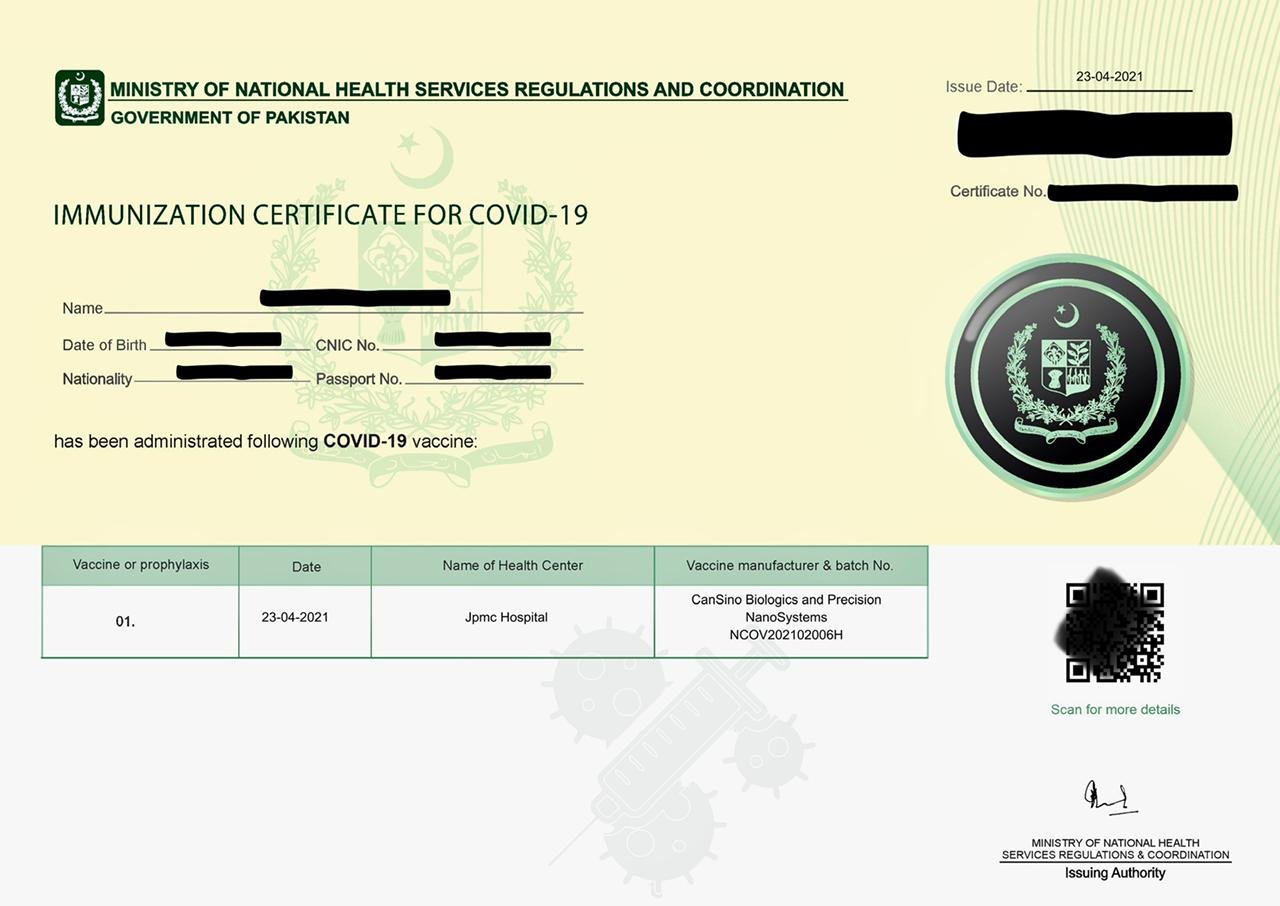
One of the most common questions on people’s minds these days is how do I get my vaccination certificate? Here is how you can get it:
Step 1
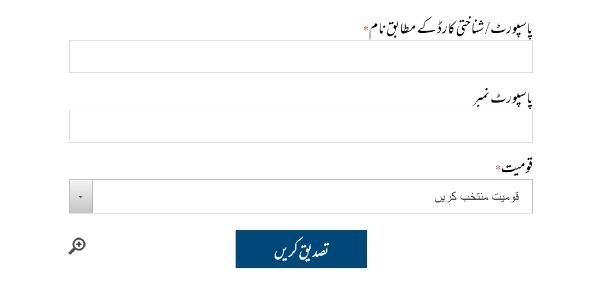
The first step is to visit the National Immunisation Management System (NIMS) website and enter the details of your computerised national identity card (CNIC). The certificate’s fee is Rs100 that can be paid through your debit or credit card.
The certificate can also be downloaded if you have received only your first shot of the vaccination or you can visit a National Database and Registration Authority (NADRA) centre to get your vaccination certificate.
Step 2
In the next step, enter the required details, i.e. your name and nationality.
Step 3
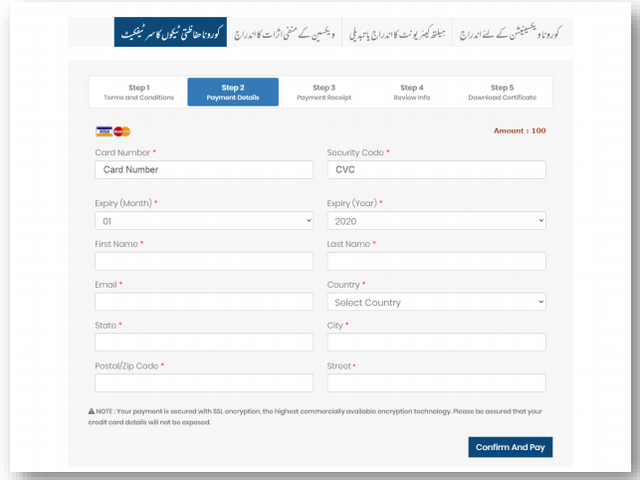
Enter your payment details.
Step 4
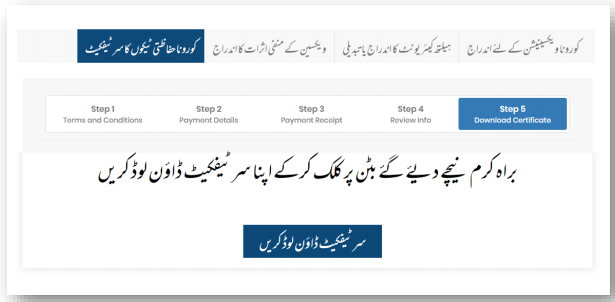
After paying the amount, you can download a receipt, check your information and then your certificate will be ready to download.
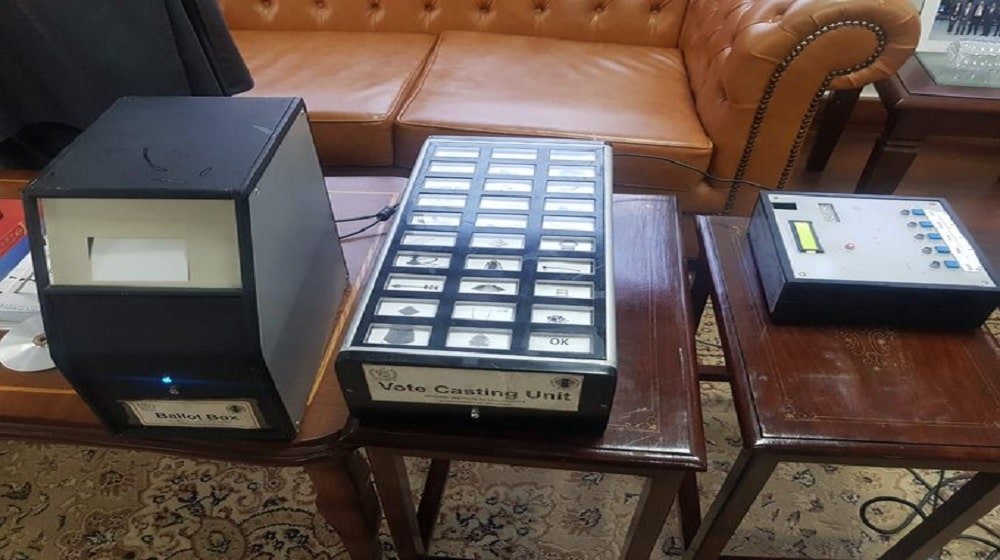
National Institute of Electronics (NIE) has claimed that their new e-voting machines will halt election rigging and ensure transparency during the general elections.
Earlier this month, the Ministry of Science and Technology (MoST), NIE, National University of Science and Technology (NUST), and COMSATS University have collaborated to develop indigenous e-voting machine.
While explaining the voting process through the indigenously manufactured e-voting machine, Technical Research Director of NIE, Kamran Bhatti, said that symbols of all contesting political parties will be visible on the machine for the e-voting machine.
Voters will only need to press the button of the candidate they want to vote for. A green light on the ballot box of the e-voting machine will notify them that they have successfully cast the vote.
The e-voting machine will also compile the final tally after the polling ends. The record of the e-voting could be used in courts and also as a reference if the results are challenged.
The Director of NIE added that voters will be verified through thumb impressions that will be provided by NADRA on the day of general elections.
He claimed that the NIE e-voting machine cannot be hacked that will ensure the safety of the data of the voters.
Prime Minister (PM) Imran Khan has been making efforts to introduce an e-voting system in the general elections to ensure impartiality and transparency.
In November 2020, PM Imran had announced electoral reforms for free and fair elections in the country.
The reforms included open balloting through a show of hands during Senate elections, an e-voting system for general elections and allowing overseas Pakistanis to cast their votes.
The Federal Board of Revenue (FBR) and National Database and Registration Authority (NADRA) have launched a web portal through which Pakistanis can view the list of declared assets and download information for documentation and record-keeping.
The portal provides the following services that allow you to check your asset details online:
a) FBR Tax Profiling System
b) FBR Assets Inquiry System (FBR Maloomat)
The web portal created by FBR and NADRA collects your data from official sources in order to calculate your assets. As long as you’re a Pakistani citizen, you can view the information from anywhere in the world.
ELIGIBILITY CRITERIA TO ACCESS THE INFORMATION:
You must be a Pakistani national with a valid CNIC or NICOP
You should be above 18 years of age
Citizens residing in Pakistan must have a PTA registered mobile number
Overseas Pakistanis must have a valid email address
You must make a payment of PKR500 through NADRA e-Sahulat or you credit/debit card
Create your account by entering your valid CNIC number in the relevant field followed by the computer-generated verification code and click on ‘Submit’
Pay the application fee via your credit/debit card or through a nearby NADRA e-Sahulat franchise. A city-based drop-down list of e-Sahulat outlets is also there on the portal for your convenience
Once you have successfully made the payment, here is the information that will be available for viewing:
Tax Filer Status
NTN number
Total Income
Tax Paid
Net Wealth
Withholding Tax
SIM card in your name
Number of cars
Arms License
Executive Services
Passports
Travel information
6. You can save the information in a PDF format and print it if needed.
FBR ASSETS INQUIRY SYSTEM
Here is a step-by-step tutorial on how to carry out an FBR assets check using the board’s web portal.
Use your registered mobile number to send your CNIC number to 9966
OR
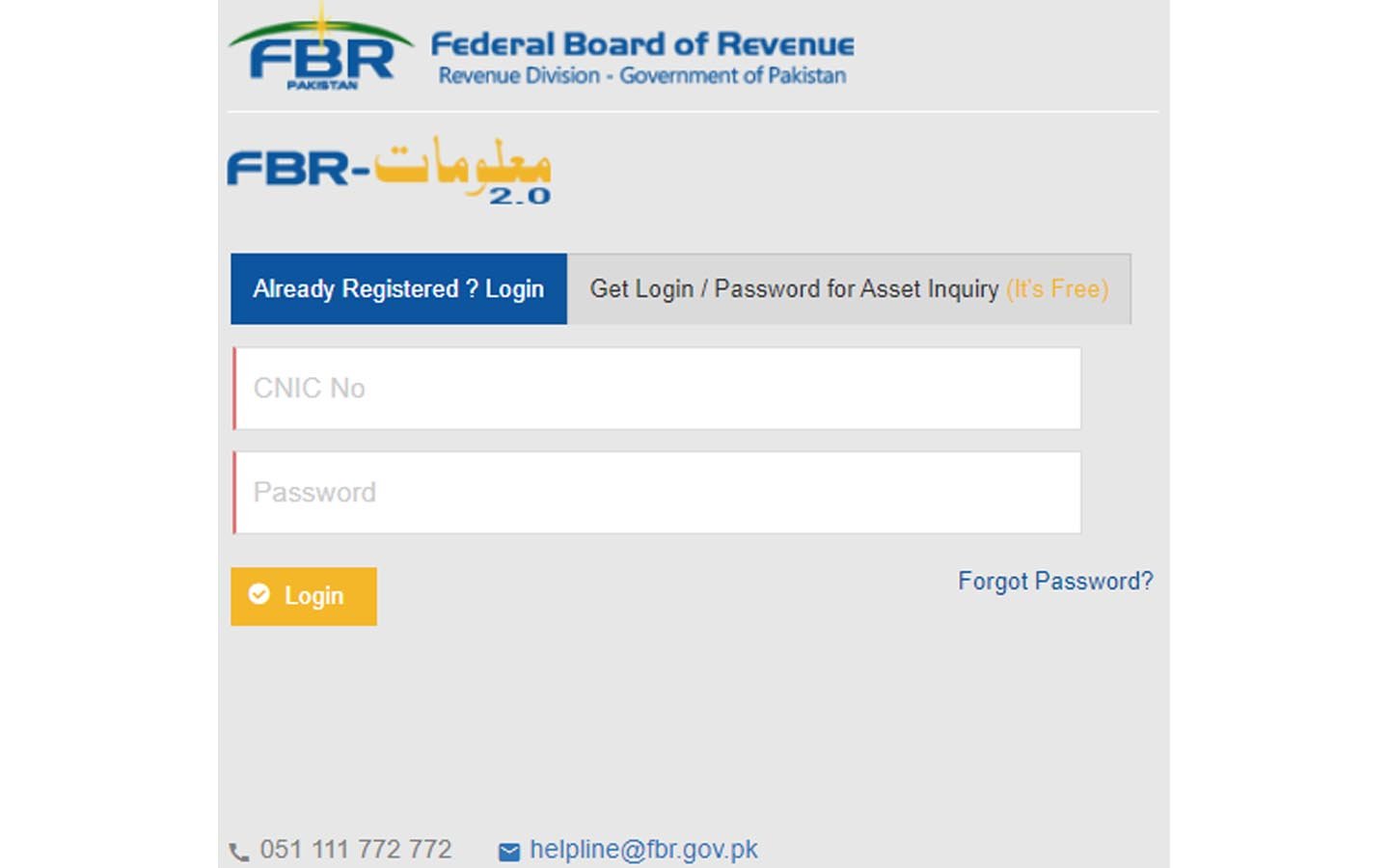
3. Select the ‘Get Login/ Password for Asset Inquiry (It’s Free)’ tab on the top. Then, enter your CNIC number, name, choose an appropriate prefix, pick current service provider and add your mobile number in the relevant fields. Just make sure the phone number you enter into the portal is registered in your name.
4. Receive the code on your mobile number
5. Once you login to the FBR Asset Inquiry System, you will be able to see different tabs. From there, select any tab and click on ‘Load Data’ to see your relevant data.
You can view the following information if you check your assets using FBR:
Withholding Tax
Vehicles
Travel Information
Utilities with bill amount
The details of properties in your name
FBR updates assets data on its portal on a regular basis. Therefore, you will be required to visit the portal regularly to view updated data.
The Sindh government will pay daily wage labourers who have no work these days due to the coronavirus lockdown through a mobile wallet application. The money will be given against their CNIC number and labourers will be able to get their money by showing their ID card and phone at mobile shops.
Registration requests are being submitted and the government has asked NADRA, the FIA, FBR and State Bank for help verifying them.
People who have travelled abroad, except for Hajj or pilgrimages and those with over Rs10,000 in their bank accounts will not be eligible for this money.
Daily wage workers have been out of work since the coronavirus lockdown. The government promised to provide them rations. Sindh has reported 502 cases so far.
NADRA, PTA spokespersons reject claims against their respective departmentsas data leakmakes headlines
In a massive breach of privacy, personal and sensitive data of millions — if not hundreds of millions of Pakistanis — has been leaked over the internet as blame game continues between the authorities concerned with none of them willing to take the fall for the divulgence.
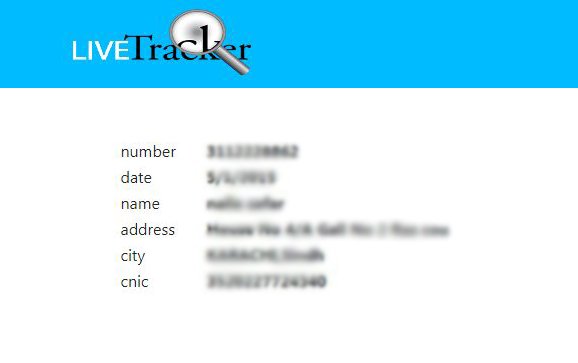
According to the details, multiple smartphone applications and websites, one of which is Sim Database Online, are hosting millions of Pakistani telecom users’ sensitive data such as their Computerised National Identity Card (CNIC) numbers, names and even residential addresses, all of which can be accessed by simply entering the victim’s mobile number.
Not only does the web-based application further goes on to reveal other mobile numbers registered in the name of the privacy breach victim, but also claims to be providing services such as mobile phone tracking.
A screen grab of ‘Sim Database Online’
“Such applications have been around for quite some time now and most probably are the reason behind the recent spike in number of identity theft incidents in Pakistan,” sources told The Current, adding that leaks of government-held databases remain the biggest contributor to identity theft-related crimes in the country, around 50,000 of which were reported in 2019 alone.
Some groups on Facebook are also offering information regarding driving licences, current location, call details and even criminal records associated with any CNIC numbers if you pay them, sources claimed. “You can even dig out the National Database and Registration Authority (NADRA) family trees associated with a CNIC for a few hundred rupees.”
They went on to claim it wasn’t just Pakistanis’ confidential data that was being hosted by such web applications. “Sensitive personal information of Afghans and Indians can also easily be accessed through these websites, but there appears to be no urgency among authorities of the three countries to protect their citizens,” they claimed.
When asked if NADRA or the Pakistan Telecommunication Authority (PTA) were to be held responsible for the leak, they blamed the latter, saying the watchdog had failed to keep an eye on what the country’s telecommunication companies were doing with sensitive data of their customers.
“How else do you the inboxes of so many people get flooded with text advertisements?” sources questioned, alleging that a data archive of registered telecom users was leaked online in August 2017.
“The archive contains information about registered mobiles users of Pakistan categorised by their telecom companies. It is publicly available and contains personal information recorded to verify SIM cards. Despite the leaked information being brought to light by many, the data remains available.”
Speaking to The Current, an information technology (IT) expert said that e-governance came with a set of standards across the world. “If you give access to someone, you have to follow these standards and maintain a certain security level. But unlike the rest of the world… where they have emergency response teams to investigate such issues, Pakistan has had no such probes I know of.”
“Instead of having teams that react to such incidents, we need certain proactive measures,” the IT expert said, adding that privacy over the internet was a right of the users, and most identity theft-related crimes could be linked to data leaks associated with government bodies over the years.
NADRA & PTA:
When approached, NADRA spokesperson Faik Ali told The Current that there was no truth to the claims being made regarding the role of the authority in the data leak as it very carefully managed the sensitive registration database of all citizens.
“NADRA has nothing to do with it,” he said and also rubbished claims regarding a data breach from two years ago.
“We had in 2018 also denied accusations of leakage of voters’ data ahead of the general election,” he said, adding that it was also clarified by the authority in a letter to the Election Commission of Pakistan (ECP). “There has never been a data breach in the history of NADRA and we have never shared any citizen’s data with anyone.”
Faik also reiterated NADRA’s commitment to protect sensitive data of all citizens come what may.
PTA Public Relations Director Khurram Mehran, on the other hand, rejected all claims regarding the watchdog’s alleged inability to protect the data of telecom networks’ customers, saying that no telecommunication companies were involved in releasing confidential information of their customers.
He, however, said that action would be taken against any company if evidence to support such claims is there.
To a query, the PTA spokesperson further said if there were any such cases, they were to be dealt under the Prevention of Electronic Crimes Act (PECA) provisions by the agency concerned, as they were cybercrime cases.
Repeated attempts were made to contact the chairperson of Senate Standing Committee on IT and Telecommunication, Rubina Khalid, but she was unavailable.