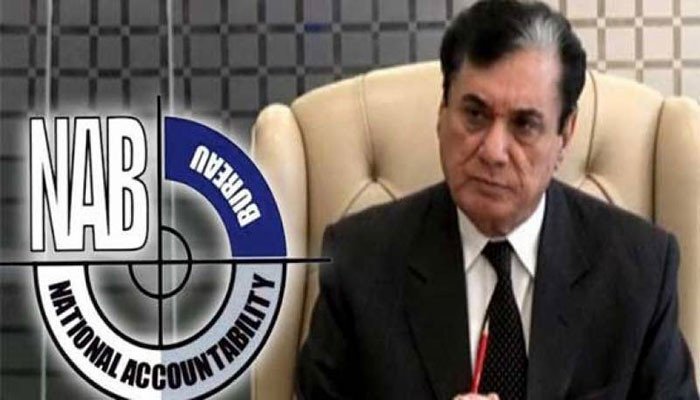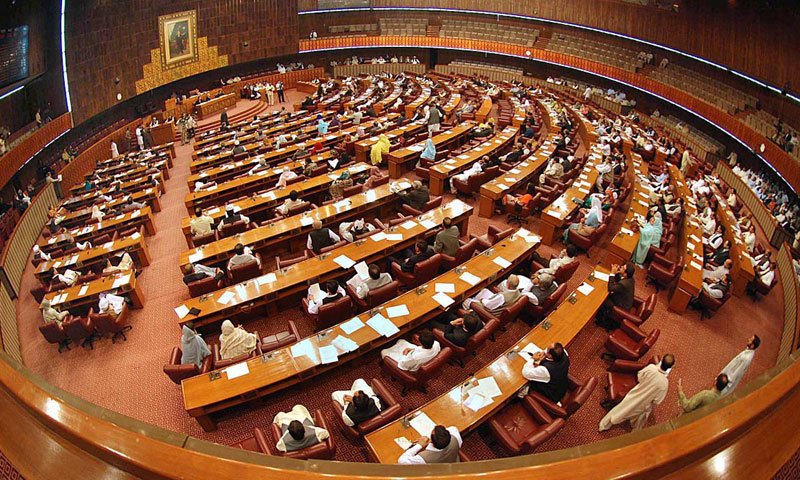
The joint session of Parliament that took place on Thursday passed the National Accountability (Second Amendment) Bill 2021 with a majority in National Assembly (NA).
The bill will be presented in the Senate today for approval. Once passed from the Upper House, the bill will apply to all cases, being probed by NAB since 1999. The key points of the bill are as follows:
1- The NAB chairperson’s term has been reduced from four years to three years and will not be eligible for reappointment or an extension.
2- Consultation for the chairperson of NAB will begin two months prior to the retirement of the previous chairperson.
3- If the leader of the House and Opposition do not agree on a name for a chairperson, then the matter will go to a parliamentary committee. That too is now time-bound and the committee has 30 days to recommend a name.
4- A closed inquiry cannot be reopened without permission from the courts and all inquiries by NAB have to now be completed within six months.
5-People who initiate false or fabricated cases will now be punished with imprisonment of either five years or a fine.
Federal Minister of Law and Justice Azam Nazeer Tarar presented this bill. Speaking about the NAB law, he said it had been used to influence politicians, adding that “judges had also said that the NAB was used to corner politicians”.
Supreme Court asks how cabinet members make amendments to law for own benefits
Following the news of amendments in the NAB law and Election Act taking place in the House, the Supreme Court of Pakistan (SCP) took notice of the situation.
The apex court inquired how could federal cabinet members make amendments benefitting themselves and directed the government to present the details of the cabinet members whose names have been removed from the Exit Control List (ECL).
The Chief Justice of Pakistan (CJP) Umar Ata Bandial asked Attorney General of Pakistan (AGP) Ashtar Ausaf, “At whose behest did the Cabinet amend the rules pertaining to people involved in corruption and defaulters. Did the federal Cabinet approve the amendment in rules?”
Responding to it, AGP Ausaf said that he would present the minutes of the Cabinet meeting for approval.
Similarly, SC Justice Mazhar Naqvi was of the view that the cabinet members benefited from the amendment they approved.
The AGP maintained that he would find out if the members who were on the no-travel list were part of the committee that approved the amendments or not.
Justice Mazhar also observed how a minister facing allegations could make amendments to benefit himself.
No electronic voting machines will be used in elections: Assembly passes bill
The NA also passed the Elections (Amendment) Bill 2022 on Thursday with a majority, seeking to remove the use of Electronic Voting Machines (EVMs) in the upcoming general elections.
Parliamentary Affairs Minister Murtaza Javed Abbasi presented the bill, which was only opposed by Grand Democratic Alliance (GDA). The bill is expected to be sent to the Senate today.
GDA lawmaker Ghous Bakhsh Mehr said that Pakistan should at least try using EVMs. “If not the whole country, then use them in some areas,” he said.
Under the new bill, two amendments were being made to Sections 94 and 103 of the Election Act:
1- In Section 94, the Election Commission of Pakistan (ECP) may conduct pilot projects for voting by overseas Pakistanis in by-elections to ascertain the technical efficacy, secrecy, security, and financial feasibility of such voting and shall share the results with the government, which shall, within 15 days from the commencement of a session of a house after the receipt of the report, lay the same before both houses of parliament.
2- In Section 103, the ECP may conduct pilot projects for the utilisation of EVMs and biometric verification system in the by-elections.
Azam Nazeer Tarar said that these amendments will ensure free, fair, and transparent elections. He added that ECP had also raised objections to the use of EVMs.
About the matter of Overseas Pakistanis’ vote, the federal minister said, “Overseas Pakistanis are a precious asset of the country and the government does not believe in snatching their right to vote.”
Similarly, Pakistan People’s Party (PPP) argued that the amendments will not deprive Overseas Pakistanis of their voting right.
Prime Minister (PM) Shehbaz Sharif’s Focal Person on Digital Media Abubakar Umer also issued a clarification via Twitter on the matter. He said, “The overseas Pakistanis voting right remains intact. Only voting through EVM has been discarded due to ECP objections on some technical aspects.”
The details of the expenses for the upcoming general elections were also presented in the NA session. The elections would cost approximately Rs47.41 billion, of which around Rs15 billion would be for ensuring security.