Tag: Naomi Osaka

  • Naomi Osaka might take another break after shocking defeat at US Open

    Naomi Osaka might take another break after shocking defeat at US Open

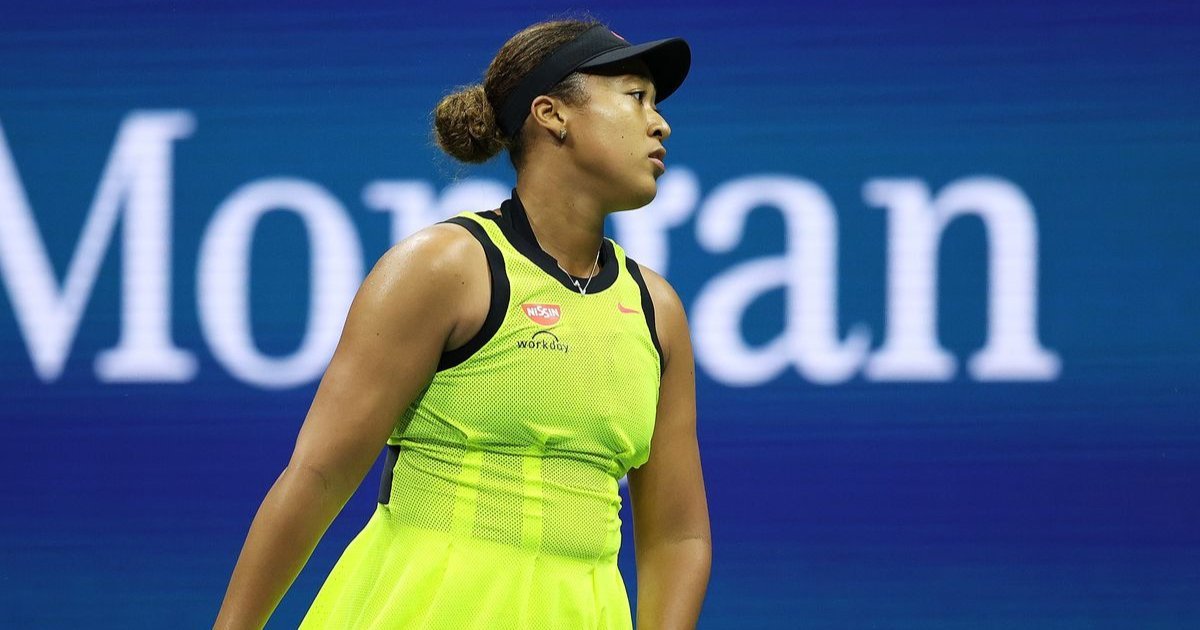
    “I honestly don’t know when I am going to play my next tennis match,” announced defending US Champion Naomi Osaka at her news conference after a shocking loss to 18-year-old Leylah Fernandez from Canada. Osaka broke down during the news conference after making this announcement.

    “I think I am gonna take a break from playing for a while,” added Osaka.

    “I feel like for me, recently, like when I win, I don’t feel happy. I feel more like a relief. And then when I lose, I feel very sad,” Osaka said earlier in the post-match news conference. “I don’t think that’s normal.”

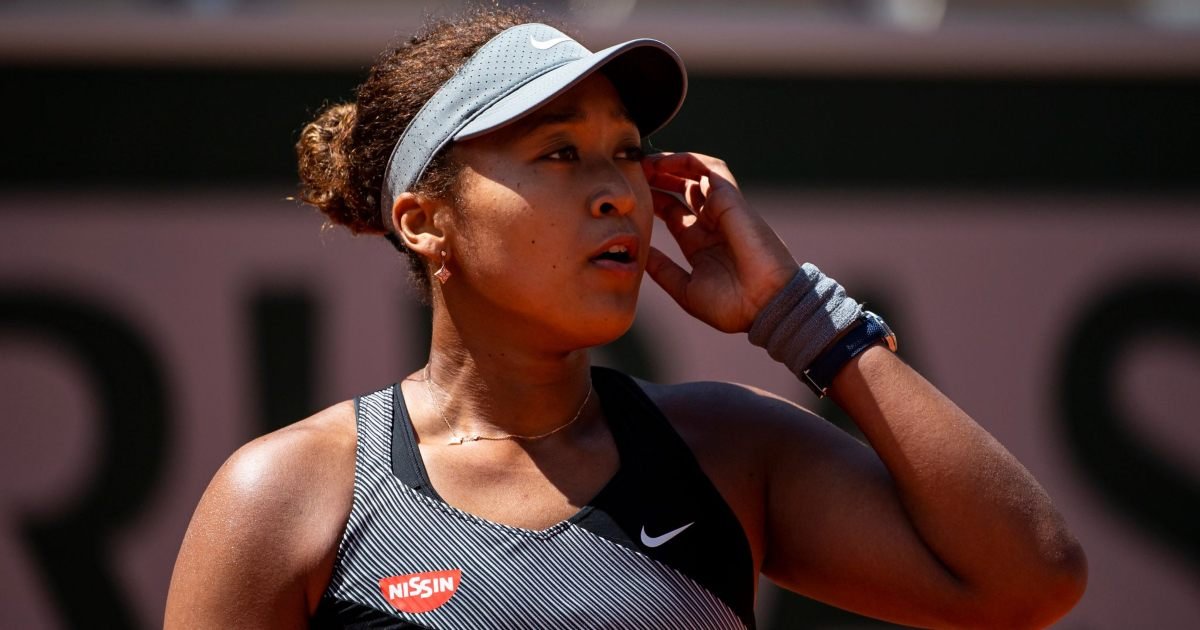
    Just a few months ago, Osaka withdrew from the French Open after revealing she has struggled with her mental health since first becoming a Grand Slam champion in 2018. Osaka announced her withdrawal from Roland Garros a day after she was fined $15,000 by the French Open and warned that she could face expulsion from the tournament, following her decision not to speak with the press during the tournament.

    The 23-year-old World Number 3 also missed Wimbledon before returning to tennis at the Tokyo Olympics, where she lit the flame at the opening ceremony.

  • Naomi Osaka lights Olympic cauldron at opening ceremony in Tokyo

    Naomi Osaka lights Olympic cauldron at opening ceremony in Tokyo

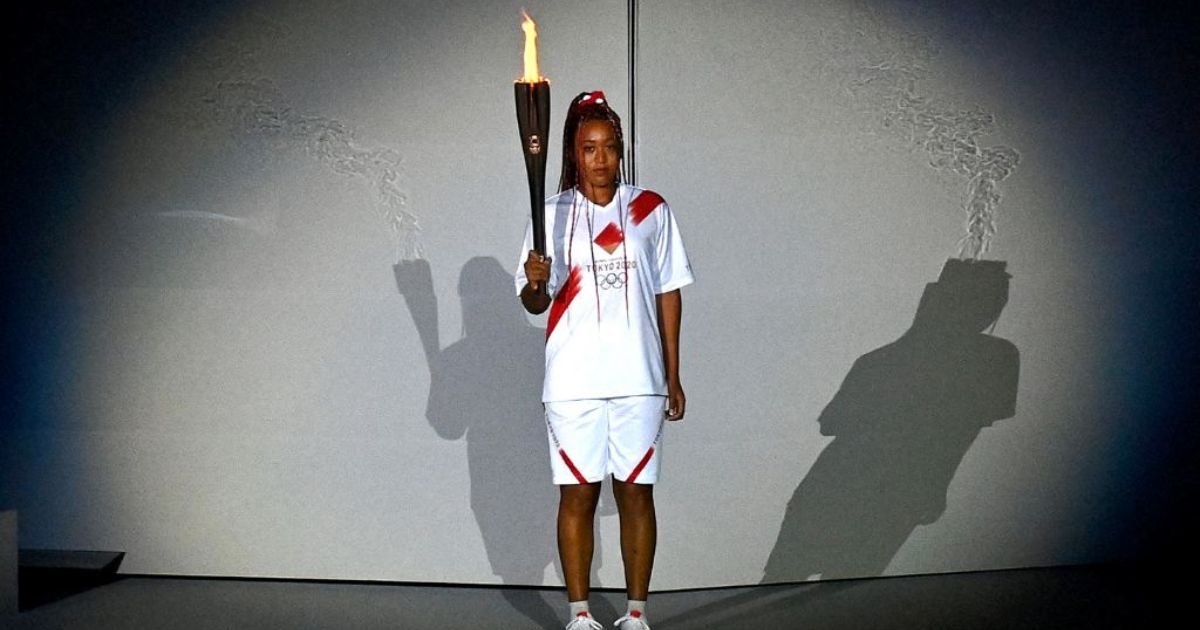
    Naomi Osaka lit the cauldron with the Olympic torch on Friday, which was handed off several times after entering the stadium, including from New York Yankees legend Hideki Matsui and a Japanese doctor and nurse. NBC Sports reported that the tennis star’s opening match was pushed back to Sunday so she could take part in the ceremony.

    Paralympian Tsuchida Wakako passed the torch on to several local students, who in turn took it to Osaka.

    Osaka’s mother, Tamika Osaka, is Japanese, and the tennis star is representing Japan in the Olympics.

    “The most important thing was to deliver a message of diversity and inclusion. In the end, we decided on [Osaka] because she is a great athlete and she has been delivering a variety of messages so we thought she was the best person to be the final torchbearer. It was a decision that the whole organising committee came to,” said Hioki Takayuki, who was the executive producer of the Tokyo 2020 Opening Ceremony.

    When asked whether Osaka’s appearance contributed to improving the image of the Tokyo Games, Takayuki said, “It’s more about the absolute values that Naomi Osaka offers. That’s what we focus on. Of course, for the Games as a whole and also for Japan, she is a jewel, she is a treasure for us, so that is why we selected her.”

    Osaka’s big moment comes shortly after she took a step back from the spotlight, citing her mental health, and opted to sit out the 2021 French Open and Wimbledon. In her first match in nearly two months, Osaka is set to take on 52nd-ranked Saisai Zheng of China in the opening round of the Olympic tournament.

    The torch paid homage to the cherry blossom, a symbol for the host country, with its shape of five “petals” from which the flames emerged, according to NBC Olympics, which also reported that the torch was made out of aluminum using the same technology used to produce Japan’s bullet trains.

    The Olympic flame, which goes out in Tokyo on August 8 during the Closing Ceremony, first became part of the modern Olympic tradition in 1928 when it appeared at the Games hosted in Amsterdam. Eight years later, the lighting ceremony and the torch relay were introduced in the Opening Ceremony programme.

    With a slogan of “hope lights our way,” the Tokyo 2020 Olympic Torch Relay began with the traditional lighting ceremony at Olympia, Greece, on March 12, 2020, which was the first lighting ceremony since 1984 to be held without spectators due to the Covid pandemic. In addition, the global health crisis forced the Games to be postponed by a year thus the torch relay was put on hold.

    A year later, on March 25, the torch relay resumed in Fukushima and traversed all 47 prefectures across Japan. The start of the relay coincided with when cherry blossoms hit their peak bloom and the 10th anniversary of the 2011 Great East Japan Earthquake. Organisers wanted the torch relay and its slogan to “showcase the recovery of the areas worst affected by the disaster,” and amid the Covid pandemic, “hope lights our way” additionally symbolises the “light at the end of the dark tunnel; a beacon of hope for the world in the run-up to the Tokyo 2020 Games, themselves a symbol of the resilience, the unity and the solidarity of humankind.”
    Notably, 2021 also marks the 25th anniversary of the 1996 Atlanta Games where the late boxing icon Muhammad Ali lit the Olympic cauldron.

    Even before the official start of the Tokyo Games, this current Olympics cycle has been unlike any other and its reception from local residents has been deeply unpopular. Many fear that hosting the international competitions will result in superspreader events as the country is largely unvaccinated due to a relatively slow rollout and Covid cases continue to rise amid the threat of the delta variant. In addition, major Olympic sponsors and leaders in Japan continue to speak out against moving forward with the Games.
  • Osaka deserves support, not backlash

    Osaka deserves support, not backlash

    “It is a part of your job.” “You are being paid millions of dollars each year.” “You are a privileged brat who is exploiting and trivialising mental health.”

    These are some of the profoundly hysterical responses by a slew of callous simpletons that tennis star Naomi Osaka had to endure after her decision to not attend the press conferences because of mental health struggles.

    In an ideal world, board officials should have addressed Osaka’s concerns, done what they could do to help her in her bouts against anxiety, and applaud her for mustering up the courage to prioritise her mental health. Instead, she was pilloried, fined 15 grand, and threatened with suspension following which she announced to withdraw from the French Open.

    It is worth a mention that Naomi didn’t refuse to take questions on the court following her victory in the first-round match, which means that she was setting a boundary on how much time she can give to the media to protect her mental health. Attending press conferences or answering media questions might be an athlete’s obligation but they can be taxing. This is not to suggest cutting journalists’ access to players at all but the point at issue is whether press conferences are banal or do they offer anything relevant to the game.

    In his column for The Guardian, Jonathan Liew writes, “The modern press conference is no longer a meaningful exchange but really a lowest‑common‑denominator transaction: a cynical and often predatory game in which the object is to mine as much content from the subject as possible.” 

    In addition to this, other journalists who have attended numerous press conferences were also of the view that these conferences are superfluous.

    Lindsay Andler, The Athletic’s reporter for New York Yankees, tweeted; “We don’t *want* press conferences. We want to talk to people in person, like human beings. The reality TV-ification of press availability is an annoyance to me.”

    Pakistan’s Ahmer Naqvi also took to Twitter to post a thread about the banality of press conferences and how majority of the cricket press conferences he has attended have been useless.

    “Other than incredibly lazy questions, the only alternative is cynical types looking to pounce on anything that can be spun to be controversial,” Ahmer tweeted. “There are a handful of journos who want to ask interesting things, but the players are so scared of being quoted out of context that they will (understandably) give a generic answer that covers all bases.”

    If any athlete or even Naomi in this case would have excused themselves from any obligation because of a physical injury like a wrist or leg injury, there would have been no furore. This triggers a pertinent question: why is then Osaka getting so muck flak over mental health struggles? All of the criticism of Naomi Osaka stems mainly from the pernicious misconception that athletes are immune to mental breakdowns. As a consequence, many athletes are reluctant to come forward and speak about mental health issues because of the stigma attached to mental problems. 

    English presenter Charlie Webster is doing an incredible job to lay this misconception to rest by inviting current and retired athletes to her podcast, ‘My Sporting Mind’, where they talk about their mental wellbeing journey.

    Governing bodies often wax lyrical about how they care for the athletes and their mental health but this Naomi episode is a damning indictment of their utter disregard for the mental health of players. Also, a tip of the hat to Naomi for not cowing down to the pressure by board officials and showing that mental health and self-care comes ahead of everything else.

  • ‘Huge waves of anxiety,’ Naomi Osaka withdraws from French Open

    ‘Huge waves of anxiety,’ Naomi Osaka withdraws from French Open

    Japanese tennis ace Naomi Osaka has withdrawn from the French Open due to “huge waves of anxiety.”

    Osaka announced her withdrawal from Roland Garros a day after she was fined $15,000 by the French Open and warned that she could face expulsion from the tournament, following her decision not to speak with the press during the tournament.

    Osaka, 23, who won her first match against Patricia Maria Tig, was scheduled to face Ana Bogdan in the second round. She released a statement last Wednesday stating her intention to skip her media obligations during Roland Garros because of the affect of interacting with the press on her mental health.

    “This isn’t a situation I ever imagined or intended when I posted a few days ago,” Osaka wrote on social media, “I think now the best thing for the tournament, the other players and my well-being is that I withdraw so that everyone can get back to focusing on the tennis going on in Paris.”

    “I never wanted to be a distraction and I accept that my timing was not ideal and my message could have been clearer. More importantly, I would never trivialise mental health or use the term lightly.”

    In her original statement, Osaka said she expected to be fined. The French Tennis Federation (FFT) President Gilles Moretton, has stated that his organisation would penalise Osaka, after which she was fined $15,000.

    The organisation has not given an official response to the fine, despite Osaka’s statement, explaining her anxiety. Their heavy-handed approach to Osaka has been criticised as a disproportionate response by many, saying that Osaka should not be penalised for putting her mental health first. The attention Osaka received after her statement has been compounded by the announcement of her fine and possible default.

    In her withdrawal statement, the four-time grand slam champion said she has suffered from “long bouts of depression” since the 2018 US Open final. Osaka defeated Serena Williams then to win her first grand slam title in a controversial match that similarly led to significant attention and queries from the media.

    “Anyone that knows me knows I’m introverted, and anyone that has seen me at the tournaments will notice that I’m often wearing headphones as that helps dull my social anxiety,” Osaka wrote.

    Osaka explained in her statement, saying she suffers “huge waves of anxiety” before speaking with the media. “Here in Paris, I was already feeling vulnerable and anxious so I thought it was better to exercise self‑care and skip the press conferences. I announced it preemptively because I do feel like the rules are quite outdated in parts and I wanted to highlight that,” she wrote.

    “I’ll see you when I see you,” concluded Naomi.

    Osaka has received support from numerous public figures since her announcement.