Tag: Narendra Modi

  • Anti-Muslim slogans call for murder at event organised by BJP

    Anti-Muslim slogans call for murder at event organised by BJP

    Inflammatory, anti-Muslim slogans calling for murder were raised in New Delhi, India, on Sunday during a march “against Colonial-era laws” in the country — an event organised by a Bharatiya Janata Party (BJP) leader Ashwini Upadhyay, reported The Wire.

    The event, organised under the ‘Bharat Jodo Movement’, demanded the end of “colonial-era laws” by implementing a Uniform Civil Code. The event was reportedly held without police permission.

    In photos and videos of the event doing the rounds on social media, violent and inflammatory anti-Muslim slogans were raised at the event, including slogans directly calling for the murder of Muslims. The Delhi Police have registered an FIR against unknown persons.

    https://twitter.com/asfreeasjafri/status/1424366863711043587?s=21

    People are questioning why an FIR has been registered against unknown people when their faces are clearly visible.

    Senior Journalist Barkha Dutt tweeted: “Revolting anti-Muslim slogans in heart of the capital is a clear example of hate speech and incitement to violence.”

    “I do not agree with the sedition law or with the phrase anti-national but if ever there was an apt definition of it, it is these men, caught on tape,” tweeted the journalist.

    Indian journalist Smita Sharma tweeted, “Video clips doing the rounds of vitriolic dangerous sloganeering against Muslims in the heart of the capital.”

    Sharma further said, “These are not fringe elements or just stupid crowds. They have been emboldened. Will @DelhiPolice act against these toxic anti-nationals?@CPDelhi.”

    Journalist Maya Mirchandani tweeted, “A group gets permission to hold a sit in at Jantar Mantar supposedly for unity in the country, then raises genocidal slogans against Indian Muslims in the heart of Delhi, a stone’s throw from parliament. Under govt’s nose, under @CPDelhi nose. How? #rightwingextremism #hatespeech”

  • ‘PM Khan’s phone does not have messages of Gujarat massacre like Modi’: Fawad

    ‘PM Khan’s phone does not have messages of Gujarat massacre like Modi’: Fawad

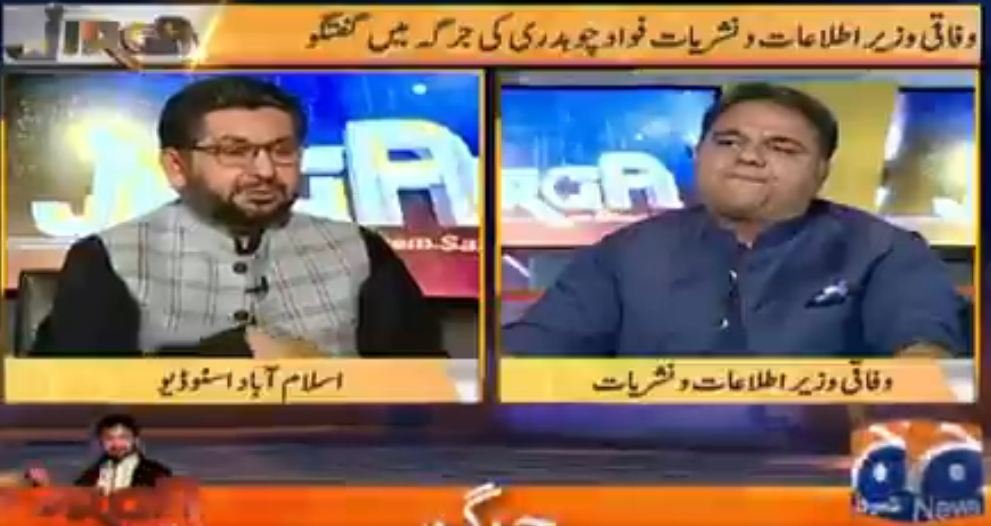
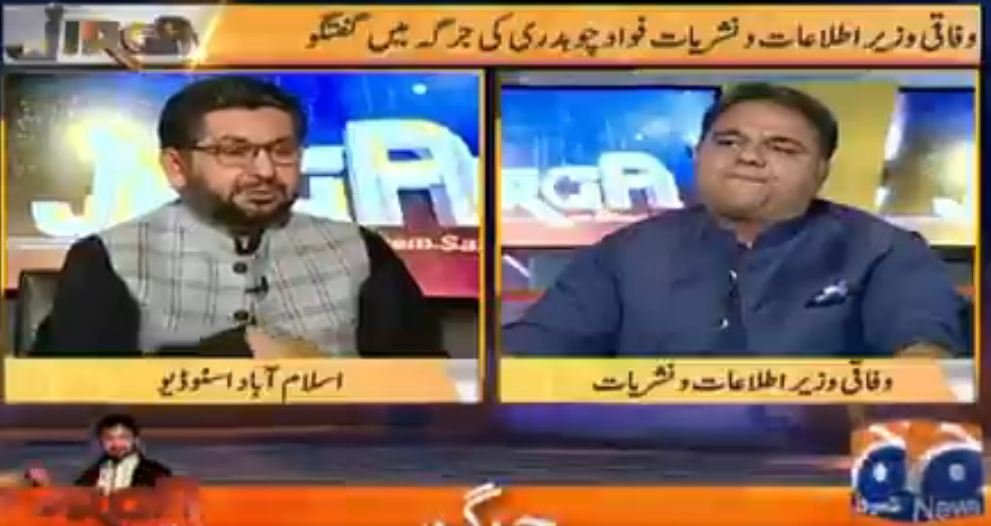
    Federal Minister for Information and Broadcasting Fawad Chaudhry, while speaking on Geo News’ programme ‘Jirga’, said, “Two days prior to the story of Pegasus spyware being published, I received a letter from The Guardian revealing that there was a list of phone numbers that had been hacked. Three numbers previously used by Prime Minister Imran Khan were also in the list.”

    Fawad said that the letter further added that he needed to confirm whether the numbers included in the list belonged to PM Khan or not.

    Fawad said that a team was being put together by the government, who would do the forensics to verify whether the premier’s phone was hacked or not. Only then will the government be able to tell if the attempt to hack the phone was successful or not.

    “It is confirmed that an attempt to hack the phone was made,” said Fawad.

    On being asked by Saleem Safi that if the phone was indeed hacked and the Indians did get the data from the premier’s phone, what implications would it have for the country, Fawad replied, ” PM Khan’s phone did not have messages of Gujarat massacre like Indian Prime Minister Narendra Modi. His phone does not have any orders of murder in it.”

    Fawad condemned how Modi and his government had hacked the phones of Indian journalists, judges, his own government officials, and other world leaders and said that the United Nations must intervene in this regard.

    Fawad Chaudhry added that the Foreign Office has taken notice of India’s use of Israeli spyware, Pegasus, to hack Prime Minister Imran Khan’s phone and had already said: “We call on the relevant UN bodies to thoroughly investigate the matter, bring the facts to light, and hold the Indian perpetrators to account.”

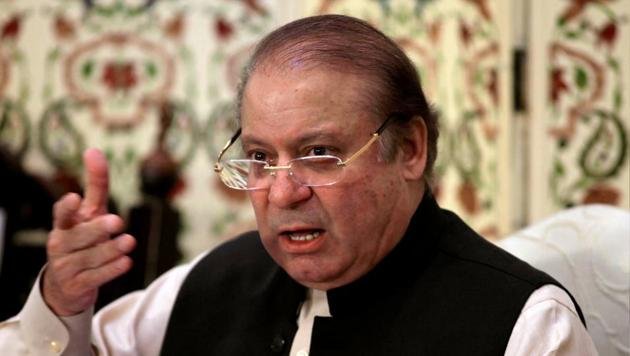
    When questioned about the meeting between Imran Khan and Narendra Modi before he came into power and whether it was discussed with the then government, Fawad responded that PM Khan’s meeting was public and the media was present. Fawad criticised Nawaz Sharif’s meeting with Afghan National Security Adviser (NSA) Hamdullah Mohib in London and said this was news shared with the Afghan media.

    “I won’t call Nawaz Sharif a traitor but it was a very irresponsible act by him,” added Fawad.

    Earlier this week, Pakistan Muslim League-Nawaz (PML-N) leader Nawaz Sharif was met by Afghan National Security Adviser Hamdullah Mohib and State Minister for Peace Sayed Sadat Naderi.

    The National Security Council of Afghanistan (NSCA) gave an update about the meeting on Twitter Saturday, saying that the Afghan state minister for peace and NSA discussed “matters of mutual interest” with the former Pakistan prime minister.

    Nawaz Sharif’s meeting faced extreme criticism from the government.

  • Our own people were involved in drone attacks says PM Khan

    Our own people were involved in drone attacks says PM Khan

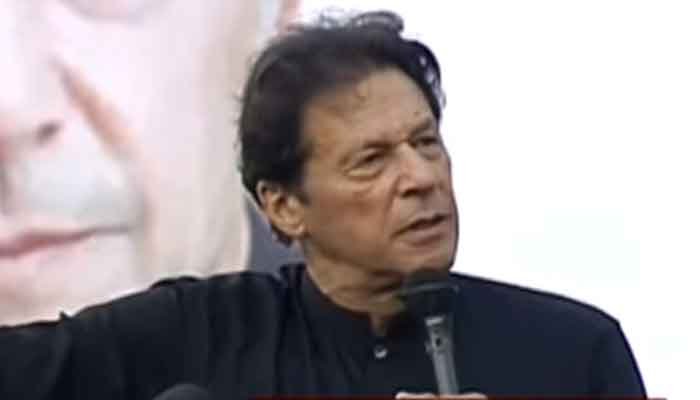
    Addressing an election rally in Kotli, Azad Kashmir, Prime Minister Imran Khan said, “Our ally, the one we considered our friend used to do drone attacks on our country. Drone attacks used to occur in Pakistan both during the tenure of Pakistan Muslim League-Nawaz (PML-N) supremo, Nawaz Sharif, and former President, Asif Ali Zardari’s time.

    They both used to condemn the attacks but deep with they had permitted for the attacks to occur. Why doesn’t any drone attack happen in my [PM Imran Khan] term.”

    “You should not blame the United States for the drone attacks, our own people were involved,” added the prime minister.

    PM Khan asked the people to question the Opposition as to what did they do for the betterment of their people while they were in power

    “Both PML-N and Pakistan People’s Party (PPP) both had five years in power, how much did these two parties advocate for the people of Kashmir internationally?” questioned PM Khan.

    Khan reiterated that ever since the Indian Prime Miniter Narendra Modi’s party, Bharatiya Janata Party (BJP) came into power, the people of Kashmir have gone through the most turmoil.

    “The ideology of Rashtriya Swayamsevak Sangh (RSS) being practiced by Modi is that of the Nazism, ‘borrowed by the German Nazi’,” said the PM.

    “India has the strongest lobby with Israel and our Prime Minister (Nawaz Sharif) was busy inviting Modi to weddings for his own benefit.

    Earlier during the day, Prime Minister Imran Khan had rubbished talk of him “wishing to turn Azad Jammu and Kashmir” into a new province of Pakistan.

    “I do not know where all this talk has sprung from,” he said, dismissing any notion of such an idea.

    “But what I want to make clear now, is that in 1948, there were two United Nations Security Council resolutions which granted the people of Kashmir the right to decide their own future. According to the UN resolutions, the people had to decide whether they want to join Hindustan or Pakistan.

    “I want to clarify to all of you today. InshaAllah, a day will come, when all the sacrifices made by the people of Kashmir, will not be wasted. God will grant you that right. There will be a referendum, InshaAllah.

  • Government blames Nawaz Sharif for PM Khan’s phone hacking

    Government blames Nawaz Sharif for PM Khan’s phone hacking

    Minister of State for Information and Broadcasting, Farrukh Habib, said that when Prime Minister Imran Khan’s phone was being hacked through Pegasus spyware, it was Nawaz Sharif’s government.

    Farrukh made this statement after The Guardian reported that the Indian government targeted Prime Minister Imran Khan’s phone for surveillance.

    Farrukh further added that while Indian Prime Minister Narendra Modi was busy hacking the phones of his Opposition, who knows, Nawaz Sharif might have sought Modi’s help for some other purposes as well.

    “We will not allow them [Nawaz Sharif and Narendra Modi] to remain silent on these issues,” added Farrukh.

    Special Assistant to Prime Minister Dr Shahbaz Gill tweeted, “Maryam Safdar kept speaking against Imran Khan. Today, the international media has once again exposed the nexus between her [Maryam Nawaz’s] father and Israel.”

    “He [Nawaz Sharif] was working with Israel to hack the phones of Imran Khan and other government officials,” added Gill.


  • US says it recognises and supports Pakistan’s continued efforts to satisfy FATF

    US says it recognises and supports Pakistan’s continued efforts to satisfy FATF

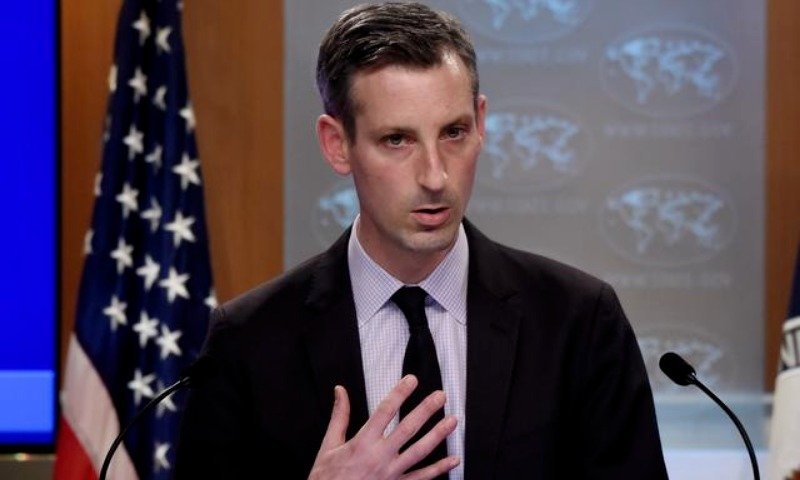
    During a regular press briefing, the United States (US) State Department’s spokesperson Ned Price said, “We do recognise, and we support Pakistan’s continued efforts to satisfy the Financial Action Task Force (FATF) obligations,” reported Geo News.

    This statement comes after Indian External Affairs Minister S Jaishankar admitted that Pakistan is on the grey list of the Financial Action Task Force (FATF) because of the “efforts of Narendra Modi’s government”.

    When asked to comment over Jaishankar’s admission, Price said that the US encourages Pakistan to continue working with FATF and the international community to swiftly complete the remaining action item.

    “We do further encourage Pakistan to expeditiously implement its new second action plan,” said Price.

    The spokesperson also commented on the alleged abduction of the Afghan ambassador’s daughter. “Afghanistan’s neighbours do have a role to play.”

    Price added, “I would add that tangible and material support for the Afghanistan peace process is vital for its ultimate success, as are the longer-term relations between Afghanistan and Pakistan.”

    “We understand the crucial role that Pakistan has the potential to play in this regard as well,” said the US State Department’s spokesperson.

  • Indian government spying on PM Khan through his phone: Report

    Indian government spying on PM Khan through his phone: Report

    The Indian government targeted Prime Minister Imran Khan’s phone for surveillance, reports The Guardian. Analysis of the more than 1,000 mostly Indian phone numbers selected for potential targeting by using Pegasus spyware strongly indicates intelligence agencies within the Indian government were behind the selection.

    Among other numbers identified by the Pegasus Project, the client identified two numbers registered to or once known to have been used by PM Imran Khan. The records also included numbers of known priorities of India’s security agencies, including Kashmiri separatist leaders, Pakistani diplomats, Chinese journalists, Sikh activists, and business people who have known to be the subject of police investigations.

    Narendra Modi’s political rival and Congress leader Rahul Gandhi was twice selected as a potential surveillance target in the leaked phone number data, making him one of the dozens of Indian politicians, journalists, activists, and government critics whose numbers were identified as possible targets for the Israeli company’s government clients.

    The phone numbers of over 40 Indian journalists appeared on a leaked list of potential targets for surveillance, and forensic tests have confirmed that some of them were successfully snooped upon by an unidentified agency using Israel’s Pegasus spyware, reported The Wire.

    Forensic tests conducted as part of this project on a small cross-section of phones associated with these numbers revealed clear signs of targeting by Pegasus spyware in 37 phones, of which 10 are Indian.

    Indian ministers, government officials, and Opposition leaders also figure in the list of people whose phones may have been compromised by the spyware, claimed The Wire.

  • Pat Cummins donates $50k for COVID-hit India

    Pat Cummins donates $50k for COVID-hit India

    Pat Cummins, who has enjoyed plenty of gripping battles with India on the cricket pitch, has delivered a classy show of unity with the struggling country as it faces one of the toughest fights in the nation’s history.

    The Australian fast bowler has pledged a generous $50,000 donation to Prime Minister Narendra Modi’s ‘PM Cares Fund’ to supply oxygen to hospitals overwhelmed by the COVID-19 pandemic.

    In a touching message posted on social media, Cummins announced the donation and urged fellow cricketers to donate as well.

    “India is a country I’ve come to love dearly over the years and the people here are some of the warmest and kindest I’ve ever met,” said Cummins. “To know so many are suffering so much at this time saddens me greatly.”

    Talking about the ongoing edition of Indian Premier League (IPL), Cummins said: “There has been quite a bit of discussion over here as to whether it is appropriate for the IPL to continue while COVID-19 infection rates remain high. I’m advised that the Indian government is of the view that playing the IPL while the population is in lockdown provides a few hours of joy and respite each day at an otherwise difficult time for the country.”

    “As players, we are privileged to have a platform that allows us to reach millions of people that we can use for good. With that in mind, I have made a contribution to the ‘PM Cares Fund’, specifically to purchase oxygen supplies for India’s hospitals,” said Cummins, encouraging his fellow cricketers to contribute as well.

    “I will kick it off with $50,000,” said Cummins. “At times like this, it is easy to feel helpless. I’ve certainly felt that of late. But I hope by making this public appeal we can all channel our emotions into action that will bring light into people’s lives.

    “I know my donation isn’t much in the grand scheme of things, but I hope it will make a difference to someone,” he concluded.

    Cummins, who was the most-expensive foreign player purchased in the IPL auction, has repaid the faith with some impressive performances for the Knight Riders including striking an unbeaten 66 off 34 balls in a recent match.

    Meanwhile, India in the last four days has seen fresh COVID-19 cases numbering over 300,000 per day – the worst numbers of any country since the pandemic began. The nation has tallied nearly 17 million cases in total, and hospitals have been overrun in the latest wave of infections.

    While three Australian cricketers – Kane Richardson, Adam Zampa, and Andrew Tye – abandoned the league and returned to Australia, Cummins opted to stay there and contribute towards the cause.

    IPL will continue its 2021 edition as per schedule, organisers said on Sunday, even as the tournament faced heavy criticism for the plan as India grapples with a massive surge in coronavirus cases.

  • ‘Desire peaceful relations’ – Khan replies to Modi’s letter

    ‘Desire peaceful relations’ – Khan replies to Modi’s letter

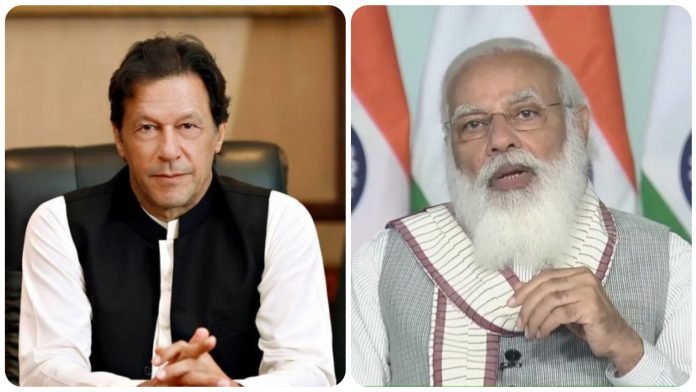
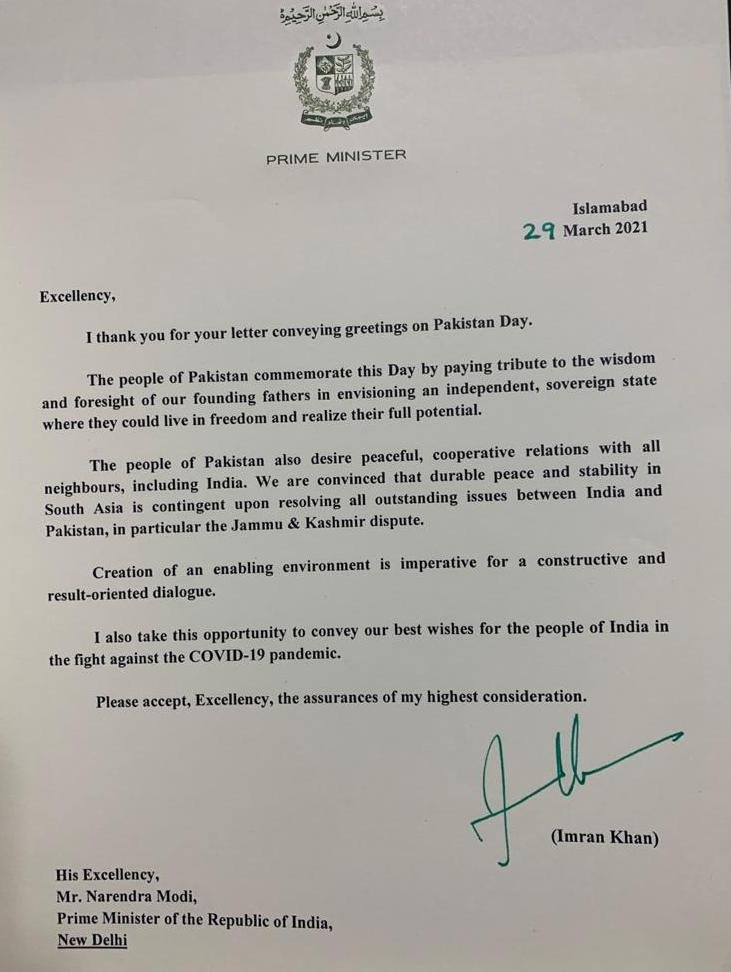
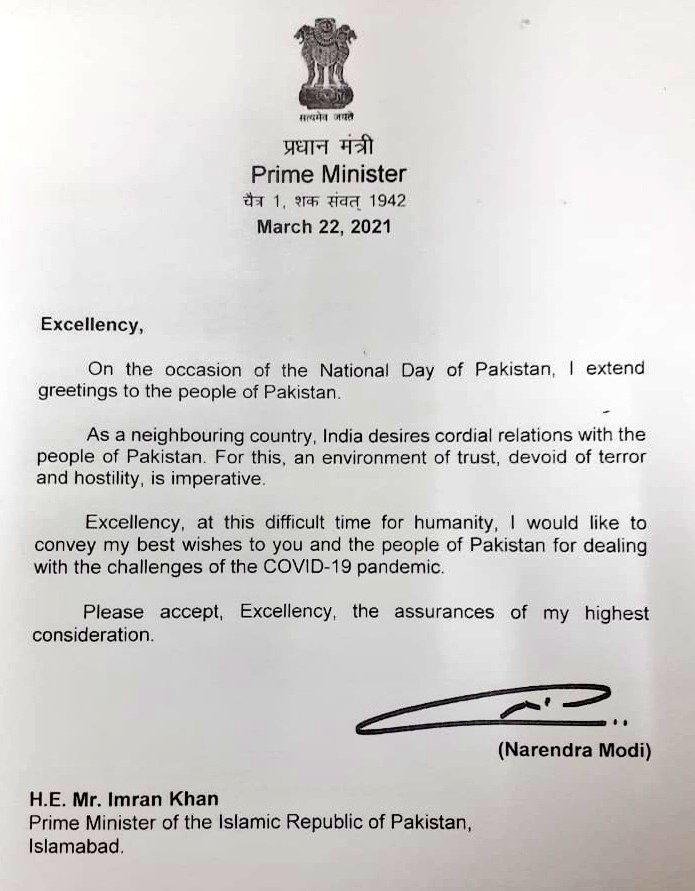
    Prime Minister Khan has responded to the letter written by his Indian counterpart Narendra Modi on Pakistan Day, telling Modi that the Pakistani people “also desire peaceful, cooperative relations with all neighbours, including India”. The letter is dated March 29, a week after PM Khan received the letter from Modi.

    PM Khan started the letter by saying, “I thank you for your letter conveying greetings on Pakistan Day. The people of Pakistan commemorate this Day by paying tribute to the wisdom and foresight of our founding fathers in envisioning an independent, sovereign state where they could live in freedom and realise their full potential,” clearly stating that Pakistan is a place where people live in freedom.

    Letter written by Imran Khan to Narendra Modi

    PM Khan said Pakistan was convinced that “durable peace and stability in South Asia is contingent upon resolving all outstanding issues between India and Pakistan, in particular the Jammu & Kashmir dispute” . He also added that the “creation of an enabling environment is imperative for a constructive and result-oriented dialogue.”

    “Please accept, Excellency, the assurances of my highest consideration,” PM Khan concluded, after conveying his best wishes to the Indian people in the fight against coronavirus.

    It should be noted that in Modi’s letter to Khan, the same phrase was used to end the letter.

    In the letter that Modi wrote to Khan, Modi stated that, “an environment of trust, devoid of terror and hostility” was necessary if both countries were to move forward.

    Social media was abuzz after the news of the letter broke, with details emerging that Pakistan and India were going to resume trade.

    Others were hopeful that maybe this time Pakistan and India might commit to a new peace.

    While some are apprehensive.

    A separate message was also sent by President Ram Nath Kovind to his Pakistani counterpart Arif Alvi. Indian government officials have told the Indian press that it is a routine letter sent every year.

  • All you need to know about Indian farmers’ protests as world shames Modi govt

    With international celebrities, including Rihanna and Greta Thunberg, voicing concerns over the law and order situation in India as farmers continue to give the Narendra Modi-government a tough time while seeking fulfillment of their demands, ‘#FarmersProtest’ has become the top trend on Twitter even beyond Indian borders — in Pakistan.

    But what do the protesters, who have now been on roads for two months, really want?

    The ongoing demonstrations caught most attention when Indian law enforcement resorted to violence against the farmers who had converged on New Delhi on the country’s Republic Day.

    According to Associated Press (AP), farmers hailing from northern Punjab and Haryana states, the two biggest agricultural producers, are demanding the repeal of laws passed by the parliament in September that they say will favor large corporate farms, devastate the earnings of many farmers and leave those who hold small plots behind as big corporations win out.

    Modi has billed the laws as necessary to modernise Indian farming.

    In recent weeks, people who are not farmers have also joined in, and the protests gained momentum in November when the farmers tried to march into New Delhi but were stopped by police. Since then, they have promised to hunker down at the edge of the city until the laws are repealed.

    At the heart of these protests are Indian farmers’ fears that the government’s moves to introduce market reforms to the farming sector will leave them poorer — at a time when they are already frustrated over their declining clout as the government aims to turn India into a hub for global corporations.

    The new legislation is not clear on whether the government will continue to guarantee prices for certain essential crops — a system that was introduced in the 1960s to help India shore up its food reserves and prevent shortages.

    While the government has said it is willing to pledge the guaranteed prices will continue, the farmers are skeptical and want new legislation that says such prices are their legal right.

    Farmers also fear that the legislation signals the government is moving away from a system in which an overwhelming majority of farmers sell only to government-sanctioned marketplaces. They worry this will leave them at the mercy of corporations that will have no legal obligation to pay them the guaranteed price anymore.

    The Modi government argues that this is designed to give farmers more choice in who to sell their produce to. It also says the legislation will benefit farmers by boosting production through private investment.

    The government has offered to amend the laws and suspend their implementation for 18 months — but that has not satisfied farmers who want a full repeal.

    Clauses in the legislation also prevent farmers from taking contract disputes to courts, leaving them with no independent means of redress apart from government-appointed bureaucrats.

    These perceived threats to their income terrify India’s farmers, who are mostly smallholders as around 70% of them own less than 1 hectare of land.

  • Egg on face of Modi’s India with highest bribery rate in Asia

    Egg on face of Modi’s India with highest bribery rate in Asia

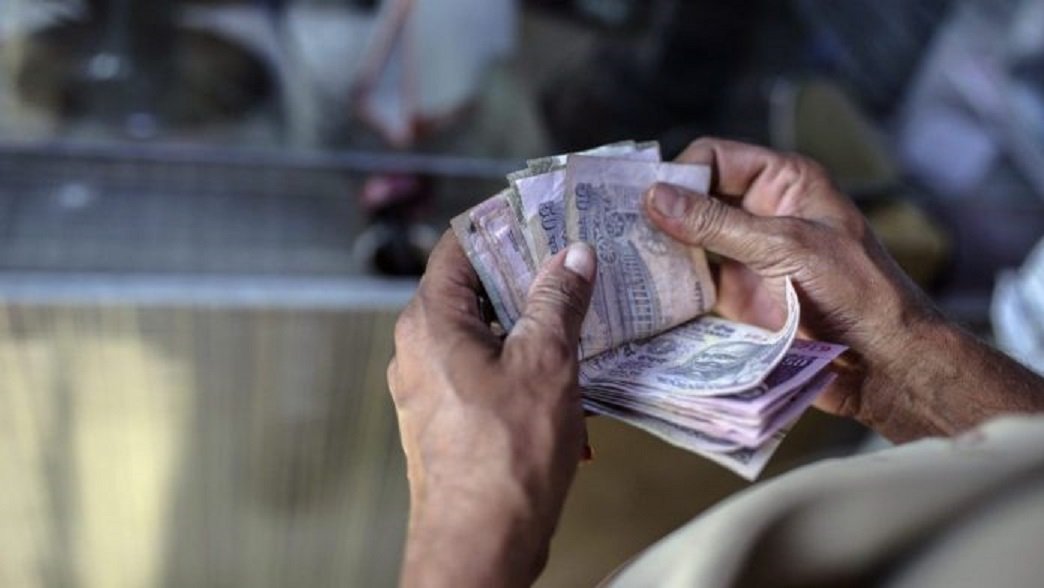
    India has the highest bribery rate in Asia and the most number of people who use personal connections to access public services, according to a new report by Transparency International (TI).

    According to Global Corruption Barometer (GCB) Asia, nearly 50 per cent of those who paid bribes were asked to do so, while 32 per cent of those who used personal connections said they would not receive the service otherwise.

    The report is based upon the survey which was conducted between June 17 and July 17 this year in India with a sample size of 2,000.

    “With the highest bribery rate [39 per cent] in the region, India also has the highest rate of people using personal connections to access public services [46 per cent],” the report said.

    Bribery in public services continues to plague India. Slow and complicated bureaucratic process, unnecessary red tape and unclear regulatory frameworks force citizens to seek out alternate solutions to access basic services through networks of familiarity and petty corruption, the report said.

    “Both national and state governments need to streamline administrative processes for public services, implement preventative measures to combat bribery and nepotism, and invest in user-friendly online platforms to deliver essential public services quickly and effectively,” the report said.

    Although reporting cases of corruption was critical to curbing the spread, a majority of citizens in India, 63 per cent, think that if they reported corruption, they would suffer retaliation, it said.

    In several countries, including India, Malaysia, Thailand, Sri Lanka and Indonesia, sexual extortion rates are also high and more must be done to prevent sextortion and address specific-gendered forms of corruption, the report said.

    Sextortion is extorting money or sexual favours from someone by threatening to reveal evidence of their sexual activity through means like morphed images.

    In India, 89 per cent think government corruption is a big problem, 18 per cent offered bribes in exchange for votes and 11 per cent experienced sextortion or know someone who has.

    “About 63 per cent of surveyed people think the government is doing well in tackling corruption while 73 per cent said their anti-corruption agency is doing well in the fight against corruption,” it said.

    Based on fieldwork conducted in 17 countries, the GCB surveyed nearly 20,000 citizens in total.

    The report said the results showed that nearly three out of four people think corruption is a big problem in their country and the survey also found that nearly one in five people who accessed public services, such as health care and education, paid a bribe in the preceding year.

    This equates to approximately 836 million citizens in the 17 countries surveyed, it said.

    After India, Cambodia has the second-highest bribery rate at 37 per cent, followed by Indonesia (30 per cent) while the Maldives and Japan maintain the lowest overall bribery rate (2 per cent), followed by South Korea (10 per cent) and Nepal (12 per cent).

    “However, even in these countries, governments could do more to stop bribes for public services,” the report said.

    The report concluded by noting that daily experience with corruption and bribery remains alarmingly high, with nearly one in five citizens paying a bribe to access key government services, such as health care or education, and one in seven being offered a bribe to vote one way or another at elections.

    “In several countries, including India, Malaysia, Thailand, Sri Lanka and Indonesia, sexual extortion rates are also high and more must be done to prevent sextortion and address specific-gendered forms of corruption,” it said.

    The report further said that to provide victims of corruption with channels for redress, governments must ensure that bribery was criminalised and actively investigated and prosecuted.

    “Citizens must have access to safe and confidential reporting mechanisms and governments must do more to ease citizens’ fear of retaliation in reporting corruption. Despite these challenges, citizens are largely optimistic about the future and believe that ordinary people can make a difference in the fight against corruption,” the report said.