Tag: Narendra Modi

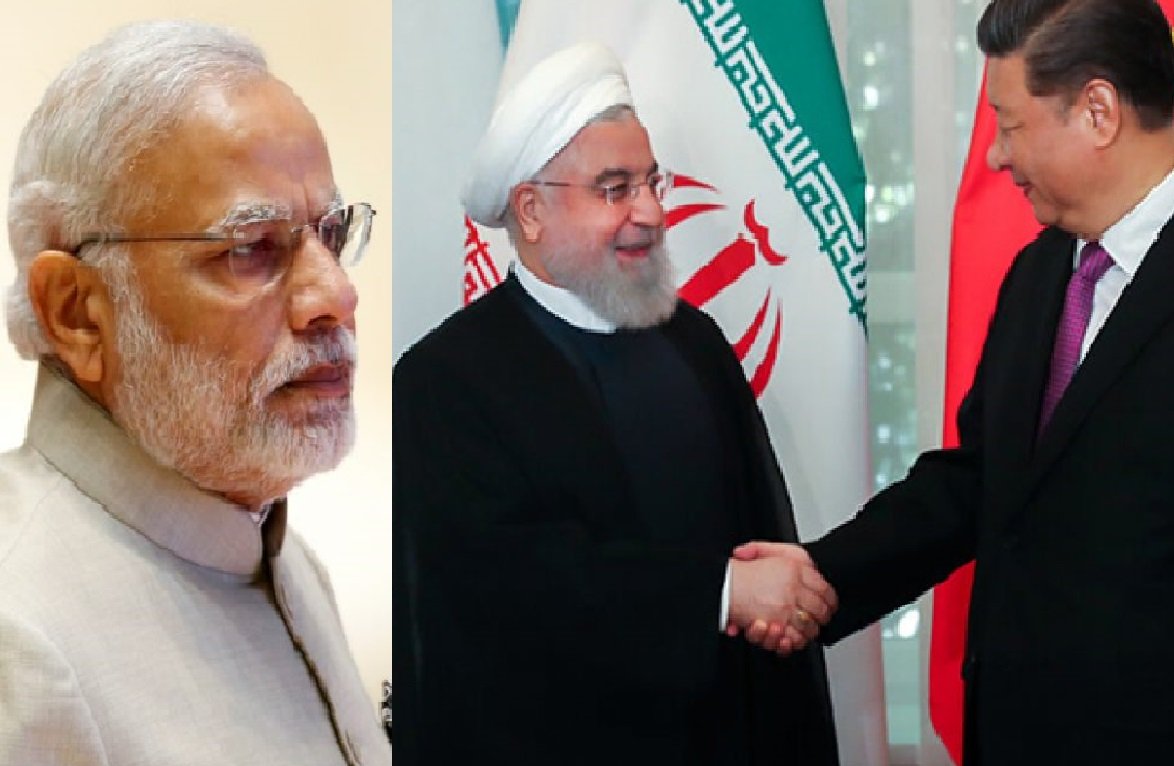
  • Friendship ended with India, now China is Iran’s best friend?

    Friendship ended with India, now China is Iran’s best friend?

    After being “dropped” from a key rail project in southeastern Iran along the border with Afghanistan, India is also set to lose an ambitious gas field project in the country that had been in the pipeline for the past 10 years. 

    India’s Ministry of External Affairs has said in a statement that Tehran would develop the Farzad-B gas field in the Persian Gulf region “on its own” and might engage India “appropriately at a later stage”.

    Last week, Masoud Karbasian, managing director of National Iranian Oil Company (NIOC), told reporters that a new operator had been roped in to develop the gas field, replacing India’s ONGC.

    The field, estimated to possess 21.7 trillion cubic feet of natural gas reserves, 12.8 trillion cubic feet of natural gas and 212 million barrels of gas condensates, was discovered in 2008 by a consortium of three Indian companies — ONGC, Oil India Limited and Indian Oil Corporation.

    According to the deal, the Indian side was supposed to develop the field but they abruptly stopped work in 2012, following the intensification of sanctions against Iran.

    After sanctions were eased in 2015 following the signing of a nuclear deal between Iran and Western countries, India showed its willingness to return to the project.

    However, things again fell apart amid the reinstatement of US sanctions on Iran in May 2018, which further “discouraged” India from making headway in the project, said sources familiar with the issue who requested not to be named.

    “By May 2018, the two sides had made tremendous progress and agreed on key details of the project,” the sources said. “However, the US sanctions played the spoilsport.”

    The two sides had disagreements among themselves as well, particularly on the number of pipelines to be laid and financial investment in the development plan, according to reports.

    In May 2019, Iran’s oil minister, Bijan Namdar Zanganeh, said his ministry had devised a plan to finance the development of the Farzad-B gas field.

    The NIOC had asked the Indian side to submit a financial plan for the field’s development. However, Tehran was “not impressed” with the plan and asked for a new one, said the sources. India had reportedly made a $5.5 billion investment plan

    In August 2019, after slow progress by the Indian side to submit a new plan, Karbasian said Iran would proceed with another operator for the project.

    India’s External Affairs Ministry, however, said the “follow-up bilateral cooperation” was impacted by “policy changes on the Iranian side”.

    This was, however, not the only blow that Iran has served to India as just earlier this week it had “dropped” India from a rail project after the Indian side showed reluctance to start work due to US sanctions.

    The memorandum of understanding to construct the 628-kilometre railway line from the port city of Chabahar to Zahedan was first discussed between the two sides in May 2016.

    It came on the sidelines of the signing of a trilateral agreement between India, Iran and Afghanistan to develop a transport and trade corridor from India to Afghanistan through the Chabahar port in southeast Iran. The port has been operational since 2016 and has been exempted from US sanctions.

    India’s External Affairs Ministry dismissed the reports that Iran excluded it from the rail project as “speculative,” saying Tehran was to “nominate an authorised entity to finalise outstanding technical and financial issues”. The matter, it said, was “still awaited”.

    “IRCON was appointed by [the] Government of India to assess the feasibility of the project. It was working with CDTIC, an Iranian company under their Ministry of Railways in that regard. IRCON has completed the site inspection and review of the feasibility report,” the ministry said in a statement on Thursday, referring to the state-run Indian infrastructure firm undertaking the project.

    “Detailed discussions were thereafter held on other relevant aspects of the project, which had to take into account the financial challenges that Iran was facing. In December 2019, these issues were reviewed in detail at the 19th India-Iran Joint Commission Meeting in Tehran.”

    An official from Iran’s Ports and Maritime Organisation has also denied the reports. However, he said Iran “has not inked any deal with India” for the construction of the Chabahar-Zahedan railroad.

    Both the developments come amid China-India tensions over a territorial dispute in the Ladakh region and as Beijing, sensing America’s internal political difficulties amid social justice protests and poor COVID-19 response, reportedly approves a $400 billion economic and security deal with Tehran.

    In addition to massive infrastructure investments, the agreement envisions closer cooperation on defense and intelligence sharing, and is rumored to include discounts for Iranian oil. If finalised, China would gain massive influence in this geopolitically critical region.

    The US is likely to push back against this partnership, which threatens its security and energy interests in the Middle East and Eurasia. According to Forbes, it is an open secret that Washington’s foreign policy interests constantly clash with those of Tehran and Beijing.
  • Indian bride and groom cancel wedding after fight over PM Narendra Modi

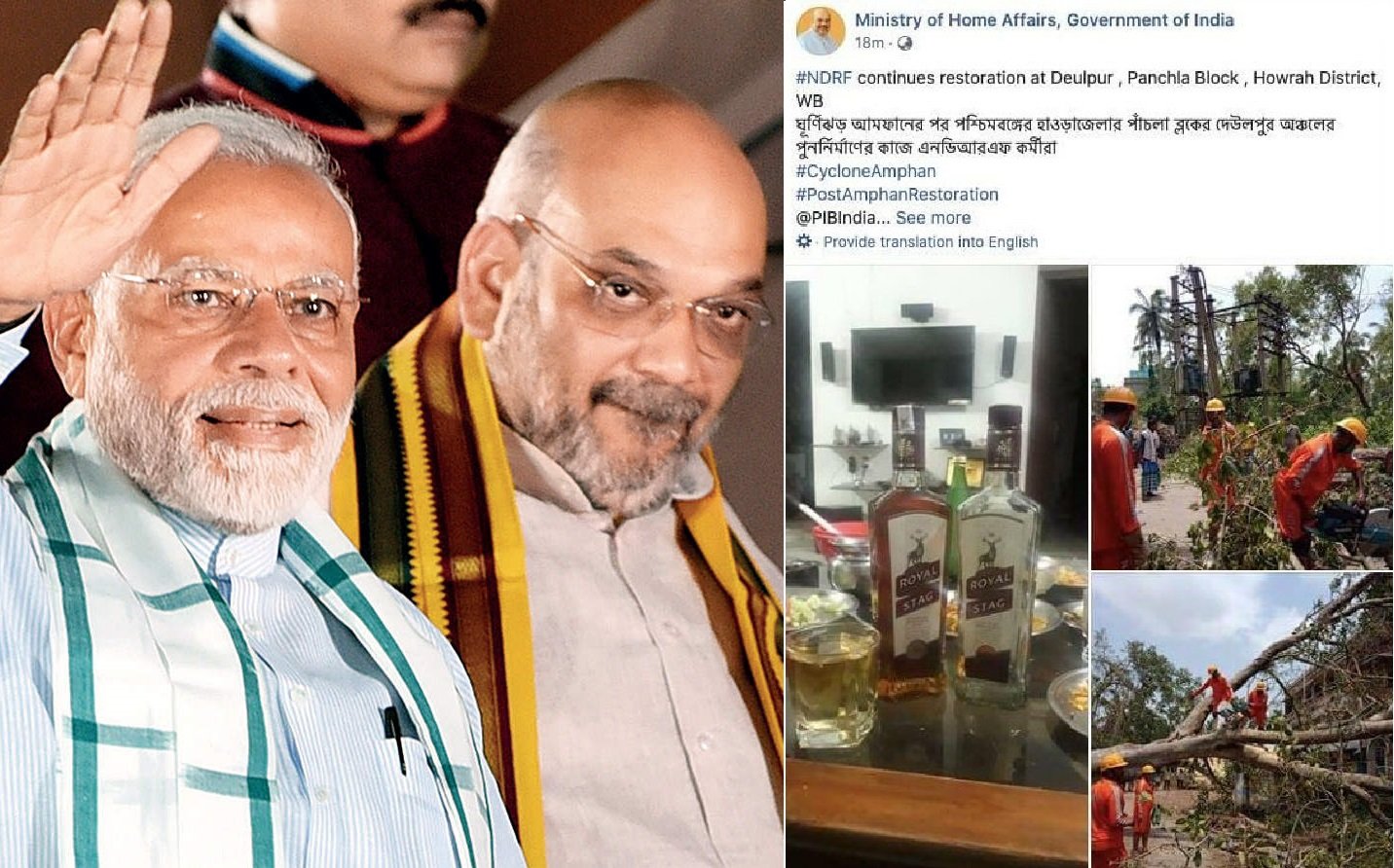
    A couple in Uttar Pradesh, India reportedly cancelled their wedding because they have different views about Indian Prime Minister Narendra Modi. The bride was of the view that Modi is responsible for India’s economic collapse while the groom disagreed.

    The situation transpired when the bride-to-be and the groom met at a temple to decide how to divide the wedding expenses. The discussion led to India’s present economic condition and the bride-to-be, who is a government employee, held PM Modi responsible for India’s poor economic condition. The groom-to-be, a businessman turned out to be a Modi supporter and disagreed with her.

    The argument turned into a heated discussion after which both of them decided to part ways and called off the wedding.

  • Indian Home Ministry accidentally posts whiskey pictures while advertising cyclone relief efforts

    Indian Home Ministry accidentally posts whiskey pictures while advertising cyclone relief efforts

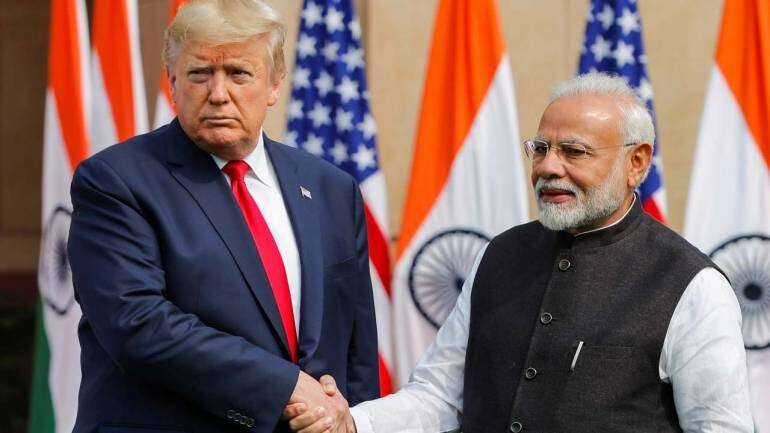
    There was panic in the Indian Ministry of Home Affairs (MHA) after efforts to advertise its relief operations in Cyclone Amphan-hit West Bengal, went awry.

    According to the details, the MHA had taken to Facebook to highlight the work that personnel of the National Disaster Response Force (NDRF), which falls under the ministry, were carrying out in the Trinamool Congress-governed West Bengal.

    However, with ‘work from home’ having its perils, one of the handlers of MHA’s social media accounts inadvertently posted images of two bottles of whiskey and snacks along with those of the rescue and relief work

    While the photos were posted on MHA’s official Facebook around 9 am and were taken off around 30 minutes later, screenshots of the post started doing rounds over social media. The post sparked exasperation and elation in equal measure as some were enraged by the “irresponsible behaviour” and others saw the funny side of the “accident”.

    The MHA refused to comment on who uploaded the picture but reports quoted officials as saying that the ministry was treating it as a case of human error that should not be shown out of proportion.  

    They added that although most officers were enraged at the “callousness”, many other civil servants laughed off the “disaster”.

  • White House unfollows Modi on Twitter amid concerns over India’s treatment of minorities

    White House unfollows Modi on Twitter amid concerns over India’s treatment of minorities

    The White House has unfollowed Prime Minister (PM) Narendra Modi on Twitter, leaving Congress party leader Rahul Gandhi ‘dismayed’ at the American administration’s decision.

    Indian media reported on Wednesday that The White House, which has 22 million followers on Twitter, followed the Indian premier till April 11, unfollowed him recently.

    “The official Twitter account of White House, the residence and workplace of the president of the US, doesn’t follow Indian PM Narendra Modi anymore on the micro-blogging site,” reported Outlook India.

    Modi was the only world leader followed by The White House on Twitter till April 11. Other Indian Twitter accounts unfollowed were those of the president of India, the Indian PM’s Office and the Indian Embassy in Washington D.C.

    The move ‘dismayed’ Congress party leader Rahul Gandhi, who urged India’s External Affairs Ministry to take note of the incident.

    “I’m dismayed by the “unfollowing” of our President & PM by the White House. I urge the Ministry of External Affairs to take note,” tweeted Gandhi.

    The development took place as a US commission recommended India be placed on a list of countries that violate religious freedom.

    The US Commission on International Religious Freedom recommended that India be re-designated as a ‘Country of Particular Concern’ because of the Modi government’s policies and treatment towards the Muslim population.

    “Perhaps the steepest, and most alarming deterioration in religious freedom conditions is in India,” the vice-chair of the USCIRF vice had said after the release of the Commission’s annual report.

    The report also recommended 13 other countries to the State Department for designation as “countries of particular concern” because their governments engage in or tolerate “systematic, ongoing, egregious violations of religious freedom”.

    These include nine that the State Department designated as CPCs in December last year, which were Burma, China, Eritrea, Iran, North Korea, Pakistan, Saudi Arabia, Tajikistan, and Turkmenistan. The five others include India, Nigeria, Russia, Syria, and Vietnam.

    WHAT DOES IT MEAN?

    According to reports, the White House has explained that its Twitter handle typically follows the accounts of officials from host countries for a brief period during a presidential trip to retweet their messages in support of the visit.

    “The White House Twitter account normally follows senior US government Twitter accounts, and others as appropriate. For example, during the time of a presidential visit, the account typically follows for a short time, the host country’s officials to retweet their messages in support of the visit,” a senior administration official told the Press Trust of India.

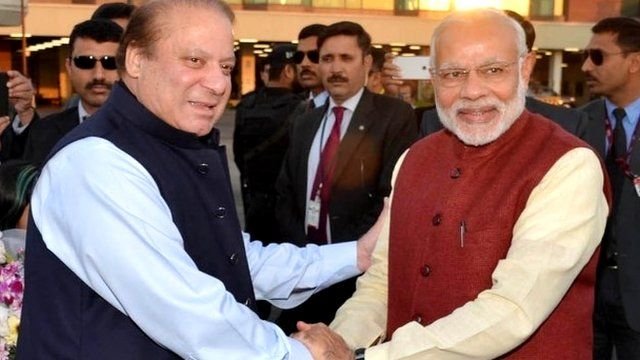
  • ‘Nawaz Sharif as PM barred Foreign Office from speaking against India,’ ex-diplomat claims

    ‘Nawaz Sharif as PM barred Foreign Office from speaking against India,’ ex-diplomat claims

    Former spokesperson for the Foreign Office (FO) Tasneem Aslam has claimed that former prime minister (PM) Nawaz Sharif had barred the FO from commenting against India and its spy Kulbhushan Jadhav, who is currently in Pakistan’s custody.

    “Nawaz Sharif did not want to say anything against India and Jadhav through the Foreign Office,” she claimed during an interview with a YouTube channel being run by journalist Isa Naqvi.

    When asked if Nawaz’s instruction benefited the country, Tasneem, who worked as FO spokesperson twice — from 2005 to 2007 under military ruler General (r) Pervez Musharraf and during the last Pakistan Muslim League-Nawaz (PML-N) government between 2013 and 2017, said it “did not benefit the country” but she did not know “whether it benefited Nawaz’s own interests or not”.

    She said Nawaz had business interests in India and he did not meet Muslim leaders of India-held Kashmir when he visited India as the premier. “Usually, every PM of Pakistan meets Hurriyat leaders but Nawaz Sharif did not meet them when he visited India.”

    Nawaz had visited India in 2014. Aslam further said even in his speech at the United Nations (UN) summit, Nawaz did not talk about India and Jadhav but on the Kashmir issue.

    Meanwhile, PML-N Information Secretary Marriyum Aurangzeb told Dawn that the comments by a retired FO official bore no resemblance to reality. “It is a false and biased expression of an individual’s views, based on her personal predilections.”

    Recalling efforts made by Nawaz to resolve the Kashmir dispute, she said that “the principled manner in which he dealt with the issue of Pakistan’s relations with its eastern neighbour was well documented”.

    Marriyum added that the former premier’s address to the UN General Assembly in 2016 contained the most forceful references ever to the issue of Kashmir and the most powerful condemnation of the atrocities and brutalities of the Indian occupation forces.

    The former diplomat’s statements have not been very well-received by Twitterati either.

    What do you think of Tasneem’s statement? Let The Current know in the comments.

  • Hamza Shehbaz ‘avoids coronavirus’ in meeting with ex-Punjab Assembly speaker

    Hamza Shehbaz ‘avoids coronavirus’ in meeting with ex-Punjab Assembly speaker

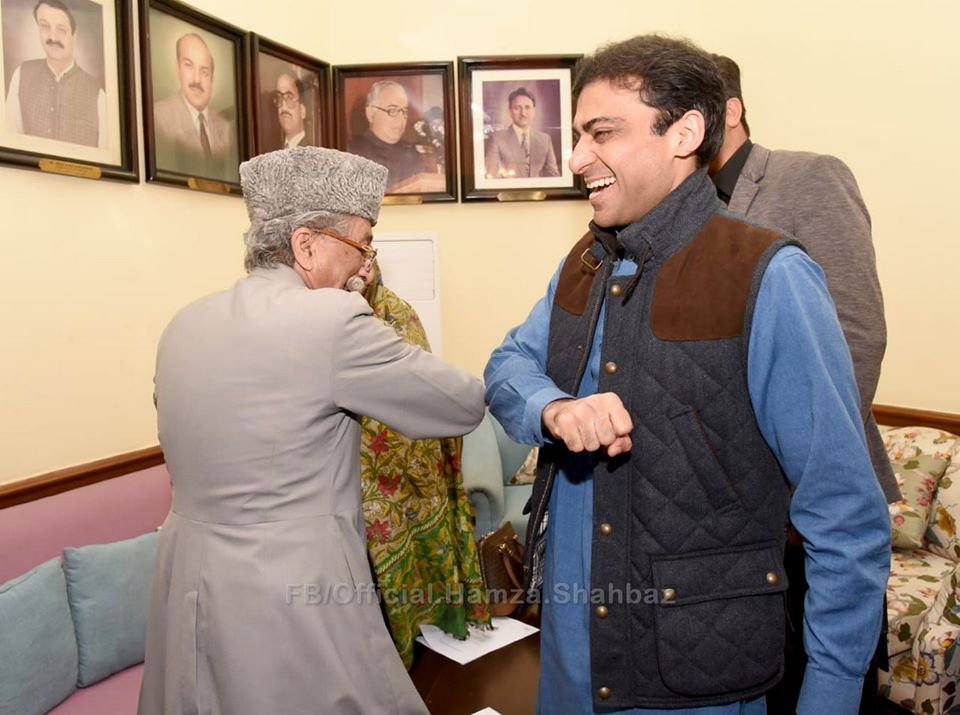
    As the new coronavirus — COVID-19 — continues to spread across the globe and the infections tally in Pakistan reaches 94, many, including Pakistan Muslim League-Nawaz (PML-N) leader Hamza Shehbaz, have been spotted avoiding direct physical contact such as handshakes, and resorting to new, cooler ways of greeting others.

    A viral photo on Monday showed the leader of opposition in the Punjab Assembly (PA) greeting PML-N leader and ex-speaker of the provincial house, Rana Muhammad Iqbal Khan, with an elbow bump instead of a handshake during a meeting in the former’s chamber.

    The two had met on Saturday to discuss the current political and economic situation of the country. PML-N Punjab lawmakers and local leaders were also in attendance.

    While Hamza might be the first prominent Pakistani to be spotted resorting to an elbow bump amid coronavirus fears, he is not the first political leader in the world to be doing so.

    United States (US) President Donald Trump was last week seen elbow bumping health executive Bruce Greenstein following a press conference during which a national emergency in response to coronavirus outbreak was declared.

    Here are a few other leaders avoiding physical contact as per the guidelines of the World Health Organization (WHO):

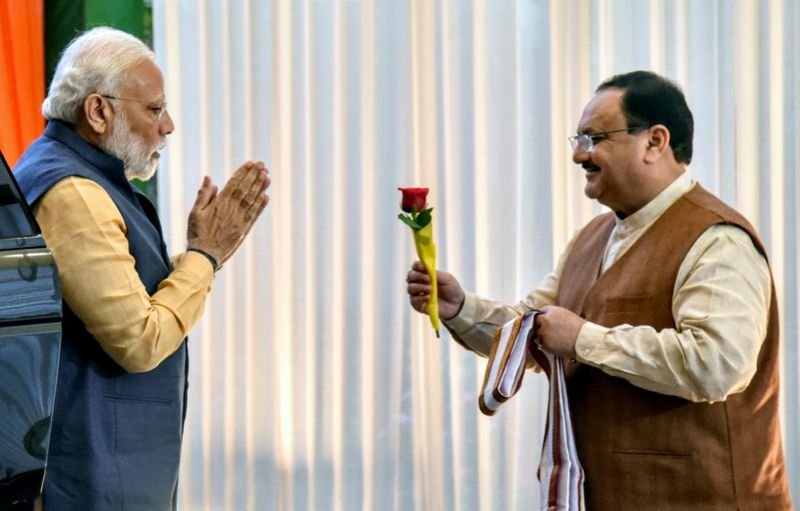
    Indian Prime Minister (PM) Narendra Modi being welcomed by Bharatiya Janata Party (BJP) President JP Nadda as he arrives to attend a party meeting in New Delhi.
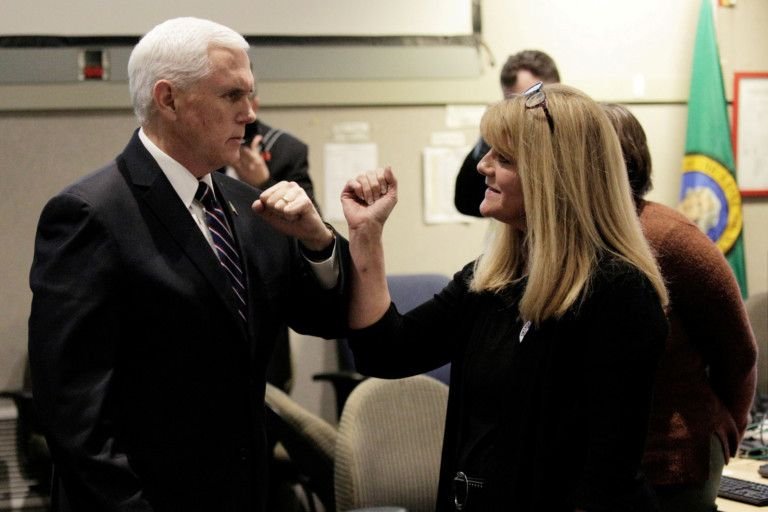
    US Vice President Mike Pence, who heads the government’s coronavirus task force, greets a woman at the Washington State Emergency Operations Center during a tour.
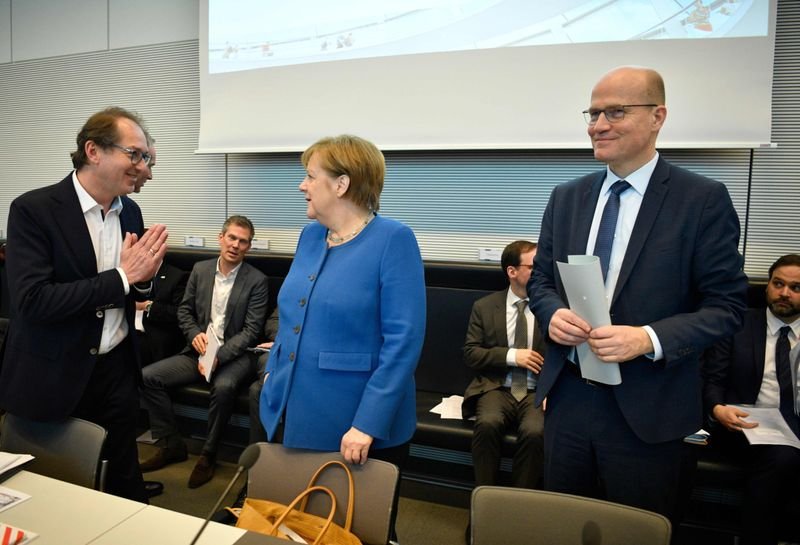
    Union parties leader Alexander Dobrindt greets German Chancellor Angela Merkel in a Buddhist style to avoid a handshake in times of coronavirus.

    Globally, more than 6,000 people have died and more than 156,000 have been infected by COVID-19 as the disease spreads rapidly to new territories.

  • Back to the 40s?

    Back to the 40s?

    While violence against the Muslim community of India is no longer an internal secret of our neighbour, it would be nothing less than hypocrisy to turn a blind eye towards the quality of life of minorities in Pakistan where a majority of them is equally vulnerable due to intolerance rooted in religion or ethnicity.

    When Saadat Hasan Manto finally decided to leave India amid growing communal violence back in the 40s, Indian actor Sunder Shyam Chadda wasn’t very happy with his friend’s decision.

    “Are you going to Pakistan because you think you are a Muslim?” Shyam asked Manto as the former removed the bottle of alcohol from their table.

    “I am a Muslim enough to get killed here,” Manto replied.

    Seven decades later — in the year 2020 — the world’s most populous democracy, under fascist Narendra Modi’s Bharatiya Janata Party (BJP), witnesses similar circumstances as those belonging to India’s minority communities, flee their homes in order to save their lives.

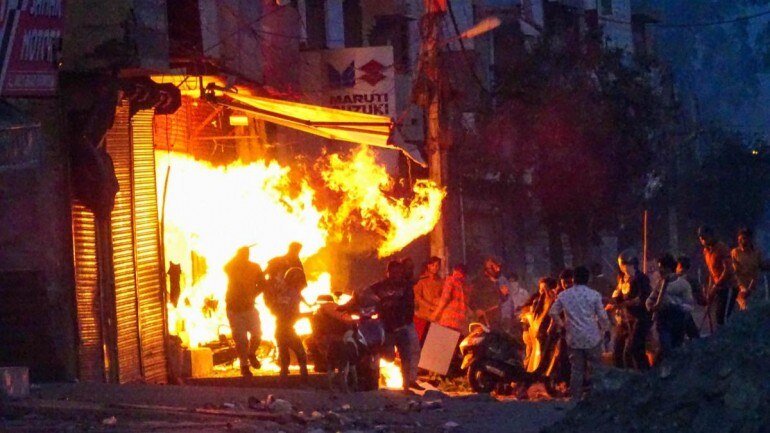
    The recent round of violence against Muslims in India by extremist Hindutva mobs has been the worst with over 40 innocent people losing their lives, mosques being set ablaze and properties of New Delhi’s Muslims being vandalised.

    The situation persisting across Pakistan’s eastern boundaries can be best explained through a mention of suzerainty, under which a single ideology asserts and maintains paramountcy or supremacy over the rest. But the problem in India is further accentuated by the fact that the state’s monopoly over violence has silently been delivered to the goons of the ruling BJP with the promise of targeting Muslims regardless of if they are at home or at a mosque.

    While violence against the Muslim community of India is no longer an internal secret of our neighbour, it would be nothing less than hypocrisy to turn a blind eye towards the quality of life of minorities in Pakistan where a majority of them is equally vulnerable due to intolerance rooted in religion or ethnicity.

    Although analyses suggest the factors that have led to the current upheaval in India are manifold, our focus, for now, will remain on religion since outside India, its importance has been rightly overshadowed by unfolding the neo-liberal agenda New Delhi is trying to implement; for which Hindutva serves as the best medium, and that too in disguise.

    It is nothing but Modi’s model from Gujarat, which is now expanding to Delhi and Ashoknagar.

    Nonetheless, the role of religion in itself cannot be undermined especially in the Indian subcontinent as both in Pakistan and India, religion has remained closely intertwined with politics since even before the partition. And from world-acclaimed statesman Gandhi to today’s fascist Modi, the combination has proved to be lethal while resulting in violence almost every time.

    The use of religion on state-level despite having a secular constitution is to achieve a purposive social order, which in other words is ‘national interest’ based on the exclusion of Muslims and inclusion of corporate and liberal values in society, surprisingly through the conservative ideology of RSS.

    Regardless of the intention behind employing religion in politics, its implications have not been desirable for the general masses, which brings into question the basic understanding of religion. Apart from politics, when religion is examined alone, the underlying principle of religion generally is expounded as that of peace and prosperity.

    Having said that, one inadvertently subscribes to the root word of religion as ‘lig’ and not ‘leg’ where the former means ‘to bind’ while the latter means ‘to gather.’

    Contrary to the broader agreement of religion to be in the greater interest of mankind by making people dependent on each other, the current predominant form of Hinduism in India is that of a certain mindset of people – the Rashtriya Swayamsevak Sangh (RSS) — coming together to serve a ‘holy purpose’ which in this case has become a national interest of BJP’s India.

    In this pretext, the use of religion on state-level despite having a secular constitution is to achieve a purposive social order, which in other words is ‘national interest’ based on the exclusion of Muslims and inclusion of corporate and liberal values in society, surprisingly through the conservative ideology of RSS, which ultimately benefits a handful of people in India by increasing their wealth and stay in power.

    Therefore, while mentioning the Citizenship Amendment Act (CAA), one should always mention its far-reaching effects in the lives of minorities other than Muslims, including Hindus with a working-class background.

  • Indian police mistake wedding for anti-Modi protest, uproot tents

    Indian police mistake wedding for anti-Modi protest, uproot tents

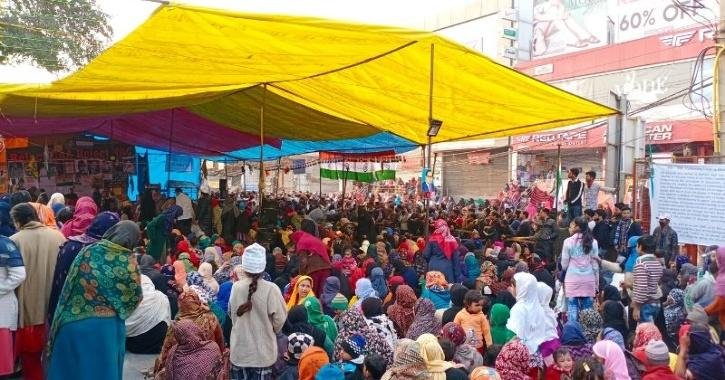
    As anti-Citizens Amendment Act (CAA) and National Register of Citizens (NRC) protests against Prime Minister (PM) Narendra Modi’s government continue across India, Uttar Pradesh (UP) police have disrupted a wedding after mistaking it for a sit-in.

    According to India Times, UP police on Saturday uprooted a tent meant for a wedding in the Mohalla Mirdagan area of Bijnor city. The wedding was scheduled for February 4 and the bride’s father had set up the tent in a vacant land.

    All gifts and other items for the bride were kept in the tent. Police arrived on the spot and assuming that the tent was set up for anti-CAA/NRC protest without permission, started uprooting it. However, after realising the truth, they asked the family to reinstall the tent, reportedly not even helping them.

    The anti-CAA and NRC protests are ongoing protests taking place across India and overseas against the CAA that was enacted into law on December 12, 2019, and the proposals to enact a nationwide NRC. The protests began in Assam, Delhi, Meghalaya, Arunachal Pradesh and Tripura on December 4, and within a few days, spread across India, though the concerns of the protesters vary.

  • Indo-Pak war odds-on if soldiers are attacked in Kashmir again: report

    Indo-Pak war odds-on if soldiers are attacked in Kashmir again: report

    A transnational non-profit organisation, International Crisis Group, has warned that any militant attack on Indian forces in held Kashmir could set off an escalation between Pakistan and India, saying that pro-freedom militants were lying low in the troubled vallet, but they were still active.

    “India’s heavy-handed military operations in Kashmir over the past few years have inspired a new homegrown generation, whose ranks are likely to swell further after the latest repression,” read its report titled “10 conflicts to watch in 2020”.

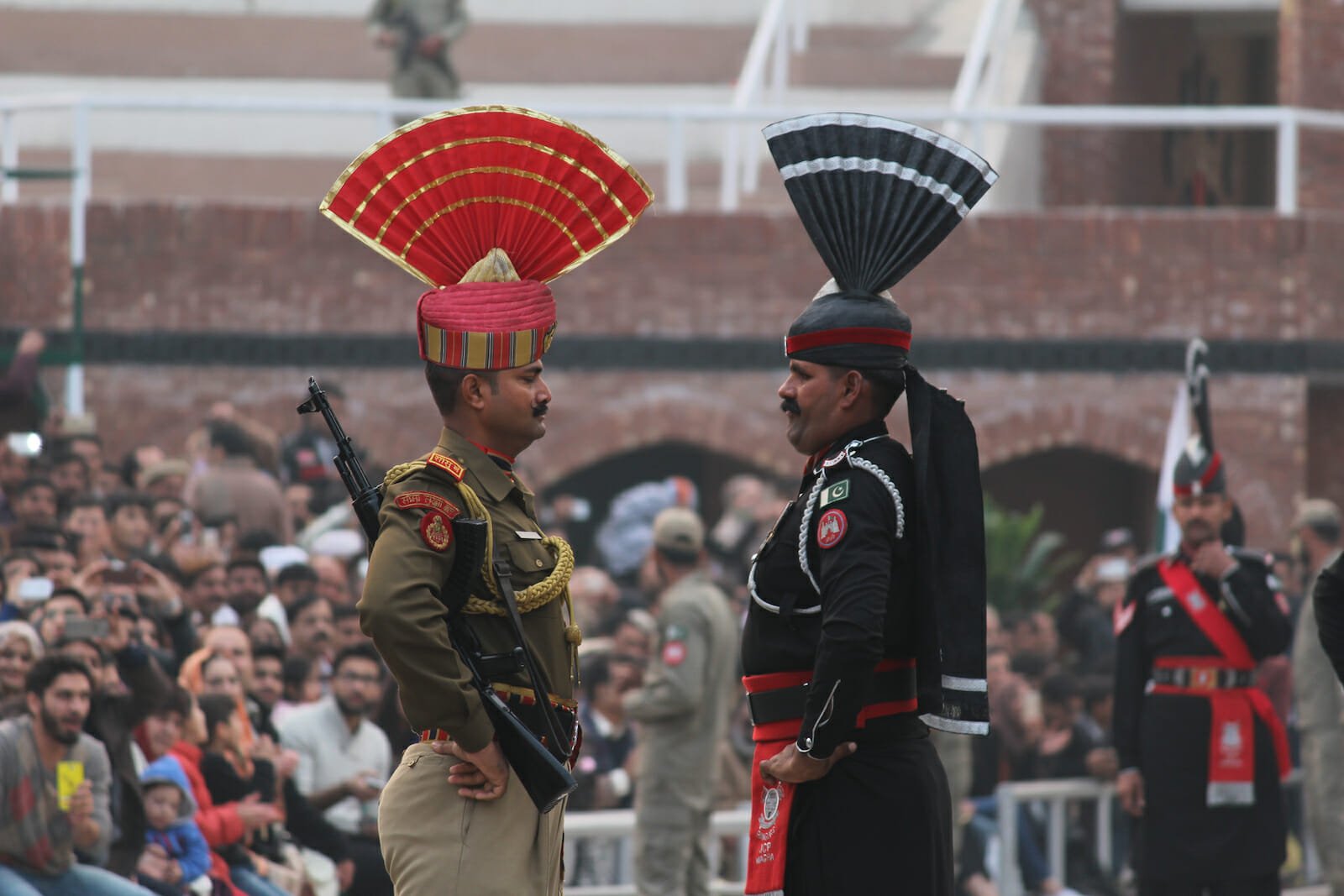
    Indian fighter planes had violated Pakistani airspace after a pro-freedom militant attack that killed at least 40 paramilitary soldiers in Pulwama on February 19, 2019. In retaliation, Pakistan had shot down two Indian jets over Kashmir on Feb 27, and captured an Indian pilot as well. He, however, was released by Prime Minister (PM) Imran Khan’s government as a “gesture of peace”.

    The Crisis Group, which describes itself as “working to prevent wars and shape policies that will build a more peaceful world” , has warned that any Pulwama-like attack on Indian forces in Kashmir would precipitate Indian action against Pakistan.

    “In a worst-case scenario, the two nuclear-armed neighbours could stumble into war,” the report said.

    The Crisis Group asked New Delhi to lift the communication blackout and release political prisoners in the occupied valley, and asked Pakistan to take action against militants allegedly operating from its soil.

    It further urged the international community to push Pakistan and India for talks “before it is too late”.

  • Pakistan declared ‘more attractive destination for global investors than India’

    An international credit rating agency, Moody’s Investors Service, has upgraded the outlook for Pakistan’s economy from negative to positive, declaring the country a more attractive destination for global investors than India as the latter’s credit outlook downgraded to negative earlier this year, Sputnik News reported.

    According to the agency, upgrade in Pakistan’s status is driven by “Moody’s expectations that the balance of payments dynamics will continue to improve”. On the other hand, it said that India’s outlook downgraded, “on concerns that its economic growth would remain materially lower than in the past”.

    “Moody’s decision to change the outlook to negative reflects increasing risks that economic growth will remain materially lower than in the past, partly reflecting lower government and policy effectiveness at addressing long-standing economic and institutional weaknesses than Moody’s had previously estimated, leading to a gradual rise in the debt burden from already high levels.”

    Meanwhile, Prime Minister (PM) Imran Khan’s Adviser on Finance and Revenue Dr Abdul Hafeez Sheikh said the upgradation of outlook to stable was affirmation of the government’s success in stabilising the country’s economy and laying a firm foundation for robust long term growth.

    The announcement also pushed Pakistan’s stock market above 40,000 points — highest after a gap of 10 months.

    The premier himself has also claimed that over the first four months of the current fiscal year beginning April 2019, Pakistan’s current account deficit fell by 73.5%, as compared to the same period last fiscal year. “The country’s exports of goods and services in October 2019 rose 20 per cent over the previous month and 9.6 per cent over October 2018.”