Tag: NASA

  • Largest black hole discovered in Milky Way

    Largest black hole discovered in Milky Way

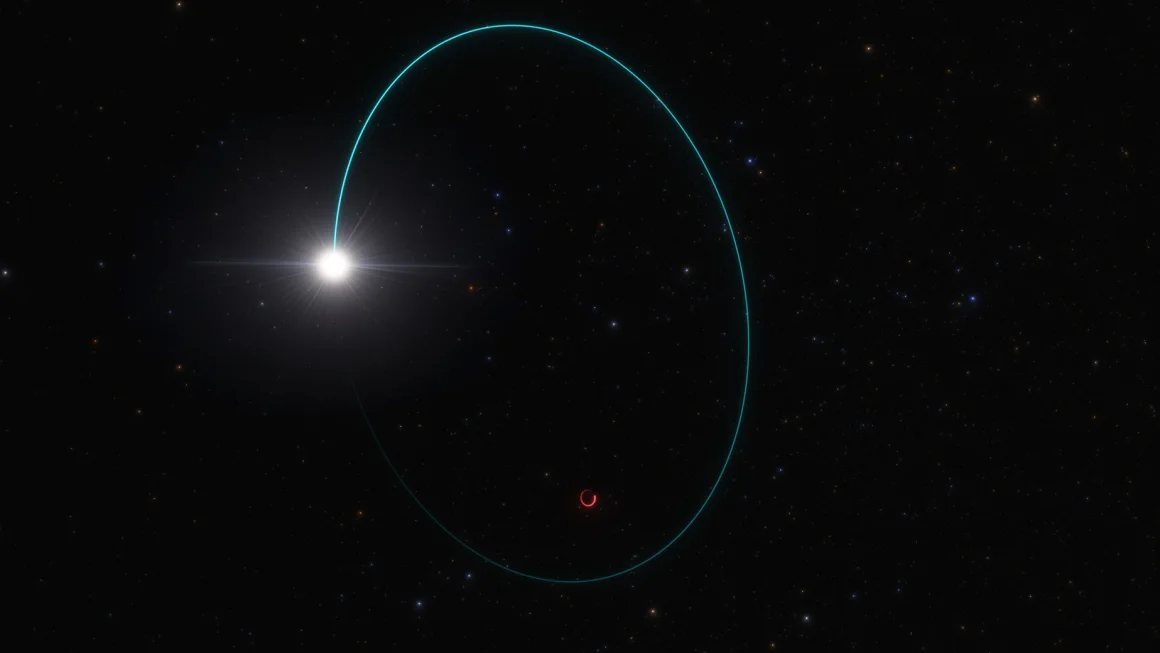
    PARIS: Astronomers identified the largest stellar black hole yet discovered in the Milky Way, with a mass 33 times that of the Sun, according to a study published on Tuesday.

    The black hole, named Gaia BH3, was discovered “by chance” from data collected by the European Space Agency’s Gaia mission, said an astronomer from the National Centre for Scientific Research (CNRS) at the Observatoire de Paris, Pasquale Panuzzo.

    Gaia, which is dedicated to mapping the Milky Way galaxy, located BH3 2,000 light years away from Earth in the Aquila constellation.

    As Gaia’s telescope can give a precise position of stars in the sky, astronomers were able to characterise their orbits and measure the mass of the star’s invisible companion — 33 times that of the Sun.

    Further observations from on-the-ground telescopes confirmed that it was a black hole with a mass far greater than the stellar black holes already in the Milky Way.

    “No one was expecting to find a high-mass black hole lurking nearby, undetected so far. This is the kind of discovery you make once in your research life,” Panuzzo said in a press release.

    The stellar black hole was discovered when scientists spotted a “wobbling” motion on the companion star that was orbiting it.

    Stellar black holes are created from the collapse of massive stars at the end of their lives and are smaller than supermassive black holes whose creation is still unknown.

    Such giants have already been detected in distant galaxies via gravitational waves. But “never in ours”, said Panuzzo.

    BH3 is a “dormant” black hole and is too far away from its companion star to strip it of its matter and therefore emits no X-rays — making it difficult to detect.

    Gaia’s telescope identified the first two inactive black holes (Gaia BH1 and Gaia BH2) in the Milky Way.

    Gaia has been operating 1.5 million kilometres from Earth for the past 10 years and in 2022 delivered a 3D map of the positions and motions of more than 1.8 billion stars.


  • Pakistan mein ‘Super Blue Moon’ kis waqt daikhein?

    Pakistan mein ‘Super Blue Moon’ kis waqt daikhein?

    Once in a blue moon is going to be a reality tonight. On the night of August 31, a celestial spectacle known as the ‘Blue Moon’ will captivate astro enthusiasts around the world. Despite its name, this unique event won’t unveil a blue-hued moon; instead, it will radiate a captivating shade of orange.

    The Super Blue Moon Experience

    During this event, the Super Blue Moon will be slightly larger and brighter than a typical full moon. Supermoons shine about 40 percent larger and 30 percent brighter than regular full moons. While the size difference may not be discernible to the naked eye, binoculars can enhance the view of this captivating phenomenon.

    When and How to Observe the Super Blue Moon

    In Pakistan, the spectacular view of the Super Blue Moon can be seen from 6:25 AM PKT till 6:40 AM. The moon will be full at 6:35 AM PKT.

    European viewers will have an extended opportunity to witness the moonrise, providing an additional chance to catch a glimpse of this celestial event. In London, the moon will rise at 8:08 PM BST. For those in New York, moonrise is set for 7:45 PM EDT, followed by moonset at 7:33 PM EDT, with the full moon radiating its brilliance at 8:37 PM EDT.

    In Los Angeles, both moonrise and sunset are scheduled for 7:36 PM PDT, and the full moon will grace the sky at 5:37 PM PDT. London residents can experience the Blue Moon at 7:52 PM BST during sunset and 8:24 PM BST, with the full moon’s appearance at 1:37 AM BST.

    Understanding the Blue Moon Phenomenon

    A Blue Moon is an extraordinary astronomical event that occurs when a supermoon or full Moon coincides with a perigee—when the Moon is closest to Earth in its orbit.

    While Blue Moons aren’t exceedingly rare occurrences, they remain intriguing phenomena in the world of astronomy. The most recent Blue Moon graced the skies in August 2021, as reported by Space.com. With the average lunar cycle spanning approximately 29.5 days, a year typically accommodates 12 lunar cycles, totaling 354 days. As a result, roughly every 2.5 years, a thirteenth full moon emerges within a given year.

    This upcoming event, the super blue moon, marks the final chapter of a four-part lunar sequence and is anticipated to be the third-largest moon visible throughout this year. It’s important to note that the term “blue moon” has no connection to the moon’s color; it merely signifies the occurrence of two full moons within a single calendar month.

    How rare is a blue supermoon?

    According to NASA, the blue supermoons are a very rare phenomenon. It mentions that these moons often only appear once every ten years due to astronomical conditions. But occasionally, the interval between blue supermoons can be as long as twenty years. While blue moons only account for 3% of full moons, supermoons account for around 25% of all full moons. Although the interval between super blue moons is highly erratic—it can be as long as 20 years—the average is often 10 years. The following super blue moons will take place in pairs in 2037, in January and March.

  • India makes history as Chandrayaan-3 successfully lands on moon

    India makes history as Chandrayaan-3 successfully lands on moon

    India makes history by being the first country to ever land on the moon’s south-pole.

    Earlier today, former Federal Minister for Science and Technology, Fawad Chaudhry, congratulated India on X (formerly Twitter) as the country awaits the Chandrayaan-3 moon landing:
    “All eyes on #Chandryaan3 Moon landing 5:40 PM, great day for Indian Science Community and Space scientists, Congratulations to people of India on this great achievement”

    Chandrayaan-3 (means “mooncraft” in Sanskrit) is the third Indian lunar exploration mission. It was launched on 14 July 2023 and was expected to land near the lunar south pole region on 23 August around 05:45 pm IST and the touchdown was expected around 06:04 pm IST.

    So far, only three countries, the United States, Russia, and China, have been able to achieve a controlled landing on the lunar surface. But now India has become the first country to land on the moon’s south pole.

    Earlier in the week, Russia’s Luna-25 spacecraft was to land in the same area, however, it crashed on August 19 after spinning out of control.

  • Meteors, beware; NASA’s DART Mission alters asteroid’s course

    Meteors, beware; NASA’s DART Mission alters asteroid’s course

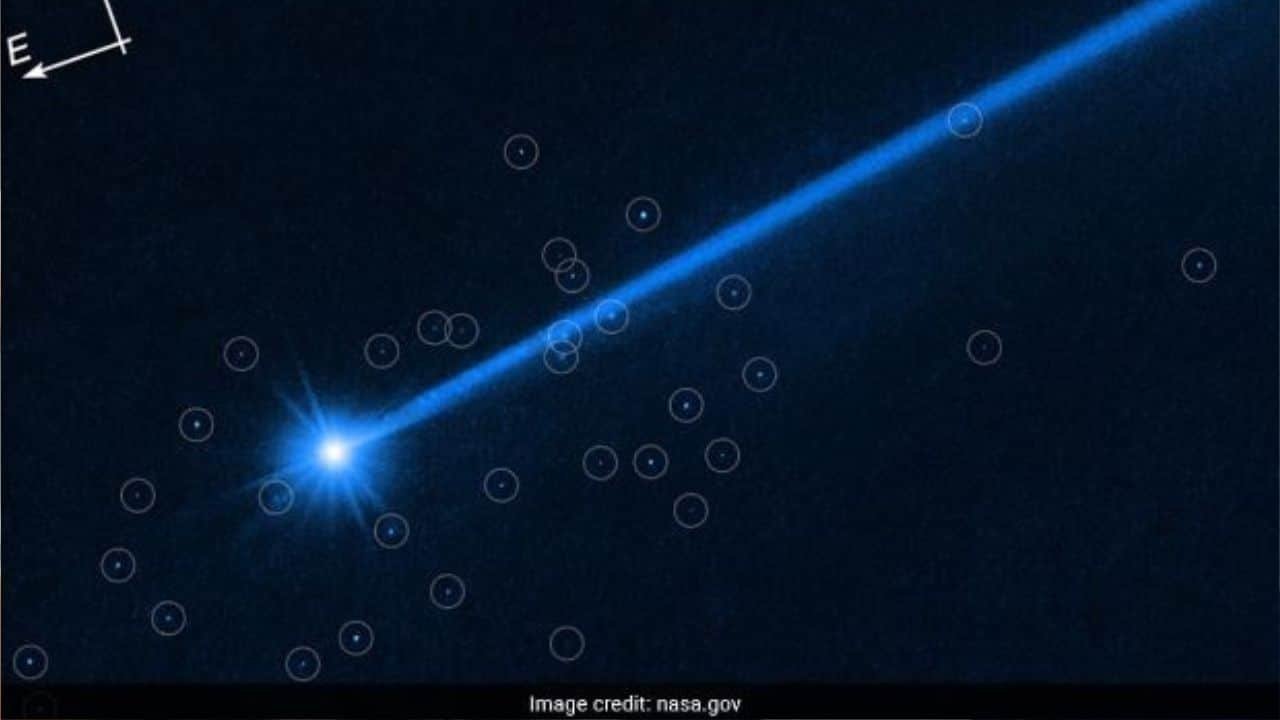
    In a groundbreaking test of Earth’s planetary defenses, NASA’s DART probe successfully knocked an asteroid off its trajectory, creating a dazzling display of boulders hurtling into space.

    The story was shared by Dawn with images of the historic experiment. Last year’s momentous collision between the fridge-sized spacecraft and the pyramid-sized, rugby ball-shaped asteroid Dimorphos, situated 11 million kilometers from Earth, yielded astonishing results, as captured by the Hubble Space Telescope. The images were released on Thursday.

    Astonishing Aftermath Unveiled:

    Newly released images from the Hubble Space Telescope unveiled the extraordinary aftermath of the DART mission. A total of 37 boulders, ranging in size from one to seven meters in diameter, were sent floating into the cosmos. These boulders represent approximately two percent of the loosely-held-together asteroid’s surface, as estimated in a recent study by scientists.

    Unraveling the Secrets:

    Scientists are eager to continue tracking the trajectory of these celestial boulders, as their movement patterns hold crucial clues about how they were propelled from the asteroid’s surface. The research, detailed in the Astrophysical Journal Letters, offers invaluable insights into asteroid deflection techniques and potential strategies for planetary defense.

    Insights for Future Asteroid Defense:

    The findings hold significant implications for future missions aimed at diverting potentially life-threatening asteroids on a collision course with Earth. While the images might raise concerns about boulder dispersion towards Earth, experts reassure that these specific rocks pose no threat. The successful DART mission sets an encouraging precedent for safeguarding our planet against potential asteroid threats and lays the groundwork for future endeavors to protect Earth from space hazards.

  • NASA records sound of ‘dust devil’ on Mars

    NASA records sound of ‘dust devil’ on Mars

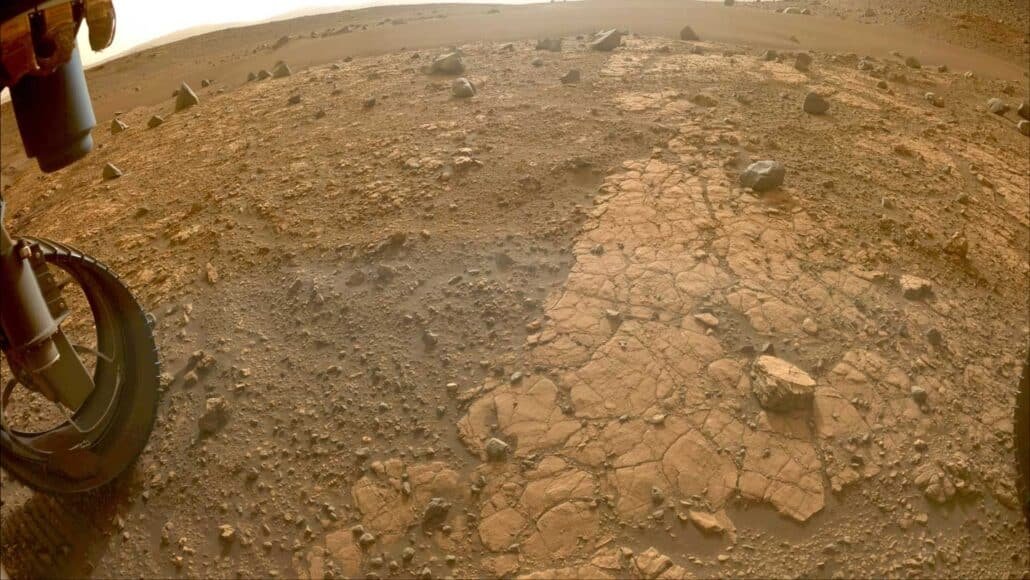
    The sound of a ‘dust devil’ on Mars has been recorded for the first time by NASA’s Perseverance when a short whirlwind swept over the rover.

    Researchers believe that the recording will help to gain more information about climate behavior on Mars, including how the atmosphere of the red planet could possibly support life.

    Although dust devils and dust storms are very common on Mars, NASA’s rover has captured it for the first time on its microphone.
    The rover’s audio recording device is turned on only occasionally, leading to estimates that such events might be recorded just around 0.5 percent of the time. Wind speeds in the walls of the dust devil reached nearly 40kmph as with the last whirlwinds observed by other instruments, this early morning dust whirl caused a slight drop in atmospheric pressure and rise in temperature as it swept over the rover on September 27, 2021. It was 25 meters in diameter, at least 118 meters tall, and ambled by at about 20 kilometers per hour.

  • NASA captures ultraviolet image of the Sun ‘smiling’ back at Earth

    NASA captures ultraviolet image of the Sun ‘smiling’ back at Earth

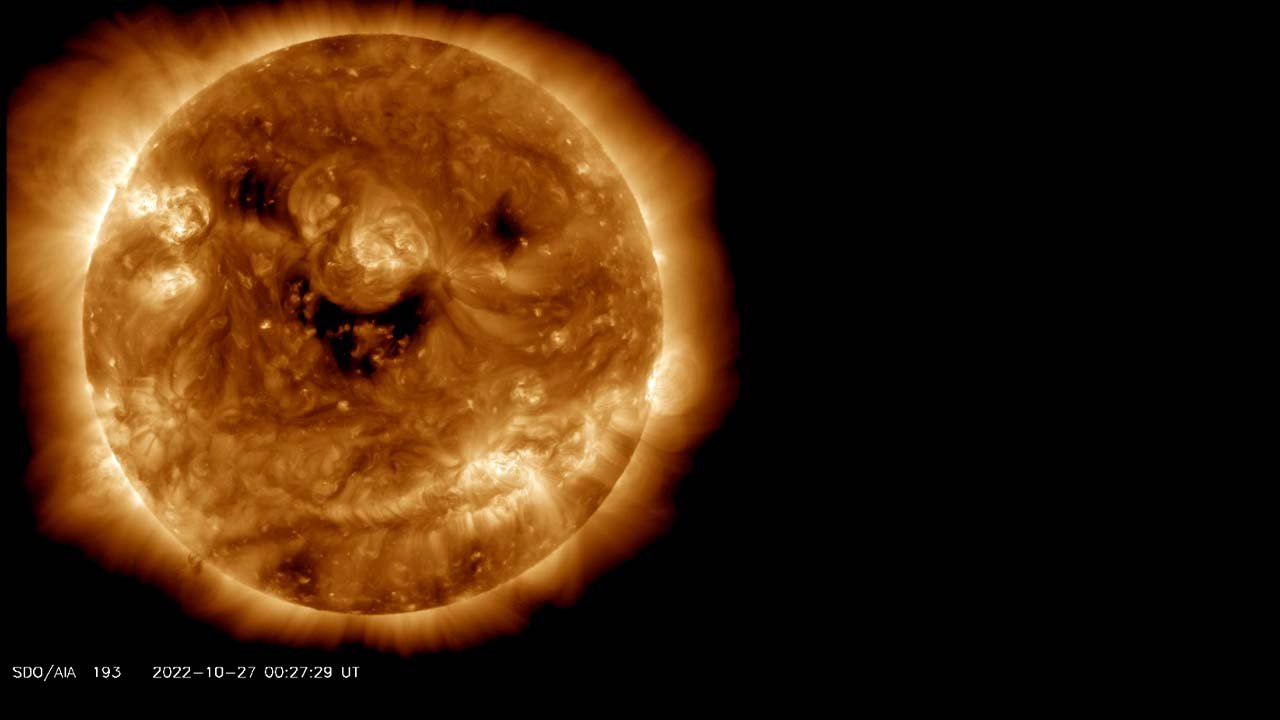
    This week, NASA’s Solar Dynamics Observatory (SDO) captured an ultraviolet image of the sun with three black spots that resemble a smiling face. This face may be a harbinger of a solar storm that might cause issues for Earth.

    A small geomagnetic storm watch has been issued for Saturday by the Space Weather Prediction Center of the National Oceanic and Atmospheric Administration. While geomagnetic storms may produce stunning auroras in the sky, they can also interfere with GPS and cause dangerous currents to flow through the electricity system and pipelines.

    The coronal holes, which are black patches, are places where solar wind escapes into space more rapidly and readily, keeping those places colder. According to the Exploratorium, a museum in San Francisco, these winds may reach speeds of up to 1.8 million miles per hour.

    People took advantage of the chance to create memes and change the smiling sun to resemble a pumpkin or the Stay-Puft Marshmallow Man from the Ghostbusters series.

    In 2014, NASA acquired pictures of the sun that similarly resembled jack-o-lanterns and gave them the name “Pumpkin Sun.” The sun’s active regions, which are what made up the jack-o-face, lantern’s indicate magnetic field disruptions that give rise to solar storms like solar flares and coronal mass ejections.

    Solar physicists employ telescopes that can picture the sun in the extreme ultraviolet spectrum because the human eye cannot see some wavelengths of sunlight. SDO highlights a specific region of the sun’s atmosphere using 13 different light wavelengths.

    “Ultraviolet light from the sun can show us the origins of solar storms that can lead to power outages, cell phone disruptions, and delays in shipping packages due to the rerouting of planes from over the pole,” Joseph Gurman, a researcher at the NASA Goddard Space Flight Center’s Solar Data Analysis Center said.

    “Wednesday’s image was taken at 193 angstrom light, giving it the yellow, light orange hue. The 2014 image was taken at a blend of 171 and 193 angstrom light, colorizing the sun in gold and yellow “to create a Halloween-like appearance,” according to NASA.

    Shockingly, both pictures were taken in October, just in time for Halloween.

  • NASA releases first ever ‘deepest’ image of the distant universe

    NASA releases first ever ‘deepest’ image of the distant universe

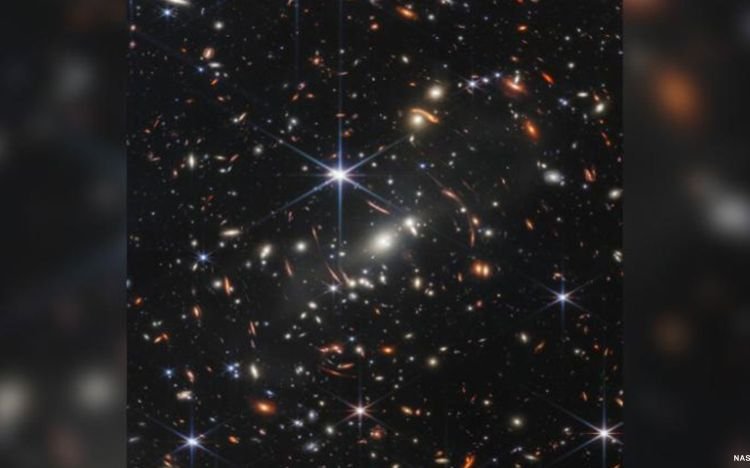
    The first image from NASA’s new space telescope, which provides the most in-depth view of the universe ever taken, has been made public. It was unveiled during a White House event by United States (US) President Joe Biden.

    The James Webb Space Telescope, the most potent observatory ever launched into space, presented its first image on Monday. It provides the most in-depth view of the ‘distant universe’ ever taken. This image is among the telescope’s first-full color images

    The image shows stars, with massive galaxies in the foreground and faint and extremely distant galaxies peeking through here and there.

    “The James Webb Space Telescope is the world’s premier space science observatory. Webb will solve mysteries in our solar system, look beyond to distant worlds around other stars, and probe the mysterious structures and origins of our universe and our place in it,” said NASA.

  • Fact check: Was Khan’s Peshawar jalsa visible from space?

    Fact check: Was Khan’s Peshawar jalsa visible from space?

    Claim: Imran Khan’s jalsa in Peshawar was visible from space as shown in a photography taken by NASA

    Fact:

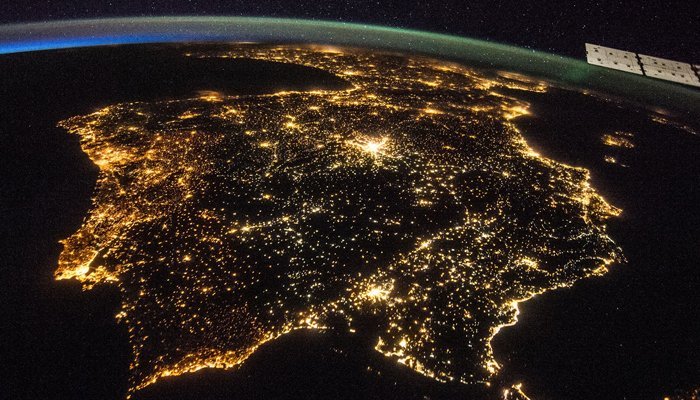
    Pakistan Tehreek-e-Insaf (PTI)’s Peshawar jalsa was massive. Visuals and videos from the jalsa are doing the rounds on social media. However, PTI leader Ali Muhammad Khan went overboard as he shared a photo from the United States National Aeronautics and Space Administration (NASA), claiming that it was from the party’s rally.

    Ali M Khan shared three pictures on Twitter after the rally, and among them was a picture from NASA, which was a snap captured from the International Space Station.

    Screenshot of Ali Muhamamd Khan’s tweet

    The picture shared by the PTI leader actually shows the lights in the Iberian Peninsula, which falls in Spain and Portugal. This picture was taken by NASA and published on their website in 2014.

    “One of the Expedition 40 crew members aboard the International Space Station recorded this early evening photo of the entire Iberian Peninsula on July 26, 2014,” the NASA post read.

    VERDICT: FALSE

  • Asteroid size of Burj Khalifa to make closest pass by Earth

    Asteroid size of Burj Khalifa to make closest pass by Earth

    A large asteroid the size of the Burj Khalifa – the world’s tallest building is heading for Earth. The flyby is expected to take place on Tuesday, January 18.

    The massive asteroid has a diameter of approximately 791 meters. Its estimated size is about 3,280 feet, which is approximately the size of Dubai’s Burj Khalifa and twice the height of New York City’s Empire State Building.

    For comparison, the distance between the earth and the moon is far less than that around 385,00 km. As such, despite being classified as a potentially hazardous asteroid(PHA) due to its size and close proximity to Earth, it seems unlikely to pose a threat to the planet. In fact, NASA has declared the Earth safe from asteroid impacts for the next 100 years.

    The asteroid’s size also isn’t a cause for concern. Hasan Al Hariri, the CEO of Dubai Astronomy Group, said it will pass Earth safely.

    “The asteroid will fly past and go even beyond the moon. It’s not going to collide with our planet,” he said. “There are more than 500 such asteroids. These are also called NEOs or Nearth-Earth Objects or Hazardous Bodies.”

    “There are different types of asteroids, and we have to create different methods to defend Earth against potential asteroids or comet hazards,” Al Hariri said.

    The speeding asteroid will pass 1.93 million kilometres from earth, or about five times the distance between earth and moon.

    “Nasa’s programmes of planetary defence systems monitor all such bodies that can cause a threat to Earth, either in the short or long-term,” Al Hariri said. “Different space agencies also monitor the sky and there are many surveys held around the year and around the world to identify such objects that could pose a threat to us. Additionally, advanced telescopes are being manufactured that can capture up to even one million objects coming from space.”

  • Nasa Earth releases satellite images of Hingol National Park

    Nasa Earth releases satellite images of Hingol National Park

    The National Aeronautics and Space Administration (NASA) has shared satellite images of the Hingol National Park, located 120 miles from Karachi. The image was acquired in February this year.

    Read more – NASA shares picture of snow-covered Himalayan ranges from space

    Nasa Earth observatory describes Hingol Park with its “rocky terrain, mountain caves, and beautiful beaches” as “one of the natural wonders of Pakistan”.

    Hingol spans around 6,200 square kilometres (2,400 square miles) across three districts of the Balochistan Province: Lasbela, Awaran, and Gwadar,.

    The park is named after the Hingol River, which flows through this dry region year-round and is the longest in Balochistan. Before emptying into the Arabian Sea, the Hingol flows into an estuary that supports threatened fish, birds, and crocodiles. It is part of the largest national park for the protection of endangered species in the country. The park is also home to wild Sindh Ibex, Balochistan Urial, and Chinkara Gazelle.

    Located approximately 200 kilometers (120 miles) northwest of Karachi, Hingol National Park features several distinct ecosystems. In the north, it includes an arid subtropical forest, while dry, mountainous terrain covers the western portion.

    In the east, the park is renowned for a group of mud volcanoes that spew methane and mud instead of lava. Along the coast, Hingol includes caves, beaches, and a marine ecological zone that is home to dolphins, sea turtles, and mangroves. The water body in the image above is an ephemeral lake near Sapat Beach.

    The park also holds a significance amount for Hindu community because of the Hinglaj Mata Mandar located there.