Tag: NASA

  • Large asteroid to zip past Earth today

    Large asteroid to zip past Earth today

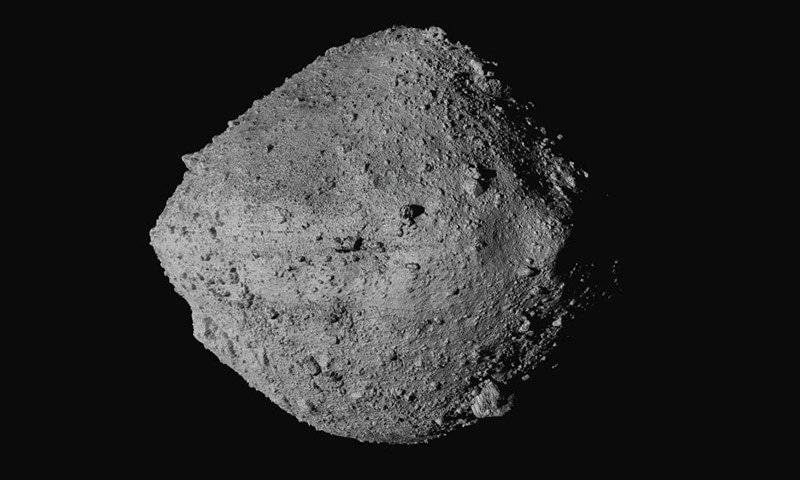
    The largest asteroid to pass by Earth this year is expected to swing closest on Monday, giving astronomers a rare chance for a good look at a space rock that formed at the dawn of our solar system.

    While in astronomical terms this marks a close encounter with the asteroid — called 2001 FO32 — Nasa says there is no threat of a collision with “our planet now or for centuries to come”.

    The nearest it will get will be two million kilometres away, according to the US space agency.

    That is roughly 5.25 times the distance of the Earth from the Moon, but still close enough for 2001 FO32 to be classified as a “potentially hazardous asteroid”.

    “We know the orbital path of 2001 FO32 around the Sun very accurately,” said Paul Chodas, director of the Center for Near Earth Object Studies.

    Nasa says 2001 FO32 would pass by at about 124,000 kilometres per hour, much faster than the speed at which most asteroids encounter Earth.

    The asteroid is estimated to be about 900 metres in diameter and was discovered 20 years ago.

    Astronomers are hoping to get a better understanding of the asteroid’s size and a rough idea of its composition by studying light reflecting off its surface.

  • First ‘space hotel’ expected to open in 2027

    Space construction company Orbital Assembly has announced the construction of a ‘space hotel’. The announcement was made in an event ‘First Assembly’ which streamed live on the company’s YouTube channel.

    Image by orbital assembly coorporation

    Speaking to a news publication, Chief Executive Officer of Orbital Assembly John Blincow said that the coronavirus pandemic may ultimately delay the construction start date from its initial 2025 projection. However, he believes it could take just a year or two to assemble Voyager Station, the commercial space station that will house the hotel.

    “It’s going to happen fast when it starts,” Blincow said. “And we believe it’s going to happen a lot, too, even before we finish the first one. We have buyers for other stations because they’re very, very lucrative.”

    He further added, “You’re going to have the top chefs making really, really good food. And when you pay $5 million to go someplace, it’s not going to be burgers and fries.”

    Voyager Station, it is planned to operate with artificial gravity. Orbital Assembly’s goal is “to build a ring-shaped Voyager Space Station (VSS) with a diameter of 650 ft (200 m) and capable of creating moon-levels of artificial gravity.”

    As per details, construction of this space structure will begin in 2025 and it will have the capacity to accommodate 400 people. The Voguer Space station is expected to be operational by 2027.

  • NASA’s Perseverance rover lands on Mars, China trails behind

    NASA’s Perseverance rover lands on Mars, China trails behind

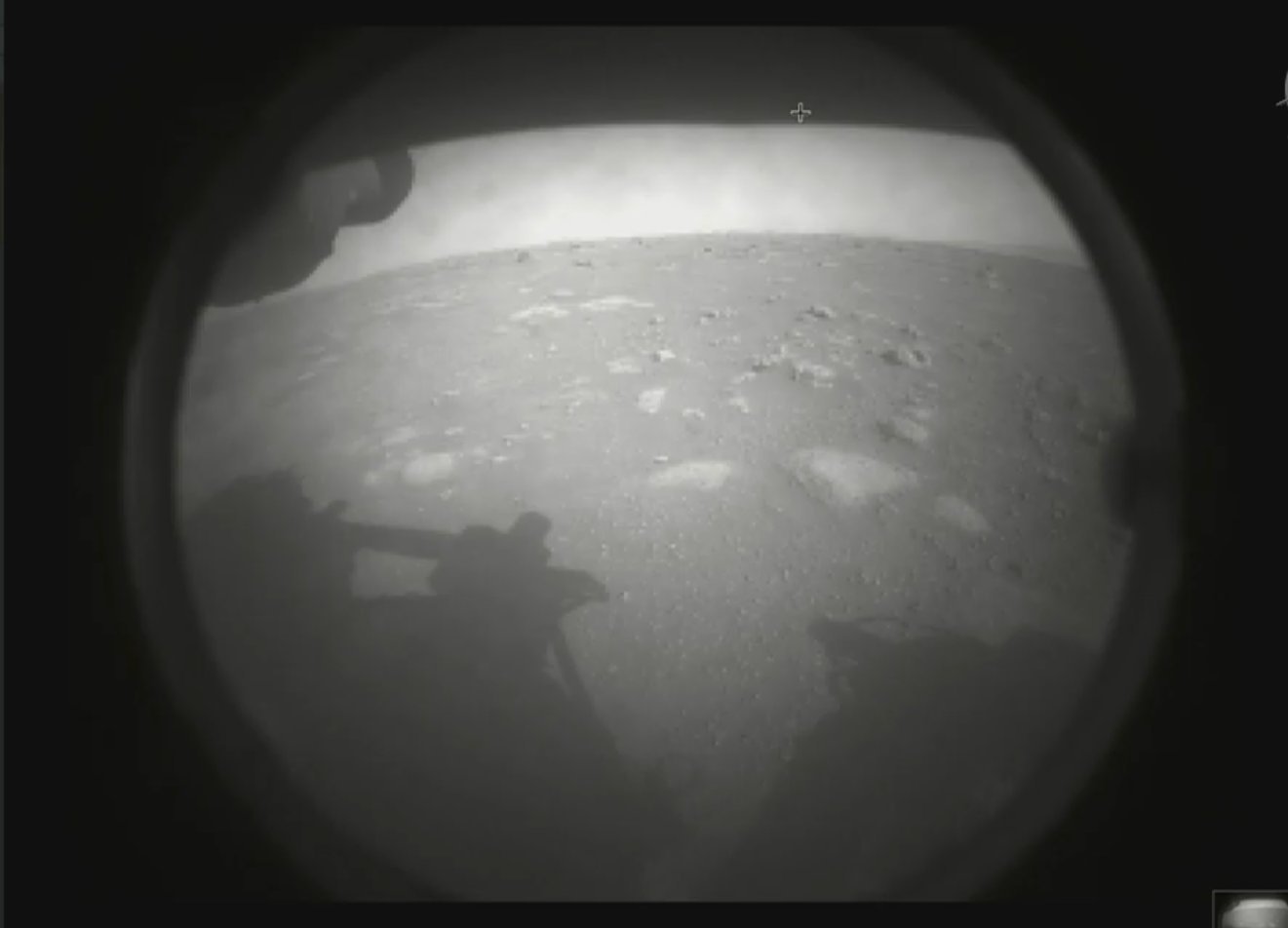
    NASA successfully landed its fifth robotic rover, Perseverance, on the surface of Mars on Thursday after its six-month journey from Earth.

    “Touchdown confirmed. Perseverance is safely on the surface of Mars,” said Swati Mohan, an engineer on the Perseverance team.

    The rover is the most technologically advanced robot NASA has ever sent to Mars. The agency’s goal is to use it to explore the surface in nearly two years.

    NASA spent about $2.4 billion to build and launch the Perseverance mission, with another $300 million in costs expected for landing and operating the rover on the Mars surface.

    Perseverance also has a small helicopter named Ingenuity that NASA would use to try the first flight on another planet.

    The rover’s weight is about 1one ton. It is 10 feet long, nine feet wide and seven feet tall. The camera is fixed in a robotic arm that reaches about seven feet. It also has a chemical analyser and a rock drill.

    Perseverance traveled 293 million miles to reach Mars over the course of more than six months after it was launched on a United Launch Alliance Atlas V rocket on July 30.

    Meanwhile, China’s Tianwen-1 spacecraft has also entered into the orbit and might land on the surface later this year.

  • NASA shares picture of snow-covered Himalayan ranges from space

    NASA shares picture of snow-covered Himalayan ranges from space

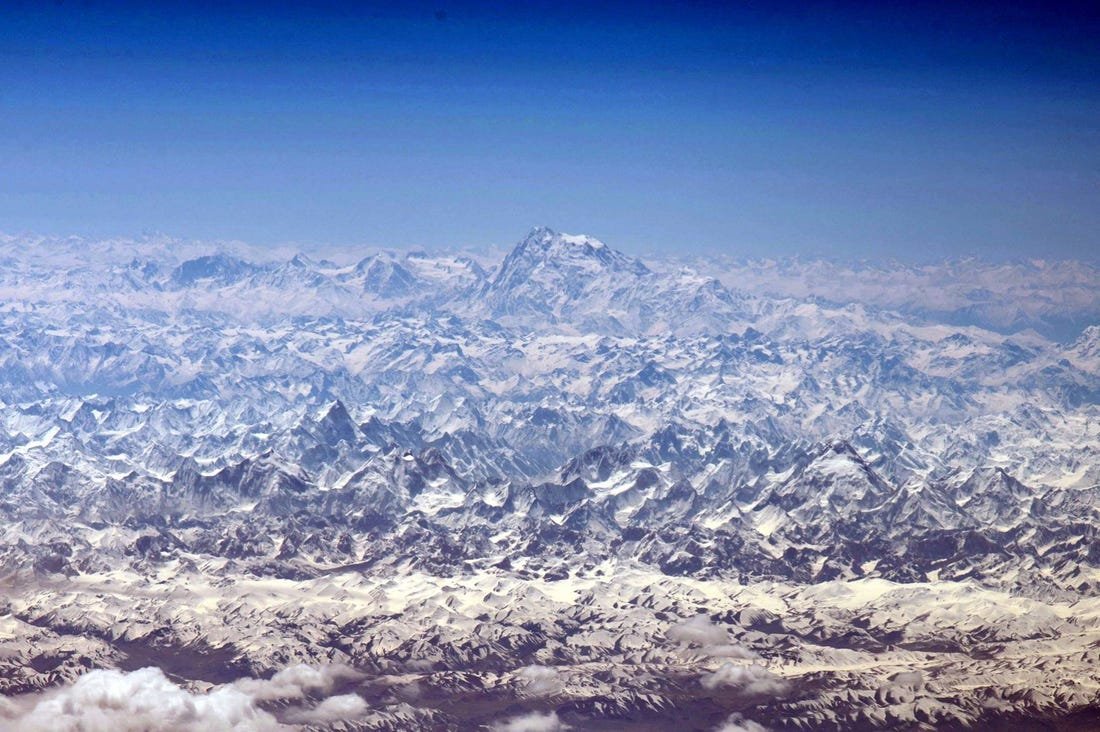
    The National Aeronautics and Space Administration (NASA), which often shares pictures of the planet as seen from the space, has shared a picture of the snow-covered Himalayan ranges.

    The long exposure shot sees not just the expanse of bright white mountain ranges but also captures the city lights of New Delhi and Lahore to the south and the arid Tibetan plateau, the “Roof of the world,” to the north.

    Among these details is also a faint, orange airglow of atmospheric particles reacting to solar radiation.⁣ The horizon of the Earth adds the element of the beauty of this universe.

    Following months of coronavirus lockdown, people were lucky to see the mighty Himalayan mountains from their cities due to reduced pollution.

    The Himalayas are the highest mountain range in the world and are a sight to behold even on Earth. But the shot NASA shared from space is absolutely breathtaking. The picture has gone viral on social media with over a million likes and comments.

  • NASA discovers water on the surface of moon

    Stratospheric Observatory for Infrared Astronomy (SOFIA) of NASA has discovered water on the surface of the moon for the first time.

    The discovery confirms that water is distributed all over the surface of the moon and it is not confined to one place.

    Although NASA previously had observed some form of hydrogen on the Moon’s surface, it was unable to differentiate between water and hydroxyl, its close chemical relative.

    According to details, SOFIA has located water molecules in Clavius Crater. Located in the Moon’s southern hemisphere, Clavius Crater is one of the biggest craters that are visible from Earth.

    The amount of water discovered on the moon is between 100 to 412 parts per million– roughly equal to a 350-milliliter bottle of water– that is trapped in a cubic meter of soil.

    To put it into perspective, the Sahara desert has 100 times more water than what is discovered on the Moon’s sunlit surface.

    The first way suggests that micrometeorites raining down on the lunar surface, carrying small amounts of water, could have deposited the water in the Clavius Crater upon impact.

    The second way consists of a two-step process in which Sun’s solar wind delivered hydrogen to the lunar surface and caused a chemical reaction with oxygen-bearing minerals in the soil to create hydroxyl. The radiation from the bombardment of micrometeorites might have transformed that hydroxyl into water.

    “We had indications that H2O – the familiar water we know – might be present on the sunlit side of the Moon. Now we know it is there. This discovery challenges our understanding of the lunar surface and raises intriguing questions about resources relevant for deep space exploration.”

    Director of the Astrophysics Division in the Science Mission Directorate at NASA Headquarters in Washington, Paul Hertz

    However, these missions were unable to distinguish between water and hydroxyl.

    With SOFIA definitively confirming the presence of water on the Moon, it remains to be seen whether or not this water is easily accessible for use as a resource.
    The discovery confirms that water is distributed all over the surface of the moon and it is not confined to one place.

    Although NASA previously had observed some form of hydrogen on the Moon’s surface, it was unable to differentiate between water and hydroxyl, its close chemical relative.

    According to details, SOFIA has located water molecules in Clavius Crater. Located in the Moon’s southern hemisphere, Clavius Crater is one of the biggest craters that are visible from Earth.

    The amount of water discovered on the moon is between 100 to 412 parts per million– roughly equal to a 350-milliliter bottle of water– that is trapped in a cubic meter of soil.

    To put it into perspective, the Sahara desert has 100 times more water than what is discovered on the Moon’s sunlit surface.

    The first way suggests that micrometeorites raining down on the lunar surface, carrying small amounts of water, could have deposited the water in the Clavius Crater upon impact.

    The second way consists of a two-step process in which Sun’s solar wind delivered hydrogen to the lunar surface and caused a chemical reaction with oxygen-bearing minerals in the soil to create hydroxyl. The radiation from the bombardment of micrometeorites might have transformed that hydroxyl into water.

    “We had indications that H2O – the familiar water we know – might be present on the sunlit side of the Moon. Now we know it is there. This discovery challenges our understanding of the lunar surface and raises intriguing questions about resources relevant for deep space exploration.”

    Director of the Astrophysics Division in the Science Mission Directorate at NASA Headquarters in Washington, Paul Hertz

    With SOFIA definitively confirming the presence of water on the Moon, it remains to be seen whether or not this water is easily accessible for use as a resource.
  • NASA astronauts respond to fourth-graders from Karachi

    The National Aeronautics and Space Administration (NASA) has responded to a Twitter post by a teacher from Karachi, wherein she had posted some space-related questions by her fourth-grade students.

    A group of fourth-graders from The Cornerstone School in Karachi came up with space-related queries for scientists and astronauts at NASA. In order to spread the message across NASA and get a response, the teacher took a shot and tweeted the same, tagging the space agency as well as prominent astronauts’ official Twitter handles.

    Over 2,000 people retweeted the letter that eventually reached scientists and astronauts who answered all the queries and invited the kids to be their guest after the pandemic.

    Here is the reply from Emily Calandrelli, an American science communicator and the host of Xploration Outer Space.

    Here’s what Canadian astronaut Chris Hadfield had to say:

    People, including the teacher, were overwhelmed by the responses and appreciated the effort as DLR — German Aerospace Center — also responded.

    Some even suggested that Federal Science Minister Fawad Chaudhry should get involved to help other children have their questions answered.

  • All women crew conducts first spacewalk of 2020

    All women crew conducts first spacewalk of 2020

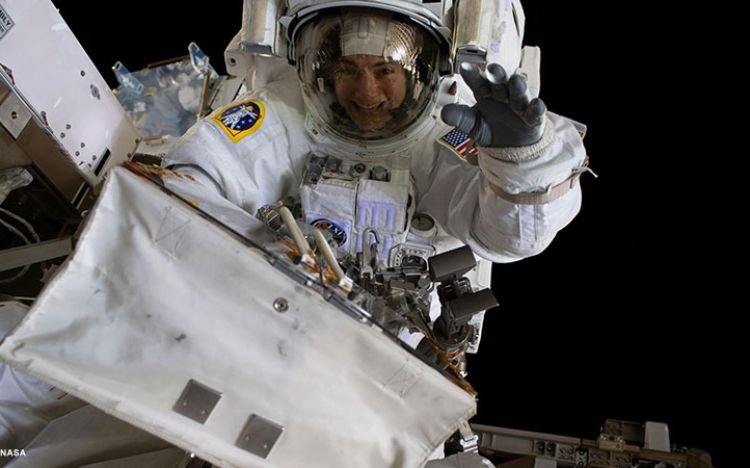
    The second spacewalk in history was conducted by a team of all-women astronauts at the International Space Station on Wednesday morning.

    NASA astronauts Jessica Meir and Christina Koch replaced batteries on solar arrays on the outside of the International Space Station during the first spacewalk of 2020.

    The same astronauts made history after completing the very first all-female spacewalk in October. That came months after a planned spacewalk with an all-women crew had to be cancelled in March because of lack of suitable spacesuits.

    These will be the second and third spacewalks for Meir
    and the fifth and sixth for Koch. NASA said Wednesday’s spacewalk is the 225th
    conducted at the International Space Station.

  • NASA to open International Space Station to tourists

    NASA to open International Space Station to tourists

    NASA is to allow tourists to visit the International Space Station from 2020, priced at $35,000 (Rs 5,233,900) per night.

    NASA will allow up to two private trips to
    the station per year, each lasting up to 30 days. The first mission could be as
    early as 2020. But the ride won’t be cheap. NASA estimated the cost of a flight
    would be around $50 million per seat. NASA will charge visitors for food,
    storage and communication at the station.

    “If you look at the pricing and you add it up, back of a napkin, it would be roughly $35,000 a night, per astronaut,” NASA’s Chief Financial Officer Jeff DeWit said at a news conference in New York.

    The two companies hired by NASA are SpaceX and Boeing which
    will be responsible for all the arrangements.

    NASA had previously banned any commercial use
    of the space station and prohibited astronauts from taking part in for-profit
    research.NASA does not own the station however it was built in 1998, with
    Russia, which has taken a more relaxed approach in recent decades to commerce.

    In 2001, US
    businessman Dennis Tito became the first tourist to visit when he paid Russia
    around $20 million for a round trip.