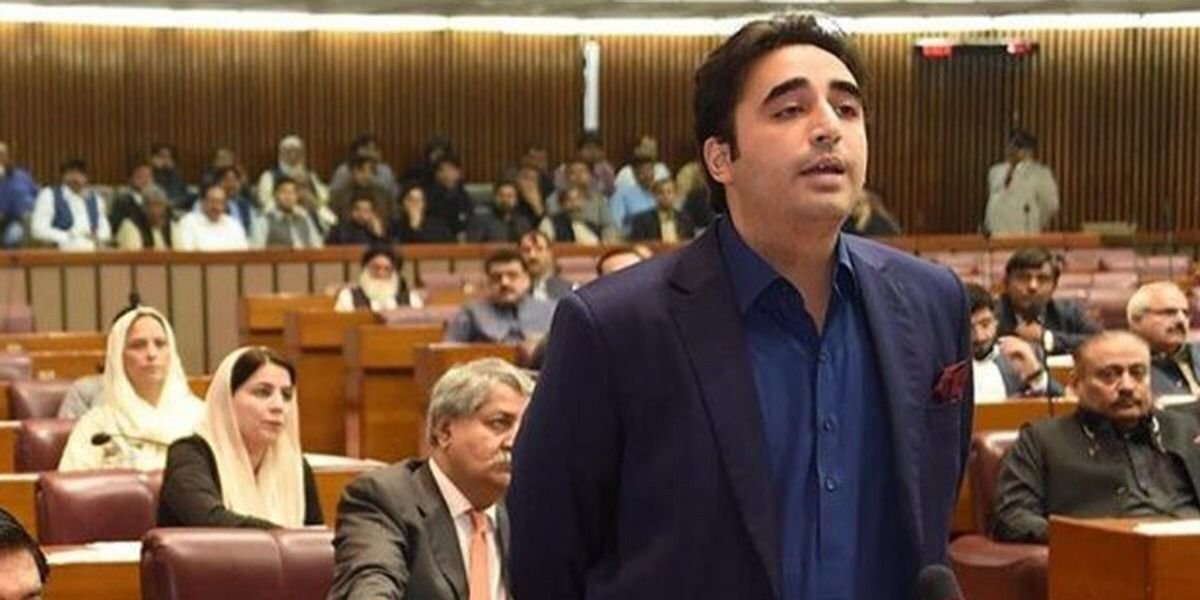
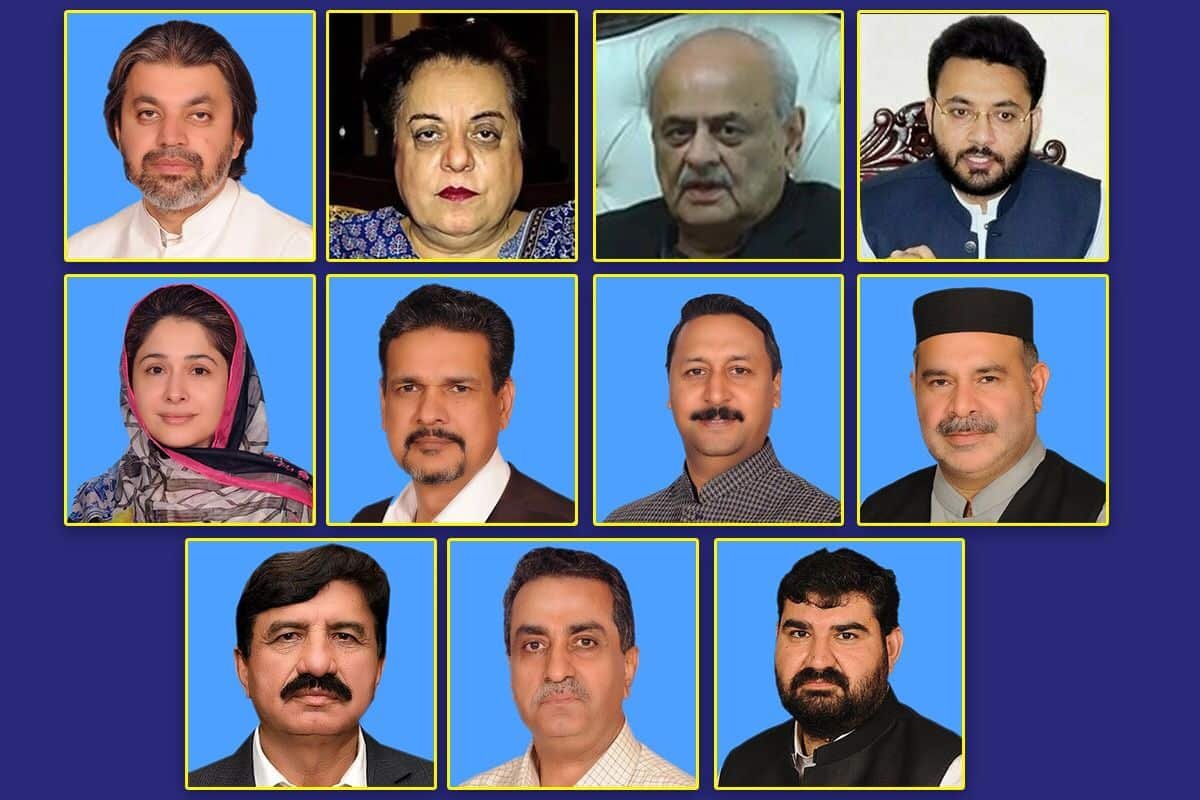
Pakistan People’s Party (PPP) Chairman Bilawal Bhutto-Zardari was the most vocal lawmaker during the fourth year of the current National Assembly before the change in government, with a talk time of one hour and 59 minutes , according to PILDAT.
PML-N leader Shehbaz Sharif came in second and spoke for one hour and 57 minutes, followed by PML-N’s Khawaja Mohammad Asif who spoke for one hour and 27 minutes.
During this period in the House of 342 members, 174 (50.88 per cent MNAs) did not speak for a single minute in the Assembly. Out of these 174 non-vocal MNAs, 149 were male and 25 were women MNAs. 84 of these MNAs (22 per cent of the House) belong to the Pakistan Tehreek-e-Insaf (PTI), 48 MNAs are of the Pakistan Muslim League-Nawaz (PML-N) and 23 are affiliated with the PPP.
PILDAT’s comparative analysis looked at the three years and eight months’ period of the National Assembly under former prime minister Imran Khan and also looks how the PTI tenure under Imran Khan as prime minister was different from the same period in the 14th National Assembly.
— احمد بلال محبوبAhmedBilalMehboob (@ABMPildat) August 22, 2022
Legislative activity witnessed a decrease of 8 per cent in the fourth year of the 15th National Assembly as it passed 55 laws compared to 60 bills passed during the third year of the Assembly. 30 bills were passed during the second year while only 10 bills were passed in the first year.
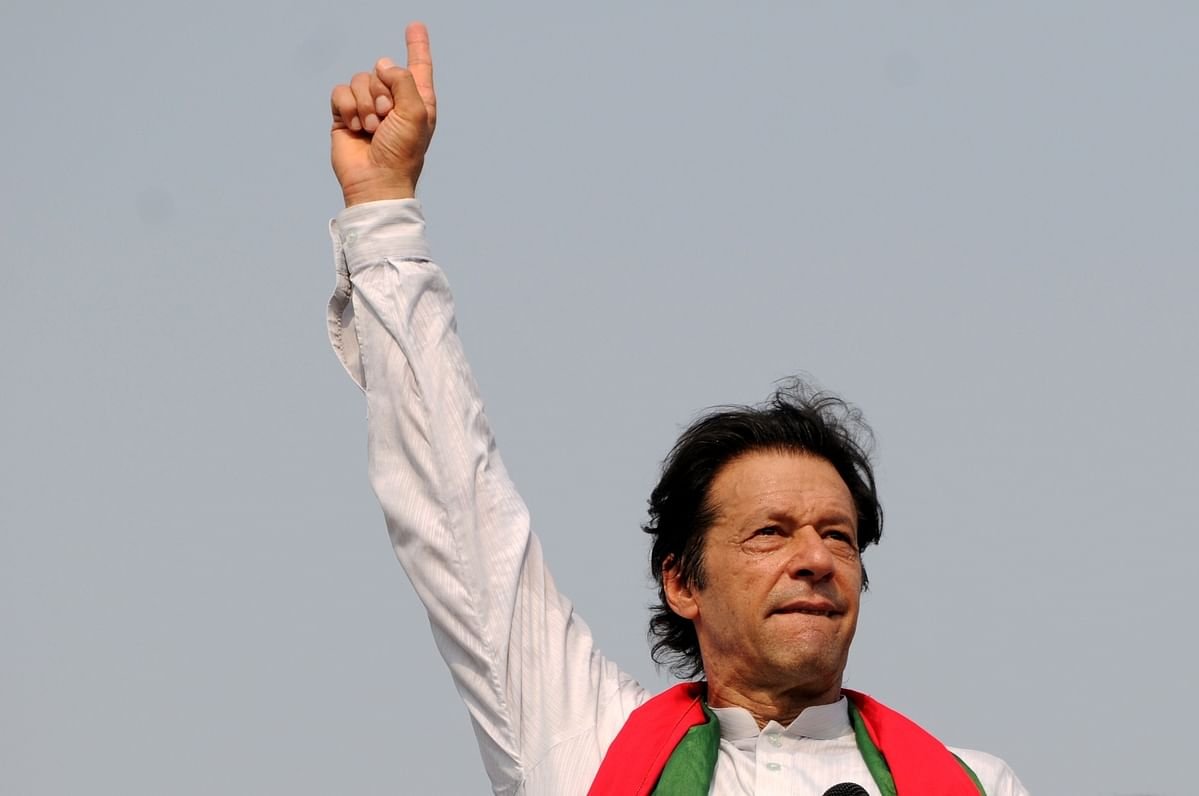
Pakistan Tehreek-e-Insaf (PTI) Chairman Imran Khan is set to create a record in the country’s history by contesting the by-elections from nine National Assembly (NA) constituencies.
Imran Khan will run from Mardan, Charsadda, Peshawar, Kurram, Faisalabad, Nankana, Malir, Korangi, and Karachi South constituencies, i.e. NA-22, NA-24, NA-31, NA-45, NA-108, NA-118, NA-237, NA-239, and NA-246.
Khan will file his nomination papers today (Saturday) for the three constituencies from Karachi.
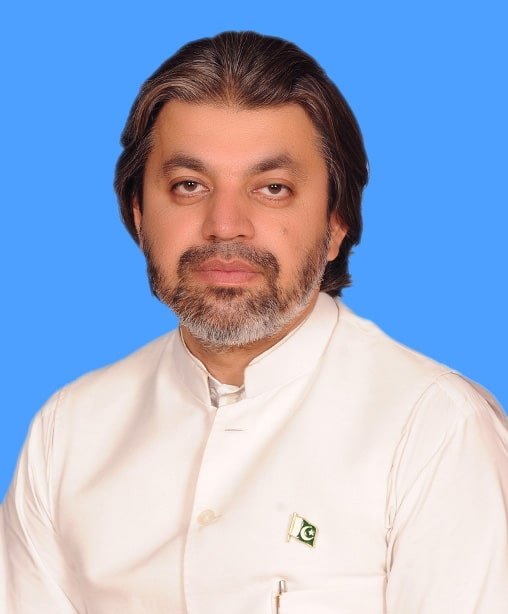
Speaking at a press conference, PTI leader Ali Zaidi said, “The by-elections will once again prove the love of Karachi and its people for Imran Khan.”
“The PTI will launch an aggressive election campaign and we are very much hopeful that Khan sahib would also visit Karachi very soon,” he added.
These nine seats were declared vacant after NA Speaker Raja Pervaiz Ashraf accepted the resignations of PTI MNAs.
By-elections in nine constituencies will take place on September 25.
Imran Khan to contest by-elections on 9 vacant NA seats
Pakistan Tehreek-e-Insaf (PTI) Chairman Imran Khan will be contesting by-elections on all nine National Assembly (NA) constituencies that had fallen vacant after NA Speaker Raja Pervez Ashraf accepted 11 resignations of PTI members under Article 64(1) of the Constitution of Pakistan.
The announcement that Khan will contest from all nine constituencies was made on PTI’s official Twitter account.
During the 2018 general elections, the PTI chairman contested elections from five constituencies and won all of them.
Election schedule for nine vacant National Assembly seats announced
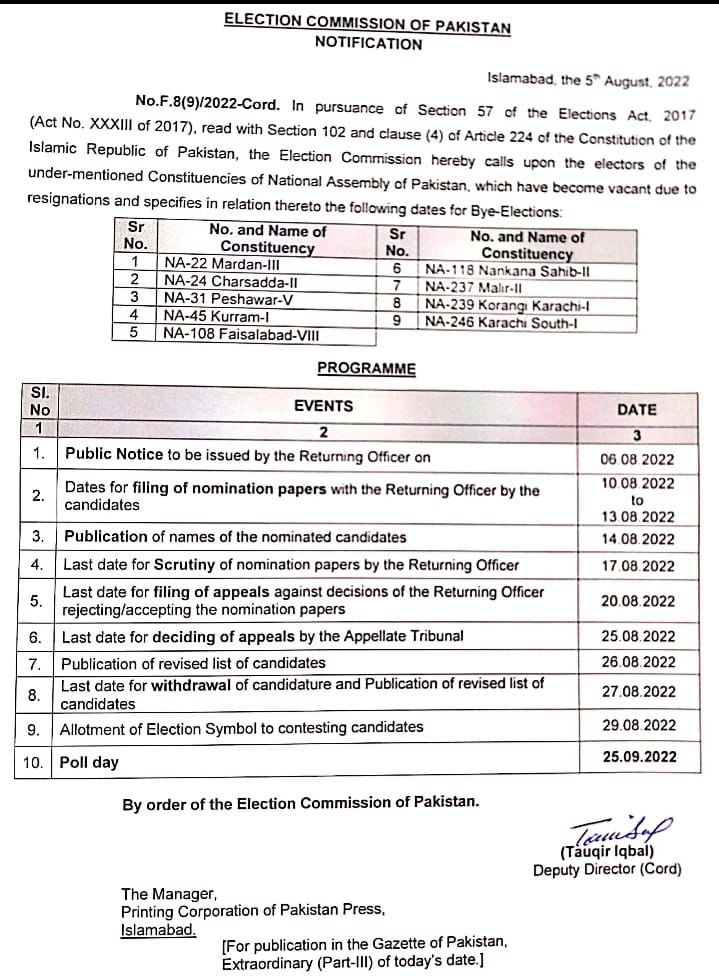
The Election Commission of Pakistan (ECP) on August 5, announced that it will be holding by-elections in nine constituencies of the NA on September 25.
According to the ECP notification, the elections are to be held in NA-22 Mardan -III, NA-24 Charsadda-II, NA-31 Peshawar-V, NA-45 Kurram-I, NA 108 Faisalabad- VIII, NA-118 Nanakana Sahib-II, NA-237 Malir-II, NA-239 Korangi Karachi-I, NA-246 Karachi South-I.
After Imran Khan was ousted through a vote of no-confidence, 123 PTI lawmakers resigned en masse from the National Assembly.
Pakistan Tehreek-e-Insaf (PTI) Vice President Shah Mahmood Qureshi’s daughter Meher Bano Qureshi is contesting the upcoming by-polls for a National Assembly (NA) seat vacated by her brother Zain Qureshi.
She will contest the election from NA-157, Multan. Addressing a press conference, Shah Mahmood Qureshi said that they had filed nomination papers after the approval of PTI Chairman Imran Khan.
“Meher Bano has a sense of the next generation. If we want to get our country out of this difficult situation, then mothers and daughters have to play a role because a mother has more sense of what will be the future of her child.”
Meher Bano said that she has been working with the social media team of PTI since 2018.
“My father has chosen me to keep Imran Khan’s narrative alive, contrary to tradition.”
However, in Multan, PTI workers came to protest against their own party’s candidate, Meher Bano Qureshi, outside the Election Commission office and raised slogans of disapproval for dynastic politics. They argued that Mahmood couldn’t find anyone within the party for the candidacy.
“First Mahmood gave a party ticket to his son, now her to his daughter,” they complained.
A local PTI member, Engineer Waseem, who was also a part of the protest, said that if the party does not give him a ticket, then he would contest the election as an independent candidate.
ملتان,پی ٹی آئی کارکن انجینئر وسیم کا ساتھیوں کے ہمراہ وائس چیئرمین شاہ محمود قریشی کے خلاف احتجاج
ملتان,این اے 157 میں شاہ محمود قریشی اپنی بیٹی مہر بانو قریشی کو امیدوار کھڑا کر کے موروثی سیاست کو فروغ دے رہے ہیں, انجینئر وسیم pic.twitter.com/Kb2nq3ido4
People on social media are expressing their disappointment over PTI continuing with the tradition of dynastic politics.
Father Shah Mehmood Qureshi already in NA and brother Zain first in NA (now PA) certainly @PTIofficial is proving to be no different from parties @ImranKhanPTI accuse of dynasty politics https://t.co/JVE3OcMxtm
They say that Imran Khan is against hereditary politics, on the other hand, after Shah Mahmood Qureshi’s son was made MPA, now his daughter was given a party ticket. Wow!#PTI
This should be Stop PTI is doing the same as PPP&PMLN I was against them and also this one. Tickets should be given to PTI Worker who worked for years rather than Shah Mahmood Qureshi Family. Shah Mahmood is destroying the stance of PTI on Dynasty Politics. pic.twitter.com/eZUl5WvK6O
One thing not related to the topic but I must mention it . The ticket of National Assembly given to the daughter of Shah Mahmood Qureshi daughter is pure nepotism and a example of family dynastic politics which IK has been a strong critic
Reacting to the backlash, Meher Bano tweeted: “I have come across so many spreading fake news, doctored images and posters and attributing false statements to me. I wonder if it would have been different had I been a man. Anyhow, happy to work hard and prove myself.”
Since announcing my candidacy for by-election in #NA157, I have come across so many spreading fakes news, doctored images and posters and attributing false statements to me. I wonder if it would have been different had I been a man.Anyhow, happy to work hard & prove myself✌️
Shah Mahmood’s son Zain Qureshi won PP-217 in the Punjab by-polls held on July 17. After becoming a member of the Punjab Assembly, he vacated his NA seat. His sister will now contest the election for the NA seat vacated by him.
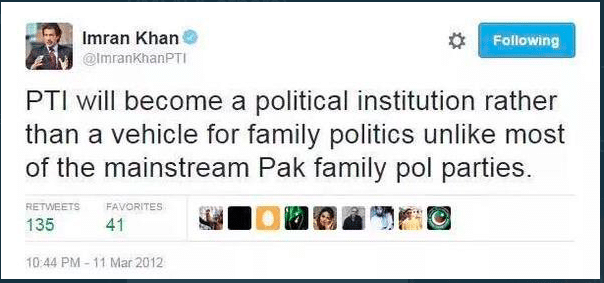
PTI Chairman Imran Khan himself has condemned and attacked the Pakistan Muslim-League (PML-N) and Pakistan People’s Party (PPP) for dynastic politics on multiple occasions.
Shameful how the feudal mindset of dynastic-controlled political parties allows their ldrs 2 usurp public property for its personal needs.
PTI Chairman Imran Khan sharing interesting facts on how his coalition party in Punjab “PMLQ” that also has successfully brought its CM with mere 10 MPAs in the Punjab Assembly has seen the downfall because of their dynastic politics. @MoonisElahi6@chparvezelahi#PMLQ#PTIpic.twitter.com/HtutUfCu8R
National Assembly (NA) Speaker Raja Pervez Ashraf accepted 11 resignations of Pakistan Tehreek-e-Insaf (PTI) members under Article 64(1) of the Constitution of Pakistan.
The announcement was made on the official Twitter handle of the National Assembly on Thursday.
اسپیکر قومی اسمبلی @RPAPPP نے پی ٹی آئی کے 11 مستعفی ممبران قومی اسمبلی کے استعفے قبول کر لیے۔
قومی اسمبلی سیکرٹریٹ کی جانب سے استعفوں کے نوٹیفیکیشن جاری۔
اسپیکر قومی اسمبلی نے استعفے آئین پاکستان کی آرٹیکل 64 کی شق (1) کے تحت تفویص اختیارات کو بروئے کار لاتے ہوئے منظور کیے۔ https://t.co/oOOxPuqyyb
The PTI leaders had tendered their resignations together after former Prime Minister Imran Khan’s government was ousted through a no-confidence motion.
According to the notification, the NA speaker has accepted the resignations of the following PTI members:
1. Ali Muhammad Khan — NA-11, Mardan-III
2. Fazal Muhammad Khan — NA-24, Charsadda-II
3. Shaukat Ali — NA-31, Peshawar-V
4. Fakhar Zaman Khan — NA-45, Kurram-I
5. Farrukh Habib — NA-108, Faisalabad-VIII
6.Ijaz Ahmad Shah — NA-118, Nankana Sahib-II
7. Jamil Ahmed Khan — NA-237, Malir-II
8. Muhammad Akram Cheema — NA-239, Korangi Karachi-I
9. Abdul Shakoor Shad — NA-246, Karachi South-I
10. Shireen Mehrunnisa Mazari — Reserved Seat for Women (Punjab)
11. Shandana Gulzar Khan — Reserved Seat for Women (Khyber Pakhtunkhwa)
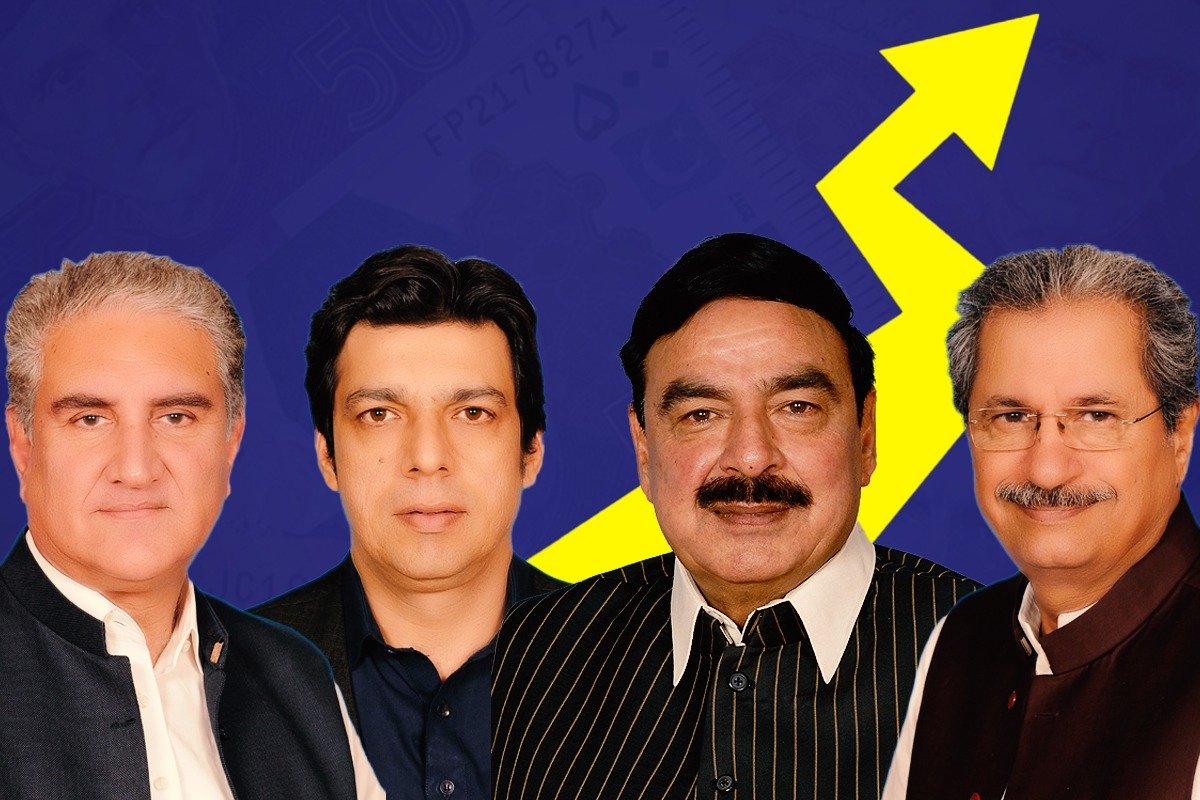
Official documents revealed that several members of Pakistan Tehreek-e-federal Insaf’s cabinet enjoyed gains in their fortunes during their term in parliament and as ministers, despite being elected on pledges of fighting corruption.
According toSAMAA TV, Shah Mehmood Qureshi and Sheikh Rasheed Ahmad, Omar Ayub Khan, Azam Khan Swati, Khusro Bakhtiar, Faisal Vawda, Shafqat Mehmood, Fehmida Mirza, Zubaida Jalal, Mahboob Sultan, and Tariq Cheema are among the listed former ministers.
Since select ministers received notices to explain their excessive wealth, the majority blamed weak wealth and asset declaration regulations, which did not contribute to increases in the valuation of assets overtime or the amalgamation of entities.
An inquiry into assets spontaneously declared before the Election Commission of Pakistan (ECP) and Pakistan’s tax authorities — primarily the Federal Board of Revenue (FBR) — by cabinet members who worked under former Prime Minister Imran Khan disclosed that plenty of of them saw a tremendous upsurge in their riches, with growth proportions primarily in the triple digits.
As per the official record, the ECP sent notices to at least six former ministers while they were still in government in 2019 and 2020, requesting them to clarify their wealth-related issues.
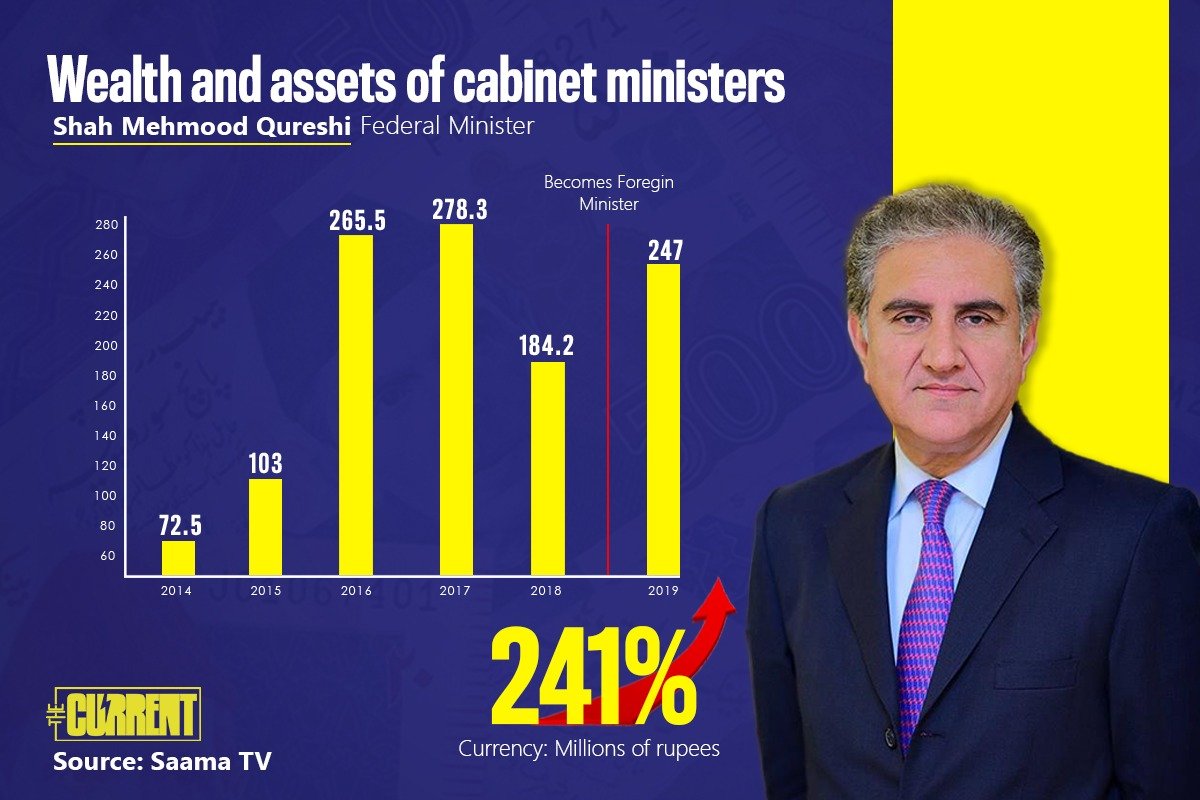
From 2014 to 2019, former foreign minister Shah Mahmood Qureshi, who has been a staple of the parliament for more than a decade and served twice in the federal cabinet in two different governments, had a 241 per cent growth in his wealth.
He and his wife held assets worth only Rs72.5 million in 2014, according to asset declarations he submitted to the ECP and the FBR. In the following three years, his assets nearly quadrupled, reaching Rs278.3 million, a 283.86 per cent increase over his wealth in 2014. Qureshi’s fortune dropped dramatically to Rs184.2 million in 2018, the year he returned to the Treasury benches, albeit with a new party, the PTI. However, while in power, it soon increased to Rs247.1 million in 2019, a rise of 240.82 per cent since 2014.
When questioned, Qureshi recounted how the worth of his assets had evolved over the years.
“The reason for the increase in assets was that during 2015-16, my wife received her share from the sale of property situated in Lahore, which had been gifted by her mother, and shares from sale proceeds of inherited property worth Rs169.6 million and Rs22.6 million,” he claimed. In October 2017, duplicates of sale deeds were handed to the ECP, according to the former minister.
“The ECP raised this observation too,” he said regarding the increase in his wealth, adding, “I and my dependent family members are all filers with the FBR”.
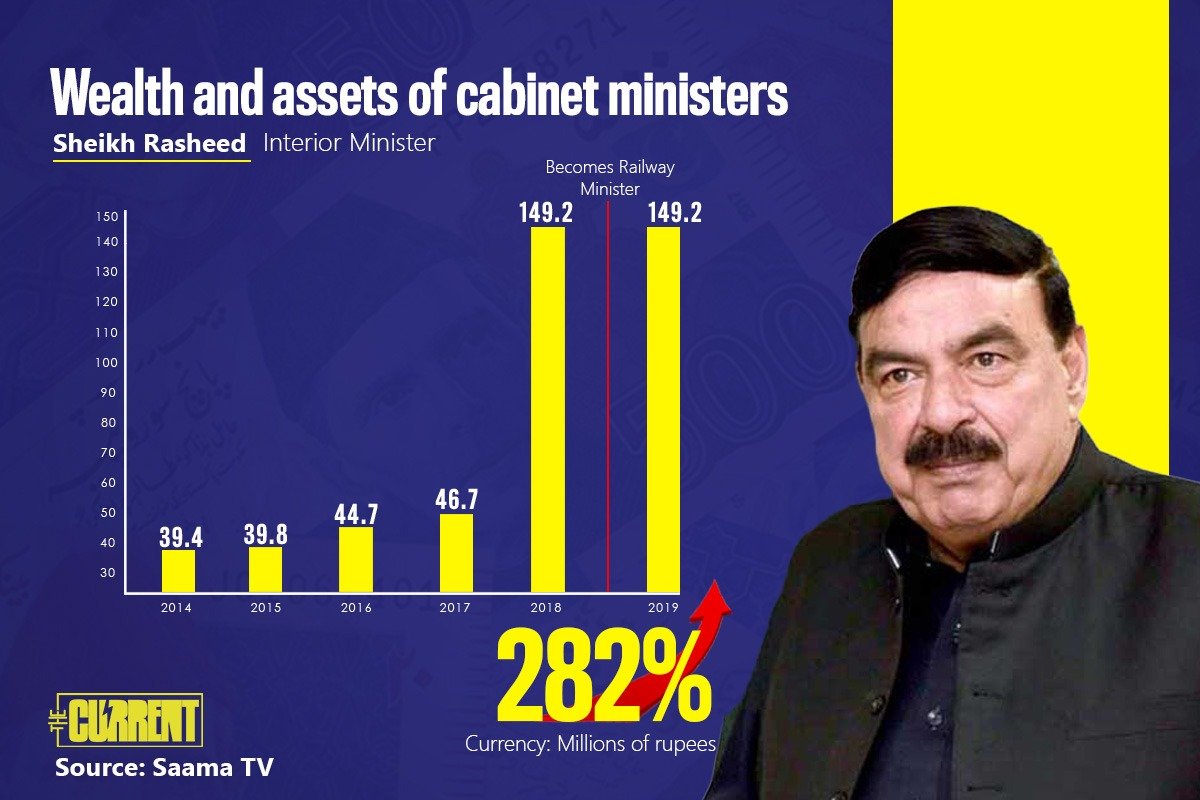
Sheikh Rashid, the former interior minister, watched his fortune increase by nearly 278.68 per cent between 2014 and 2019.
The financial disclosures for 2014 revealed that he only had Rs39.4 million in assets. Earnings climbed by Rs0.4 million to Rs39.8 million. His holdings steadily expanded over the next two years, reaching Rs44.7 million in 2016 and Rs46.7 million in 2017.
Conversely, in 2018, the time he was elected to power, his assets boosted by Rs100 million to Rs149.2 million. In 2019, there was no movement in reported assets. After inquired why his assets had suddenly changed, Rashid said that the discrepancy was due to an advance payment he had obtained for reselling a portion of land in 2018.
“I received Rs100 million as advance after making a deal of land to be sold last year, [2021],” he said, adding, “There is no such increase in my assets”. The former interior minister stated that the rise in his declarations submitted with the FBR and the ECP had been properly disclosed.
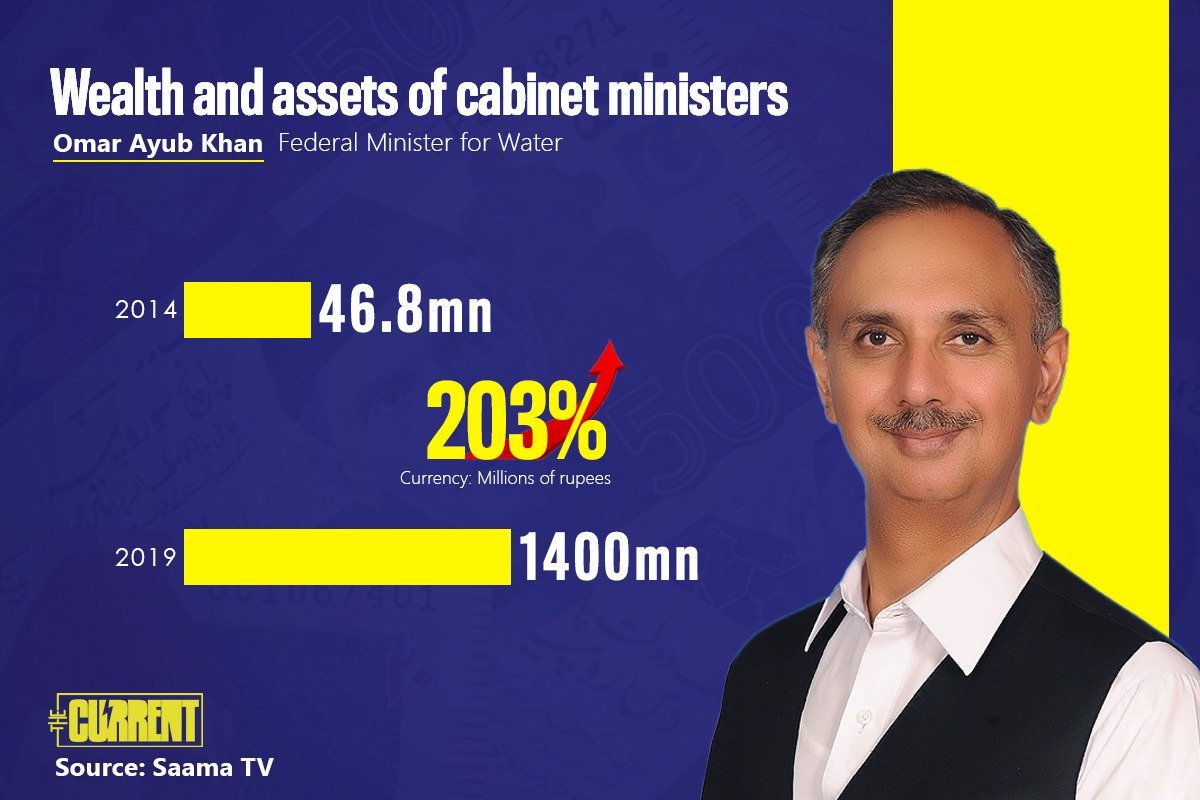
Between 2014 and 2019, the fortune of former federal minister of water Omar Ayub and his wife jumped by 203 per cent.
As per Ayub’s filings to the ECP and FBR in 2014, he and his wife held assets worth Rs461.8 million. This comprised Rs132 million in assets held by his wife and Rs329 million in assets owned by the minister. This value had risen to Rs1.4 billion by 2019. Surprisingly, while his wife’s holdings increased slightly to Rs201 million, Ayub’s assets increased to Rs1.2 billion. Each has debts worth only Rs26.3 million, according to the disclosures.
As a result, the ECP expressed concerns about Ayub’s and his family’s unexpected surge in wealth.
“It was explained to the ECP in 2019 that it [increase in wealth] is because of group formation having no cash involvement,” Ayub said, confirming that the top poll body had issued him a notice on this subject. Ayub claimed that he owned shares in Nova Synpac Ltd. and NovaGene Pharmaceuticals Ltd., which increased in value by approximately Rs1.071 billion.
“My assets have decreased (excluding this group formation) since I took an oath as a minister because I resigned from my group,” he claimed, adding that the increase was due to the consolidation of all of his businesses under the group.
“This cannot be reflected in a declaration, which is always a reflection of statements submitted to the FBR and there cannot be any difference [between them] otherwise it would have been challenged there,” he explained.
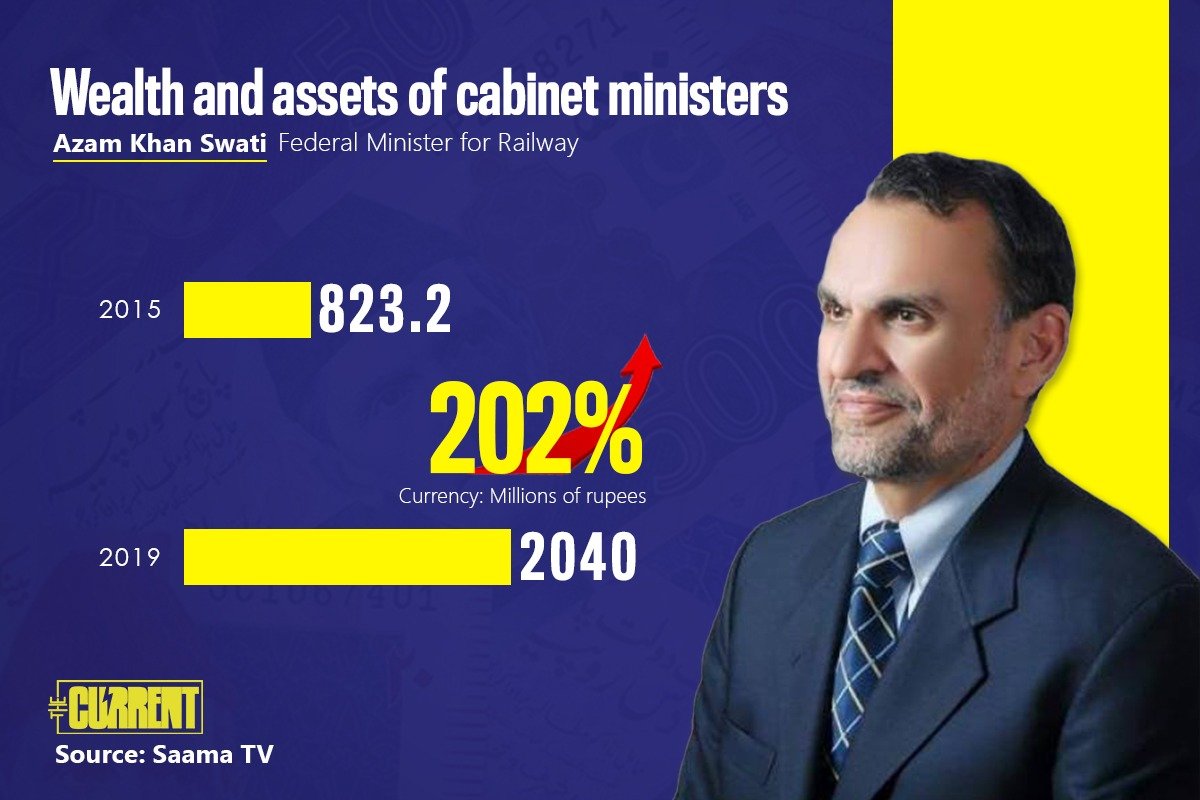
Azam Swati, the former federal railways minister, saw his fortune grow by 202 per cent from Rs823.2 million in 2015 to about Rs2.04 billion in 2019. He reported that his liabilities increased from Rs417 million in 2015 to Rs811 million in 2019.
“[Your] figures are wrong due to incomplete information being furnished before ECP by members and cabinet members owing to faulty legal requirements mentioned in ECP Act 2017,” he explained.
He further said that his situation was slightly unusual. “In Pakistan, I have no income and no business.” I am confident that our FBR wealth statement [filed] will be compared to ECP in 2019 [asset declarations],” he remarked, worried that the statistics may contain a few errors.
“ECP has no efficiency and capability to audit assets and liabilities,” he disclosed, adding, “We were making mistakes filing combined [wife and husband together]”.
“Now we have corrected the mistake and filed separately because the wife is not dependent,” Swati told SAMAA TV.
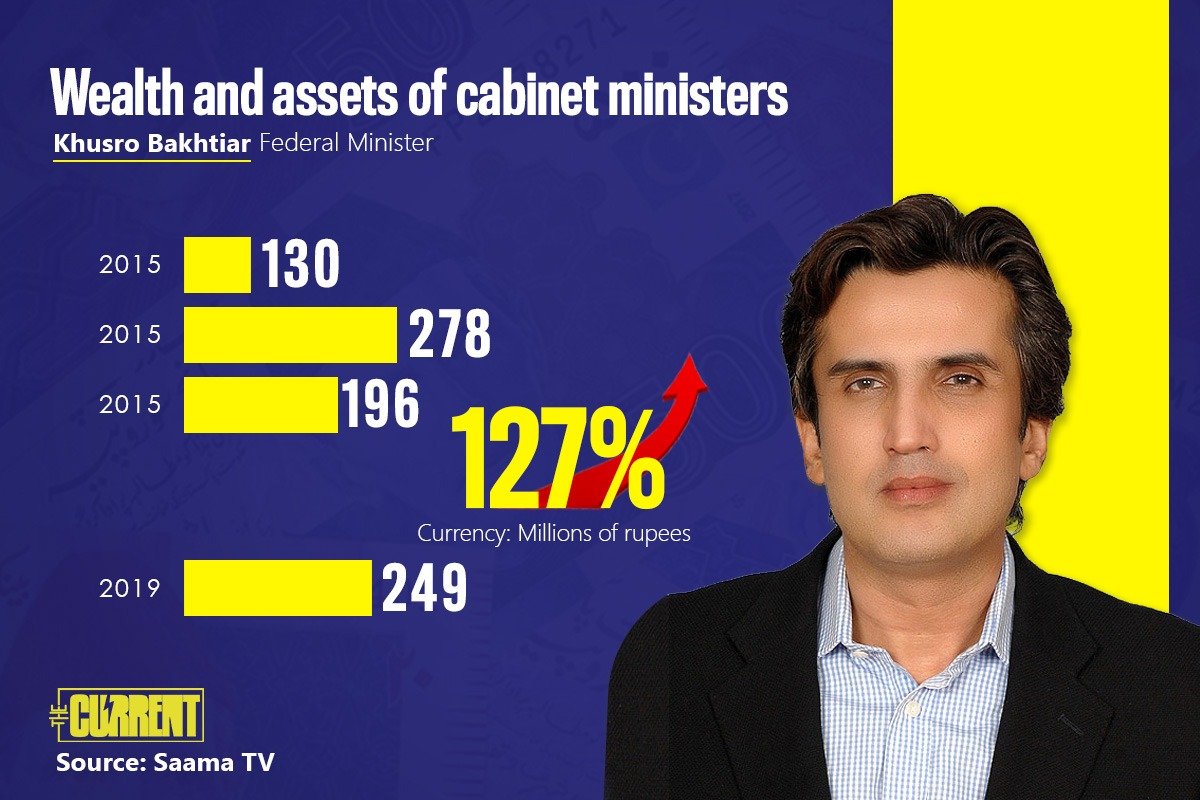
Khusro Bakhtiar, the former federal commerce minister, saw his fortune rise by 127.8% from Rs109.3 million in 2013 to Rs249 million in 2019. In 2014, he had assets of Rs130 million, which more than doubled to Rs278 million in 2015, shrank to just Rs196 million in 2016, and then surged again in the next three years.
“Increase in assets were mainly comprised of [various] sources during the year 2014 to 2019,” he told SAMAA TV, detailing that these sources included savings from agricultural income, proceeds from the sale of land worth Rs40 million, other sources which contributed Rs20 million.
Bakhtiar also claimed that he actually paid Rs27.5 million in agricultural taxes from 2017 to 2020, and that he owed Rs60 million in 2016.
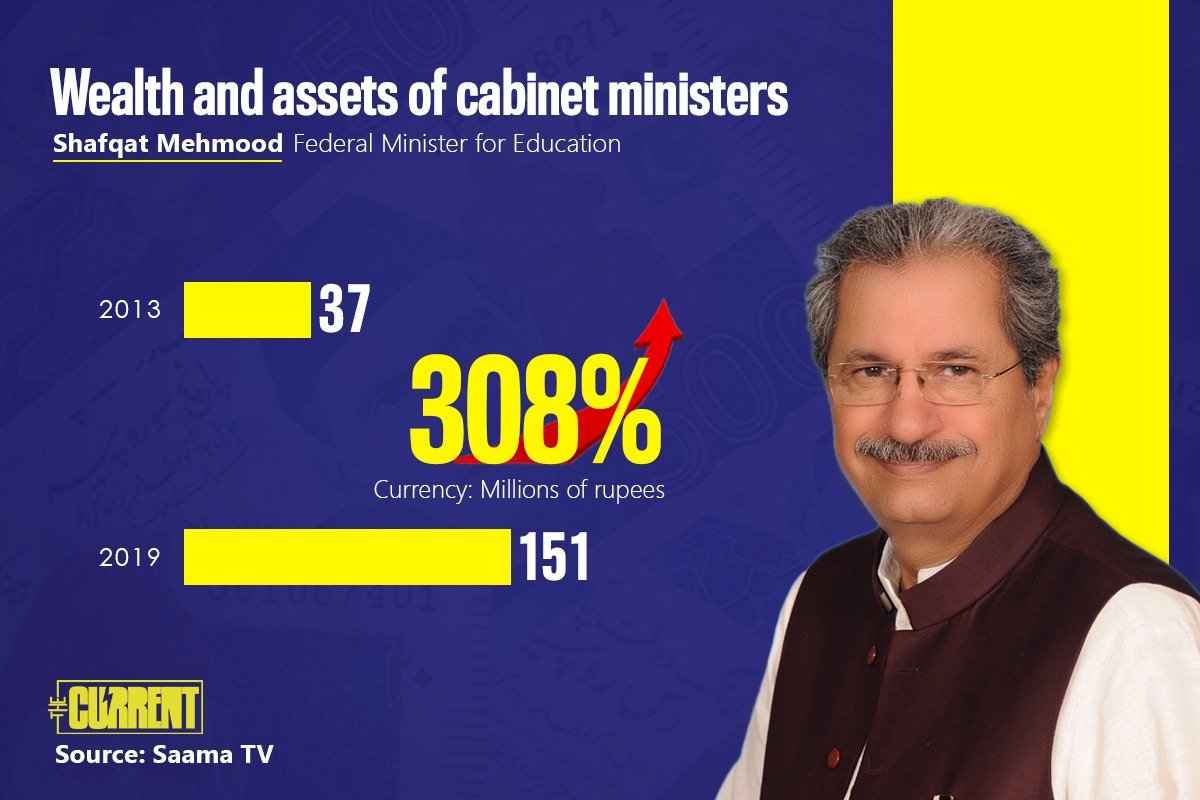
Former federal minister for education Shafqat Mahmood and his family had a 308 per cent growth in asset valuation between 2013 and 2019, making them one of the most successful federal ministers in terms of percentage increases. According to Mehmood’s filings, his and his family’s assets were valued at just Rs37 million in 2013, but had grown to Rs151 million by 2019.
“My assets have not changed since 2013 onwards,” Mehmood asserted, explaining “The change that you see is the cost re-evaluation from purchase price to market price”. The ex-minister further said that he has 360 kanals of hereditary land, a few more plots, and automobiles that he never assessed.
“There will, of course, be some variation regarding bank accounts. There will also be a slight difference in detail offered to FBR and ECP with regards to bank accounts,” he maintained. He went on to say that in his previous disclosure, he had combined the amounts in all of his bank accounts to present a single total.
“My wife is a distinct taxpayer because she works, but I have included her assets as well”, he explained.
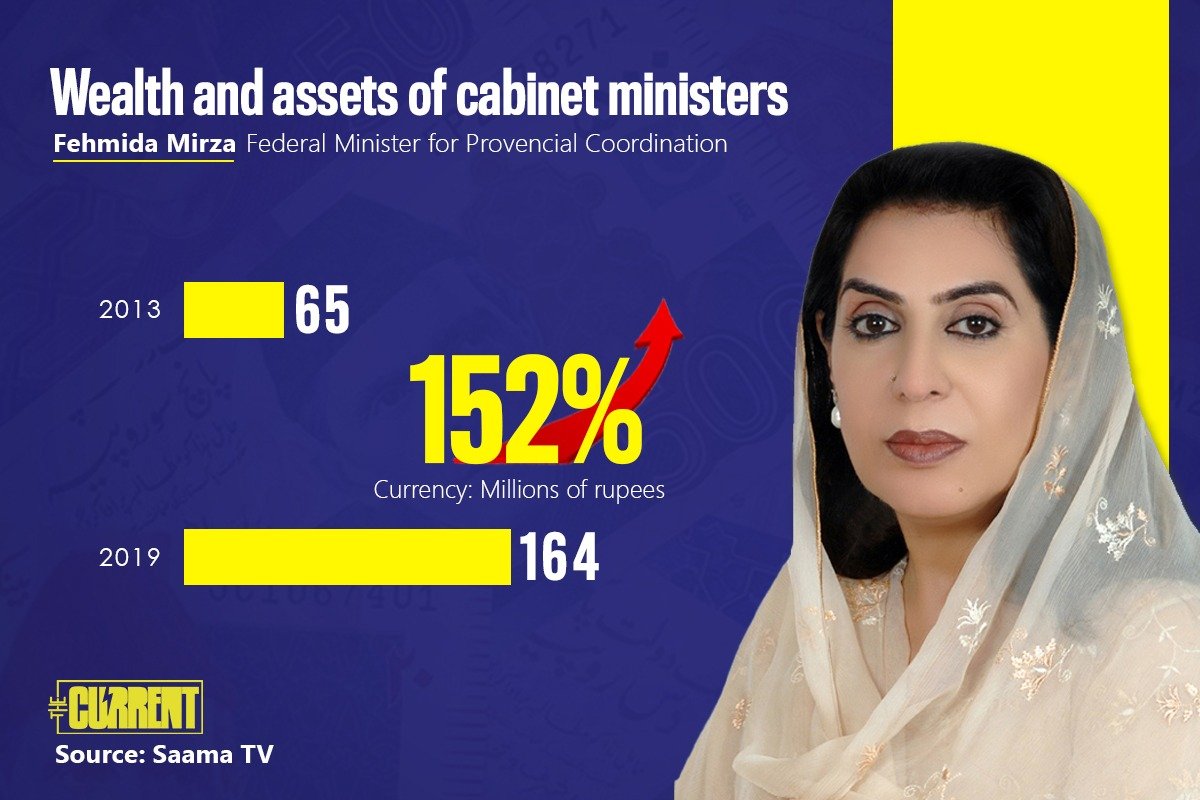
Fehmida Mirza, the former federal minister for interprovincial coordination, had a similar scenario, with her net worth rising from Rs65 million in 2013 to Rs164 million in 2019.
“I did not see any rise in my assets and wealth at all,” she told SAMAA TV. She did, although, reveal that she had sold some property in Pakistan in order to purchase a home in the United Kingdom.
“This new increase in my assets has already been declared with the FBR and the ECP,” she stated.
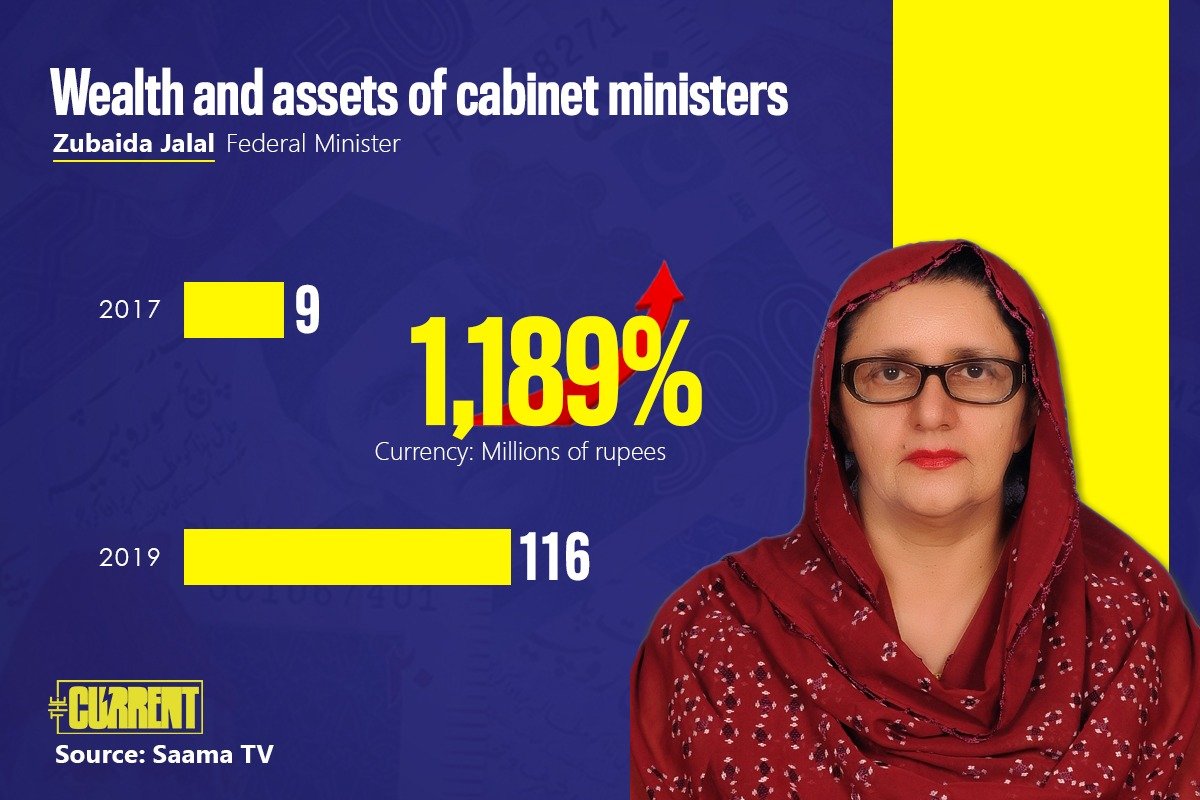
Contrary to the PTI’s cabinet’s millionaire members, one of the “weakest” members of the federal cabinet, former federal minister Zubaida Jalal and her husband, had a 1,189 per cent growth in their fortune in a short period of time. Their riches increased from Rs9 million to Rs116 million in 2019.
Jalal, on the other hand, described the quick spike in wealth as the outcome of changes in declaration requirements.
“There is no big difference in my assets’ declaration” she asserted while speaking to SAMAA TV. The value of immovable assets was not mentioned in data provided in past elections, she said, noting that the ECP declaration requirements changed over time.
“[We are] required to mention values of assets in the asset declaration for this time,” she stated. She explained that the variations in asset values were attributable to market forces working on enterprises.
“Ups and downs will keep happening [in mining operations and business],” she said, as she reminded that her husband owns the National Coal Mining Company since the 1960s.
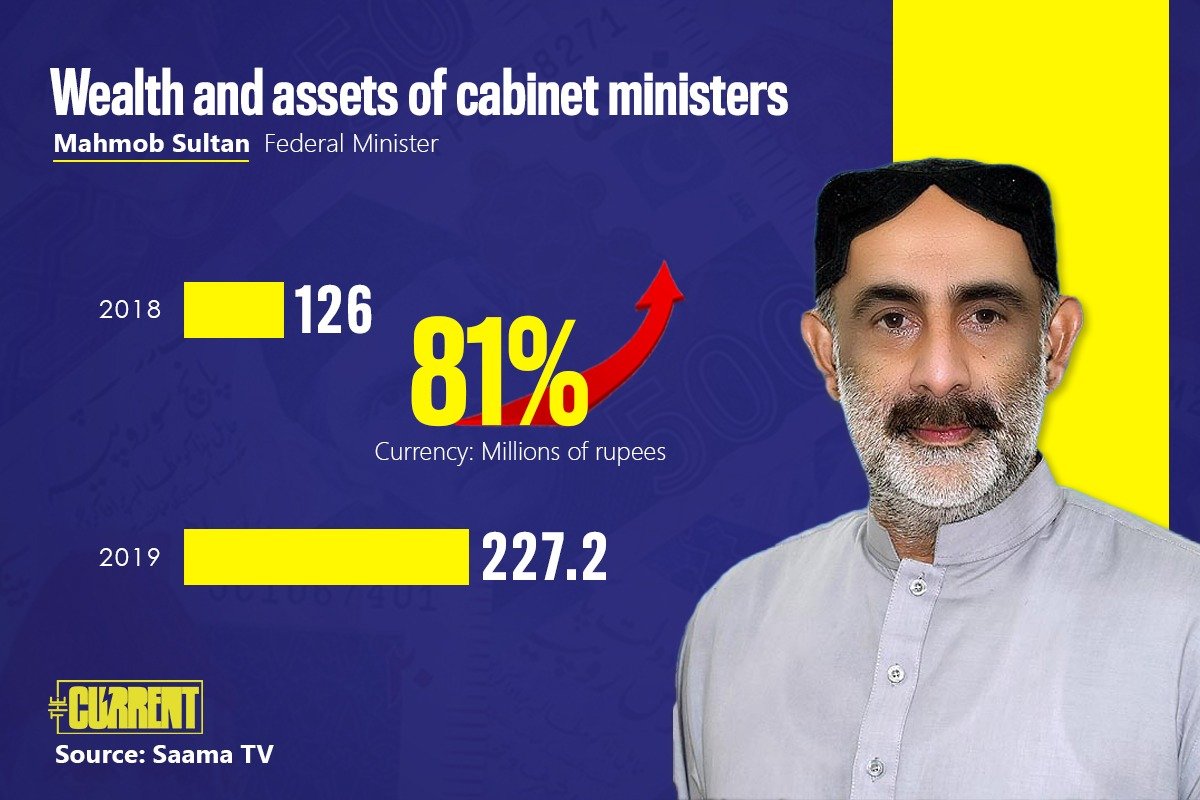
Former state minister Mahboob Sultan was one among the ministers who saw only double-digit asset growth. Only 81 per cent of his assets increased from Rs126 million in 2018 to Rs227.2 million in 2019. It’s worth noting, however, that his growth of nearly Rs100 million occurred while he was in the cabinet of ministers.
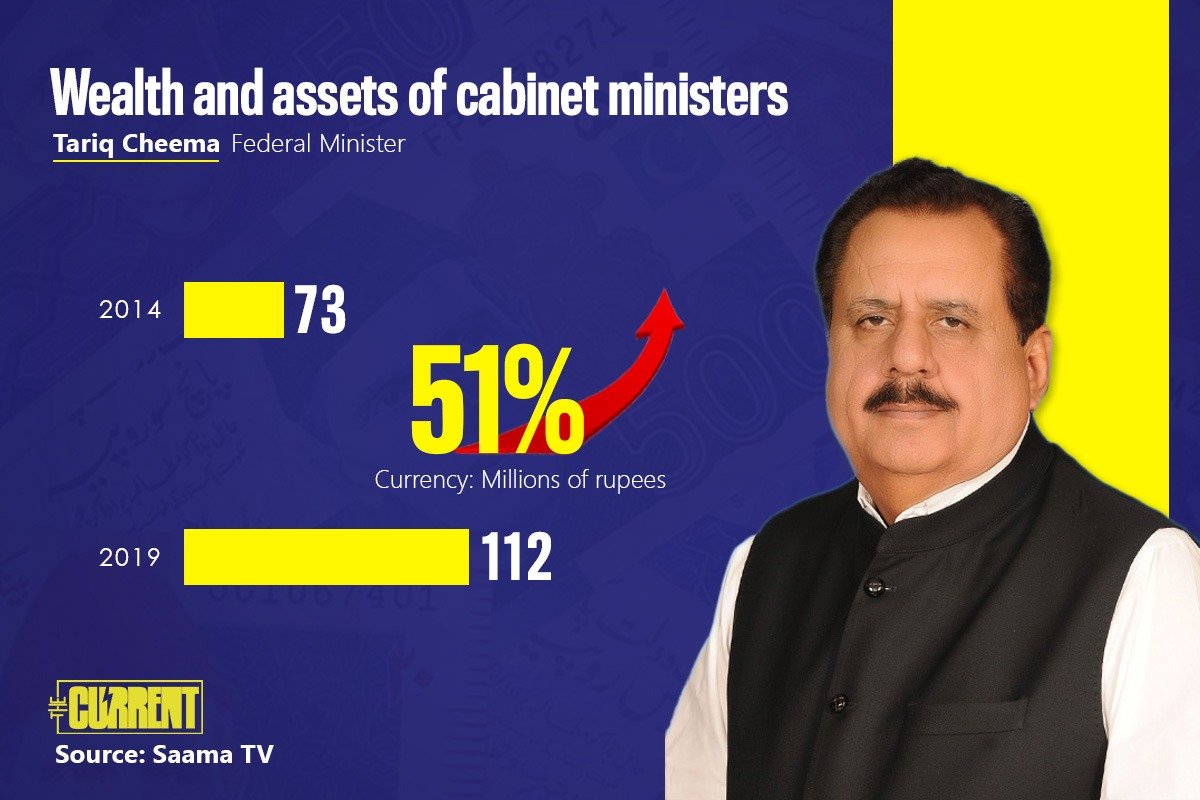
Tariq Cheema, the former federal minister for housing and infrastructure, showed the smallest growth in his wealth, going from Rs73 million in 2014 to Rs112 million in 2019. He did not, however, assess the value of his inherited assets and report them to the electoral or tax authorities.
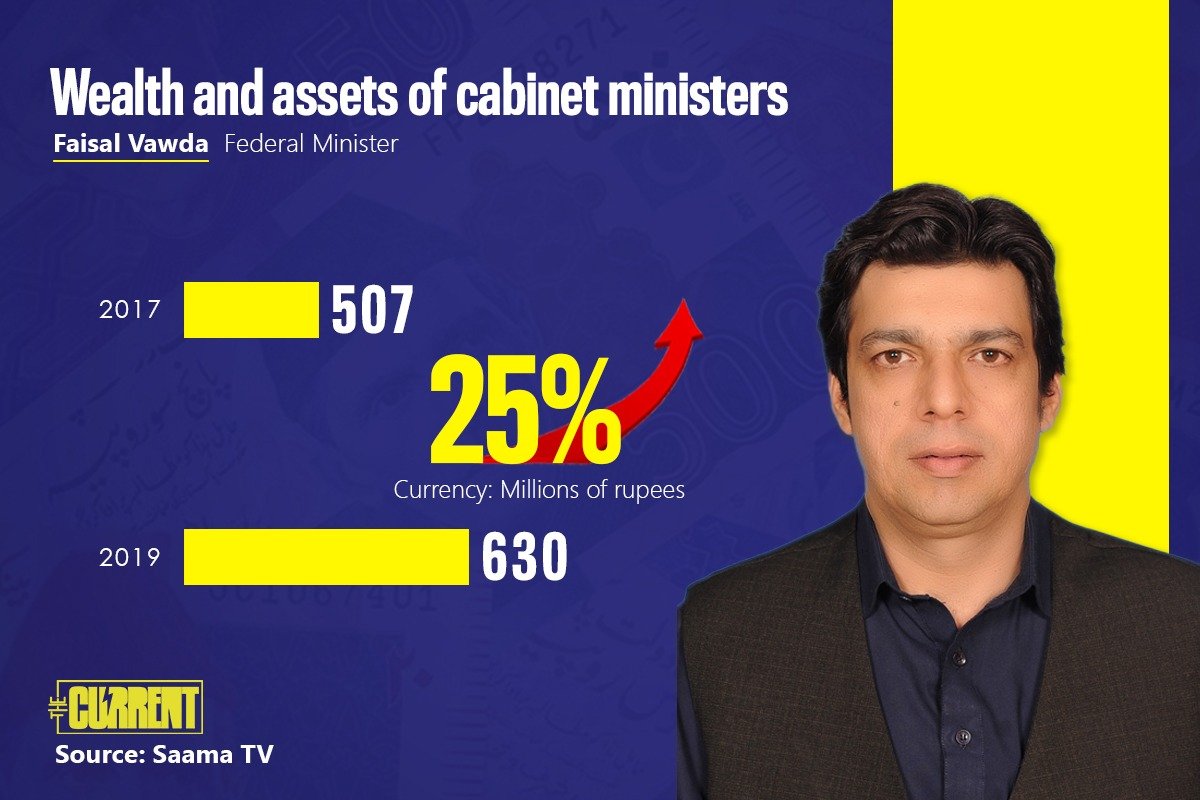
Former federal minister Faisal Vawda and his family witnessed their fortune increase by 25 per cent from Rs507 million in 2017 to Rs630 million in 2019. He was among the most controversial cabinet ministers who were eventually dismissed by the ECP.
Despite multiple requests from SAMAA TV, neither Sultan, Cheema, Vawda, nor an ECP official have commented on inquiries regarding their wealth.
Foreign Minister (FM) Bilawal Bhutto-Zardari on Thursday revealed that the night before the no-confidence motion, a message was sent to him to agree on early elections, otherwise martial law would be imposed.
“A day before no-confidence, I was threatened by the previous government to agree to hold immediate elections or martial law can be imposed,” said Bilawal in the National Assembly session, adding that the threat was sent through a former minister.
“جمہوری طریقے سے عدم اعتماد کا مقابلہ کرنے کے بجائے سابق وزیراعظم نے بھاگتے بھاگتے آئین توڑا کر جمہوریت پر جو حملہ کیا وہ عوام کے سامنے ہے۔” چیئرمین پاکستان پیپلز پارٹی اور وزیر خارجہ بلاول بھٹو زرداری@BBhuttoZardari 1/3 pic.twitter.com/QwNBwS3T7c
“جو شخص 30 سال سے کرپشن اور احتساب کی رٹ لگا رہا تھا، وہ 4 سال کے اقتدار میں ایک چور کو سزا نہیں دلوا سکا اور ٹرانپیرنسی انٹرنیشنل رپورٹ کے مطابق خود تاریخ کا سب سے بڑا چور نکالا۔”
“The situation in Pakistan is at a crisis point; there should be no two views about it. Every institution of ours had been made controversial due to a selected man. The harm that Imran Khan and his former government have caused to the constitution, democracy, and institutions is before everyone. The former PM abrogated the constitution and attacked democracy. Former PM, deputy speaker, and the President on the nights of April 3rd, April 9th, and 10th till today are abrogating the constitution and refusing to follow it. How can this National Assembly, the Parliament ignore such an attack? Our constitution has been torn like a piece of paper in the past as well,” said Bilawal.
“I am saying that we should take the attack seriously, and make a commission to investigate who was involved in this unconstitutional and undemocratic attack. As far as April 3rd is concerned, the Supreme Court clearly termed it unconstitutional in its decision. The people of Pakistan expect accountability of the former government abrogating the constitution while trying to escape a democratic process,” said the FM.
Bilawal further said, “Since this attack was ignored, the former PM thinks that he is a sacred cow and is roaming in the country while making attacks that are against the national interest and our national standing. This political instability is harming our economy. He thinks he is invincible since it was ignored that a government was formed through the worst-rigged elections.”
“We are not the undemocratic forces that used to call for accountability and elections, we do not believe in political engineering,” said Bilawal. The FM said that they had already demanded reforms. “We are democratic forces and we want transparent elections. Our demand earlier too was that we will carry out electoral reforms first, this is the clear policy of the Pakistan People’s Party (PPP).”
Giving a policy statement on Kashmir, the Foreign Minister said that India has been occupying Kashmir illegally since 1948. India changed the status of Illegally Occupied Kashmir (IOK) and India continues to violate the United Nations, Geneva Conventions.
Bilawal said that efforts were being made to convert the majority into a minority in occupied Kashmir. “We reject the report of the Delimitation Commission in Occupied Kashmir. The Indian government wants to stifle the voice of Muslims in Occupied Kashmir with new demarcations,” said Bilawal Bhutto.
Speaker National Assembly (NA) Raja Pervez Ashraf on Tuesday said that former Prime Minister Imran Khan is still a member of the National Assembly, adding that he is yet to resign, reports Geo News.
The speaker has sent letters to Pakistan Tehreek-e-Insaf (PTI) members in order to confirm their resignations.
It was further reported that PTI has decided not to appear before the Speaker National Assembly to confirm their resignations. It is also being reported that the PTI fears that more than two dozen members may refuse to confirm in front of the speaker.
Geo News further reports that if Khan is arrested, protests would be held across the country and important highways would be blocked.
The government has started preparing a high treason case against the former and the current PTI government officials on the basis of Article 6 for violating the Constitution, confirmed Deputy Secretary General PML-N Attaullah Tarar.
According to Geo News’ sources, the people who are being named are President of Pakistan Dr Arif Alvi, Former Prime Minister (PM) Imran Khan, Former National Assembly (NA) Deputy Speaker Qasim Suri and Punjab Governor Omar Sarfraz Cheema.
As per the news outlet, currently, the government is consulting legal experts. The current ministries of interior and law have started gathering evidence related to the case.
Article 6 of Constitution of Pakistan, says any person who “abrogates or subverts or suspends or holds in abeyance the Constitution shall be guilty of high treason”.
On April 3rd, Deputy Speaker Suri “dismissed” the no-confidence motion against Imran Khan, terming it against Article 5 of the Constitution. Then, Khan addressed the nation, saying he had advised President Alvi to dissolve NA, which the President approved.
A couple of weeks ago, PML-N Hamza Shehbaz was elected as the new CM of Punjab. However, his oath-taking ceremony is still hanging as the Governor of Punjab Omar Sarfraz Cheema declined to administer the ceremony multiple times. Despite Lahore High Court’s (LHC) order to do the ceremony, it is yet to take place.
Many legal experts have argued that Punjab’s governor cannot decline to administer the oath to the chief minister-elect under any circumstances and termed it illegal.
Pakistan Tehreek-e-Insaf (PTI) Chairman Imran Khan on Wednesday asked the institutions if ‘thieves’, who have come into power through a ‘foreign conspiracy’ and are ‘slaves’, can protect Pakistan’s nuclear programme. He was addressing a rally in Peshawar.
میں اداروں سے پوچھتا ہوں کیا یہ دو ڈاکو نیوکلیئر پروگرام کی حفاظت کر سکتے ہیں۔۔۔؟ سابق وزیر اعظم عمران خان کا سوال
In his first public address since losing his government, Khan directly addressed the judiciary and asked: “My dear judges, my judiciary, I have spent time in jail because of your freedom because I dream that one day the judiciary would stand with the weak people of the society, and not the powerful. I ask the judiciary that when you opened the court in the dead of night … this nation has known me for 45 years. Have I ever broken the law? When I played cricket, did anyone ever accuse me of match-fixing?”
میں آج اپنی عدلیہ سے سوال پوچھتا ہوں میں نے کون سا جرم کیا تھاکہ رات 12 بجے عدالت کھولی گئی؟ میں نے کبھی عوام کو اداروں کے خلاف نہیں بھڑکایا میرا جینا مرنا پاکستان میں ہے۔ عمران خان #امپورٹڈ_حکومت_نامنظورpic.twitter.com/NBgSRp5Mf0
“During my 25 years of politics, I have never provoked the public against state institutions or the judiciary because my life and death are in Pakistan. I ask you, what crime had I exactly committed that you opened up the courts at midnight?” questioned Khan.
“I will live and die for Pakistan.”
The PTI chairman also warned that he was not that dangerous while he was part of the government, but now that he has been ousted, he will become “more dangerous” for the Opposition.
“Shehbaz Sharif is out on bail, his son is out on bail, Nawaz Sharif is a convict, and his son is an absconder in London and the same is the case with his sons, daughter, and son-in-law.”
“America has insulted Pakistan by imposing these bandits on us; Shehbaz Sharif is facing corruption charges of Rs40 billion,” Khan added. “Zulfiqar Ali Bhutto was sacked through a conspiracy by the USA, but this is not the Pakistan of 1970. This is the new Pakistan.”
“My youth, get ready, I will be out on the streets with you in every city until we do not force them to hold elections,” he said, adding, “Today marks the beginning of the struggle to find actual freedom.”
Imran Khan makes history as he becomes the first prime minister in Pakistan’s history to be voted out of power. The Constitution of Pakistan witnessed historic moments as the country saw a transfer of power and made it clear: The Law is Supreme.
The Opposition’s no-confidence motion against Prime Minister Imran Khan succeeded on Sunday, April 10, with 174 members voting in favour of the motion. The magic number to oust Khan was ‘172’. National Assembly debated on the matter for more than 12 hours and the political situation in the country took a critical turn.
Speaking on the occasion, Pakistan Muslim League-Nawaz’s (PML-N) President Shehbaz Sharif said, “We cannot thank Allah enough for allowing us to see this new day,” said Shehbaz. “We thank everyone for their sacrifices, and now, once again, a Pakistan based on Constitution and law is about to come into existence,” the PML-N president said, hoping that the alliance would move the country towards progress.
“I would like to congratulate the whole nation and this House, as for the first time in the history of the country, a no-confidence motion has succeeded and we have made history,” said Pakistan People’s Party (PPP) chairperson Bilawal Bhutto.
“On April 10, 1986, Benazir Bhutto ended her self-imposed exile and arrived in Lahore to launch her struggle against Ziaul haq,” said Bilawal.
The PPP chairman said that on April 10, 2022, the person who was declared “selected” by the Opposition and proved himself to be an “undemocratic burden” on the country saw the end of his rule.
“Today [on] April 20, 2022, we welcome [you] back to the purana Pakistan,” said Bilawal
What happened in NA from April 9 to 10
The historic and crucial session of the National Assembly (NA) session to decide the fate of Khan was held on April 9, as per the Supreme Court’s orders given on April 8. However, Khan never showed up.
Voting on the no-confidence motion against Prime Minister Imran has begun as PML-N Ayaz Sadiq chaired the session. National Assembly Speaker Asad Qaiser resigned from his post on Saturday, saying he could not take part in a foreign conspiracy to oust the prime minister.
Before announcing his resignation, Qaiser said that he had received “important documents” from the cabinet, which he invited the leader of the opposition and the Chief Justice of Pakistan to see. “In line with our laws and the need to stand for our country, I have decided that I can’t remain on the position of the speaker and thereby resign,” he said. Because this is a national duty and it is the Supreme Court’s decision, I will ask the panel chairman Ayaz Sadiq to run the session.
Chief Justice of Pakistan Umar Ata Bandial open the Supreme Court’s doors in light of the current political situation. The chief justice instructed the relevant officials of the top court to open the doors at 12am, as the National Assembly Speaker Asad Qaiser was yet to allow voting on the no-confidence motion against PM Khan.
Meanwhile, Islamabad High Court’s (IHC) doors opened on the instructions of IHC Chief Justice Athar Minallah.
Prior to this, the NA session was adjourned again and was expected to resume at 9:30pm after Isha prayers. The latest adjournment was the fourth of the day as the Opposition’s clamour for immediate voting throughout the day has fallen on deaf ears.
Speaker NA Asad Qaiser delayed the session until 12:30pm, but the break had been prolonged and the voting is now expected to take place at 8pm, i.e. after iftaar.The NA session resumed at 2:32pm. However, the session was also adjourned for Asar and Maghrib prayers.
Shehbaz Sharif takes the floor:
The session started at 10:30am today with Quranic recitation, followed by naat recitation. At 10:40am, the national anthem was played.
At 10:43am, Leader of the Opposition Shehbaz Sharif took to the floor of the House and started addressing. He called on NA Speaker Asad Qaiser to conduct proceedings in accordance with SC directives, stating that the parliament would be writing history today. “Today, parliament is going to defeat a selected prime minister in a constitutional manner,” he declared.
پرسوں پاکستان کی تاریخ کا ایک تابناک دن تھا، جب عدالت نے آپ کے، عمران خان اور ڈپٹی اسپیکر کے غیر آئینی اقدام کو کالعدم قرار دیا اور نظریہ ضرورت کا سہارا نہیں لیا بلکہ نظریہ ضرورت کو ہمیشہ کے لیے دفن کردیا اور پاکستان کا مستقبل تابناک بنادیا۔@CMShehbazpic.twitter.com/MP5D6lWvOr
Shehbaz urged the Speaker to play his role and to have his name “written in history in golden words”.
“You must cash in on this moment with conviction and with your heart and your mind. Don’t follow the dictation of a selected prime minister,” he urged Qaiser, adding that the apex court’s directives were clear.
جنابِ اسپیکر جو ماضی میں ہو گیا وہ ہو گیا۔ آج آپ آئین و قانون اور عدالت عظمیٰ کے فیصلے کے لیے کھڑے ہو جائیں۔ آج آپ صحیح معنوں میں اسپیکر کا کردار ادا کر کے تاریخ کے سنہرے حروف میں نام لکھوا لیں۔@CMShehbazpic.twitter.com/wsxoRZkYjz
Qaiser interjected the Opposition leader and said that he would conduct proceedings according to the law and the Constitution.
“[But] the important thing is that there has been discussion of an international conspiracy. This should also be discussed,” said Qaiser.
On this, Shehbaz told Qaiser that he would be violating the law and order of the SC.
“Under the court’s directives, you are bound to take up this agenda item and no other item. That is the intent of the order and you cannot deviate from it,” he said, calling on the Speaker to hold voting on the motion forthwith.
“The SC’s orders will be followed in true letter and spirit,” Qaiser replied, giving the floor to Foreign Minister Shah Mahmood Qureshi.
Foreign Minister Qureshi addresses the floor of the House
At 10:51am Qureshi took to the floor and accepted that according to the Constitution, it is the right of the Opposition to submit a no-confidence motion, while it is the government’s responsibility to defend itself from the motion.
Citing PM Khan’s April 8 address to the nation, Qureshi said that just like the premier said, although we are disappointed with Supreme Court’s judgment but respected the court’s orders. He added that NA proceedings were being conducted in accordance with the directives issued by the court.
“Today is Saturday and the session has started at 10:30am. The court said the session will not be prorogued unless the process of Article 95 and rule 37 is concluded.”
Highlighting the seriousness of the “threat letter” controversy, Qureshi said: “The National Security Committee (NSC) took two decisions. First, they acknowledged there was interference in Pakistan’s internal matters and that a demarche must be issued,” he said, adding that the Foreign Office followed these directives.
“The second was to immediately summon the Parliamentary Committee on National Security and for the matter to be presented before elected representatives,” he said, adding that the Opposition was also invited.
Session adjourned till 12:30pm
The Opposition benches started protesting and shouting. Shah Mahmood Qureshi asked why they were “nervous”. Meanwhile, the Opposition continued to chant the slogan “voting karwao, voting karwao” during Qureshi’s speech. Amidst all this ruckus, Qaiser at11:03am adjourned the session till 12:30pm.
Number of Opposition members
Pakistan Muslim League-Nawaz (PML-N) Marriyum Aurangzeb tweeted the total number of Opposition members present in NA.
Meanwhile, the session was to start at 12:30pm, but it has still not started.
Voting will take place at 8:00pm: reports
Journalist Nasim Zehra, who is currently inside Parliament, has tweeted that the Speaker is reportedly going to return by 2:00pm to announce that the voting will take place at 8:00pm.
In the NA- voting on No confidence motion , likely at 8pm -Speaker reportedly to announce at 2 that voting will be at 8pm. pic.twitter.com/jKC23RBBL6
Bilawal holds Qureshi responsible for PM’s troubles
Bilawal began by telling Niazi he was violating the Constitution and the court’s orders. “You cannot take up anything else except for what is on the agenda. Not only you, but the speaker also did the same,” he told him, demanding that voting is held on the no-confidence motion.
Turning his guns on PM Imran, Bilawal said that the premier was breaking the law on his way out of office. “If you want to be involved in it, then it’s your choice. But I had warned the prime minister to stay away from the man speaking before me,” he said, referring to the foreign minister.
The PPP chairman alleged that FM Qureshi was responsible for the premier’s troubles, again calling for voting to be held on the no-confidence motion. “If you don’t come to today’s agenda, then you should know that the opposition will not leave […] we will snatch our constitutional rights from you.”
‘SC’s ruling interference in proceedings of Parliament’: Asad Umar
Planning Minister Asad Umar claimed that the Supreme Court’s declaration of the deputy speaker’s ruling was “interference in the proceedings of the Parliament.” “If Supreme Court has to decide on which day and at what time the session will be summoned then we should do away with assembly,” said Umar. He added that the apex court’s decision was “an interference in Parliament’s matters”.
“Would it have been right if the Parliament had intervened in Supreme Court’s matters?” asked Umar. He also questioned whether it would have been right if the Parliament decided which judge comes and goes in the Parliament.
Zardari calls for voting on no-trust motion
In his speech, former president Asif Ali Zardari said, “I just want to make a request to hold voting on the no-confidence motion. Don’t waste time.” He said that the stock market rose after the apex court issued its verdict while the dollar also fell, once again calling on the speaker to hold the vote.
“I don’t want to go to the court against you tomorrow. We have to live in Pakistan. We have to maintain links with every political party. So hold the vote and end this. Let’s move forward so that Pakistan can prosper,” he told Qaiser.
‘Opposition is a part of US conspiracy’
Human Rights Minister Dr Shireen Mazari’s speech revolved around the alleged US influence on Pakistani politics. “It is this nation’s misfortune that America has always been successful in [changing] the leaders of Pakistan.”
The Supreme Court had on Thursday, April 8, ordered the government to hold voting on the motion on Saturday, April 9, at all costs according to the agenda issued for April 3 session when the deputy speaker rejected the motion through a ruling declaring it “unconstitutional” and a “foreign conspiracy”.
The top court’s directives came after Chief Justice Umar Ata Bandial took suo motu notice of Deputy Speaker Qasim Suri’s ruling and the subsequent dissolution of the assembly, declaring all the decisions unconstitutional.