Tag: National Command and Operation Centre

  • NCOC allows 50 per cent crowd in Lahore leg of PSL, children under 12

    NCOC allows 50 per cent crowd in Lahore leg of PSL, children under 12

    The National Command and Operation Centre (NCOC) has allowed 50 per cent crowd for Lahore leg of the Pakistan Super League (PSL) after a session chaired by Federal Minister for Planning, Development and Special Initiatives Asad Umar was held. The forum discussed the pandemic data, national vaccination progress, inbound health protocols and second leg of the ongoing PSL.

    Read More – PSL teams to arrive in Lahore today and tomorrow

    As per NCOC, “PCB has been allowed to conduct PSL Lahore matches with 50% stadium capacity for fully vaccinated spectators till February 15, 2022, however, from February 16 onwards 100 % stadium capacity for fully vaccinated spectators will be allowed. Children under 12 years of age (un-vaccinated) will also be allowed.”

    “RAT test for Inbound Passengers on arrival at Pakistani airports has been abolished with effect from February 8, however, RAT test will continue to be conducted for deportees from foreign countries and for non-vaccinated individuals arriving from land border terminals,” added NCOC in its statement.

    Days before the start of the PSL’s seventh edition, the NCOC had reduced the crowd capacity to 25 per cent in light of rising coronavirus cases. But now, as the positivity rate lowers, the forum has revised its decision.

    The Lahore leg matches will be staged completely under the lights of the Gaddafi Stadium. The matches will kickstart on February 10, with the unbeaten Multan Sultans facing off against Peshawar Zalmi.


  • NCOC bans indoor events in cities with Covid positivity rate over 10%

    NCOC bans indoor events in cities with Covid positivity rate over 10%

    According to the National Command and Operation Centre (NCOC), all indoor gatherings and events have been banned in the districts and cities with Covid-19 positivity rate exceeding 10 per cent. However, only outdoor wedding events are allowed to be organised with a maximum of 500 guests.

    The ban will go into effect from January 24 , the NCOC said.

    The decisions were taken after the NCOC held a detailed review of the country’s current coronavirus situation along with the corresponding Nonpharmaceutical Interventions (NPIs). The forum differentiated the new NPIs depending on whether districts have Covid-19 positivity rate up to 10 per cent or above.

    The NPIs to be implemented are as follows depending on the positivity rate and specify that they are for fully vaccinated individuals:

    Gatherings

    • Indoor gatherings allowed up to 300 individuals, outdoor up to 500 for districts with positivity up to 10pc
    • Indoor gatherings banned, outdoor up to 300 for districts with positivity rate more than 10pc (with effect from Jan 24)

    Weddings:

    • Indoor weddings allowed up to 300 individuals, outdoor up to 500 for districts with positivity rate up to 10pc
    • Indoor weddings banned, outdoor up to 300 for districts with positivity rate more than 10pc (with effect from Jan 24 and will remain effective till February 15)

    Dining:

    • Indoor and outdoor dining both allowed for districts with positivity rate up to 10pc
    • Indoor dining banned (with effect from Jan 24), outdoor allowed for districts with positivity rate more than 10pc

    Education sector:

    • Education activities will continue for those under and over 12 in districts with positivity rate up to 10pc
    • Education activities will continue with staggered attendance at 50pc capacity for those under 12 and 100pc attendance for those over 12 in districts with positivity rate more than 10pc
    • Those over 12 will need to be fully vaccinated in both situations
    • Vaccination will be mandatory (at least one dose) for those over 12 from Feb 1
    • Aggressive sentinel testing to be carried out for targeted closures in institutes with high disease prevalence
    • Federating units in consultation with health authorities will decide limits for closure of educational institutions

    Gyms, cinemas, shrines, amusement parks:

    • Indoor activities allowed for districts with positivity rate up to 10pc
    • Indoor activities allowed at 50pc capacity for districts with positivity rate more than 10pc

    Sports:

    • All sports activities allowed for districts with positivity rate up to 10pc
    • Ban on contact sports (karate, boxing, martial arts, rugby, water polo, wrestling and kabaddi) for districts with positivity rate more than 10pc


    The NCOC decided that markets and business activities will continue without any restrictions. Employers are encouraged to let people work from home where possible.

    Similarly, intercity public transport has been restricted in districts with high coronavirus positivity ratios at 70pc and 80pc in railways. The ban on serving of meals was also maintained for public transport and domestic air travel.

    The curbs come as the country is in the grip of the fifth wave, which is being driven by the highly transmissible Omicron variant.

    It should be noted that in the last 24 hours, the coronavirus positivity ratio in Pakistan was 9.48pc when 5,472 infections were recorded, with Sindh and Punjab leading the charge in new cases reported.

    Owing to a surge in the number of Covid-19 cases, several educational institutions in Islamabad and Karachi have also decided to close all schools to curb the rapid spread of the virus.

  • Pak includes more countries in restriction list, announces strict travel policies

    The National Command and Operation Centre (NCOC) added nine more countries especially from Europe after a reviewal of the covid situation around the globe on Monday.

    According to the notification issued by NCOC on their website, they revised the list of countries due to the worsening Covid situation.

    The nine countries which are banned by the NCOC are Croatia, Hungary, Netherlands, Ukraine, Ireland, Slovenia, Vietnam, Poland, and Zimbabwe.

    In case of emergency travel from recently banned countries, a strict protocol has to be observed by passengers, including foreigners. Passengers above the age of six years will require full vaccination and must possess a negative polymerase chain reaction (PCR) test report which must be issued 48 hours prior to boarding a plane. On arrival to Pakistan, rapid antigen testing (RAT) will be conducted. Passengers will be allowed to enter Pakistan who test negative.

    Meanwhile, passengers will face compulsory quarantine of three days after a PCR test from South Africa, Mozambique, Lesotho, Eswatini, Botswana, Zimbabwe, and Namibia.

    Passengers will have to be quarantined for an extra 10 days if they get a positive PCR result on arrival or could be transferred to a hospital depending on the advice from health workers as stated by NCOC.

    However to facilitate the stranded Pakistani nationals from countries who are not able to get double dose vaccination because of some reasons including expiry visa, illegal immigration, medical conditions, pending court cases, pregnancy or partially vaccinated from Pakistan are exempted from the requirement of full vaccination.

  • Risk of New Variant Omicron, Pakistan imposes travel ban

    Risk of New Variant Omicron, Pakistan imposes travel ban

    The National Command and Operation Center (NCOC) has imposed a complete travel ban from red zone African countries and Hong Kong on Saturday evening after the emergence of a new Covid variant, Omicron.

    NCOC tweeted the notification in which six South African countries and Hong Kong are included in category C due to Omicron.

    A complete ban has been imposed on every direct and indirect flight with immediate effect.

    Earlier, the United Kingdom (UK) already imposed the travel ban from South Africa, Namibia, Zimbabwe, Botswana, Lesotho, and Eswatini unless travellers are the UK or Irish nationals.

    Head of NCOC, Asad Umar took to Twitter to urge the people of Pakistan how important it is to get vaccinated.


  • Unvaccinated people to face new restrictions in next 24 hours: NCOC

    Unvaccinated people to face new restrictions in next 24 hours: NCOC

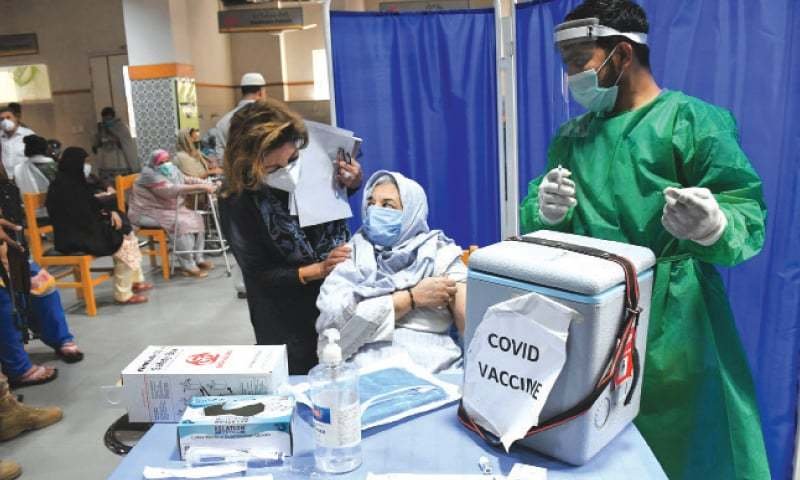
    Strict restrictions will be enforced for non-vaccinated individuals from October 1, 2021. National Command and Operation Centre (NCOC) announced vaccination certificates will be made “mandatory for domestic travellers from October 1”.

    Confirming the news, Pakistan International Airlines (PIA) spokesperson said: “From October 1, only vaccinated passengers will be able to travel on all domestic and international flights of PIA,” reports Geo News.

    “Vaccination certificates will be checked at the airport upon receipt of the boarding card,” he said.

    People won’t be allowed to use railway and airline services without showing their vaccination cards.

    People who do not get vaccinated will not be able to enter wedding halls, shopping malls, hotels and guest houses from tomorrow [October 1].

    On the other hand, Special Assistant to the Prime Minister on Health Dr Faisal Sultan said that pregnant women should also get vaccinated.

    He reiterated that children’s vaccination is also necessary to continue educational activities.

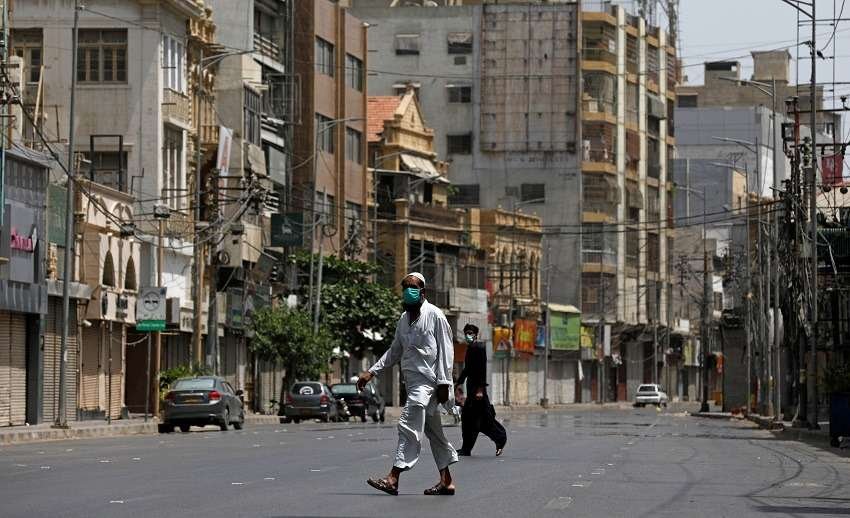
  • Two-week lockdown in 20 cities by May 3?

    Two-week lockdown in 20 cities by May 3?

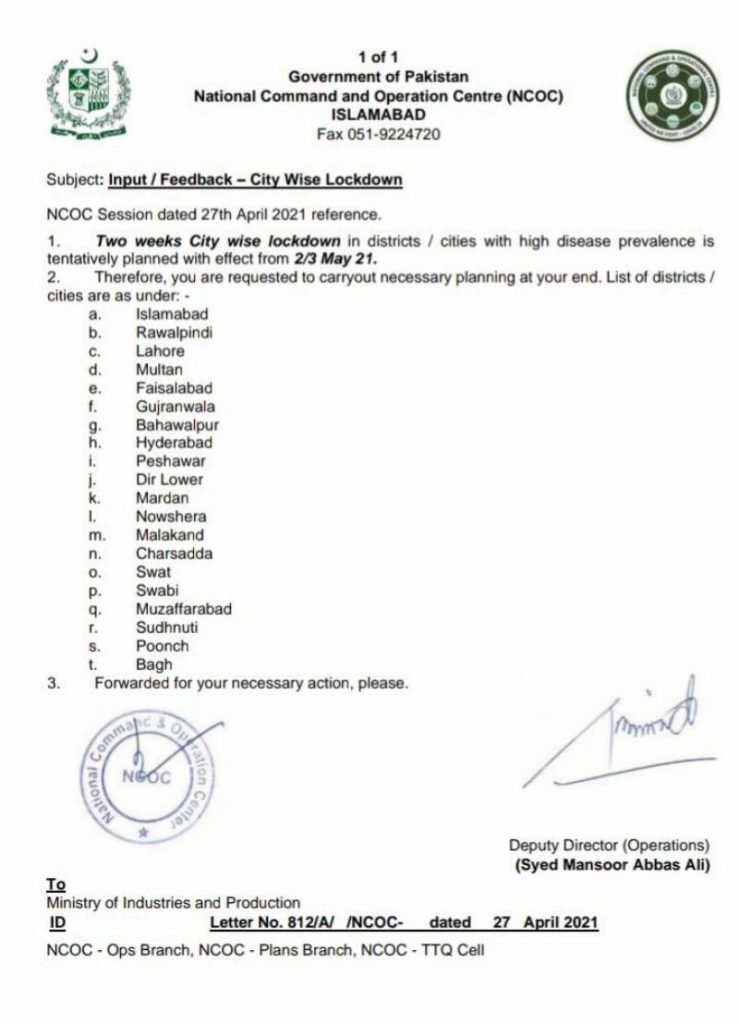
    The National Command and Operation Centre (NCOC) has sought input of provincial governments for a two-week lockdown in 20 cities.

    Pakistan’s top monitoring body wrote letters to the provincial authorities where the coronavirus situation is extremely bad and the restrictions imposed by the authorities have failed to stem the spread.

    Within the past 24 hours, Pakistan has recorded its highest tally of both single day deaths and infections, 201 and 5,292, respectively.

    The letter titled ‘Input / Feedback — City Wise Lockdown’ came after a meeting of the body on Apr 27.

    In the letter, the authorities directed that a two-week city-wise lockdown in affected districts was cautiously planned and provinces need to carry out necessary planning at the earliest.

    The most-affected cities where the lockdown could be imposed include Islamabad, Rawalpindi, Lahore, Multan, Faisalabad, Gujranwala, Bahawalpur, Hyderabad, Peshawar, Dir Lower, Mardan, Nowshera, Malakand, Charsadda, Swat, Swabi, Muzaffarabad, Sudhnuti, Poonch and Bagh.

    The letter also comes amid warnings from the government in case people continue to flout COVID-19 SOPs and the third wave situation continues to worsen.