Tag: National Security briefing

  • National security briefing

    National security briefing

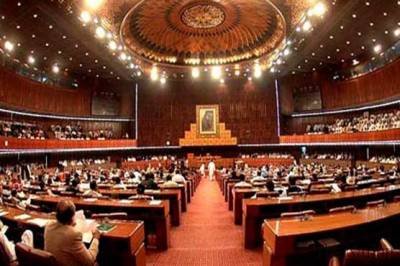
    Speaker National Assembly (NA) Asad Qaiser summoned a session of the Parliamentary Committee on National Security on July1. Army chief and heads of security institutions participated in the meeting. Politicians and legislators were given an in-depth briefing on Kashmir, Afghanistan, and internal security challenges.

    Leader of the Opposition Shehbaz Sharif, Pakistan People’s Party (PPP) Chairman Bilawal Bhutto-Zardari, Mohsin Dawar, Yousaf Raza Gillani, Shahid Khaqan Abbasi, Mustafa Nawaz Khokhar and many others were part of the in-camera briefing.

    However, Prime Minister Imran Khan did not attend the meeting. Government spokespersons said that PM Khan was going to attend the meeting but Speaker Asad Qaiser conveyed to him that Shehbaz Sharif would not attend the briefing if Khan attended it. However, Pakistan Muslim League-Nawaz (PML-N) leaders have denied this. But NA Secretariat spokesperson also clarified that PM Imran Khan was always willing to attend the meeting but the only reason for not attending the meeting was reservations conveyed to the Assembly secretariat by some Opposition leaders.

    First of all, why did the Opposition ask the PM not to attend the meeting? Some say that the message by Shehbaz Sharif was miscommunicated. Well, the PML-N should clarify what message was conveyed, if any, and why.

    Sharif wanted to sign a Charter of Economy in order to improve Pakistan’s economy so why would he not allow PM Khan to attend such a meeting. Prime Minister Imran Khan does not need Mr Sharif’s permission or anyone else’s to attend an important parliamentary meeting.

    Secondly, even if Shehbaz Sharif had sent this message, why did the prime minister give in? This meeting was extremely important in light of the US withdrawal from Afghanistan and its consequences for Pakistan. All political leadership should have been there, including the PM, so as to come to a national consensus on these security issues. When has the prime minister ever listened to the Opposition before that he chose to finally pay heed to them now?

    Thirdly, Speaker NA Asad Qaiser was the convenor of the meeting. Why did he discourage the prime minister from attending such an important and sensitive meeting.

    Our leadership should not let their political differences come in the way when it comes to national security issues. Such differences should be limited to electoral politics, not on issues that have an impact on the future of the country. We hope that the next time there is such a meeting, or when issues related to the country’s future are discussed, all leaders would sit on the same table and build a national consensus.
  • National security briefing: key takeaways

    National security briefing: key takeaways

    A meeting of the National Security Committee was held on Thursday.

    Speaker National Assembly (NA) Asad Qaiser had summoned a session of the Parliamentary Committee on National Security on July 1 for an in-camera briefing on the latest regional situation in light of the US withdrawal from Afghanistan. Director-General of the Inter-Services Intelligence (ISI) Lieutenant General Faiz Hameed briefed the lawmakers. The army chief was also present at the briefing, which went on for about eight hours.

    According to senior journalist Fahd Husain, the major takeaway from the meeting was how the military and intelligence leadership emphasised that while ties with China were well built and thriving and could not be foregone, a strong relationship with the United States (US) would have to be maintained.

    A senior parliamentarian told Dawn that although there were clear indications of an impending “strategic reorientation” of the foreign policy because of the geo-political developments, it was also obvious that there was no desire for being seen “overtly pro-China”.

    Prime Minister Imran Khan’s absence too was a matter of varied significance. One member of the Opposition questioned the PM’s absence from the crucial juncture gathered, to which the army chief reportedly said that the Opposition did not want the PM to attend this briefing, hence his absence. Speaker Asad Qaiser said that his office had received a message that if PM came to the briefing, the Opposition would review its presence and involvement in the briefing. However, this claim was unequivocally denied by the Oppositon.

    Senior Journalist Saleem Safi, tweeted about the major higlights of the briefing stating that the Afghan Taliban and Tehreek-i-Taliban Pakistan (TTP) are one from within due to their ideological connection.

    Around 6,500 TTP fighters, currently based in Afghanistan, may reconnect with the Afghan Taliban in the event of the fall of Kabul. This concern is said to be based on the Afghan Taliban’s past track record of not taking on the TTP.

    According to reports, Pakistan Muslim League-Nawaz’s (PML-N) Shahid Khaqan Abbasi and later Pakistan People’s Party (PPP) chairperson Bilawal Bhutto raised the issue of Pashtun Tahafuz Movement (PTM) lawmaker Ali Wazir’s release. They were told that any criticism against the army will not be tolerated and Ali Wazir will have to apologise.

    When lawmaker Mohsin Dawar was stopped from talking by Speaker Asad Qaiser, army chief asked him to speak openly.

    Leader of the Opposition in the National Assembly Shehbaz Sharif and Bilawal Bhutto also spoke at the briefing, apart from a few other participants.