Tag: natural language processing

  • Top 7 AI tools every content creator should try

    Top 7 AI tools every content creator should try

    Artificial intelligence (AI) has rapidly evolved, revolutionising various aspects of our lives. Chatbots, in particular, have gained immense popularity, providing virtual assistants that can engage in meaningful conversations.

    Whilst ChatGPT is undoubtedly a remarkable AI chatbot, there are several other free alternatives that surpass its capabilities in specific domains. In this article, we will explore seven of the best AI chatbots that offer unique and impressive functionalities.

    Google Bard

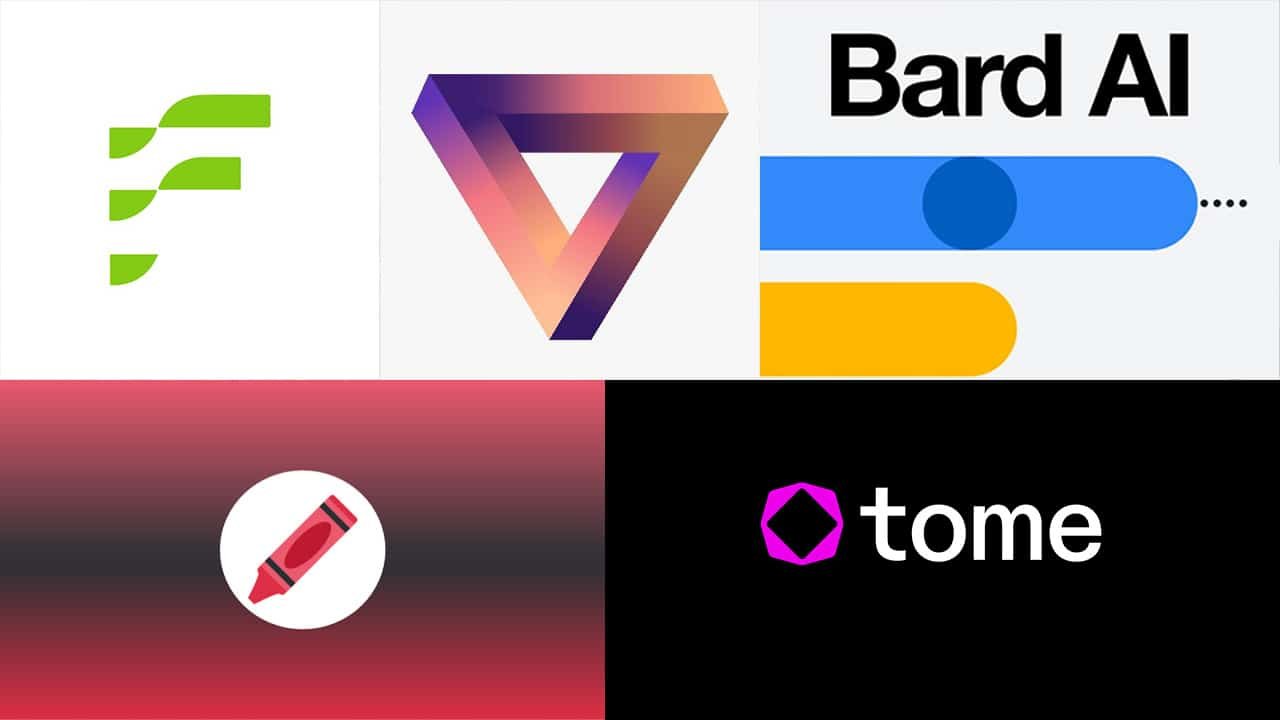
    Google Bard is an advanced AI chatbot that combines natural language processing and internet access to provide comprehensive answers, summarise articles, and even generate images. Its ability to leverage vast online resources allows users to obtain accurate and up-to-date information swiftly. Whether you seek answers to complex questions or require an AI-powered image generator, Google Bard delivers exceptional results.

    Vidyo.ai

    Vidyo.ai specialises in converting YouTube videos into short clips with captions and editing options. This AI chatbot streamlines the process of extracting relevant portions from lengthy videos, enabling users to share concise and impactful content. By facilitating video editing and captioning, Vidyo.ai empowers content creators, educators, and marketers to enhance their video-based communication effectively.

    Beat Oven

    For music enthusiasts, Beat Oven is a game-changer. This AI chatbot possesses the ability to generate royalty-free music tailored to the user’s preferences. By analysing the input, Beat Oven can create unique and high-quality compositions, allowing artists, content creators, and even casual users to access a vast library of original soundtracks. The convenience and versatility offered by Beat Oven make it a must-have tool for those in need of background music.

    Scribble Diffusion

    Scribble Diffusion harnesses the power of AI to transform simple scribbles into realistic drawings. This chatbot uses advanced image generation algorithms to convert rough sketches into visually appealing illustrations. Furthermore, Scribble Diffusion can also generate captions for these drawings, making it an excellent tool for artists seeking inspiration or individuals interested in exploring their creative potential.

    Runway.ml

    Runway.ml is an AI chatbot that excels in video editing and object removal. Leveraging state-of-the-art inpainting techniques and other magical tools, this chatbot allows users to edit videos seamlessly. With Runway.ml, unwanted objects or blemishes can be effortlessly removed from footage, enabling content creators and video enthusiasts to enhance the visual quality of their projects.

    Tome

    Tome is a powerful AI chatbot that utilises ChatGPT and DALL-E to create stunning presentations from a single prompt. By combining text generation and image synthesis, Tome can generate slides, infographics, and visual aids that complement the user’s content. This chatbot simplifies the presentation creation process, allowing individuals to convey their ideas effectively and professionally.

    Flair

    Flair.ai is an AI-powered design tool that generates high-end product photography in minutes. It is a cloud-based platform that allows users to create high-quality product images without the need for professional photography equipment or skills.

    Whilst ChatGPT undeniably possesses exceptional conversational abilities, it is essential to recognise the wealth of alternative AI chatbots that excel in specialised domains. From Google Bard’s comprehensive information retrieval to Beat Oven’s music generation capabilities, each of these chatbots offers unique functionalities that can cater to specific user needs.
  • Google’s Bard is a more powerful, accurate AI chatbot than ChatGPT

    Google’s Bard is a more powerful, accurate AI chatbot than ChatGPT

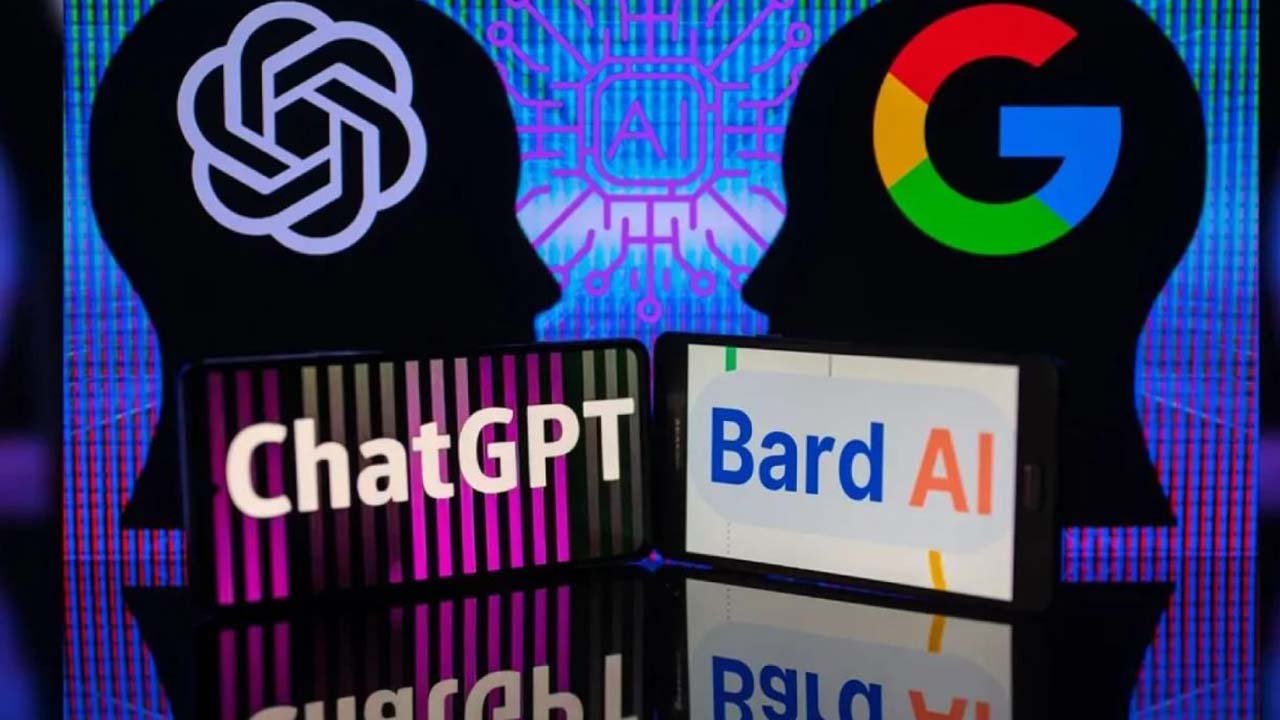
    Google has opened up access to Bard, its AI-powered chatbot, to English speakers in many parts of the world. The waitlist for access to the chatbot has been removed after two months of limited testing.

    Some people believe that Bard is simply a clone of ChatGPT, but this is not the case. Bard is much more advanced than ChatGPT, as it has access to the latest news and events. This allows Bard to provide more comprehensive and informative responses to users’ questions.

    Bard and ChatGPT 4 are both large language models, also known as conversational AI or chatbots. They are trained on massive datasets of text and code, and they can communicate and generate human-like text in response to a wide range of prompts and questions.

    However, there are some key differences between the two models.

    Bard

    1. Bard is trained on a massive dataset of text and code that includes information from the internet. This gives Bard a wider range of knowledge to draw from, and it allows Bard to answer questions in a more comprehensive and informative way.
    2. Bard is also able to access and process information from the real world through Google Search. This gives Bard a real-time view of the world, and it allows Bard to keep its answers up-to-date.
    3. Bard is designed to be informative and comprehensive. It is trained on a massive dataset of text and code, and it is able to access and process information from the real world through Google Search. This gives Bard a wide range of knowledge to draw from, and it allows Bard to answer questions in a comprehensive and informative way.

    ChatGPT 4

    1. ChatGPT 4 is trained on a massive dataset of text, but it is not trained on information from the internet. This means that ChatGPT 4 has a more limited range of knowledge, and it may not be able to answer questions as comprehensively as Bard.
    2. ChatGPT 4 is also not able to access and process information from the real world. This means that ChatGPT 4’s answers may not be up-to-date.
    3. ChatGPT 4 is designed to be creative. It is trained on a massive dataset of text, and it is able to generate human-like text in response to a wide range of prompts and questions. This makes ChatGPT 4 a good tool for generating creative content, such as poems, code, scripts, musical pieces, email, letters, etc.

    Bard and ChatGPT 4 are both powerful large language models. They can both communicate and generate human-like text in response to a wide range of prompts and questions. However, Bard has a wider range of knowledge, it is able to access and process information from the real world, and it is designed to be informative and comprehensive. ChatGPT 4 is designed to be creative. Ultimately, which model is better for you depends on your needs.

    It is currently unknown whether Bard will remain free. Google has not made any announcements about its plans for Bard’s pricing model. However, it is possible that Google may choose to make Bard a paid service in the future. This is because Bard is a very powerful and versatile tool that could be used for a variety of purposes, such as generating content, writing code, and translating languages. As such, Google may believe that it can charge a premium for access to Bard.

    On the other hand, Google may also choose to keep Bard free. This is because Google has a history of providing free access to its products, such as Gmail and Google Drive. Additionally, Google may believe that making Bard free will help to promote its other products and services.

    Ultimately, it is up to Google to decide whether Bard will remain free or not. However, it is likely that Google will make a decision about Bard’s pricing model in the near future.

  • Alibaba launches AI model ‘Tongyi Qianwen’ as ChatGPT rival for enterprise testing

    Alibaba launches AI model ‘Tongyi Qianwen’ as ChatGPT rival for enterprise testing

    Alibaba has launched its long-awaited ChatGPT rival, “Tongyi Qianwen,” for enterprise testing. The launch is not open to the general public but is restricted to a few eligible enterprises. Currently, the company is extending invitations to enterprise users only to participate in experience testing. Interested users can submit their applications via the official website, and those who meet the eligibility criteria will be considered for participation.

    “Tongyi Qianwen” is a highly advanced AI model designed to understand and respond to human commands. It serves as an efficient assistant and can even generate ideas. The model is being developed by Alibaba’s advanced research institute, the DAMO Academy. For many years, Alibaba DAMO Academy has been involved in cutting-edge scientific research fields such as natural language processing (NLP) and has been developing large models since 2019.

    Alibaba plans to integrate its AI large-scale model technology with the DingTalk productivity tools. Alibaba’s large-scale model is scheduled to be launched on April 11 at the 2023 Alibaba Cloud Summit, along with several industry-specific application models that will follow. Additionally, it has been reported that the company is set to release a large model, which could be comparable to ChatGPT 2.5, in the second half of this year.

    Alibaba DAMO Academy is the research and development arm of Alibaba Group, one of the world’s largest e-commerce companies. The academy was founded in 2017 and focuses on cutting-edge research in areas such as machine learning, artificial intelligence, natural language processing, and quantum computing. The academy has several research centers located in China, the United States, Israel, Singapore, Russia, and other countries.

    The goal of the academy is to use its research to support Alibaba’s businesses and to make significant contributions to the academic and scientific communities. The academy has partnerships with leading universities and research institutions around the world and collaborates with top researchers in various fields.

  • ChatGPT’s impact on the job market: Which professions will be most affected?

    ChatGPT’s impact on the job market: Which professions will be most affected?

    The rise of artificial intelligence has led to concerns about job displacement and unemployment. As a large language model trained by OpenAI, ChatGPT is one such example of AI technology that has the potential to impact the workforce.

    In this article, we will explore the ways in which ChatGPT may affect jobs, and whether it is ultimately beneficial or detrimental for employees.

    What is ChatGPT?

    Before delving into the impact of ChatGPT on jobs, it is important to understand what it is and how it works. ChatGPT is a natural language processing model that uses deep learning techniques to generate human-like responses to text-based queries. It was developed by OpenAI and is based on the GPT-3.5 architecture, which enables it to understand and generate language with remarkable accuracy.

    ChatGPT can be used for a variety of purposes, including customer service, chatbots, and even creative writing. It has the ability to learn from large amounts of data, which means that it can continue to improve and become more accurate over time.

    Impact of ChatGPT on jobs

    The rise of AI technology has led to concerns about job displacement and unemployment, particularly in industries that rely heavily on manual labor or routine tasks. However, the impact of ChatGPT on jobs is more nuanced and depends on the specific industry and job type.

    To better understand the potential impact of ChatGPT on jobs, let’s take a closer look at some of the industries and job types that may be affected:

    Customer service

    One of the most obvious applications of ChatGPT is in customer service. Chatbots powered by ChatGPT can provide customers with quick and accurate responses to their queries, without the need for human intervention. This has the potential to reduce the number of customer service representatives needed, particularly for routine inquiries.

    Still, ChatGPT is not a complete replacement for human customer service representatives. While it can provide quick and accurate responses to routine inquiries, it may struggle with more complex or nuanced queries that require empathy and human judgment.

    Creative writing

    Another potential application of ChatGPT is in creative writing. ChatGPT has the ability to generate human-like responses to text-based prompts, which means that it can be used to write articles, scripts, and even novels.

    While this may seem like a threat to human writers, it is important to note that ChatGPT is not capable of original thought or creativity. It can only generate responses based on the data it has been trained on. Human writers will still be needed to create truly original and creative content.

    Data entry

    Data entry is a job that involves manually inputting data into a computer system. While this may seem like a mundane task, it is still a job that many people rely on for their livelihood. ChatGPT has the potential to automate some aspects of data entry, which may reduce the need for human data entry clerks.

    However, it may struggle with handwriting recognition, and may not be able to accurately input data from non-textual sources such as images or audio recordings.

    Benefits of ChatGPT for employees

    While there may be some potential job displacement due to the rise of ChatGPT, there are also several benefits for employees. Here are just a few:

    Quick and convenient support

    One of the most significant benefits of ChatGPT is that it provides quick and convenient support to employees. With ChatGPT, employees can quickly get answers to their questions without having to wait for a human representative. This can save employees a significant amount of time, enabling them to focus on their tasks and responsibilities more effectively.

    Improved productivity

    ChatGPT can also help to improve employee productivity. By providing fast and accurate answers to employee queries, ChatGPT can reduce the amount of time employees spend looking for information. This can free up more time for employees to focus on critical tasks, helping to improve productivity and efficiency.

    Enhanced learning and development

    ChatGPT can also be used as a tool for learning and development. By providing employees with access to a wealth of information and resources, ChatGPT can help to enhance employee knowledge and skills. This can be particularly useful for employees who are new to a job or those who are looking to expand their knowledge in a particular area.

    Increased accessibility

    Another benefit of ChatGPT is that it can increase accessibility for employees. With ChatGPT, employees can access information and support from anywhere and at any time. This can be particularly useful for remote workers or those who work outside of traditional office hours.

    Personalised assistance

    Finally, ChatGPT can offer personalised assistance to employees. By using machine learning algorithms, ChatGPT can learn about employees’ needs and preferences over time, providing more personalised support and assistance. This can help to improve the employee experience, leading to increased engagement and job satisfaction.