Tag: NDMA

  • NDMA warns of floods during monsoon

    NDMA warns of floods during monsoon

    The National Disaster Management Authority (NDMA) has issued an alert for floods and landslides as both heavy and light rains are expected in different parts of Pakistan in the first week of July.

    As per the NDMA forecast, moderate to heavy rains may increase water flows in streams and rivers, causing flash flooding in low-lying areas.

    Monsoon rains may cause torrents in areas of Dera Ismail Khan, Dera Ghazi Khan, Rajanpur, and the Suleman and Kirthar mountain ranges. Meanwhile, urban flooding in major cities is also possible.

    Rains could also trigger landslides in mountainous areas of Murree, Galiyat, Azad Kashmir, GB and Khyber Pakhtunkhwa.

    Increased temperatures and rainfall in GB and KP are expected to cause glacial lake outburst flood (Glof) events in at-risk valleys.

    The NDMA further said that dust, wind, thunderstorms, and heavy showers may damage structures such as electrical poles, solar panels, hoardings, trees, and under-construction buildings.

    Citizens, especially travellers and tourists, have been advised to check forecasts regarding weather and flood conditions before setting out for any travel.

  • Cyclone Biparjoy makes landfall in Gujarat, 125km from Keti Bandar

    Cyclone Biparjoy makes landfall in Gujarat, 125km from Keti Bandar

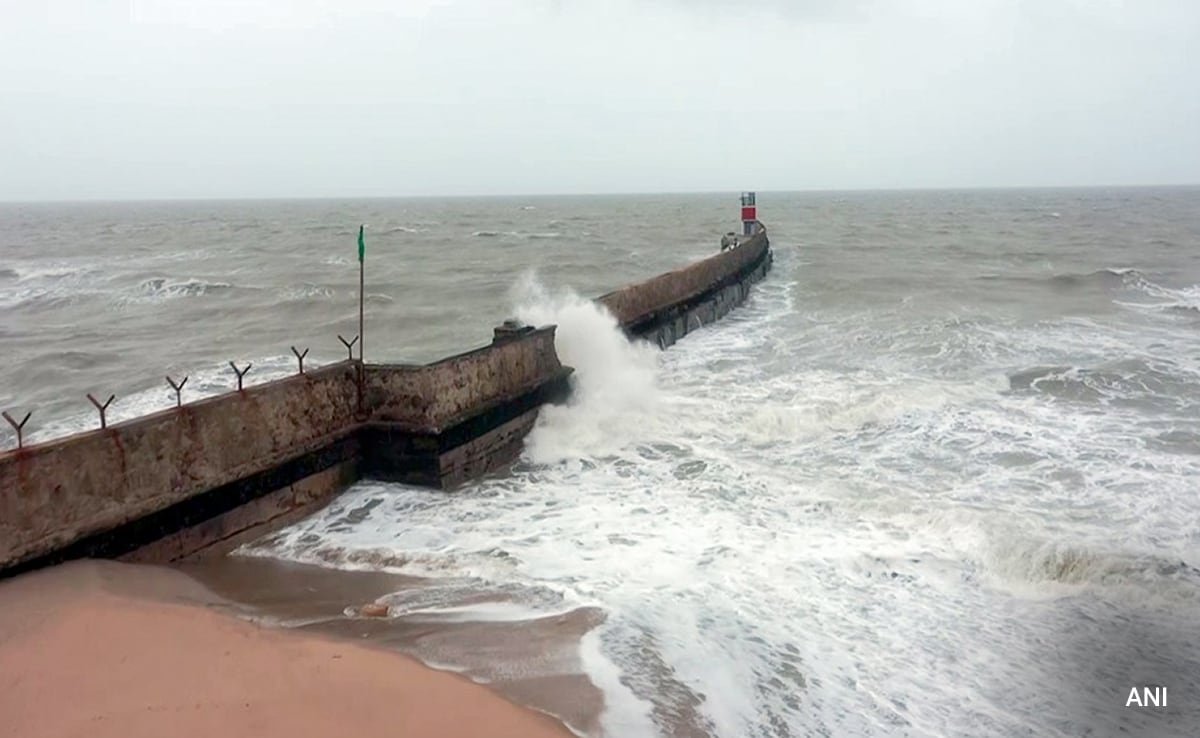
    The National Disaster Management Authority (NDMA) has said that Cyclone Biparjoy made landfall at 7pm on Thursday evening along the coast of western Indian state Gujarat, 125km southwest of Sindhi port Keti Bandar.

    According to the Joint Typhoon Warning Center, Biparjoy was equivalent to a strong tropical storm with winds of 100 kph at landfall.

    However the storm has weakened from a ‘very severe’ category to ‘severe’ as it moved northward in the early hours of Friday. The dangers of winds and storm surge are expected to diminish.

    Experts worry flooding will become the most significant factor for millions of people over the next 48 hours. The Pakistani meteorological department warned of widespread dust storms and thunderstorms in the southern Sindh province, with some very heavy rain and winds of 80-100 kph.

    The Impact of Biparjoy:

    India and Pakistan evacuated more than 170, 000 people along the coast in fear of Biparjoy. No cyclone-related deaths have been reported as yet.

    However, there has been a trail of destruction left behind in the wake of heavy wind and rain. In Gujarat, more than 500 trees have been uprooted and nearly 3500 electric poles collapsed due to Biparjoy.

    The storm is expected to weaken first to a cyclonic storm and then to a depression over Southern Rajasthan by today’s evening.

  • What was happening when the earthquake came in Pakistan?

    What was happening when the earthquake came in Pakistan?

    A powerful 6.8 magnitude earthquake jolted parts of Pakistan on Tuesday night.

    The epicentre of the earthquake was Afghanistan’s Hindu Kush region, while its depth was 180 kilometres, according to the Pakistan Meteorological Department (PMD).

    According to reports, tremors were felt in Islamabad, Peshawar, Rawalpindi, Lahore, DI Khan, Swabi, Bahawalpur, Quetta, Parachinar, Skardu and other cities of the country. 

    The tremors continued for 30 seconds, and people came out of their homes in panic.

    Prime Minister (PM) Shehbaz Sharif ordered the National Disaster Management Authority (NDMA) and other institutions to be ready to deal with any emergency.

    Below are scenes as to what was happening in different parts of the country when the earthquake came in Pakistan.

  • PM Shehbaz says Pakistan will never leave Turkey, Syria alone in these circumstances

    PM Shehbaz says Pakistan will never leave Turkey, Syria alone in these circumstances

    Prime Minister (PM) Shehbaz Sharif on Friday announced that the federal government has allocated Rs10 billion to help Turkey’s earthquake relief efforts.

    The premier said that Pakistan will never leave alone Turkey in these circumstances, urging the nation to pray for the victims of the earthquake in Friday prayers today.

    “I believe that the people of Turkey and Syria will come out of this difficulty,” he said, adding that Pakistan assured Turkey of assistance on the very day the tragedy took place.

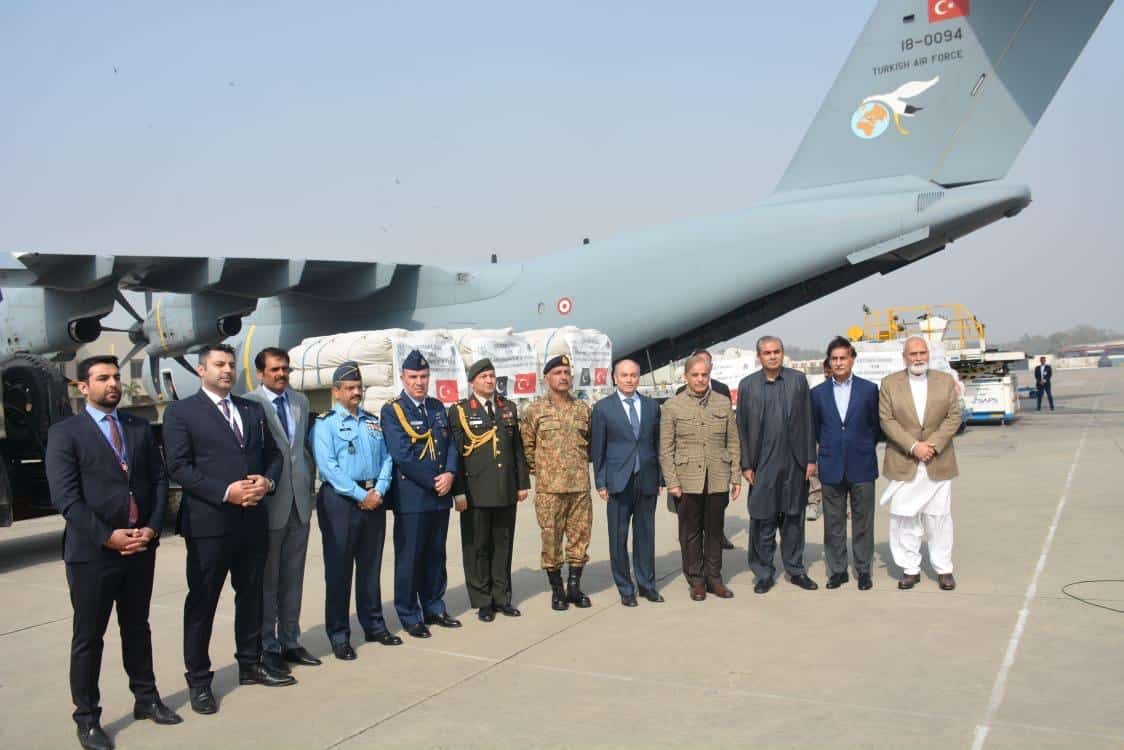
    “A committee has been formed to send funds to Turkey. 1,486 tonnes of relief goods are being sent to Turkey and Syria,” he added.

    The premier said that the National Disaster Management Authority (NDMA) will purchase relief items — such as tents, clothes, blankets and dry food — from the fund and dispatch them to Turkiye.

    “Destruction of such magnitude is seldom seen, where parents have lost their children and infants have become orphans […] there are dreadful visuals everywhere,” he noted.

    However, the prime minister asserted that under the leadership of Turkish President Recep Tayyip Erdogan, the people of Turkiye would emerge out of the crisis. “And so will our brothers in Syria,” he said.

    More than 21,000 people have died in Turkiye after an earthquake of magnitude 7.8 struck the region in the early hours of Monday morning. The hope of pulling out survivors from underneath the rubble diminishes as the days pass and freezing temperatures continue unabated.

  • President Alvi stresses on women empowerment in sparsely attended session

    President Alvi stresses on women empowerment in sparsely attended session

    Addressing a joint session of the parliament on Thursday, President Dr Arif Alvi stressed on empowerment of women in Pakistan, saying that opportunities should be made for them.

    Addressing a sparsely attended session, the President said that women should feel safe in public spaces and men in society can contribute to that. He pointed out that women in Pakistan can contribute a greatly to society.

    Moreover, the president said that women should be given chances to work in public offices and urged lawmakers to work on eliminating harassment.

    His remarks were addressed to a mostly empty hall, with legislators from both treasury and Opposition benches choosing to skip the session.

    Dr Alvi warned against neglecting youth as he called for the inclusion of children who were out of school and urged lawmakers to focus on it.

    “I have spoken to ulema that mosques should have sessions to provide school education. If you can’t provide education to children, give them skills,” he highlighted.

    Talking about the flood situation in Pakistan, the president, “I want to felicitate the Pakistan Army for helping victims while sacrificing their lives. The federal and provincial governments, PDMA (Provincial Disaster Management Authority), and NDMA (National Disaster Management Authority) all worked hard on the ground. I thank all of them.”

    He said that the recent floods had, once again, raised the demand for building dams. Furthermore, he pointed out that if the relief work is not done on time, human and economic losses from the floods would be higher.

    “The Netherlands is 19 times smaller than Pakistan but it has progressed in agriculture, and my country should have progressed more in this field. If we adopt a scientific approach, Pakistan can beat the world,” he stated.

    Talking about foreign affairs in his speech today, the president lauded the government for improving ties with the United States (US). On China, the president said, “I believe the Pakistan-China friendship is a real one and CPEC (China-Pakistan Economic Corridor) is an example of it.”

    At one point during his address, the president also called for the continuation of the work on Electronic Voting Machines (EVMs), saying “We shouldn’t delay this”.

    President Alvi was set to address the joint session on August 14, but due to the apprehensions of the coalition government, the address was postponed.

  • ‘It is water everywhere, just like a sea’: PM Shehbaz visits flood-affected areas

    ‘It is water everywhere, just like a sea’: PM Shehbaz visits flood-affected areas

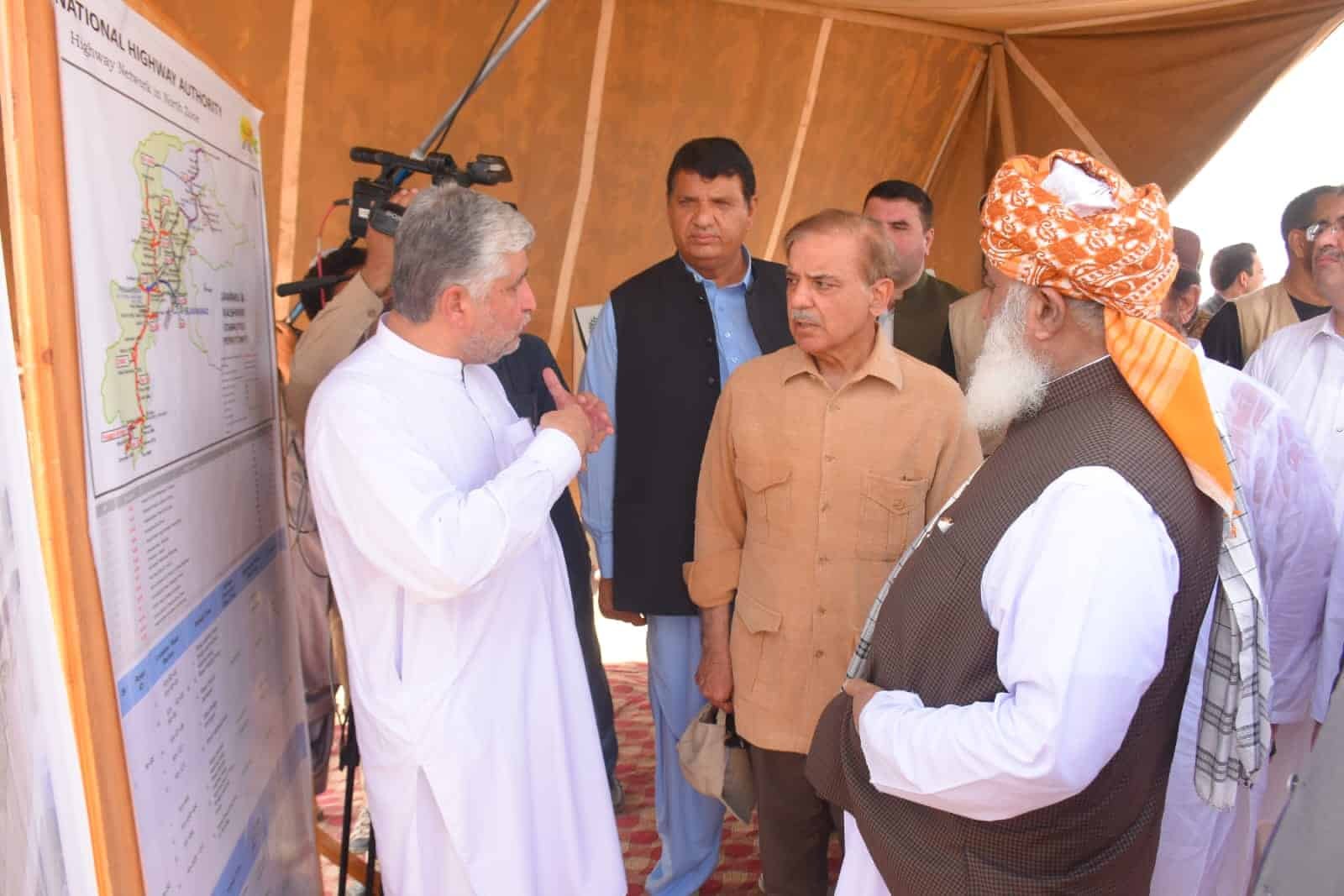
    Prime Minister (PM) Shehbaz Sharif visited Dera Ismail Khan, KP to review ongoing restoration and rehabilitation work in flood-affected areas today (Wednesday).

    During the visit, while talking to the media, PM Shehbaz said, “You wouldn’t believe the scale of destruction there. There is water everywhere as far as you can see. It is just like a sea.”

    The premier emphasised the need for a “sustainable system” to cope with the challenges of climate change.

    He said trillions are needed for relief and rehabilitation activities post floods. “We will need trillions of rupees to cope with this calamity”, he observed.

    “The country is grappling with an unprecedented situation, witnessing floods that have resulted in the loss of lives, infrastructure and crops,” he said, adding that it was time to “rise above politics and demonstrate the spirit of service and welfare.”

    The Premier announced that a sum provided by a philanthropist for flood relief would be used for installing 100 prefabricated houses in DI Khan.

    Moreover, the premier announced that under the Benazir Income Support Programme (BISP), every flood-hit household would be given Rs25,000 and Rs1 million would be given in compensation to the relatives of the deceased.

    According to National Disaster Management Authority (NDMA),18 more people died from the flood in the past 24 hours, taking the death toll to 1,343. Eight children were among the dead in the last 24 hours.

    The government has said 33 million people have been affected. The floods were brought by record monsoon rains and glacier melt in Pakistan’s northern mountains. A total of 116 districts have been adversely affected.

    World Health Organisation (WHO) said more than 6.4 million people need humanitarian support in the flooded areas.

  • US Congress members to visit flood affected areas tomorrow

    Members of the United States (US) Congress, Representative Sheila Jackson Lee and Rep. Tom Suozzi will arrive in Pakistan on Sunday to visit flood-affected areas in the country.

    Before departing for Pakistan, Jackson said that they would visit disaster-struck zones and will take “all possible steps” to help flood victims.

    Separately, the Commander of US Central Command, General Michael Erik Kurilla, expressed grief over the catastrophic floods that killed over 1000 people and submerged a third of the country.

    General Michael talked to Chief of Army Staff (COAS) General Qamar Javed Bajwa via telephone and offered condolences.

    United Nations (UN) Secretary-General António Guterres is also set to pay a ‘solidarity visit to the flood-affected areas of Pakistan on September 9.

    The secretary-general will arrive in Islamabad and will visit the areas most impacted by the unprecedented climate catastrophe. He will also have conversations with displaced families and humanitarian agencies working on the ground.

    According to National Disaster Management Authority (NDMA), nearly 57 people have died in the last 24 hours.

    The overall death toll has crossed the 1,200 mark.

  • ‘Floods are a lesson’: Ahsan Iqbal criticises construction on waterways

    ‘Floods are a lesson’: Ahsan Iqbal criticises construction on waterways

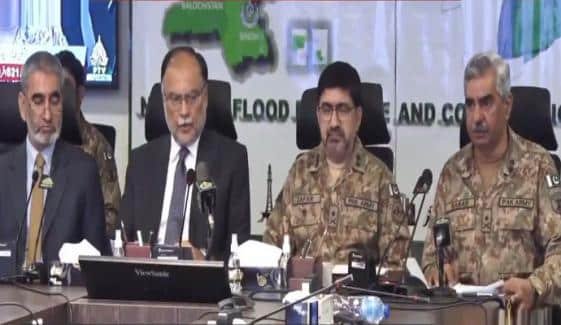
    Minister for Planning and Development Ahsan Iqbal along with the representatives of the National Disaster Management Authority (NDMA) and the Pakistan Army briefed media personnel at the National Flood Response and Coordination Center, Islamabad regarding flood relief work today (Saturday), reports Radio Pakistan.

    National Disaster Management Authority (NDMA) Chairman Akhtar Nawaz said that the year 2022 showed the realities of climate change in Pakistan. “We saw four heatwaves that caused forest fires and monsoon rains began prematurely,” he said.

    “We had predicted 25 percent more rainfall this year but it turned out to be 190 percent higher. We saw glacial lake outburst floods (GLOFs) as well,” he explained.
    Ahsan Iqbal, while talking to the media said, “Pakistan’s carbon emission is less than 1 per cent however, we are among the countries that are most vulnerable to the climatic disasters.

    “The scale of the floods warrants a major humanitarian response for which the support of the international community has started pouring in and we are extremely grateful. However, the scale of devastation is massive and requires a large humanitarian response,” he remarked.

    “The floods are a lesson for Pakistan as it proves that buildings should be constructed on waterways,” he added.

    Pakistan is experiencing one of the worst floods of its history. In the last 24 hours, 57 more deaths have occurred which has taken the death toll to 1,265.

  • Floods in Pakistan: Death toll reaches 1,136

    The death toll from the devastating floods in Pakistan has reached 1,136. According to the data issued by the National Disaster Management Authority (NDMA),402 people have lost their lives in Sindh, 244 in Balochistan and 258 in Khyber Pakhtunkhwa.

    Read more- Flood Emergency: Here is how you can help

    The federal and provincial governments are currently providing assistance to the displaced families and now the international community has also poured in their support.

    Read more- World leaders extend their support to Pakistan’s flood affectees

    The locals are concerned that the standing water may spread waterborne diseases.

    Read more- What caused Pakistan’s greatest flood in a decade?

  • What caused Pakistan’s greatest flood in a decade?

    What caused Pakistan’s greatest flood in a decade?

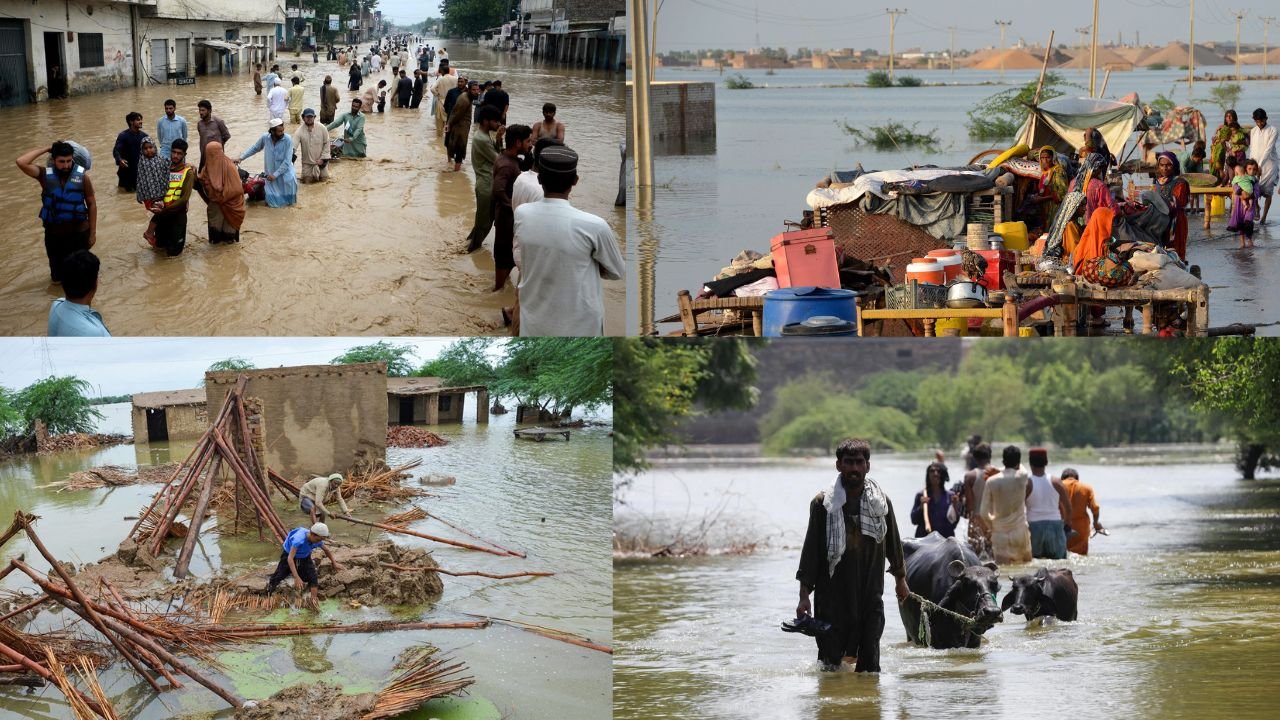
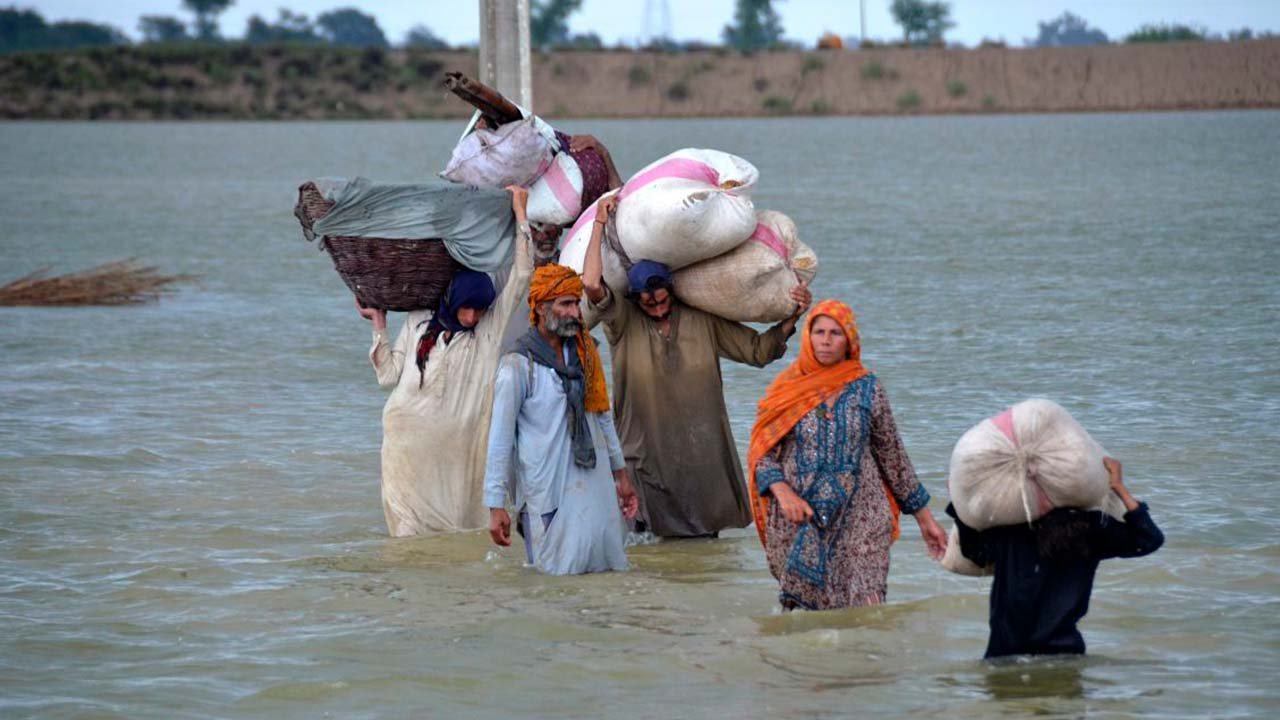
    Floods in Pakistan have affected millions of people, drowned hundreds, and prompted the government to proclaim a national emergency.

    Nearly 1,000 people have died since June, according to the National Disaster Management Authority (NDMA). People are looking for shelter as torn tents fill the streets of Sukkur.

    Around 15,500 people sacrificed everything in the 1,000-kilometer-long coastal area patch of Sindh’s Thatta district.

    The flood water has swallowed up people’s entire life savings, earned after years of hard work, meant to get their kids educated.

    The locals are concerned that the standing water may spread waterborne diseases. There hasn’t been any relief for residents expecting to return home to see what can be salvaged because it has been raining all week in Sindh province.

    Many houses in the city’s center have sustained damage, leaving only the walls standing.

    Over 300 people have died as a result of the floods in the province of Sindh alone. People set up tents along the narrow alleyways in any remaining dry area because further rain is predicted.

    About 15 per cent of the population, or 33 million people, were affected by the floods, according to Prime Minister (PM) Shehbaz Sharif on Friday.

    The nation has pleaded for greater international assistance, as PM met with ambassadors from other countries in Islamabad.

    He claimed that this season’s flood losses were on par with those from the floods of 2010–2011.

    The country is currently experiencing its eighth monsoon cycle, whereas typically there are only three to four cycles of rain, according to climate minister Sherry Rehman.

    She claimed that the proportions of super flood torrents are startling.

    Numerous monsoon cycles that have hit Pakistan since the start of summer have destroyed more than 400,000 homes.

    The Office for the Coordination of Humanitarian Affairs (OCHA), the UN organization in charge of disaster relief, announced on Thursday that at least 184,000 people had been relocated to relief camps.

    The rains have notably affected Sindh, which has seen nearly eight times its normal August rainfall. Southern Pakistan has been severely hit.

    On Thursday, Ms. Rehman claimed that officials had requested a million tents to house the refugees.

    What led to Pakistan’s floods?

    Extreme weather conditions or rains brought on by climate change are to blame for the recent floods that have affected Pakistan. Some floods originate in inland regions because of excessive rain, whereas others happen at the seashore because of sea-level rise, causing devastation in coastal districts.

    High tides in the sea cause heavy flooding primarily in coastal locations. Because of the daily rise in global temperature, this is related to climate change.

    There are two main causes of the floods: The experts noted that sea-level rise is a result of expanding saltwater caused by glacier and Arctic sea ice melting as well as cyclones and heavy rains brought on by warming ocean temperatures.

    Seawater intrusion inland has been caused by a significant sea-level rise of 1 millimeter along coastal Sindh recorded over hundreds of years. Communities in coastal regions, where economic activity is concentrated, are significantly impacted by invasive sea water.

    Experts have noted that the storms that have occurred more frequently and with greater severity in the Arabian Sea over the past 50 years as a result of climate change have an economic impact on urban areas like Karachi, Badin, and Thatta.

    According to a research, the primary causes of sea incursion include thermal expansion, freshwater inflows, physical forces, monsoon fluctuation, and ocean current variance.

    As seawater warms, the top layers of the ocean release some heat into the sky, while the lower layers hold onto this heat for a longer time and in greater amounts. As a result, saltwater gradually warms up due to a process known as thermal expansion.

    According to a study, freshwater inflow from melting glacial layers, ice sheets, and sea ice contributes to sea level rise. Freshwater input also rises as a result of the hydrogen cycle brought on by the warming of the oceans and surface areas.

    The scenario of subsidence and lifting also affects sea level without changing the volume of ocean water. This is caused by tectonic activities such extraction for oil, gas, and water.

    A direct connection between climate change and variations in monsoon rainfall. In recent years, Pakistan has had numerous instances of extreme monsoon rainfall and flooding.

    Regional ocean currents, which transfer a lot of water from one place to another, do not alter the volume but have an impact on sea level in another place.