Tag: Nepal

  • Suniel Shetty is a real-life hero, and now we have proof

    Suniel Shetty is a real-life hero, and now we have proof

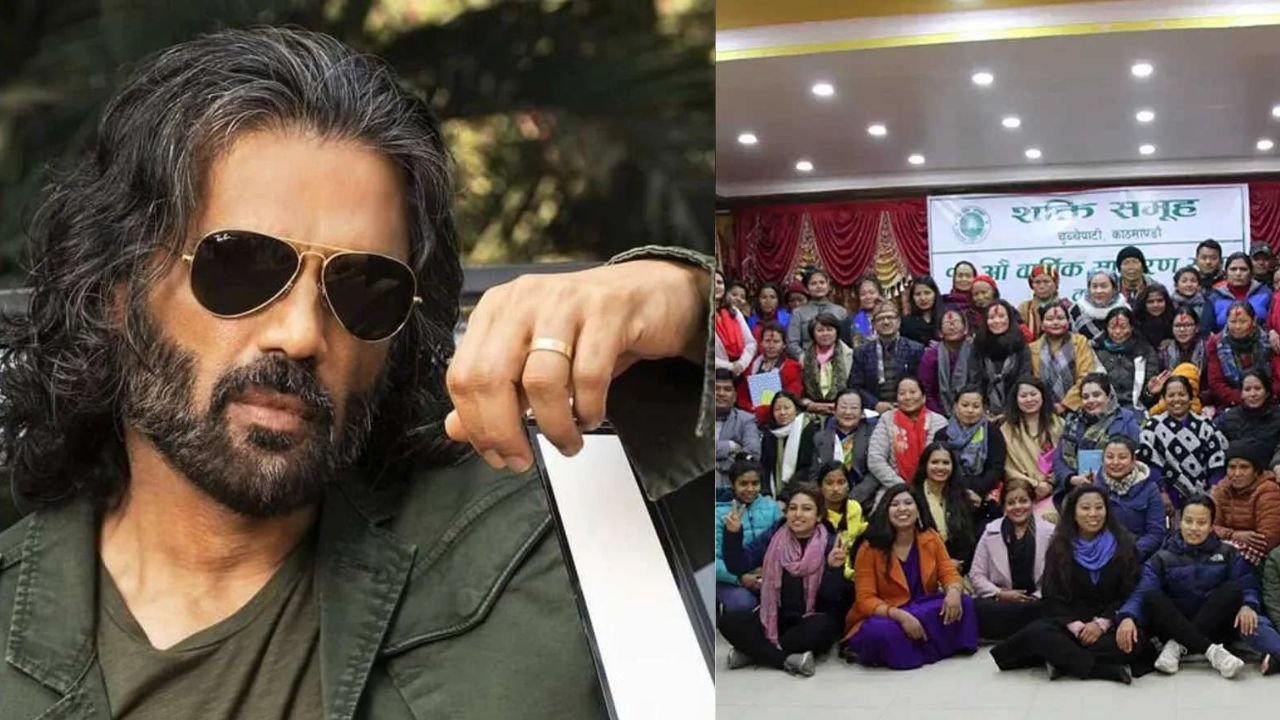
    Bollywood actor Suniel Shetty was an action hero on screen and a real-life hero off screen. About 28 years ago, the star rescues 128 women survivors of sex trafficking. All these years later, this kind act has come to light through one of the women saved in that operation, Charimaya Tamang.

    The incident occurred on February 5, 1996, when the Mumbai police raided the red light area at Kamathipura and rescued 456 women, including 128 from Nepal.

    Many of these women did not have proof of citizenship; hence the Nepal government refused to take them back. When Shetty came to know about this, he took matters into his own hands, arranging a flight, and paying for tickets of all the 128 women so that they may reach home safely.

    Shetty gives the credit of the operation to the Mumbai police and his mother-in-law, Vipula Kadri, founder of the ‘Save the Children’ NGO.

    During an interview with Bollywood Hungama, Shetty said, “We didn’t think about the cost of flight tickets. The effort was what counted. My mother-in-law inspired us all. She took the risk of rescuing the girls, getting into the bad books of the mafia.”

    Despite the danger, Shetty’s actions remained low-profile to protect the women involved. “We didn’t want to glorify ourselves. Given that these girls were participating, it wasn’t right. This mafia never lets go. The operation needed to be low-profile, and it was,” Shetty added.

    Today, the 128 women, including Charimaya Tamang, have rebuilt their lives, thanks to the compassion and bravery of Suniel Shetty and his team. Their stories remind us that a single act of kindness can change countless lives.

  • Plane crashes in Nepal with 18 dead, pilot sole survivor

    Plane crashes in Nepal with 18 dead, pilot sole survivor

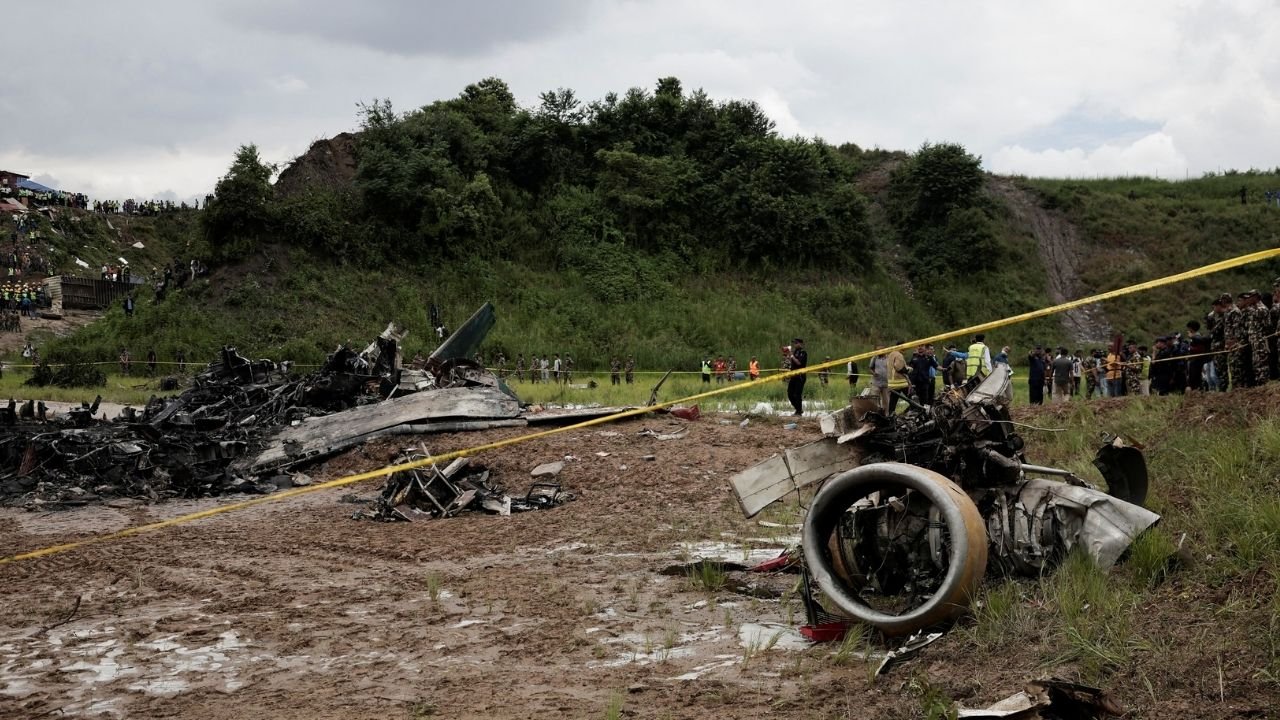
    A passenger plane crashed on take-off in Kathmandu on Wednesday, with the pilot rescued from the flaming wreckage but all 18 others aboard killed, police in the Nepali capital told AFP.

    Nepal has a woeful track record on aviation safety and the Himalayan republic has seen a spate of deadly light plane and helicopter crashes over the decades.

    The Saurya Airlines flight was carrying two crew and 17 of the company’s staff members, Nepali police spokesman Dan Bahadur Karki told AFP.

    “The pilot has been rescued and is being treated,” he added. “Eighteen bodies have been recovered, including one foreigner. We are in the process of taking them for post-mortem.”

    The Civil Aviation Authority said the dead foreigner was a Yemeni citizen.

    A press release from the airport said the aircraft “veered off to the right and crashed on the east side of the runway” shortly after take-off.

    The survivor was in serious condition in hospital, it added.

    Ram Kumar K.C., who runs a tyre store near the accident site, told AFP the plane caught fire after hitting the ground.

    “We were about to run to the site but then there was an explosion so we ran away again,” the 48-year-old said.

    The flight was being conducted for either technical or maintenance purposes, Gyanendra Bhul of Nepal’s Civil Aviation Authority told AFP without giving further details.

    Images of the aftermath shared by Nepal’s military showed the plane’s fuselage split apart and burnt to a husk.

    Around a dozen soldiers in camouflage were standing on top of the wreckage with the surrounding earth coated in fire retardant.

    The aircraft crashed at around 11:15 am (0530 GMT), the military said in a statement, adding that the army’s quick response team had been lending assistance with rescue efforts.

    The plane was scheduled to fly on Nepal’s busiest air route between Kathmandu and Pokhara, an important tourism hub in the Himalayan republic.

    Saurya Airlines exclusively flies Bombardier CRJ 200 jets, according to its website.

    Plagued by poor safety

    Nepal’s air industry has boomed in recent years, carrying goods and people between hard-to-reach areas as well as foreign trekkers and climbers.

    But it has been plagued by poor safety due to insufficient training and maintenance — issues compounded by the mountainous republic’s treacherous geography.

    The European Union has banned all Nepali carriers from its airspace over safety concerns.

    The Himalayan country has some of the world’s trickiest runways to land on, flanked by snow-capped peaks with approaches that pose a challenge even for accomplished pilots.

    The weather can also change quickly in the mountains, creating treacherous flying conditions.

    Nepal’s last major commercial flight accident was in January 2023, when a Yeti Airlines service crashed while landing at Pokhara, killing all 72 aboard.

    That accident was Nepal’s deadliest since 1992, when all 167 people aboard a Pakistan International Airlines plane died when it crashed on approach to Kathmandu airport.

    Earlier that year a Thai Airways aircraft had crashed near the same airport, killing 113 people.

  • Do you know what were the top three most polluted countries in 2023?

    Do you know what were the top three most polluted countries in 2023?

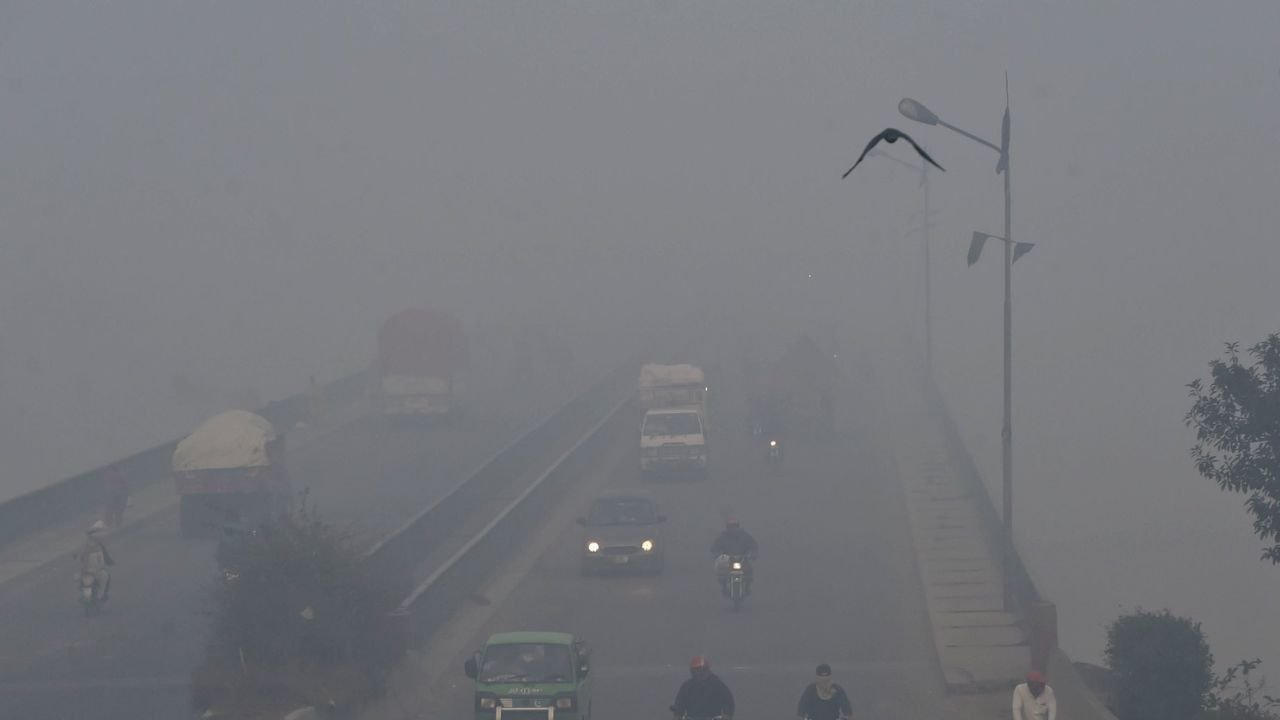
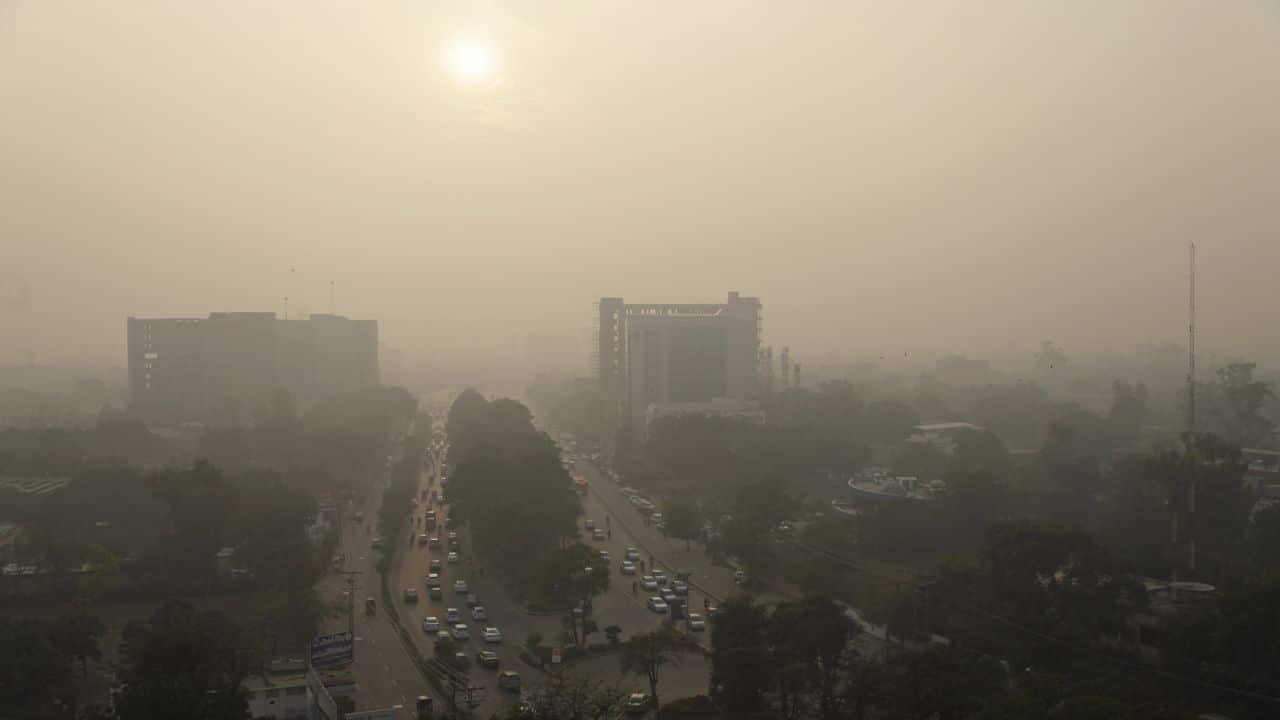
    IQAir, a Swiss air monitoring organisation, published its World Air Quality Report on Tuesday revealing troubling details of the world’s most polluted countries, territories, and regions in 2023.

    “IQAir’s annual report illustrates the international nature and inequitable consequences of the enduring air pollution crisis. Local, national, and international effort is urgently needed to monitor air quality in under-resourced places, manage the causes of transboundary haze, and cut our reliance on combustion as an energy source,” states Aidan Farrow, Sr. Air Quality Scientist, Greenpeace International.

    “In 2023, air pollution remained a global health catastrophe. IQAir’s global data set provides an important reminder of the resulting injustices and the need to implement the many solutions that exist to this problem.”

    The report revealed that Pakistan, alongside Bangladesh and India, remained among the top three countries with the highest levels of air pollution, particularly concerning particulate matter, in 2023.

    The concentrations of PM2.5, harmful airborne particles detrimental to respiratory health, surpassed recommended levels by a staggering margin, as indicated by the World Health Organization (WHO).

    In Bangladesh, the average concentration of PM2.5 reached 79.9 micrograms per cubic meter, while in Pakistan, it stood at 73.7 micrograms per cubic meter. These figures starkly contrast with the WHO’s guideline of no more than 5 micrograms per cubic meter.

    “Because of the climate conditions and the geography (in South Asia), you get this streak of PM2.5 concentrations that just skyrocket because the pollution has nowhere to go,” said Christi Chester Schroeder, air quality science manager at IQAir.

    “On top of that are factors such as agricultural practices, industry and population density,” she added. “Unfortunately, it really does look like it will get worse before it gets better.”

    In 2022, Bangladesh was ranked fifth for its air quality, with India in the eighth position. Approximately 20% of premature deaths in Bangladesh are attributed to air pollution, with related healthcare costs accounting for a substantial portion of the country’s GDP, according to Md Firoz Khan, an air pollution expert at Dhaka’s North South University.

    India also witnessed an escalation in pollution levels in 2023, with PM2.5 levels exceeding the WHO standard by about 11 times. Notably, New Delhi emerged as the worst-performing capital city, recording a PM2.5 level of 92.7 micrograms.

    China experienced a 6.3% increase in PM2.5 levels in 2023, marking a departure from five consecutive years of decline. Conversely, only a handful of countries, including Australia, Estonia, Finland, Grenada, Iceland, Mauritius, and New Zealand, met the WHO standards for air quality.

    The IQAir report, based on data from over 30,000 monitoring stations across 134 countries and regions, highlighted significant gaps in air quality monitoring, particularly in countries where the health impacts of pollution are most severe.

    Christa Hasenkopf, director of the Air Quality Life Index at the University of Chicago’s Energy Policy Institute, said 39pc of countries have no public air quality monitoring.

    “Considering the large potential benefits and relatively low cost, it’s stunning that we don’t have an organised global effort to deploy resources to close these data gaps, especially in places where the health burden of air pollution has been largest,” she said.
  • Nepal, Pakistan: anything better than cricket to bring people together?

    Nepal, Pakistan: anything better than cricket to bring people together?

    Pakistan v Nepal from Moorhead to Multan: A Journey of Friendship and Fervour

    Picture this: a chilly midnight in Moorhead, a tiny university town near Fargo. Amidst the freezing air, two cricket fanatics — me and my Pakistani roommate, Shehzad — walk to the end of 20th Street just off campus to a house full of friends from Nepal. Our connection with these guys? Cricket. We had known each other through an indoor tape ball cricket tournament we played together.

    It was the turn of the millennium; TV apps and online streaming weren’t a thing back then. These guys from Nepal were our cricket saviours, the only ones in the area with Direct TV and video on demand available to watch Pakistan vs India 2004 Test series. I remember the first Test was in Multan. Sehwag smashed a triple ton and Tendulkar 194 to stamp their authority on the game. India won the match by an innings and also the series 2-1.

    Even though we had great respect for each other, there were moments when we had tempers flared during this series as all of these guys were rooting for India. That’s the nature of this encounter, it’s an emotional rollercoaster. People from Pakistan and India living abroad will relate: no matter how close you are with each other, this game will always get your emotions out of control.

    Fast-forward to 2023. Two decades later, Asia Cup is being co-hosted in Pakistan. The venue for the first game was Multan where Nepal faced Pakistan head to head for the first time. I have been in touch with these guys on and off, mostly through Facebook. As the national anthem of Nepal was being played, I dropped a one-liner message about the clash to Pawan Adhikari, now living in Houston, Texas. His response, I can feel, triggered a cascade of emotions for him just like it did for me. Memories flood in of chai-fuelled nights, banter, and heated arguments at his apartment.

    This particular game in Multan seemed to create a nostalgia that’s etched in our memories. For me this wasn’t just a game where Pakistan was playing a minnow, it was a symphony of emotions that cricket had orchestrated two decades ago. This memory and this game flung the door open to tomorrow, to the possibility of sitting with old mates, Pawan, Neeraj, Prajowl, and Shehzad; watching Nepal and Pakistan take on the world in the West Indies and Americas next year.

    From that viral image of a packed cricket ground in Katmandu of their famous victory, Nepal’s cricketing journey is a tale of resilience, a narrative that echoed the nation’s spirit, much like conquering the Everest.

    In a world often divided, cricket emerges as the unifier, a magical thread that weaves tales transcending time zones and cultures. From Moorhead’s chilly cold streets to Multan’s scorching heat, this is more than just a cricket story; it’s a tale of friendships woven by cricket’s tapestry. It’s a reminder that amidst the chaos, there’s a language we all speak, a language that unites us, This is why we love this game.

  • After beating Nepal, Pakistani team is ready for India

    After beating Nepal, Pakistani team is ready for India

    After beating Nepal on Wednesday, captain Babar Azam has said that the Pakistani cricket team is ready to beat India on Saturday’s Asia Cup match, Dawn has reported.

    Iftikhar Ahmed scored an unbeaten 109 and Babar scored a masterful 151 runs in yesterday’s match held at Multan.

    Tournament co-hosts Pakistan bowled out Asia Cup debutants Nepal for 104 in 23.4 overs in their third-biggest victory in a one-day international.

    “This game was good preparation for the India game because it gave us confidence,” Babar, who was named Player of the Match for his 19th one-day hundred, said.

    “India-Pakistan will always bring high intensity. We want to give 100 percent in every match, and we hope to do that there as well.”

    “When I went in, the ball wasn’t coming on properly, so I was trying to build an innings with Rizwan,” Babar explained.

    “Iftikhar also played a great inning when he came on. I told him to play his natural game, and he was comfortable after hitting two-three boundaries,” the batting maestro stated.

  • Air pollution in South Asia can cut life expectancy by more than five years per person

    Air pollution in South Asia can cut life expectancy by more than five years per person

    University of Chicago’s Energy Policy Institute (EPIC) has published its latest report about Air Quality Life Index on Tuesday. The report deduced that rising air pollution can cut life expectancy by more than five years per person in South Asia which is currently one of the most polluted places in the world.

    Primary contributors in the region’s declining air quality are increasing industrialisation and population growth. The particulate pollution levels are resultantly more than 50 percent higher in comparison to the century’s start, posing a much greater health threat.

    What does the report say about Pakistan?
    According to the report, 98.3% of Pakistan’s population lives in areas exceeding the national air quality standard of 15 micrograms per cubic meter.

    From 1998 to 2021, average annual particulate pollution increased by 49.9% in Pakistan and reduced life expectancy by 1.5 years.

    In Punjab, Islamabad, and Khyber Pakhtunkhwa 65.5 million citizens reside (69.5% of Pakistan’s population), with the country’s people potent set to lose between 3.7 to 4.6 years of life expectancy on average relative to the World Health Organization (WHO) guideline and between 2.7 to 3.6 years relative to the national standard if the current pollution levels persist.

    Moreover, if Pakistan is able to meet WHO’s guideline, Karachi residents would gain 2.7 years of life expectancy whereas residents of Lahore would gain 7.5 years and people in Islamabad would gain about 4.5 years of life expectancy.
    Pakistanis would gain 3.9 years by meeting the WHO guidelines of limiting average annual PM 2.5 concentration to 5 micrograms per cubic meter.

    Others in South Asia

    The study further expounds upon other countries in the region.

    In light of the current pollution levels, Bangladeshis can lose 6.8 years of life on average per person compared to 3.6 months in the United States.

    A Nepali would live 4.6 years longer by meeting the WHO guidelines of limiting average annual PM 2.5 concentration to 5 micrograms per cubic meter.

    It is also highlighted that India is responsible for about 59 percent of the world’s increase in pollution since 2013, threatening to reduce lifespan in some of the country’s polluted regions.

    The average lifespan in New Delhi, a heavily populated and the world’s most polluted megacity, is down by more than 10 years.

    The report added that by reducing global levels of lung-damaging airborne particles, known as PM 2.5, to levels recommended by WHO could raise average life expectancy by 2.3 years.

    China has put in work to reduce pollution by 42.3 percent between 2013 and 2021. The report suggested the governments generate accessible air quality data in order to help bridge global inequalities in accessing tools to combat pollution.

  • After Oscar win, Michelle Yeoh urges support for Turkey, Syria earthquake victims

    After Oscar win, Michelle Yeoh urges support for Turkey, Syria earthquake victims

    Michelle Yeoh has scored a major win for Asian Americans in Hollywood by becoming the first Malaysian-origin woman to win awards at the Golden Globes, Screen Actors Guild and then finally becoming the second woman of color to win Best Actor at the Oscars.

    In an op-ed titled “The Crisis That Changed My Life 8 Years Ago Keeps Happening” for The New York Times, Yeoh revealed that she wanted to shift all the praise and attention that was being showered on her towards a cause that was deeply close to her heart: the earthquakes in Turkey and Syria.

    Yeoh opened up about how she saw first-hand the tragedies of the 2015 earthquake in Nepal, where she had been visiting with her partner Jean Todt. Witnessing the ruin and destruction around her had pushed the Asian-American actress to become a Goodwill Ambassador for the United Nations Development Program in order to help with the relief efforts.

    When devastating earthquakes struck Turkey and Syria in February, mass destruction and havoc followed, leaving behind a confirmed death toll of 50,000 people.

    Yeoh writes that in such catastrophic events, women and children bear the brunt, especially when they live in poverty:

    “Crises aren’t just moments of catastrophe: They expose deep existing inequalities. Those living in poverty, especially women and girls, bear the brunt. In the immediate aftermath of a disaster, lack of sanitation, health facilities and safety disproportionately affect women. In my time as a goodwill ambassador, I have seen up close how women and girls are often the last to go back to school and the last to get basic services like clean water, vaccines, identity cards and counseling. They are typically the last to get jobs and loans.”

    Which is why, Yeoh urged that more women should be brought in to leadership positions, because they are the essential voices we need in order to rebuild neighborhoods, schools and marketplaces:

    “Women must also play leadership roles in the recovery process. But women are woefully underrepresented in the decision making that affects their prospects of survival in times of crisis. This gap has a dangerous effect: Studies have shown that women are hit hardest in disasters. Women and girls are often at a disadvantage when it comes to rescue efforts, and women are more likely than men to suffer from hunger.

    We know women sustain their communities. Their voices, leadership and full participation are key to an inclusive, successful and sustainable recovery. This means considering women’s needs, priorities and safety when rebuilding neighborhoods and constructing schools and marketplaces. It means ensuring women have equal access to information, job opportunities and skills training, as well as loans and insurance mechanisms, which are all crucial to regain financial stability.”
    Knowing that she is a person with a lot of privilege, Yeoh said that the best that she can do is redirect the spotlight currently on her towards those who often go unacknowledged:
    “I’m 60 years old, and I just won my first Oscar. I know something about perseverance, and I am all too aware of what society expects of women. I’m also well aware that my experience can’t compare at all with that of the women heroes I met who are on the front lines of crises. But if I can do one thing with this moment of my professional joy, it would be to point the spotlight on those who all too often go unacknowledged, the women who are rebuilding their communities, taking care of children and older people and putting food on the table. Let’s make sure they are not missing from the room when decisions are being made that affect them the most.”

    Read her complete piece here.

  • Nepal missing plane found: Rescue recovers 14 bodies

    Nepal missing plane found: Rescue recovers 14 bodies

    Following the announcement by Nepal’s army that it had located the crash site of the missing plane, rescue workers have so far recovered 14 bodies from the crash site. There were 22 passengers on board.

    According to a spokesman for the Tribhuvan International Airport in Nepal’s capital Kathmandu, the search for others is continuing.

    A small passenger plane, operated by private airline Tara Air went missing in Nepal on Sunday during cloudy weather.

    The airline said the plane was carrying four Indians, two Germans and 16 Nepalis, including three crew.

    The government officials said that the plane took off in the morning for a 20-minute flight but lost contact with the control tower five minutes before landing.

    The state-owned Nepal Television said villagers had seen an aircraft on fire at the foot of the Himalayan mountain Manapathi.

    Referring to the fire site, Tara Air spokesperson told Reuters, “Ground search teams are proceeding towards that direction but it could be a fire by villagers or by cowherds. It could be anything.” The Civil Aviation Authority of Nepal (CAAN) also said a team was headed to that area.

    Nepal has a record of air accidents because of the huge mountains that country has. Its weather can change suddenly and airstrips typically located in mountainous areas are hard to reach.

  • PM Imran Khan announces ‘no tax’ policy for freelance workers

    PM Imran Khan announces ‘no tax’ policy for freelance workers

    Prime Minister(PM) Imran Khan has announced that registered freelancers will be exempted from all types of taxes.

    While addressing the launching ceremony of the E-commerce Portal, PM said that freelancers will not be liable to any sort of tax on their income now.

    He said, “IT [sector] is youth-driven. All of these tech company owners became billionaires by the age of 20.”

    He also shared that the government’s aim is to take Information technology (IT) exports upto $50 billion in the upcoming years. The exports of IT have reached $4 billion during the past two years.

    He also added that women at home will be able to empower themselves by freelancing at home.

    He also opened up about his future plans to work with Microsoft co-founder, Bill Gates, for the IT industry. He was invited to Pakistan to honour him as he made efforts to eliminate polio disease from the country.

    PM said, “But my interest was to involve him in Pakistan’s IT [industry] even if in an advisory capacity.”

    In September 2021, the Information Technology Ministry of Pakistan launched a portal to register freelancers.

    World Bank released a report last year in September in which it revealed that the number of freelancers is much higher than Bangladesh, Nepal, and Sri Lanka.

  • Shehroz Kashif summits 8000 meters Manaslu in Nepal

    Pakistani climber, Shehroz Kashif summited 8000 meters Manaslu in Nepal,  the world’s eighth highest peak on Saturday morning.

    Shahrooz Kashif climbed the 8163-meter-high Manaslu peak, the fourth peak of his career.

    Shehroz Kashif has climbed the third consecutive peak in the last five months at an altitude of over 8,000 meters — setting a record of summiting peaks in this young age.

    Shehroz’s father, Kashif Salman, told Geo News that his son is fully fit and he will reach the base camp in two days

    Punjab Sports Minister, Rai Taimur Bhatti, took to Twitter to congratulate Shehroz Kashif for his achievement and lauded him for his bravery at this age.

    Earlier, the 19-year-old mountaineer became the youngest Pakistani to summit Mount Everest.