Tag: Nestle Pakistan

  • Nestlé Pakistan, Government of Khyber Pakhtunkhwa and World Bank collaborate to launch Responsible Tourism training in Chitral

    Nestlé Pakistan, Government of Khyber Pakhtunkhwa and World Bank collaborate to launch Responsible Tourism training in Chitral

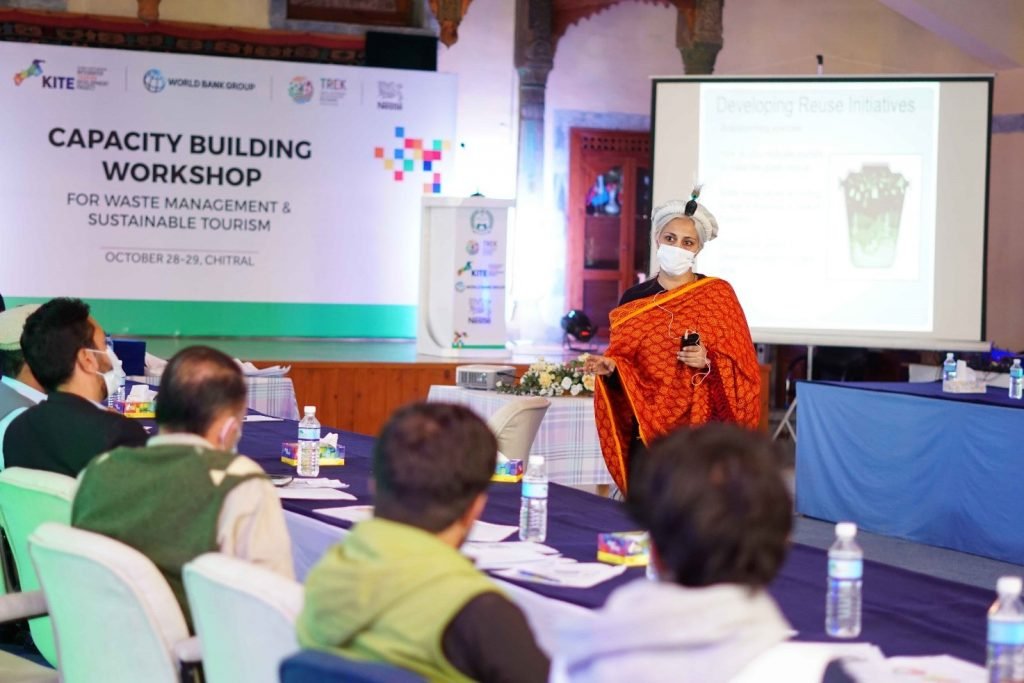
    As part of solid waste management (SWM) initiatives under TREK (Travel Responsibly for Experiencing Ecotourism in Khyber Pakhtunkhwa), a two-day training was conducted in Chitral by Nestlé Pakistan, in partnership with Government of Khyber Pakhtunkhwa and the World Bank.

    TREK was unveiled in December 2020 by Prime Minister Imran Khan, as part of World Bank financed Khyber Pakhtunkhwa Integrated Tourism Development (KITE) project. TREK was also listed as one of federal government’s key achievements of 2020.

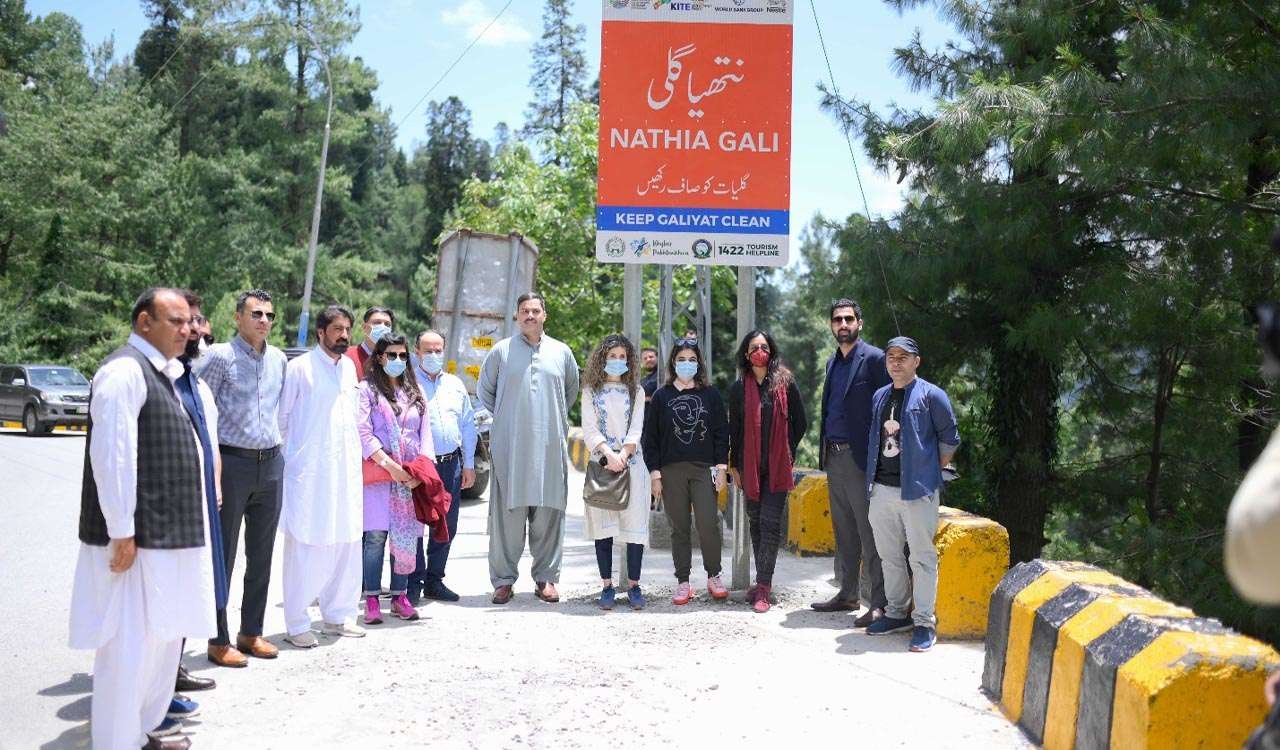
    In June 2021, TREK communication campaign was launched in Nathiagali to promote responsible tourism in the Galiyat region. On the launch, 2,000 reusable bags were handed out to Galiyat Development Authority (GDA) for local tourists and hotel association. Radio and social media campaigns have been launched; furthermore, signboards emphasizing the importance of clean Galiyat were also installed across the region.

    A two-day training titled “TREK for Healthier Kids” was held in collaboration with the Nestlé for Healthier Kids (N4HK) program in August 2021. It concluded with a certificate distribution ceremony for teachers, distribution of 4,000 reusable bags and 2,300 N4HK books to children in Galiyat. N4HK is one of Nestlé’s global Creating Shared Value initiatives that empowers parents, caregivers and educators to foster healthier eating, drinking and lifestyle habits among school age children.

    An extensive two-day training on waste management and sustainable tourism in Swat as part of TREK’s community engagement initiatives. The training comprised of sessions on categorizing waste, importance of recycling, learning to conduct waste audits, basic food safety and importance of WASH compliance among others. The event concluded with souvenir distribution for participants by Ghulam Saeed, Director General Directorate of Tourist Services and Touseef Khalid, Project Director KITE. We have also donated 2,000 reusable bags among communities in Swat.

    Under the TREK initiative, more than 130 public and private sector participants including 20 women have been trained at the three locations of Swat, Galyat and Chitral. The initiative has also engaged the local communities through training and awareness session on nutrition and hygiene for school children of Galyat.

    “We are delighted that community engagement activities such as waste management training and awareness campaigns for tourists are coming to fruition, as part of TREK,” said Tashfeen Haider, Additional Secretary, Tourism Department, KP government, adding that Department of Tourism through KITE project is working on SWM cycle by providing equipment to area development authorities of Galyat, Kaghan, Chitral, Kalam and Kumrat. Moreover, contract for feasibility study and engineering design of sanitary landfill sites have been awarded through the KITE project.
    Kiran Afzal, Senior Private Sector Specialist, of the World Bank shared, “KITE project is now implementing activities for tourist facilitation in Chitral which will be complemented by TREK’s initiatives for SWM.”
    Talking about the initiative, Waqar Ahmad, Head of Corporate Affairs & Sustainability, Nestlé in Pakistan & Afghanistan said, “Our partnership with the government on TREK, will help realise our vision for shaping a waste-free future, by driving new behaviour for a cleaner environment.”

    “At Nestlé, our vision is that none of our packaging, including plastics, ends up in landfill or rivers. To achieve this, we have set ourselves the commitment of ensuring 100% of our packaging is reusable or recyclable by 2025,” he added.

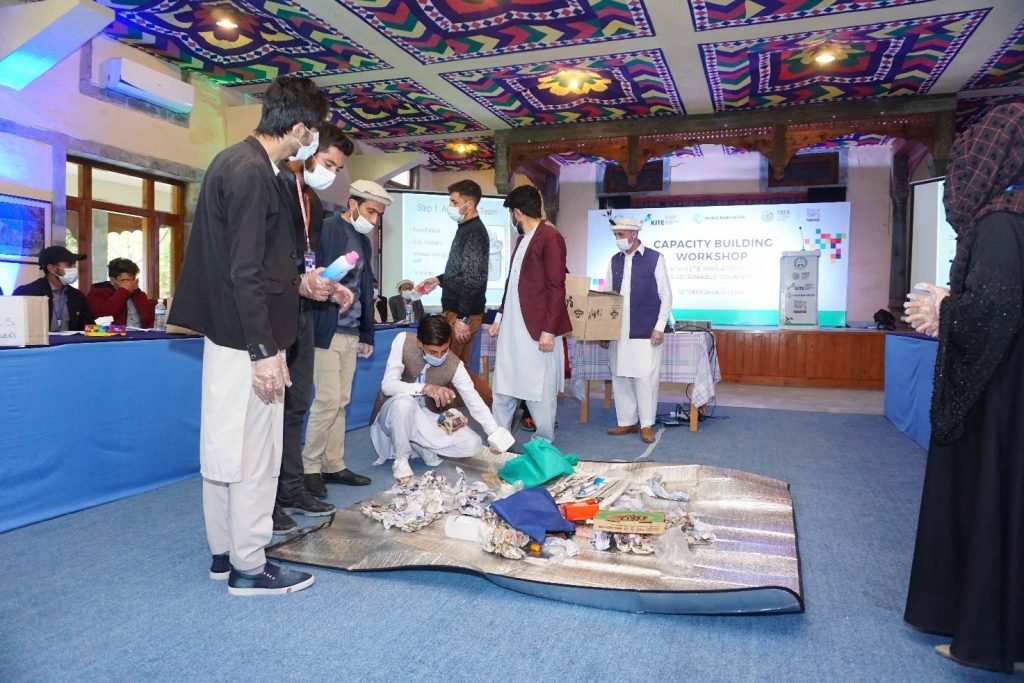
    The two-day SWM training comprised of sessions on categorizing waste, importance of recycling, learning to conduct waste audits, basic food safety and importance of WASH compliance among others. The event concluded with souvenir distribution for participants by Ghulam Saeed, Director General Directorate of Tourist Services, Hassan Abid, Deputy Commissioner Chitral, and Touseef Khalid Project Director KITE.

    Nestlé Pakistan’s commitment to TREK includes 2 pillars: A massive awareness

    campaign focusing on Reduce, Reuse and Recycle and a Community Engagement plan which includes activities that will help in countering the issues of waste, pollution and destruction of wildlife, in line with United Nations Sustainable Development Goals 12, 13, 15 and 17.

  • Making a difference – Nestlè Water Pledge

    Making a difference – Nestlè Water Pledge

    Water is one of the most critical resources on earth. There have been growing concerns about climate change and the impact it has on water resources around the world. Water is life – it is the backbone of our ecosystem, and the current trend of water wastage will have serious effects on our way of life. Nestlé recognises the importance of using water as efficiently as possible. We have been working with our partners to steward water resources for a sustainable future.

    Nestlé has pioneered water stewardship for years, and its Water Business has been at the forefront of water preservation at every stage of its value chain. This year, they want to take a step forward in their efforts towards preserving water through business-specific commitments called the Water Pledge.

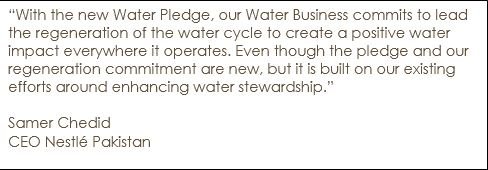
    Nestlé’s Water Business pledges to lead the regeneration of the water cycle to create a positive water impact everywhere it operates by 2025.

    Over the years, we have seen that to tackle the environmental challenges, we have to do more than just solving the issue on our own. Water is a shared resource. Through collaboration and shared efforts, Nestlé stands a better chance to navigate through the challenges through collective action.

    That is why Nestlé formally shaped up and launched their water stewardship efforts under the umbrella of the Caring for Water-Pakistan (C4W-Pakistan) initiative in 2017.

    The Caring for Water – Pakistan initiative targets three focus areas – Factories, Communities, and Agriculture.

    Here are some of Nestlé’s most celebrated projects under each one of the categories:

    • Nestlé Pakistan has collaborated with the Agriculture Department, Government of Punjab, and Pakistan Agricultural Research Council (PARC) to reduce water consumption in the agriculture sector which currently stands at 90% with accompanied wastage of 50%. Through establishing lighthouses across parts of Punjab and Islamabad, Nestlé aims to encourage local farmers to take up drip irrigation. This irrigation method aims to save 40% – 60% water in comparison to conventional flood irrigation. This is a major step towards water preservation in the agricultural sector. 
    • Nestlé’s Smart Soil Sensors Project is another step towards using technology to reduce the wastage of water in the agriculture sector. Nestlé has developed smart soil moisture sensors that read the moisture level of the soil. These readings are stored in the cloud which is then used by farmers to efficiently water to irrigate the soil. This saves about 12%-17% water using precision technology. Through their collaboration with Lahore University of Management Sciences (LUMS) and an Italian organization called Waziup, software has been developed that enables the farmers and researchers to see the soil moisture level remotely on their computer screens.
    • The Alliance for Water Stewardship (AWS) is an international standard, which guides companies and organizations to manage freshwater resources by taking site and catchment initiatives through a stakeholder-inclusive process. Nestlé Pakistan’s Sheikhupura Factory became the first Pakistani site and the first Nestlé site worldwide to be awarded the AWS Certification. And in 2020, all Nestle’s sites were awarded the Alliance for Water Stewardship (AWS) certificate.
    • Nestlé has also installed 6 Safe and Clean Drinking Water Facilities around its operational areas. Nestlé is maintaining these facilities with strict quality control and checks. These water facilities collectively save around 177 tons of water every day.

    The ‘Nestlé Water Pledge’ is an opportunity for the company to reconfirm its position on water stewardship or C4W-Pakistan, to lay out its vision and set an ambition. The launch focuses on the Waters Business itself, but there will be more to come in the future.

    All Nestlé’s initiatives are aligned with the United Nations Development Goals, SDG 6 on Clean Water and Sanitation and SDG 17 on Partnerships for the Goals.

    This article has been sponsored by Nestle Pakistan

  • Responsible Tourism for a Waste-Free Future: TREK communication campaign launched

    Responsible Tourism for a Waste-Free Future: TREK communication campaign launched

    Nestlé in collaboration with KP Tourism Dept, World Bank and GDA launched the TREK communication campaign in Nathiagali to promote responsible tourism. It includes radio & geo-targeted social media awareness campaigns for tourists, installation of information boards.

    Earlier in December 2020, Prime Minister Imran Khan had unveiled the logo for TREK, which is part of the Khyber Pakhtunkhwa Integrated Tourism Development (KITE) project and has been listed amongst the federal government’s key achievements of 2020.

    Responsible Tourism

    The launch event featured tree plantation, an awareness walk and the unveiling of awareness signages installed in various parts of the Galiyat district.

    Highlighting Nestlé’s vision for a waste-free future, Samer Chedid, CEO Nestlé Pakistan said, “At Nestlé, our vision is that none of our packaging, including plastics, ends up in landfill or rivers. To achieve this, we have set ourselves the commitment of ensuring 100% of our packaging is reusable or recyclable by 2025.”

    “We are excited for this partnership on responsible tourism: we will be shaping a waste-free future by driving new behavior that contributes towards a cleaner environment.”

    Meanwhile, Raza Ali Habib Director General, Galiyat Development Authority said, “GDA in collaboration with Nestle, KITE World Bank and Tourism Department is making all out efforts to promote responsible and sustainable tourism in Galiyat under the TREK initiative.”

    “This includes massive fruit tree plantation drive, anti-littering campaign, distribution of reusable cotton bags and a nationwide awareness campaign,” he added.

    Tauseef Khalid, Project Director, KITE said, “TREK is an initiative under the Khyber Pakhtunkhwa Integrated Tourism Development (KITE) project being implemented in partnership with the World Bank Group and Nestlé Pakistan.”

    Tauseef highlighted that under TREK, the government was arranging provision of solid waste management equipment to keep the area waste-free as well as installing information boards.

    “We are training local communities on waste minimization and collection, and facilitating tourist sites by providing restrooms under the Khyber Pakhtunkhwa Integrated Tourism Development program,” he said.

    Kiran Afzal, Senior Private Sector Specialist, of the World Bank Group conveyed that the occasion marks an important phase of TREK’s implementation, and “we expect to see more contributions from the private sector towards responsible tourism.”

    Responsible Tourism

    Nestlé Pakistan’s commitment to TREK includes 2 pillars: A Massive Awareness  Campaign focusing on Reduce, Reuse and Recycle and a Community Engagement plan which includes activities that will help in countering the issues of waste, pollution and destruction of wildlife.

    Participants at the event highlighted the government’s role in promoting tourism, planning better infrastructure for improving accessibility, rescue services and special zones for tourists in the region.

  • Nestlé Pakistan switches to paper straws for the environment

    Nestlé Pakistan switches to paper straws for the environment

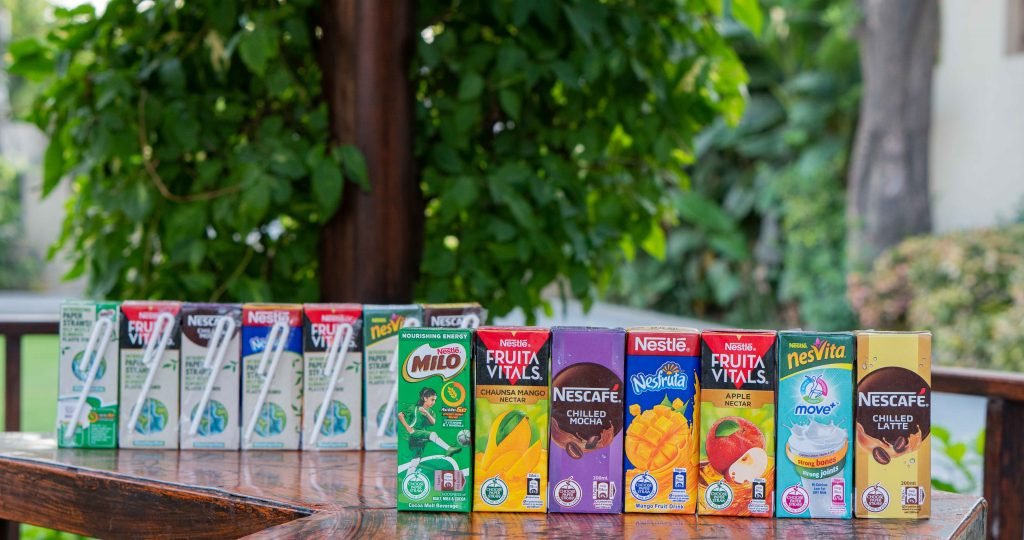
    Nestlé Pakistan has introduced paper straws across its entire ready-to-drink (RTD) product range, making it the first food and beverage company in Pakistan to do so. The initiative will eliminate over 400 million plastic straws, marking a breakthrough in its sustainable packaging transformation journey.

    This is in line with the company’s global pledge to make its packaging 100% recyclable and reusable by 2025. Nestlé Pakistan’s brands – NESVITA, MILO®, FRUITAVITALS, NESFRUTA and NESCAFÉ’s RTD products – are now in the market with paper straws that are made from Forest Stewardship Council (FSC) certified paper.

    All paper straws across RTD products have been sourced responsibly, meet stringent quality requirements and are safe to drink from.

    Highlighting Nestlé’s global sustainable packaging transformation journey, Chedid stressed, “Our vision is that none of our packaging, including plastics, ends up in landfill nor in oceans, lakes and rivers. To achieve this, we have set ourselves the commitment of ensuring 100% of our packaging is reusable and recyclable by 2025, and the switch to paper straws is a major step towards this.”

    Chedid also added that while many people are used to plastic straws, making the switch to paper straws will bring a slightly different consumer experience. “We encourage millions of trusted Nestlé consumers in Pakistan to embrace this change and join us in our journey towards a more sustainable future,” he said.

    Cognizant of the challenges and the importance of plastic packaging, Chedid pointed out, “Plastic packaging plays an important role in safely delivering high-quality food and drinks to consumers and reducing food loss and waste.”

    “We believe that with the right approach, collection and recycling of plastic is possible without causing a detrimental effect on the environment,” he added.

    The entire RTD pack is recyclable after you finish drinking it. All you need to do is push the paper straw into the RTD pack. When you’re done, do these 3 simple steps:

    Step 1 – Flip the sides of the pack up

    Step 2 – Flap the bottom of the pack

    Step 3 – Flatten the pack

    And put it into the nearest paper recycling bin!

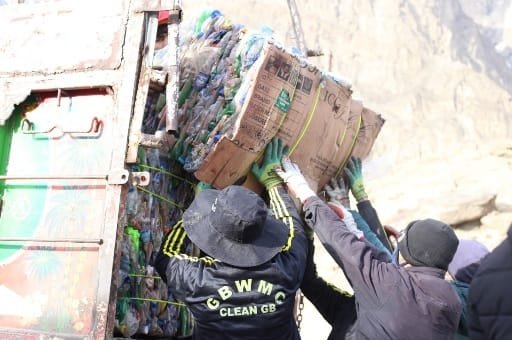
    In 2020, Nestlé Pakistan operationalised the Clean Hunza Project, with the support of District Council Hunza and Gilgit Baltistan Waste Management Company. The project focuses on managing 200 tons of packaging waste in 2021, eventually leading up to 1000 tons by 2025 to make Hunza waste-free.

    Similarly, Nestlé Pakistan also partnered with World Bank and the Government of Khyber Pakhtunkhwa under the TREK initiative to make northern areas waste-free and promote responsible tourism in the region.

    Nestlé Pakistan is also one of the founding members of CoRe (Collect & Recycle), the first ever packaging alliance in Pakistan formed with the mission to eliminate packaging waste by enabling formal collection and recycling, while also raising awareness at a mass level.

    These efforts to reduce the environmental impact of packaging waste by improving its management and recycling are in line with UN Sustainable Development Goals 12 and 17 – Responsible Consumption & Production and Partnership for Goals.

  • Nestlé Pakistan pledges Rs 100 million to support vulnerable communities during COVID-19 pandemic

    To meet the nutritional needs of both affectees and frontline workers during these times, Nestlé Pakistan has committed 100 million rupees in the national response to the COVID-19 pandemic. As part of the pledge, Nestlé Pakistan will give product and cash donations, which will include 4 million servings of milk, iron-fortified dairy products, baby cereals, water and juices.

    Sharing details, CEO Nestlé Pakistan Samer Chedid said, “We will be mobilizing relief to medical facilities (quarantine centres) and food-delivery organisations serving vulnerable families, worth 100 million rupees, in the form of product and cash donations, through national and provincial disaster management authorities and local governments.”

    “We have also joined hands with reputable NGOs in response to their COVID 19 emergency appeals to support deserving people across Pakistan. We have invited all our employees to step forward and donate one day’s salary for supporting people going through hard times. The donation intimations by employees will be matched by Nestlé Pakistan,” Chedid said.

    Chedid also emphasized on the additional safety measures Nestlé was undertaking internally. “We are making sure that we keep our employees healthy and safe, and that they follow the most stringent safety protocols at all our manufacturing and warehouse facilities, as advised by the World Health Organisation.”

    Nestlé Pakistan is also working to ensure that their food and beverage products are available for consumers across Pakistan, in line with the strategic roadmap laid out by Prime Minister Imran Khan and respective provincial leaderships.