Tag: Netherlands

  • Milk prices in Karachi higher than cities in France, Netherlands, Australia

    Milk prices in Karachi higher than cities in France, Netherlands, Australia

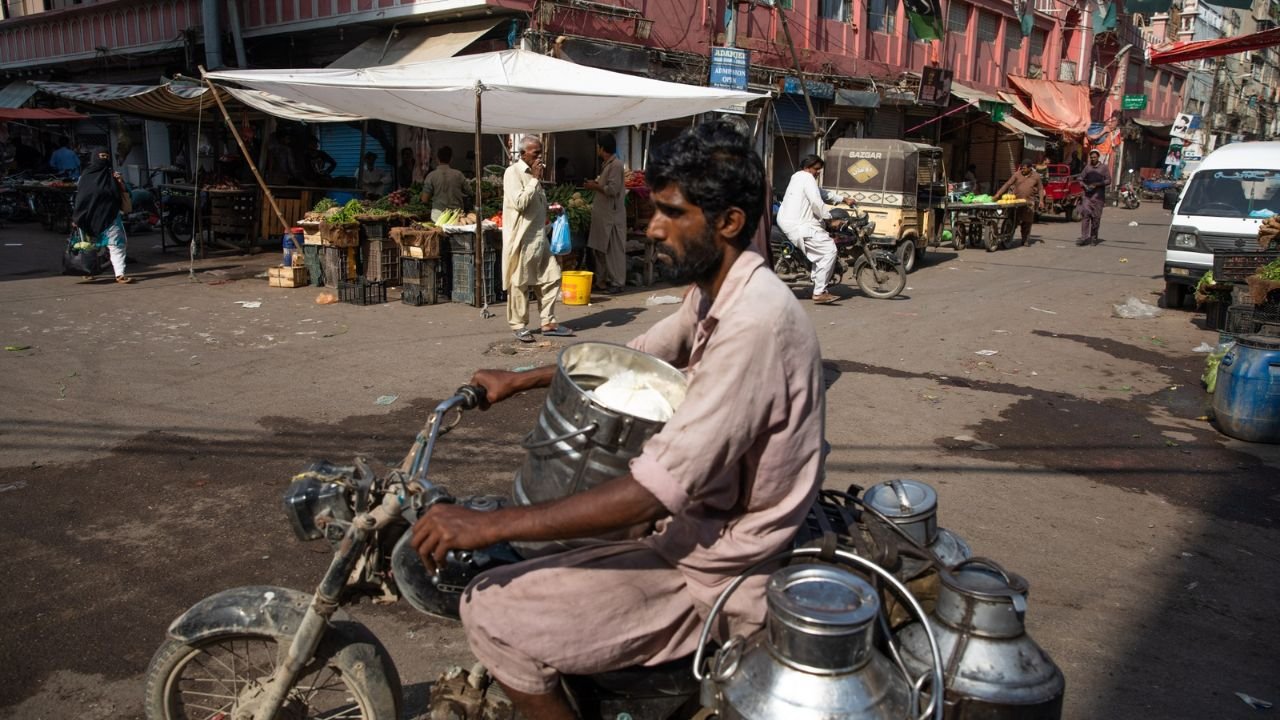
    Milk has become more expensive in Pakistan as compared to many countries of the world, Bloomberg has reported.

    According to the report, the price of boxed milk in Pakistan is 370 rupees per liter, while the same milk is available in Paris, the capital of France, for 342 rupees per liter. The price of milk in the Netherlands has also been declared cheaper than Pakistan.

    The report states that milk is available at Rs 358 per litre in Amsterdam and in Australia for Rs 300 per litre, while the price of canned milk in Pakistan is Rs.370.

    “Ultra-high temperature, or UHT, milk now costs 370 rupees ($1.33) a litre in supermarkets in Karachi. That compares with $1.29 in Amsterdam, $1.23 in Paris, and $1.08 in Melbourne, according to data collected by Bloomberg.” the report highlights.

    Bloomberg says that more than 60 percent of children in Pakistan are suffering from anaemia and increasing the price of milk is akin to putting the lives of sick children at stake.

  • 10 easiest European citizenships

    10 easiest European citizenships

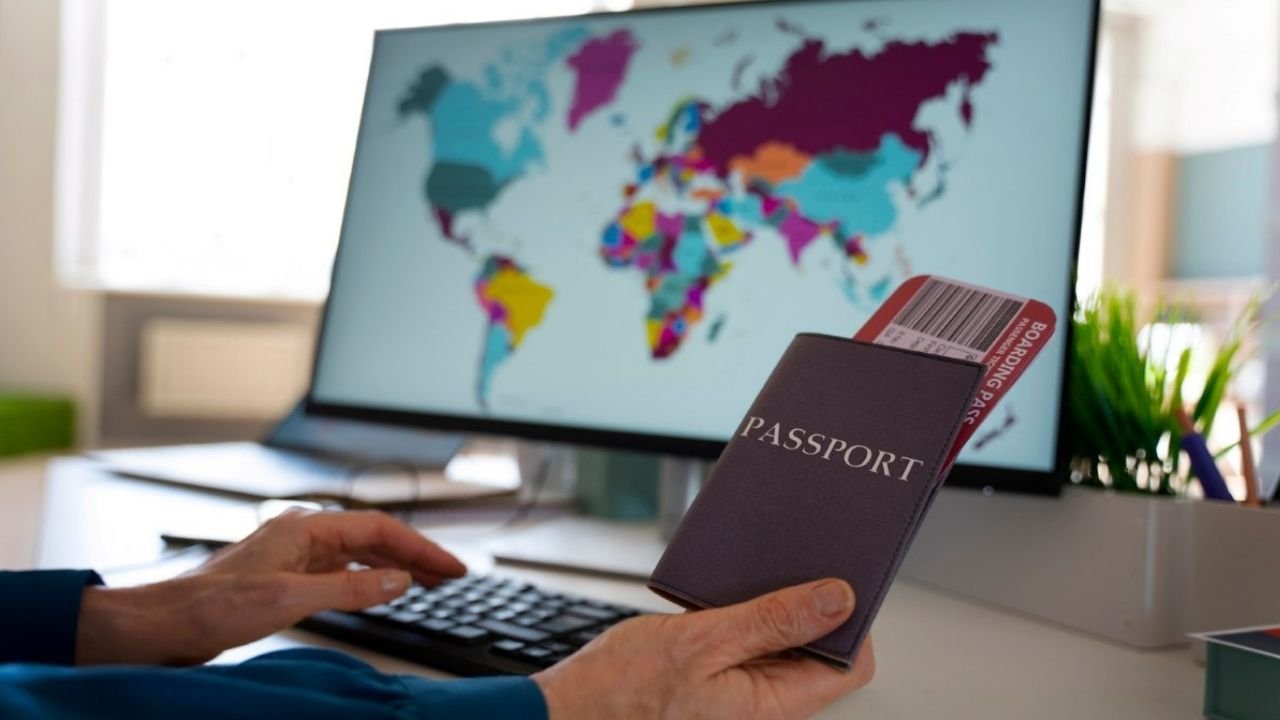
    Many people from developing countries aspire to acquire citizenship in European states. Some countries offer relatively straightforward paths to citizenship, while others present significant challenges. Sweden stands out as the easiest country in Europe for obtaining citizenship, whereas Estonia and Latvia are the most challenging.

    A recent study by CIS analysed Eurostat immigration data from 2009 to 2021 to identify which countries have the highest and lowest rates of non-EU residents acquiring citizenship.

    The analysis revealed that the nine most challenging countries to obtain citizenship are located in Central Europe. Estonia ranks as the most difficult country for non-EU citizens to naturalise, with the lowest average acquisition rate—approximately one in 200 residents. Additionally, the acquisition rate for men in Estonia is lower at 0.58 percent compared to 0.69 percent for women.

    Latvia, the Czech Republic, and Lithuania also have acquisition rates of less than 1 percent for non-Europeans, contrasting sharply with the average of 3.56 percent across European countries. Austria, Liechtenstein, Slovakia, Slovenia, and Germany follow, granting citizenship to about one in fifty non-EU residents. Denmark, outside Central Europe, presents the next highest hurdle with an acquisition rate of 2 percent.

    Over the past decade, six of the ten most challenging countries have seen an increase in citizenship grants year-on-year, particularly Denmark, which experienced a notable rise. Germany’s acquisition rate remained stable, while Latvia, Lithuania, and Slovenia saw declines.

    Many countries implement various programs aimed at attracting foreigners, including opportunities for investment, as well as citizenship and tax benefits.

    Individuals seeking migration often favour Golden Visa and Golden Passport routes, terms that are sometimes used interchangeably despite minor distinctions.

    10 Easiest European Countries to Get Citizenship

    According to the report, Sweden ranks as the easiest country, with nearly one in ten (9.3 Perce) non-EU residents obtaining citizenship—more than double the EU average.

    Sweden boasts the highest acceptance rates for both genders, with women experiencing a slightly higher acceptance rate of 10.02 percent compared to 8.66 percent for men.

    Norway, the Netherlands, Portugal, and Iceland follow as the second to fifth easiest countries to acquire citizenship, with an acquisition rate of one in 25 (4 percent).

    Data shows that northern European countries generally have the highest citizenship acquisition rates, with Sweden, Norway, Iceland, and Finland leading the pack.

    In southern Europe, Portugal emerges as the easiest, while the Netherlands, Ireland, and the United Kingdom are the most accessible Western European states for citizenship. The UK ranks eighth, with nearly three in 50 (3.2 percent) residents granted citizenship.

    Poland and Croatia are the easiest countries in Central Europe for changing nationality, with acquisition rates of 4 percent and 3.9 percent respectively. Northern and Western Europe present the most accessible regions for nationality changes, with an acquisition rate of 5.9 percent compared to 1.9 percent in Central Europe and 3.6 percent in the South.

  • One dead after falling into jet engine at Schiphol

    A person died Wednesday after falling into the spinning turbine blades of a departing passenger jet at Amsterdam’s Schiphol airport, officials said.

    The death occurred on the apron outside the busy hub’s terminal as a KLM flight was ready to depart for Billund in Denmark.

    “An… incident took place at Schiphol today during which a person ended up in a running aircraft engine,” Dutch flagship carrier KLM said in a statement.

    “Sadly the person has died,” KLM said, without disclosing the victim’s identity.

    Dutch border police, who are responsible for security at the Netherlands’ largest airport, said passengers were removed from the plane and an investigation was opened.

    The plane involved is a short-haul Embraer jet, used by KLM’s Cityhopper service which operates flights to other nearby destinations like London, Dutch news reports said.

    A picture posted on the NOS public broadcaster showed the plane surrounded by fire trucks and ambulances next to the departure terminals.

    Safety and security measures are strict at Schiphol and accidents are rare at the busy airport, which handled around 5.5 million passengers last month alone, according to airport figures.

  • Netherlands fines Uber over data protection

    Netherlands fines Uber over data protection

    Dutch regulators said Wednesday they are imposing a 10 million euro ($10.8 million) fine on ride-hailing app Uber for lack of transparency in how it treats the personal data of its drivers.

    The Dutch Data Protection Authority said it imposed the fine after a group of 170 French drivers complained to a French human rights organisation.

    The complaint was handled in the Netherlands because it is where Uber has it European headquarters.

    “The DPA found that Uber had made it unnecessarily complicated for drivers to submit requests to view or receive copies of their personal data,” the authority said in a statement.

    DPA said the process for drivers to request access to their data “was located deep within the app and spread across various menus.”

    “In addition, they did not specify in their privacy terms and conditions how long Uber retains its drivers’ personal data or which specific security measures it takes when sending this information to entities in countries outside the European Economic Area,” it said.

    Uber has taken steps to improve the situation and has appealed the decision, the statement said.

  • Israel weakly counters South Africa’s strong stance in genocide case: What’s next?

    Israel weakly counters South Africa’s strong stance in genocide case: What’s next?

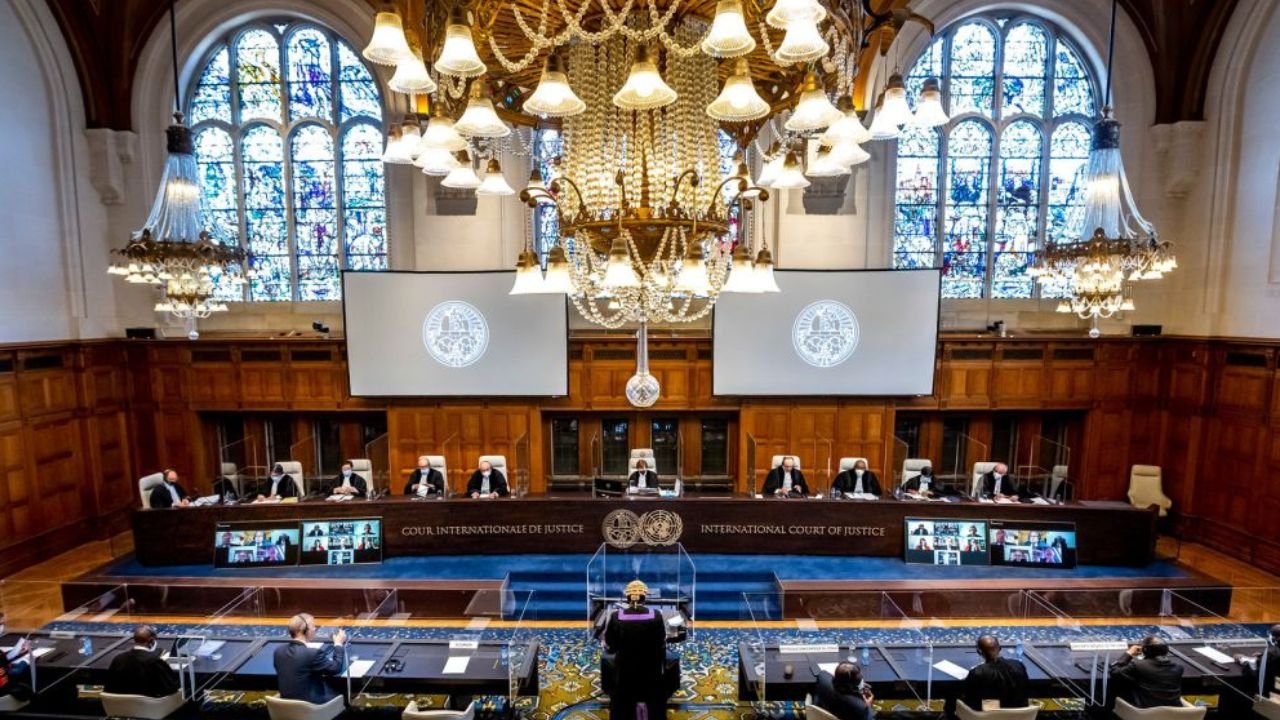
    On January 11-12, the International Court of Justice (ICJ) heard the genocide case filed against Israel by South Africa.

    On Day 1, South Africa’s legal team put forward its case, pointing at the atrocities being committed against Palestinians in Gaza by Israel.

    Israel is accused of committing genocidal acts during their military operations which included mass killings of Palestinians, bodily and mental harm, forced displacement and food blockade, destruction of the healthcare system, and preventing Palestinian births.

    On Day 2, Israel defended itself against the charges, arguing that South Africa “ignored” the incident of October 7 and that Israel had the right to defend itself, adding that the court should put provisional measures against South Africa, accusing it of having ties with Hamas. Israel did not submit any evidence to support its claims that Hamas was the cause of the attacks in Gaza whereas South Africa submitted video evidence of Israeli atrocities in Gaza.

    They also blamed Hamas for the high civilian death toll in Gaza, claiming that Israel did not bomb hospitals and that they enabled humanitarian aid.

    What’s next?

    Al Jazeera explains that even though South Africa’s case against Israel can take years, an “interim measure” intended to halt Israel’s attack in Gaza can be taken “within weeks”.

    If the interim measure is implemented, Israel will be legally obligated to put an end to its offences. And while the “court’s rulings are final”, it has no authority to impose them, nonetheless.

    On the other hand, if the court does not implement an interim measure, “it could still decide it has jurisdiction and proceed with the case”, adds Al Jazeera’s explainer.

  • All you need to know about South Africa’s genocide case against Israel at ICJ

    All you need to know about South Africa’s genocide case against Israel at ICJ

    A case in the International Court of Justice (ICJ) has been put in motion by South Africa in The Hague, Netherlands, asking the court to look into the genocide being committed by Israel against Palestinians.

    The imposition of charges do not only pertain to the crimes perpetrated during the last few months since October 7 that have killed more than 23,000 people till now, but also the 75-year long apartheid, 56-year hostile occupation, and 16-year blockade on Gaza.

    The hearing will take place on January 11th and 12th in which a 15-judge panel will hear and deliberate the case.

    South Africa filed an 84-page suit with the court on December 29, quoting proofs and references of atrocities being committed by Israel in Gaza, asking the Court – a United Nations body established for settling interstate discords – to pronounce Israeli breaches of responsibilities under international law since October 7.

    “No armed attack on a State’s territory no matter how serious — even an attack involving atrocity crimes — can, however, provide any possible justification for, or defence to, breaches of the 1948 Convention on the Prevention and Punishment of the Crime of Genocide (‘Genocide Convention’ or ‘Convention’), whether as a matter of law or morality.”, read an excerpt from the suit.

    While the rulings are intended to be “binding”, a number of countries do not recognise its results. To give an example, the previous ICJ rulings of Russia invasion of Ukraine, and China’s claims in the South China Sea, were disregarded by China and Russia, consequently affecting ICJ’s credibility.

    Additionally, an NGO called Protect Palestine, an Action Guide, writes that according to experts, while South Africa “will make a strong case, it still may not be enough to rule against Israel. Israel will likely continue claims that “Hamas is embedded with civilians”, and that they “try to warn civilians”.

    The votes for and against, however, can pave the way to additional challenges for Israel and further affect the legal global standing of the country.

    Who is supporting South Africa’s ICJ case against Israel?

    The 57-member bloc known as the Organization of Islamic Countries (OIC) which includes Saudi Arabia, Iran, Pakistan and Morocco; Malaysia; Turkey; Jordan; Bolivia; The Maldives; and Namibia.

    A number of advocacy groups and civil society groups across the world including Terreiro Pindorama in Brazil, Asociación Nacional de Amistad Italia-Cuba in Italy, and Collectif Judeo Arabe et Citoyen pour la Palestine in France.

    Previously, Bolivia had filed a request to International Criminal Court (ICC) Prosecutor Karim Khan alongside South Africa, Bangladesh, Comoros, and Djibouti to probe into the matter in Palestine.

    Read more: Can South Africa’s ICJ case against Israel stop war in Gaza?

  • US-led coalition to patrol Red Sea against Houthi attacks

    US-led coalition to patrol Red Sea against Houthi attacks

    The United States on Monday announced a 10-nation coalition to quell Houthi missile and drone attacks on ships transiting the Red Sea, with Britain, France, Bahrain and Italy among countries joining the “multinational security initiative.”

    “Countries that seek to uphold the foundational principle of freedom of navigation must come together to tackle the challenge posed by this non-state actor,” US Defense Secretary Lloyd Austin said in a statement.

    Iran-backed Houthi rebels have escalated attacks on tankers, cargo ships and other vessels in the Red Sea, imperiling a transit route that carries up to 12 percent of global trade.

    The security coalition, Austin said, will operate “with the goal of ensuring freedom of navigation for all countries and bolstering regional security and prosperity.”

    It includes the United States, United Kingdom, Bahrain, Canada, France, Italy, Netherlands, Norway, Seychelles and Spain, Austin said.

    Yemen’s Iran-backed Houthi rebels said earlier they had attacked two “Israeli-linked” vessels in the Red Sea in solidarity with Gaza, as more companies halt transit through the troubled but vital waterway.

    The attacks on the Norwegian-owned Swan Atlantic and another ship identified by the Houthis as the MSC Clara are the latest in a flurry of maritime incidents that are disrupting global trade in an attempt to pressure Israel over its war against Hamas militants.

    In a statement, the Yemeni rebels said they had carried out a “military operation against two ships linked to the Zionist entity” using naval drones.

    They vowed to “continue to prevent all ships heading to Israeli ports… from navigating in the Arab and Red Seas” until more food and medicine is allowed into Gaza.

    But the Swan Atlantic’s owner, Norway’s Inventor Chemical Tankers, said in a statement the ship was carrying biofuel feedstock from France to Reunion Island.

    It said the vessel has “no Israeli link” and was managed by a Singaporean firm, adding that the Indian crew were unharmed and the vessel sustained limited damage.

    British oil giant BP became the latest to suspend transit through the Red Sea on Monday, while Taiwan shipping firm Evergreen said it was suspending its Israeli cargo shipments with immediate effect.

    Frontline, one of the world’s largest tanker companies, also said it was rerouting ships and would “only allow new business” that could be routed via South Africa’s Cape of Good Hope.

    That route is far longer and uses more fuel.

    The Red Sea attacks have forced insurance companies to significantly increase premiums on ships, making it uneconomical for some to transit through the Suez Canal.

    Italian-Swiss giant Mediterranean Shipping Company, France’s CMA CGM, Germany’s Hapag-Lloyd, Belgium’s Euronav and Denmark’s A.P Moller-Maersk — the latter accounting for 15 percent of global container freight — have all stopped using the Red Sea until further notice.

    The attacks have become “a maritime security crisis” with “commercial and economic implications in the region and beyond,” Torbjorn Soltvedt of analysis firm Verisk Maplecroft told AFP.

    Monday’s attack took place as the Pentagon chief visited Israel after a stop in Bahrain, home base of the US Navy’s Fifth Fleet.

    “In the Red Sea, we’re leading a multinational maritime taskforce to uphold the bedrock principle of freedom of navigation. Iran’s support for Houthi attacks on commercial vessels must stop,” Austin said at a news conference.

    On Saturday, a US destroyer shot down 14 drones in the Red Sea launched from rebel-controlled areas of Yemen, the US military said.
    Britain said one of its destroyers had also brought down a suspected attack drone in the area.

    Rebel spokesman Mohammed Abdul Salam said neutral Oman had launched mediation efforts to safeguard shipping using the waterway.

    “Under the sponsorship of our brothers in the Sultanate of Oman, communication and discussion continue with a number of international parties regarding operations in the Red Sea and Arabian Sea,” he said on X, formerly Twitter.

    The Gaza war broke out when its rulers Hamas launched an unprecedented attack on Israel on October 7, killing around 1,140 people and kidnapping some 250, according to an AFP tally based on official Israeli figures.

    Gaza’s health ministry says Israel’s military response has killed more than 19,450 people, mostly women and children.
  • Transgender woman to compete in Miss Universe after winning Miss Netherlands

    Transgender woman to compete in Miss Universe after winning Miss Netherlands

    After being crowned Miss Netherlands, Rikkie Valerie Kollé will represent the country at the Miss Universe pageant.

    The 22-year-old will be the second openly transgender woman to participate in the Miss Universe pageant.
    Kollé took to Instagram to express her excitement and share her story.

    “Yes I’m trans and I want to share my story but I’m also Rikkie and that’s what matters to me. I did this on my own strength and enjoyed every moment,” she wrote.

    Kollé said she wants to be an example for others and is excited for the next adventure.

  • Lionel Messi determined to win football’s greatest prize as Argentina reaches the World Cup final

    Lionel Messi determined to win football’s greatest prize as Argentina reaches the World Cup final

    Lionel Messi’s lifelong dream of leading Argentina to World Cup will remain alive until the last day of Qatar 2022, as the South American powerhouse outclassed a weary-looking Croatia in a 3-0 victory in Tuesday’s semifinal.

    Argentina has made its eighth appearance in a World Cup semifinal (defeating the USA in 1930, Belgium in 1986, Italy in 1990, and the Netherlands in 2014). It has additionally made the final six times. The last time Argentina won the World Cup was in 1986.

    According to CNN, Argentina and Croatia both played conservatively at the beginning of the game in an effort to avoid making a mistake. But after a half-hour, Argentina took charge and never looked back.

    When Julián Álvarez and Croatian goalkeeper Dominik Livaković faced off in the 32nd minute, Livaković knocked Álvarez down, earning a penalty kick. Then Lionel Messi, a star for Argentina, took the initiative and did what he seemingly usually does. He struck the ball high and to the right with calm and composure, giving his team a 1-0 lead.

    Álvarez had not finished. He led a counterattack in the 39th minute and dribbled all the way from midfield, racing through three Croatian defenders before lofting the ball past Livakovi to put Argentina ahead 2-0 at the break.

    In goal, Livaković excelled during the competition. However, a relentless Argentina onslaught and a few defensive mistakes by Croatia proved to be too much.

    Against Croatia, Messi and Álvarez had one more brilliant moment as a team. Messi displayed incredible ball control in the 69th minute against Croatian goalkeeper Joko Gvardiol on the right side of the net. Then Messi connected with Álvarez, who scored to make it 3-0. Only two of Croatia’s twelve shots on goal were successful.

    Only one of their previous 41 international games had Argentina lost, coming into this encounter (28 wins, 12 draws). Croatia, who finished second in the 2018 tournament, had only dropped one of their previous 12 World Cup games.

    Messi moved slightly ahead of Kylian Mbappé of France (five goals and two assists) for the lead in the Golden Boot competition with his fifth goal of the tournament (and third assist). In the championship game, Messi plans to smash another record. In terms of overall FIFA appearances, he now has 25 World Cup games under his belt and is tied with Lothar Matthäus.

    On Sunday, Argentina will take on the winner of the semifinal match between France and Morocco on Wednesday. The World Cup competition for Croatia is still ongoing. It will compete against the loser of tomorrow’s semifinal in the third-place game on Saturday.

  • PAK vs NED: Babar Azam breaks world record

    PAK vs NED: Babar Azam breaks world record

    Pakistan cricket team all-format captain Babar Azam has made another record. In the first One-Day International (ODI) against the Netherlands on Tuesday, Babar Azam broke South Africa’s great Hashim Amla’s record for the most runs in ODIs after 88 innings.

    Though he managed to score only 74 runs during Tuesday’s match, they were enough to shatter record books.

    In that innings, he crossed the 4,500-run mark in the ODIs and broke Amla’s record. Babar now has 4,516 runs to his name at an average of 59.42 in 88 innings. On the contrary, Amla had scored 4,473 runs after batting in the exact number of innings.

    Pakistan will play the second ODI on August 18 in Rotterdam, Netherlands.

    Earlier this month, the International Cricket Council (ICC) released the T20I rankings in which Azam was at the top of the rankings with 818 points.