
Tag: network

  • ‘Ensure uninterrupted Internet access’; Sindh High Court orders on Jibran Nasir’s petition

    ‘Ensure uninterrupted Internet access’; Sindh High Court orders on Jibran Nasir’s petition

    The Sindh High Court (SHC) has issued a directive on Wednesday, instructing the government and the Pakistan Telecommunications Authority (PTA) to ensure uninterrupted internet access until February 8, the scheduled date for the general elections in the country.

    The order came from a two-member bench led by SHC Chief Justice Aqeel Ahmed Abbasi, following a petition filed by lawyer and independent candidate Jibran Nasir. The petition addressed the recent “unconstitutional” internet outages experienced across the country in the past month.

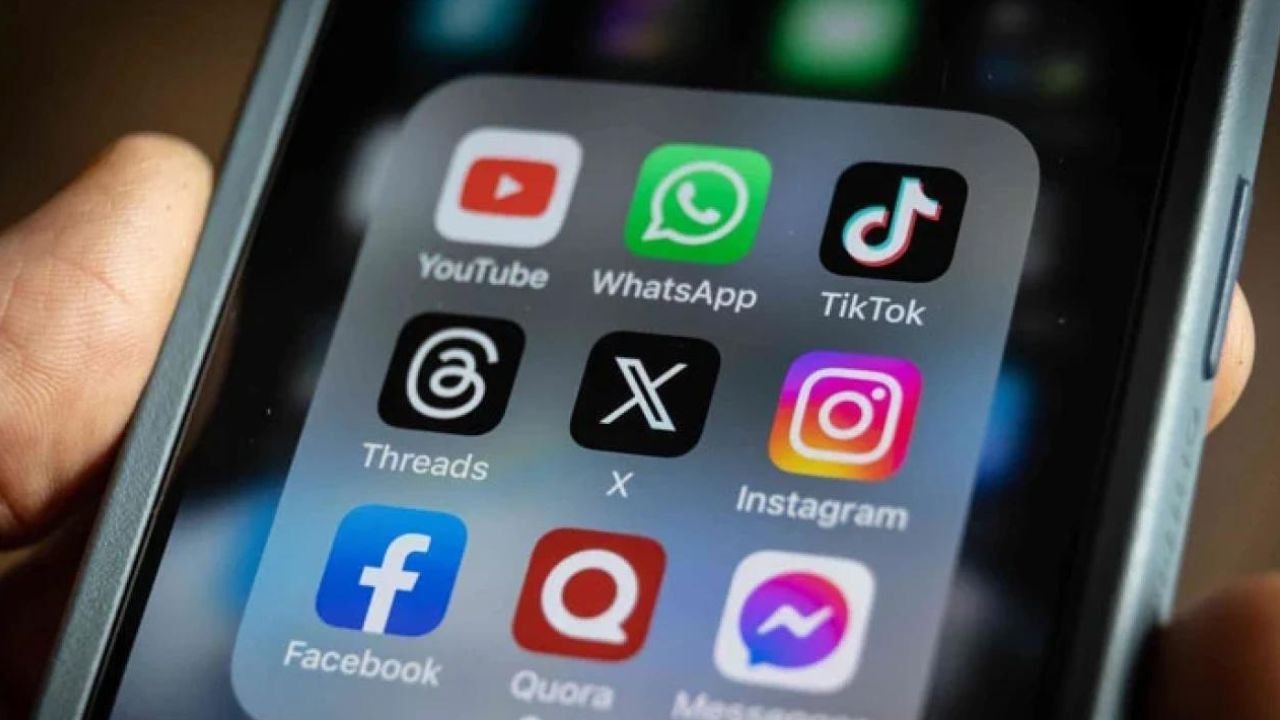
    Jibran took to X (former Twitter) and said, “SHC has directed PTA and Govt to ensure smooth uninterrupted access to Internet till Election Day 8th Feb to ensure no further pre poll rigging happens and any rigging attempts on Election Day can also be reported through social media.”

    “This is not just stopping the PTI from contesting free and fair elections — which is pre-poll rigging — but is also hindering the way of independent candidates like me,” he stated, highlighting that the internet and social media were efficient and cost-effective platforms to reach out to voters.

    Notably, three nationwide disruptions occurred on December 17, January 7, and January 20, coinciding with virtual events organized by the Pakistan Tehreek-e-Insaf (PTI) on social media platforms. The PTI had recently approached the Supreme Court, urging it to take notice of the suspension of internet services and the blocking of social media websites.

    During a press conference earlier in the week, caretaker Information Minister Murtaza Solangi attributed the outages to “technical” issues and system installations. He also stated that there was “no guarantee” such incidents wouldn’t occur in the future.

    In Nasir’s petition, the PTA, the federal government, and the Ministry of Information Technology and Telecommunications were named as respondents. Nasir argued that the act of shutting down mobile internet and broadband services should be declared as “unconstitutional, illegal, disproportionate, unreasonable, and without lawful authority.”

    The plea further sought the immediate restoration of access to social media platforms and the suspension of any directives restricting access to social media until the conclusion of the general elections.

    In response to the petition, the SHC issued notices to the respondents and directed authorities to ensure uninterrupted internet access until the general elections on February 8. The hearing has been adjourned until January 29.

    Read more: PTA warns of possible internet disruption in next 90 days
  • PTA warns of possible internet disruption in next 90 days

    PTA warns of possible internet disruption in next 90 days

    Pakistani internet users experienced disrupted internet once again on January 20 — previously disrupted on December 17 and January 7. The Pakistan Telecommunication Authority (PTA) claimed that the internet disruption was caused by technical reasons — system upgrades.

    Caretaker Information Minister Murtaza Solangi has on Tuesday reiterated the claims of technical issues while also warning of the possibility of further hiccups.

    These frequent and dubiously timed blackouts have brought PTA under public scrutiny.

    Samaa news writes that “Pakistan’s tech-savvy populace expressed palpable outrage at the apparent lack of transparency and the extended timeframe for resolution”.

  • Pakistan’s big cities likely to get 5G coverage in 2023

    Pakistan’s big cities likely to get 5G coverage in 2023

    In 2023, Pakistan intends to launch 5G service in three of its major cities.

    The government has predicted that by 2025, 4 per cent of Pakistan’s internet users will be able to use 5G technology, while 65 per cent of the connections will be enabled on 4G technology, according to an official document of the Ministry of Information and Telecommunication (MOITT), a copy of which is available with WealthPK.

    According to The Nation, the Global System of Mobile Communications (GSMA) predicted that by the end of 2022, more than 50 per cent of consumers in Pakistan would have a 4G connection. Although accurate, these predictions are still three years behind the trend of the global average.

    Although Pakistan’s percentage of 4G connections is substantially lower than that of the rest of the area when compared to the global average, it is predicted to increase more quickly. The adoption of 5G is expected to increase starting in 2023, although it will still only represent a relatively small part of connections in the years that follow.

    Although mobile broadband in Pakistan is constantly expanding, there is still much space for improvement. Mobile penetration and subscription rates are rising steadily. Total mobile and mobile broadband (MBB) customers was at 195 million as of August 2022 and 123 million as of that same month.

    The penetration of mobile and MBB has reached 84 per cent and 51 per cent, respectively. Over the previous few years, MBB users have become a larger percentage of all mobile subscribers.

  • PTA temporarily unblocks non-compliant smartphones

    PTA temporarily unblocks non-compliant smartphones

    A number of Pakistani users have regained cellular connectivity on smartphones that are not PTA compliant. This led many customers and sellers to believe that the PTA had unblocked all non-PTA-approved phones.

    Unfortunately, all of the reports claiming that the PTA has unblocked non-tax compliant phones are false as the majority of imported phones with unpaid taxes, are still blocked by the Pakistan Telecommunication Authority (PTA) and cannot work with any cellular networks in the country.

    They can, however, continue to use Wi-Fi connections like before. Some people with unapproved phones had their phones unblocked at random in recent weeks, allowing them to reconnect to cellular networks.

    The telecommunications authority has made clear that it has unblocked an undefined number of non-approved phones solely to motivate people to pay taxes and have their phones properly unblocked.

    According to PTA spokesperson Khurram Ali Mehran, this was just a persuasive drill to get people to authenticate their phones and pay taxes, no matter how expensive they are.

    He stated that the PTA chose to unblock the phones at random and that they will all be blocked again within two months.

  • Number of 3G, 4G users in Pakistan increases to 113.89 million

    Number of 3G, 4G users in Pakistan increases to 113.89 million

    The latest data from Pakistan Telecommunication Authority (PTA) reveals that the number of 3G and 4G users grew by 1.14 million from 112.75 million in April 2022 to 113.89 million in May 2022.

    Pakistan’s cellular subscriber base grew by 0.25 million to 193 million by the end of May 2022, up from 192.75 million at the end of April, according to Brecorder.

    By the end of May, cellular mobile teledensity had risen from 87.6 per cent to 87.67 per cent. By the end of May, the total teledensity had risen to 88.81 per cent, up from 88.74 per cent in April.

    The monthly penetration of Next Generation Mobile Services (NGMS) at the end of April had risen to 51.73 per cent, up from 51.24 per cent.

    Network providers

    The total number of 3G users on Jazz fell from 6.222 million at the end of April to 6.068 million at the end of May, a reduction of 0.154 million. By the end of May, the number of Jazz 4G users had risen from 36.567 million to 37.168 million.

    Zong 3G subscribers fell from 3.357 million at the end of April to 3.272 million at the end of May, while 4G users grew from 27.952 million at the end of April to 28.317 million at the end of May.

    Telenor 3G subscribers fell from 3.696 million at the end of April to 3.613 million at the end of May, whereas Telenor 4G users enhanced from 21.216 million at the end of April to 21.494 million at the end of May.

    By the end of May, there were 3.576 million Ufone 3G users, up from 3.673 million at the end of April. Ufone’s 4G users increased from 8.761 million at the end of April to 9.052 million at the end of May, a 0.291 million increase over the previous month.

  • Pakistan is finalising policy guidelines to launch 5G

    Pakistan is finalising policy guidelines to launch 5G

    The government intends to introduce 5G across the country, despite the fact that widespread 4G coverage is viewed as a major requirement before its launch. Also, 5G services can be offered in locations where 4G services are already available.

    Although all telcos in Pakistan have switched to 4G or LTE networks, a few companies are still unable to provide stable connectivity in a number of locations. Also, network providers frequently fail to deliver an acceptable, 4G standard connection speed despite hefty mobile data charges.

    To meet license requirements for the 5G network, cellular operators are forced to extend 4G coverage.

    According to Brecorder, the government of Pakistan is intending to introduce 5G in the country, according to official documents, and the Ministry of Information Technology and Telecommunication (MOIT&T) is in the phase of finalising policies for 5G in consultation with the Pakistan Telecommunication Authority (PTA) and relevant authorities.

    The former administration intended to offer 5G services in the country in the first quarter of 2023. Unfortunately, no consulting assistance has been utilised for this purpose thus far. The reports also revealed that the PTA spent no expenses as no consultancy services had been obtained for its deployment.

    The MOIT&T has analysed seven bands for the implementation of 5G services. As per official documents, the government is currently reviewing the possibilities available for the prompt deployment of 5G services in the ccountry.

    The following bands are being considered for 5G service adoption as low, mid and high bands:

    700 MHz; 2.3 GHz; 2.6 GHz; 3.5 GHz; MiIIimeter wavebands; C-Band (3.6-4.2) GHz; and Unlicensed Backhaul Frequency bands (P2P & P2MP).

    In light of these bands, the ministry has requested that the Frequency Allocation Board (FAB) share the present status and availability of all 5G spectrum in the above-mentioned frequency bands.

    Network providers are actively extending their infrastructures. Pakistan presently has 90 per cent teledensity and 89 per cent mobile penetration. The total number of cellphone consumers is 193.4 million. These figures are steadily rising. According to license terms, all CMOs are working to expand 4G coverage nationally.

    Approximately 60 per cent of the populace has access to 4G coverage. New rollout criteria have been imposed on operator licenses in order to accelerate 4G implementation in Pakistan.

    Furthermore, population-based rollout obligations are being implemented in order to give 4G coverage to the greatest number of Pakistanis.

  • How 5G will affect you

    How 5G will affect you

    Qualcomm, an American multinational telecommunication company makes the 5G chips and modems that every 5G phone in the US will rely on. However, Qualcomm isn’t the only major 5G player, of course — Huawei, Nokia and Ericsson are all leaders too. Nevertheless, Qualcomm’s investments in 5G research and development mean that it has a strong hand in getting more business. 

    Here how 5G wil affect our lives.

    Every high-end phone could be 5G in 2020

    In a confident statement by Qualcomm, “all premium phones will support 5G in 2020 such as Galaxy Note 10 Plus 5G, LG V50, Oneplus 7 pro 5G. But there’s a little nuance here too. 4G only options are still valuable during the 5G transition because they come with a lower price tag. 

    5G laptops will appear in 2020

    Lenovo has already announced that it will introduce 5G connected PCs in early 2020. We may not see those laptops hit the market for a while, but you’d better believe that some laptop-makers will jump at the chance to be the first to bring 5G to computing — just as you see happening right now with phones, but Qualcomm bets that the hunger for 5G laptops will grow over time. 

    5G will replace wifi routers at home and office 

    5G hubs that work like Wi-Fi for your home are already here. One example of fixed 5G is the HTC 5G Hub, a device that plugs into your router to deliver home broadband. 

    Moreover, they’re designed to deliver the same dramatically high-speed internet, say between 500 (Mbps) to over one (GB) per second. 

    Self-driving cars that talk to each other 

    Qualcomm showed a self-driving car fitted with 5G sensors runs the same route as a car without 5G. The 5G powered sensors take in data from other connected vehicles, understanding when a car door is opening at the curb, if there’s an obstruction in the road and when pedestrians are finished crossing the streets. At the end of the demo, the 5G-connected car is better informed of obstructions and arrives at the destination much faster. 

    But the reality could be decades away. Before 5G autonomous cars become common, self-driving vehicles will be be the norm.