Tag: New Delhi

  • Pakistani and Indian officials participated in ‘off the record’ sessions

    Pakistani and Indian officials participated in ‘off the record’ sessions

    Senior serving and retired Pakistani and Indian officials participated in a conference organised recently by the International Institute for Strategic Studies (IIS) in Oman, reports Rezaul Hasan Laskar for Hindustan Times.

    The 15th edition of the Southern Asia Security Conference saw officials from both sides participating in “off the record” sessions that were held behind closed doors.

    The conference, which was held in Muscat from September 17 to September 18, saw the participation of an Indian delegation that included the external affairs ministry’s pointperson for Pakistan, Afghanistan and Iran, joint secretary J P Singh, and at least two former officials from the external intelligence setup who continue to be active in tracking Pakistan-related issues, writes Laskar.

    “The Pakistani side was represented by former foreign secretary Jalil Abbas Jilani, the special representative for Afghanistan, Mohammad Sadiq, and Brig Zulfiqar Ali Bhatty, the director of strategic communications in Inter-Services Intelligence (ISI). Haneef Atmar, the foreign minister in the former Afghan government led by president Ashraf Ghani, also participated in the conference.”

    The conference was held at a time when there are virtually no bilateral contacts between India and Pakistan, with relations having plummeted since New Delhi scrapped Jammu and Kashmir’s special status in August 2019.


  • PM Shehbaz offers to talk to India but onus on New Delhi to take steps for ‘meaningful engagement’

    PM Shehbaz offers to talk to India but onus on New Delhi to take steps for ‘meaningful engagement’

    Prime Minister (PM) Shehbaz Sharif said on Thursday he was “absolutely willing and ready” to engage with India for the sake of regional peace and prosperity, but the onus was on New Delhi to take necessary measures for “meaningful engagement“.

    While addressing the 6th summit of the Conference on Interaction and Confidence Building Measures in Asia in Kazakhstan, the premier said, “I am absolutely ready and willing to have a serious dialogue and discussion with our counterparts, Indians, provided that they show sincerity of purpose and they show that they are ready to discuss issues that have really kept us at a distance over decades.”

    PM Sharif stressed that the people deserved that resources be diverted to their education and health.

    I want to leave behind a legacy of peace and progress

    “I want to leave behind a legacy of peace and progress for the prosperity of the coming generations of our region,” he said.

    “Pakistan’s first priority at the moment is to revive rapid and equitable economy,” he stated, regretting that issues that have kept the two countries apart had hampered the promotion of bilateral trade and investment.

    “This has to come to a stop,” he stressed, “but the onus remains on India to take the necessary steps for meaningful and result oriented-engagement.

    PM on Kashmir

    PM Sharif highlighted India’s unabated atrocities in Jammu and Kashmir for the last seven decades where Kashmiris faced the continued denial of their right to self-determination.

    He urged other countries to take notice of India’s “Bullet over ballot” policy as it blatantly quashed the United Nations Security Council’s resolution on holding a plebiscite in Kashmir.

    “India has become a threat to its minorities, neighbours and the entire region,” he said.

    Prosperous and stable Afghanistan is not only in the interest of Pakistan but also for the international community

    On Afghanistan, he said four decades of conflict took not only a heavy toll on the country but also upon Pakistan.

    Pakistan, he said, suffered immense damage to its peace and security with serious consequences in the shape of 80,000 casualties and billions of dollars in financial losses.

    The prime minister expressed satisfaction that after immense sacrifices, Pakistan was now able to control extremism and terrorism on its soil while managing to host four million Afghan refugees.

    “A prosperous and stable Afghanistan is not only in the interest of Pakistan, but also for the international community,” he said.

  • Flight from Delhi makes emergency landing in Karachi

    Flight from Delhi makes emergency landing in Karachi

    Qatar Airways flight, QR-579, made an emergency landing at Karachi’s Jinnah International Airport on Monday. The flight was on the way to Doha from New Delhi.

    Smoke filled one of the cabins of the Airbus 150.

    According to Geo News, the plane was at a height of 40,000 feet when the fault occurred near Karachi. The flight was circling around for a while when it was decided to make an emergency landing at Jinnah International Airport.

    Other flights including Air Lanka’s UL-183 were delayed, which were supposed to land in Karachi due to emergency circumstances. Qatar Airways flight was made to land on Runway No 1 of the airport. Passengers were shifted to a transit lounge.

    Currently, Pakistan International Airlines (PIA) engineers are inspecting the plane.

  • Pakistan, India resume talks on water dispute again, this time in Islamabad

    Pakistan, India resume talks on water dispute again, this time in Islamabad

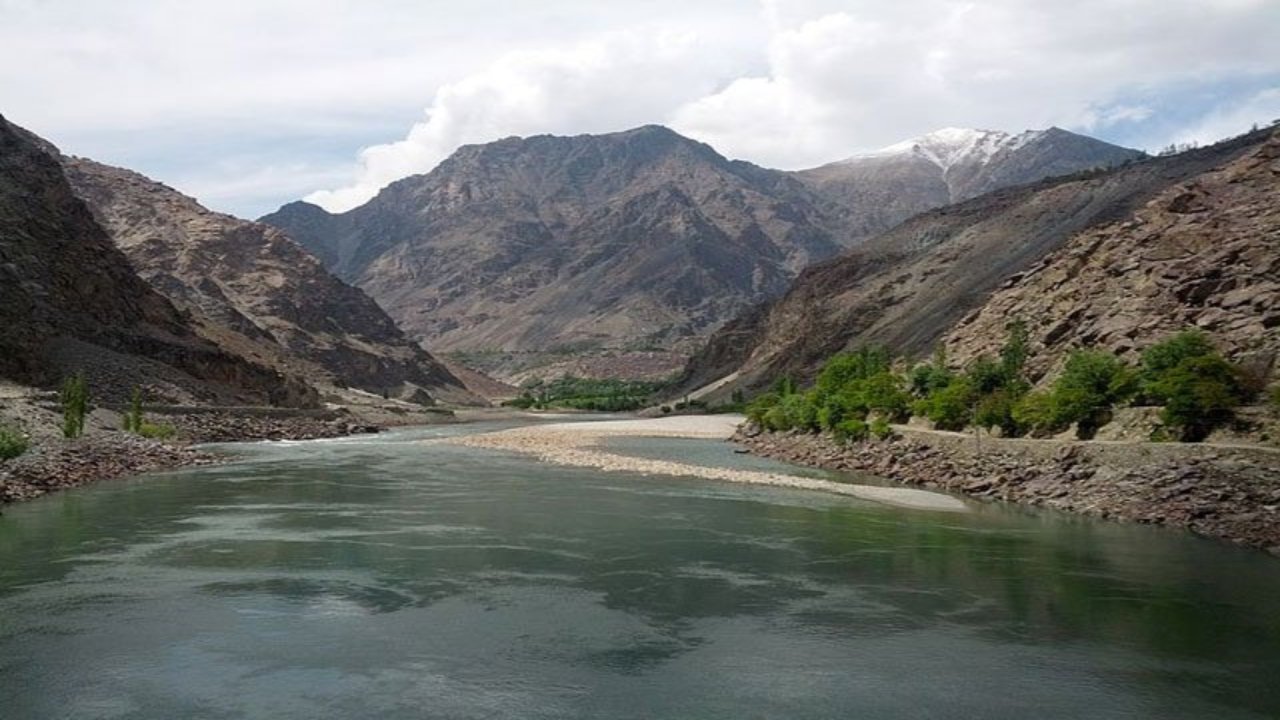
    Pakistan and India will resume talks on the water dispute again from March 1 till March 4. The talks will be held in Islamabad to resolve the issue between the two countries.

    The Indian delegation comprising of ten members will arrive at Wagah Border on Monday and the sessions will be held at the 117th session of the Permanent Indus Commission (PIC), reports The Express Tribune.

    The Indian delegation will be presided by the Indian Commissioner for Indus Water Pradeep Saxena. The Pakistan delegation will be headed by the Indus Water Commissioner Commissioner Mehr Ali Shah.

    While talking about the dispute, Shah mentioned that Pakistan objects to several projects of India which are in progress. The Pakistan delegation will raise the issue regarding projects on Occupied Kashmir, River Chenab, and River Indus.

    According to the Indus Water Treaty, which was signed in 1960, Pakistan and India have to hold discussions at least once a year.

    The talk was last held in March 2021 in New Delhi, India which concluded that frequent meetings will be held to resolve the water dispute.

    Pakistan had also requested India to share designs of the projects. India replied that data would be shared according to the requirements written in the treaty.

  • Pakistan rescues woman in love gone wrong, saves wife left in Indian jail by husband

    Pakistan rescues woman in love gone wrong, saves wife left in Indian jail by husband

    Pakistan has issued a nationality certificate, which will lead to becoming a citizen of Pakistan, to a stateless woman, Sumaira who has been stranded in India for four years. It was issued after verification by National Database and Registration Authority (NADRA) and her family. Pakistan Interior Minister has sent her nationality certificate to Foreign Ministry.

    Pakistan High Commission in India, New Delhi will issue travel documents and she will be able to come to Pakistan with her daughter who is four-years-old.

    According to her lawyer, Sohana Biswapatna, Sumaira was born in Qatar to Pakistani parents who moved from Karachi for employment. She married an Indian Muslim for love in Qatar without the consent of her parents. She illegally moved to India with her husband in 2016.

    Sumaira and her husband were arrested in 2017. However, her husband, who faced the charges of facilitating a foreign intruder, was released on bail after a few months. She remained in jail.

    She gave birth to a daughter in prison.

    The message she sent through her lawyer to BBC, “I have been punished by law for the mistake I made, but my sorrows and pains are not diminishing. The family had already separated, but now the husband in India has also turned away. At the moment, my only recourse is my country, Pakistan.”

    According to Sumaira, she wanted to confess her crime but her husband stopped her from giving a statement. The husband thought that India would deport her if she confessed. He was trying to find a way to release her from jail and settle her in India.

    Her case was stalled in India for three years as she did not confess to her crime.

    Her husband stopped visiting her and attending her calls without any explanation around after two to three years. After losing hope of reunion, she confessed to her crime.

    She was sentenced to a three year imprisonment, which she has already completed.

    Currently, she is living in a state shelter in Bengaluru, Karnataka, a state of India.

  • Indian conjoined twins get a job, two salaries

    Conjoined twins from Amritsar Sohna and Mohna landed a job at the Punjab State Power Corporation Limited in India. The job has allotted them both two salaries, of about 20,000 Pakistani rupees each, a total of around 40,000 Pakistani rupees.

    The twins were born in New Delhi on June 14, 2003 with two hearts, arms, kidneys and spinal cords, but a shared liver, gall bladder and legs.

    After their birth, the twins were abandoned by their parents and raised in an orphanage.

    Sohna, along with Mohna, look after the electrical appliances at PSPCL, an official said. The twins have an ITI diploma (electrical).

    The twins thanked the Punjab government for providing them this opportunity.

    The twins have an affinity toward music and can play harmonium and sing hymns.

  • Adnan Sami, Kangana Ranaut receive Indian fourth highest civilian honour

    Adnan Sami, Kangana Ranaut receive Indian fourth highest civilian honour

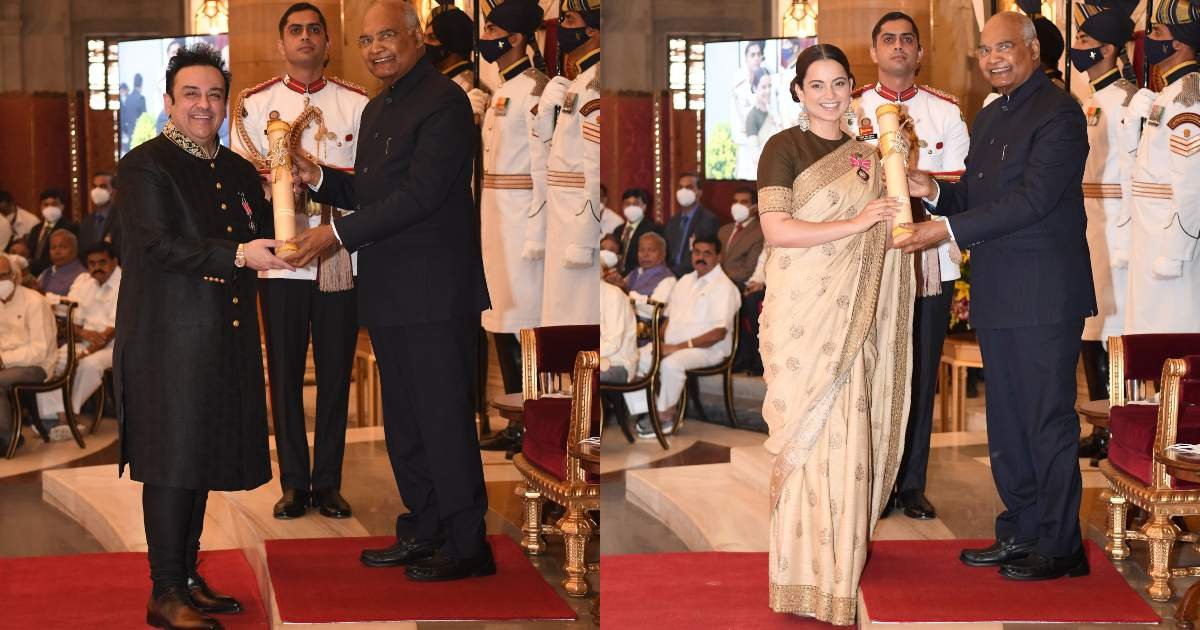
    Singer and composer Adnan Sami Khan, who has left Pakistan and permanently shifted to India, received India’s fourth-highest civilian honour, Padma Shri Award, today, November 8 for his contribution to the field of performing arts.

    The award was presented to him by Indian President Ram Nath Kovind at Rashtrapati Bhavan in New Delhi.

    The official Twitter handle of the President of India tweeted a photo of Adnan Sami receiving the Padma Shri Award, and wrote, “President Kovind presents Padma Shri to Shri Adnan Sami Khan for Art. He is a world renowned and celebrated music composer, concert pianist, singer and actor.”

    Indian actress Kangana Ranaut was also given the award at the ceremony.

    The Queen actor, dressed in a gold saree, was pictured being presented the Padma Shri by President Kovind. Kangana, last seen in the Jayalalithaa biopic Thalaivi, also recently received the National Award for Best Actress for her performances in the films Manikarnika and Panga.

    The list includes seven Padma Vibhushan, 10 Padma Bhushan and 102 Padma Shri Awards, of which 29 awardees are women and one awardee is a transgender person. The Padma Awards have been presented in various fields, such as art, social work, public affairs, science and engineering, trade and industry, medicine, literature and education, sports, civil service and so on.

  • All you need to know about Indian farmers’ protests as world shames Modi govt

    With international celebrities, including Rihanna and Greta Thunberg, voicing concerns over the law and order situation in India as farmers continue to give the Narendra Modi-government a tough time while seeking fulfillment of their demands, ‘#FarmersProtest’ has become the top trend on Twitter even beyond Indian borders — in Pakistan.

    But what do the protesters, who have now been on roads for two months, really want?

    The ongoing demonstrations caught most attention when Indian law enforcement resorted to violence against the farmers who had converged on New Delhi on the country’s Republic Day.

    According to Associated Press (AP), farmers hailing from northern Punjab and Haryana states, the two biggest agricultural producers, are demanding the repeal of laws passed by the parliament in September that they say will favor large corporate farms, devastate the earnings of many farmers and leave those who hold small plots behind as big corporations win out.

    Modi has billed the laws as necessary to modernise Indian farming.

    In recent weeks, people who are not farmers have also joined in, and the protests gained momentum in November when the farmers tried to march into New Delhi but were stopped by police. Since then, they have promised to hunker down at the edge of the city until the laws are repealed.

    At the heart of these protests are Indian farmers’ fears that the government’s moves to introduce market reforms to the farming sector will leave them poorer — at a time when they are already frustrated over their declining clout as the government aims to turn India into a hub for global corporations.

    The new legislation is not clear on whether the government will continue to guarantee prices for certain essential crops — a system that was introduced in the 1960s to help India shore up its food reserves and prevent shortages.

    While the government has said it is willing to pledge the guaranteed prices will continue, the farmers are skeptical and want new legislation that says such prices are their legal right.

    Farmers also fear that the legislation signals the government is moving away from a system in which an overwhelming majority of farmers sell only to government-sanctioned marketplaces. They worry this will leave them at the mercy of corporations that will have no legal obligation to pay them the guaranteed price anymore.

    The Modi government argues that this is designed to give farmers more choice in who to sell their produce to. It also says the legislation will benefit farmers by boosting production through private investment.

    The government has offered to amend the laws and suspend their implementation for 18 months — but that has not satisfied farmers who want a full repeal.

    Clauses in the legislation also prevent farmers from taking contract disputes to courts, leaving them with no independent means of redress apart from government-appointed bureaucrats.

    These perceived threats to their income terrify India’s farmers, who are mostly smallholders as around 70% of them own less than 1 hectare of land.

  • Kangana Ranaut has a meltdown after Rihanna tweets about Indian farmers

    Just as expected, Kangana Ranaut had a meltdown after Rihanna extended her support for the ongoing farmers’ protest in India. Sharing an article which reported on the internet shut down in several districts of Haryana amid violent clashes between police and farmers over the weekend, the multi-Grammy award-winning singer said: “Why aren’t we talking about this?”

    Soon after Rihanna’s tweet, Kangana, who has been actively slamming those participating in the protests, reacted to the singer’s tweet calling her a “fool” and referring to the farmers as “terrorists”.

    “No one is talking about it because they are not farmers they are terrorists who are trying to divide India so that China can take over our vulnerable broken nation and make it a Chinese colony much like the USA,” wrote an agitated Kangana.

    “Sit down you fool, we are not selling our nation like you dummies,” she added.

    https://twitter.com/KanganaTeam/status/1356640083546406913

    When Twitter user brought up an old tweet of Kangana’s in which she had said: “Alexa play Diamonds by Rihanna”, the actor lashed out saying: “I took over my account in August last year. Before that, it was a team fan page.”

    Mujhe na pop music samajh aata hai, na hee main English gaane zyaada sunti hoon,” she added.

    Kangana then launched into a full blown attack against Rihanna, calling her a porn star and saying that there is nothing special about her.

    Meanwhile, Federal Minister for Science and Technology Fawad Chaudhry has appreciated Rihanna’s gesture of support for the farmers.

    “You have earned the respect of every farmer of the world and particularly of Punjabis all around the world,” said Chaudhry in a tweet. “You have shown your heart is in the right place.”

    “Loads of respect,” he added.

    Farmer’s Protest

    Thousands of farmers have gathered at Delhi’s gateways to demand a repeal of the Centre’s three new farm laws. The protesting farmers, mainly from Punjab and Haryana as well as Uttar Pradesh, are worried the new laws will eliminate the safety cushion of a Minimum Support Price and procurement system while rendering ineffective the mandi system that ensures earnings for various stakeholders in the farm sector.

  • Republic Day: Thousands of protesting farmers converge on Indian capital in convoy of tractors

    In a high-profile protest against controversial agricultural reforms, tens of thousands of farmers drove a convoy of tractors festooned with brightly-coloured flags through the outskirts of India’s capital of New Delhi on the country’s Republic Day.

    Growers, angry at what they see as laws that help large, private buyers at the expense of producers, have been camped outside Delhi for almost two months.

    Thousands more, steering tractors bearing the flags of India and farm unions, had streamed in from neighbouring states for several days ahead of the rally, planned to coincide with celebrations of Republic Day.

    “Our word should travel around the world, that we are fighting for our living,” said Devinder Singh, a 36-year-old farmer from Punjab, seated on his tractor. “If we lose our farmland, how will we survive?” he asked.

    Some took to Twitter to dispel rumours of the Indian flag being removed from Delhi’s Red Fort.

    The protests have so far been peaceful, and farm leaders have urged rally participants to refrain from violence. 

    Authorities used trucks to barricade the main route to the site, where hundreds of police, some armed with assault rifles, tear gas, and a water cannon, stood guard.

    Although some protesters breached police barricades at Singh and Tikri, another site, early on Tuesday, there were no immediate reports of violence.

    https://twitter.com/swatijaihind/status/1353941486673379328?s=21

    Agriculture employs about half of India’s population of 1.3 billion, and unrest among an estimated 150 million landowning farmers presents one of the biggest challenges to the authority of Prime Minister Narendra Modi since he came to power in 2014.

    Nine rounds of talks between the government and the farmers’ unions have failed to end the protests, with farm leaders rejecting the government’s offer to delay the laws for 18 months, as they push for repeal.

    “The farm organisations have a very stronghold,” said Ambar Kumar Ghosh, an analyst at the New Delhi-based Observer Research Foundation think-tank.

    “They have the resources to mobilise support and to continue the protest for a long time. They have also been very successful in keeping the protest really focused.”

    Police have allowed farmers to rally along approved routes on the outskirts of Delhi. But the tractor march threatens to overshadow the annual Republic Day military parade in the centre of the capital on the anniversary of India’s 1950 adoption of its constitution.

    “They could have chosen any other day instead of January 26 but they have announced now,” Agriculture Minister Narendra Singh Tomar told media on Monday. “Conducting the rally peacefully without any accident would be the concern for farmers as well as police administration.”