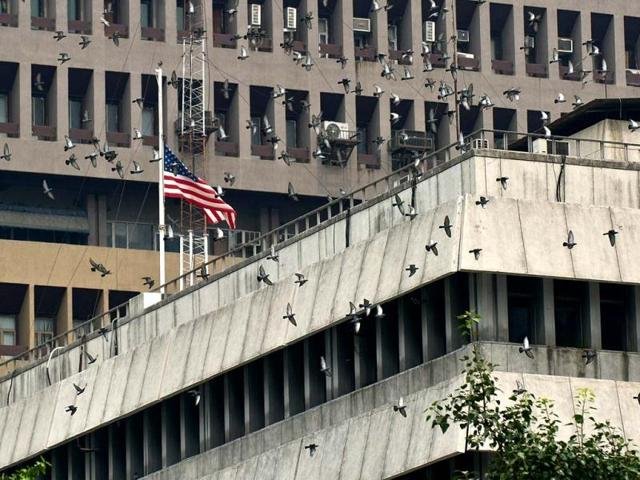
Tag: New Delhi

  • What’s the story behind ‘Pakistan Zindabad’ slogans in New Delhi?

    What’s the story behind ‘Pakistan Zindabad’ slogans in New Delhi?

    After an 11-hour long investigation, the Indian police have finally cracked the case of ‘Pakistan Zindabad’ slogans in New Delhi.

    Police had detained two men and three women following the reports that they were heard chanting ‘Pakistan Zindabad’ slogans. However, after investigations, it was revealed that the slogans were raised in a “lighter vein” as a part of a cycling game near Delhi’s Khan Market metro station on late Saturday night.

    The police said that they have not registered a case against them following the investigation.

    “Ahead of Republic Day, police said, they were on high alert when they received a call around 1 am about a group shouting slogans, praising Pakistan,” Indian Express reported.

    “Two families…had rented Yulu bikes they were racing, and they had named each other after countries like India, Pakistan, Japan and Australia. They were cheering each other on by shouting these names when some locals heard them shout, ‘Pakistan zindabad’,” the report quoted the police officials as saying.

    During interrogation, police found the family had named the 14-year-old boy ‘Pakistan’ during the game, the newspaper reported.

    “When the boy was slow, others, which included his parents, shouted ‘Pakistan haar gaya… peechhe reh gaya,’ and when the boy started speeding, they cheered him with ‘Pakistan Zindabad’,” said the officer.

    However, following the questioning, all of them were allowed to leave.

  • Modi invites Imran Khan to New Delhi

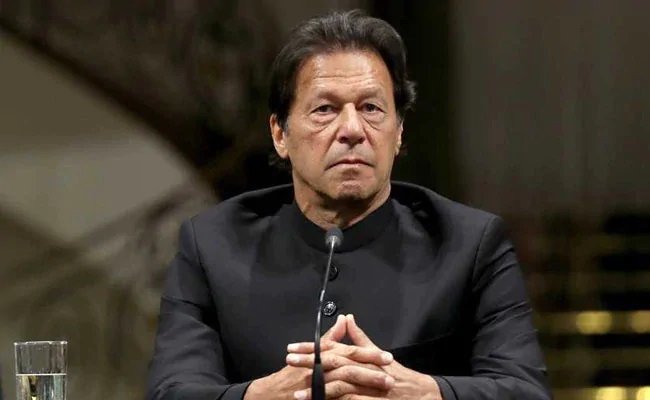
    Indian Prime Minister (PM) Narendra Modi has invited his Pakistani counterpart, Imran Khan, to participate in the Shanghai Cooperation Organisation (SCO) heads of government meeting being held in New Delhi on November 30.

    According to reports, the Indian premier invited all the eight members and four observer countries on Tuesday during the online summit of the organisation held in Moscow, chaired by Russian President Vladimir Putin.

    The News quoted sources as saying that the Russian president appreciated Pakistan’s proposals on various counts.

    Modi, who tried to demean the objectives of the SCO, tried to take on Pakistan and China in the same stroke without naming them under the garb of respect of sovereignty and said in muffled words that India believed that to enhance connectivity it was important that we move forward while respecting one another’s sovereignty and territorial integrity.

    He boasted that India had always been resolute in working in sync with principles laid out in the SCO charter, but it was unfortunate that there had been repeated efforts to unnecessarily bring bilateral issues in the SCO agenda which was in violation of the SCO spirit.

    It was an assault on Pakistan and China’s policies of enhancing connectivity in the region.

    Modi referred to the Shanghai spirit and SCO charter, but he conveniently forgot that it was India that had humiliated the two documents by its actions and inactions.

    Diplomatic sources told the English daily that none of the significant member countries’ premiers will attend the New Delhi virtual meeting except Russian PM Mikhail Mishustin while the Chinese premier, Li Keqiang, and PM Imran might not be available to attend the heads of government meeting.

    Foreign Secretary Sohail Mahmood or Additional Foreign Secretary Syed Faisal Tirmizi are likely to represent Pakistan at the huddle.

  • Pakistan reacts to Indian claims of taking Kartarpur Gurdwara’s management away from Sikh body

    Pakistan reacts to Indian claims of taking Kartarpur Gurdwara’s management away from Sikh body

    Pakistan has firmly rejected the “baseless and fallacious” claims made by the Indian government against the Kartarpur Corridor, and the same have also been rejected by the Pakistan Sikh Gurdwara Prabandhak Committee (PSGPC).

    In a statement, Foreign Office (FO) Spokesperson Zahid Hafeez Chaudhri has said that the malicious propaganda by the Indian government is simply an attempt to malign the peace corridor initiative.

    “The malicious propaganda by the Indian government is simply an attempt to malign the peace corridor initiative by casting mischievous aspersions against the interests of the Sikh community and to detract attention from the reprehensible violation of human rights of minorities in India,” he said.

    The FO said that it was no more than an Indian attempt to cast damaging accusations against the interests of the Sikh community and to detract attention from India’s own reprehensible human rights violations of minorities in India.

    Chaudri added that the PSGPC is responsible for carrying out rituals in Gurdwara Sahiban, including Kartarpur, as per Sikh Rehat Maryada.

    “Any insinuations regarding ‘transferring’ the affairs of Gurdwara Kartarpur Sahib from the PSGPC to the Project Management Unit (PMU) are not only contrary to the facts but are also aimed at creating religious disharmony by the Hindutva-driven government in India,” the FO spokesperson said.

    “The PMU, under the Evacuee Trust Property Board (ETPB), has simply been created to facilitate the committee in this regard,” he added.

    Chaudhri said that the Sikh community from all over the world remains greatly appreciative of the efforts made by Pakistan to complete the Kartarpur Corridor project in record time and for the excellent arrangements made to facilitate the pilgrims.

    “India would be well advised to take steps to protect its minorities and their places of worship, rather than feigning misleading and sham concerns for the rights of minorities elsewhere,” he said.

    INDIAN CLAIMS:

    India had on Thursday “highly condemned” Pakistan’s then alleged decision to transfer the management of the Kartarpur Sahib Gurdwara from PSGPC to a separate trust, saying the move ran against the religious sentiments of the Sikh community.

    The Ministry of External Affairs (MEA) had said India received representations from the Sikh community expressing grave concern over the decision to transfer the management and maintenance of the gurudwara from the PSGPC to the administrative control of the ETPB.

    KARTARPUR SAHIB:

    Kartarpur Sahib Gurdwara is located in Pakistan’s Narowal district across Ravi, about four kilometres from the Dera Baba Nanak shrine.

    In November last year, the two countries threw open a corridor linking Dera Baba Sahib in Gurdaspur in India with Gurdwara Kartarpur Sahib in Pakistan, in a historic people-to-people initiative.

    The move was lauded by members of the Sikh community from all across the globe.

  • ‘Our relief package is as large as your country’s GDP,’ India reacts to Imran’s offer to share Ehsaas project

    ‘Our relief package is as large as your country’s GDP,’ India reacts to Imran’s offer to share Ehsaas project

    — Islamabad regrets negative remarks by New Delhi regarding goodwill suggestion by PM Imran

    In a stinging reply to Prime Minister (PM) Imran Khan’s offer of sharing with India his government’s cash transfer project technology to help the poor amid the coronavirus crisis, New Delhi has said that the size of its economic relief package during the pandemic is as large as Pakistan’s Gross Domestic Product (GDP).

    “Pakistan would do well to recall that they have a debt problem which covers 90% of their GDP. As far as India goes, our stimulus package is as large as the GDP of Pakistan,” said Anurag Srivastava, a spokesperson for India’s Ministry of External Affairs (MEA), on Thursday.

    Imran had earlier in the day tweeted a news report published in an Indian daily highlighting the suffering of a section among the poor in India due to the economic challenges posed by the COVID-19 outbreak, saying that his government was willing to help with its successful cash transfer programme, which he boasted was recognised internationally.

    “I am ready to offer help and share our successful cash transfer programme, lauded internationally for its reach and transparency, with India,” the premier had said while sharing the report as per which 34 per cent households across India will not be able to survive for more than a week without assistance.

    He had said his government successfully transferred Rs120 billion in nine weeks to over 10 million families in a transparent manner to deal with the economic fallout of the virus.

    ISLAMABAD REACTS TO NEW DELHI’S RESPONSE:

    In response to New Delhi’s reaction to the premier’s offer, the Foreign Office (FO) regretted “negative remarks by the MEA spokesperson regarding a goodwill suggestion by the PM to share Pakistan’s successful experience in ameliorating the impact of COVID-19 on the poorest sections of the society”.

    “Remarks by the MEA spokesperson reflect an unprofessional attempt at point-scoring over a serious issue that involves the lives of millions of poor people in the subcontinent, worst affected by the COVID-19 pandemic,” read a statement issued by the FO on Friday.

    THE REPORT:

    A study titled “How are Indian households coping under the COVID-19 lockdown? Eight key findings”, carried out by experts at the University of Pennsylvania, the University of Chicago and the Mumbai-based Centre for Monitoring the Indian Economy (CMIE) reveals that nearly 84 per cent of Indian households are seeing decreases in income since the lockdown began. Nearly a third of all households will not be able to survive beyond a week without additional assistance.

    “Direct and immediate transfers of food and cash are a very high priority,” said Heather Schofield, assistant professor of medical ethics and health policy at the Perelman School of Medicine and a Wharton professor of business economics and public policy.

    When a nationwide lockdown began in late March, India’s Ministry of Labour and Employment asked private and public organisations not to terminate jobs on the pretext of prevailing conditions. But these pleas hardly made any difference and large-scale retrenchments that took place as cope with the contagion.

    However, the study found a “sharp and broad negative impact on household income” as the pandemic diminished their staying capacity, adding that the unemployment rate in the country had crossed 27 percent in early May, up nearly four-fold from levels in January-February.

    The fall in incomes affected people in the lower and middle segments of the income distribution most severely, the study found. “Households in the lowest of the five income groups had average monthly per-capital earnings of less than Rs3,800 (about $50), while those at the high end made between Rs12,374 and upwards of Rs100,000 ($167 to $1,370 and more).”

    Households in the middle-income groups are hurt disproportionately more perhaps because they are most likely to be dependent on sources of income that are hit due to the lockdown, the study’s authors stated.

    Rural households have seen disproportionately more distress than those in urban India during the lockdowns. Incomes have fallen at some 88% of rural households, compared to 75% of urban households, the study found.

    Only 30% of households are able to survive one month or more without additional assistance. “Crucially, 14% of the sample is already out of funds and risks immediate and severe deprivation if they are unable to borrow or receive additional benefits,” the report warned.

    “Rapid distribution of in-kind or cash transfers is needed to prevent a sharp increase in malnutrition and severe deprivation. Such transfers will also likely promote a more robust recovery as the country is able to reopen.”

    The need for additional resources is also affected by where the household is located. “The urban poor have the least time before their resources are depleted,” the study said.

    Nearly two-thirds of urban households that earn less than median income households will run out of resources in two weeks. Rural households in similar income groups have relatively more resilience, the study found, as 54% of them have sufficient resources for the same period of time.
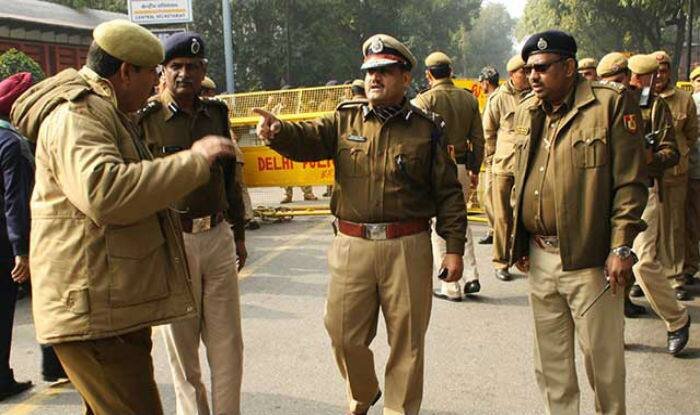
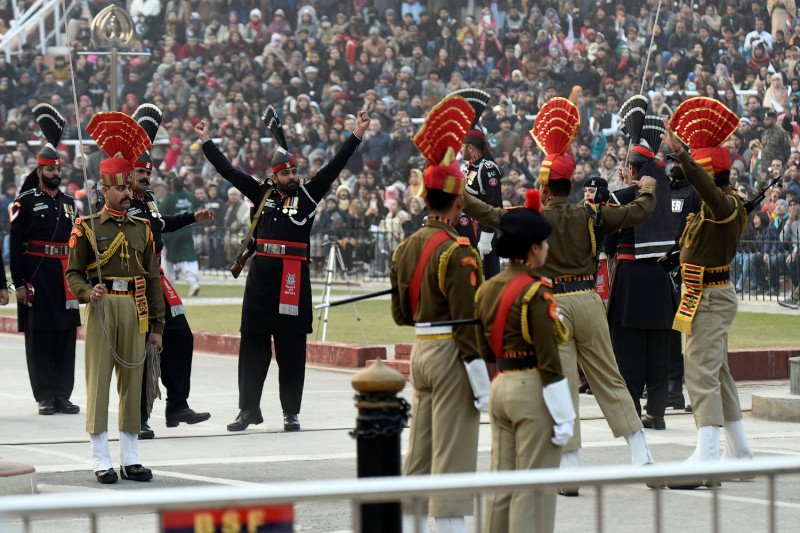
  • India reacts to Pakistan’s assertion, says ’embassy officials were caught red-handed while spying’

    India reacts to Pakistan’s assertion, says ’embassy officials were caught red-handed while spying’

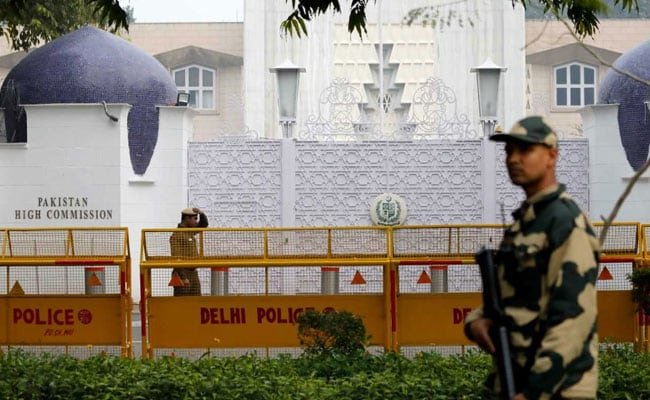
    India has rejected Pakistan’s contention that two high commission staffers were detained on unsubstantiated charges and tortured, people familiar with developments told Hindustan Times, adding that the officials “were caught red-handed while indulging in spying”.

    New Delhi on Sunday expelled two junior officials of the Pakistan High Commission after they were detained during an operation by the Delhi Police and Military Intelligence while allegedly trying to obtain classified documents on security installations.

    The officials were identified as Abid Hussain Abid, 42, an assistant in the Pakistani mission, and Mohammad Tahir Khan, 44, a clerk.

    Pakistan condemned India’s decision to declare the two officials persona non grata and to expel them, saying they were detained on false and unsubstantiated charges. A statement from Pakistan’s Foreign Office (FO) also contended that the two men were tortured and threatened to “accept false charges” despite identifying themselves as diplomatic staff.

    The FO said the Indian action was in clear violation of the Vienna Convention on Diplomatic Relations as well as the norms of diplomatic conduct.

    “The High Commission of Pakistan in New Delhi has always worked within the parameters of international law and diplomatic norms. The Indian action is clearly aimed at shrinking diplomatic space for the working of Pakistan High Commission,” it said.

    The FO said that the Indian ploy to heighten tensions would fail in diverting attention from the ongoing internal and external issues faced by the Bharatiya Janata Party (BJP) government or from the worsening situation and gross human rights violations being perpetrated by the Indian forces in occupied Jammu and Kashmir.

    It again called on the world to take note of the Indian designs and play its role in ensuring peace and security in South Asia.

    “The assertions of the Pakistan FO are false. The two officials were caught red-handed while indulging in espionage activities,” said one of the people cited above, speaking on condition of anonymity.

    “They did not disclose their identity that they were high commission officials. When they were taken into custody and questioned, they confessed to indulging in espionage and also informed that they were high commission officials,” the person added.

    The Pakistani mission was immediately informed and the two men were handed over, the person said.

    “They were never subjected to any torture. They have also undergone medical examinations. Pakistan appears to be making false accusations and possibly creating ground for some tit for tat reaction and torture of Indian officials in Islamabad,” they said.

  • Taliban deny plan to target Delhi, say ‘Kashmir is India’s internal matter’

    Taliban deny plan to target Delhi, say ‘Kashmir is India’s internal matter’

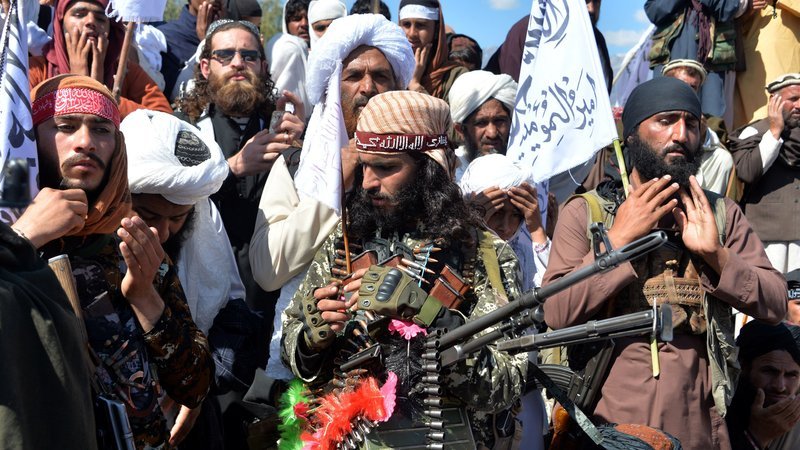
    Taliban have denied claims of joining Kashmiris’ freedom movement and attack New Delhi in retaliation against Indian atrocities under Prime Minister (PM) Narendra Modi’s regime that Pakistan and the international community fear is leading to the ethnic cleansing of the troubled valley’s majority Muslim community.

    According to Hindustan Times, the militant group has underlined that the Taliban “do not interfere in internal affairs of other countries”, saying the statement published in the media about the group joining Jihad in Kashmir was wrong.

    “The policy of the Islamic Emirate is clear that it does not interfere in the internal affairs of other countries.” Suhail Shaheen, the spokesperson for the Islamic Emirate of Afghanistan, as the political wing of Taliban calls itself, tweeted in Arabic.

    The clarification came after officials monitoring social media noted a spike in posts around claims that Taliban spokesperson Zabihullah Mujahid had said it was impossible to be friends with India unless the Kashmir dispute was resolved. The spokesperson was also claimed to have said that the Taliban, after capturing power in Kabul, would also “capture Kashmir from infidels”.

    Diplomats based in Kabul and Delhi said that the Taliban spokesperson’s clarification came after India worked the backchannels to confirm reports about the group’s approach to India, and on Jammu and Kashmir.

    New Delhi was told that the social media posts were fake and did not reflect Taliban’s position.

    But analysts have also underlined that Taliban comprises people holding different beliefs. For example, while the group has alleged deep linkages with the deep state of some countries, there are also some who favour an independent line.

  • As Delhi burns, Gurdwaras open doors to Muslims fleeing violence

    As Delhi burns, Gurdwaras open doors to Muslims fleeing violence

    As New Delhi Chief Minister (CM) Arvind Kejriwal suggests calling the army amid police’s failure to quell violent communal clashes that have so far claimed at least 20 lives and left hundreds of others injured, Gurdwaras are offering help to Muslim families fleeing violence in the Indian capital.

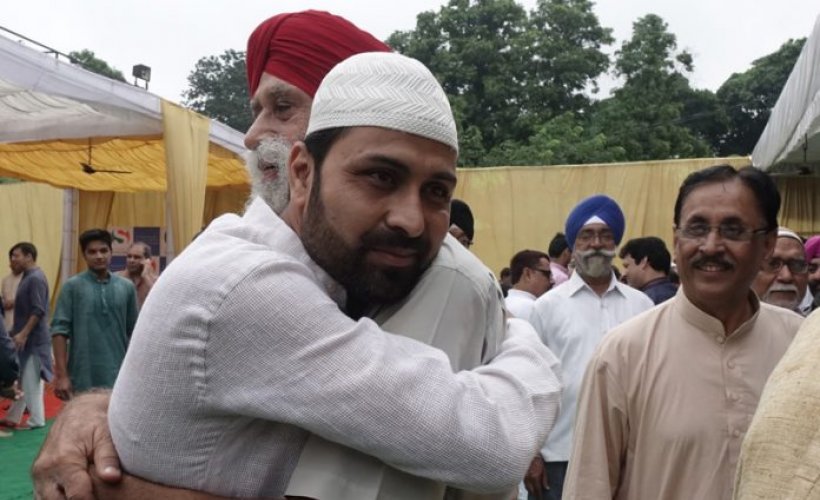
    According to a report in India Times, members of the Sikh community are not only patrolling with their neighbours of the Indian Muslim community to ensure that no one from outside attacks the latter’s homes, but many Gurdwaras — places of assembly and worship for Sikhs — are also giving shelter to the Muslims of riot-infested Delhi.

    Novelist Nilanjana Roy tweeted that she had come across news from one part of the city wherein a Gurdwara had opened its doors to anyone who needs shelter.

    https://twitter.com/nilanjanaroy/status/1232303148766617601

    Many other people shared similar stories.

    DELHI RIOTS:

    The riots — clashes between anti and pro Citizens Amendment Act (CAA) groups, which soon took a communal colour — that began earlier this week, are the worst Delhi has witnessed in recent years.

    The controversial citizenship law has been deemed discriminatory toward Muslims, against which the Muslim minority community of India has been staging protests across the country since December last year.

    With Hindu supremacist mobs running rampage in New Delhi earlier this week, things escalated quickly.

    Violence broke out in three Muslim-majority areas in north-east Delhi on Sunday and has continued since. Protesters are split along religious lines, and each side blames the other for starting the clashes.

    But the violence has been linked to a Bharatiya Janata Party (BJP) leader, Kapil Mishra, who had threatened a group of protesters staging a sit-in against the CAA over the weekend, telling them that they would be forcibly evicted once United States (US) President Donald Trump left India.

    It merits a mention that Trump had been in the country on a two-day maiden visit. When asked about the violence during a press briefing, Trump evaded the issue, saying the incident was “up to India” to handle.

  • Five-year-old raped inside US Embassy compound in Delhi

    Five-year-old raped inside US Embassy compound in Delhi

    A man has been arrested for allegedly raping a minor girl in the grounds of the United States (US) Embassy in New Delhi, CNN quoted police sources as saying.

    According to reports, the girl was playing outside the embassy’s staff quarters before she “was lured and raped by a neighbour”. Reports quoted Delhi Police Deputy Commissioner Eish Singhal as saying that the girl, who is the daughter of a housekeeper employed by the embassy, later identified the 25-year-old male suspect, who has been arrested and charged with rape.

    “She was able to identify him point blank and there is no doubt over this,” Singhal said, adding that the suspect remains in custody.

    The incident has appalled embassy staff. In a statement to CNN, a US Embassy spokesperson said they were deeply disturbed by the alleged misconduct. “We promptly took action when we were informed of the allegation, and brought this matter to the attention of the police. Of course, we are cooperating fully with them,” the spokesperson said.

    An investigation has been launched, and a court date is yet to be set. In the wake of the brutal 2012 Delhi gang rape — which brought worldwide condemnation and still haunts the collective memory of women in India’s capital –, lawmakers passed a series of amendments to the existing rape laws.

    The amended law lengthened prison terms and introduced the death penalty in cases in which the victim is younger than 12 years of age.

  • VIDEO: Indian Police destroy vehicles amid protests against citizenship act

    VIDEO: Indian Police destroy vehicles amid protests against citizenship act

    A video of Indian Police destroying vehicles parked outside a house during a protest against India’s citizenship bill has gone viral on the internet.

    The video shows a police official attacking a parked car and a motorbike outside a house in Bulandshhar city Uttar Pradesh while throwing stones at the protestors.

    https://twitter.com/UroosaAlam1/status/1208032702856908800

    Moreover, other videos of police randomly destroying vehicles in Lucknow and other areas, even where no one is protesting are also getting viral on the social media.

    https://twitter.com/AnujGurwara/status/1208607982126108673?ref_src=twsrc%5Etfw%7Ctwcamp%5Etweetembed%7Ctwterm%5E1208607982126108673&ref_url=https%3A%2F%2Fscroll.in%2Fvideo%2F947733%2Fcaa-protests-these-videos-show-the-police-vandalising-vehicles-parked-on-the-streets

    At least 23 people have been killed in clashes between police and protesters since parliament passed the anti-Muslims law on December 11.

    India’s parliament had earlier passed a contentious citizenship bill that will grant citizenship to illegal immigrants who entered India from three neighbouring countries before 2015, but won’t grant citizenship to people who are Muslims.

  • VIDEO: New Delhi university students sing ‘Hum Dekheinge’ by Faiz Ahmad Faiz

    Students of New Delhi’s Indian Institute of Mass Communication (IIMC), have grabbed the attention of thousands of internet users for singing Pakistani Marxist poet and author Faiz Ahmad Faiz’s iconic poem ‘Hum Dekheinge’.

    According to journalist Pervaiz Alam, the recitation came after he asked the students to sing a song for him while conducting a media workshop.

    “I asked students to sing a song for me and they chose Hum Dekhenge by Faiz as I conducted a media workshop at the IIMC in New Delhi on 21 Nov. Meet the vibrant students of Indian Institute of Mass Communication [sic],” he tweeted while sharing the video.

    WATCH VIDEO:

    ‘HUM DEKHEINGE’:

    The popular revolutionary poem was written by Faiz in 1979 when he was in Honolulu for a writers’ conference. The poem was included in Faiz’s seventh poetry book titled “Mere Dil Mere Musafir” in 1981 and is known for its rendition by singer Iqbal Bano.

    The poem’s beginning deals with conventional themes such as injustice and oppression, then gives way to more overtly religious symbolism. Faiz writes that the idols will be lifted from the Kabah and goes on to describe a revolutionary inversion of power, where the pure-hearted, who were outlawed, or cast out, will be honoured.

    The crowns (of those in power) will be thrown up in the air (alluding to a celebration) and their thrones will be cast low. The final stanza of the poem is the most religious in tone, declaring that the only name (essentially on people’s lips) will that be of Allah and a great revolutionary cry of “I am Truth” will go up and people of faith will rule again.

    In recent times, the poem has become an anthem for rights activitsts taking to streets across the Indian subcontinent.