New Zealand Police have introduced the hijab into their official uniform to encourage more Muslim women to join the force. The move is aimed to create an “inclusive” service reflecting the country’s “diverse community”.
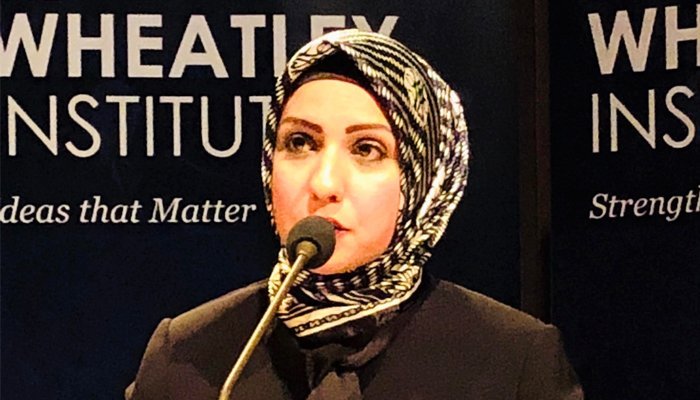
According to reports, a new recruit, Constable Zeena Ali will be the first police officer to wear a hijab as part of her uniform.
Besides New Zealand, London’s Metropolitan Police and Police Scotland also allow Muslims to wear the head covering.
Constable Ali was the first to make the request and was even included in the development process.
Ali was born in Fiji but moved to New Zealand in her childhood. Speaking to the New Zealand Herald, she said that she wanted to join the police force following the terror attack in Christchurch.
“I realised more Muslim women were needed in the police to support people,” she told the publication.
“It feels great to be able to go out and show the New Zealand Police hijab as part of my uniform,” she said. “I think that seeing it, more Muslim women will want to join as well.”
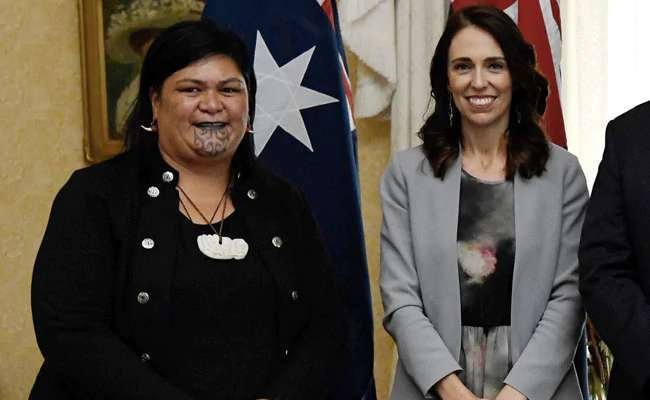
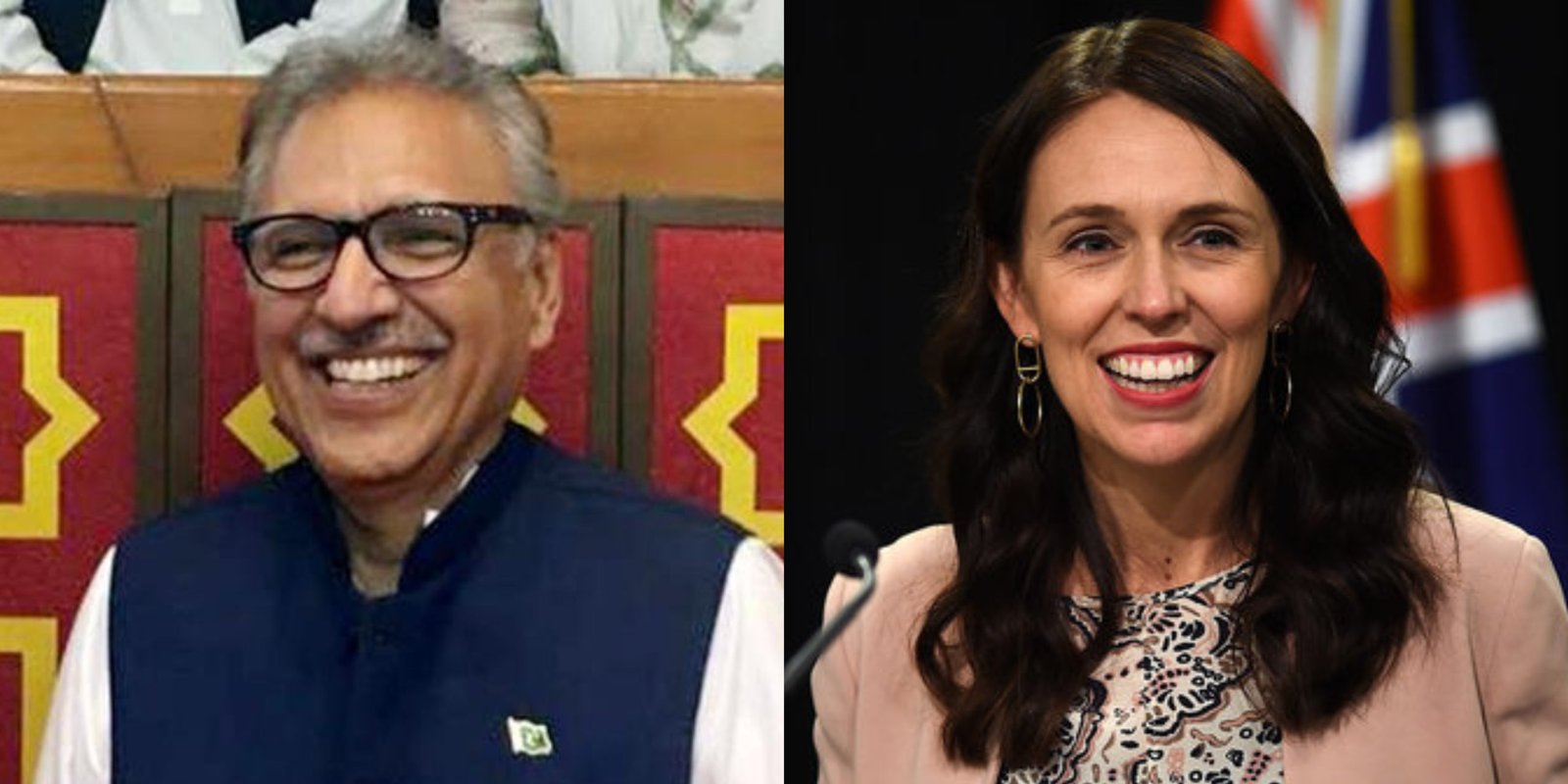
After her victory in general elections, New Zealand Prime Minister Jacinda Ardern has appointed the country’s first indigenous female foreign minister, with a facial tattoo.
Newly appointed Foreign Minister Nanaia Mahuta, who is a Maori – a minority group in New Zealand – wears a traditional tattoo on her chin, called a moko kauae. The Maori tattoos are usually bestowed on high-ranking women as a reflection of their standing or power in the community.
Four years ago, she made history by becoming country’s first female member of the parliament to wear a Maori chin tattoo, and this year she will take on the role of foreign minister.
“Moko is a statement of identity, like a passport,” said Mahuta. “I am at a time in my life where I am ready to make a clear statement that this is who I am, and this is my position in New Zealand.”
Politicians from both sides of the political spectrum congratulated Mahuta on her appointment as foreign minister. Rukuwai Tipene-Allen, a political journalist for Maori Television, said Mahuta’s appointment was hugely significant. “The first face that people see at an international level is someone who speaks, looks and sounds like a Maori”
PM Ardern, whose center-left Labour Party was reelected in the elections last month, has one of the most diverse parliament in the world. Almost half of the country’s lawmakers are women, which is higher than the global average of 25%. Moreover, she has also appointed the first openly gay deputy prime minister.
“This is a cabinet and an executive that is based on merit that also happen to be incredibly diverse and I am proud of that,” Ardern said Monday as she announced her cabinet.
The effects of poorly managed or no lockdowns at all are raising their ugly heads as Pakistanis has reached the 14th position in the global ranking of countries most affected by the new coronavirus — COVID-19 — with 165,062 cases, while it now ranks 6th among nations with the most number of active cases around the globe, as per Worldometers.
The World Health Organization (WHO) earlier this year warned that South Asia could become yet another new epicenter of the pandemic, however, despite the warning and rapidly increasing number of coronavirus cases, Prime Minister (PM) Imran Khan has only announced the imposition of “smart lockdowns” with only certain areas in worst-hit cities being put under restrictions.
The decision was taken keeping in view the consequent struggles of the poor, whom the government believes might not be able to survive a complete lockdown and its effects on the already deteriorating economic conditions.
While experts, including Dr Attaur Rahman of PM’s task force, believe the government has already failed to deal with the pandemic and is grossly under-reporting both COVID-19 fatalities and infections, the virus is yet to peak — by the end of July or August –, data suggests.
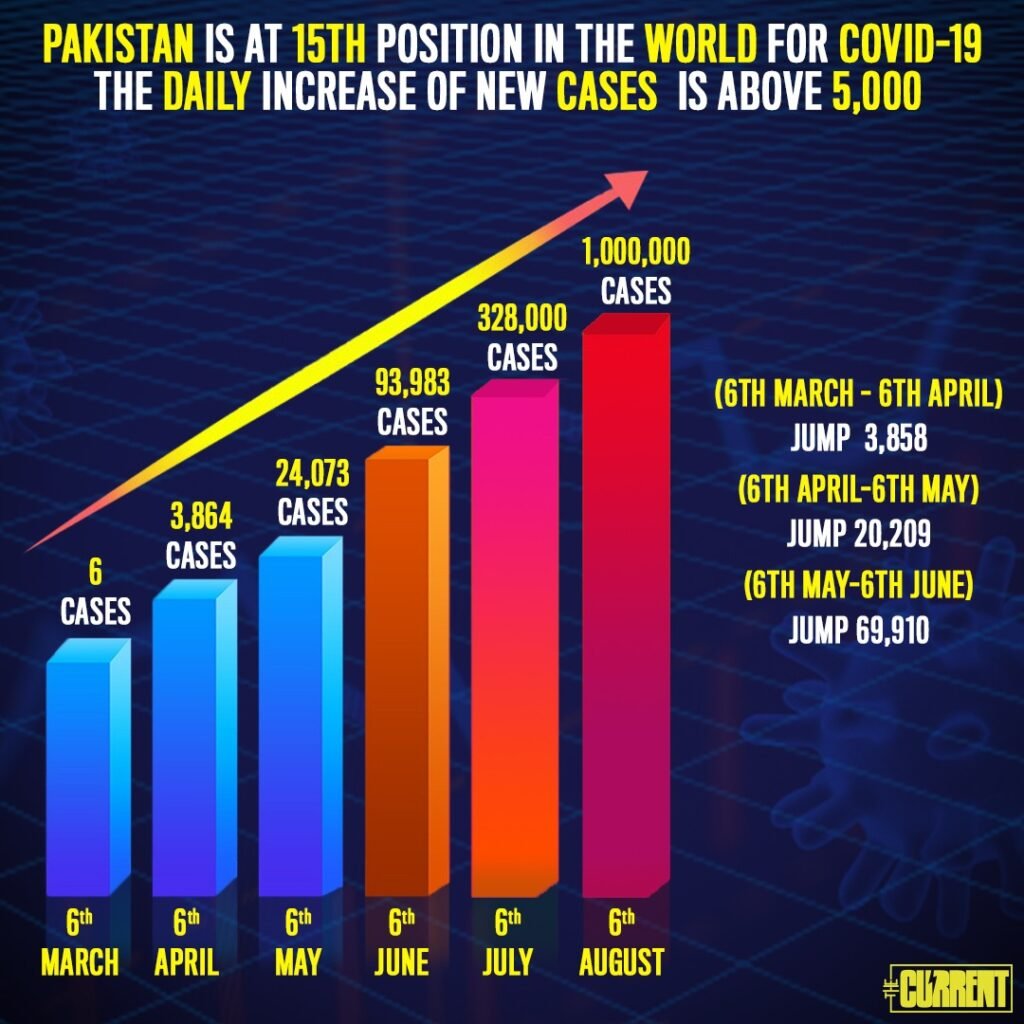
An analysis by The Current showed that before lockdown restrictions were eased in Pakistan ahead of Eidul Fitr, the highest number of confirmed coronavirus cases stood at 24,648 during the first week of May. The figure then crawled up to 122,574 by June 11, while the number of coronavirus cases as of this moment stands past 165,000 with thousands of cases being reported every day despite a low testing capacity.
It is estimated that the actual number of infections is very high with Lahore alone having more than 2 million cases by now.
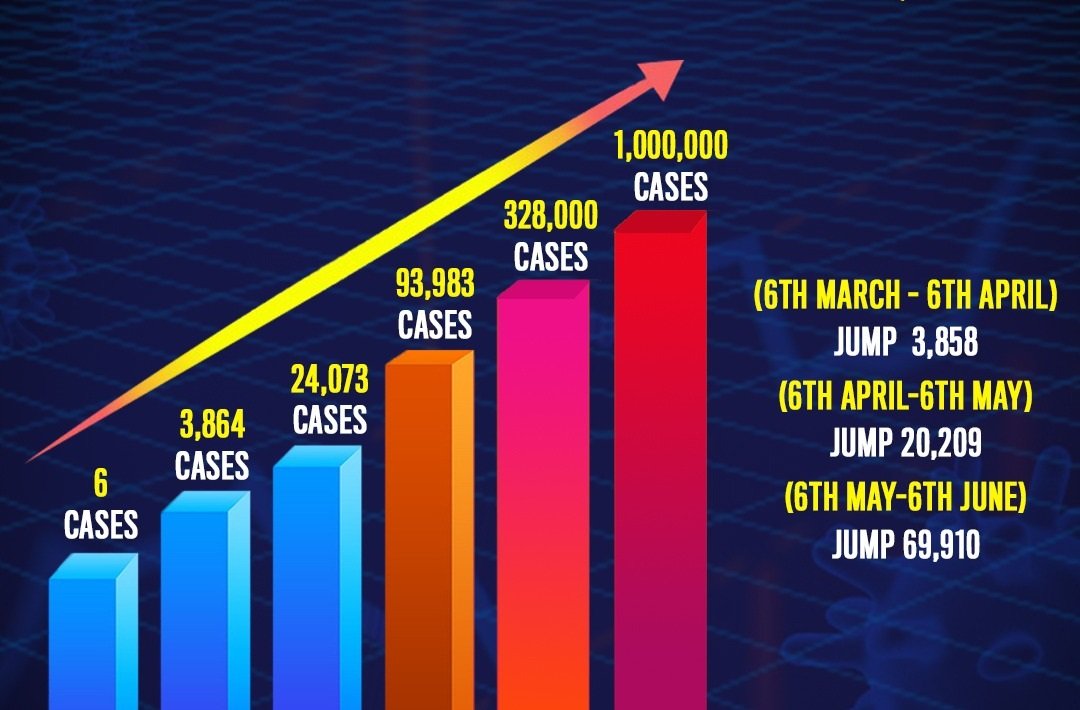
Pakistan has experienced its largest month-wise jump since the pandemic began, with 69,910 cases being reported between May 6 to June 6. Earlier, 3,858 COVID-19 cases were recorded between March 6 and April 6 while 20,209 were reported between April 6 to May 6.
According to projections, the figure is likely to reach a million by August 6 if strict lockdowns aren’t imposed and social distancing guidelines are not followed.
A comparison with the best and worst managed lockdowns from across the globe also puts things into perspective.
Country
Outcome
New Zealand
Prime Minister Jacinda Ardern announced a strict lockdown on March 25 when 100 people had tested positive and no deaths had been reported.
After a 76-day lockdown, New Zealand lifted all restrictions, declaring the country ‘corona free’ but borders remain closed. No new case for more than two weeks has been reported in the country except three suspected ones.
Wuhan
The capital of Hubei province of China was the origin of the deadly virus, where 11 million residents were locked up at their homes since January.
After an effective 77-day lockdown, Hubei reports zero COVID-19 infections and the country has reported zero coronavirus deaths since January.
On the other hand:
Country
Outcome
India
On March 25, India imposed a countrywide lockdown that was called a curfew by PM Narendra Modi. The development had come when 519 confirmed cases and 10 deaths had been reported across India.
A bit over two months later, with India easing lockdowns and shopping malls, restaurants as well as temples being re-opened, it has become the country with 4th highest number of coronavirus cases in the world.
Iran
Iran shut schools, postponed events and discouraged travel since the country reported its first COVID-19 death in February. Despite these measures, the number of deaths and infections continued to grow until a countrywide lockdown was imposed in March.
With the lockdown being eased from mid-April to May 26 when everything was reopened, including shopping malls, parks, religious shrines, restaurants and historical sites, the number of deaths has jumped to nearly 10,000 with over 200,000 infections.
By the time this report was filed, Sindh topped the chart with most infections in Pakistan (62,269), with Punjab trailing behind at 61,678, Khyber Pakhtunkhwa (KP) at 20,182, Islamabad at 9,941, Balochistan 8,998 and Gilgit-Baltistan and Azad Jammu Kashmir (AJK) at 1,225 and 769 infections, respectively.
The story of New Zealand’s Prime Minister Jacinda Ardern and her fiancé, Clarke Gayford being turned away from a popular café in Wellington, which was full due to coronavirus social distancing rules, has gone viral on social media. People cannot stop appreciating Ardern for being modest and down-to-earth.
According to reports, Ardern and Gayford had gone to get brunch on Saturday at Olive, a popular restaurant in the capital, two days after the country eased many of its lockdown rules, but were turned down due to limited seating. Restaurants in the country are required to seat guests at least 1 meter (3 feet) apart from each other because of which many have limited their seating to comply with the rules.
Though the PM and her partner walked away, they were chased down by the restaurant’s management when a spot freed up.
Gayford even addressed the matter on social media and shared his side of the story.
I have to take responsibility for this, I didn’t get organized and book anywhere. Was very nice of them to chase us down st when a spot freed up. A+ service.
Meanwhile, a spokesperson from Ardern’s office, in an email, reportedly stated, that waiting at a cafe is something that anyone can experience during New Zealand’s virus restrictions.
“The PM says she just waits like everyone else,” read the email.
After Ardern’s story went viral on social media, President of Pakistan Dr. Arif Alvi’s son Awab Alvi came forward and recounted a similar story. Awab shared that a few days back, President Alvi had gone to buy Ras Malai from a local sweet shop, clad in a cap and mask. He said that President Alvi waited for half an hour in the line and followed all the necessary protocols.
dont have to look too far @PresOfPakistan does this often eg 2 days back clad in a Cap & Mask he went to buy Ras Malai at Jameels in ISB
He walked up to counter not realizing a social distancing line on side, was asked to follow line, he did & took him ½ hour to buy
Awab further said that if anyone has any doubts, they can check the CCTV footage.
Try and see if Jameels in Islamabad has CCTV ~4:30-4:45 this Friday you might actually see this incident
This is how I know one executive in Pakistan who tries his best to keep his feet on the ground (despite the security overload that comes with the office, which is imp) https://t.co/6rnSBy9oyt
New Zealand’s cricketing stalwart Jimmy Neesham has responded to a Pakistani’s biryani invitation, which has made his fans in Pakistan love him even more.
As per the details, Jimmy had last weak turned to Twitter to ask for recommendations for a good place to have dinner in Toronto where he is currently playing the Global T20 League.
Anybody have any recommendations for nice spots in Toronto for dinner/beers? Thinking rooftop bar maybe, nice views etc etc. Many thanks
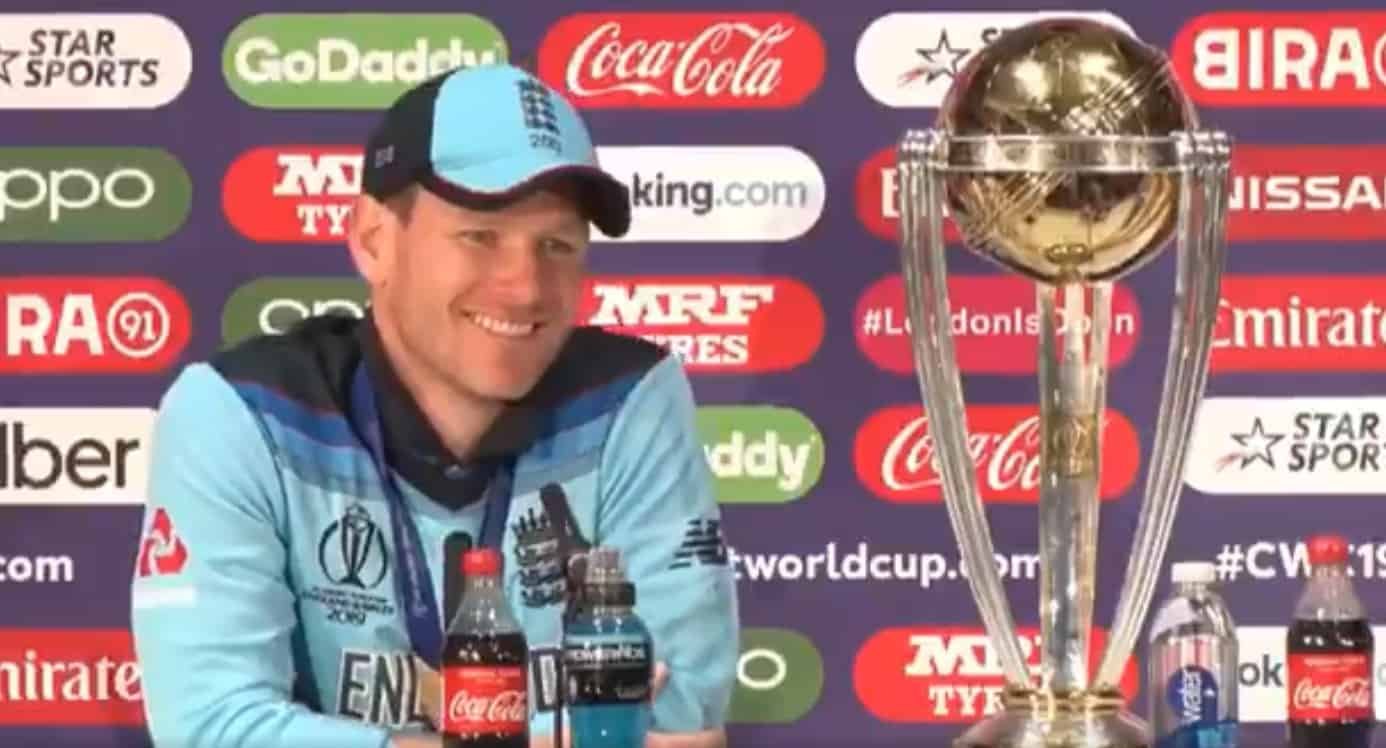
Irish and British cricketer Eoin Morgan, who steered the England cricket team to victory in the 2019 World Cup on Sunday, has said that “Allah was with them”.
After a sensational win against New Zealand in the World Cup final held at Lord’s, Dublin-born Morgan was asked whether England team enjoyed the famed luck of the Irish.
“I spoke to Adil (England leg-spinner Adil Rashid), he said Allah was definitely with us,” he said in response.
“It actually summarises our team. Quite diverse backgrounds and cultures and guys grow up in different countries and to actually find humour in the situation we were in at times was pretty cool,” Morgan added.
Earlier, England lifted their maiden World Cup. Both the Englishmen and Kiwis scored 241 runs which led to a first-ever Super Over in the World Cup final.
Both teams scored 15 runs each, however, England was declared the winner based on boundary count in the match.