Tag: NGO

  • Suniel Shetty is a real-life hero, and now we have proof

    Suniel Shetty is a real-life hero, and now we have proof

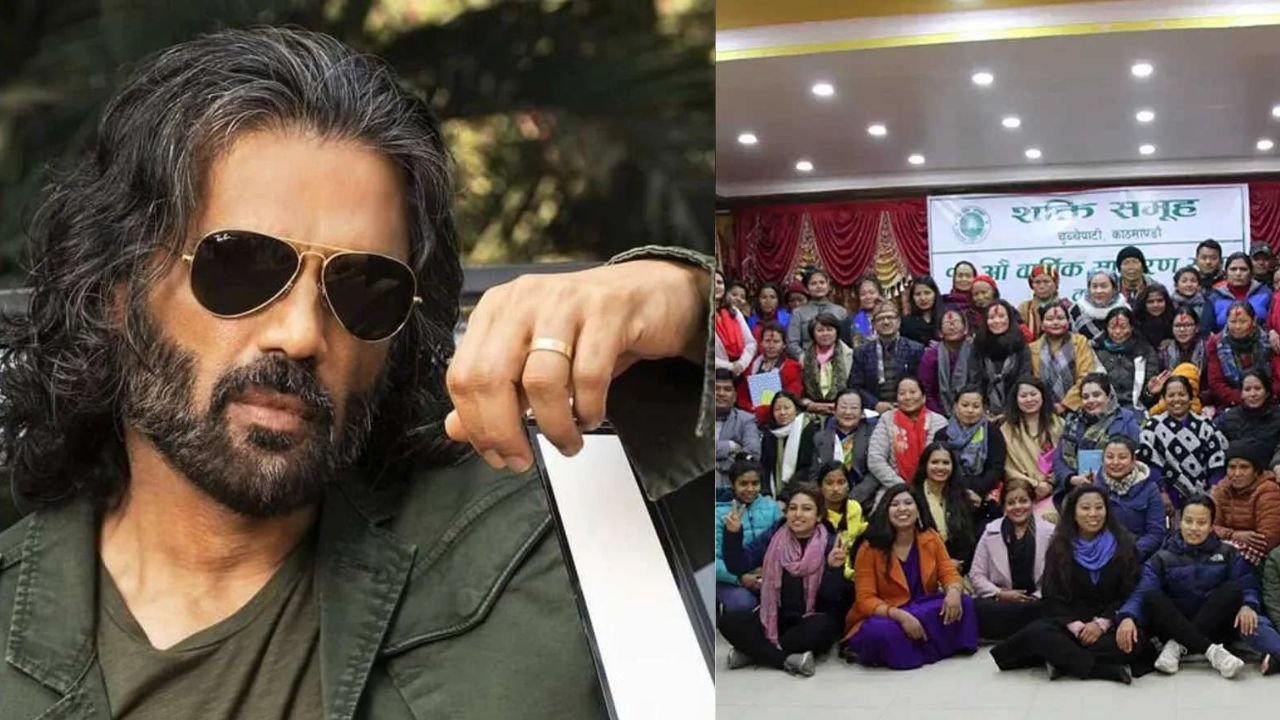
    Bollywood actor Suniel Shetty was an action hero on screen and a real-life hero off screen. About 28 years ago, the star rescues 128 women survivors of sex trafficking. All these years later, this kind act has come to light through one of the women saved in that operation, Charimaya Tamang.

    The incident occurred on February 5, 1996, when the Mumbai police raided the red light area at Kamathipura and rescued 456 women, including 128 from Nepal.

    Many of these women did not have proof of citizenship; hence the Nepal government refused to take them back. When Shetty came to know about this, he took matters into his own hands, arranging a flight, and paying for tickets of all the 128 women so that they may reach home safely.

    Shetty gives the credit of the operation to the Mumbai police and his mother-in-law, Vipula Kadri, founder of the ‘Save the Children’ NGO.

    During an interview with Bollywood Hungama, Shetty said, “We didn’t think about the cost of flight tickets. The effort was what counted. My mother-in-law inspired us all. She took the risk of rescuing the girls, getting into the bad books of the mafia.”

    Despite the danger, Shetty’s actions remained low-profile to protect the women involved. “We didn’t want to glorify ourselves. Given that these girls were participating, it wasn’t right. This mafia never lets go. The operation needed to be low-profile, and it was,” Shetty added.

    Today, the 128 women, including Charimaya Tamang, have rebuilt their lives, thanks to the compassion and bravery of Suniel Shetty and his team. Their stories remind us that a single act of kindness can change countless lives.

  • NGO World Central Kitchen says seven of its workers killed in Israeli strike in Gaza

    NGO World Central Kitchen says seven of its workers killed in Israeli strike in Gaza

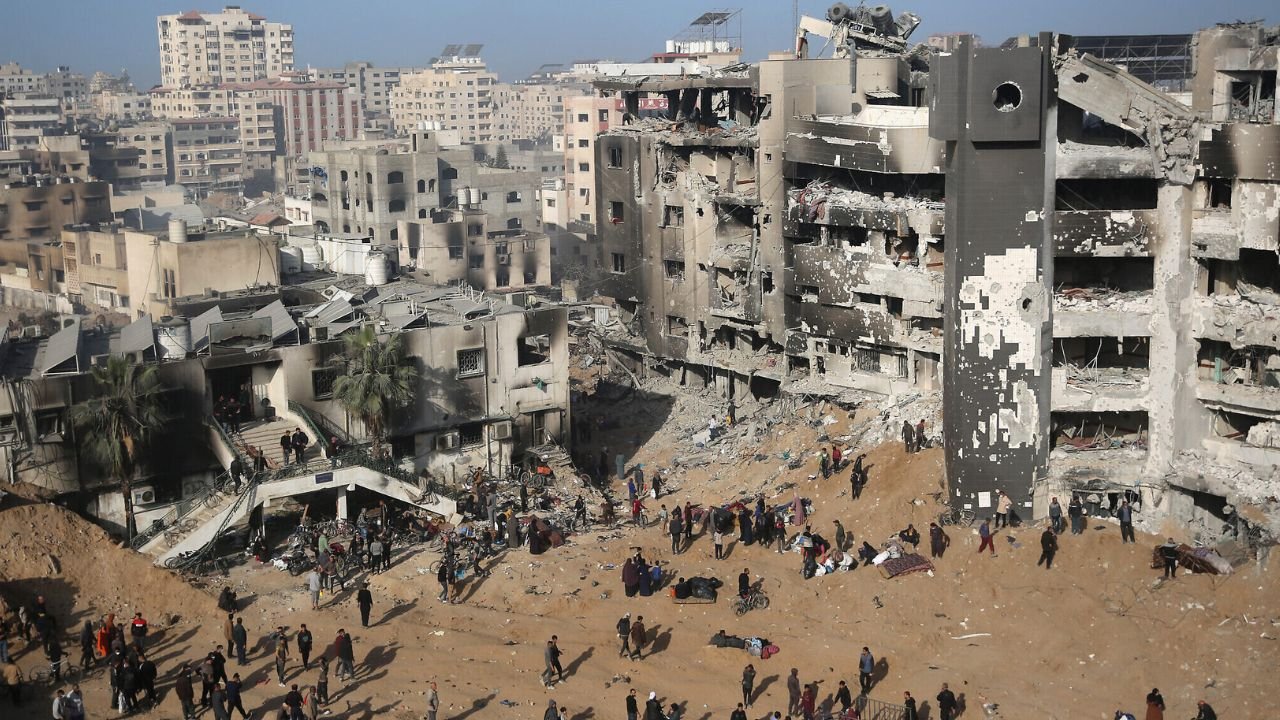
    An Israeli strike killed several people working for US-based charity World Central Kitchen in the Gaza Strip on Monday, according to the organization’s founder.

    World Central Kitchen “lost several of our sisters and brothers in an IDF air strike in Gaza. I am heartbroken and grieving for their families and friends and our whole WCK family,” chef Jose Andres posted on social media site X.

    Earlier, the Gaza health ministry had said the bodies of four foreign aid workers and their Palestinian driver were brought to the hospital in the central town of Deir el-Balah after an Israeli strike targeted their vehicle.

    Hamas said in a statement that the aid workers included “British, Australian and Polish nationalities, with the fourth nationality not known”, and that the fifth person killed was a Palestinian driver and translator.

    US National Security Council spokesperson Adrienne Watson said the White House was “heartbroken and deeply troubled by the strike.”

    “Humanitarian aid workers must be protected as they deliver aid that is desperately needed, and we urge Israel to swiftly investigate what happened,” she wrote on X.

    The Israeli military said in a statement that it was “conducting a thorough review at the highest levels to understand the circumstances of this tragic incident”, adding that it had been “working closely with WCK” in the effort to provide aid to Palestinians.

    At the Al-Aqsa Hospital in Deir el-Balah, an AFP correspondent saw five bodies with three foreign passports lying nearby.

    Australian Prime Minister Anthony Albanese on Tuesday confirmed one of the killed aid workers was Australian national Zomi Frankcom.

    “This is completely unacceptable. Australia expects full accountability for the deaths of aid workers,” Albanese said

    World Central Kitchen has been involved in delivering the aid arriving by boat from Cyprus, and in the construction of a temporary jetty in Gaza.

    Gaza has been under a near-complete blockade since October 7, with the United Nations accusing Israel of preventing deliveries of humanitarian assistance urgently needed by all 2.4 million Palestinians.

    UN agencies have warned repeatedly that northern Gaza is on the verge of famine, calling the situation a man-made crisis because aid lorries are backed up on the Egypt-Gaza border awaiting long checks by Israeli officials. Israel has denied responsibility.

    Israeli genocide in Gaza has killed at least 32,845 people, mostly women and children, according to the health ministry in Gaza.

  • Abdul Sattar Edhi’s statue put up at Edhi Chowk in Quetta

    A statue of late Abdul Sattar Edhi has been placed at a chowk named after him in Quetta. The statue is built in partnership with Peoples Primary Healthcare Institute.

    “I wanted to pay a tribute to Edhi for his outstanding welfare work,” said Ishaq Lehri ,who sculpted the figure while talking to Samaa Digital.

    The Edhi Foundation, founded by the late Abdul Sattar Edhi, is the largest Pakistani charity foundation, known worldwide for its humanitarian work serves everyone regardless of race, religion or nationality. Edhi Foundation runs several shelter houses, old homes, an ambulance network, orphanages, soup kitchens, morgues along with multiple other welfare services.

    Until his death on July 8, 2016, Edhi dedicated his life and that of all his family members to the service of people. The statue honours him, and the work that is still being done by the foundation for the betterment of the people across Pakistan.

  • Shirakat animations — a way towards progressive thinking and self-analysis

    Shirakat animations — a way towards progressive thinking and self-analysis

    Non-governmental organisation (NGO) Shirakat works on human rights, especially women’s rights in Pakistan.

    The NGO has recently released some animated videos addressing different social issues, including harassment, discriminatory behaviours, sexual abuse and domestic violence against women, to change mindsets and dismantle patriarchy and stereotypes that equally affect both men and women.

    The videos’ topic, script, voiceovers and colourful animations are put together rather well, which keep viewers engaged throughout the videos. The videos have subtitles and are also being explained via sign language.

    Talking to The Current, Shirakat Executive Director Bilquis Tahira said that the project’s main focus is to convey messages like how the brought up of daughters and sons develop a certain mindset and then the behavior and reaction of both men and women accordingly construct our society.

    “This project is on GBV (Gender-Based Violence) prevention. We have made this to engage women’s voices because most perpetrators of domestic violence are men and the victims are women. And we believe that we will have to change the behaviors of both men and women or boys and girls equally because they live in the same society”, she said.

    “We have used this medium of animation because the videos are short and interestingly represented to give the message of positive masculinity also so that people can use these short video messages for self-analysis.”

    “We do not say that this project will completely change the mindset of the people but these short videos are based on real stories and we have obviously crafted those but these are the incidents that normally happen. The goal is to make people think about their behaviours, men and women both to analyse that should they be reacting like this in a certain situation.”

    She added: “We have chosen the topics from our previous 20 years’ work on violence against women. We have understood the pattern of abuse, how an abuser is not stopped, how an abuser’s behaviour is constructed and how the community enhances his behaviour.”

    Read: “““““Tips to raise kids in line with Islamic values

    Speaking about the need to develop progressive thinking in our coming generations, she said, “If we start teaching our children from an early age that we all are humans, everybody has equal rights regardless of their gender. If we start changing the behaiovurs from their childhood so we can be more peaceful as a society. If kids are seeing negative messages from society and they also watch these positive messages, then they get to see the positive side also. They can relate to these stories and bring change in their behaviours.”

    Shirakat believes that the main focus of developing progressive thinking should be on the younger generation and particularly on kids.

    They run an ‘Early childhood care programme’ and have concluded from their experience that “the earlier you catch them the better”. Working on children’s thinking is more convenient, long-lasting and can be more powerful.

    The Current also talked to Wakhra Studios who are behind the animations in this project. The team told The Current that they keep in mind the demographics and psychological aspects of society and its members.

    “We try to keep them short with fewer dialogues and more animations so that it is more attractive and understandable. We have also added key messages at the end of the videos so that every person can understand it.”

    They said that while making these, they keep in mind that no stereotypes are reinforced or communicated via these videos and sentiments of any part of the community are not hurt.

    Answering how much time did it take, they revealed that normally it takes 1.5 to 2 weeks to make an animated video with a duration of three minutes, from the script to the final video

    The project comprises of 24 videos and Shirakat has posted 11 videos on their page yet. You can watch the videos on their Facebook page.
  • KP woman ‘forced to resign’ for bringing baby to work

    An NGO [non-governmental organisation] in Peshawar named Community Appraisal and Motivation Programme (CAMP) has allegedly forced a woman to resign for bringing a 6 months baby to work.

    According to the details, Zeenat Khan — who worked as a media coordinator at CAMP’s office — while talking to Naya Daur said that when she started bringing her child to the office her employers raised objections and “told her to drop the kid at home or hire a maid”, adding that it was not much of an issue as the child used to sleep most of the time.

    Zeenat further said that she told her employers that she was unable to leave her kid at home as her parents and in-laws did not live in Peshawar.

    “I offered to arrange and pay for daycare facilities at the office, but my employees made excuses about there not being any space available for this purpose” said the mother, adding that they even told her that such a measure would increase their expenses.

    She said that the organization was well-funded and they had rented a bungalow in one of the most posh areas of the city.

    Zeenat revealed that the project she was working for — called Da Khor Barkha (behn ka haq) — was aimed at women empowerment and funded by the Commonwealth.

    “Despite being a project aimed at empowerment of women, most of those employed were men at high salaries” she added.

    In her resignation letter, Zeenat wrote about how the management had raised concerns over her bringing her kid to the office, and spoke of all the reasons why she had to bring her child to the office, and that she had offered to pay for daycare facilities as well.

    The organisation responding to Zeenat’s resignation letter has told her that the resignation was ‘her own decision’, and that they had advised her to make arrangements for childcare at home.

    https://twitter.com/saqiburrehman/status/1204593798552129542