Tag: no confidence

  • Chronology of Events Leading to No-Confidence Motion Vote

    Chronology of Events Leading to No-Confidence Motion Vote

    Despite the PTI-led government’s efforts to make the no-confidence motion against Imran Khan unsuccessful, the vote occurred on April 10, aligning with the Supreme Court’s orders.

    However, the voting on the motion wasn’t a sudden decision made shortly after an opposition leader’s move. It comprised months of extensive planning to set the motion against the Prime Minister into reality.

    By the end of 2021 — PPP begins convincing PML-N leader Nawaz Sharif to initiate a vote of no confidence against PM Imran Khan.

    November 28, 2021 — PPP’s Khursheed Shah hints at a possible internal shift within the Parliament, stating that the opposition would possess sufficient numerical strength to remove Imran Khan from office.

    December 24, 2021 — Ayaz Sadiq, a leader of PML-N, also endorses that the opposition is inpreparations for an internal shift in power.

    January 11, 2022 — Khawaja Asif, a leader of PML-N, maintains that the government had lost its majority, indicating that a change within the legislature was about to happen.

    January 18, 2022 — PPP chairman Bilawal Bhutto-Zardari states that a vote of no confidence against the senate chairman wouldn’t result in the power shift. He emphasizes that the opposition intends to bring change in leadership at the highest level by aiming to remove the Prime Minister from his office.

    January 21, 2022 — Ayaz Sadiq remarks that the opposition is prepared for a vote of no confidence against the PM, and the timing of this action will be determined at a later stage.

    February 7, 2022 — PML-N and PPP formally consult on a motion of no-confidence against the Prime Minister. PML-N president Shahbaz Sharif assures the party’s readiness for this step under the guidance of Nawaz Sharif. Subsequently, both parties initiate communication with other opposition groups and government allies.

    February 8, 2022 — Shahbaz Sharif introduces the idea of a vote of no confidence against the Prime Minister to MQM-P; Amir Khan, leader of MQM-P, declares to present the proposal to the party’s committee for further discussion.

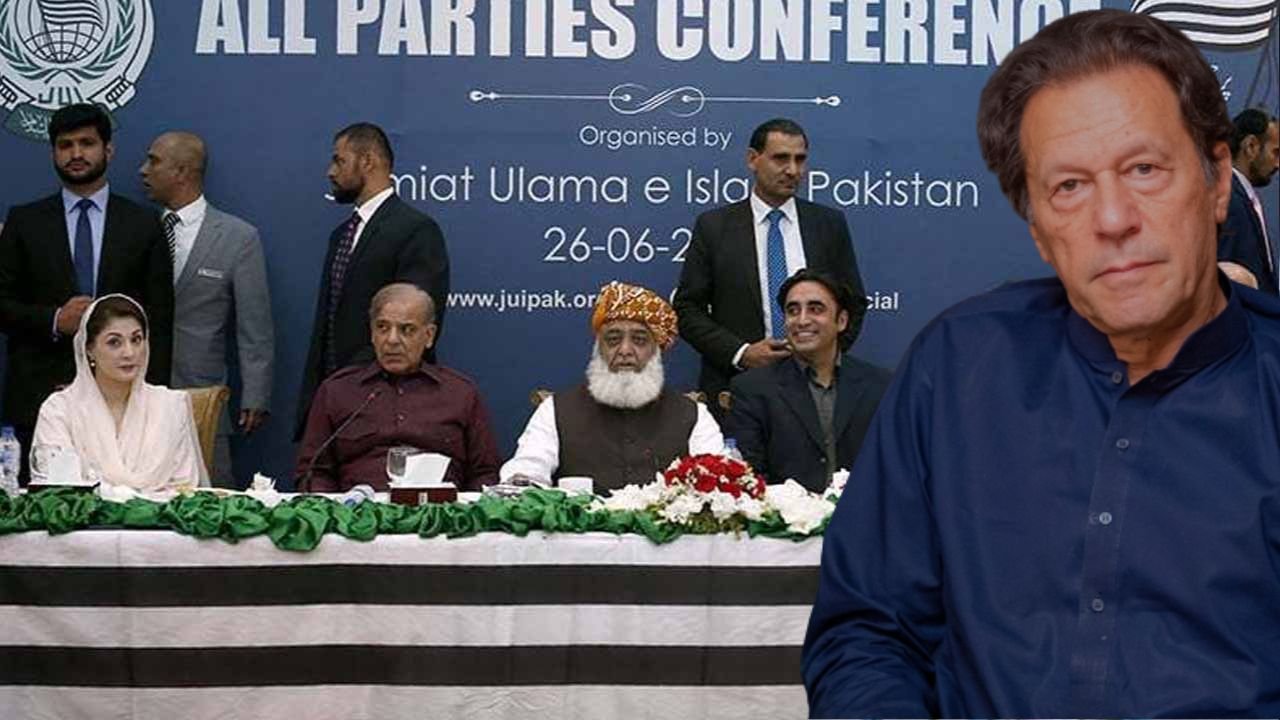
    February 11, 2022 — Maulana Fazlur Rehman, the chief of the Pakistan Democratic Movement (PDM), speaking on behalf of the opposition, declares the intention to initiate a vote of no confidence against the Prime Minister.

    In the middle of these developments, the government remained dismissive of the risk and openly challenged the opposition to formally present the no-confidence motion.

    February 14, 2022 — Foreign Minister Shah Mahmood Qureshi shares the intention of the government to counter the no-confidence motion through political means, emphasizing the impartiality of the process as the “umpire” is also neutral.

    February 18, 2022 — PMLQ leader Pervaiz Elahi, who was the Speaker of the Punjab Assembly at the time, and MQM-P leader Amir Khan meet to jointly announce their decision to remain aligned with the government and not withdraw their support.

    February 22, 2022 — Interior Minister Sheikh Rasheed challenges the opposition, daring them to gather the support of 172 Members of the National Assembly (MNAs) in their ranks.

    February 23, 2022 (When the Prime Minister departed for his visit to Russia) — Defense Minister Pervez Khattak expresses confidence that the supposed no-confidence motion would not be presented, stating that it was a challenging task to have PTI MNAs in favor of it.

    Assessing the statements, one can conclude that the government did not take the no-confidence motion with a substantial level of seriousness.

    March 8, 2022 — The opposition tables a no-confidence motion against Prime Minister Imran Khan.

    March 9, 2022 — Prime Minister Imran Khan remarks that PPP co-chairman Asif Ali Zardari is hin “gun’s crosshairs”, expressing eagerness for the opposition to bring forth a no-confidence motion against him.

    March 10, 2022 — Bilawal responds to PM Imran Khan’s warning towards Zardari, describing it as “intolerable” and warning the Prime Minister to prepare for the potential repercussions.

    March 10, 2022 — Information Minister Fawad Chaudhry states that the armed forces are aligned with the government.

    March 10, 2022 — Islamabad police starts an operation in Parliament Lodges, resulting in the arrest of over a dozen Ansar-ul-Islam workers and two Members of the National Assembly (MNAs).

    March 11, 2022 — After the release of JUI-F workers and leaders, the party’s leader Fazlur Rehman cancels nationwide protests.

    March 11, 2022 — Sheikh Rasheed announces that the security of Parliament House and Parliament Lodges will be under paramilitary Rangers and Frontier Corps (FC) on the day of the National Assembly vote regarding the no-confidence motion.

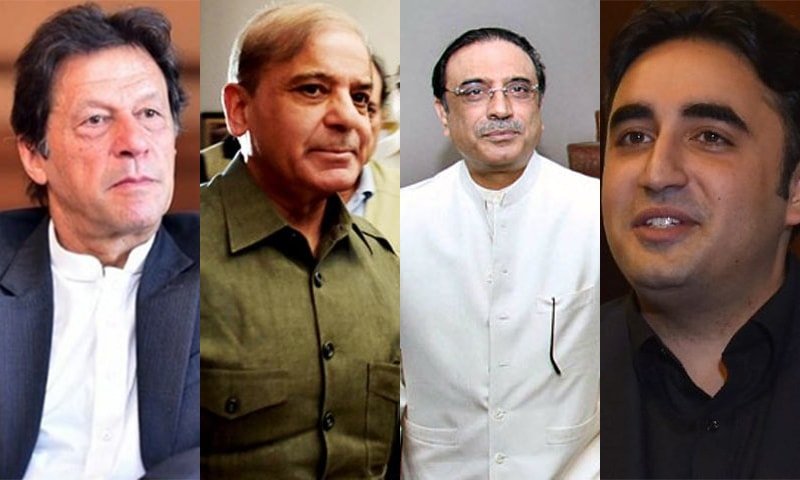
    March 11, 2022 — Prime Minister Imran Khan verbally attacks three prominent opposition figures – Fazl, Zardari, and Shahbaz.

    March 12, 2022 — Nawaz Sharif and aggrieved PTI leader Aleem Khan discuss the no-confidence motion in London.

    March 12, 2022 — Sheikh Rasheed and PML-Q leader Moonis Elahi get into verbal exchanges, highlighting growing tensions within the government’s coalition as signs of division become apparent.

    March 13, 2022 — Key ally MQM-P states that they are considering all possible “options” regarding the no-confidence motion.

    March 14, 2022 — PPP and MQM-P reach an agreement to collaborate and work together for the country’s “greater interest.”

    March 15, 2022 — PM Imran Khan declares that the nation is willing to face challenges alongside him instead of endorsing what he referred to as the “three stooges,” indicating someopposition leaders.

    March 16, 2022 — Speaker of the Punjab Assembly, Pervaiz Elahi, asserts that 10-12 lawmakers from the government are under the “safe custody” of the opposition.

    March 18, 2022 — It comes to light that approximately 24 members of the PTI were residing at the Sindh House. The PTI declares it will issue show-cause notices to the dissenting MPs. In response, PTI supporters engaged in violent behavior, forcefully entering Sindh House premises.

    March 21, 2022 — The government submits a reference to the Supreme Court seeking clarification on the interpretation of Article 63(A).

    March 27, 2022 — PM Imran Khan alleges that the opposition’s motion of no-confidence is part of a “foreign-funded conspiracy” designed to remove him from power. These claims were made at a PTI-organized rally in Islamabad.

    March 28, 2022 — The leader of the Opposition in the National Assembly, Shahbaz Sharif, officially tables a no-confidence resolution against PM Imran Khan.

    March 28, 2022 — PTI secures assurance of support from PML-Q as Usman Buzdar steps down, making way for Pervaiz Elahi to be the new chief minister. Meanwhile, the government’s ally BAP sides with the opposition.

    March 28, 2022 — Independent Member of the National Assembly (MNA) from Balochistan, Mohammad Aslam Bhootani, resigns from the ruling coalition and aligns with the opposition.

    March 30, 2022 — PTI’s majority in the National Assembly significantly reduces as MQM-P announces its decision to discontinue its alliance with the government.

    March 31, 2022 — The National Assembly session scheduled for the no-confidence motion against PM Imran Khan postpones till April 3rd.

    March 31, 2022 — PM Imran Khan mentions the US as the sender of a “threatening letter” during a speech to the nation, which he later clarifies as “a slip of the tongue.”

    April 1, 2022 — Both the State Department and the White House jointly reject PM Imran Khan’s allegations.

    April 2, 2022 — On the eve of the no-confidence motion, PM Imran Khan appeals to the youth to demonstrate against what he considers as a “foreign conspiracy.”

    April 3, 2022 — NA Deputy Speaker Qasim Suri dismisses the no-confidence motion, statingit to be “unconstitutional,” and concludes the proceedings. President Arif Alvi dissolves the National Assembly based on PM Imran Khan’s orders. The Supreme Court initiates suo motu notice of the political situation. PM Imran Khan attributes the “threat letter” to US Assistant Secretary of State for South and Central Asian Affairs Donald Lu.

    April 7, 2022 — The Supreme Court reinstates the National Assembly, ruling that the government’s dissolution of the assembly and Qasim Suri’s decision were unconstitutional. The court directs NA Speaker Asad Qaiser to convene a session of the assembly on Saturday.

    April 8, 2022 — Just a day before the scheduled vote on the no-confidence motion, the Prime Minister states that he wouldn’t tolerate the establishment of a “foreign government” and would seek public support if any such thing happens.

    April 9-10, 2022 — PTI’s elected speaker, Asad Qaiser, convenes the session for the vote on the no-confidence motion at 10:30 am. PTI attempts to hinder the vote proceedings throughout the session. However, moments before midnight, Qaiser resigns from his position and passes the speaker’s seat to Ayaz Sadiq, who then presides over the session for the no-confidence motion. Following Sadiq’s assumption of the speaker’s role, 174 members of the opposition cast their votes in favor of the motion, resulting in the removal of Imran Khan from the position of Prime Minister.
  • ‘Judges and generals can’t take decisions behind closed doors’: Fawad Chaudhry

    ‘Judges and generals can’t take decisions behind closed doors’: Fawad Chaudhry

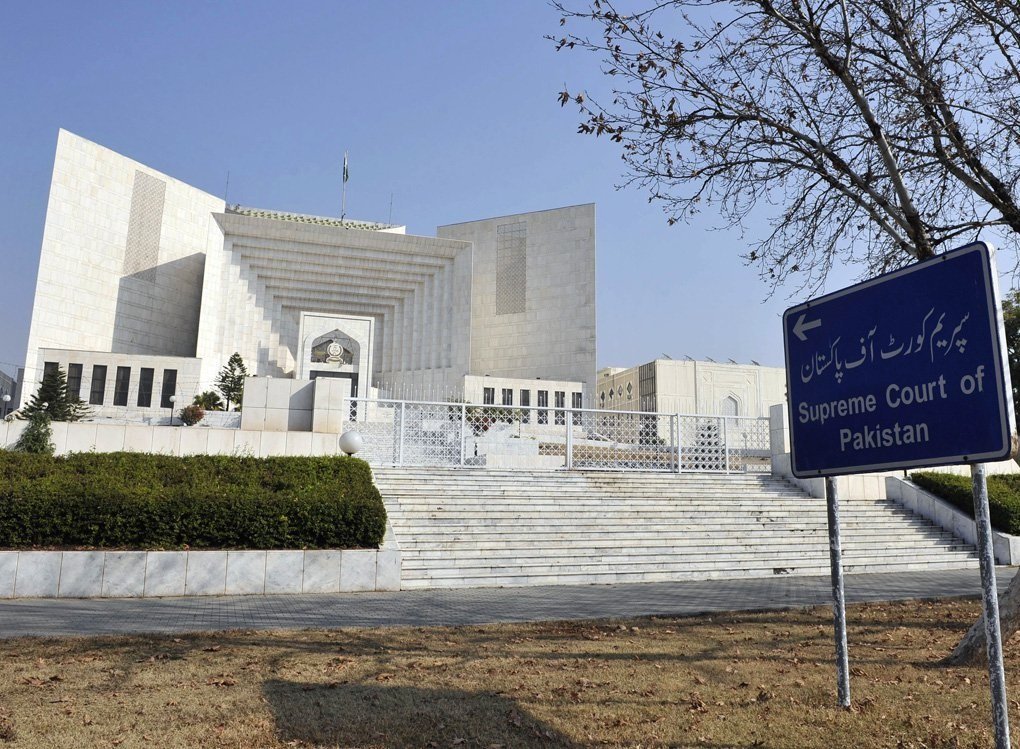
    Pakistan Tehreek-e-Insaf (PTI) leader Fawad Chaudhry criticised the Supreme Court’s detailed judgement given yesterday in a suo motu case on the ruling by former National Assembly Deputy Speaker Qasim Suri under Article 5 of the Constitution. 

    “The people should be given the right to make decisions. Judges and generals can’t change their policies every day. They can’t take decisions behind closed doors.”

    Fawad said that Chief Justice Umar Ata Bandial has the sealed cipher in his office. “Senior judges should ask the CJP why it was not shown to them,” said Fawad. 

    He further claimed that a letter from President Alvi is also with the Supreme Court suggesting the formation of a commission to investigate the matter. However, the court had not responded to Alvi’s letter.

    “Rather than forming a commission to properly investigate the matter, the Supreme Court has given its verdict without even reading the material that was given to it. Moreover, the timing of the ruling is self-explanatory.” 

    The PTI leader asked if the Supreme Court could issue the detailed judgement after three months, why did it not delay it a bit longer. He alleged that it was purposefully done in the wake of the upcoming by-elections in Punjab.

    Moreover, the PTI leader claimed that people are aware of why the SC “did not want to investigate the cipher”. Chaudhry was of the view that the top court “should read the cipher before penning the judgment”.

    He challenged the decision saying that when PTI comes back into power, it will quash the order through Parliament.

    Commenting on Mazhar Alam Miankhel’s additional note which said “if we begin to pursue cases under article 6, we will find there are more people to hang than there are nooses”.

    If I get permission, will get Imran Khan arrested: Rana Sanuallah

    Interior Minister Rana Sanaullah said that President Dr Arif Alvi should resign and that if he gets permission from the cabinet to file a case against Imran Khan, he [Khan] will be arrested.

    Rana Sanaullah said that the matter of reference against former Prime Minister (PM) Imran Khan, President Alvi, former Deputy Speaker Suri will be considered in the cabinet tomorrow. Sanaullah said that Khan “can go to any level for his personal interests”.

    He claimed that PTI is still receiving salaries from the National Assembly and they are still using government vehicles. He urged that they should be de-seated and disqualified.

    Replying to a question, Rana Sanaullah said that Sheikh Rasheed was supposed to be arrested during the long march but he could not be found as he was in hiding.

    PM Shehbaz’s reaction

    Following the judgement, Prime Minister (PM) Shehbaz Sharif said that everyone should read the judgement. In a tweet, the preimer said, “Honourable Supreme Court’s detailed judgement on Vote of No Confidence exposes the lies and propaganda indulged in by Imran Khan and Co. utterly shameful how IK tried to undermine the Constitution and manufactured the lie of regime change.”

    PTI failed to produce any evidence to support claim of foreign conspiracy: Supreme Court

    The Supreme Court issued a detailed judgement on Wednesday (July 13) in a suo motu case on the ruling by the Deputy Speaker of the National Assembly under Article 5 of the Constitution.

    The court has said that the Pakistan Tehreek-e-Insaf (PTI) failed to “produce any evidence” before the court to support their claim of interference by a foreign force in the ousting of former Prime Minister (PM) Imran Khan through a no-confidence motion.

    In the judgement, the apex court revealed that the cipher was not even shown to it although its contents “were partially disclosed in the detailed reasons issued in support of the deputy speaker’s ruling”.

    On April 7, a five-member bench of the Supreme Court had declared Qasim Suri’s ruling on the dismissal of no-confidence motion against Imran Khan as unconstitutional and illegal. The bench unanimously ruled that President Dr Arif Alvi’s decision to dissolve the National Assembly is “illegal” and restored Imran Khan as Prime Minister as well as his cabinet ministers to face the no-confidence motion on April 9.

    No evidence

    The Supreme Court said that it rejected PTI’s plea to take suo motu action over the ‘breach of sovereignty’ allegation, citing “no precedence, absence of evidence and lack of jurisdiction”.

     Chief Justice of Pakistan (CJP) Justice Umar Ata Bandial observed that the action by the deputy speaker triggered a chain of events.

    Moreover, the SC noted that neither the Constitution nor the NA procedure rules have given the power to the Speaker and Deputy Speaker to dismiss a no-trust resolution “for being inadmissible or non-maintainable”.

    The judgement said, “It was a unilateral decision taken by the Deputy Speaker at the behest of the Law Minister.”

    High treason for President Alvi, Khan and others?

    Justice Mazhar Alam Miankhel stressed in his additional note that there must be consequences for President Alvi, ex-PM Imran, former Speaker Asad Qaiser, former Deputy Speaker Qasim Suri and former Law Minister Fawad Chaudhry because they prevented the elected representatives of the people “from voting on the resolution” and therefore it was a “blatant transgression of the Constitution”.

    “Whether the stated acts attract Article 6 of the Constitution is also left open to be determined by the Parliamentarians as to whether they leave open the doors for such unconstitutional acts or take suitable measures to stop such like mess in future,” Justice Miankhel suggested.

    Article 6 of the Constitution of the Islamic Republic of Pakistan states, “Any person who abrogates or subverts or suspends or holds in abeyance, or attempts or conspires to abrogate or subvert or suspend or hold in abeyance, the Constitution by use of force or show of force or by any other unconstitutional means shall be guilty of high treason.”

    Suri was biased

    Justice Jamal Khan Mandokhel observed in his additional note that the action of the Deputy Speaker was biased. He said that if at the time it was permitted to hold fresh elections, it would amount to giving license to an authority to misuse the extraordinary power of the doctrine of necessity.

  • ‘All pending cases would have been solved by December 2022’: former special assistant to Khan

    Former Special Assistant to the Prime Minister (SAPM) on Accountability Brigadier (Retd) Musaddiq Abbasi said that all the pending cases of politicians would have been solved by December 2022. Abbasi was SAPM to Imran Khan.

    Speaking on Express News‘ political programme‘ Kal Tak‘ with anchorperson Javed Chaudhry, the former special assistant revealed that he was working to make amendments to the Code of Criminal Procedure (CRPC) 1898 so that all the cases could be streamlined. According to him, when he took over the office as SAPM, he discussed it with Khan and he agreed.

    Moreover, talking about pending cases of Nawaz Sharif and other politicians, he clarified that all the cases would have been decided either in their favour or against them.

    On the show, Abbasi who is also the former National Accountability Bureau (NAB) director-general, talked about the recent amendments to NAB law. He said that the bureau is almost closed. It is pertinent to mention that the incumbent government through the new amendments has limited the powers of NAB.

    Abbasi also termed the allegations by Energy Minister Khurram Dastgir’s revelations as baseless. Dastagir alleged that in November when a new army chief would have been appointed by Imran Khan, the new chief would have violated the Constitution and would have helped Imran Khan make false cases against his opponents in order to disqualify them.

    Earlier, Dastgir said, “This is based on information. Imran Khan and his followers would have stayed in power for 15 years. The entire Opposition would have been disqualified. He [Imran Khan] was of the point of view that he will remove everyone and will not spare anyone.”

    Replying to Dastagir, Pakistan Tehreek-e-Insaf (PTI) leader Asad Umar said that he believes that Dastagir is lying but is still waiting for Director General (DG) Inter-Services Public Relations’ (ISPR) statement because these are very serious allegations and the military spokesperson should respond to them.

  • ‘Why we opened the court in the middle of the night’, Islamabad High Court issues clarification

    ‘Why we opened the court in the middle of the night’, Islamabad High Court issues clarification

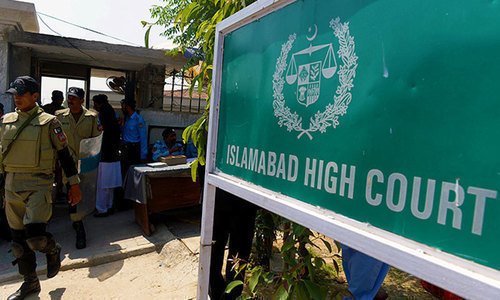
    The Islamabad High Court (IHC) has clarified opening its doors late on the evening of April 9, 2022 when the process of a no-confidence motion against former Prime Minister (PM) Imran Khan was going on in the National Assembly (NA).

    In a statement, the court said, “The filing of petitions late in the evening on April 9, 2022, has been misreported and queries have been raised whether petitions can be presented after the notified court timings.”

    On Saturday, there were rumours that a petition was filed in the IHC, asking the court to restrain Khan from de-notifying Chief of Army Staff (COAS) General Qamar Javed Bajwa from his post.

    IHC said the Supreme Court Bar Association (SCBA) President approached the court and requested the court to implement the Supreme Court’s April 7 order. The IHC statement then referred to the petitions, including a “pre-emptive” constitutional petition that sought to restrain the then prime minister from de-notifying the army chief.

    “As a constitutional court, the Islamabad High Court has ensured that cases relating to extreme urgency are presented at any time after the notified timings,” the high court said, adding: “The honourable chief justice, if satisfied that there exists extreme urgency, may order fixing of the case at any time.”

    “A petition regarding extreme urgency could be presented at any time after the notified court timings and it could also be fixed for hearing subject to the satisfaction of the chief justice that circumstances exist for doing so,” the court said further.

  • Did the establishment fact-check PM Khan?

    Did the establishment fact-check PM Khan?

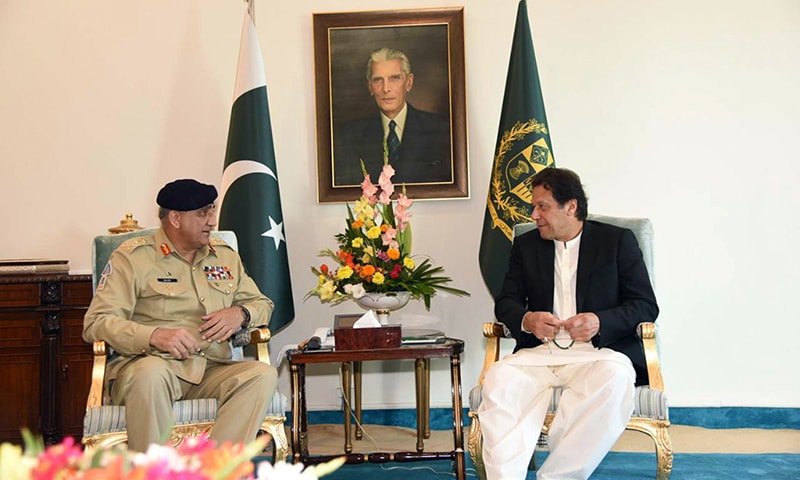
    In an exclusive interview with ARY News’ senior anchorperson Arshad Sharif on April 1, Prime Minister (PM) Imran Khan was asked about options given to him by the Opposition to which the premier said that he does not think he should talk to people like Shehbaz Sharif.

    However, PM Khan revealed that he was given three options by the establishment: resignation as PM, no-confidence vote, or early elections.

    In response to PM Khan’s claim, sources in the military establishment said that the military leadership did not bring the Opposition’s options to PM Khan but that the government called the top brass and asked for a meeting to discuss the ongoing political scenario, reported Fakhar Durrani for The News. According to the report, PM Khan rejected the options to resign or vote of n-confidence and agreed to dissolving the assemblies and holding early elections.

    The military sources told The News that after discussion with the PM, both the army chief and DG ISI met the Opposition leadership on the same day and conveyed the government’s message. The Opposition did not agree to any of the three options and rejected them.

  • Civilian governments and completing their term

    Civilian governments and completing their term

    In the wake of the no-confidence move against Prime Minister (PM) Imran Khan by the Opposition, a debate has started about several issues ranging from the government completing its term to defections from the ruling party. In Pakistan’s history, no civilian prime minister has ever completed his/her five-year term. Even when the last two civilian governments completed their tenures from 2008-2018, despite many hiccups and conspiracies against the governments. Of course, we do not know what the result of the latest vote of no-confidence will be, but if we are to believe speculations about what is happening in politics, this government may not survive and even PM Khan may not be able to complete his full term. Ideally, a civilian government, no matter how it has come to power, should be able to complete its full term. In a democracy like Pakistan, there are many factors involved in politics, which is why it is important for democratic governments to complete their tenures. 

    On the other hand, a vote of no-confidence is also a constitutional right that can be exercised in parliament to remove the Prime Minister from office if he/she loses the confidence of the majority of the members of the National Assembly. The number required to dislodge the premier is 172. The Opposition has followed a democratic procedure by moving a resolution for a vote of no-confidence, which requires signatures of at least 20 percent of the total membership of the lower house.

    Under the 1973 Constitution, we have seen two votes of no-confidence in the past against prime ministers. First against Benazir Bhutto in November 1989 and then against Shaukat Aziz in August 2006. Both Bhutto and Aziz survived the votes. After successfully defeating the vote of no-confidence, Benazir Bhutto gave a magnanimous speech and said she bore no ill-will against the opposition. Contrast her words with what is happening today — a prime minister addressing the nation with a short message to join his March 27 rally, bitter words by the ruling party on national television, threats of what is in store for those members who have gone to the opposition’s side, threats of a showdown, etc. This is not how politics should be but unfortunately, we have seen how the discourse over the last few years has led to politicians stooping to the lowest level just to settle scores. Add to it labels like a traitor, apart from other choice words. These add to the toxicity of political discourse, which is telecast live on our television screens.

    Parliament’s fights should be fought on the floor of the house through the vote of no-confidence, not on the streets.

  • ‘Resign before we table no-confidence,’ Bilawal Bhutto gives an ultimatum to PM Khan

    ‘Resign before we table no-confidence,’ Bilawal Bhutto gives an ultimatum to PM Khan

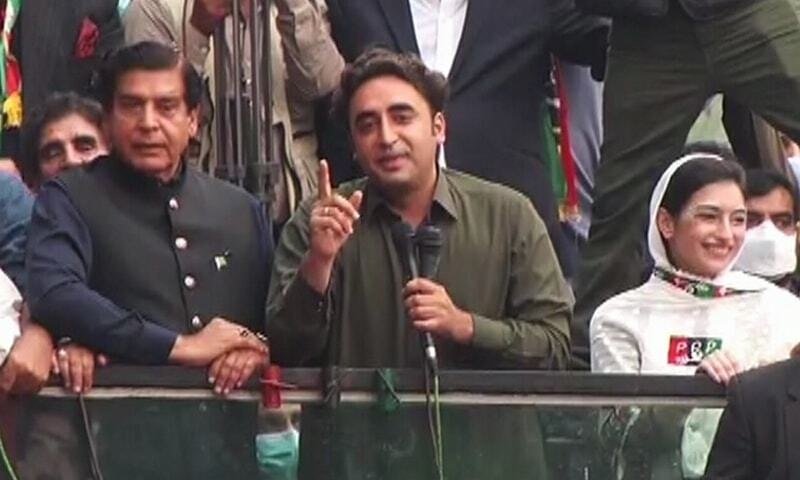
    Pakistan People’s Party (PPP) Chairman Bilawal Bhutto-Zardari asked Prime Minister (PM) Imran Khan to resign before the vote of no-confidence is tabled in the National Assembly. He also challenged PM Khan to dissolve the assembly as “he has always threatened to do”.

    “Even if he does not resign and dissolve the assembly, the Opposition is well prepared. We will bring the no-confidence motion and take this democratic war to parliament. We will be successful,” said Bilawal Bhutto on Sunday. He said he cannot guarantee 100 per cent success of the no-confidence move.

    “If we succeed, it will be a great achievement but even if we do not, I will not back down and continue my struggle.”

    The PPP Chairman was speaking in Lahore at Nadeem Afzal Chan’s residence.

    Nadeem Afzal Chan rejoins PPP

    Pakistan Tehreek-e-Insaf (PTI) leader Nadeem Afzal Chan rejoined the PPP on Sunday (March 6) in Lahore. Chan had quit the PPP for the PTI in April 2018 and contested the general elections but said he made the “wrong decision” by leaving PPP. Chan said he was very happy to be back ‘home’ in the PPP.

    Balochistan’s Sardar Yar Muhammad Rind meets Zardari

    Former PTI Balochistan President Sardar Yar Muhammad Rind called on PPP Co-Chairman Asif Ali Zardari on Sunday, days after quitting as Special Assistant to the Prime Minister, reported Dawn.

    PPP in Lahore

    Bilawal Bhutto-Zardari said that through the 18th Amendment and NFC (National Finance Commission) Award, the PPP made Punjab the owner of its own resources.

    Awami March in Gujrat

    PPP Awami March has reached Gujrat today (March 7) and will reach Islamabad either tonight or tomorrow (March 8). Last week, senior journalist Saleem Safi tweeted that the Chaudhries of Gujrat had offered to host Bilawal Bhutto’s Awami March in Gujrat but due to the PML-Q’s refusal to go to Shehbaz Sharif’s house, Asif Zardari refused their offer.