Tag: Non filers

  • FBR to scrap non-filers category, aims to strengthen banking-based economy

    FBR to scrap non-filers category, aims to strengthen banking-based economy

    In a recent meeting with representatives of key industries, the Federal Board of Revenue (FBR) Chairman Rashid Mahmood Langrial said that the government is planning to eliminate the category of non-filers, which will require everyone to make transactions through banking channels.

    This is a part of FBR’s transformation plan to curb cash flows in the economy.

    Langrial was of the view that non-filing is a fraudulent method established domestically. He said that the FBR will generate data to monitor citizens’ financial transactions.

    Most importantly, property transactions will be categorised into only two groups: ineligible and eligible.

    According to Dawn, businesspeople were briefed regarding the tax authority’s overhaul. Langrial said that the FBR has no option but to eliminate the issue of nil-filing and non-filing of returns.

    This step is crucial because if the situation does not get better, it will be nearly impossible for the government to collect taxes.

    It was revealed that the tax authority will establish disincentives for non-compliant taxpayers, starting with linking the availability of facilities such as investments and the opening of bank accounts to the filing of tax returns.

    There will be no monetary transactions, and the source of funds will have to be established through digital interventions.

    The meeting highlighted the potential tax gap across 20 sectors, with the largest gap reported in the textile sector at Rs700 billion.

  • PM Shehbaz orders immediate action to tax 4.5 million non-filers

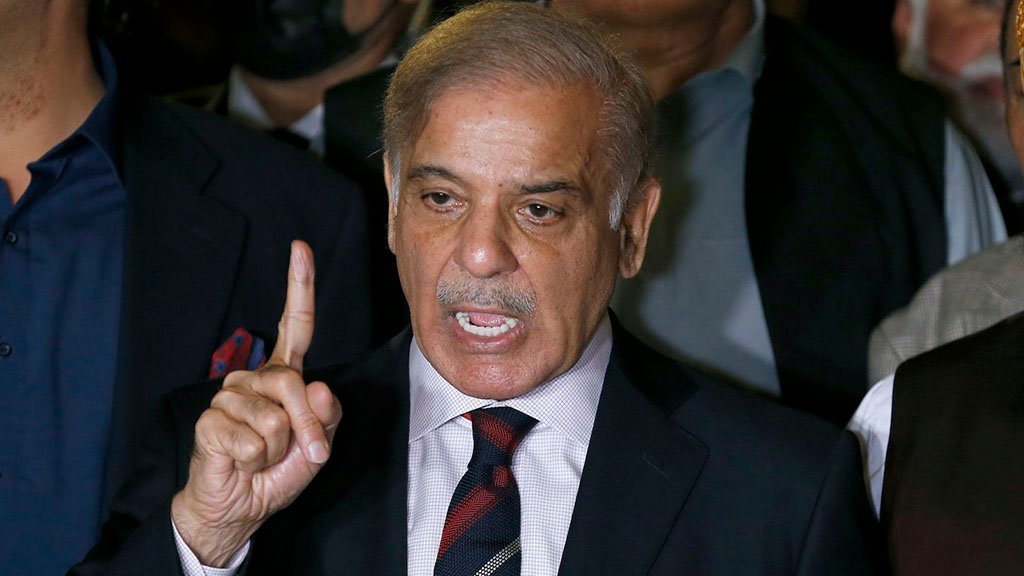
    PM Shehbaz orders immediate action to tax 4.5 million non-filers

    Prime Minister Shehbaz Sharif has mandated immediate action to bring 4.5 million identified non-filers into the tax net.

    Chairing a review meeting on Federal Board of Revenue (FBR) reforms, he stressed the need for swift implementation of measures to ensure these potential taxpayers are registered and contributing their due share.

    During the meeting, officials updated the prime minister on the ongoing reforms and digitisation efforts within the FBR. The implementation of Sharif’s directives is progressing rapidly, with a comprehensive review of the FBR’s existing systems and manpower nearing completion.

    Initial steps have already led to the identification and cessation of fraudulent sales tax refund claims by approximately 4,000 companies.

    The prime minister underscored the importance of ending discretionary powers of customs appraisers, instructing the FBR chairman to ensure compliance and report back within 24 hours. He highlighted that more than 300,000 new taxpayers have submitted their returns in recent weeks, a testament to the government’s initiatives.

    PM Shehbaz also called for strict action against individuals and officials involved in tax evasion, emphasising that those who facilitate such crimes will be punished. Conversely, taxpayers who comply with their obligations will be acknowledged.

    To enhance transparency and reduce corruption, the prime minister directed the installation of modern, international-quality scanners at ports. He reiterated that the digitisation of the tax system is a top government priority to prevent billions in tax evasion.

    PM Shehbaz also recommended the creation of a dashboard to monitor the progress of digitisation and reforms.

  • Telecom companies block 9,000 SIMs of non-filers under FBR directive

    Telecom companies block 9,000 SIMs of non-filers under FBR directive

    Telecom operators have taken action by blocking the mobile SIMs of approximately 9,000 individuals who have not filed their taxes, following directives from the Federal Board of Revenue (FBR).

    According to a spokesperson from the FBR, this measure has been expedited, with telecom companies receiving updated data daily for the purpose of blocking SIMs.

    It has been revealed that the FBR has already provided data for around 30,000 individuals whose SIMs are earmarked for blocking.

    However, the spokesperson acknowledged that there is still a substantial number of approximately 506,671 individuals who have not filed their Income Tax Return for Tax Year 2023 but are obligated to do so.

    Initially, telecom operators were hesitant to execute this directive, citing various legal concerns. Nevertheless, they eventually consented to manually block SIMs in smaller batches.

    The FBR had issued an Income Tax General Order (ITGO) in late April, instructing the disabling of mobile phone SIMs belonging to over half a million individuals not appearing on the active taxpayer list.

    At the time of issuance, telecom companies were directed to furnish a compliance report by May 15 regarding this matter.

  • Mobile SIMs of over 500,000 tax evaders to be blocked under FBR directive

    Mobile SIMs of over 500,000 tax evaders to be blocked under FBR directive

    The Federal Board of Revenue (FBR) has identified 506,671 individuals who have not filed their income tax returns for the 2023 tax year and issued an order to block their mobile phone SIM cards.

    This directive, known as Income Tax General Order No. 01 of 2024, was released on Tuesday, mandating the Pakistan Telecommunication Authority (PTA) and all telecom operators to comply immediately.

    According to the FBR, these non-filers are required to file their income tax returns under the Income Tax Ordinance of 2001. The list of those affected is available on the FBR’s website. Those listed can check to confirm whether their mobile phone service will be disrupted.

    Under Section 114B of the Income Tax Ordinance, the FBR has the authority to take such measures to enforce compliance with tax regulations.

    The PTA and telecom operators must block the SIM cards of the individuals named in the order, and the SIM cards will remain deactivated until the FBR or the respective Commissioner of Inland Revenue restores them.

    The FBR has set a deadline of May 15, 2024, for telecom operators to report their compliance with the order. Failure to meet this deadline could result in further regulatory action.

    The FBR is taking this step to ensure that all those required to file income tax returns do so promptly, contributing to the country’s revenue base.

  • FBR hikes motor vehicle tax by 200% for non-filers

    FBR hikes motor vehicle tax by 200% for non-filers

    The Federal Board of Revenue (FBR) has implemented significant changes to the tax structure for motor vehicles in an effort to boost government revenue and encourage tax compliance. The new regulations apply to both Active Taxpayers List (ATL) filers and non-filers.

    For individuals not on the ATL, the tax rates on motor vehicles have been increased by a substantial 200 per cent. This means that non-filers will now be subject to fixed tax rates of 18 per cent, 24 per cent, and 30 per cent, based on the engine capacity of their vehicles, specifically 2001cc to 2500cc, 2501cc to 3000cc, and above 3000cc, respectively.

    On the other hand, ATL filers will experience a different taxation structure. Instead of fixed tax amounts, they will be required to pay tax at a rate of 6 per cent, 8 per cent, and 10 per cent, depending on the engine capacity of their motor vehicles, namely 2001cc to 2500cc, 2501cc to 3000cc, and above 3000cc, respectively.

    In cases where the engine capacity is not applicable, and the value of the vehicle exceeds Rs5,000,000, the tax rate will be 3 per cent of the import value (including customs duty, sales tax, and federal excise duty for imported vehicles, and invoice value for locally manufactured or assembled vehicles).

    It is worth noting that certain exemptions have been made. Pakistan’s government agencies and foreign diplomats will not be subject to these revised tax rates.

    Furthermore, the circular introduced tax implications for bank withdrawals based on the withdrawn amount. Non-ATL filers will be taxed Rs303 for withdrawals of Rs50,500 and taxed Rs450 for withdrawals ranging from Rs55,000 to Rs75,000.

    Additionally, to curb unnecessary foreign exchange outflows via credit/debit card transactions, the withholding tax rates for ATL persons have been increased from 1 per cent to 5 per cent, while non-ATL persons will face a higher rate of 10 per cent, up from the previous 2 per cent.

    These adjustments in the tax policy aim to strengthen the country’s revenue generation while encouraging citizens to become active taxpayers.

  • Non-filers beware: Proposed increase in advance taxes on vehicles and utility bills

    Non-filers beware: Proposed increase in advance taxes on vehicles and utility bills

    In an attempt to boost tax revenue and increase non-tax income, the Pakistan Business Council (PBC) has proposed the Federal Board of Revenue (FBR) to impose higher advance taxes on various sectors. The council’s recommendations primarily target non-filers and aim to generate additional funds for the government’s development initiatives.

    One of the key proposals put forth by the PBC is to increase the annual advance income tax amount for owners of vehicles with an engine capacity of 2000cc and above who are non-filers. The council suggests raising the amount to Rs250,000 per year.

    Additionally, the PBC argues for an increase in advance income tax levied on non-filers for the purchase of cars, as outlined in section 231B.

    The proposed changes in advance income tax for different engine capacities are as follows:

    Engine capacity: 1800cc – 2000cc

    Existing tax: Rs600,000

    Proposed increased tax: Rs2,000,000

    Engine capacity: 2001cc – 2500cc

    Existing tax: Rs900,000

    Proposed increased tax: Rs2,500,000

    Engine capacity: 2501cc – 3000cc

    Existing tax: Rs1,200,000

    Proposed increased tax: Rs3,000,000

    Engine capacity: Above 3000cc

    Existing tax: Rs1,500,000

    Proposed increased tax: Rs4,000,000

    Furthermore, the PBC suggests raising the advance income tax from Rs1,200,000 to Rs2,400,000 on the sale of vehicles with an engine capacity of 2001cc and above by non-filers before registration.

    In addition to the proposed changes in vehicle-related taxes, the PBC recommends increasing the advance tax collected from domestic connections in the name of non-filers.

    Currently, non-filers with monthly utility bills of Rs25,000 or more are subject to a 7.5 per cent advance tax. The council suggests continuing this practice and exploring the possibility of imposing withholding tax on withdrawals exceeding Rs50,000 in a single day from non-filer bank accounts.

    According to sources within the FBR, the board has decided to increase the petroleum development levy from Rs50 to Rs60 per unit, which is expected to generate revenue of Rs870 billion. The government aims to increase non-tax income to Rs2.9 trillion through such measures.

    It is worth mentioning that the proposed measures are intended to create additional funds for various government initiatives. One such initiative involves increasing pensions by up to 30 per cent, which would require Rs780 billion in funding.

    The PBC’s recommendations, if implemented, would significantly impact non-filers and luxury expenditures. These proposed changes seek to address the revenue deficit and support the government’s efforts to strengthen the economy and promote sustainable development in Pakistan.

  • Proposed increase in advance tax on vehicle registration to impact expensive car buyers

    Proposed increase in advance tax on vehicle registration to impact expensive car buyers

    With the upcoming budget just days away, the Federal Board of Revenue (FBR) is deliberating on measures to increase the advance tax on motor vehicle registration, particularly targeting non-filers. The proposed plan suggests raising the tax rate by 10 to 35 per cent based on the value of vehicles.

    Currently, the advance tax is determined by engine capacity, but significant changes are being considered for the forthcoming budget, set to be revealed in the first week of June. The Resource and Revenue Mobilisation Commission (RRMC) has recommended imposing the advance tax based on the value of the vehicle.

    As per the proposed rates, the RRMC has advised the government to impose a 2 per cent advance tax on the corporate sector and 3 per cent on the non-corporate sector for individuals listed in the active taxpayers list (ATL) for the past three years. These rates would apply to motor vehicles valued up to Rs10 million.

    For individuals, the proposed tax rate stands at 10 per cent. As for motor vehicles valued between Rs10 million and Rs30 million, the recommended tax rates are 4 per cent and 5 per cent for the corporate and non-corporate sectors, respectively, provided they are part of the ATL for the past three years.

    Moving up the value scale, vehicles valued between Rs30 million and Rs100 million would face tax rates of 6-7 per cent for the corporate and non-corporate sectors. The proposed tax rate for individuals would be increased significantly to 30 per cent.

    For vehicles valued up to Rs100 million, the proposed tax rates are 8 per cent and 10 per cent for the corporate and non-corporate sectors, respectively, for individuals present in the ATL for the past three years. Individuals falling under this category would face a tax rate of 35 per cent.

    The RRMC has also recommended subjecting the transport sector to a minimum tax regime of 3 per cent of the gross turnover, applicable to transport services provided to withholding agents. Additionally, a tax rate of 3.5 per cent would be levied on the gross amount received for the provision of carriage services by transport contractors, while oil tanker contractors would face a tax rate of 2.5 per cent.

    These proposed changes in the tax structure aim to generate increased revenue for the government and incentivize compliance with tax regulations. By targeting motor vehicle registration, the FBR hopes to enhance revenue collection and promote a fair tax system.

    It is essential to note that these proposed changes are subject to approval and implementation during the budget announcement. The FBR and RRMC are carefully evaluating the potential impact of these adjustments on various sectors and taxpayers, striving to strike a balance between revenue generation and taxpayer convenience.